Back
It was someone’s birthday. The relatives were sitting in the cemetery
A nurse from Dnipro about her only son, killed in a Russian bombardment
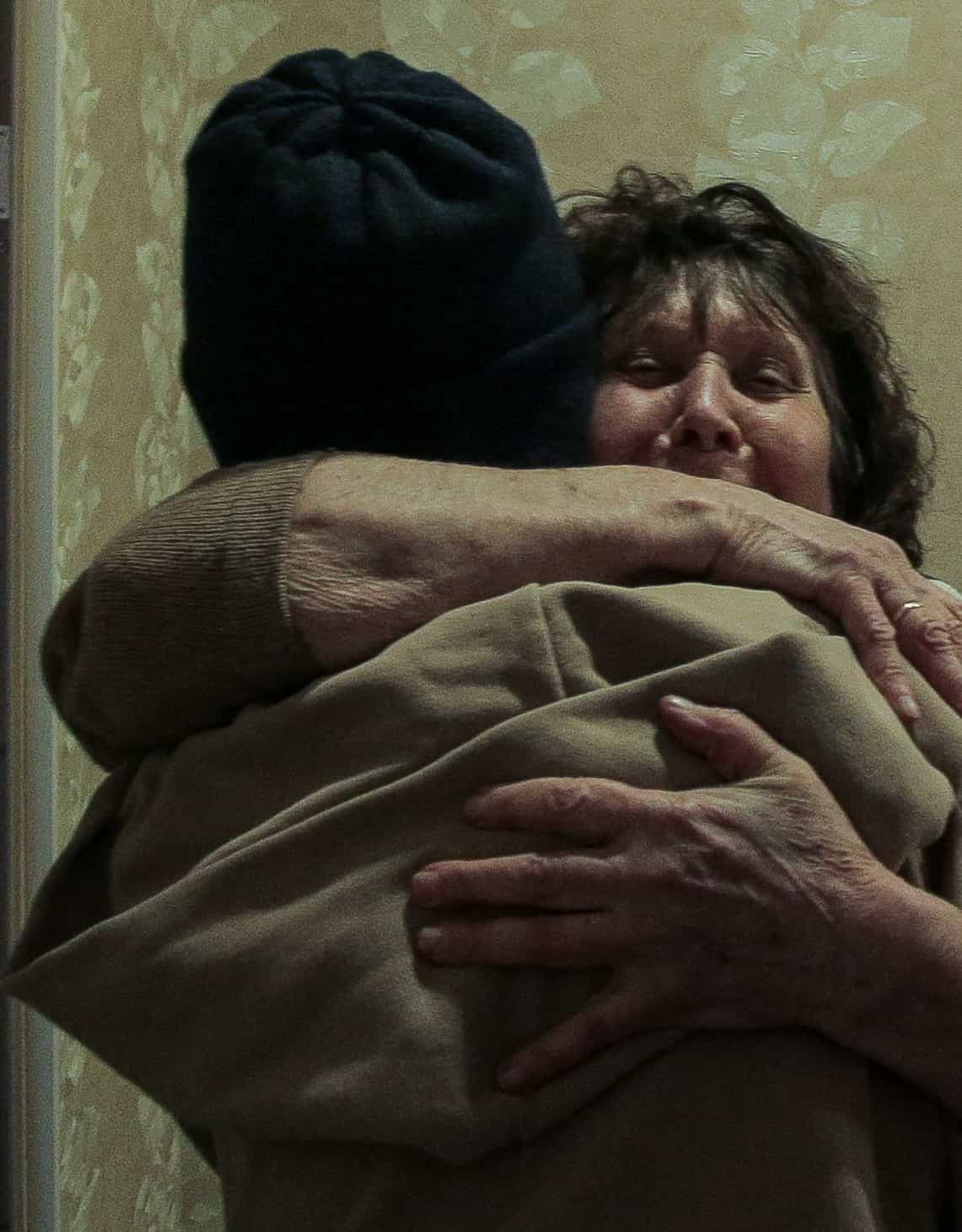
Tetiana Bohutska, a nurse from Dnipro, lost her only son Maksym in the tragedy of January 14, 2023, when a Russian missile destroyed the stairwell of an apartment building on Naberezhna Peremohy. That day the family had gone out to see friends, and Maksym was about to head to a friend’s, but didn’t make it in time. The missile hit their stairwell. Maksym’s body was identified only after two days. In March, he would have turned 18: his parents gathered friends and relatives at the cemetery. Nothing remained of the family’s apartment either.
Interview
Transcript
Transcript
Attention! Translation was done using AI, mistakes are possible
ТБ: Tatyana Bogutskaya
АП: Anna Pavlova
ТБ: I am Bogutskaya Tatyana, residing in the city of Dnipro at the address: Pobedy Embankment, building 118, building 3, third entrance.
АП: Tell me, please, what do you do? Where do you work? You can just name the sphere of activity.
ТБ: I work in a polyclinic, I'm a nurse in the children's neurological office.
АП: We called you so that you would share a story that happened on January 14th. Let's recreate that day. How did it begin? What do you remember? What was your morning like? Let's talk about the day before the tragedy.
ТБ: On this day we had... As usual, on Saturday near the house we have a bazaar, and every Saturday we go to the bazaar to buy things. Collective farmers come there. Tasty cottage cheese, tasty milk, fresh – we bought all of this. On this Saturday, specifically the fourteenth, we didn't feel like leaving the house – neither my husband, nor I, nor my son. We said... Well, since it was a holiday, Old New Year, so that women wouldn't enter the house, everyone [editor's note: "everyone" – unclear] says: "Let's stay home." This is, so to speak, one of the Saturdays when we didn't want to go out. Also on this Saturday we work, but, again, everyone stayed home. We didn't feel like, I repeat, leaving the house.
And on this day was the birthday of my son Maxim's godmother. And she invited us. She hadn't celebrated her birthday for a very long time, but this year she wanted to celebrate it, she wanted to gather everyone – parents, closest relatives. She lives on the left bank [of the Dnipro]. And the time was such an interesting one for a birthday, unusual – three o'clock. And usually on Saturdays very many people are still working. I even asked Zhenya then, I say: "What a strange time you have." She says: "Well, I want the earlier, the better" – because they were turning off the electricity for us. And they were turning it off throughout the whole city. And she says: "Let's do it the earlier, the better. We'll all gather."
And on this day my son was supposed to also go for a walk with a friend, he asked permission to be excused. A boy from the neighboring entrance, his friend. And for some reason I started telling him this from the morning, I say: "The earlier you go, as they say, the merrier, for God's sake." And I kept telling him everything, for some reason I had the desire: when we leave the apartment, for him to also leave the apartment. And this time wavered from three to four o'clock.
And it turns out, we left for the left bank, and we saw from the app in Telegram that [something] was flying specifically toward Dnipro. We called our son back and said: "So, something is flying toward Dnipro, stay home for now. When they cancel the siren, you'll leave the house." And he agreed. Now if only... I was hoping all the same that he got in the elevator... that he... such time, during which he was supposed to leave the apartment.
АП: So he was supposed to go out with his friend, but because there was an alert, he stayed?
ТБ: Yes, yes, yes.
АП: Do I understand correctly that he wasn't planning to go with you to the godmother's birthday?
ТБ: No, he was planning to go with his friend, [to his place] to visit.
АП: When did you find out that a hit had occurred? And how did you find out?
ТБ: Friends who live on Pobedy [Pobedy Embankment] immediately started calling us. Very many people know me, since I work in the polyclinic. Everyone started calling me. And the thing is that my son was talking with his friend on the phone then. My nephew called, the first call was – it was my nephew who called. He was nearby our house, walking on the spit. And he shouted into the phone that they hit our house...
АП: Excuse me, please, I didn't hear. What did he shout into the phone? Very quietly.
ТБ: That they hit our house, our entrance. "A rocket flew into your entrance."
АП: So your nephew saw this? He was nearby?
ТБ: Yes. Well, like he... I don't know how much he saw this impact itself, but he was nearby, yes.
АП: Do I understand correctly that at that moment you were visiting, on the other bank?
ТБ: Yes.
АП: Before continuing to talk, let's go back a bit and talk about your leaving the house, about your last conversation with your son. When you were leaving, what did you talk about? What did you talk about that day, that morning?
ТБ: In general, well, so to speak, everything as usual. I prepared food for him. He really loved homemade baking, homemade dumplings. We always prepared this. I just boiled dumplings for him so he would eat before going for a walk. And I prepared a thermos. Well, an iron thermos, and I always brewed either rosehip or herbs there. And, leaving the house, I brewed rosehip. And then, when all this happened, I found my thermos in a pile of garbage.
АП: You said that you found it in a pile of garbage. Let's move to the moment when you arrived at the scene of the tragedy, to your house. Tell me, please, how it was. Who did you come with? What did you see?
ТБ: We got to the scene of the tragedy very quickly. There was a crowd of people. Cars standing under our window were burning. It turns out, our car was standing there. At first there was a lot of smoke, everything was burning, and you couldn't see that the entrance was missing, it wasn't visible. Well, it was just... It was all in smoke. And there was no realization that there was a hole, that there was nothing.
I saw rescue workers, I rushed to the rescue workers. I saw our neighbor from my floor, rescue workers brought him out. And I immediately gave the rescue workers the key to the apartment so they would go in and... I said that there might be a child there. The rescue workers went in there. And then, well, when they came out, they gave me back the keys and said: "You have nothing. There's a door, but no home... no apartment." That's all. Then they searched for my son for 48 hours.
АП: Do I understand correctly that the door remained, which just stood in the ruins of the house?
ТБ: It turns out, like the entrance hall remained, the entrance hall and the door remained. You go in – and there's already nothing, just a hole.
АП: What does a person feel at that moment when they're told about this – when rescue workers gave you back the key and said that nothing remained?
ТБ: The desire to find the child. All this is unnecessary, believe me, all this is coming and going. I had only one thought – to find the child. I saw that they were carrying people out. I hoped that still maybe a miracle could happen: somewhere on the landing, somewhere in the elevator... Well, suddenly a miracle would still happen.
АП: At that moment when all this was happening, who was near you, who was supporting you?
ТБ: My husband, my husband.
АП: Were you together at that moment?
ТБ: Yes.
АП: What happened in the next two days? Because, if I understood correctly from publications, they searched for Maxim for two days.
ТБ: Yes. Among these ruins very many people died. They couldn't even find bodies. Some bodies still haven't been found to this day. Even, as they say, no remains whatsoever. The rocket destroyed everything. And when you understand that your child is not alive...
First we spent a day driving to all the hospitals in the city hoping that we would still find him wounded, unconscious, somewhere. All the hospitals in the city, everywhere. There were relatives, friends who were tracking. And when the second day began and they stopped bringing out living people, we started searching in morgues. He wasn't in the morgue either. He wasn't anywhere. And after two days they called us and said they found a similar child, that we needed to come identify.
АП: Did you go to the identification?
ТБ: Yes, yes, yes.
АП: Can you tell how it was? And, if possible, can I ask you to speak a bit louder? Thank you.
ТБ: The thing is that they don't show you just your one child, they show several similar people who were crushed by concrete, by some objects. That is, poorly recognizable bodies of people that you identify by some fragments. And since, as they say, you know your child inside and out, what he was wearing, well, clothes, some little scars on the body... That's how you recognize your child.
АП: How did you manage to recognize Maxim? By what features of his?
ТБ: Bite... well, jaw, well, teeth, bite. His haircut. Clothes. And I recognized his face.
АП: You said that there were several children there. So you entered a room and there were many parents and many children?
ТБ: No, they let in one at a time, they let one person at a time into this building. And they show you this on a computer.
АП: Photographs?
ТБ: Photographs, yes, they photograph. And they don't allow you to approach the bodies. Well, it's not like a person just took and died. They are, to put it mildly, disfigured.
АП: What were you thinking then when you realized that Maxim was no more?
ТБ: Life ended. That's it, there's no life. Everything you lived for. When you have everything planned... Well, you make plans, you live with these hopes. When you have everything planned, when you live for this... He entered where he wanted. He was studying. This was such a very eventful year for us. He finished school, entered where he wanted, he got in on budget. Everything was laid out. He wanted an additional second education. You know, as they say, your whole life is laid out, everything. And then – that's it, nothing more. You have no reason, you have nothing to live for further. That's it.
АП: What do you find support in now for yourself? And what allows you to continue living?
ТБ: The only regret is that I left the apartment. Believe me, it would have been better to stay there. It hurts me... The only child they took. This was the only long-awaited child. So that...
АП: What happened next, after you identified Maxim? I read a big report about his funeral, where you said that he didn't like it when people cried.
ТБ: Yes, he was like that. He loved life very much. He was always with humor. He was a very positive child. And he didn't like me to be upset. If even something happened with us, so to speak, not according to plan, something fell through, he always told me: "Don't be upset. The main thing is that we're healthy. If there are some troubles – that's all nonsense. The main thing is that we're healthy and we're together." And here's all together. Understand? All together. Together to rest, together to walk, together... here everywhere together.
АП: What are the brightest joint memories you have left of him and of your joint activities, joint life?
ТБ: Our travels, he loved them very much. We traveled and vacationed together, traveled by car. I have a birthday at the end of August, and he always loved very much and made some gifts with his own hands since childhood. Then he started earning, he tried to work part-time, saved money so that, you know, to buy flowers, something... even the same chocolate bar. Since childhood somehow.
I always very much wanted him to study foreign languages. And when he was ten years old – I remembered this so well – he says: "What should I give you for your birthday?" I say: "Please enroll in Solovov school." And he enrolled in Solovov school. And there's four years of study. And each subsequent year he told me: "What should I give you for your birthday?" I always told him: "Move to first year/move to second year/move..." And that's how he finished Solovov school. He liked studying foreign language, he was engaged in this. Well, this was like a gift for me.
АП: Can you, please, tell a bit more in detail about this school for those who don't know what it's famous for?
ТБ: In our city of Dnipro there's an English language school named after Solovov. There are group classes there – they exist both for children and for adults. I liked it because there were strong children in the group, he had something to strive for, for the very best. You know, this reminded me of higher education. You know, as they say, when you come to an institute, to university, they lecture to you, they ask you strictly. There should be a desire to study. If you have desire, then you will study. Well, probably, like everywhere. If there's no desire to study, then, as they say, no school, no teacher will force you. In this regard.
Well, his classmates went there, his friend went to this school. And, you know, as they say, this is a children's company, competition: who's better, who's worse. Well, when children are together both at school and at some other classes, they came together, left together – this is very good.
АП: So this is a very strong language school?
ТБ: Well, I don't know how strong, but this is a good language school.
АП: And Maxim learned English there?
ТБ: Yes, yes. He studied both at school and he also studied individually with a tutor. We had English every day.
АП: You talked about gifts. I read that you have a gift left that Maxim made with his first scholarship – an apron.
ТБ: Yes, he gave dad a green apron, and he gave me a Teflon frying pan. Well, the frying pan remained in the house, we couldn't take anything. It turns out, the kitchen... the kitchen facade, it remained. And rescue workers couldn't get anything out of there. They could only get out the apron – that's all.
АП: Do I understand correctly that when you arrived at the scene of the tragedy and saw your apartment, you saw this apron hanging on the wall?
ТБ: Yes. It wasn't on the wall, it was hanging on the refrigerator. It turns out, one kitchen wall – where the kitchen stands, specifically the furniture – well, it was all standing. There was no kitchen wall that connects with the living room, that one wasn't there. It turns out, my whole kitchen is standing, but the entrance to the kitchen from the corridor – all of that is gone.
АП: This green apron Maxim gave to dad because you all love to cook?
ТБ: Yes. With us everyone – dad cooks, I cook, Maxim loved to cook, he liked it.
АП: Did you manage to get anything else besides the apron, maybe some of Maxim's things? Maybe some photographs?
ТБ: Nothing. Photographs were found later by people on the street, they were scattered. There were very many albums, but practically nothing was preserved. A few photographs of the child – what we found on the street.
The thermos was lying around, it was all beaten up by concrete. And somehow a policeman... I pick it up and say: "This is our thermos." He says: "How do you know this is your thermos?" I say: "You know, if rosehip is poured there now – then this is my thermos." We open it, and there's rosehip. Photographs, things in general none, nothing. Here's what we found: the thermos and this apron, well and several photographs.
АП: You said that people found photographs. So other residents found them and brought them to you?
ТБ: Yes, they brought them. It turns out, there's an entrance nearby that survived, and there on the first floor... People found not only my photographs, but all photographs that they found, they put albums there. And my neighbor told me: "Please look, in that pile there could be your photographs. I saw, there was something similar there." And there we found them.
АП: So there was some separate room in the house where they brought photographs from the whole house?
ТБ: No, no, no, it's not quite like that. You know, as they say, there, probably, a couple of albums – what people found and put. And all subsequent photographs that were found – this was already... They took this whole house to a landfill. And volunteers sorted through all the garbage and found documents, found photographs. And they then through their volunteer post...
АП: Chat?
ТБ: Chat, yes. They then informed us, all residents. They photographed, informed residents of our two entrances: "Here are photographs. Whose are these? And documents." And we would come, find some of our documents, find photographs.
АП: All two days while the search continued, were you near the house? Or...
ТБ: Yes, near the house. My mother-in-law lives not far away, and we were at her place.
АП: So you spent nights at her place, and then came back?
ТБ: Yes, yes, yes.
АП: Back to the house?
ТБ: Yes. Well, we were near the house practically all the time.
АП: What was happening generally around the house all this time? Because all people tell different things: some say that very many people helped, some talk about the work of rescue workers. What do you remember? And did you remember anything from these two days? Or were all thoughts only about searching for Maxim?
ТБ: Thoughts were, so to speak, only about searching for Maxim, there was no time for that. What I liked in the yard – that people really brought some things. Because you left the house, in whatever you left – that's all you have, you have absolutely nothing. And volunteers, people came, they brought things, brought food products. Even elementary, sitting constantly in the yard waiting, running to hospitals, to morgues and being in the yard, people even approached me... I don't know – volunteers or who. Even elementary offered me just hot tea and a sandwich. And I understand that I don't eat or drink for whole days. And when you stand on the street, you get very cold – it was cold – that glass of hot tea, believe me, it was happiness.
АП: Do you communicate now with residents of the house? Is there some support, maybe, from them? What is happening in the community now in general?
ТБ: We communicate, yes. We have a group created in Viber. This was created... well, like we created it for the fact that... They sent us all for the same... Well, we needed to restore documents, practically everyone had lost documents. And we created a group so that if someone starts making some documents, we could consult, who was in what office, where they sent whom. There was an insane amount of specifically paperwork. And in this regard you could turn and ask who was where, as they say, who deals with what papers. In this regard.
I communicate directly with our entrance, since we were friends. I lived on the seventh floor. We were very friendly with the guys who lived above me, on the eighth floor, those on the ninth floor, Misha and Olya. Well, from the eighth... We were friends, we communicated. Everyone had children, we knew each other. We continue to communicate now, even elementarily call each other, at least to find out, like: "Are you alive in general?"
АП: Misha and Olya – do you mean Mikhail Korenovsky and his family? [editor's note: Mikhail Korenovsky, boxer and honored coach of Ukraine, died in the house during this same shelling, leaving behind his wife Olga and two children]
ТБ: Yes, yes, yes. We were very friendly, we communicated. With Olya we also communicate, continue to communicate.
АП: Is anything known about the boy, about Maxim's friend, with whom they were supposed to walk? Is he also from this house?
ТБ: Yes, yes. He, it turns out, lives through the entrance, Kirill. He's alive. Yes, their apartment was damaged, but they're all alive.
АП: Was he also in the house at that moment?
ТБ: He survived. His parents were home, but they all survived.
АП: We started talking about the funeral. Can we stop on this in more detail?
ТБ: Yes.
АП: Tell me, please, how all this went. Who was there? I read that there were many of Maxim's classmates, Maxim's friends. Is this so?
ТБ: Yes. You know, when we took him from the morgue, we approached... We have a church of Ukrainian patriarchate here in the district, we went there to light candles, blessed Easter cakes. Well, we went to this church. And I directly approached there because I had nowhere to take my child. I approached the priest and asked that the memorial service take place at their place specifically, because I understood that... Very many of Maxim's classmates called, very many friends. I understood that everyone wanted to say goodbye to Maxim.
And, it turns out, the church is located on the embankment. They put the coffin outside, and the whole embankment filled with people. There were really very many of them, believe me. I don't even know most of these people. They approached, offered condolences. They introduced themselves – parents of children, classmates. There were very many people.
АП: And all these people came to Maxim?
ТБ: Yes. I didn't even expect such a number that he would gather.
АП: Did he have many friends?
ТБ: Yes. I want to tell you that he studied at school from first grade, in this class, in this school. They were friendly. And these guys who were from the very first grade. Well, very many classmates came.
АП: Did they bury him at a cemetery also not far from Pobedy?
ТБ: No, we buried him on the left bank, near my father, on the other side of the Dnipro, on the left bank, "Yubileinoye" cemetery.
АП: Near grandfather?
ТБ: Almost.
АП: In one material I read that you had bought, had stored wine to open when the war ends, when victory comes.
ТБ: You know, when you collect a bar, well, some, so to speak, elite drinks. And [wine] stood in the bar. And, you know, as they say, everyone was waiting for an occasion, a very big occasion was wanted. And we always said: "This is for victory, this is for victory."
АП: I very much want such a bottle to be opened as soon as possible.
Many many residents of the house with whom we talked said that they very much want to leave the city now, don't want to stay in Dnipro. What do you plan to do?
ТБ: Opinions are very much divided. My husband wanted to leave from the first day, it was hard for him to be here. With me – the opposite. I sat near the entrance every day, walked: "I want to go home. I want to go home." I still walk. I very much want to go home... It's hard, insanely hard. It's insanely hard to be and walk in those places where you were insanely happy, and now they're empty. It's hard to look when you see [your son's] classmates. Everything continues for them, life continues for them, but you don't have it. It's hard to read, you know, when some people write, like "spring came, mimosas in the soul," but for me – whether winter, summer, or spring. No tastes, no smells, no joy... Life stopped.
АП: You talk about home. Do I understand correctly that you live somewhere not far now from your house?
ТБ: Yes, yes. We live at my son's classmate's place.
АП: Wow!
ТБ: Yes. Well, this is my son's friend, classmate, together since first grade. And they offered us to move to their place. We live at their place.
АП: So his parents and you?
ТБ: No, they left us the apartment, they have the possibility to live in another place, they left us the apartment.
АП: Can we say that your son is helping you now?
ТБ: Yes, this is really so, this is really so. You know, as they say, he even arranged this in heaven.
АП: When you said earlier that it's hard for you to look at classmates, did you mean Maxim's classmates?
ТБ: Yes. It's not that it's hard... I, probably, said not quite the right word. It's, you know, like... Everyone lives, everyone's life continues. Understand... You know, as they say, people remember and mourn grief for the first two weeks, and then everyone starts their own life, work, study, their own bustle. But this doesn't start for you. I continue to live differently, understand? This is when positive emotions are no longer present in your life, they're not there, they're simply not there.
АП: You sound like an incredibly strong and bright person. How do you manage to find strength to continue?
ТБ: Probably, communication every day with my son, because I know, I want... This is, you know, somewhere... Now, you know, as they say, I'm with him... probably, some human, you know, when you already want... I don't know. At the cemetery constantly. This is very hard, believe me.
АП: Do you often go to him?
ТБ: Well, now in connection with the weather not very often, because it's raining, because there's earth there, it's very hard to walk. But otherwise we go often.
АП: It's understandable that it's hard to speak for another person, but how is your husband now, in what state is he?
ТБ: Probably, not in a better one than me, because he, so to speak, also spent a lot of time with his son. He instilled a big, huge love for football in Maxim, they went to football, Maxim played football. Fishing, football – all this was from dad. The desire to cook – all this was from dad.
АП: So now you're in the same confusion, can we say so?
ТБ: Yes. It's hard for me to say. You know, as they say, whose hurts more – dad's or mom's? Probably, everyone in their own way. We're all different people, everyone in their own way, but this is huge-huge pain.
АП: At the same time, speaking about differences, you said that your husband would like to leave.
ТБ: You know, yes, his first reaction was – he wanted to. You know, you want to run away in general. You know, like a bad dream when you want to wake up. Like you'll wake up now – and none of this will be. But you understand that, as they say, you can't run away from yourself. The fact that I'll leave now, change the picture, but after all, I'm all here with my thoughts. I don't know how it will be further. Well, at least, at the moment I'm in the city. And how it will work out further – I don't know.
АП: Do you continue going to this church?
ТБ: Yes, yes.
АП: Does this support you?
ТБ: The priest, yes.
АП: You said that you communicate with Maxim. Do you talk to him, do you address him?
ТБ: Yes, yes.
АП: I would like to talk with you a bit about the house. Almost all residents note that this house was somehow special. And many say that there was some very close community there, many residents knew each other, supported, somehow communicated. What was the house itself for you?
ТБ: The thing is that with our entrance, we bought at practically the same time – the guys who were on the eighth floor, on the ninth, Misha – we practically acquired housing together – plus-minus a year, well something like that. We did repairs practically all at the same time, also plus-minus. And during this time we became friends.
Misha was responsible at our place, so to speak, for the entrance. In our entrance we, the residents, hired a cleaning lady ourselves who came, washed both the railings and the walls. Well, this was a clean entrance. Besides this, you know, when, so to speak, a master of sports in boxing monitors order, then, believe me, your entrance will be very clean. I'm very positive in this regard, very grateful to Misha.
The guys also, when the war started, they didn't leave, we stayed home together. Very many people moved away from the entrance, came, left, but we, you know, as they say, remained on guard. And you watch so that there were no strangers, so that everything was under supervision. Left the same cars. Curfew, lights turn off. We organized, you know, guards around the house who went around the house so that no one would steal, wouldn't drain gasoline from these cars. People organized themselves and walked.
In the yard, when the war started, they started making Molotov cocktails. People came out, grandmothers came out, brought sheets, made these cocktails. Somehow, so to speak, it was friendly in this regard. And in front of the entrance there were flower beds, people always planted flowers themselves, painted these entrances. All this was very beautiful. The house itself and the yard were well-maintained, were beautiful. And it attracted with all this. You know, as they say, a beautiful view apartment with a view. A very beautiful view from the window.
АП: On the Dnipro, on the embankment?
ТБ: For me – on the Dnipro, on the embankment. My windows faced both the yard, it turns out, and the embankment.
АП: So we can say that your entrance was such a central entrance? In the sense that people who lived in it, they monitored the whole house?
ТБ: No, I can't say that for the whole house. I want to tell you that in our house there are five buildings, and in each building there are three entrances. And in each building there were those activists who monitored the whole house. We also have in Viber a group not just of the entrance, but specifically of our house. For example, something happened somewhere, someone's pipe burst, something broke somewhere – everyone reported, looked for craftsmen, advised, who had what better craftsman, where to turn. Well, in this regard – yes.
АП: I think that, probably, we can now finish our conversation. I would like to ask you about the possibility of getting some, maybe, video archives, digital photographs that you have left of your life in this house, your photographs with Maxim.
ТБ: I have video. I don't know if Oksana posted it or not – I didn't see, honestly – video of the apartment. When the war started, when they said: "Film your apartments, your property" – then they were saying this on television. And I have such a video – video of the apartment. And Maxim is filmed there.
АП: Yes, this would be very useful for us. And in general some of your family photographs, something like that, if possible, please send.
I would like to clarify one more moment. Tell me, please, do I understand correctly that Maxim after the start of the war couldn't leave because of age? Or you just didn't want to leave as a whole family?
ТБ: The thing is that we offered Maxim to leave. We have relatives in Western Ukraine. To leave at least for some first time. He didn't want to leave alone: if we're leaving, then we're leaving as a whole family. He said: "I won't leave you here alone."
And we agreed, we had suitcases packed, like many: in case there's such, you know, counteroffensive, God forbid, they reached Zaporizhzhia, something else, then we gathered, as they say, car nearby, loaded suitcases and all left, if possible. And we had these suitcases packed until the end of summer. And our windows were taped up, Maxim taped them in his room. And then, at the end of summer he said: "That's it. Everything is good." He unstuck his windows, washed the window himself and said: "Everything will be good."
But regarding anxiety... I'm saying, we didn't leave. The only thing – we went to Western Ukraine for a week in September, literally for five days, just to leave the city. As I called it: "Let's change the picture." Well and back, as they say, returned. The only thing I understood and wanted, and was offered to him... We offered him to leave abroad.
АП: So he as a seventeen-year-old could still leave?
ТБ: Yes, yes. He would only turn eighteen in March, would turn now. We could leave, but he didn't want to. His friends started returning, those who left immediately, his friend returned from Spain. They started returning, and he said: "I'm not going anywhere."
АП: You said that he would have turned eighteen in March, that is already now. Did you have some memorial day?
ТБ: We had a birthday. There was a cake, there were sweets, his favorite sweets, his favorite cake. Well, a girl makes for us to order, bakes. We ordered all his favorite sweets from the girl. Relatives sat, well, were at the cemetery then drank tea with sweets. And those guys who were home, his classmates, I treated them to sweets.
АП: Did they gather at your home?
ТБ: No, I drove to the guys, well, went home, I distributed to them myself. I'm saying, there wasn't long... [editor's note: end of sentence – unclear]
АП: You arranged a real celebration, a real eighteenth birthday.
ТБ: He very much wanted this celebration. The thing is that he was ordering gifts... You know, we were home for New Year, and he was already preparing for his eighteenth birthday: "I want a little car with electronic control." And we laughed at the fact that already an adult boy, you can drive a car, but, as they say, "I want a children's one, with electronic control." And he was already ordering gifts for himself since New Year, what to give him.
АП: Did he want this little car so much?
ТБ: Well, not that, you know, as they say... It wasn't so much about the little car, as he was waiting for the celebration itself. He very much wanted this birthday, he was waiting for his eighteen years – you know, probably, of adult and independent life.
АП: Was he planning to move away from you?
ТБ: Not exactly to move away. You know, this is from that series when boys can already tell mom: "That's it, I became an adult boy, I can make some decisions." Although he was actually quite adult, independent. But, you know, deep in his soul... He says: "I can already object to you."
АП: Didn't you buy the little car?
ТБ: No.
АП: You said that you had very many joint plans. Can you tell a bit about what you wanted to do in the near future?
ТБ: We wanted, actually speaking, to leave... I offered him, while he hadn't turned eighteen, before New Year I offered him to leave for Europe, at least just to leave. And there further... Well, probably, this was even more like an offer to travel, to change, again, the picture. I say: "Because there's war, we won't be able to later. Let's try."
He liked this offer very much, because before the war we were planning as a whole family – we already bought tickets – to fly to Riga, we planned such a tour for a week. And the war started. And all our tickets – everything. This [trip] was more connected with his graduation, with the fact that he got in. I say: "Since you were a good boy, let's..." Well, we all just really loved to travel, to go places. I say: "Let's go somewhere, let's unwind." We very much wanted to travel. And he always wanted to go to the sea. He very much wanted to go to the sea.
АП: And you were planning to go after New Year specifically?
Tatyana: Yes. I thought that we would still leave somewhere with him at least the two of us. I wanted this very much.
АП: Tatyana, thank you very much for telling this story. Really, I don't know what I can tell you, but for me it was very valuable to hear your words and your story about Maxim, to hear such love, which doesn't occur so often, unfortunately [in life], in your voice.
I would like to ask you to send photographs and video – everything you're ready to share. And also we're planning in the next week, maybe a couple of weeks to do video filming of some residents of the house who are ready for this. As far as I understand, you're ready? ТБ: Generally, yes.
[...]
АП: Why are you sharing this story?
ТБ: Probably more... You know, it's like a bright memory, when you want to share something very, very kind, bright, this enormous love.
АП: We'll try to do everything so that it will be like that, so that this love will be felt. Thank you so much for the conversation, for taking the time, for sharing.
ТБ: Thank you too.
АП: Thank you. We'll stay in touch. Goodbye.
Testimony Photos
Testimony Videos
Other Testimonies from the Archive
- Recording
Sasha, you’re alone now
A resident of Dnipro remembers his wife, killed in Dnipro in a strike on an apartment building
Oleksandr Bulhak02/27/23 - Text
The coffins were sealed. There were three intact bodies; the rest were fragments
A Ukrainian man lost seven family members in one day. He couldn’t bury them for over a year
Vitalii Perehon06/21/23 - Text
I bought a coffin for my daughter: small, white, cozy
A teacher lost his wife and two children in the shelling of their home in Dnipro
Yevhen Linkevych04/12/23 - Text
My sister says: 'Well, it’s your own people bombing you'
The son of a woman from Kharkiv was killed in the war, while her relatives in Russia collect money for the Russian army
Olena Avilova01/05/23 - Text
My mom is under the rubble
Dasha’s story of searching for her mother after the shelling of a shopping center in Kremenchuk
Dasha06/29/22 - Text
Baby strollers stood there — either with no one in them already or with dead children inside
A volunteer account from Kramatorsk
Olena and her daughter Kateryna04/09/22