Recording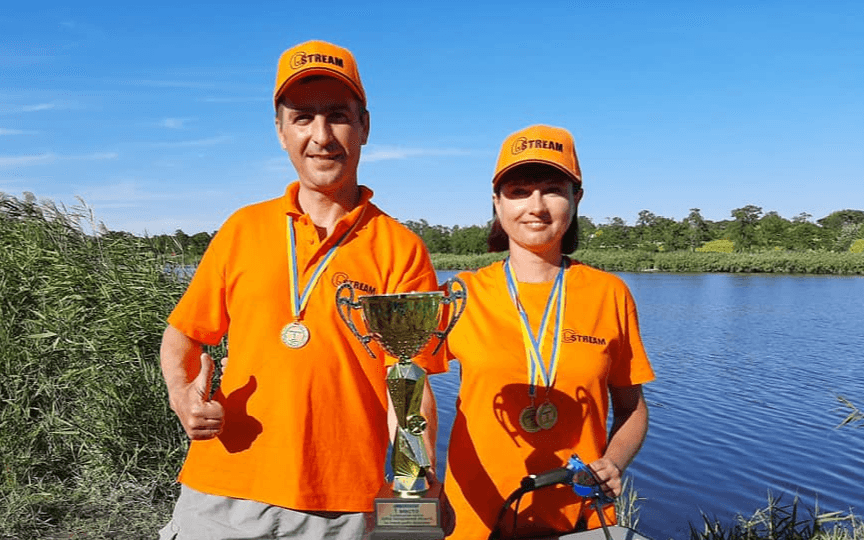
I kept bragging to all my friends in my dreams: 'See, Ira is alive'
A resident of Dnipro lost his wife in a strike on an apartment building strike. His story continues two years later
Oleksandr Bulhak07/03/24
A resident of Dnipro remembers his wife, killed in Dnipro in a strike on an apartment building
Oleksandr and Iryna Bulhak had been married for 22 years and lived in Dnipro. They were professional anglers who competed across Ukraine. When Russia struck a high-rise in Dnipro on January 14, 2023, Iryna was at work in a fishing store on the building’s ground floor. Oleksandr was fishing nearby and came immediately after the explosion. For several days, Oleksandr searched for his beloved wife’s body.
Attention! Translation was done using AI, mistakes are possible
АП: At the beginning, please introduce yourself, tell us your name, what you do, where you're from, so we can introduce you.
АБ: Bulgak Alexander.
АП: You live in Dnipro, correct?
АБ: Yes-yes.
АП: Tell me, please, what do you do? You don't have to name the exact place, just the field of activity.
АБ: Well, let's say it like this, at the moment without work. Well, officially, so as not to... this...
АП: Okay, maybe then what you used to do or your main sphere of interests, let's say? So we can somehow introduce you.
АБ: What I did - I worked in a fishing store.
АП: Aha, I understand you. And now you're also searching, as I understand? Hello? Hello? Hello? Maybe I'll try to call you back? Or you call me back?
[...]
АП: We stopped at you introducing yourself. Tell me, can we introduce you as a professional fisherman? As I understand, you're involved in fishing?
АБ: I yes, I'm a sport angler.
АП: So we can say that you're a sport angler, a professional angler?
АБ: Well, yes.
АП: I understand you, thank you. It's very valuable that you're ready to talk with us after what happened... After Irina's death. How do you feel now, and generally how is your condition now?
АБ: Well, how... If I can say so, then more or less, but I still can't believe it. Just somehow... I don't know, I can't say my condition so specifically.
АП: If any questions seem too heavy, too difficult for you, you can stop me at any moment, and...
АБ: Yes, well, I understand.
АП: Let's probably start with the story about Irina in general. Tell me, please, how long were you together?
АБ: 22 years together. 20 years of official marriage would have been in October this year. All the time together, she was also a sport angler. We participated with her in all kinds of feeder competitions. We traveled around Ukraine, to different cities for competitions. This was our hobby, passion, well, generally, well, somehow... Constantly together. It's good when husband and wife have the same passion. Somehow together all the time.
АП: Do I understand correctly that you also worked together in this fishing store?
АБ: No. We worked in the same area, next to each other, but were competitors. I worked in a different fishing store.
АП: Wow, nothing! And both stores were located on Pobeda?
АБ: Yes, on Pobeda, just about 400 meters from each other.
АП: Unbelievable!
АБ: Well, when this happened, I wasn't working in the fishing store at that moment anymore. I then just brought Ira to work and went fishing, roughly speaking, a kilometer and a half from her store. To the ice, went winter fishing.
АП: Do I understand correctly that you hadn't been working in the store for a long time at that moment? Or you weren't working on that specific day?
АБ: No-no, I haven't been working in the fishing store at all since November.
АП: I understand you. You started talking about the day when the tragedy happened. Let's try to reproduce it in details. Do you remember how it began, how your morning with Irina went in general?
АБ: Of course-of course, I remember. Everything as usual. We woke up, I got ready for fishing, she got ready for work. We went, I brought her to the store. We had coffee in the store, talked, and around, probably, 10 in the morning I went fishing. Well, it's nearby there, literally a kilometer and a half to two kilometers from her store. That's the last time I saw her. She still called me, then called back around the beginning of four in the afternoon, said I should get ready because ракетна небезпека. How is that in Russian?
АП: Alert.
АБ: Missile danger. And I told her that's it, I'll be coming soon, and when I was leaving the ice, this explosion thundered - and the flash, and I saw everything. I saw smoke behind the trees, but I just couldn't think that it flew right there. When I drove up... Well, I was still calling on the way when I had already driven away. There was no connection, but it's usually like that with us: when there are strikes, the connection glitches. When I drove closer, there... Well, it was just indescribable.
АП: You were calling but couldn't get through to her, did I understand correctly?
АБ: Yes, of course-of course.
АП: You said that Irina called you around half past three. That is, right before the explosion?
АБ: Well, practically. Maybe not at half past, maybe 10-15 minutes to four she called, yes.
АП: What did she tell you?
АБ: Well, she says: "Kysya [editor's note: pet name], come on, this," she says, "get ready, because, this, ракетна небезпека [editor's note: Ukrainian for 'missile danger'], come on." I say: "I'm getting ready now, I'll be leaving." Well, I was going to her after fishing, I thought I'd go to her, sit with her until the end of the work day, and together we'd go home. Well, like that. And it turned out like that.
АП: So you were supposed to go to her to stay in shelter, as I understood?
АБ: Yes-yes-yes. We usually, when there's an air raid alert, go to the back room. There are no windows, no doors, more walls. And it turned out that there, where she was hiding, the explosion thundered - right above her head. She ended up at the epicenter of the explosion, because it was a cumulative missile. Well, I think you know what that is - cumulative. It burns through... it flew in from the attic, from the top of the house and exploded already around the second floor. And the store was located on the first floor. And it exploded right in the place where Ira was hiding. She thought and everyone thought that this was the safest place, that there are no storefront windows, nothing.
АП: Is this some kind of basement room?
АБ: What-what?
АП: Is this some kind of basement room where she was hiding?
АБ: No-no, this isn't a basement room, it's just a back room in the store.
АП: When did you see the explosion? Can you tell a bit more in detail about this moment? You were still on the ice then, right?
АБ: Yes-yes-yes. I first saw the flash. I crouched down on the ice, closed my eyes, because I understood that in a couple of seconds there would be a bang. And the bang happened, immediately thick black smoke poured from behind the trees. Well, I left the ice, started the car and drove. Something like that.
АП: And you were fishing on the Dnipro?
АБ: Yes, on the Dnipro.
АП: Tell me, please, what happened next when you arrived?
АБ: When I arrived, the police had already managed to block traffic on this street. I parked the car on another street and ran to the store. There literally 300-400 meters, already running.
АП: What happened next?
АБ: Next I saw all this, this smoke, cars like cigarette paper, completely burned, which were standing near the store or even driving on the road, there were also cars without windows, without everything. There was no house as such, no entrance to the house, everything under... A pile of concrete, and this all, well... Everything was, as they say, up to the level of about 4-5 floors. This pile of concrete.
АП: I talked with many people who suffered in Dnipro, everyone talks about different things. What were you thinking at that moment when you saw what happened?
АБ: I thought that this was already it, the end. Well, simply, well I was just shaking all over. I, well, I don't know, I had panic simply.
АП: What did you do next? Did you try to somehow clear...
АБ: Yes, I tried. There were still few emergency workers then, then people started clearing these rubble. There was acrid smoke, specifically from rocket fuel that was still burning. They gave us respirators, these disposable ones.
АП: Who?
АБ: Emergency workers, police, everyone. We were all in one pile. Then I saw two military men with a dog and ran after them, barely caught up with them. Asked if they're looking for people or not. They said the dog is looking for people. I explained that I have on the first floor, in the store, my wife. They, without saying a word, say: "Let's run." Well, we ran, came to the store. They asked me to stand nearby. They said the dog smelled someone, specifically there, under the rubble, but they can't say... The dog won't tell them if it's a living person or dead. They started trying to dig, but after, well... To get to the back room there you had to dig through two more rooms. And after I raised my head up and saw from the second floor the ceiling cracked and sofas hanging from a residential apartment, I understood that clearing rubble should only be done from above.
And then, that's it. Everything was already clear that... I, honestly speaking, thought it wouldn't get worse, but it was worse later when I couldn't find Ira for four days. Then we were already thinking by body fragments somehow, by DNA [to find her], although DNA tests now take very long, up to four months. When we found Irishka on the fourth day, then, honestly speaking, this [was] the first night that I slept. My soul calmed down a little, because I could at least bury her. They found her last. At the forensic medical examination we registered then: morgue, forensic medical examination. We were at identifications all the time. Hello?
АП: Yes, I hear you. I'll clarify one point. You said you came to the store with the rescue workers. So the store partially survived? Was it possible to enter?
АБ: Yes, the entrance to the store survived, the sales floor survived. Well, how it survived - no, it's impossible to say. Just the walls were whole, and everything that was inside the store, this was all completely mangled, mutilated. If she had even been in the sales floor itself, it seems to me she wouldn't be there either.
АП: So you went into the hall, looked up, understood that you need to clear rubble from above because everything could collapse?
АБ: Of course, yes-yes-yes. Well, not that everything could collapse. Imagine a pile of concrete up to the level of about 4-5 floors. What kind of weight is that? How can you pull concrete out from below? No way. And then, when a large number of emergency services arrived, they kicked all of us, civilians, out, because very heavy smoke started. And they started working around the clock themselves.
АП: You said that practically immediately the dog detected someone.
АБ: Smelled, yes.
АП: What happened next? Did the rescue workers start clearing something in that place?
АБ: No, we just told the rescue workers that there's a person down there. They said that at the moment we can't get through because they were clearing rubble from above. They're right in their own way. It's even logically understandable.
АП: When did you understand that Irina most likely died?
АБ: Well, if I'm being honest, probably in the very first minute. But there was, hope remained, that maybe she left the store to get some air, somewhere the blast wave threw her, and maybe they took her to an ambulance. This was the only hope. We drove around - both we and our friends, athletes, organized - hospitals. Everyone was asking, everyone believed, everyone waited for some positive result, but no, it didn't work out.
АП: Can you tell in a bit more detail about this? You went in there with rescue workers into the room, understood that you need to clear rubble. What happened next? Did you still stay with the rescue workers or did you leave immediately?
АБ: Well, we still stayed with the rescue workers for about ten minutes. Then, I'm telling you, all civilians, ordinary people, rescue workers, emergency workers, drove away. They said to go behind the barriers because of very heavy smoke. They started putting it out with water, which hardly helped, because the smoke was coming from below. At the same time, a lot of equipment arrived. They started sifting through all this, collecting from above, sifting, looking for living people. They found living people, they found human remains, they found body parts. Sometimes they would stop movement - well, not movement, but the sound of generators that worked for lighting - to hear if someone there maybe made a sound or something else. So there would be dead silence. Then the equipment would turn on again, and again they continued working.
АП: What did you do next after you left the room?
АБ: My brother came to me with his wife, and we already together helplessly watched what was happening. Also my friends came, who went to identify bodies that they extracted from there. They wouldn't let me go there - not the emergency workers, but friends. They just say: "Stand here." They themselves went to identify right there on the spot with emergency workers, but Ira wasn't there. And this continued for three days.
АП: You didn't leave from there for three days?
АБ: No, I left because of curfew. I left, we went home, but not to my place, to my brother's. I lived at his place those days. Then in the morning we went to the forensic medical examination to identify bodies that were already delivered there. Well, no-no-no-no, she wasn't there for three days. On the fourth day a lieutenant called, a girl who's a forensic expert there, said: "Come." And we were already approaching there. - "Come, this, I think, is yours." Well, I identified her only by clothes.
АП: Was this at the site, was this in the house? Or did you go to the morgue?
АБ: No-no-no, this is the morgue, this is forensic medical examination. They don't let ordinary people into the morgue. Now they show everything on computer, by photographs. I identified the clothes completely by photographs. Then they asked me to leave, and my brother with his wife already identified the body remains, so to speak.
АП: So they already showed them live, yes, everything?
АБ: No, also all this on photographs. My brother saw live when we were already taking, when we were burying Irishka. That's when he with the morgue, saw everything-everything.
АП: I understand it's difficult to formulate here, but can you tell what condition you were in during these three days? What was it like?
АБ: This I... I can't even describe this condition. At that moment I already wanted her to be found, alive or dead, but for her to just be found. Because I had to understand that she didn't evaporate into air, didn't burn completely. You know, as they say, it can't get scarier. But it turns out, there is where it's scarier, when you have complete uncertainty. When there's no person, no body of a person and nothing at all, and everyone knows she's there. The worst thing is this uncertainty when a person has disappeared. That's why I'm telling you that when we found her on the fourth day, that was the first night when I fell asleep.
АП: Before that you couldn't fall asleep?
АБ: Yes, I, well... My soul simply calmed down because we still found Irishka, that we'll bury her, that I'll have somewhere to come talk with her.
АП: Tell me in more detail, please, about the funeral. How was all this?
АБ: The funeral? City authorities said for us to give all the data, which cemetery you want to bury at. Any cemetery, they said, within city limits. They provided the funeral completely: both transport, and wreaths, and coffin, and place at the cemetery. This was all at the city's expense, at the expense of city authorities. There were about 300 people at the funeral. We buried at Zaporizhzhia cemetery in Dnipro.
АП: 300 people, do you mean at Irina's funeral, or were there other...
АБ: Yes-yes-yes. At Irina's funeral.
АП: These were your friends?
АБ: Yes-yes. These were all our friends, relatives. Those I didn't know personally, these were Ira's classmates, but they came, introduced themselves, that these are classmates.
АП: And when did the funeral take place?
АБ: When was the funeral?
АП: Yes-yes-yes.
АБ: On Friday. On Wednesday we found Ira, we buried Ira on Friday. I already forgot what date it was - 20 or 21. We buried, and on Sunday already...
АП: On Sunday you what?
АБ: It was 9 days.
АП: I understand. You said that your fisher friends helped you search, go to identifications, yes?
АБ: Yes.
АП: Can you tell in more detail: do you have some kind of community, or how is this organized?
АБ: Yes-yes-yes. Well, we have a group in Viber, in Telegram, where we all communicate. And in general we meet at competitions and just with each other, we visit each other. Helped very well... Lesha Zaiko, this is a repeated world champion in sport fishing. By the way, yesterday our Ukrainian national team in Estonia took first place at the world championship in jig fishing. Well, this is winter fishing. And Lesha Zaiko, he became world champion both individually and in team.
АП: Nothing!
АБ: Lesha Zaiko helped very well in terms of information, because I didn't have time to call everyone, ask someone. I communicated, mainly, by phone with Lesha Zaiko and Tanya Borisenko, who organized everything specifically there, in groups, Facebook, in Viber, through all our communities. They organized people who helped, because physically I myself would have been with my brother, but we wouldn't have been able to cover what my friends covered.
АП: Can you tell in a bit more detail what they did?
АБ: What did they do? They went to hospitals, went around all hospitals, hospitals that had morgues, hospitals that didn't have... All hospitals were completely covered. Plus, well, I, of course, didn't want it, but they then on Facebook... Then already, after we found Irishka, they posted my card details. All of Ukraine helped me. Thank you everyone! Because we have fisher friends not only in Dnipro, but throughout all of Ukraine.
You yourself understand perfectly that there aren't that many women sport anglers. Therefore everyone loved Ira, everyone knew her. She was such, I can't say she was a blogger, but at least on Facebook she was constantly active, wrote publications. And plus we personally knew many of each other: both Kharkiv people, and Kyiv people, and the western part of Ukraine. We went to competitions in Ternopol, and in Kyiv, and in Kharkiv, and in Kremenchug - we traveled all over Ukraine. And therefore many knew us. We also knew many. That's how all of Ukraine, thank you to them very much, helped me financially, because I only these memorial dinners took a very large sum of money. Plus I also now bought currency, set aside for Irishka's monument. There's also such an unspoken agreement that, if everything will be normal, in spring we'll organize competitions in honor of Ira, and there will be a collection of some funds also for the monument. Well, and the monument, in a year we'll put up.
АП: And competitions in her honor, did I understand correctly?
АБ: Yes, of course-of course.
АП: Since we started talking in detail about this bright trait of Ira, her passion, can you tell in more detail how this passion appeared in her life? As I understand, this influenced your acquaintance too? Or you started fishing just...
АБ: No, no.
АП: Tell me, please, in more detail how she got passionate about this.
АБ: We went fishing like ordinary fishermen. Sometimes we'd go to nature, catch some fish with a float. And then somewhere in 2016 Ira was already taught to fish with bottom tackle, with feeder. And she really liked this. I already knew, like that, a little bit, at the level of an amateur, ordinary fisherman. Ira liked it, then she somewhere on Facebook read that competitions are held. She wrote, is it possible for amateurs to participate there. Well, and people wrote: "Of course, it's possible and necessary." That's how we came into sport, purely spontaneously. Yes, at those competitions we took second to last place, but it was excitement, this was generally already everything differently. We met many people there, and that's it, and it started rolling. Since 2017 we've been in sport. Basically, it was Ira who dragged us into sport, it wasn't me... Oh, повітряна тривога [editor's note: Ukrainian for 'air raid alert'], damn.
АП: Should we stop?
АБ: No-no, I'm fed up. They're attacking and attacking, bastards.
АП: We can interrupt if necessary.
АБ: No-no-no, I don't hide anywhere anymore, I don't care anymore.
АП: Aren't you afraid?
АБ: Only a fool isn't afraid. Well, and I'm probably a fool. I already, well, honestly... Well, so what? Ira died from what she was most afraid of. She was always yelling at me during air raid alerts: "Why are you, I'm sitting in the partition, and you're lying, watching TV, all this." I say: "Well, Ir, well it's quiet for now, well, nothing's exploding." It started exploding, then I'd already hide, and so... And Ira always hid. I'm telling you, what she was most afraid of, that's what killed her.
АП: Do you think if she hadn't hidden, it could have been different?
АБ: Well, I can't say that, because I was in the sales hall. If she hadn't hidden, she would have been in the sales hall. There was nothing living there, except for walls. Therefore, it seems to me, there wouldn't have been Irishka even if she hadn't hidden.
АП: We stopped at the fact that since 2017 you started professionally doing sport fishing.
АБ: Yes.
АП: You started participating in competitions, do I understand correctly?
АБ: Yes-yes.
АП: Why did Irina decide to work in a store? Because it was close to her passion?
АБ: Yes-yes, of course. She really liked it, and she lived by it. You know, work that brings joy, and not just getting a salary there, going to work and... This is also communication with people specifically about interests, this is also knowing goods more than you knew at some specific moment. This is all very interesting, cool. First of all, yes, this is what was dear to her soul.
АП: How long had she been working there?
АБ: She specifically worked in the fishing store for two years. Before that we worked together also in a fishing company. This is a company-producer of fishing baits. Also worked there for more than a year, company [name unclear Chivstrim? - editor's note]. And then after [name again] she went to work in a store. I still continued working at [name], after [name] I also went to work in a fishing store. But in a different one.
АП: Do I understand correctly, you said at the beginning, I'll clarify, you worked in the same building in stores?
АБ: No, not in the same building, 300-400 meters from each other, in the same area, on Pobeda.
АП: I understand. So these were different buildings?
АБ: Yes, these were different buildings.
АП: How was it for you to work in competing stores?
АБ: Excellent. There was something to talk about at home in the evening. Everything was excellent.
АН: Tell me, please, was Irina the only salesperson in this store? How was her workday organized in general?
АБ: Yes, she was one salesperson, but when she had days off, there was a replacement salesperson who worked those two days. And so she worked from 9 to 7 in the evening, five days a week.
АП: And Saturday - was this also her work day?
АБ: Yes, Saturday. She had days off Wednesday-Thursday. Saturday was a work day.
АП: Didn't you have thoughts to work together in a store, replace each other?
АБ: No, well how to replace each other? Then we wouldn't be able to go anywhere. And this way I arranged at my store that I have day off Wednesday-Thursday, she arranged at her store that day off Wednesday-Thursday. And we could go together, spend weekends: either go to parents or go to nature. And this way, if I replaced her, we wouldn't spend weekends together.
АП: I understand. She was a salesperson and communicated with customers, do I understand correctly?
АБ: Of course-of course, yes. Everyone loved her, all fishermen loved her. At first, of course, as soon as she started working, everyone was skeptical: "Oh, a girl in a fishing store?" But then, when they found out that she knows more than they do, they already with such respect everyone [treated her], even asked for advice and bragged. They communicated as equals, and everyone was interested in communicating with Ira.
АП: You said you had something to talk about after work. What did you usually discuss?
АБ: We discussed customers. Well, we didn't discuss who had what cash register, no. And so - this one came, told that, this one came, showed photos, what fish he caught, this one came, brought chocolate, thanked her for something. It, you understand, when interests coincide, then, in principle, there's always something to talk about.
АП: As I know, Irina entered university recently.
АБ: Yes-yes, Agricultural University, for the specialty aquaculture and water bioresources.
АП: How long had she been studying there?
АБ: This was already her second education she was getting. Her first education - she's a chemist-technologist, graduated with honors both bachelor's and master's. And then went to Agricultural University for master's. She should have studied for two years, and February 24th she should have had thesis defense on a topic that no one had ever defended in Ukraine. I don't remember the exact formulation of the topic, there like the influence of sport fishing on aquaculture, specifically about sport. She should have had a topic about sport fishing. Such a topic no one had defended in Ukraine yet.
АП: And February 24th, 2022 she should have had thesis defense?
АБ: No, 2023. Three days ago she should have graduated. She was always worried that she wouldn't manage, because you yourself understand perfectly, constant power outages - accordingly, you can't turn on the computer, nothing. And she worried that she comes home from work, there's no electricity, and she won't manage to collect information. She was collecting information, but didn't manage.
АП: Why was it important for her to get another education?
АБ: She really loved to study, very much. She's such a person. And especially she specifically entered the specialty that's connected with bioresources, with fishing, with forest.
АП: And what did Irina and you do before, before fishing became an important part of your life?
АБ: What did we do? We worked, went to nature, fished.
АП: I mean, what did you do professionally?
АБ: Professionally, specifically by work?
АП: Yes-yes.
АБ: We worked at companies. More than twelve years we worked together at a company [producing] everything for garden-vegetable garden and indoor plants. Company-producer of soil mixtures and everything for this: pots for flowers, soil fertilizers, seeds. We worked with her, and then went into fishing.
АП: And what did you do there? As I understand, Irina was a chemist? So she had some connected...
АБ: No, she just when she worked, she was only studying in chemical-technological. She's a financier. I was a regional sales manager.
АП: I understand. You told about Irina being one of the few women in Ukraine who professionally did sport fishing.
АБ: One of the few. As it turned out, there are also very many girls. Well, of course, many times fewer than men, but very many. And in Kyiv there are very many girl athletes, because there are different directions. There's spinning direction, there's feeder direction, there's float direction. The same winter fishing - there's jig.
In sport fishing there are very many directions. We were feederists, although, let's say, at festivals, at amateur competitions Ira even took third place in float. We went with jig, also there amateur competitions, festivals, as we call them. In jig both I and Ira were in prizes. There was such, yes. And so, mainly, feeder direction we had.
АП: Can you tell in a bit more detail what this is, because I think those who don't do it don't know.
АБ: What is this? Well, where does the word feeder come from? If you type in search engine the word "feeder", you'll get fat women. Feeder means to feed. This is bottom type of fishing, this goes feeder, leader, and you constantly need to feed the fish. This isn't like you throw a float and wait for a bite. Or threw a spring - also like bottom type of fishing - but this is completely different. Also you wait for a bite. Here constantly, every minute-two, recast goes, and you feed-feed one point and get result.
АП: And how many women, approximately at least, do sport fishing in Ukraine? You said not that many...
АБ: In Ukraine? I can't say like that. I can say about feederists. In Kharkiv, I know, girl spinners, in Kyiv there are spinnerists too. Feederists - well, up to twenty, maybe.
АБ: And men? For comparison simply.
АП: Well, thousands. Specifically in Ukraine, yes. In our Dnipro sport fishermen, purely even feederists, I don't take spinners or anyone else, more than 100 people. These are those who practically constantly participate in competitions. More than 100 people just in Dnipro. And if you take all Ukraine, this is thousands.
АП: Unbelievable. So for 100 people only 20 women?
АБ: Well, there, two-three, I think, yes [editor's note: most likely Alexander means that in Dnipro there are two-three women anglers, and in the whole country 20].
АП: Nothing! You said that at Irina's funeral there were more than 300 people. Do I understand correctly that most of them are your friends in fishing, your colleagues?
АБ: Oh, now I'm starting to hear you poorly.
АП: Hello-hello? Can you hear?
АБ: Yes-yes, now yes.
АП: You said that at Irina's funeral there were more than 300 people. Can you hear? Hello?
АБ: Yes, at Irina's funeral... Hello? I hear.
АП: There were more than 300 people. Most of them were your fisher friends?
АБ: Well, most yes. And relatives, of course, were there, but most from places of work, both previous and current. Well, let's say like this - 100 fishermen for sure were there.
АП: Nothing, wow!
АБ: Also from Zaporizhzhia guys came, from Kryvyi Rih guys came, also athletes.
АП: You said about relatives - I saw a short comment from Irina's mother.
АБ: You saw the video from Ninth Channel, yes?
АП: Yes-yes. How did you...
АБ: She accidentally got there, she didn't know that something was being filmed there.
АП: How did you manage to communicate with relatives in general and what is their condition now?
АБ: We communicate to this day, practically every day with mother-in-law we call each other. It's hard, of course, and she cries. This is all, well... As she tells me, that it's harder for me, because still Ira hadn't lived with them for more than 20 years, we just visited. And I was with her every day. Well, in any case, parents are parents.
АП: Did you tell them about what happened? Or did they find out some other way?
АБ: I couldn't get through to mother-in-law at that moment, because there was practically no connection. I somehow managed to call Marina, this is her sister who lives in another city in our oblast. And Marina then called back to mom.
АП: Did you communicate with Natalia, the store owner?
АБ: Of course-of course, we communicated. Very good girl, well done. She's not the owner, she's just director there, as I understand. Good girl - well, woman.
АП: So you communicated already after the terrorist attack, after the tragedy already with her?
АБ: Of course-of course, yes. We keep in touch. She had birthday day before yesterday, also we texted, I congratulated. We communicate, of course. We're all people, and all people should communicate.
АП: How is your life organized now without Irina?
АБ: Well, now I'm trying to work. They offered me work - to manage an online store. Second week - I can't say I'm training, I know how this works. An acquaintance offered. That's why I said that now I'm like unemployed, officially I don't work. Now I'm already working, but... I manage an online store.
АП: What allows you to hold on? You sound like a very calm person, surely it's not easy for you. How do you hold on in this situation?
АБ: All my friends don't let me relax much. I don't even mean relatives, that's obvious. Everyone constantly calls, supports. Not that they support, console or something else - that's even worse. We just communicate, talk about different topics. Somehow this all distances. The worst for me is night when I remain one-on-one with myself. And if I didn't fall asleep right away, then it might be hard to sleep for long. And if right away - it happens - I fell asleep, then thank God, як то кажуть [editor's note: Ukrainian phrase meaning "as they say"].
АП: What do you think about when you can't fall asleep? Hello? Hello?
АБ: Hello, again I hear you in fragments.
АП: Yes-yes-yes, you were saying that the hardest thing is night when...
АБ: Hello-hello, yes?
АП: You were saying that the hardest thing is night when it's hard to fall asleep...
АБ: Well, I'll tell you like this, until this house falls on me 20 times... It happens that I can't fall asleep, all variants are worked through in my head, my heart constantly skips. Very often at night this house crashes on me.
АП: Do you mean that you dream about it?
АБ: No, I don't dream, no. It just works through in my head while you're lying. What if like this, what if like that...
АП: You mean you think what would have been if you had been there together?
АБ: Well, if instead of Ira I had been there. If instead of Ira I... Well, it just all somehow in my head, I'm telling you that...
АП: You were saying that you planned to come to Ira and wait out...
АБ: Oh, can you call me back, because now something with connection...
АП: Yes-yes, let's, now.
[...]
АП: You were saying that on the day of the explosion you were going to Ira, you planned to spend the rest of the day together in the store. Was it like this before, that during alerts you came to her and together experienced the alert?
АБ: Oh, what's happening...
АП: Can't hear well?
АБ: Well, I, of course... I kept thinking that ten more minutes, and we would have been together, at least there somehow... Well, I don't know what I thought, I don't know. I thought about this, yes, that ten-twenty minutes, and... If I had come a bit earlier, we would have been there together.
АП: When full-scale war began, didn't you have thoughts, maybe Irina had thoughts to leave when there was such possibility?
АБ: Leave?
АП: Yes-yes-yes.
АБ: No, definitely no. We decided to be at home. I went to military commissariat, but they told me to wait. Basically, no, we didn't have such thoughts.
АП: You went to military commissariat, you wanted to register? Can you tell in more detail?
АБ: Of course-of course, yes-yes-yes. Well, they said: "Зараз не на часі, чекайте" [editor's note: Ukrainian for "Not the time now, wait"]. Meaning, now is not the time, wait, we'll call you if we need you.
АП: Did you want to register for territorial defense? Or go to the frontline?
[...]
АБ: Well, not territorial defense. I didn't know yet where I wanted, I just went to military commissariat. I knew that I needed...
АП: How did Irina react to this decision? АБ: That was a normal decision. In principle, well, how else? She wasn't very happy about it, of course, but she didn't try to talk me out of it either.
АП: I see. You talked about your plans, said that you want to organize a championship dedicated to Irina. Can you tell us a bit more about this in detail?
АБ: So far it's only in words, nobody knows any more details yet, because right now plans are being made for today. The main thing is that nothing flies in again anywhere or something else. In general, the plan was to make some kind of tournament in memory of Irinka. But that's already for spring, for summer, when it gets warm already. There's no concrete information yet. It's just like that, in words, in thoughts for now, in plans.
АП: You mentioned that you want to put up a monument. Do you know what kind of monument this will be?
АБ: Not yet. We'll talk with friends, decide how to do this in a human way, so it would be beautiful and good. Not exactly a monument, like a real monument. Otherwise you'll imagine something now, like it's a monument to Pushkin. No, an ordinary monument, just not the cheapest one, but something more already [serious].
АП: Probably the last question at this moment. First of all, do I understand correctly that when you went to the military recruitment office, they told you to wait and in the end never offered you anything?
АБ: Not yet, I'm still waiting. Nothing terrible, because many people are waiting, that's normal. We don't have that here, where they grab everyone in a row.
АП: You talked about fishing. Despite the war, fishing still continues? People continue to fish?
АБ: Of course. People live, yes. Thank God, thanks to our Armed Forces of Ukraine, that in Dnipro it's more or less normal except for all these missile strikes that are happening all over Ukraine.
People go fishing, people live their lives, go to work, make some plans. Well, they try to live. It's not like everyone sits in bomb shelters and nobody walks around the city. Life continues: public transport runs, and theaters work, shopping centers, everything works. It's just that this kind of crap happens.
АП: How is your life organized now without Irina? Can you tell us in a bit more detail how much your day differs, if such a question is appropriate at all?
АБ: Well, how much does it differ? I don't know, if I were to say it more correctly, I had my previous life, and now some kind of new life has started. Nothing changed in my work day, just my thoughts changed. Well, somehow... Well, honestly, I can't explain, but it's just already a different life I have now today. I need to get used to it. It seems like I'm living in the same city, but I have the impression that I went somewhere very far away and that everything is new for me now. Now I need to somehow restructure my head, continue living.
АП: You said your thoughts changed. How, in what way?
АБ: Well how what way? I honestly can't even explain. Well, just... I still can't realize that Ira is gone. And on the other hand, the other half of my brain says that, well, yes, Sash, you're alone now. So, somehow... Right now I'm having a breakdown of my brain. When it breaks down, then maybe it'll become a little easier, specifically in the moral sense. Right now, of course, all this is hard. I still, well... To realize all this... It's just as if she went to Poland and should come back soon. Well, but that won't happen anymore.
АП: Do I understand correctly that you didn't have children?
АБ: Yes, we didn't.
АП: Thank you very much for the conversation. I understand that this isn't easy.
АБ: Thank you.
АП: Thank you for sharing.
АБ: At least, talking about this is better than just staying silent and keeping everything inside yourself. So thank you.
АП: It's valuable to hear that this somehow helped you, maybe.
АБ: Yes, yes.
A resident of Dnipro lost his wife in a strike on an apartment building strike. His story continues two years later
A resident of the village of Hroza about the Russian strike that killed 59 people
A nurse from Dnipro about her only son, killed in a Russian bombardment
A Ukrainian man lost seven family members in one day. He couldn’t bury them for over a year
A teacher lost his wife and two children in the shelling of their home in Dnipro
Dasha’s story of searching for her mother after the shelling of a shopping center in Kremenchuk