Instagram Post Text
Attention! Translation was done using AI, mistakes are possible
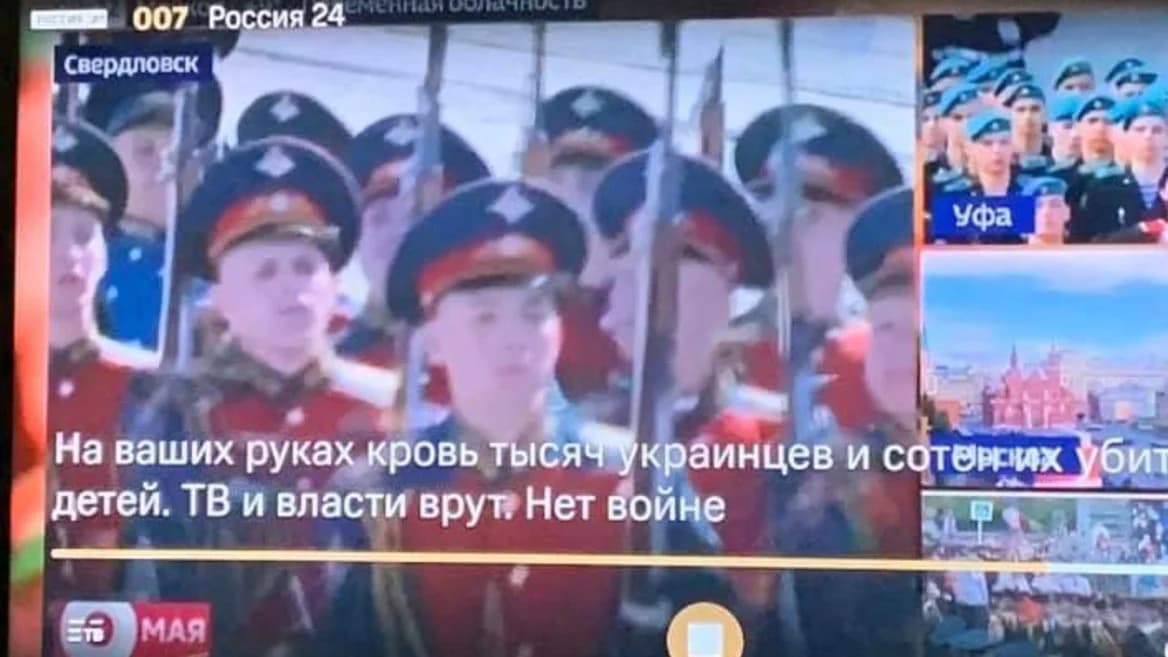
Natalia (name changed) is a news producer at a Russian television channel. She recently contacted the “Helpdesk” chatbot and agreed to describe how and by whom Russia’s notorious propaganda is made.
Our propaganda is so primitive — there are no NLP techniques (neuro-linguistic programming — S.P.), it’s not some kind of hypnosis, it’s simply lies. Brazen, unconcealed lies. If you just watch two consecutive segments, you can tell that something’s off.
A huge number of people believe it, because it’s easier: you don’t have to question anything — they hand you a ready-made worldview. I absolutely do not absolve myself of responsibility; of course I’m complicit in what’s happening. But on the other hand, I don’t understand why people can’t construct basic logical chains.
I didn’t have a sense that war would start. At the channel, we’d become so accustomed to this constant background noise: Ukraine this, Ukraine that. In every segment, we’d trash it. In the newsroom, it was openly discussed: “Why the hell are we even talking about this? Don’t we have our own problems?”
In 2014, I made an unsuccessful attempt to leave, when the Donbas situation started. But the amazing thing is, when you work at a federal channel, you basically have a brand on your forehead, and no opposition channel will hire you. For several years, I couldn’t find a new career path. During that time, I racked up an enormous amount of debt, and I had to go back to the news, which fortunately had calmed down a bit by then. The focus had shifted toward human interest stories.
The theory of small deeds helped you feel like you were doing something good. An enormous number of people call us at the channel asking for help. And we write an official media inquiry to, say, the local administration of some small town that has totally neglected some pensioner. If the problem isn’t resolved, we show up and do a segment — which the local authorities don’t like. And suddenly that pensioner’s elevator starts working. When you realize you can change something for the better, the scales balance out somewhat.
After the 24th of February, everything I do lost its value. I started taking antidepressants just to somehow cope.
I spoke with a relative — she’s 80 years old. Despite the fact that I work in television and can explain exactly how these fake news stories are produced, she won’t take it in. She’ll listen to Putin’s speech. Putin will say things are bad in Ukraine, and she’ll believe him. I feel that I’m part of the force that creates evil.
Once a week, I believe, there are editorial meetings at the Kremlin, where they issue directives on which direction to work in next. Every month, the goal of the “special operation” changes — a week ago we were saying one thing, and then the boss comes out and says something different. Everyone immediately pivots and starts supporting our new objective. It’s pure Soviet-style thinking.
A year or two ago, we were told to stop mocking Ukraine: it’s an independent state, leave it alone. The segments became more or less neutral. At television, nobody makes independent decisions. Everything is controlled manually from above.
At the channel, a sadly large number of people believe in the rightness of what’s happening. There are huge numbers of employees under 28 who unquestioningly believe it’s all correct. I don’t think they’re innate super-patriots. I suspect it’s a lack of empathy. If their boss tells them that a certain Telegram channel isn’t ours and it’s all lies, they believe him.
Their moral compass is a bit skewed, if you can put it that way. They believe there are some Nazis in Ukraine. But if a mob of teenagers beats up a Black kid on the next street over, they won’t connect the dots that this is actually Nazism.
I try to talk to the young employees and explain things. For example: “Are you sure this was filmed today? Something collapsed, something exploded — but in the background there’s not a single green leaf, and it’s summer, there should be green leaves.” And you try to do this kind of fact-checking for them.
When you force them to use their brains, to analyze incoming information, there’s hope that slowly, drop by drop, water wears down stone. I hope for that. Because you can never say anything head-on to a person who’s convinced of something — they’ll just think you’re an idiot and stop talking to you.
Marina Ovsyannikova’s action was very brave. We discussed it actively. Many screamed that she was probably paid off and would now work comfortably in London. Now she’s being attacked by both those who support the war and those who oppose it. Colleagues look at that and understand: no matter at what stage they quit, they’ll be hounded from both sides.
After February 24, I transferred to a different department. In my current position’s agenda, there isn’t a single word about Ukraine. Recently I was producing a segment and caught myself thinking that it felt pre-war. Because, as our management says, people are starting to watch the war less. Ratings are dropping.
I think our television will face the same thing as our country. If the war ends, there will probably be purges. Most likely, they’ll flip and start saying: “My bosses made me do it.” You know, like an oath. If the conflict drags on and stays low-intensity, nothing will change.
I’m looking for a job, but so far without success. To change your career, you need money, you need training. 50% of my salary goes to my mortgage every month. It’s my only apartment, and I can’t sell it because I’d lose my residence registration.
My friends are sympathetic because they understand what I’m dealing with. What it’s like to live when you’re doing something you can no longer do. You understand that it’s causing harm — and you can’t stop.
I honestly don’t know what to do. If I had the financial means, I’d happily go work at an NGO. I’d like to do something redemptive for the soul.