Instagram Post Text
Attention! Translation was done using AI, mistakes are possible
The main instrument of propaganda is the television. I figured that if I could find the right words for a mass audience, at least some of them would start to think.
That’s more useful than doing DDoS attacks to knock out banks and websites. I had this internal question: why aren’t hackers trying to do something slightly more complex? Not just break things, but, for example, leave a message.
I started researching the topic and roughly understood how everything works. Besides video content, a television signal carries text information: channel name, schedule, current program description — it’s distributed in a more or less centralized way. I found the largest company responsible for generating and distributing these texts to telecom providers.
I had this ambitious idea that you could reprogram people. I planned to hack this company and replace the schedule with a certain message.
I had this fantasy that I’d actually de-zombify some people — the ones who live entirely on TV information. They’d see my message, and it would blow their minds, make them think. If even 1% of everyone who sees it reacts, that would already be a huge success for me.
Since I’m more of a tech person, an IT guy, I have trouble with crafting messages. I understood I’d break into the system, but what message did I want to send?
I was afraid to take on that kind of responsibility, imagining how massive the audience could be. I reached out to someone I knew — to help me with the message — and secured his support.
I hadn’t planned to leave — I thought I’d pull this off from Russia. But he strongly recommended I not do it from Russia. At the very beginning of May, I left for Europe.
The actual phrase only came together on May 8. It consisted of two parts. In the program title: “Blood is on your hands…” and in the description: “TV and the authorities are lying.” I made it that way in case one appeared somewhere and the other somewhere else.
May 9 was a Monday. I figured that from Sunday to Monday, the week’s schedule gets uploaded. I decided the substitution had to happen at night. If I did it earlier, they’d notice and fix it, but if I timed it right, the scripts on the servers would load my text and by morning it would be displayed to everyone.
At midnight, I started preparing. The final steps remained. I was preparing the server request — it would bypass the vulnerable code and, figuratively speaking, write the right phrase into the right database.
This was a practical action done blind. I’d roughly figured out how their server worked and where to write the data. But I wasn’t sure it was actually the right database.
There was a feeling of battle, a sense that I was delivering a strike — maybe that sounds too grandiose. I wanted it to land with maximum impact.
Based on my research of this aggregator’s clients, the message should have reached about 60% of devices across all of Russia. Cable TV, federal, broadcast, satellite. Tens of millions of subscribers.
On the morning of May 9, everyone’s watching the parade, the president’s speech. My message was supposed to appear around 6 a.m. At the last moment, right around six, I launched everything and went to sleep.
I woke up very late and the first thing I did was check various Telegram channels to see if it had worked. Fairly quickly, I saw screenshots of my action. A ton of screenshots, photos of TV screens, loads of media outlets had written about it. I was stunned at that moment — it worked!
I was slightly disappointed by how Sobchak wrote about it: that only “Smart TVs” had been hacked. I found a niche chat where telecom operators hang out. They were posting photos from different regions of Russia and different devices.
At that moment, of course, there was adrenaline, shock. I was simply amazed — the scale was enormous. It stroked my ego, and at the same time it was very scary — a sense that I’d misjudged the scale of the damage. I felt somewhat ashamed that people working in those organizations would suffer because of this. When I saw that Anonymous (one of the world’s largest hacktivist organizations — S.P.) claimed responsibility for the action, I felt relieved.
I felt like I’d accomplished something great. Like the whole world was talking about it — major foreign media wrote about it. A friend wrote to me: “I wish I knew who did this — they’re amazing!”
That faded. The buzz died down. I don’t know how effective it was or what it changed. I hope it helped by even an iota against the war. One action alone won’t do the job — it has to be regular interference.
Hacks like this take time. I’m researching several more resources and planning to carry out similar actions.
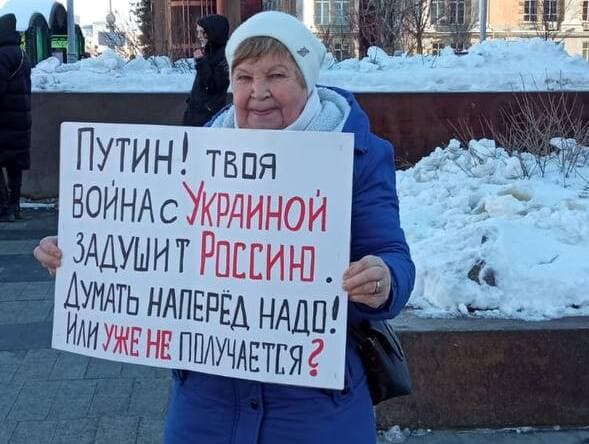
In my ideas for future messages, it’s less about the guilt of the Russian regime for the war and more about showing people with anti-war views that they’re not alone. If there’s a grandmother in a family who doesn’t support the war but is afraid of her pro-Putin grandfather and keeps quiet, that grandmother needs to know she’s not alone.
The work needs to focus on uniting people who are against the war and the regime. So they understand — there are enough of them that they don’t need to be afraid to collectively say “no”.