Back
Dad’s house is flooded, Mom left for Russia, my brother is in the Armed Forces
A Ukrainian woman on the consequences of the destruction of Kakhovka Dam for her family, her mother in Russia, and her brother at the front
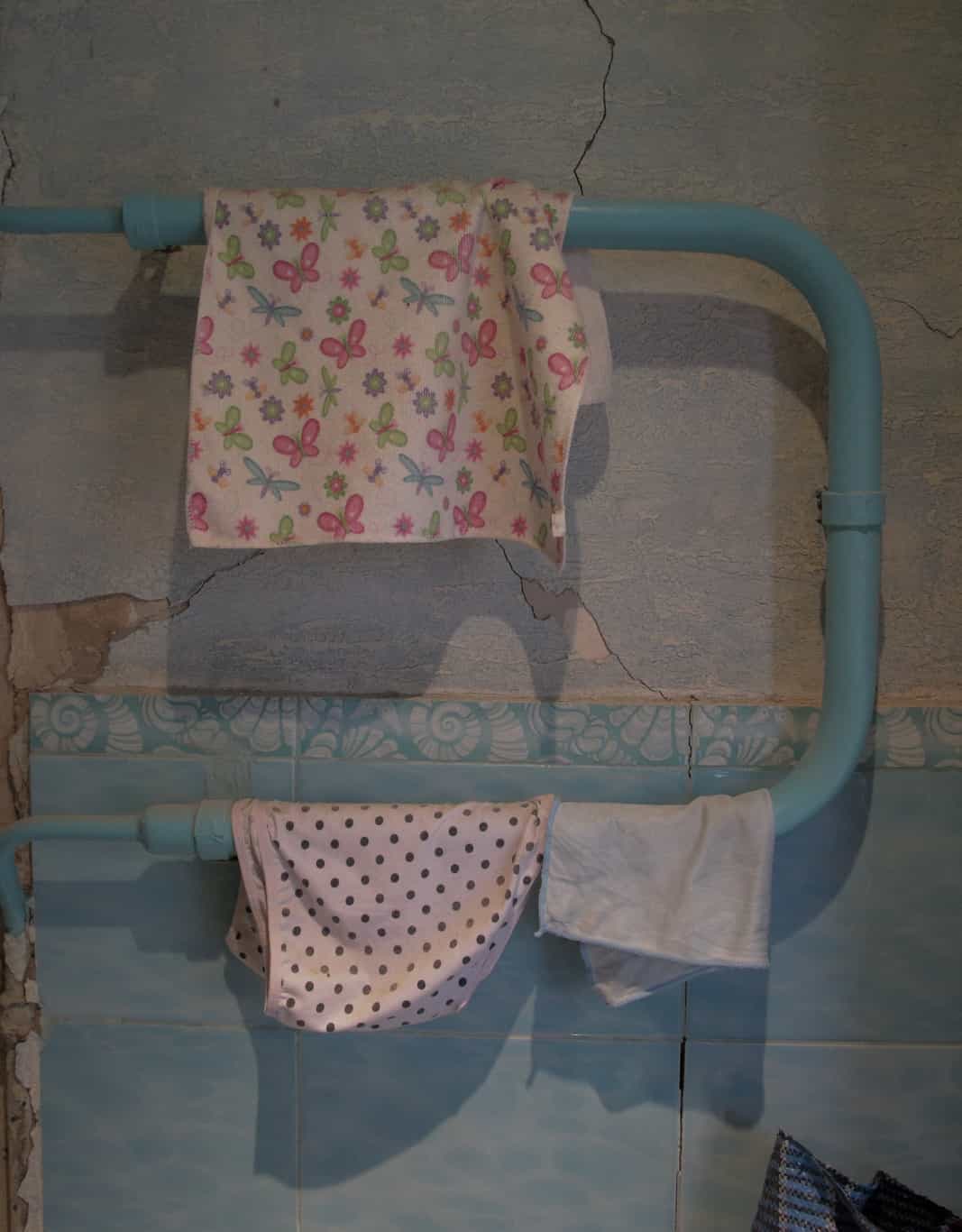
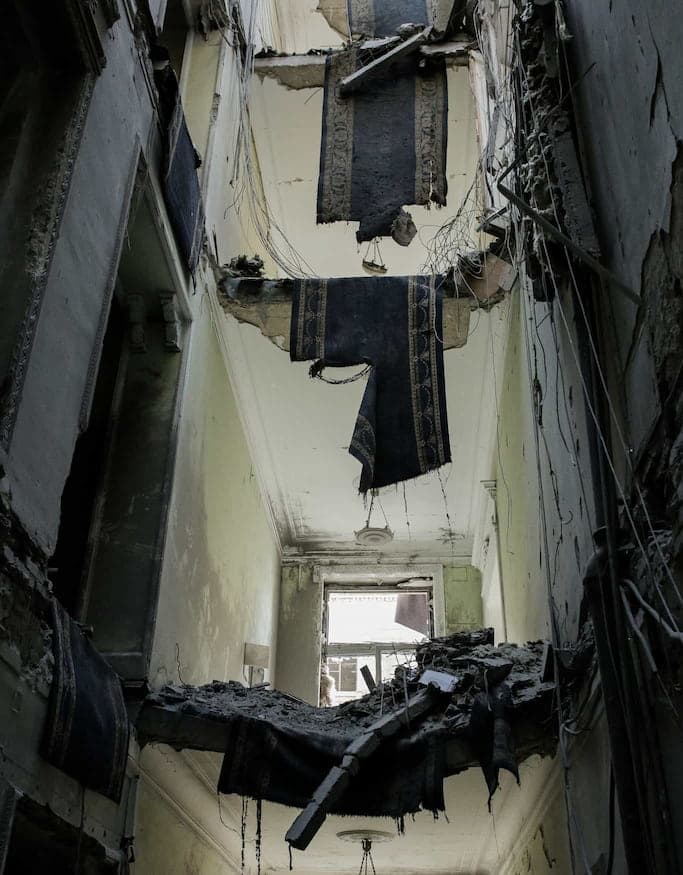
Maryna Sokolenko talks about the flooding of the Ostriv neighborhood after the Kakhovka Dam was blown up, where her father lives. He refused to leave his home and stayed in his apartment without electricity, water, or gas, watching his neighbors being evacuated. Maryna shares her worries from Sweden, where she works and supports the family, talks about her brother who has joined the Armed Forces, and about her mother who went to Russia and got a Russian passport. A story about a family divided by war.
Interview
Transcript
Transcript
Attention! Translation was done using AI, mistakes are possible
КА: Katya Alexander
МС: Marina Sokolenko
КА: Hello. Marina, hello.
МС: Hello.
КА: So, how can you hear me?
МС: Perfectly. And me?
КА: Yes, everything's fine. Before we begin our conversation, maybe you have some questions for me that you'd like to clarify?
МС: Yes. I don't quite understand where to start and whether you'll be asking any questions?
КА: Yes, of course, I'll be conducting the entire interview. Don't worry, I'll be asking questions. I can even tell you what we'll start with and how we'll continue. It'll probably be more comfortable for you that way. I'll start with what's currently known, what's happening now with your father. We'll discuss how much is generally understood/not understood about what's happening, what news there is or if there's none at all. You'll tell us a bit about him. And we'll go through your story: how you yourself left, what's with your brother now. In general, we'll start with your father, then continue with your family and generally talk about how you're all experiencing this, what state you're in now, what's happening with you. Let's probably start then, if everything's clear?
МС: Yes.
КА: Can you tell from the very beginning the story about how your father ended up in the flood zone. What is known? How did you find out about it at all?
МС: I found out about this – generally about the flooding, about them blowing up...
КА: The dam.
МС: ...this hydroelectric power station – I found out from my friend who is actually in Armenia. She was the first one in the family to write to me at seven in the morning: "Marina, what about your father?" I had just woken up from her message, didn't understand anything. Immediately went to the news. The very first thing my morning starts with is news. Went to the news, found out the news. Started calling father, but there was already no electricity, and we had been communicating before only via internet. I'm currently in Sweden, and calling is quite expensive, money constantly goes to father and brother. I couldn't get through to father. I had no money on my account, I had to wait several hours until my boss could top up my phone number here. He topped it up. I got through to father and say, I ask: "How are you? What are you? Where are you?" Because I thought he was already somewhere on the way to evacuation. But, alas, dad says: "No, I'm home, I'm not planning to go anywhere." I tried to convince him that he has a sister in Mykolaiv: "Maybe you'll go to Mykolaiv to your sister for some short time? You can come to me. You can go to any other city that you choose. I'll rent an apartment, you'll live there for some short time while this all ends." No, father is categorically against leaving his home.
КА: And how does he argue this? What does he say?
МС: It's his home. The most important argument for all this time, both when there was occupation, and shelling after the occupation, again, this flood, the main thing – he doesn't want, how to put this correctly, to be dependent... well, not to be dependent on me, but so that I don't spend my strength and life on him.
КА: That is – to be a burden?
МС: Yes, to be a burden. And he constantly says this. But I constantly answer that: "On the contrary, it's worse for me when you're there and I'm here."
КА: When approximately did you manage to get through, after how many hours? This was probably already daytime somewhere?
МС: Yes, it was daytime. I'll even say the exact time now – 11:30 my time. So by dad's time – 12:30. Our house is located on the Island, this is a neighborhood that's completely surrounded by water. And there, accordingly, it started flooding first. But it only started reaching dad's house yesterday, closer to lunchtime. Now he can't get out.
КА: When you called for the first time, what did he generally tell you about the situation on the Island?
МС: He was getting ready to go to work. Again, he read the news, didn't go. He found out from neighbors, because there was already no internet, no electricity. He found out from neighbors. We spoke briefly then, because at that moment I was very worried, I really hoped that he would leave after all. And most of the time I talked about: "Dad, let's have you pack your things and leave." But – no.
КА: So then the water hadn't reached them yet, right?
МС: The water hadn't reached yet. The water only reached yesterday, closer to lunchtime, specifically to our house. It's kind of located on a slight elevation. It only started approaching yesterday at lunch, meaning it was still dry there, even in the yard. And today there's already no half of the first floor.
КА: Can you tell how events developed? So you called the first time at 12:30. Father said it was still dry by the house and he wasn't planning to go anywhere. What happened next?
МС: In what sense – what happened next?
КА: When did you next call, for example? Did you somehow try to persuade him more, for instance?
МС: Yes, I called him already in the evening after work. He tries to act cheerful, to be positive, that everything's fine, but I can hear in his voice that not everything's fine. Our windows there don't face the yard, but the other side. There's just the road there, which was already starting to flood quite well. We have a store there, and it has these basement windows. He says that these windows are no longer visible. But he didn't even try to go out anywhere.
КА: So he said he's no longer leaving the house, right?
МС: Yes. I asked him: "Do you have food and water? Do you have everything you need?" He says: "Yes, there's still enough. And it will definitely last for ten more days."
КА: And did he think the water wouldn't reach the house?
МС: No, he didn't think the water wouldn't reach the house. He understands. He's on the fifth floor, I say: "How will you be there? It will flood everything." He: "Well, nothing. I won't go out anywhere, I'll sit at home. I've lived my whole life here. I've already lived my life." And when a daughter hears that, it's impossible to just endure.
КА: At this moment, when your father told you this, how did you experience it?
МС: I'm constantly crying. My whole family is somewhere: brother is at war, mom went to Russia, dad is constantly under occupation, under shelling. Sometimes, when I called dad, even before this accident, I heard impacts through the phone. And this is very scary! It's impossible to convey in words, impossible to even find such words, what you feel at that moment.
КА: And how do you cope with such a very heavy and traumatic feeling?
МС: Very hard, because I'm alone here. I work in a small settlement of 1600 people. The only entertainment here is my café, two supermarkets and a pharmacy. I practically don't go anywhere, don't communicate with anyone, except my friends who are scattered around the world, who are from Ukraine. And it's very hard! Sometimes you just cry for days. They almost fired me from work several times because I would start crying at work.
КА: And management doesn't understand your situation?
МС: Management understands, but not completely. Until you experience something similar yourself, you won't understand completely, I think.
КА: That's true. And you work in a café, right?
МС: Yes, I work as a cook. A small roadside café. I work as a Mexican cuisine cook.
КА: We'll return to that. Let's go back to the events that were happening now. On the evening of June 6th, father was already anxious and said: "I've already lived my life." This is a very traumatic, very scary phrase for a child, undoubtedly. At this moment what were you doing? Were you trying to find some information about this, maybe some volunteers who would still persuade father to leave?
МС: I know that he won't listen to other people at all. My father is like that, quite temperamental. If he doesn't listen to me, doesn't listen to my brother, then he won't listen to other people either.
КА: And how did you follow the news?
МС: I have Telegram channels. Kyiv Telegram channel, Kherson, also Lachen [editor's note: likely a reference to a news channel]. These are Telegram channels that I've been following since the first days of the invasion.
КА: The first day after they blew up the dam and the hydroelectric power station, were you sitting in the news all the time? Or were you trying to do something else?
МС: Not all the time. I worked that day. There are few people, I have no replacement, and I worked all the time. That is, I gave out an order, go outside to smoke, open Telegram channels. And so the whole day.
КА: So you called your father twice that day, right?
МС: Yes.
КА: And he categorically refused to go anywhere at all?
МС: Yes. Just the same as today. Just the same as yesterday.
КА: The next day – June 7th. When you called him, what did he tell you?
МС: June 7th – that's today for us...
КА: Yesterday.
МС: No, today is the eighth. Yesterday. He told how he watches how they evacuate other people. He tried to joke, like: "Everything's normal, they won't reach me, to the fifth floor."
КА: In the sense – volunteers won't reach?
МС: Yes. He's a fisherman, and I joked: "Well, you'll cast your fishing rod with a bag – someone will give you some water." He tries to joke around and not bring up this topic. First thing, when I call him, he asks: "How are you? How are your affairs?" I have the same days, every day, all this time here. I call to find out how his affairs are, whether everything's fine with him, whether he's alive, healthy, whether he ate today.
КА: And what did he tell about the situation on the Island already yesterday, the seventh?
МС: Yesterday, the seventh, he just told how he sees from the window how they evacuate other people. He wasn't going out into the yard anymore. And that's it. He tries not to talk about it.
КА: So he didn't tell you about the water level anymore?
МС: He did tell, and today he already told about the water level: seemingly it's already falling. But I don't really believe it, because I saw from videos – there it already reaches the trolleybus lines.
КА: Yesterday he again said that they're evacuating people and so on. The Island – this is the most flooded, as far as I understand, district in Kherson itself?
МС: Yes.
КА: Do you still have any acquaintances or relatives there with whom you could contact during these days?
МС: No, absolutely no one is there. In principle, no one remained in Kherson.
КА: Of course, very few people remained. On the second day, did your state somehow change? Did you try to somehow either distract yourself, or on the contrary, still find some ways to persuade dad?
МС: Again, I suggested going to Mykolaiv to his sister, but got the answer: "No, I'll be here. I have a full freezer of meat here, it will all spoil, – there's no electricity, no water, no gas. – how can I abandon this here?"
КА: So on the second day there was already no water, no electricity, no gas?
МС: There wasn't. On the first day there was still gas in the morning, but as far as I understood, they turned it off by lunchtime. There was no electricity or water already.
КА: You also worked yesterday, yes?
МС: Yes, yes.
КА: And your state was the same? That is, you worked and immediately went to read, monitor?
МС: Yes, went out to read, monitor. Sat and cried and went back to work.
КА: And today is the same kind of day, do I understand correctly?
МС: Today they gave me a short day, few people, and they let me go home.
КА: This isn't because of your state, but it just happened that way?
МС: It just coincided, because few people work there, three people, and there was no point for everyone to be there that day, because very few people. That is, I came, did some initial work, and they told me: "If you want, you can go home for the day off."
КА: And today what did dad tell about the water level? What did he tell? How did he describe what's happening to him? What did he generally say?
МС: He says that he looks out the window and sees that there were garbage cans standing there, and that there seems to be less water on them. By them he determines that there's already less water. He told what he cooked for himself. Again, he tries not to tell much about his feelings, about what he experiences, and about what's happening. I find out everything practically from the news.
КА: When you hear dad who gives you very contradictory information, in the sense that in those same news publics they write completely different things, and at this moment you literally can't do anything, you're sitting in another country, you can't just drop everything and come – how is this generally, what happens to you at this moment?
МС: On the first day, when I found out, when I couldn't get through to dad for several hours, I just sat and thought: maybe I'll drop everything? Now I have money for a ticket, I'll buy a ticket and go there, and I'll at least be with dad, and I'll be able to help other people. Because I see very many volunteers, very many people from Kherson, very many from Kyiv. Just yesterday I saw how a girl from Kyiv took her husband, friends, five minibuses with food, with diesel, with inflatable boats and just went to Kherson to help. And you sit at this moment and think: God, what am I doing here? I sometimes feel very ashamed that I'm here, in safety, in a soft bed, and such things are happening there, and I'm not helping others.
КА: You had the reaction – buy a ticket now and leave. How did you change your mind? What was happening inside you at this moment?
МС: I understood that I need to now fully equip my brother to the end. I understood that there's flooding there, and father again lost his job. He had just gotten it back, he hadn't been working all this time. Literally the last month, maybe, he was working. He worked as a lathe operator. And I understood that if I leave now – we'll remain there with dad, the two of us without money, without food, without any means of existence and means to help brother. And these are the main priorities now – father and brother.
КА: Tell about dad's job. How did he lose it, how did he find it? This is also very hard now – to sit without work.
МС: He worked as a lathe operator at a private production facility, they manufacture all kinds of small and large parts, mainly for cars. He worked there for a very long time, ten years, I don't know, maybe even more. When the war started, accordingly, everything closed, nothing worked. We all sat there without money, brother was still there. After a month and a half after the occupation I already understood that I could leave, in principle, only I could. When I told this news to father and brother, I said: "Let's go with me." It was hard with brother because brother has many patriotic tattoos. It was very scary at that moment, a month and a half after the start of the occupation, nothing was known yet: what they check, how they check. I mean Russian checkpoints. And he didn't dare to leave. Father also said: "I won't go anywhere, but you must leave," – because the first news about rapes was appearing. I had unemployment, father had unemployment, brother had unemployment, no one had money. I understood that I needed to leave. I then left for Odesa, and I planned to stay there. But having started looking for work, by the salaries I saw, I understood that I wouldn't pull three people. I needed to somehow exist in Odesa myself and still send to them. After another month and a half of job searching I just packed up and left for Sweden.
КА: And at this moment your whole family was still remaining in occupied Kherson?
МС: Yes, yes. There were also mom and stepfather.
КА: And brother hadn't gone to serve yet, as far as I understand, because he was under occupation.
МС: Yes, yes, yes.
КА: And you went to Sweden because there was some opportunity, some offer, yes?
МС: I went to Sweden because it's the only country where I had some acquaintances, not very good friends, but we periodically called each other. It's a married couple – my friend Natasha, who moved there to a man, and a Swedish man. At first I lived with them, and then moved to a camping site.
КА: This was just such an opportunity?
МС: Yes. It was more a spontaneous decision – to leave specifically to Sweden. I generally didn't plan to leave Ukraine at that moment, I didn't want to, I wanted to help with something, do something. But I understood that, again, the priority is father and brother.
КА: And how did you generally make this decision? How did this happen inside you?
МС: At first it seemed that this was only for a couple of months, that a couple of months – and this would all calm down, settle down, it would be possible to return home. They would leave, it would be possible to return. But a year has passed...
КА: This is very understandable, now there aren't so many opportunities in general to find some kind of earnings. All the time of the occupation did you have some kind of connection with your relatives?
МС: Yes. Periodically the connection disappeared when they removed Ukrainian mobile connection. There was no internet, no mobile connection. And I can't even remember how much time that was. There was such a thing that for several weeks I couldn't get through to either brother or father. And that was the scariest thing.
КА: How did you experience this, especially being already even in a foreign country?
МС: Terribly. I didn't get work here immediately. I just sat at home under a blanket, constantly in bed, I only got up to go to the toilet, smoke and maybe cook something to eat. I didn't go out, but got up from bed only for this. And constantly monitored news, volunteers, all the information I tried to find. I learned news through Kherson volunteers that in Kherson everything was more or less calm and quiet, just no connection.
КА: You had some acquaintances there, maybe even some remain. Did you somehow discuss this with them?
МС: No, because I also couldn't get through to them or write to them. I had one friend left in Kherson, and everyone else left at the very beginning.
КА: You just said that you have acquaintances in Sweden.
МС: No, in Kherson, a friend in Kherson. Or weren't you asking about Kherson?
КА: I thought that when you had already left for Sweden, the connection was disappearing there. Or did I misunderstand you?
МС: It wasn't my connection that was disappearing...
КА: In Kherson the connection was disappearing. I mean that when you couldn't contact people in Kherson, already being in Sweden, you had some acquaintances there. Did you somehow discuss this with them?
МС: Ah, you mean my friends who are scattered around the world? Of course. I probably didn't lose my mind only because of my friends, who constantly supported, constantly asked how my father is, how my brother is, how mom is. Probably only because of them I didn't lose my mind. I had someone to communicate with.
КА: So this was the only way to somehow generally endure this?
МС: Yes, yes.
КА: And at that time your brother was also still there. What did they tell you about the occupation? I understand that there was little that could be told because phones were being tapped. But what did you manage to learn about their life, about what was happening around them?
МС: My brother is a biker, and he still tried to somehow go out, ride his bike, he photographed very many billboards, like "Russia is here forever" and all that. He has a very categorical attitude toward Russia, although he lived in Saint Petersburg for four years, he was married there. He got divorced and returned to Ukraine exactly a month before the start of the war. He sent videos of how people there were taking some Russian humanitarian aid. He also worried very much about this – that people, some people, were switching to Russia's side. Dad always joked around, always told what he cooked today or what he bought. But we communicated every day. There wasn't such a day that I didn't call and find out, when it was possible, when there was connection, how their affairs were and what they were generally doing there.
КА: And what were they doing, being under occupation?
МС: Dad went fishing. Dad is an avid fisherman, dad had a boat. There was a moment when during the occupation Russians were taking boats. Dad has a small old boat, I don't even know what it's called, what years. I know that the motor there is very old, very slow. But the boat is painted in camouflage color and was very advantageous for Russians. Dad told how he went every day to the pier, got in the boat, went out to the wetlands and sat there while Russians weren't leaving this pier. Then he brought the boat back to its place and went home. We didn't have any garage, and in principle there was no possibility to hide it, because garages were all opened and checked. For about two weeks he went like this every day, went to the wetlands, hid this boat. But then he found some garage that had already been checked, through some acquaintances, and hid the boat there. And somewhere even less than two weeks before the accident at the hydroelectric power station, artillery fire hit this garage, and the boat was punctured.
КА: And your brother, your mother – what were they doing under occupation?
МС: Mom – this is a very painful topic for me. Mom took a passport and left for Russia, she's somewhere in Kuban. I don't even know where exactly. She took a passport, together with my stepfather they took Russian passports and left. She has a sister living there. Initially, when this was all starting and when she listened to me, listened to my brother, there was still Ukrainian television, she wasn't yet so positively disposed toward Russia, but was already saying: "Look, they brought humanitarian aid." I explain: "Mom, you understand that if they hadn't entered, if they didn't block the work of our same supermarkets and allow products into Kherson, then there wouldn't be need for this humanitarian aid..."
КА: Necessity?
МС: Yes, there wouldn't be necessity. She: "Well yes, I understand." And then I find out that she took a Russian passport.
КА: And how did you find out about this?
МС: She said this very... not casually, but accidentally she said this: "They gave us 10 thousand rubles for the passport." I: "What, you took a passport?" For me this was a very strong blow. While I communicated with her, she perfectly understood or pretended to understand that Russia is the aggressor in this situation. But then, when she started communicating closely with her sister, there's just all the Russian propaganda, she told me all of this.
КА: And what, for example? How was this expressed? What was she trying to convince you of?
МС: She said very much about Donbas. Although in our family, which I'm very-very-very ashamed of, we never paid attention to the actions in Donbas over the last eight years. She said: "Our people, the Ukrainian army terrorized Donbas." I try to explain to her: "Mom, another country attacked your country. You will defend it." Most of all – about terrorism.
КА: She accused Ukrainian military of terror, yes?
МС: Yes, yes, yes. But now everything has changed very dramatically when brother went to the Armed Forces of Ukraine.
КА: And at what moment did she start communicating with her sister? Did you track at what moment everything changed?
МС: I can't say this exactly, because mom also hid a lot. This is so horrible! This is your mom, and she knows your position clearly and perfectly, because I screamed about everything on the internet, and she saw all of this, how much I'm against it. I went to those same rallies. She saw all of this and hid that she takes Russian humanitarian aid. Although I repeatedly asked her: "Mom, what do you need – food, medications? I'll bring everything." Transport wasn't working then. She lived in Antonovka – this is somewhere a couple of kilometers from Kherson, not far. And I walked on foot, stepfather's blood pressure was jumping, and I carried medicines to them, walked there. There was a very large concentration of Russian troops there, in this Antonovka. And I saw how a Russian "Tiger" [editor's note: military vehicle] just almost ran over a regular car that was moving in the neighboring lane. This was the last time I got there, to Antonovka. I wasn't there anymore after that, because then I left. Again, I also told mom: "Let's go with me." Mom then said: "What will we do there? We have neither housing nor money for existence." I say: "Mom, I will, I'll manage this." Plus I had friends abroad who initially sent some money, some help, so I could provide for myself, and mom, and father, and brother. We all lived in different districts of the city. I rented an apartment, brother rented an apartment, dad in his apartment, and mom with stepfather, accordingly, in Antonovka.
КА: And during this time, when you hadn't left yet, were some transfers still working? Because later, as far as I understand, it became very bad with this, it became impossible to withdraw cash in Kherson. I'm trying to understand what the family could live on while Kherson was occupied.
МС: This was possible almost until the last days. I think Kherson was liberated on October 11th, if I'm not mistaken. On October 7th I found a girl through Instagram who cashed money from a Ukrainian card. Connection with father was only through home internet. He categorically refused to buy a Russian SIM card, there was no Ukrainian connection anymore. I tell him: "At such and such time you should be at such and such place. There will be a girl there, she'll cash money for you and give it." Even then it was still possible in hryvnias. In principle, there were still places where you could shop for hryvnias.
КА: I see. Do I understand correctly that the entire occupation from the moment you left, you were providing for the family?
МС: Yes, yes.
КА: Here I understood. Your relationships with your parents before the full-scale war – what were they like? How did you communicate with mom? How did you communicate with dad?
МС: I lived an independent adult life, from twenty years old I rented an apartment, now I'm thirty-two. We communicated, we could call each other once every two weeks, just to find out how things are. Once a month, maybe, I could come visit one of them. Dad cooks very deliciously and constantly invited me for pancakes with meat. I came to them once a month, maybe. There wasn't such a thing that we called each other every day or every week.
КА: How long have your parents not been living together?
МС: Yes, very long, twenty years.
КА: And did they maintain any relationship with each other?
МС: No, they parted on very bad terms. They didn't communicate all these years.
КА: And you had normal relationships with both mom and dad, ordinary relationships of a child and parents, yes?
МС: Yes, absolutely normal. We didn't quarrel. Mom was always understanding with me. Whatever I did – a tattoo or eyebrow piercing – she never criticized and never quarreled with me.
КА: And dad?
МС: Dad too. Dad just joked about the first tattoo, but also never criticized any of my actions.
КА: Before the full-scale war or at the beginning of the occupation, did you think that your views on what's happening in Ukraine, on the war, would diverge so much, especially with mom?
МС: Not at all. I never could have thought about this. And I never would have thought that I would get so close to dad, how much we have the same views on this war.
КА: So the war brought you and your father closer, do I understand correctly?
МС: Very much.
КА: And at what moment did you feel that such contact hadn't existed before, but now you literally grew together?
МС: From the first day I left Kherson.
КА: And how did you feel this?
МС: I left, came to Odesa. And I realized that I became very lonely. Although I saw dad, again, once a month, and this wasn't a problem. But then, when I left, this became a huge problem. I really wanted to go to dad and eat pancakes, sit in the kitchen.
КА: So separation gave such an awareness of closeness, yes?
МС: Yes. I didn't value what I had very much before the war.
КА: And how did you communicate with your brother while there was occupation?
МС: We communicated with brother. I worried very much that he wouldn't be caught somewhere at a checkpoint, stripped and see the tattoos. In the end, when this happened, and this happened somewhere after half a year, they stripped him and started asking about tattoos. But since he lived the last four years in Russia, he had Russian driver's license left, and thanks to this he kind of got out of this situation normally, they didn't take him somewhere to a basement, which I was very afraid of. He has such a specific haircut, he wears a Cossack forelock. I worried very much about him.
КА: And you also said that he has patriotic tattoos. What are these, for example?
МС: He has half his back covered with a Cossack with sabers, with a forelock, everything as it should be. And on his hands he has pagan tattoos. And then among Russian military there were not rumors, but beliefs that if they're pagan, then that's it, he's a terrorist, fascist, drug addict.
КА: When did he do this? When he had already returned to Ukraine?
МС: No, he did all this before leaving for Saint Petersburg. He also practiced combat hopak [editor's note: traditional Ukrainian martial dance], he very often performed at city events, on City Day or something else. Combat hopak with sabers and with fire, he had sabers with fire. He loved Ukrainian history very much, he was a patriot initially. Understanding of my country came to me only after the full-scale invasion.
КА: And did he tell before the full-scale invasion, share this patriotism that's in him? Did he tell you something about this?
МС: When I was about sixteen, probably, he tried to instill in me love for history, for Ukrainian history in particular, but I didn't have enough brains then to realize and delve into this topic.
КА: And he's older, yes?
МС: Yes, he's older, he's 38 years old.
КА: And how was he perceived in Russia in such a case? Normally? Didn't he have any clashes with someone?
МС: He never told about this. But I don't think there was anything like that.
КА: And you also maintained contact with him when you left?
МС: Yes. Again, with brother we corresponded more, and brother tried to tell more of what was happening bad in the city than dad. Dad tried not to traumatize me once more.
КА: What did he tell about the occupation?
МС: About the occupation? He was very angry, very angry at people who were switching to the Russian side, very angry at these billboards "Russia is here forever." He sent me very many photos giving the finger on the background of this billboard. We had a neighbor downstairs who was taken to a basement, and he communicated with him after that. He told what they did to him there. And when he was leaving, I don't know how he thought of this. He left on his motorcycle, and he hid an embroidered shirt. On a motorcycle there's such a secret place under the seat. Well, there's one, and there's another one, below. And he hid his phone there – he gave very many coordinates to the Armed Forces of Ukraine, who was standing where. Again, photos of these billboards and the embroidered shirt. This is what he carried. They almost exposed him, they were already getting in there, to that place, but didn't get there, something distracted them at the checkpoint.
КА: So this happened by chance? In the sense – that they didn't find it.
МС: Yes, yes. He was very lucky. I don't know at all how he thought of this.
КА: And did he tell you about this before or after? In the sense – did he warn that he would be carrying an embroidered shirt with him?
МС: No, he didn't warn. He told this after. He said: "I'm leaving today." I was already prepared for this, because there were Telegram channels where people were leaving, someone was looking for travel companions, someone told how they traveled this route, they tracked. And there it was such that people stood for three days at these checkpoints, waited until they were let through. And I was already preparing mentally for three days. No connection again, he also didn't have a Russian SIM card. And I was preparing mentally for three days, but in the end he reached Zaporizhzhia in eight hours.
КА: And when did he leave, it turns out? This was half a year passed already? Or how much?
МС: He left somewhere, maybe a month, a month and a half before the Armed Forces of Ukraine entered Kherson.
КА: And why did he decide to leave after so many months of occupation?
МС: He didn't think they would reach so quickly. He wanted to go for a very long time, very long. He talked about wanting to join the Armed Forces of Ukraine, about needing to drive out the Russian army from the lands, like: if not him, then who? In that spirit. And very much both I dissuaded him and dad, because we were afraid. In Kherson at the checkpoint his tattoos didn't bother them, but somewhere on the way out – there they very strongly picked on everything. And it was very scary, we tried to dissuade. I say: "You have enough for existence, I'm providing for you now. What's needed for food, to pay for utilities – this is no problem." But he couldn't be there, well and decided in the end. I'm grateful that he got out and everything's fine, that they didn't find this embroidered shirt.
КА: This is, of course, a very dangerous decision. And how did he hold out so long under occupation with such views? Why didn't he decide to leave right away when you, for example, left?
МС: He still hoped that this wouldn't last long. I already had some understanding, I just couldn't anymore. He somewhere after half a year moved to father, stopped renting an apartment, because, again, this is money. Here they don't have meat to cook for themselves, only some porridges and pasta. I didn't find work here right away and couldn't help right away. What my friends sent me, I sent everything to father and brother.
КА: And you weren't helping mom at that point anymore, yes?
МС: Initially I asked mom: "Mom, do you need something?" She: "No, we don't need anything. We have enough food." And then it turned out they were just taking Russian humanitarian aid. The only thing – once, when stepfather had blood pressure problems, he needed medications, and then they were very hard to get. I walked around almost half the city to find a pharmacy that had blood pressure medications. This was the only time I came to them. And the only time she asked for something.
КА: And your brother left specifically to go serve, right? МС: My brother, he's still scared. He was scared then to go to the military enlistment office himself. He left for Ternopil, lived in Ternopil and waited for them to serve him his draft notice. The fear remained in him anyway, and it's still there now. He recently sent me a message – a photo of what he would want on his tombstone. That was the first time I almost got fired from work, I was at work at that moment. I just read that message – and I was sobbing... I don't even know for how long, for a very long time. And he's still scared, he also tries not to talk much. Although I tell him: "Tell me about everything you feel. I can't help you with anything, but I can only help materially, but talk – I'll always listen to what you feel."
КА: And he still doesn't tell you, right?
МС: Very, very rarely can he say something. In the first days of training, when he had just gone, he wrote: "I woke up today with the thought that I'm going to die soon." It's just unreal to experience, to read, to realize.
КА: What a nightmare! Did he register with the military enlistment office himself?
МС: Yes, as soon as he arrived in Ternopil, he immediately registered with the military enlistment office. He was just waiting for them to call him up.
КА: So he was very scared, but he really wanted to go defend the Motherland?
МС: Yes.
КА: And does he have any military background at all? I mean – did he serve?
МС: No, he didn't, he had a white card [editor's note: exemption from military service due to health reasons]. At the time when he was supposed to serve, at eighteen... He has very poor eyesight. It's basically hereditary with us, I also have poor eyesight. I see poorly, but I don't wear glasses or contacts, and he walks around with contacts. I'm not sure exactly what his prescription is, well, poor eyesight. And there were problems with his nervous system. But now at the medical commission they didn't find this – what they found then, twenty years ago.
КА: So it turns out he left to get in line at the military enlistment office. How long before they drafted him?
МС: Many months passed. I won't say exactly, about four, maybe five, something like that.
КА: So relatively recently, right? He left a month before the de-occupation, that means this year already?
МС: Yes, yes, yes.
КА: And when Kherson was de-occupied, didn't he think about returning?
МС: No. No, although he wanted to return immediately, but then I stopped him. I said: "There's no point going there. You have work in Ternopil now, you have housing. And you'll go to Kherson, where there's nothing yet. And it's unknown how things will go there further." And how things went further, we all know – these constant artillery shelling. He stayed in Ternopil and just waited.
КА: I want to go through your whole family a bit more now. How did you find out that your mom was leaving for Russia?
МС: Initially she went to Crimea. Her sister, even before the start of the invasion, had rented a small hotel, and in summer they worked in Crimea. Initially they went to Crimea. They stayed there for about two months, that's the end of July and beginning of September, then returned to Ukraine. As far as I understood, they stayed in Antonovka, returned home. Antonovka was very heavily shelled. They decided to go to her sister there, to Kuban. I was basically glad that they were safe. No matter what, however much I dislike the fact that she took a Russian passport, but this is my mother, and I'm glad she's safe.
КА: Such very conflicted feelings arise.
МС: Very.
КА: And how did you find out about this at all? Did she tell you about it? Or did you find out after the fact?
МС: About the move? She said: "So we're thinking now about going to Aunt Ira in Kuban." I said: "Yes, go." Because that was the only option for them to be okay.
КА: This was before the de-occupation, right?
МС: Yes, this was before the de-occupation, this was in September.
КА: And didn't you want to, I don't know, yell at her and say that this was some kind of bad action, somehow talk her out of it? Didn't you have some emotions like that that you held back inside yourself?
МС: I yelled at her before this, when she tried to justify the aggression from the Russian side. I tried to prove to her that it wasn't so, she tried to say that the aggressor was Ukraine. And I was really yelling. That was probably the first time in my life that I yelled at my mom, and hung up the phone, because I couldn't talk to her normally. And when she said that she was going to Kuban, at that moment I didn't have this: "She's going to Russia. This is very horrible!" I had a moment where I worry a little less about two people, that is, I worry a little less about mom and my stepfather. I had some slight relief. But then I thought she would move there temporarily. And then it turned out they got a certificate for an apartment. Now they already have their own apartment there. And I have the realization that I might never see my mother again.
КА: How is this experienced? This is also a very differently traumatizing experience.
МС: This is also impossible to convey in words. I'm talking to you now – and tears are welling up.
КА: And how did she tell you at all? I mean – in passing, that she decided to stay in Russia? How did she convey this to you at all, knowing your position?
МС: Yes, it was in passing: "So we had chicken with potatoes for dinner today, and they gave us a certificate for an apartment" – there, in Kuban.
КА: How did you react at that moment at all?
МС: I got very angry. At that moment I began to realize that I might not see my mother, because with a Russian passport and with an already received apartment I don't know how... She said that they would return to Antonovka. But this was already after the de-occupation, and I didn't understand how they could calmly return, because the Ukrainian side wouldn't let them live peacefully after this. At that moment I begin to understand that I might not see my mother, because I categorically won't go to Russia, even if it's my mother, and that my mother won't be able to return to Antonovka anymore.
КА: Did you express this to her?
МС: Yes, I told her this. She: "Yes, everything will be normal, there's wheeling and dealing everywhere" – like they'll all work it out, everything will be good.
КА: "Wheeling and dealing" – you mean globally?
МС: Yes-yes-yes, exactly that.
КА: This is probably already the end of autumn, as far as I understand...
МС: No, they gave the certificates somewhere in December, maybe in January.
КА: So your mother announces to you that she's getting an apartment in Russia, she's with Russian citizenship. It's unclear how and under what circumstances you can even meet. How did you process this through yourself at all? Did you get angry, break dishes, just lie flat? How was all this experienced inside you?
МС: I didn't break dishes. This was a quiet protest in my head, so to speak. I couldn't get anything through to her anymore. Everything had already been done by her – the passport was taken, this certificate was taken. I already understood that there was no point in conveying anything to her. And how I experienced this – in my head, all in my head and with friends.
КА: What did you discuss, what did you turn over in your head?
МС: Again the same – that moment that I might never see my mother. Only this, probably, worried me most in this situation. I talked with friends. I have a girlfriend whose father did the same thing, took a Russian passport and also left for Russia, although she's completely on the Ukrainian side. And there was support, we understood each other and talked a lot about this topic.
КА: What did you say to each other? How to experience or discuss such a traumatic moment with someone?
МС: This was a quiet understanding of each other. You tell your story, she tells her story. There weren't exactly some eloquent support, this was quiet understanding.
КА: I'll never be able to understand you, this is something that only you can experience. But how does this thought spin in your head: "I might never see my mother"? How does this happen inside? I want to try to understand you.
МС: There's only this thought in your head. Usually, when you get some problem, you think how to solve it. But here you understand that you can't solve this problem in any way. I continue to communicate with my mother, although very rarely, this is still my mother. Sometimes we talk about the fact that maybe we can somewhere... She can leave Russia, come to Georgia, and I can take a ticket at any moment and come to Georgia, and meet there. But I understand that she'll come with her sister, whom I've already sent away I don't know how many times, because her sister actively proves that Ukraine are fascists and everything else. I understand that she'll come with her, and just because of this I don't want to go there.
КА: It's very difficult to understand how you talk to her now.
МС: We try not to touch on the topic of Russia, Ukraine and the topic of war. After my brother got into the Armed Forces of Ukraine, my mother worries very much about this moment, that my brother is at war. We mostly discuss whether Andrey has this now, whether he has that, whether he has body armor, how good this body armor is. More because of that. Well, and how things are with my stepfather, because he's sick, and how things are with me here at work. This is all we talk about. Lately we don't touch on the topic of war, because I know we'll quarrel, I'll yell at her.
КА: When your brother went, when he was already accepted into the Armed Forces of Ukraine, how did your mother react? Did she try to somehow talk him out of it, or yell, or say that "you're a fascist," something like that?
МС: No. When Andrey told her that he registered for military service and that he would go to war when they drafted him, she was like: "How will you go? You never served, you don't know anything, you never held a weapon – how will you be there?" I know that Andrey answered at that moment: "So no one served and practically no one held weapons, [of those] who are standing there now. We need to push them out, throw them out of our lands." She just stayed silent and couldn't answer anything.
КА: So she didn't even try to strongly dissuade him?
МС: You can't dissuade anyone when everything's already done.
КА: And did she tell you anything, that she's angry at him or something?
МС: She told me the same thing: "How will he be there?" Basically the same thing as to him. I answered her the same thing, that "mom, I understand that he has no experience, nothing. I understand that this might be a one-way ticket. I understand that this is my brother, I might come back and he won't be there anymore. But we can't do anything about this, it's not in our power, and all that remains is to believe, hope and help him."
КА: And did your brother manage to come after the de-occupation, maybe to visit dad, to drop by Kherson?
МС: When he was already drafted, he wanted to come to Kherson, bring some of his things and see his father. But he was given a very short time there, a week before arriving at the military enlistment office, we talked about this topic. He had a choice: either go to Kherson to see dad, or fulfill his dream on a motorcycle, ride to the Carpathians. And then he chose the Carpathians, fulfilled his dream. He had little money for this, and I sent him money for a hotel, for gas. He hasn't returned to Kherson since then.
КА: Does he think about it?
МС: Yes, of course. But he has more thoughts that he won't be able to return. He accepts this.
КА: My God, how scary... I keep trying to imagine even a tiny bit how it is for you with such great pain and being at a distance.
МС: My biggest fear is that I'll have nowhere to return to and no one to return to.
КА: Returning to the very beginning of our conversation: how was it for you to learn that Kherson is not only being shelled, but also flooded? Especially when your father is surrounded by water. How was this at all?
МС: This is the realization of complete helplessness. You can't do anything at that moment. You have a choice – to go there, but then to be left not just with nothing, I basically have nothing anyway, but to be left without means of existence and without means for father. I plan to finish my contract in September and already fully return home to Ukraine. Not necessarily to Kherson. I really want to go to Kherson, but since it constantly suffers from artillery shelling, then the flood, what will be after the flood, how much they'll shell... I don't know. But in September I'm definitely returning to Ukraine.
КА: This is a very understandable and maybe even slightly inexplicable feeling, but can you try to describe this pull toward home?
МС: Give me a minute to think...
КА: Yes, of course.
МС: I'm constantly alone here, and despite the fact that there's very great danger there, that something might hit even a house in another city, not in that same Kherson, which is under complete artillery fire. I'm planning to go to Poltava, because my friends are there. And this moment of understanding of meeting, the moment of meeting, I'm really waiting for meeting with friends and with dad... And I'd like to with my brother. I really hope that when I return, wherever he is, I'll be able to go, and they'll give him some leave to the nearest city, he'll be able to come, and we'll be able to see each other. And it's no longer scary that something will hit.
КА: This "it's no longer scary that something will hit," what is this about? Because you're with your own?
МС: It's scarier... Yes, it's scarier to be alone than to die there, in the war.
КА: And this loneliness that you're now immersed in, to provide for your father, to help your brother who's serving – could you try to describe this loneliness, what kind it is? How is it experienced by you at all?
МС: I probably can't explain this. This is emptiness. There's nothing that will bring you any joy. Only when you call, these minutes of calling someone from your family or someone from friends – only at that moment do you live.
КА: As far as I understand, the salary in Sweden and in Ukraine naturally differs quite significantly...
МС: Yes.
КА: I understand that the money you earn even in a cafe in Sweden would be difficult to earn in Ukraine now, right?
МС: Very difficult in Ukraine. But I'm actively dealing with this issue now. I've almost finished a course, I'm studying IT now, web design. In September I have a plan to buy another one and also finish it, try to go freelance or at least [find] some small company, start starting in this work. Because I understand that salaries in Ukraine are very small. And there's a plan of how to implement this. Now I'm finishing up, I'm earning the necessary sum to pay off debts, so there's still money to exist for some time, 3-4 months, calmly, without straining, give money to father, if he doesn't want... I've told him many times that "I'll come, take you by the scruff of the neck, and we'll leave from there together." To which he still nods to me. To earn this money, to start working in IT... If not, then wherever I have to.
КА: Of course, it's terrible, painful for your whole story... But I still want to ask some more things. Am I right to understand that you're regularly buying some ammunition for your brother now?
МС: Yes. Naturally, I can't buy all this myself, because it's very expensive, no matter how much I earn here, it's still not enough. We've done several fundraisers, we just finished the second one, right on the day of the hydroelectric plant accident. We finished the last fundraiser for a thermal imager, it cost 70 thousand hryvnias, that's approximately 2 thousand dollars. Before that we bought all the complete equipment: body armor, armor plates... God, what else did we buy there... all kinds of protective glasses, groin protection, helmet – we bought all this with our own money.
КА: I don't understand well why this happens. Isn't there enough equipment for the military?
МС: There's enough equipment. Let's say, when he first arrived for training, they gave him some body armor and helmet, and he says: "I put on this helmet, and it just falls on my forehead, I can't see anything, where I'm shooting, what I'm doing." They give out, how to say this correctly, not exactly the most ordinary – the simplest, without any conveniences. And you understand that he needs to walk a lot, carry a lot on himself and you try to buy everything more lightweight and more protected. The second body armor they gave him, they give them out anyway, they gave him one with blood. Someone else's blood. And you don't really want to put this body armor on yourself. It's clear that if you have no other choice, no one helps, then you'll put it on yourself. But he wants everything individual, and I'll give him everything individual, just so everything's okay with him. I'll at least be a little calmer that he'll be in protection.
КА: And I also wrote down a question that we digressed from a little. Your father got work again quite recently?
МС: Yes. When the occupation began, everything closed, nothing worked. Then, after some time, maybe a couple of months later, they started working again. But this company started working for the Russian side, that is, they made parts for Russian equipment. And father was categorically against it, he just said: "I won't go. I will..." He understood that he wouldn't starve, because I exist, he just didn't go there. Then already, a couple of months before today's conversation with you, he returned there. Because he got tired of sitting, as he says, on my neck, and he still returned there, although with great disgust for this employer, because he worked for the Russian side and repaired equipment.
КА: And is there simply no other work for him in Kherson now?
МС: No, because only a few work, and as a lathe operator it's very difficult in general. Father worked as a lathe operator his whole life, he basically only knows how to do this, probably. And father is already, father is 60 years old, you can't be picky about where and as what to work. He returned there and at least relieved my task a little, and why I was sure that I would leave home in September, I would still solve this question and make a plan.
КА: I'm absolutely sure you'll succeed at this. I want to talk about this a little later. I want to ask more about now. When did you last talk to your father, what did he tell you?
МС: We last talked to father this morning. He asked how I was doing, whether I was studying my lessons, well, what I said, that I'm studying IT. He told me what he cooked to eat today. Thank God, when the de-occupation happened, there was no electricity there, and I then bought him a powerful flashlight with a solar battery, we also bought him a gas burner then, sent it by Nova Poshta. That is, we then supplied him with everything that will be very useful to him now. And so he tells me what he cooked today on the burner, and says: "Oh, thank you for the flashlight, it's so needed now!" And once again he talked about the evacuation, which he sees from the window.
КА: Again he said that the volunteers won't reach him, right?
МС: Yes-yes, we were just joking that I say: "You drop a fishing rod with a string bag there, you'll pull up a bottle of water." We continue to somehow joke and not suffer too much, at least during the conversation. It's understandable that when I hang up the phone, I become sad. Dad simply doesn't have electricity or water there, it's hard for dad there. He says that he has enough food and drinking water, that everything will be good and he'll get through this moment, until the water goes down there.
КА: Judging by the fact that your dad knows about what you're doing, that you're studying, you tell him all your plans about September?
МС: Yes-yes, I tell him.
КА: And how does he react?
МС: At first I was afraid to tell him, because I knew my father's temperament: he would be indignant, to put it mildly, that I was going to return, that it would be better for me to sit here, in safety. But it's not better for me to sit here. I feel guilty that I'm here in such safety, silence, beauty of nature, and everything's good with me, and the supermarkets are full, and he has such a problem there. At first I was afraid to tell him about my plans, that I was going to return. But then I still said, that "dad, I'll be returning in September," and I say completely seriously: "Whether you want it or not, I'm taking you by the scruff of the neck, if everything continues the same way in Kherson, we're just going to another city." I say: "You can choose the city yourself, where we'll go." He says: "What will I do there?" I say: "I don't know, take your fishing rods, you'll go fishing all day." I say: "You're a pensioner, you'll be on pension." But he jokes it off, refuses, that he won't go anywhere. But we'll see this in September.
КА: But do you think you'll succeed in convincing him to leave?
МС: Honestly, I have doubts. He's very stubborn. But I'm also like him, I'm also very stubborn. I think we'll come to some joint decision.
КА: And if he flatly refuses, what will you do? Will you stay?
МС: I'll say: "I'm staying with you here in the apartment in Kherson under the shelling." I think this will be the best option, what to tell him, he won't be able to counter.
КА: That he won't be able to subject you to such danger?
МС: Yes, yes.
КА: In connection with the flood zones, with the fact that your father is on the Island, how scared are you for him now? Or does it seem like everything will be okay?
МС: It seems to me that everything will still be okay, because it's predicted that the water will go away. The only thing that's scary... although, knowing our people and those volunteers who went there to help... it seems to me they'll help him sufficiently with humanitarian aid, food, if everything becomes very difficult for him. Dad is like this, he very rarely takes anything from volunteers, tries [to give] more to others, "someone needs it more than me." I think our people will help. Even remotely, when there was occupation, I could find [ways] to transfer money, cash out, I could do all this remotely, and I think I can now too. The only thing that's scary is these waters that came in... how to say this correctly... bacteria, health danger... Bacteria that can be washed out from cemeteries, from dead animals in this water. This is all very scary actually. The only thing that triggers me most in this situation, I'm most afraid of this.
КА: That is, there's no feeling now that the house will completely go under water?
МС: I think not. I'm not very informed about this and maybe I'm calming myself more. As far as I read the news and forecasts, they say that maximum 2 weeks, this water will go away and it will be possible to walk there, move around.
КА: Inside the situation when your father is in a city that's been flooded, especially in the most flooded district of Kherson, your brother serves in the Armed Forces of Ukraine and constantly writes to you about thinking about death, and your mother has taken citizenship and left for Russia – what range of feelings arises in you? How much do you try to suppress this or, on the contrary, are you constantly thinking about it?
МС: I constantly think about it. But I have a motto that appeared, that this is what I can't change in any way, no matter how much I want this. I try to accept: okay, fine, this is a problem, this problem can be solved like this and like this; this problem I can't solve in any way, let's say, like my brother in the army, I can't solve it in any way, I can only support. Again, I have constant hysterics and tears, practically all the time. At work I try not to think about anything at all now, but only work, because I understand that I need this work. There's constant chaos in my head, you go from one problem to another and try to solve it somehow. Basically, most decisions come: I can meet with mom in Georgia, dad has food, water, everything's okay for now. If I can't talk him out of staying there, can't convey to him that he needs to evacuate, I can't do this, no matter how much I want this. This is painful, this is offensive, this is a feeling of helplessness, but this has to be accepted and lived in these realities.
КА: What does it mean to accept this? This is so painful that I can't imagine how to accept this.
МС: I've probably, over so much time, gotten used to this pain. Probably that's the right way to say it.
КА: Essentially, Russia destroyed your family, which lived peacefully in Kherson and in Antonovka. What experiences, what feelings does all this evoke in you toward Russia?
МС: Toward the country itself? I spoke Russian all my life, but I switched to Ukrainian. I have wild disgust toward the country itself. I'll never go there. Toward Russians... very debatable, because there's awareness that there are both people and non-people there. But non-people exist in any country, all over the world. There's no very strong hatred toward Russians, I don't feel it. I'm very offended, I'm very angry, but there's no hatred, directly like that, very strong. I'll never go to Russia. Many people say that it's all Putin, but there are people there who call for sending more landmines to Kherson, to my city – toward these people I feel hatred. And when you see on the internet, the same on your platform, stories about a little girl who draws...
КА: Yes, Moskaleva.
МС: Who draws some... Yes-yes-yes. And when they separate them... I feel pain for them too.
КА: You have a very big heart. I can't imagine how much pain you have to bear now and over the last year and a half.
МС: I don't imagine myself how I endure this.
КА: Probably for the sake of loved ones.
МС: Probably, yes.
КА: As much as I hear and understand you, despite the horror of circumstances, both your brother and father are a very big support for you.
МС: Yes, and friends. Friends, truly, very few are left, literally you can count them on the fingers of one hand. But I already said: when I talk to them on the phone, at that moment, only at that moment I understand that I'm living.
КА: And your acquaintances in Sweden, did they stay, or did they go somewhere?
МС: No, they live here on a permanent basis. But I found work a bit farther from them, in another village, and I moved there.
КА: That is, you don't have the possibility to walk to them, conditionally?
МС: No, it's 1.5 hours by train.
КА: And at work do you communicate with the collective somehow or not?
МС: I have a collective, my boss is Polish, my partner who stands at the grill, he's Ukrainian. But he's lived in Poland for a very long time, he speaks Polish, left quite long ago. We communicate very, you could say, well. And very funny, because we have very big problems with language, I don't know Polish, but Ukrainian and Polish are similar. In one sentence we can have three languages at once – this is Polish, Ukrainian and English. And very funny, but we try to somehow joke there, communicate too. The first summer when I worked with them... It turns out, this restaurant work, it's seasonal, only for summer. I found it last year and waited for it now this year. All these 9 months, autumn, winter and spring, I got by with whatever I could get, literally worked illegally at some home cleaning, dog walking, went to catering events, cooked for events. This was irregular work and irregular earnings, but somehow I got by. Last summer was somehow, I don't know, calmer, maybe... how to say this correctly... Last summer I didn't experience as much pain as now.
КА: Your brother wasn't serving yet...
МС: Yes, my brother wasn't serving yet, they were still together with father.
КА: Mom hadn't left yet...
МС: ...and everything was calm. And when Russian troops were in Kherson, the Armed Forces of Ukraine didn't shell Kherson, it's exactly Russian troops who do this. The day of de-occupation for me... God, that was the happiest day of my life! And then, when this artillery shelling began, it's horrible. From that moment, probably, it started to hurt the most.
КА: How much Kherson had to suffer, this is of course difficult to convey in words...
МС: Yes.
КА: And what's happening now is also another insane level of pain. I know that when we wrote to you from our account, we offered for you to indicate your bank details. I know you didn't want to. But maybe there's some way that we could help you somehow? We can make stories, try to at least come up with finding you some first clients at some point. We really want to try to help you somehow. In any way, if we can help you with something, so our readers can somehow participate in making your life at least a little easier, we'd very much like to do this.
МС: Actually, it's too early for clients, I'm still not sure I can handle something, and plus there's constantly no time with this work. I leave in the morning, return in the evening, and there's no strength for anything, for thinking. I don't know. Maybe there's some other fundraiser for other stories, I don't have such a hopeless situation that I would ask for money. There are people who really lost their homes in that same Kherson now, lost absolutely everything, and they need it more.
КА: This, of course, amazes me very much. But if you suddenly change your mind, we're really ready to help you, even if this help is needed in 2 weeks, 2 months, 3 months, 4 months. After the material comes out we can always update and say that "Marina needs some clients now." In general, just know that such a possibility will always exist and you can change your mind. We really want to help you at least a little, to do at least something for you.
МС: Thank you very much. But now, actually, the biggest way you help is that you'll tell about my pain.
КА: I'll try very hard to treat it carefully and maximally convey your voice. I have two questions left for you, they're abstract, for the last one, for example, there might not be an answer at all, and that's normal. The first question is what's most painful and most scary now?
МС: I already said – this is the fear that there will be nowhere to return to and no one to return to.
КА: Yes, that something will happen to your brother, something will happen to your dad.
МС: Yes, yes, that's the scariest thing for me.
КА: And did this fear grow since June 6th?
МС: Since the accident, no. I still have great hope that the water will go away and everything will be as before.
КА: You're probably more scared for your brother now?
МС: Yes, scared for my brother.
КА: God willing, everything will be good with him, that all this will end and as soon as possible he'll just return to you, to father in Kherson, which they'll never shell again.
МС: Thank you.
КА: Last question, there might not be an answer to it, you can just tell me that you have nothing to say: is there anything about Kherson, about the occupation, about your life in Sweden, about father, about mom, about brother, about everything you're experiencing and have experienced, that you would want to tell me, but I didn't ask you about it?
МС: Hmm... I need a minute to remember all the events.
КА: Yes.
МС: Yes, probably there's nothing like that.
КА: I think we'll make the material only next week. If something suddenly appears, if you suddenly remember something or want to tell more, you can record me an audio message at any moment. You can also find me on telegram, if that's more convenient. You can record me an audio message, ask me to call you, or just call me. I'm ready to listen to you at any moment for as long as you need this, and I'll be in touch at any moment.
МС: Okay, thank you very much.
КА: Marina, tell me please, can you share some of your photos, maybe photos of your brother, father, your family? The more the better in general.
МС: Photos... I have only one photo with father. And with my brother only group ones with mom and with his ex-wife, which I wouldn't want to give.
КА: Okay. We can cut something out, we won't take anything that traumatizes you anyway. But your photos, if you don't mind, we'd like to ask for.
МС: I'm just not sure about my brother... Can I send just my own?
КА: Yes-yes, yours, if there's at least one with father, that would also be good and appropriate.
МС: Aha. Okay-okay, I'll look.
КА: I'll remind you tomorrow if needed. And one more technical clarifying question: before the full-scale invasion what did you do, what was your profession?
МС: I was a bartender. I had a very cheerful and beloved job.
КА: Festive, yes... In Kherson?
МС: Yes-yes, in Kherson. There was a moment when during the de-occupation already, I was so angry about this! When they opened a strip bar in Kherson, which was being shelled. But they closed it very quickly, we tried very hard then.
КА: Not very appropriate situation, to put it mildly.
МС: Yes.
КА: Marina, thank you very much for telling me all this! It seems to me we had a very touching, very deep conversation. I'm very grateful that you entrusted me with everything that hurts you, and everything that's happening with you. I really say sincerely once again that if we can help you with something, we'll try to do this.
МС: Okay. Thank you very much for listening too. You're also a very pleasant conversationalist, and it was very useful for me to tell all this.
КА: Thank you very much! Before publication I'll send you the material to look at anyway, so we don't publish anything without your consent. I'll send you to look at it and ask you within 24 hours, for example, to read and say what you think.
МС: Yes, of course-of course. КА: Thank you so much once again! And strength, really strength, as much as possible. I hope that everything will be okay with your father, and with your brother, and with you, and you'll soon be able to see each other in peaceful Kherson.
МС: Thank you so much!
КА: All the best to you and take care of yourself!
МС: You take care too! Goodbye.
КА: Thank you. That's all, goodbye.
Testimony Photos
In Sections
Other Testimonies from the Archive
- Recording
They loaded everyone: dogs, cats, a hedgehog
The home of Kherson retirees was flooded after the destruction of the Kakhovka Dam. Ukrainian soldiers evacuated them from occupied territory
Henadii and Olena Rotar06/09/23 - Recording
A bloody trail leads to you. About twenty meters
A resident of Kherson on his injury, the occupation, and shelling after the city’s liberation
Oleksandr Noskov12/27/22 - Recording
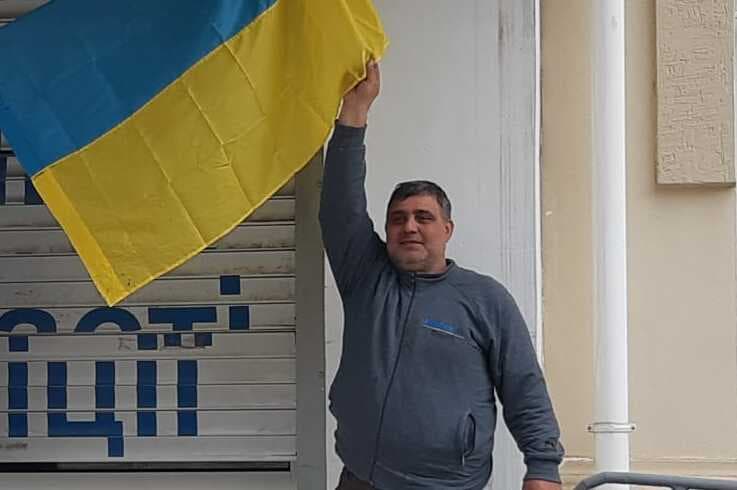
Children have been born, weddings have been held, but there has not been such joy since
A resident of Kherson stayed in the city under occupation and helped hang the first Ukrainian flag after liberation
Borys Aliiev11/22/22 - Text
At first they buried people for a bottle, then for 100 grams. And when there wasn’t any alcohol left, bodies just lay there. It’s terrifying
A native of Odesa ended up in occupied Mariupol and escaped through dozens of checkpoints and arrest
Vadym Lahunovych04/20/22 - Text
Mom made canned stew for the Armed Forces — we didn’t eat it even on the hungriest day
A family lived in occupied Kherson for 8 months; two weeks before the city’s liberation they were taken to Russia
Anonymous11/10/22 - Text
I’m going to a foreign country and I’m crying
How Russia is once again driving Crimean Tatars from their homes
Anonymous09/29/23