Instagram Post Text
Attention! Translation was done using AI, mistakes are possible
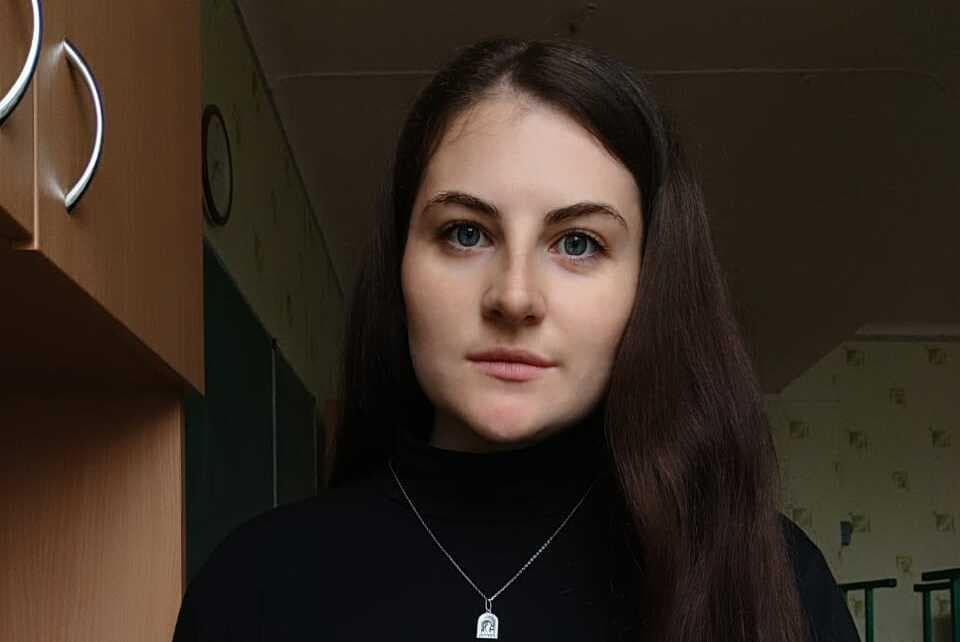
I started doing patriotic tattoos in large numbers when the city was already under occupation. I did the first one on March 10. I did about a dozen or two. There was the Ghost of Kyiv, Kherson watermelons, everything you could think of. At the time, it seemed like everything would end soon and we’d have beautiful tattoos expressing our position. But it dragged on.
The first tattoo was the word “Ukrainian” — for my best friend. At the time, we were living together, and I’d just retrieved my equipment from the studio. That was hard — my studio is in the city center, not far from the “liberators'” base. When I got home, I thought I wouldn’t be able to tattoo anything — my hands were shaking.
These tattoos became life-threatening. People started coming to me asking to cover [them] up. The first time, a girl came in — she was nearly trembling. She said she really wanted to leave the city. She had a small inscription on her arm, just in the Ukrainian language, and she asked me to cover it.
Her acquaintance had seen Russian soldiers pull a guy out of a car. They stripped him completely and led him off in an unknown direction — nobody ever saw him again. The guy had either the Ukrainian coat of arms or the flag tattooed on him. For Russian soldiers, that’s a Nazi tattoo.
The color of our flag, the coat of arms, a map, inscriptions in Ukrainian — for Russian soldiers, all of that is Nazism. Why should I have to cover up these tattoos? I’m on my own land, and these people are only here temporarily — they’ll leave soon. But if I don’t do it, the person could die. We understood perfectly well what was happening in the basements. That people might not return from there, that they could be killed.
First, they looked for veterans who’d served in the ATO, anyone who’d ever held a weapon. They tortured them to extract information about our military. I know of the head of one Kherson Oblast settlement who was tortured for nearly three months — they believed he knew something, but he knew nothing. There are many situations like this in Kherson. Later, they started taking volunteers to the basements.
We had a lot of rallies at first. The especially outspoken people were silenced. They were kidnapped, subjected to “educational conversations” through torture. They could come to your home, put a bag over your head, and take you somewhere.
People very rarely come back from there. These are basements. We know their addresses, what happens there. At first, it was fairly rare. Then it became scarier, but I continued my work. I worked right up until I left. [I was afraid that] they’d come for me and say: “Alright, you’ve had your fun — let’s go to the basement.”
There are many checkpoints in our city, and they set them up whenever they feel like it. I worked from home. Once, I had a girl and her boyfriend in for a session. During that time, they set up checkpoints, and I noticed they started getting nervous. It turned out they were police officers, and for them this checkpoint was very bad news. They needed to wait it out. And Russians sometimes go door to door looking for police officers. I couldn’t throw people out, because I understood it could cost them their lives. And putting myself in danger was frightening. But we waited it out.
Several times, people wrote to me from empty Instagram accounts: “We know where you live, what you’re doing.” I can’t say for certain it was Russian soldiers. There are some propagandists in the city. I realized I needed to leave. At some point, my supplies started running out too. I had no way to get tattoo needles or ink.
My friend and I decided her “Ukrainian” tattoo needed to be covered. And no concealer would work here, as people still write to me in the comments. The road from Kherson to Odesa at the time took us nearly 12 hours, and no foundation or concealer holds up over that time.
We settled on the same color — red — because for us it means courage, love, and perhaps even hatred. Covering the inscription with an abstract design was quite difficult; I spent nearly three hours. But it was worth it. At the checkpoints, she was let through without questions.
I signed up on the waiting list for departure. They said the earliest departure would be in two weeks. But that same evening, the girl organizing the transport called me. She said I had two hours, I had to pack my suitcase, and we were leaving. I needed to take my tattoo machines and hide them so they wouldn’t be confiscated at a checkpoint. It’s an interesting little gadget — what if they decided they wanted it, these drunkards. I’d already been asked once what that pretty little thing was.
If, God forbid, there’s a photo on your phone of a wheat field with the sky above and you in the middle — that’s Nazism. When we were getting into the car, the driver asked again if everyone had deleted everything [from their phones]. From the next seat, I heard: “Wait, was I supposed to?” The whole bus started deleting everything we could see from that girl’s phone.
We left Kherson on April 20 and spent nearly 7 hours driving through Russian checkpoints. That number seems insignificant, because now people wait for several days. And I’m incredibly grateful to the driver who got us out, because there were two situations where we could have ended up staying on that road.
The Russian soldiers didn’t like that people were simply standing near the vehicle. The road was long, and people got out to smoke. At one point, the soldiers fired an automatic burst at the tires to drive people back into the vehicles. They treated people like cattle.
Half an hour later, passing through a Ukrainian checkpoint, we nearly came under fire. Russian soldiers shelled the Ukrainian checkpoint. But our driver decided to bend the traffic rules a little and drove into the oncoming lane. Nobody was hurt.
As we were approaching Odesa, there was a bullet-riddled concrete wall, and a little boy was writing on it: “Glory to Ukraine.” I remember that image so vividly! When I stepped off the bus in Odesa and took a breath of air — I understood that here I was safe.
When my friend and I walked into a store, we were like savages. Right now in Kherson, stores are barely operating. Instead of Silpo, there’s some Russian nonsense; instead of ATB, we have ACB. When I was leaving the city, a dozen eggs cost nearly 200 hryvnias.
Kherson is slowly dying. People are starving. Many have no way to earn money, and without money you can’t buy anything. Elderly people stand on the streets with signs: “Help us survive.” They sell their last possessions — everything they have at home. Sometimes they come home empty-handed, because people have nothing to pay with. They’d want to, but they can’t. It’s very hard.
Right now I’m working in Germany and donating to the Armed Forces of Ukraine. I dream of going back to Kherson, even if it’s still temporarily occupied — I just want to go home. There’s still hope that it will be liberated soon and I’ll go home to eat real, delicious Kherson watermelons.
My relatives [in Kherson] now communicate as though we’ll never see each other again. But they’re still desperately waiting for our guys. They’re willing to sacrifice everything they have. They don’t have much left. Literally just their home and nothing more — but they’re ready. They simply want to go home, to Ukraine.