Back
'There’s fighting there, girl.' 'I don’t care, my puppy is there'
A shelter owner from Irpin evacuated animals under shelling and began rescuing dogs from flashpoints
Anastasiia Tykha and her husband had a shelter for animals with special needs in their own home. When at the start of the full-scale war the Russian army advanced on the Kyiv oblast, she and her husband led dozens of dogs and cats to safety, hiding with them under shelling. During the evacuation, several dogs ran away; Anastasiia broke through checkpoints into occupied Irpin to search for them and feed other stray animals. After the de-occupation of the Kyiv oblast, they returned and continued to help. Now their shelter houses mainly animals with disabilities that they take in from hotspots.
Interview
Transcript
Transcript
Attention! Translation was done using AI, mistakes are possible
КА: Hello. Anastasia, hello.
АН: Yes, hello.
КА: Hello, yes. Thank you so much for finding time to talk with me. I imagine how swamped you are at the shelter.
АН: Well, in the evening I'm a bit free.
КА: Before the start of our interview I'd like to ask: maybe you have some questions for me that you'd like to clarify, clear up, something that's maybe unclear?
АН: To be honest, no. I don't think this will be very different from my usual interview.
КА: Look, I'll be asking mainly about your work with animals, about Kyiv Oblast, about evacuation, about returning. And I'll start from the very-very beginning. Can you tell me how you generally started working with animals with special needs, such difficult cases? What did it all start with for you?
АН: Oh, actually this was my childhood dream. My parents had a shelter... well, not a shelter, but specifically a kennel, they worked with purebred dogs. And I constantly saw posts on Facebook with requests for help specifically for such animals, because no one wanted to take them. And I always said to my mom like: "Well let's take them! Well let's take them! We can take them." And she was afraid to work with them too. Like all people, in principle. First, when I met my husband, we worked with a hotel for animals, when people went on vacation. And then I already remembered my dream and thought: why not? If my husband supports me, I have the opportunity to do this, then why not try? Well and somehow it went.
КА: What year was this approximately?
АН: In eighteen-nineteen. To be honest, I don't remember exactly anymore.
КА: And how did it all start for you? How did you start building such a shelter?
АН: My husband and I saw an ad that they were looking for foster care for a disabled dog. And I volunteered to help, to try. I immediately said that I don't have much experience, but then people didn't have a choice. I'll repeat again: no one wanted to take such animals. And they brought me my first disabled one. Then this volunteer saw that I was handling it well, and started bringing me all such dogs. Little by little people started learning about us and bringing more and more. That's how our number grew to fifty dogs.
КА: Wow! Nothing! And did you get your own premises over time, yes?
АН: Oh, well not exactly. This all happens in our house. Well like "in our"? In a rented one, rented. I hope in the future we'll move to our own house and continue doing this.
АН: Yes, that's right.
КА: Very cool! You worked for several years with animals with injuries, with various special needs, as I understand. And then the full-scale invasion starts. What was happening with you, with your husband, with the animals, with the shelter? How was everything changing?
АН: We were very lucky, we were on the completely other end of Irpin when all these events started happening. But towards the end already, in March, we heard literally fighting on the neighboring street, a landmine flew into our neighbor's house. And we decided that we probably should go after all. But, as I told everyone - both mom, and grandma, and the volunteers who kept animals with us - I said that I won't abandon the dogs, not at all. "And let's think, and not just me. These are your animals too. Let's think. And where would I go? Let's say, if I take them out on foot, this was immediately discussed, where would I go next?" We could walk to Romanovka, let's say, and there we already needed a car. And the volunteers organized all this, that is one volunteer, the others couldn't help us. This is my good friend Snezhana, who brought me the first disabled one, we became friends. She organized a car, organized a place where we would later stop with all the animals. Because we would come to Kyiv - and what next? Where would I put them all? Thanks only to her all this happened, we left. And then we continued working with her together on evacuation of animals from other cities, sending these animals to Europe. And we had colossal work in March, my husband and I still ran back to Irpin, looked for our lost dogs and helped transport animals too, brought humanitarian aid. And at a frantic pace we found homes for, saved, about three hundred animals, if not more, just in a month.
КА: Wow! Can we stop for a bit on the moment of departure? When you were evacuating animals for the first time, were you evacuating yours, those who were kept at your shelter?
АН: Yes.
КА: And how many did you have then?
АН: Oh, compared to now - not many. Nineteen pieces. Three of them were disabled.
КА: Aha. And can you tell about your journey, how you evacuated them literally on foot to the settlement, how did it all happen?
АН: To be honest, my husband and I took all these dogs on leashes, somehow tangled them together between themselves. My husband was still dragging a cart from the supermarket with carriers with cats and with our things. And I, swearing loudly, walked and dragged this whole pack of dogs behind me. Then another person approached us, his name is Valentin. I was very grateful to him then. He took the cart with cats, and my husband took a couple of dogs from me that just couldn't keep up with the others, they were knocked off their feet. There was an old man there, grandpa. And a dog without back legs, she decided that she didn't like the wheelchair, she wouldn't go on the wheelchair, and wanted to shuffle on her stumps, and as a result couldn't keep up with the rest. So my husband took them. In the end after three kilometers my husband had to carry this dog without back legs on himself, because he scraped his stumps on the asphalt, he couldn't walk on his own anymore. My husband loaded this forty-kilogram carcass on himself and dragged it.
КА: Oh my God! And this point - this is Romanovka? Do I understand correctly?
АН: Yes, Romanovka. From our house to it is three and a half kilometers.
КА: Wow! And at this moment what was happening around? I mean - were there any shellings? What was happening?
АН: I don't know who to thank, but on this day, specifically on this day, there was shelling in the morning, and we left at lunchtime, and then there was complete silence. I'm afraid to imagine if they had started shooting there, what would have happened with my dogs. They probably would have just rushed in different directions in panic, and that's it.
КА: You evacuated them in March? They already, it turns out, yes, heard shelling nearby. Did this somehow affect their psyche?
АН: Well, one thing is to hear shelling in the house, and another thing is on the street. But dogs are good empaths. Plus these dogs lived with us for a very long time. They just saw that we were calm, and they were calm. And they even learned the command "Evacuation!" - the whole crowd ran to the bathroom, because there were two walls there.
КА: Wow! So everyone literally repeated after you?
АН: Yes, absolutely. We love our dogs very much, so we took such care of them. We didn't even have a single thought to abandon them. There was a thought - to release the healthy ones who could take care of themselves, if it became really bad, but we quickly rejected that too.
КА: So at your shelter there are not only difficult dogs, but healthy ones too?
АН: Well like healthy? These are dogs that are not social, that are afraid of people, those that a person hurt once, and they became aggressive. I had one dog that walked the whole way in a muzzle, but when a soldier was carrying her across the bridge, he accidentally removed the muzzle from him. As a result I see that my dog is flying at the soldier's neck. And I manage to substitute my hand instead of the neck - this dog even broke my fingers. So we didn't have completely healthy dogs.
КА: Wow! When was this?
АН: This was already when... The soldiers helped us a lot. The soldiers carried our dogs, because we simply wouldn't have made it across the bridge ourselves. There was a log lying across the river, and they carried them all in their arms. And just at the moment when we were already loading into the car, the muzzle came off.
КА: And where was this?
АН: In Romanovka.
КА: And it turns out that in Romanovka this Snezhana helped you?
АН: Yes.
КА: And you then went on to Kyiv, right?
АН: Yes.
КА: You somehow settled the animals there. How were they generally? What was happening with them? Where did you live with them?
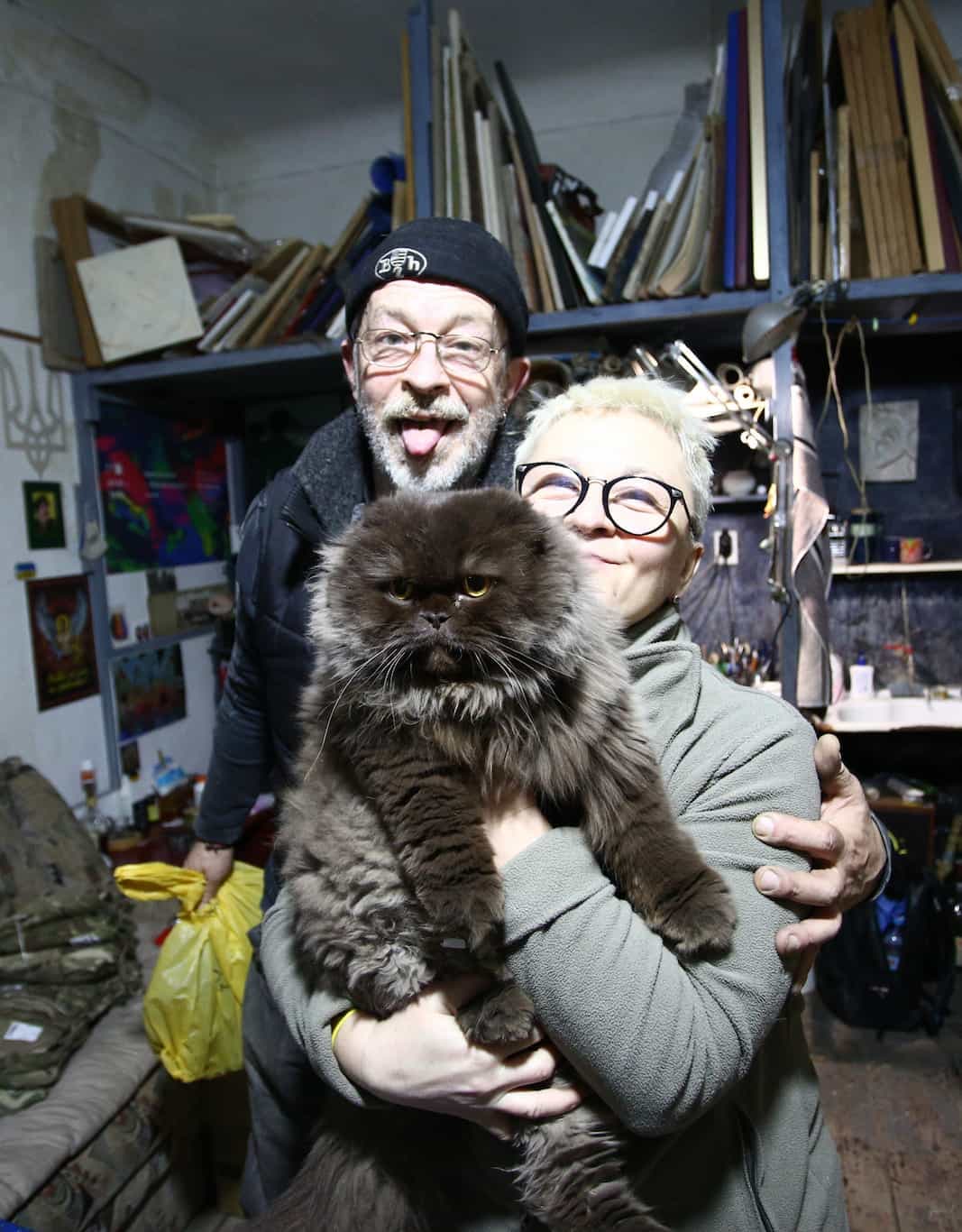
АН: Again, thanks to Snezhana, she found an empty house, so to speak, of acquaintances. The house was closed, unfortunately, without keys, but there was a bathhouse, which also served as a cat house. And they housed us there. Dogs were in enclosures, those who could live in an enclosure. Disabled ones were in the cat house, and we hung out there with them too. But this was literally the first week. Then this photograph spread all over the world, over Ukraine, and very good people offered us to live, while they live in Europe, at their house. And we lived there for two months, until returning to Irpin.
КА: And where?
АН: In Kyiv too.
КА: Together with the animals, yes?
АН: Yes-yes, of course. They wouldn't let us go.
КА: Was everything normal? Were there any difficulties when you were in Kyiv? What was happening?
АН: Well, the only difficulty was to manage everything. All the time we got up at seven in the morning, walked, fed our dogs and headed off to Irpin again. We searched. Our dog got lost then, my beagle puppy. I was hysterical for a very long time, said that I needed to return. Everyone looked at me like I was crazy, because from the next day after we left, terrible fighting started, and I needed to go back. Mainly [in Kyiv] there were no difficulties. You know, it was such a colossal difference when we left. We arrive, and supermarkets are working, pharmacies are working, and people are just walking on the streets. We like two idiots went to the supermarket like on a walk.
КА: But this is in Kyiv, yes?
АН: Yes, yes, yes. In Kyiv it was completely ordinary life. Except that, probably, fewer people, fewer cars, because everyone had left. But otherwise there were no difficulties at all.
КА: And how did you first decide to return to Irpin?
АН: Well, I had no peace. I came to the checkpoint every day, there's an uncle there. Every time he saw me, he already started swearing, because I tell him that I need to go to Irpin for a dog, and he says: "There's fighting there, girl. You won't come back." I say: "I don't care, I have a puppy sitting there." We argued like this with him for five days. And in the end he was already all red, sweat flowing down his forehead, he was swearing at me. And he says: "Drive through. If you don't come back - I won't miss you." In the end I returned, and came back to him again, and came back to him again. I think he remembered me for a long time.
КА: This was still March, yes?
АН: Yes, yes, yes, yes.
КА: Aha. And can you tell how the beagle puppy got lost?
АН: He broke out of his collar.
КА: When you were evacuating, yes?
АН: Yes, yes.
КА: And this really gnawed at you, yes?
АН: Very much! The first day I had a terrible hysteria. This is my dog. I... him in the fall, shortly before this... He was also in the shelter. And in the fall my old dog died, and I decided to keep him for myself. Really, I love him very much, he's generally my little son. And here he just ran away. We moved far from the house, but I saw that he was running home. He got scared. He didn't understand where I was dragging him with all the rest of the pack, and ran back. I understand that he's sitting at home alone. And it's not certain that he could even enter the yard, because there's a fence there. And I urgently needed to go back.
КА: And it didn't work out to go back for him? Why?
АН: We returned after five days.
КА: Aha. And why was it impossible to return at the moment?
АН: Unfortunately, no. I'm all just wound up from head to toe, really. I still have this knot of leashes left, which formed during this evacuation. This is just a knot that was wound around me. And I understand that either I now just abandon all the other dogs, they scatter, and I run after him, or I just shed a tear and go further.
КА: A very difficult situation, of course. When you returned to Irpin for the first time after five days, what did you see there?
АН: Emptiness, a huge number of animals. And occasionally people came out, asked for some help, humanitarian aid, food, food, cigarettes - anything. This was also not easy to see, because my husband and I didn't really go out of the house during all this happening. We went out and straight to Kyiv, that's it. And here we already started walking through all of Irpin, seeing this nightmare. It was exactly at that moment that we understood that we would be returning, just not with empty hands anymore, transport as much as possible, evacuate even more. And that's how our whole March continued.
КА: And the animals that were there, I understand, someone's owners were killed, someone left and forgot, or they got lost. What kind of animals were these generally?
АН: To be honest, practically all the dogs that I evacuated, I found their owners. They were all in Europe, they didn't need the dogs. I practically didn't evacuate cats, it was impossible to catch them, they were frightened, they just jumped over fences, and that's it. When I enter a yard and see that half the house is destroyed, and a chihuahua is sitting in the window, I turn to the soldiers and say: "Can I go in and take her?" They say: "Of course, go in." I take this dog, come out, and the soldiers bring me two more chihuahuas, like: "Will you take them?" I say: "Of course I'll take them. Give them here." In the end we stuffed them in a backpack, because we already had no space. We pulled them out. And their owners are found, like: "We left them with neighbors. We're now in Poland. No, we can't take them." I say: "Great! Goodbye. I'll give them to someone else."
КА: And the soldiers - these were Ukrainian, right?
АН: Yes, yes, yes. No, we didn't meet Russian soldiers, we didn't go there, to those areas. We have many of our own dogs, and we couldn't risk like that.
КА: How many more times did you come to Irpin?
АН: We went stably once every five days, that is somewhere in a month we were in Irpin four-five times. And then Irpin was liberated, and we already just drove home.
КА: And can we stop on this moment in a bit more detail? These trips to Irpin, when you were returning, when there was still fighting, when there was occupation, what was happening generally? What do you remember? What was your beloved city, where you lived, turning into?
АН: Oh, to be honest, this is difficult. Now, arriving in Irpin, you won't believe that there was complete devastation here, they rebuilt it almost instantly. But then it was just destroyed houses, unfortunate old people who were afraid to leave, who came out with tears in their eyes when they saw bread, thanked and asked that we come back again. This was very hard to see morally, so we didn't stop doing this. Although, you know, we got under shelling so many times! I will never forget to this day how I sat in a trench with a German shepherd, next to soldiers. And this was not once. Practically every time we went there, shelling would start. But, fortunately, we were spared, so to speak. The only thing - we were once hit by shrapnel, my husband and I, and that's it.
КА: And can you tell about this case - about the trenches and the German shepherd?
АН: This was probably our third trip. We delayed a bit. There generally shelling starts at a certain time, I don't know why this is. But we were late then. And, going out to Romanovka, right before the bridge mortar shelling started. The soldiers shout, like: "Get out of here or jump in a trench!" We, in short, jumped in a trench. And with me was a huge fat German shepherd, whom the owners asked me to evacuate - the only ones who took care of their dog. And I'm dragging her, and she doesn't want to. I'm dragging her, and she doesn't want to. In the end I just threw her there, in the trench, right on adrenaline, sat next to her and sat.
КА: Unbelievable! This is very-very scary - to be there and get under regular shelling. I understand what was driving you, but... I don't want to ask this question, but I'll ask, probably: why did you return there, knowing that at any moment you could literally die together with the animals?
АН: To be honest, when you're sitting under shelling, you don't think about this, not at all. Yes, adrenaline. We even managed to argue with my husband there, entertained the soldiers, because Artur says to me: "We won't go here anymore. How you've worn me out! What keeps bringing you here?" And I say: "Well what, don't you see? We need to. Help is needed here." In the end we returned home, sat, frantically smoked in the kitchen. And in a week we again had a bunch of requests for help. I look at my husband like this and say: "Well what, we won't go?" He says: "Well of course we'll go." Because people needed help. Very few could drive there, tried to drive there at all. We had the opportunity to help. We left the dogs with our Snezhana, friend. She would have dealt with them, if something happened, would have taken care. This wasn't complete recklessness, not a closed house with absolutely no one. We had to, as it seems to me, help. And plus we were looking for our lost dogs. That is this wasn't one beagle dog, but four. And we found three out of four.
КА: And you never managed to find one, yes?
АН: No. Unfortunately, this was such a wild dog that she either... I don't even want to know. I will believe that he's still running around somewhere. That's it.
КА: And how did you find the beagle?
АН: And he was sitting at home. He crawled under the fence and was sitting in the yard. After five days he jumped on me with such happiness from the floor to my neck, like: "Where were you? What was this?" I want to tell you, he even got fat. We left food, of course, just in case, everywhere: on the street, in the yard, there was also a bag of food standing, open. And he, apparently, sat on his nerves and ate, sat and ate.
КА: Poor thing! And what did you experience when you still found him? You can't single out a favorite, but this is still directly your-your dog.
АН: Oh, this was incredible relief, because the other dogs that we lost could more or less take care of themselves. I understand that he's purebred, they'll steal him if they want, if they see him. And he's small, he was eight and a half months old, he understood nothing about life at all. I always worried most about him. All the others were at least just older and had seen the street, knew what it was, how to survive on the street. They don't get to our shelter from home, but from the street. And he's silly. Instead of following me, he ran home.
КА: Well, he got scared. And this case when you were hit by shrapnel? Can you tell about this situation?
АН: This was generally the most annoying. On that day it was announced that Irpin was liberated. Well, we're like: "Well okay, let's go!" - for the last time, like. "Since they liberated it, we'll finish those requests and won't drive anymore, they'll open access already." We arrive, and there's hell, just some fighting! The Russians, retreating, decided to pelt Irpin with landmines and whatever, just. And we're sitting like this, soldiers are sitting next to us, between the house and the car. We already had dogs that we were planning to evacuate. And we're sitting. The dogs are generally just relaxed, they're sleeping, they're used to it. We're arguing - this was just that moment with Artur. The soldiers are standing, drinking tea, saying: "Are ours throwing this or not? Is this incoming or not?" And then behind us it hits the house! And the fence just hit us in the back, in the face. Everyone's in shock! And the dogs are relaxed. This was the most striking thing for me. They didn't even flinch. Half of them were generally sleeping. They're being evacuated, they're being saved - "we're sleeping, we're resting."
КА: Is this because they were already used to explosions?
АН: Yes, used to it.
КА: And what state were you in after such shock?
АН: Then, exactly at that moment, the soldiers still decided to evacuate us. And we didn't even have time to think. My cheek was scratched, my husband's too, our backs were all bruised. We didn't get major damage. I drive past that house to this day and think: "Lord, how lucky we were!" Well and after that moment we didn't go anymore. Well and we didn't need to.
КА: And how did they let you through all this time, while there was fighting and occupation? There were probably checkpoints at the entrance to the city...
АН: There were, yes. When they saw me, their hands started shaking. Because when I wanted to go for the beagle, I just stood next to the uncle for two hours and told him about how: "I have a dog there. If you don't let me through, he'll die. This will be on your conscience. Let me through, please. I have other little dogs there too. I'll even show them to you later when I return." And like this for two hours straight, in circles.
КА: So you just pressured them, conditionally?
АН: Yes. This measure was moral terror from me. But I really needed it!
КА: I understand, I understand, of course. And then they, apparently, already got used to you, you could say?
АН: Yes, yes, yes. They already know that I won't back down. If I came - I'll drive through. This uncle already at the last times was like: "So, stand over there to the side. When it will be possible to drive through, I'll signal you. When the soldiers allow volunteers to enter, like. That's it, stand!" I say: "Good, okay."
КА: And during evacuation did they help you? When you went every five days, did they participate somehow? Or were there still fighting then, and this was impossible?
АН: No-no-no, then already everything started... All of March in Irpin, complete hell was, seriously. There was terrible fighting there. We didn't even bother those soldiers. They just when they saw us, brought out dogs to us, said: "Take them from here." Like: "Next time we probably won't be here anymore. We'll either advance forward or retreat back. Take them. That's it."
КА: In what condition did you evacuate the animals? Were they wounded? What psychological state were they in? Those, not yours, yes, but those that were abandoned.
АН: They weren't emaciated. They weren't very frightened. They were absolutely lost, they were lost, hungry. When they saw that a person was going to them with a leash... And these were all domestic dogs. They saw the leash - and they just stuck their muzzle in themselves, like: "Take me quickly, take me away from here." That's it. Now animals come to me from Bakhmut, came in December. And this is really just hell! These are skeletons. Let's say, an Alabai dog should weigh sixty kilograms, and she barely reaches twenty. She looks like a skeleton. She's so emaciated that she doesn't even have strength to stand.
КА: Oh Lord... I'll ask about this in detail a bit later.
АН: Are we going much longer? - will be another such question. Because I need to go soon.
КА: When do you need to go?
АН: In fifteen minutes.
КА: I still have a number of questions. If you need to go, we can, for example, continue tomorrow or any other day convenient for you.
АН: Yes, that would be wonderful in general.
КА: We can stop now. We can in ten minutes.
АН: Let's maybe finish with spring.
КА: Yes, good. And let's maybe immediately arrange when it would be convenient for you to continue recording.
АН: Good, let's do tomorrow, at lunchtime, somewhere at half past one let's call.
КА: Half past one? Aha, now I'll write down - 13:30. Let's finish with spring then. So Irpin was liberated. What was happening with the animals? What was happening with your shelter? How did you live generally?
АН: Irpin was liberated, a bunch of people moved back home, dogs just evaporated from the streets. volunteers in large numbers also moved in, took everyone away. Our work ended there, so to speak. We already returned to our shelter. Then this was a bit of such calm. We didn't take many, because we knew that we ourselves would bring many from Irpin. And Irpin was liberated, and what should we do in Kyiv? We're going back. We slowly started putting the house in order. Waited a week and a half, I think, for them to turn on electricity. And that's it, we have the great move. We left with nineteen dogs, and moved back with forty-five. In summer the number will grow a lot - to seventy-six dogs. This is when we now just have few of them.
КА: Wow! When you returned, what condition was your house in?
АН: We had the fence torn down from an explosion and a small piece of plaster fell off the house.
КА: Well, that is intact?
АН: Yes, intact. Well, we also found a shell in the garden, so to speak.
КА: After de-occupation there was a big process by the military of demining and searching for landmines throughout Kyiv Oblast. Did this affect you somehow? Did they search for any Russian landmines in your house?
АН: No, not at all. They saw that we had moved in. They were like: "Well, everything's normal with you?" We say: "Yes. Only there's a shell lying on the street. Please take it away. Tank shell." They took it away, and that's it. They checked specifically those houses that were abandoned, that were clearly broken into. And if they see that people have already returned here, then, understandably, that either we would have already blown up, or everything's already good.
КА: So into your house, at least by visual signs, the Russians didn't enter?
АН: No, no.
КА: Thank God! And how did you transport all this horde of dogs, which doubled, back?
АН: In a truck, in crates.
КА: They even helped you, yes?
АН: Yes, they helped us a lot. There were a huge number of people there, because, besides the truck, we ended up with more things for some reason than we had in our house. We took out twice as much, because people helped us a lot. And we worked with humanitarian aid, we couldn't leave a humanitarian aid warehouse in that house, moving to another. We had to take it too. This stretched over two days. My husband and I probably moved ten tons of food with friends. We ended up distributing it here - around Irpin, in Bucha, in Nemishaieve, in Borodianka.
КА: And while you lived in Kyiv before de-occupation, did many try to help you? Considering that the photo spread widely, how many people generally connected to help you in some way?
АН: There was huge help, honestly. Just unreal! We didn't need anything. Literally even what we could buy ourselves, they offered us, and we just refused. Even things. We say like: "Calm down, stores are working." Thank god, there was a financial cushion. Like: "Well what, should we take it for free in vain? - we say. - Give it to someone who needs it, who needs it more." We had to refuse very many, because we didn't need it anymore: either someone already brought it, or we already didn't need it.
КА: So all your needs were covered?
АН: Yes. We didn't need anything at all. We needed special food - they brought it to us. We needed regular food - they brought it to us. When I said that: "We're ready to distribute humanitarian aid, you can bring it, and we'll take care of delivery to villages," - they brought us ten tons. We ended up keeping not a gram for ourselves from these ten tons, we distributed everything, because people in these villages really needed food badly. The farther from Borodianka, the worse everything was. My parents lived near Borodianka and live, in principle. They ended up under occupation for two months. They also have many dogs - they had twenty. And they literally collected hay on the street, last year's grass. This was practically winter. And they fed these dogs so they just wouldn't die from hunger.
КА: And it was impossible to reach them because of the occupation?
АН: No, at that moment not at all. I tried. I even offered money. Specifically at the end already, beginning of April, volunteers somehow made it through there, having been in captivity for two days. And out of a hundred kilograms of food that I sent, they delivered twenty, because the Russians confiscated everything, bastards.
КА: Damn, hell! I know you need to run. I'll ask probably one last question for today. Wasn't it scary for you with the animals, with the whole shelter to return to Irpin after everything that Kyiv Oblast had to endure?
АН: No, not a bit. They left. What should we fear? We drive around, we see how quickly everything is being rebuilt. Stores opened the same day. Irpin is generally an incredible city. Compared to the same Bucha, for example, Irpin suffered much more, but rebuilt itself, and all infrastructure was restored, really, in the first week of liberation.
КА: And probably you still had faith in the Armed Forces of Ukraine [editor's note: ZSU - Zbroini Syly Ukrainy], that they wouldn't let them enter Kyiv Oblast again...
АН: Well, yes this isn't even discussed.
КА: Anastasia, let's then I won't delay you, so as not to disrupt your plans. And tomorrow at 13:30 I'll call you again.
АН: Okay. Alright, good.
КА: Alright, good. Thank you very much, thank you.
АН: And thank you.
КА: Alright. Have a good evening. Goodbye!
Testimony Photos
Other Testimonies from the Archive
- Recording
They loaded everyone: dogs, cats, a hedgehog
The home of Kherson retirees was flooded after the destruction of the Kakhovka Dam. Ukrainian soldiers evacuated them from occupied territory
Henadii and Olena Rotar06/09/23 - Recording

Children have been born, weddings have been held, but there has not been such joy since
A resident of Kherson stayed in the city under occupation and helped hang the first Ukrainian flag after liberation
Borys Aliiev11/22/22 - Text
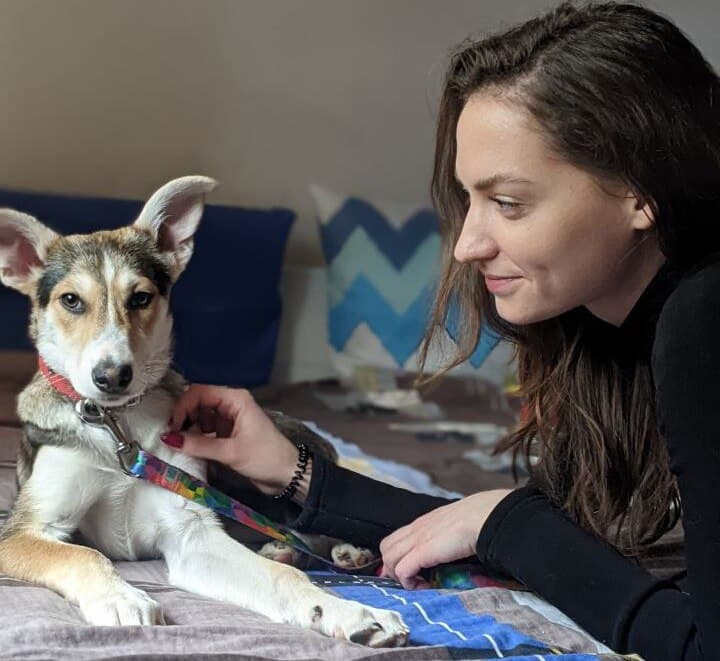
They cut into people’s dogs alive before their eyes. Skinned them
A dog handler from Lviv describes evacuating people with their pets and the Russian soldiers' treatment of animals
Olena Ostashchenko04/07/22 - Text
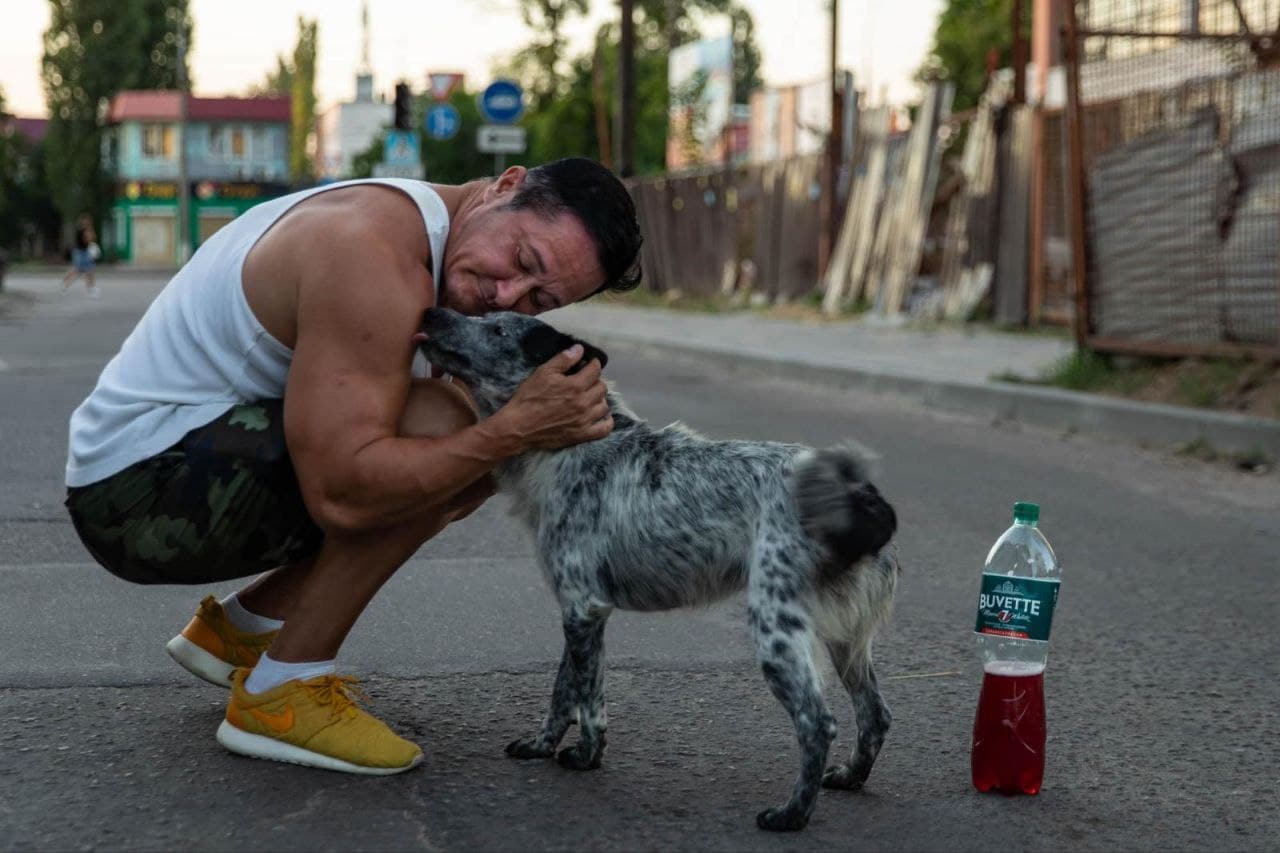
I’m the strongest woman on the planet; I urgently need pet food at the lowest price
How the world powerlifting champion rescues animals and people
Anna Kurkurina11/16/22 - Text
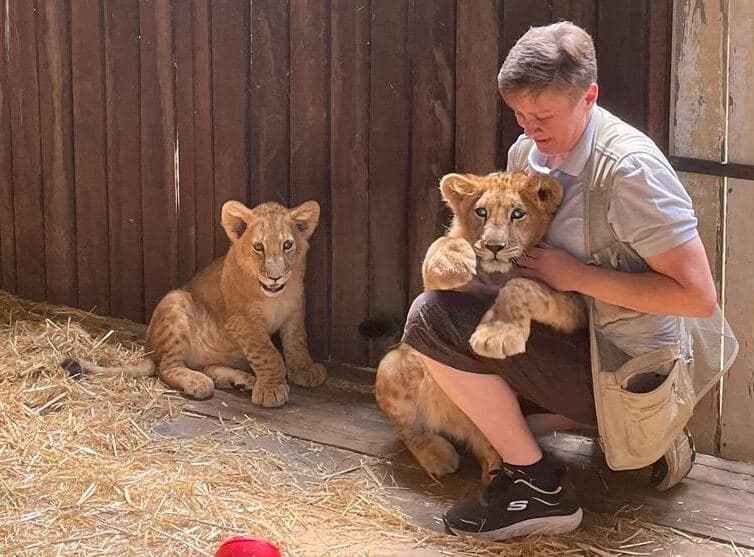
Bombs are hitting the hangar 100 meters away on one side, 70–80 meters on the other. And we’re in the middle — grabbing whatever animals we can
An animal rescue activist evacuates lions and tigers from under shelling
Nataliia Popova04/24/22 - Text
I want to see everyone. I desperately want to fall in love. In war, you constantly feel like you might not have time for something
The story of Nastya, a volunteer from Kharkiv, about evacuations and losses
Nastia05/26/22