Instagram Post Text
Attention! Translation was done using AI, mistakes are possible
A woman calls me and says her daughter and grandmother are stuck in Ruska Lozova. It’s not far from Kharkiv. She asks me to get them out. The area is fully occupied. In moments like these, you have to cut off hope. You can’t give it, you can’t get people out of there. Before the war, she’d gone to visit her parents in Poland and couldn’t get back. Her daughter and grandmother are in Ruska Lozova. She’s calling me in tears, her voice shaking — begging me to get them out. I say: “I can’t do that.” And then, when the village is being liberated, I have the address. I tell the soldiers: “Please check this house.” They said the house had been blown up with the residents inside. A grenade was thrown into the basement, and that’s where the bodies were found.
My conscience shouldn’t eat at me for that, because I know there was nothing I could have done. If I’d sent my volunteers there or gone myself with someone, I would have simply died alongside them.
A boy calls and says: “Nastia, my mom hasn’t answered for a week. I’ve raised the alarm everywhere. I can’t find her.” And the area — Vovchansk — is occupied territory. Then he calls back: “Nastia, she managed to get out. She has nowhere to stay overnight. She’ll arrive within an hour. She’s in complete shock, stressed, and with a dog.” The woman drove out in a car with a huge German shepherd. Her driving experience — a couple of months. She arrives. Massive glasses. Hands shaking. The dog had been throwing up nearly the entire way. When she left her house, she ran into Russians. They took everything: water, food, documents, even the dog’s food. Gas, the canister — everything. And let her go. They said: “You can only drive to Russian territory. They’ll take you in there, everything will be great.” Her son is in Prague, and she understands that then she’d never reach her son again. A car with some Ukrainian men was driving behind her. The Russians shifted their attention to them, and she managed to slip through. She made it to a Ukrainian checkpoint. They fed her, gave her water, dog food, gasoline. I took her into my home — there was no other place. Then in a day and a half she made it to the Czech Republic — just insane.
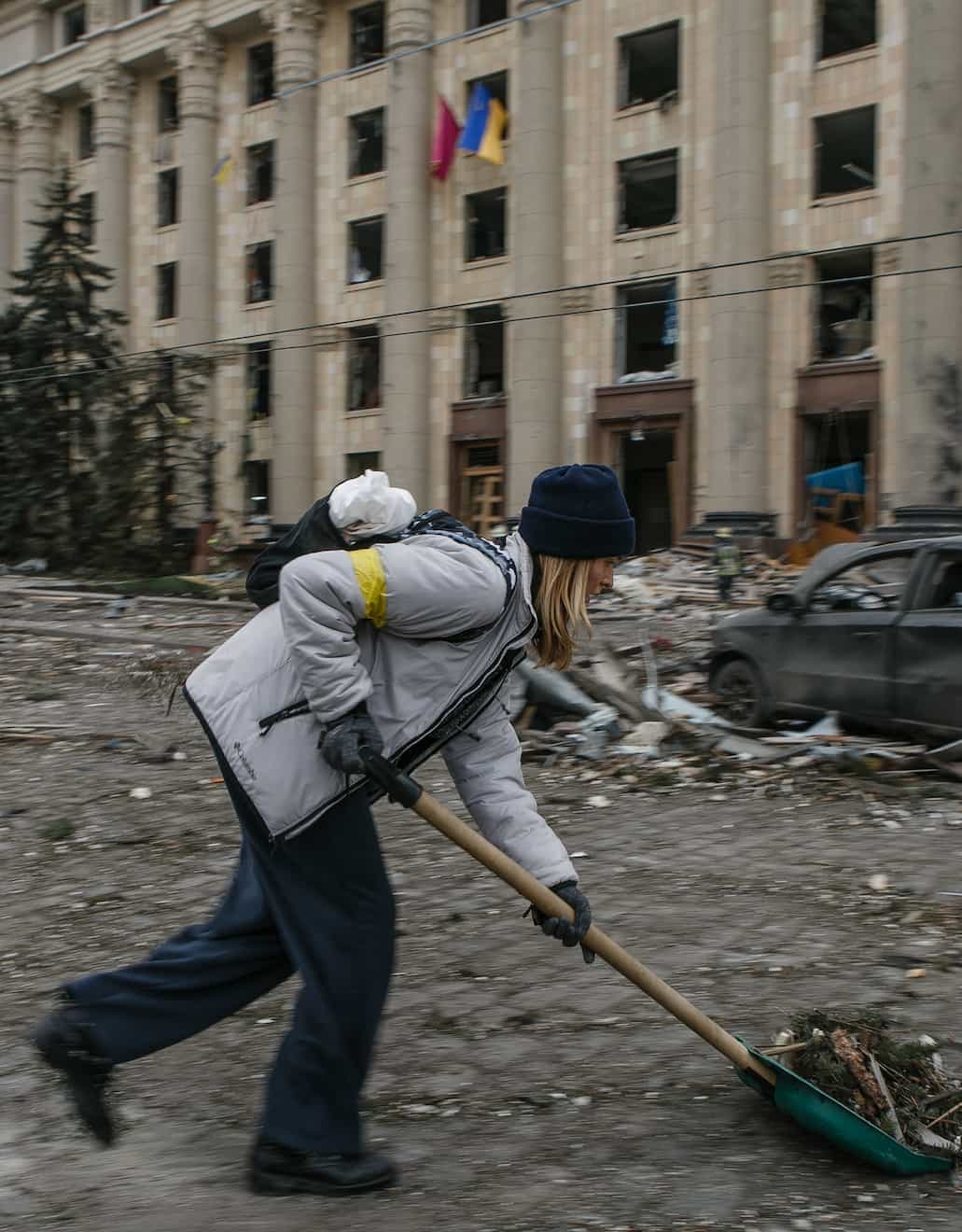
From practically the very first day of the war, I was working. We were grinding away as volunteers, delivering humanitarian aid. We connected with the heads of the western division of Ukrainian Railways, then with the deputy mayor of Kharkiv, then with the mayor. At first, it was just me and one other guy. I remember, the two of us were loading huge sacks of grain — 70, 50 kilograms each. Within a week, I’d completely wrecked my lower back. Cold, hunger — you don’t eat for 3–4 days and you’re thinking about how to grab some little can of corn. I still can’t eat enough — I eat and eat, thinking that right now I can eat, but tomorrow I might not have food.
We had a team in Khmelnytskyi — grandmothers and grandfathers making varenyky. They’d send huge containers, buckets of varenyky, crepes. Someone would send turkey, someone chickens. They sent me 20 live chickens. The train conductor calls: “Nastia, they’re driving me crazy. They’re clucking through the entire car.”
The main goal was to fill Kharkiv’s warehouses in case of a blockade. Beyond the warehouses, you have grandmothers, grandfathers, people with disabilities. I took these heartbreaking, terrifying calls. People hadn’t eaten, they had no medicine. Someone has epilepsy, diabetes. All pharmacies were closed because of constant shelling.
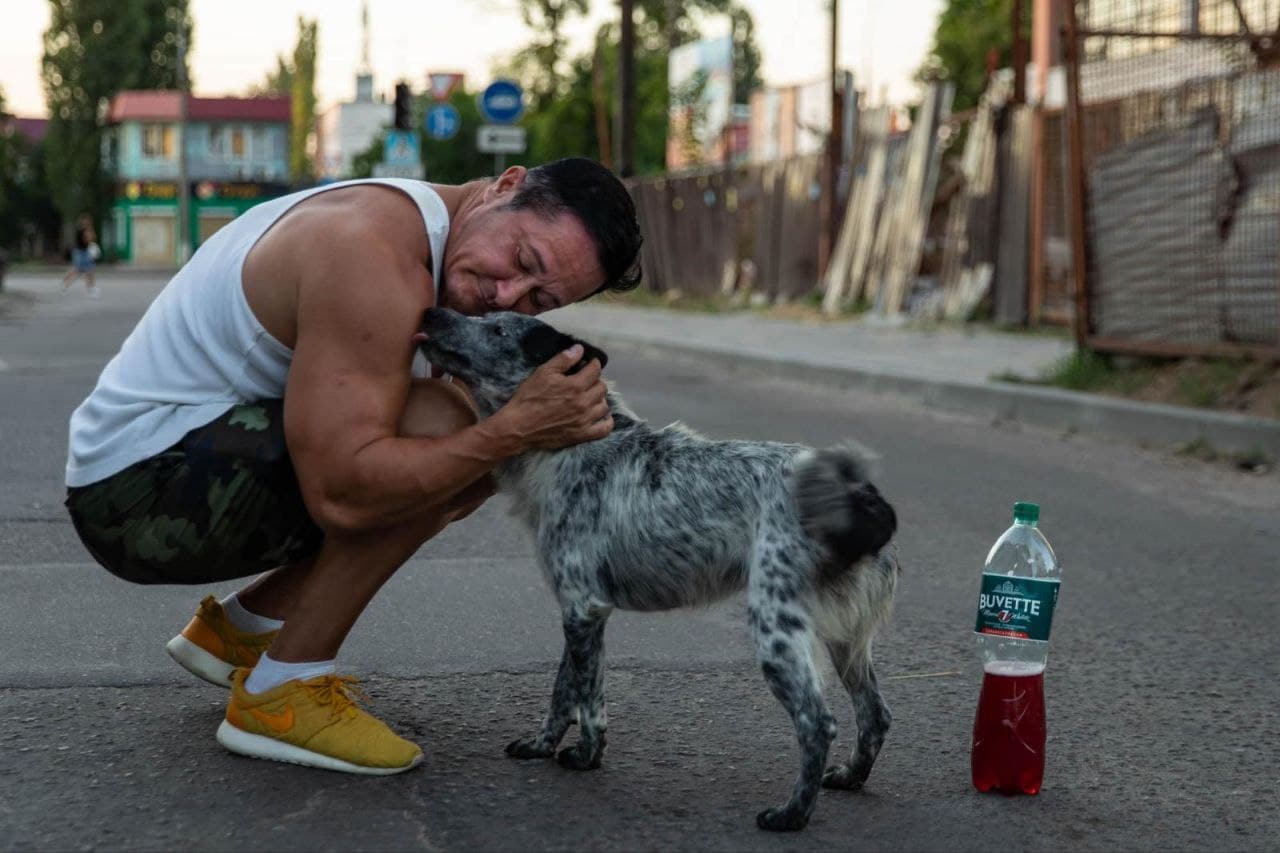
In the beginning, absolutely packed trains left Kharkiv. We’d unload humanitarian aid and load people in. Thousands upon thousands. We have a huge train station. It was packed with people, dogs, cats, and everything else. It was nightmarish, because not everyone could get on. Women and small children first. Families were being separated. A brother couldn’t go with his sister. You put a mother with a child on the train, and her son stays on the platform. People left their suitcases, all their belongings, even documents, just to get their dog on board.
We learned to tell apart what was flying — a mortar, a Grad, a rocket. I’d ride my bicycle to neighborhoods that were constantly being hit. One time, I was riding and Grads started firing. Grads have this rustling sound. I hear it growing louder and see strikes starting to land in front of me. I realize I need to get out. And it was raining, too. I swing the bike to the other side and on the turn I slip and go flying with the bike. I’m lying there thinking: “Okay. I’ll wait till the rustling stops and then ride on.” I had absolutely no strength left.
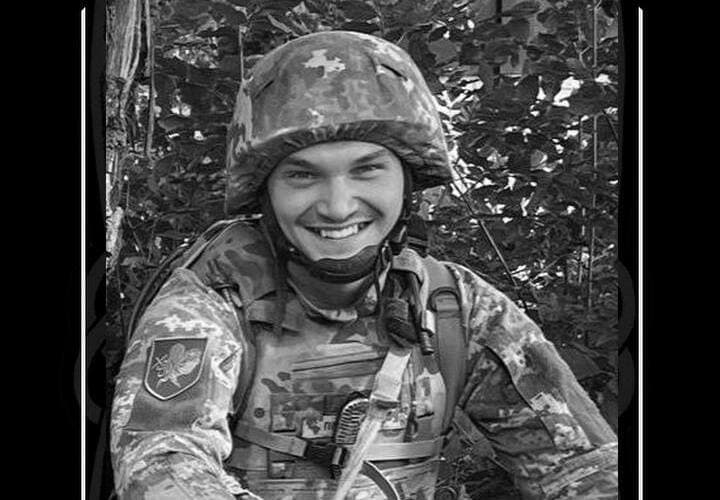
During this war, I lost very good acquaintances and friends — 4 people. One of them lived near me; I used to walk my dog with him. I have many friends who are now on the front line, at “point zero.”
My mother was initially very pro-Russian. She watched a lot of propaganda. In 2014, she justified all of it. And I was always for Ukraine. I lived abroad for some time and understand that Ukraine is amazing. It’s just a really great country that you want to come back to. On the 24th, my mother’s worldview shattered immediately. She completely changed her views.
I have many Russian friends. Real friends who have supported us throughout the entire war, who try to donate money. I know what that risks, that they could be imprisoned for it. My friends went out to protests in Yekaterinburg, St. Petersburg, Krasnoyarsk. I’m incredibly grateful to them.
When your friends and relatives are scattered across all of Ukraine and all over the world, you’re left alone. It’s psychologically very hard. And I sincerely feel sorry for the guys who ended up away from their homes. They come back simply because they want to go home. You want to see everyone. Sit down, talk, or just sit in silence. You desperately want to fall in love. During war, you constantly feel like you might not have enough time. Now people live as they want and do as they want. That’s really great.