Instagram Post Text
Attention! Translation was done using AI, mistakes are possible
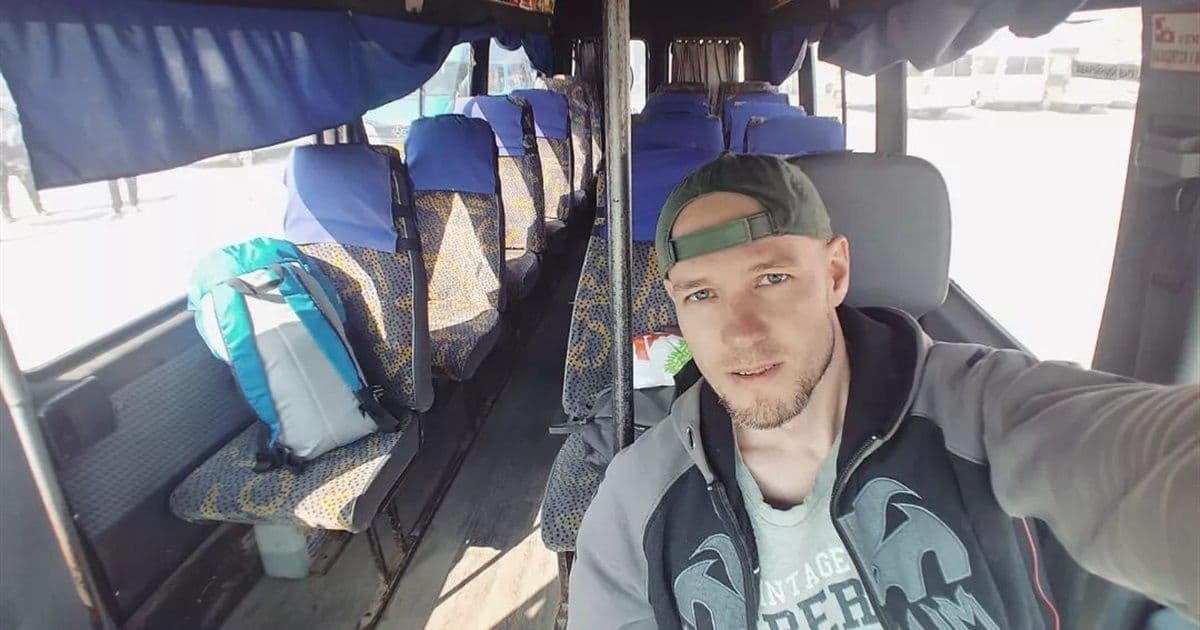
Vadym Lahunovych Engineer, activist, lived in Odesa before the war. He was planning to repatriate to Israel and went to Mariupol in early February to visit his mother. They spent the first month of the war in the city, then left toward western Ukraine on April 3. The journey took them 10 days.
[By late March] nobody was carrying away the people who remained lying in the streets. At first, you could get someone buried for a bottle of alcohol, then for 100 grams. Then there was no more liquor, so the bodies just lay there. It’s terrifying. I’ve seen horror movies, but this was worse. Some people went mad during the shelling. My mother’s neighbor hanged herself — she couldn’t take the psychological strain. There was Dimka, a brave guy who walked about 3 kilometers for water. He was killed too, and Dimka’s bedridden mother was left in the apartment. Who would come to her? Who would feed her? The people who suffered most were those who couldn’t walk.
I used a fire truck to deliver water around the neighborhood. I had a public activist ID card issued by the City Council Police Oversight Commission. Those were the times when the police were being reformed — 2016–2017. We came to the fire truck to ask for water. Only two emergency workers and a diver were at the truck. They wouldn’t give me the truck, I started making threats. They said: “Where’s your mayor who gave you that ID?” — implying he’d fled. I said: “This is for people.” But they didn’t care about people. Their fire trucks stood full of water while people’s lips were cracking. I said: “Even technical water — anything to wash with. Everything’s blocked up.” The sanitation was horrific — in the basement, people used buckets. [In the end] I found a truck and drove around the neighborhood. Under shelling, of course. People came out with buckets, lined up, and still argued.
If someone had a serious wound, that was it. And heart problems… Many people died of heart attacks, from stress. People collapsed in the streets. There was no medical care. Some women went around providing help while they still could. Then nobody was left. After March 10, nobody remained.
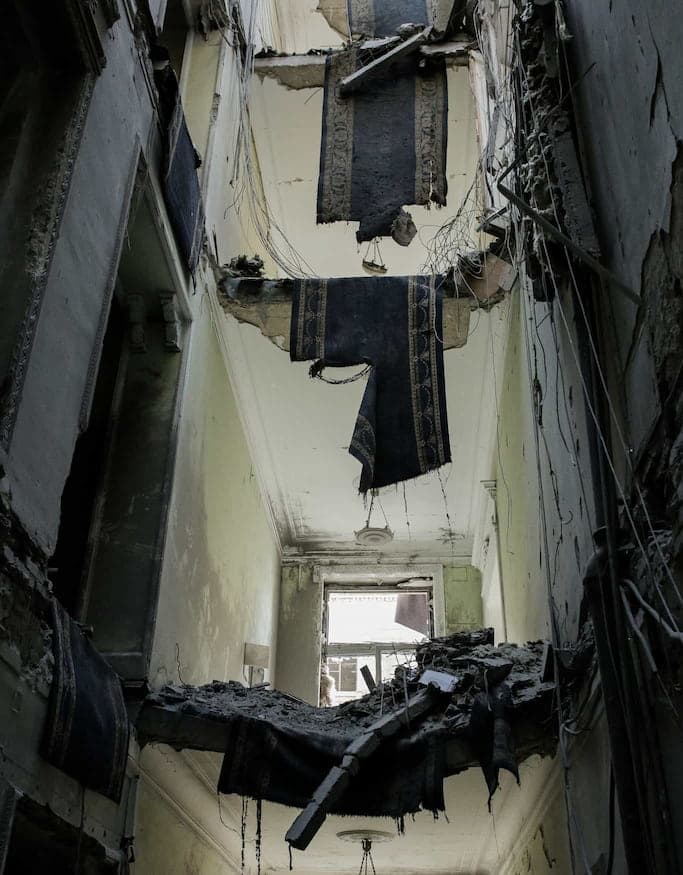
The real catastrophe began when, by early April, they started firing incendiary shells. More than half the buildings burned — a nine-story building, 8 stairwells, every last apartment. The density of fire increased tenfold, probably. Before, there were breaks between the shooting, but now it never stopped. Personally, I didn’t see any Ukrainian army tanks or armored vehicles — nothing. That’s just what I saw.
I started thinking about how to leave — my own car was already gone. I bought a Moskvitch practically from a junkyard for 300 dollars. Non-functional. Tires falling apart, no battery. But I’d had a repair shop in Mariupol in the early '90s — I used to bring cars from Germany, restore them, weld, putty, rebuild engines. It was a great workshop once. I had tools, some were still there. We took a battery off a forklift, found wheels somewhere, patched things up. I built the starter myself, rebuilt the carburetor in my workshop. Took me 3 days.
We left on April 3. I took my mother and two other people with a dog and a cat. I was terrified of getting a flat tire — there was no tire shop. The road was covered in debris, gravel, poles, wires, craters. We had to drive through the front line, through shelling. Nobody stopped anything — there was no green corridor.
We came under fire. A round hit our tire, so we pulled into some yard to get off the road. It was a village right next to Rybatske. It’s on elevated ground, and you could see the city spread out like on the palm of your hand. Everything was already burning. You could see nine-story buildings collapsing. In short — it was hell. Actual hell.
We changed the tire and drove on. The fighting had just subsided and we broke through, got out. The car was overheating, naturally. I don’t know — it all happened in a kind of fever. Because people had stopped talking — they were screaming. Nobody could speak calmly. Every 100 meters someone from our group — fellow travelers, I don’t even remember their names — would get out and lift wires off the road so we could pass. Almost every utility pole was lying across the road.
The first checkpoint was on the way out of the city — 2 people stopped us. Then a kilometer later, another checkpoint. There they opened up the whole car, searched everything, removed seats, stripped me completely naked. I heard one guy was from Donetsk. He said: “I’m from Donetsk, and you lot were living the high life here. Nazi collaborators.” They called us names, insulted us. “You should all be shot.”
They checked us against lists — apparently looking for military. One person had a namesake on the list. He said he was a theater director and worked in Moscow. You could clearly see he was an intelligent person, a musician. But they said: “We’ll check what kind of musician you are.” He had a heart attack right there.
They pulled me out of the car and interrogated me for an hour and a half. My mother stayed in the car — they didn’t do anything to her. They asked what I was carrying. Like, “What, you’ve got drugs?” I had clay with me — I use it to treat people, I was bringing a jar, my little case. They went through all my things. I’d hidden my phone — it had a lot of photos, I’d photographed all the destroyed buildings, a Russian tank firing at houses. They found the phone — they didn’t look at the photos, just confiscated it.
They let us go eventually, and we drove on. We didn’t drive long — the engine started knocking. I’m amazed it ran at all. About 2 kilometers past the checkpoint we reached the village of Chervone, found shelter, negotiated a price.
The next day I went to the store for groceries. And right next to the store was the commandant’s office. The soldiers from the checkpoint were also in the store and recognized me. Apparently, overnight — a day had passed — they’d gone through my phone and photos. They said: “Come with us.” They took me to the commandant’s office, handcuffed me to a post. Said it was because of the photos. They said: “That’s it, you’ll be part of a prisoner exchange. A car from Donetsk is coming for you now.” I’m amazed they didn’t just shoot me for the photos.
Then they took me to a basement. It was warm, there were some rags. At least I covered myself with those rags. Then they handcuffed me to a chair. I spent another 5 hours in the basement — they said they were waiting for an investigator. The sun was starting to set. Then some short, energetic guy came in. I could tell he was a policeman by his interrogation style: “Surname, first name, patronymic, date of birth, children” — then the swearing started. He kicked me — not hard, more of a psychological blow. I turned away, the foot hit my shoulder. There were several blows. It was terrifying. All of this was a shock for me.
Then he tightened my handcuffs and said: “Give me your documents.” I said: “My documents are with my mother — let’s go to her and get them.” He said: “No. You go get the documents and come back tomorrow at 8 in the morning with your passport. Don’t tell anyone what happened here. Give me your word.” They were hoping they’d scared me into silence.
I’m not an idiot, after all. I’m a fool, sure, but not that much of one. In the morning, I hired a car for 1,200 hryvnias and a neighbor drove us 4 kilometers to another village, Portovske. We got to Portovske. The school was packed with people, and they were only evacuating 20 people per day. Fights over the bus. Only seated passengers in the bus — no standing. I gathered they were deliberately slowing down the evacuation. It was using civilians as human shields. Try bombing their positions when tens of thousands of people are there.
The bus left at 8 in the morning every day. People got on but were then kicked off, and my mother and I rode the bus to Melekino. I made a deal with the driver for 1,000 hryvnias and a carton of cigarettes, because nobody else had any money. That’s how we got to Melekino. In Melekino they kicked people off again — it was some kind of lists. There were scandals. People getting on, getting off, arguing. It nearly came to fists. 22 people crammed into that PAZik minibus.
We arrived in Manhush. Started looking for housing — we had money. I’ve always been lucky in life. Some man came up and said he knew someone renting out a place. Introduced us to Rita — she said she wasn’t taking anyone in because some refugees had stolen her son’s t-shirts. But I’d bought chocolate candy at the store. She realized I had money and let us stay. The apartment was right across from the commandant’s office. I tried to stay out of sight so they wouldn’t spot me — after all, I’d essentially escaped. But they had no internet, so they couldn’t put me on the lists at all the checkpoints.
After the first two days, they told us we needed filtration, registration. We went — huge crowds, arguing — and they registered us as number 4,065. They only processed 20 people per day for filtration, with fingerprinting.
We spent a week there. I went to the school where the refugees were, bought apples for the children. I saw these people who’d spent a month in a basement. Horrible sores, heat rashes — unwashed, dirty people. There was nothing to wash with at the kindergarten either. They didn’t wash. The stench was awful. I took my black clay, a brush, mixed it in a jar and applied it to their raw spots. It works like an antiseptic.
Some elderly couple noticed me going to the refugees. Especially since I was dressed up — tie, suit, coat. They took a liking to me. We got acquainted, I helped them somehow, and they spent a week looking for a car for us. Eventually they said they’d found a driver — 200 euros per person. I had money, of course. If I hadn’t, I’d have been done for, because over those month and a half everything had become 10–20 times more expensive. I always keep money for emergencies. That’s just how I am. You never know.
There were about 25 checkpoints, stopped at every one. But I’d bought a carton of cigarettes and scattered the packs in the trunk. They took a pack at each checkpoint and didn’t rummage through our things or open our suitcases. If Chechens were manning the post, it was rough; if Russians — they were less rude. The Chechens made remarks about my appearance — what was I doing dressed up in a tie and suit.
In our car there were two old ladies and a grandfather, gentle as a dandelion puff. I sat in the middle in my hat, tie, and leather coat. Russians have this thing — they get nervous around authority. Maybe they thought I was some important person and tried to behave decently. Plus the cigarettes we handed out helped.
Through all the checkpoints, we made it to Zaporizhzhia. And there — our volunteers, Ukrainian ones. First food, tea, plenty of food. They registered us, asked: “How do you feel? Do you need medical help?” Then about half an hour later, they drove us to a kindergarten. At the kindergarten they fed us again.
The next day we were already on a train to Lviv. Everything free, not a kopeck. The entire journey from Mariupol to Lviv took my mother and me 10 days. My mother was happy. She’s 82, and along the way she didn’t dwell on anything too much. My mother has this ability to abstract herself from things. She was delighted there was food in the stores. She kept buying bread, crackers. She made me carry bottles of water — she pathologically wanted to stock up on water. I stayed in Lviv, and I sent my mother to Mallorca to stay with my brother.