Instagram Post Text
Attention! Translation was done using AI, mistakes are possible
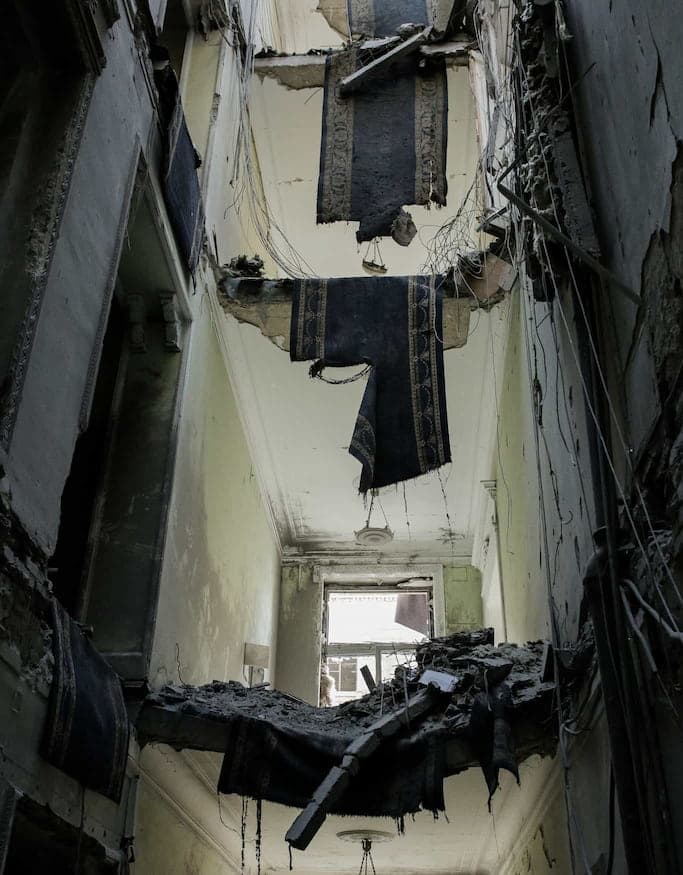
February 24. We woke up to heavy artillery fire from the direction of the Eastern district. We start running around the apartment, grabbing things and deciding on the fly what to put in emergency suitcases. We drive to pick up the second car, which is winterized right in the Eastern district. Things are extremely bad. Hundreds of cars at gas stations. People are frantic. We grab the car under nonstop volleys and race to pick up my mother-in-law. We fly back. An hour later, my mother-in-law learns that a shell hit her stairwell, striking the gas pipe. The first floor and a neighboring car were torn apart.
February 25. My birthday. Explosions. Even my parents from the neighboring district couldn’t come. My wife and I, along with her parents, celebrated with a little salad and a muffin. In the evening, my wife’s parents moved in with us.
February 27. The scheduled due date. We arrived at the maternity hospital under nonstop shelling. The doctors said my wife would stay with them. Joint delivery was out of the question. I left my wife and went home. We stayed in touch for the rest of the day.
February 28. Constant explosions and shelling across different parts of the city. Power outages, gas and water disruptions are already happening. In our district, all utilities still work. Communications too. But getting food and water is a problem.
March 1. Drove to check on my wife. Brought her home to bathe and warm up for a few hours: the maternity hospital is cold, no electricity. Shells hitting schools, apartment buildings, private homes, and hospitals. Took my wife back and returned home. After a hit on the school in the neighboring yard, it clipped a power substation — electricity gone. We’re without power but still have communications.
March 2. My wife calls in the morning: “I’ll give birth today. There might be no connection. They won’t let you into the hospital. If I don’t get in touch today, I’ll be waiting for you tomorrow at 10 a.m.” No connection.
March 3. No information. I race to the maternity hospital. In the dim light, I see my wife with a little bundle in her arms. She’s very weak, but the smile is there. “Please take us out of here.” And I did. The baby was born on March 2. Meaning yesterday. I didn’t know a thing until today.
March 4. First night with the baby at home. No electricity. Gas remains. We use it to heat water for bathing the baby. No water either — during the day we tried to get 19 liters, standing in line for about two hours. The explosions don’t stop. Mortar fire from the neighboring yard. The blast wave nearly blows out the windows.
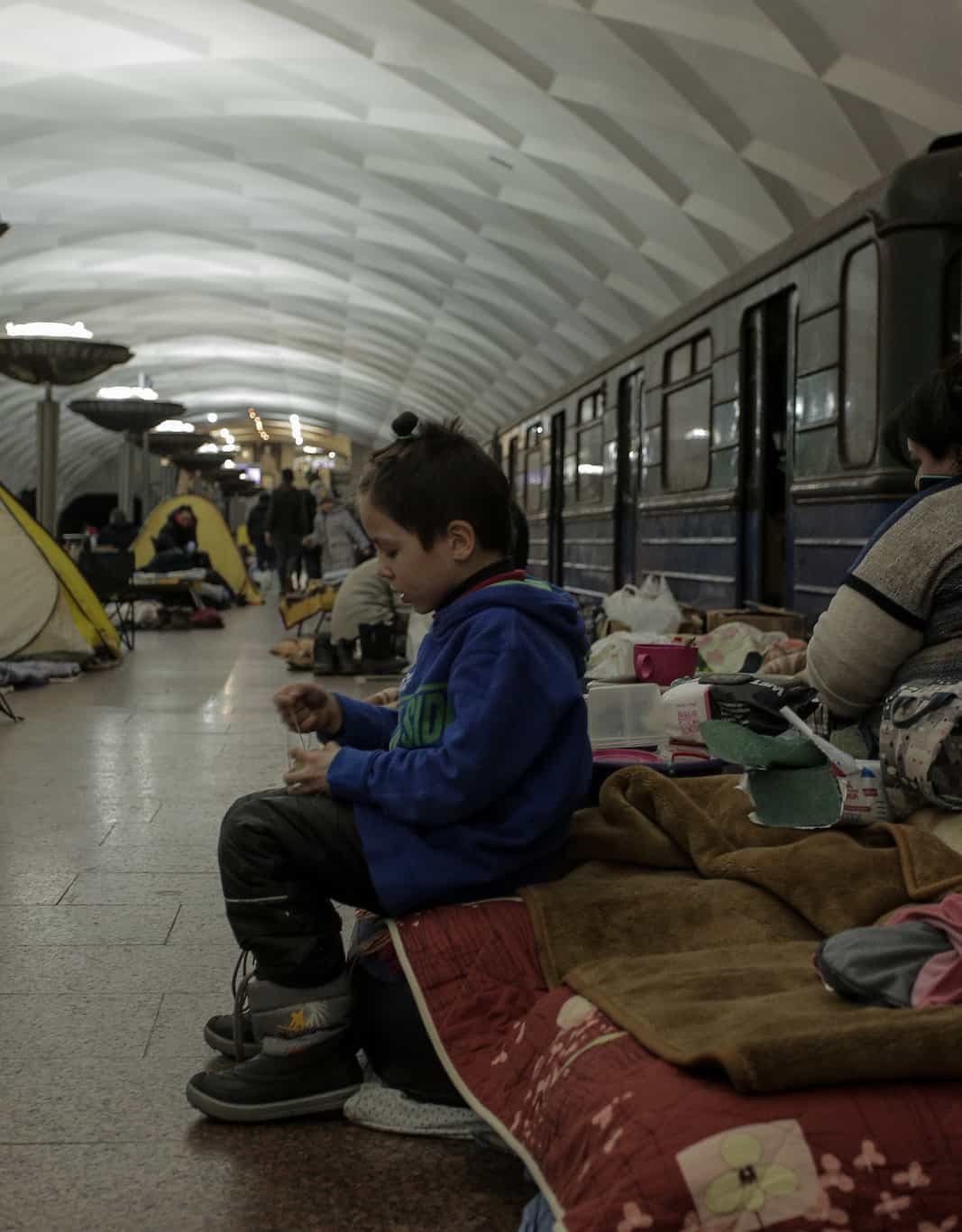
March 5. We decide to go check out the office where my wife works: it has a minus-1 floor. There’s room for us. I leave my wife and baby in the shelter and drive with my mother-in-law back home for things and the second car. Shelling and strikes don’t stop. Driving through the city is nerve-wracking and fast. They offered us a separate room. Most people live 10–20 to a room. We realize we made the right call moving: there’s running water here! At home, we’d been hauling rusty water in 19-liter jugs just to have something to flush the toilet with. The diesel generator runs for one hour in the morning and one in the evening. People help us with everything they can.
March 6. The morning started with a direct hit from heavy ordnance on the office grounds. The whole building shook hard. We ran outside to see where it landed. Smelled heavy burning. Walking around the building, we saw a fire in the front parking lot. A car is burning. All drivers rushed there. I jump into mine and tear away closer to the building. I go into the bunker. The building shakes again from a second explosion: the car next to the one that was hit caught fire and exploded. My second car is parked almost directly opposite, and I took the risk. Crouching behind a substation wall, I start the car with the remote to save time. God bless the creators of remote-start systems! Inhaling about ten liters of air, I sprint to the car. I didn’t drive away — I launched myself out of there.
March 8. Azov Regiment positions have moved closer to our shelter. Company employees used a satellite phone to ask the military to move their positions farther from the office. The positions were moved.
March 9–12. We try to negotiate with police to leave in a convoy through a green corridor. We ask for food, water, and fuel. Water has stopped coming from the tap. People go for water to a spring 200 meters from the office. A few days earlier, on the way to the spring, a Grad strike killed several civilians — they were left lying there with their water jugs. All day we sit in dim light, whispering. We listen to gunfire and try to figure out: incoming or outgoing? We prepare food that can be cooked during the generator time — they’ve started running it once a day for 30 minutes. I call this “Life in 30 Minutes.” In that time, you need to:
— Boil a kettle of water. — Carry it to our little room and pour it into a thermos for washing the baby. — Start the rice cooker with porridge, potatoes, soup. And it all has to cook in 30 minutes. — Boil another kettle and make tea for the four of us. — Manage to drink a cup of coffee. That feeling is priceless.
During those 30 minutes, we feel a little more human. The temperature outside has dropped. The bunker is very cold, especially evenings and nights. The baby cries often. We sleep fully dressed, in two layers. We use the snow that falls in the mornings. Collect it in bags, buckets, to get at least some utility water. We’ve almost stopped using clean water and drink what was left from the tap. We cook outside, despite incoming and outgoing fire: 30 minutes of generator time isn’t enough to cook for the whole day. The explosions are so strong you instinctively crouch to the ground. The blasts knock the breath out of you. I pray every day.
March 13. 5:55 a.m. A horrifically powerful explosion. Glass shattering. We realize this wasn’t a miss. This was us. We run outside. Shrapnel in the lobby and outside. The strike landed 10–15 meters from our building. Five meters from my car. Thank God it didn’t happen an hour later: the shell landed right in the zone of our outdoor kitchen. I check the damage to the cars, because they’re the only possible chance of getting out of this hell. For lunch, we’re going to fry potatoes over a fire. Last night, half a sack of potatoes froze and had to be thrown out. Today there’s no hope of getting a green corridor.
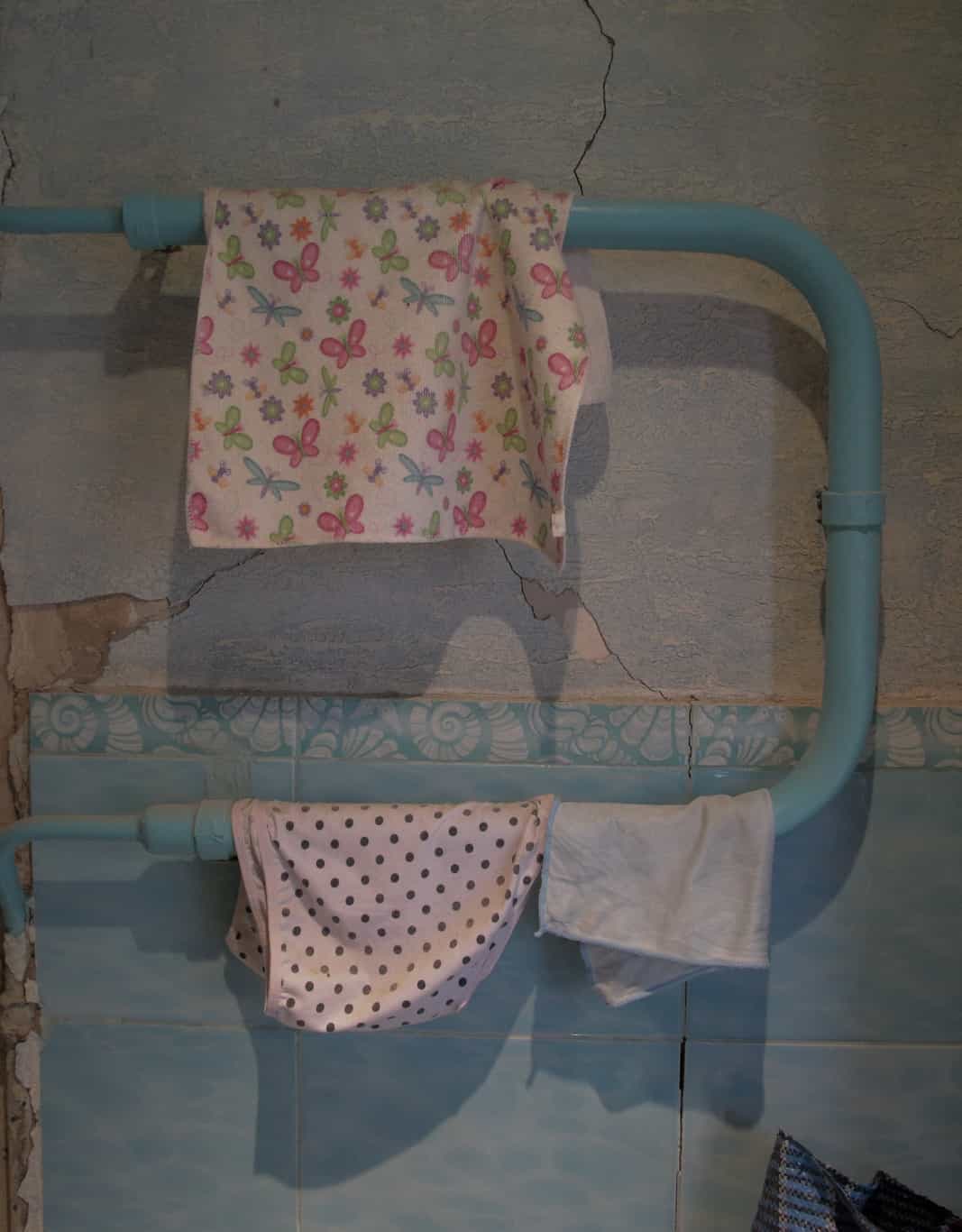
March 14. The baby has slept poorly for the second night. Very cold. During “30 Minutes of Life,” you heat the room, but it cools down within an hour. We decide to walk with my wife’s father to the maternity hospital, to get at least some documents for the baby. We walk under shelling, and I can’t believe my eyes. I don’t recognize the district. I don’t recognize the place. I realize I won’t be getting any documents for the baby. The room is 15 degrees. We change the baby’s diapers in a makeshift tent under a blanket. Volunteers brought aid. The baby got a pack of diapers, swaddling cloths, formula, and a bottle-thermos. They brought food. My wife got sweet cookies, crackers, cheese, buckwheat flakes. They also gave us sour cream, smoked wings, a piece of bacon, and bread. During the day, we even had a sandwich with butter and cheese each! We start packing. From two suitcases, we make one.
March 15. Began evacuation around 11:20. Spent about four hours in a line to exit the city. A motionless traffic jam of cars under shelling. Hundreds of cars and people just standing and praying that the shelling doesn’t reach us before we leave the city. And finally, we’re moving. Our goal for today is Berdiansk. Somewhere near the Portovskyi district, phones got a signal and the internet came back! Messages flooded in. No time to respond. We’re driving from hell into the unknown. We reached Berdiansk around 10 p.m. A huge thank-you to the Red Cross coordinator who helped us find a place to stay at the city hospital. In Berdiansk, there’s light in the windows. Streetlights. Quiet. No gunfire or explosions. We were incredibly lucky with the hospital room. It had a shower! We took turns showering, washing off everything we’d lived through over two weeks. An indescribable feeling.
March 16. Packed up early in the morning. We head to Zaporizhzhia in a convoy of 12 cars. We passed 15 checkpoints held by DPR and Russian units. And 5 Ukrainian checkpoints.
No major difficulties, though local commanders decided to play generals and show how important they were. At one checkpoint, one such commander let slip “Should shoot you all,” but apparently someone reined in this village “general” and he deigned to say “Proceed to inspection.” One car was practically turned inside out. They didn’t bother with ours. Moreover, the soldier inspecting our car whispered an apology and said: “The boss showed up, damn it. Let’s pretend I checked everything. Please drive through — you have a baby.”
Along the way, a bridge was destroyed in the village of Kamenske. We had to detour past a minefield. Car by car. Spent 2 hours and finally reached Ukrainian-controlled territory. The next several kilometers were under constant mortar fire. We saw fires and one burning car that had been hit. Anti-tank hedgehogs on both sides. We fly past one burning Lanos after another and keep going. We broke through. Upon reaching Zaporizhzhia, we drive to the arrivals registration point. Here people warm up and even eat something. I walked up to the guys and asked about food and prices. “It’s all free! What would you like? How many of you? Here’s a hot first course for you! Here’s a second! Can you carry it?” At that moment, I nearly cried. We managed to survive! We made it.