Instagram Post Text
Attention! Translation was done using AI, mistakes are possible
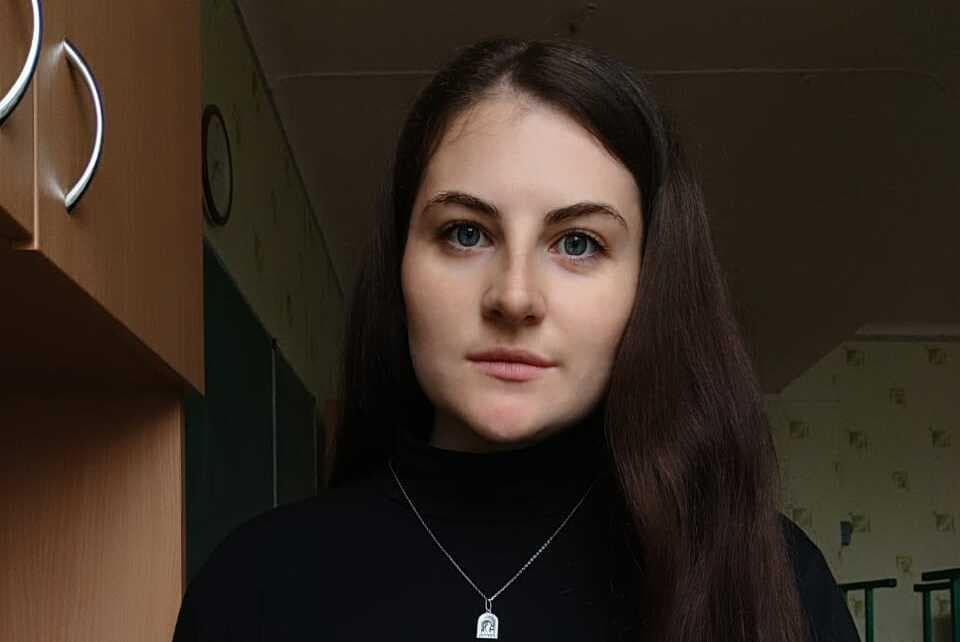
Liia: On February 24, I woke up because the dog was barking and car alarms were going off outside. I ask Lyosha what’s happening. Lyosha says: “Someone just hit a car. Go back to sleep.” I’m like: “Okay, Lyosha said so — I’m sleeping.”
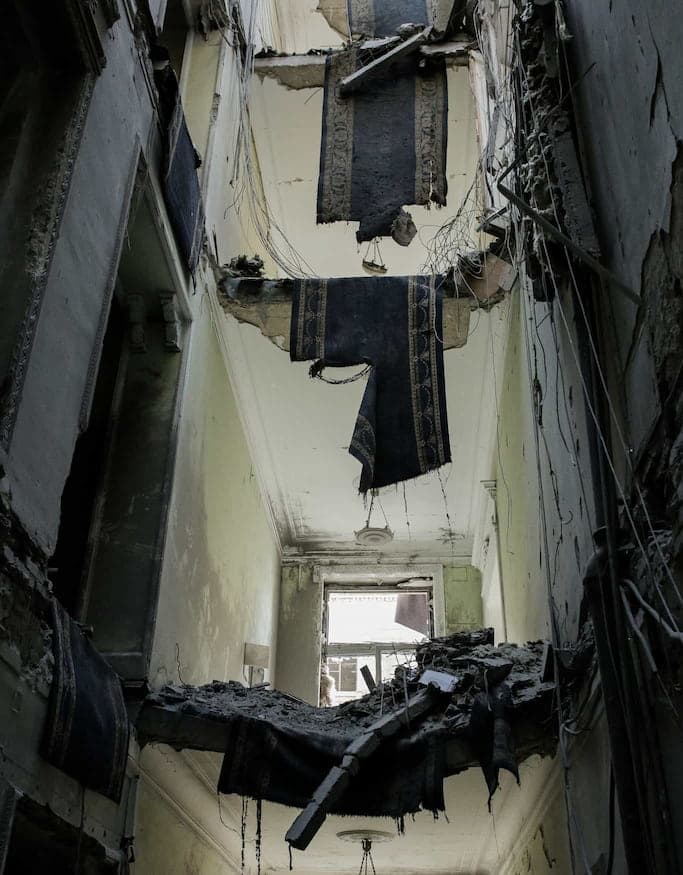
Our maximum capacity to be stunned was reached on March 9, when our grandmother died and we went to get a coffin. We decided to stop by our house to grab the remaining things. We pull up to our intersection — a tank with the letter Z is standing there, firing at our neighborhood. The turret starts turning toward us. That was the only situation where I didn’t scold Lyosha for driving through the city at 140.
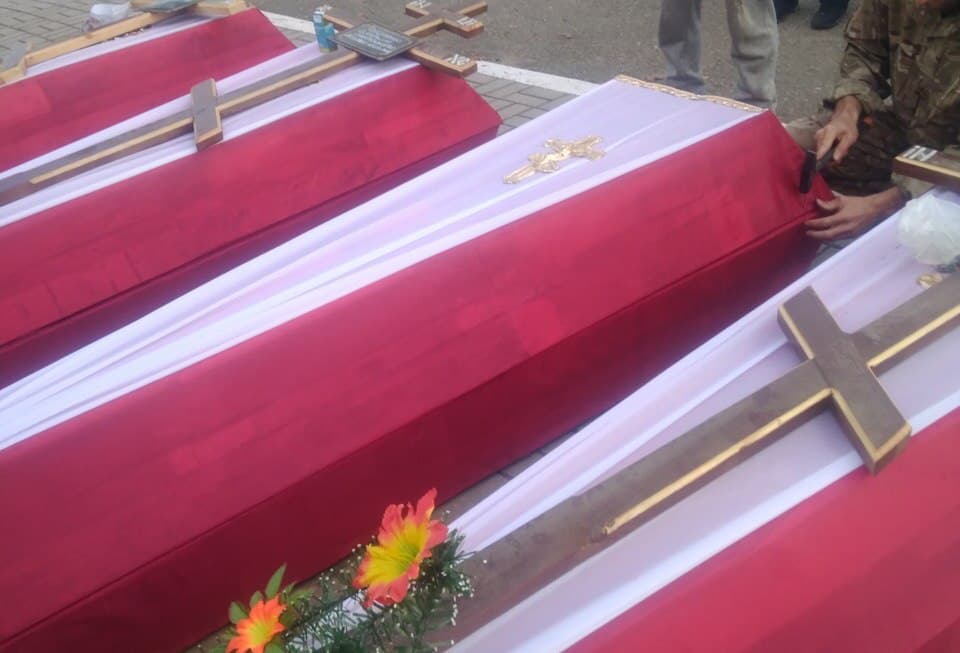
We buried our grandmother in the garden. Lyosha and my father spent 2 days digging the grave in the frost. Many people were burying their dead in their yards. An ordinary 9-story apartment building, a courtyard, graves right there, people cooking food on fires, children playing on the playground. The scariest part: people get used to this.
We recalled things our grandmothers told us about the war — tried peeling potatoes so the “eyes” remained, so you could plant them. We’d stand in line for humanitarian aid that might be delivered. On March 10 or 12, I was number 3,005 at 9:30 in the morning. Only 268 people got through that day. Looters figured out this trick too. There were 2 lines: one for humanitarian aid, and next to it — one for cigarettes stolen from shops. I was 187th in the looters' line, and only the first 30 people got to buy. It’s despair when you go home empty-handed — no humanitarian aid, couldn’t buy cigarettes. You walk down the street and can’t see a single butt you could smoke. You understand that maybe you’ll die tomorrow, and you just wanted to at least have a smoke!
Lyosha: At work, I had a team from Russia and Spain. They immediately created a chat for Ukrainian employees. The director spoke — he couldn’t believe this had happened. He ordered that all employees be given several months' salary in advance, while money could still be withdrawn.
In the first days of war, people were very organized. When bread was delivered, nobody took the whole thing — two loaves max, and they’d pass the rest back. Then chaos began. When the electricity was cut, every store was looted, everything torn apart and scattered, the huge grocery stores were burned down. Some seemed to have been deliberately targeted.
You didn’t know what was happening in the next district. You didn’t even know what was happening on the next street, because you had no means of communication. Our only sources of information were the water queue and the car radio — when the Russians weren’t jamming it. We’d listen to the news and hear songs by Shura or Pugacheva. I will hate Shura’s songs like never before. There were air raid sirens in the city until the electricity was cut. After that, you only found out you were being shelled when it was happening.
Liia: I heard: “Great news — a green corridor has opened in Mariupol.” Half an hour before that, an SMS had arrived: “Everyone who leaves the city voluntarily will remain alive.” The Russians would sometimes turn on mobile service to send texts from number 777. From the same number came messages: “Ukrainian soldier, surrender, come out to the highway.”
I open the front door and say: “A green corridor from Mariupol has opened.” We hear a whistle, and at that moment a strike hits our summer house. The car took the blast wave — it was totaled. My mom was closest to the explosion. She was bending down to pack things into a bag at that moment — all the shrapnel flew over her. Another shell hits. A neighbor was standing nearby — shrapnel struck her, splitting her head open, blinding her in one eye, but she survived.
At night, I lay in the basement and said to myself: “Please, can we just die quickly.” Lyosha said we needed to buy a car or beg someone to drive us out. We said: “Your grandfather escaped from Auschwitz. Something will definitely work out!” The shelling was pouring down.
Lyosha: Everything’s being shelled, you’re running around, knocking on every gate where you see a car. I went to about 50 families — everyone laughed: “Who’s going to sell you a car right now?” Then this guy shows up who had 2 cars. I say: “What will you take for the Lanos?” At first he said he wouldn’t sell, then he said 4,000 dollars. We haggled down to 3,500.
People were standing on the road, grandmothers flagging down cars, holding 200 hryvnias in their hands. You drive past them and feel like such a scumbag. You think: “How can I fit them in?” And you realize you absolutely can’t. We drove 20 kilometers from Mariupol, and already coming toward us were military vehicles with Z’s, Russian police cars, DPR license plates. At the first checkpoint, they pulled us out, led us into a basement at gunpoint. They stripped me completely, looking for tattoos, rifle bruises on my shoulder. I showed them my Russian passport — they didn’t care at all.
We made it out of the occupation. At the Ukrainian checkpoint, I show my Russian passport and my travel passport. I’m so nervous. The guy just laughed at me: “Relax. What are you tripping about?” In general, I’ve never once had an incident in Ukraine — with the Russian language and a red passport — where someone said anything hurtful to me.
Liia: My strongest negative emotions came when I saw Russian soldiers. It was as if they’d been let out of prison and told: “Sic 'em!” Such scum. They were disgusting — unwashed, smirking. Stupid faces, stupid eyes. I was especially “delighted” by the guy who was trying to find out if we had drugs or alcohol. He said: “We just really need some.”
We initially decided to go to Berlin. My dad had a heart attack. He’s with us. Mom too. We don’t leave our own behind. Even the cat that Lyosha is allergic to.
Lyosha: Damn, the hardest thing for me during the occupation was that cat — which I’m severely allergic to. I’d wake up choking. I was hoping that if the food ran out, we’d collectively agree to eat the cat.
We feel a lot of support from the Germans. People just gave us their cottage, which they normally rent out for 200 euros a night. A friend from Odesa recommended me to an exhibition organizer (a contemporary Ukrainian art exhibition “Captured House”). I sent my works, and they said: “Great, we’ll take them!”
Being more Ukrainian than Russian at heart, I still feel guilty. It’s traumatic to know that the country where you were born and lived for 20 years is doing such horrific things — and it’s supported by its people. A person who became a soldier has a thousand opportunities not to destroy homes and not to kill civilians: he can surrender, shoot at the ground, even go to prison — but the only thing he chooses is to kill.
Nobody treats Russians badly, even after everything that’s happened. We spoke Russian in Uzhhorod. I even managed to get car insurance by showing the woman my Russian driver’s license.
Russia has brought so much pain! Calling us a brotherly people, and then coming and cold-bloodedly doing this. It’s simply horrifying.