Instagram Post Text
Attention! Translation was done using AI, mistakes are possible
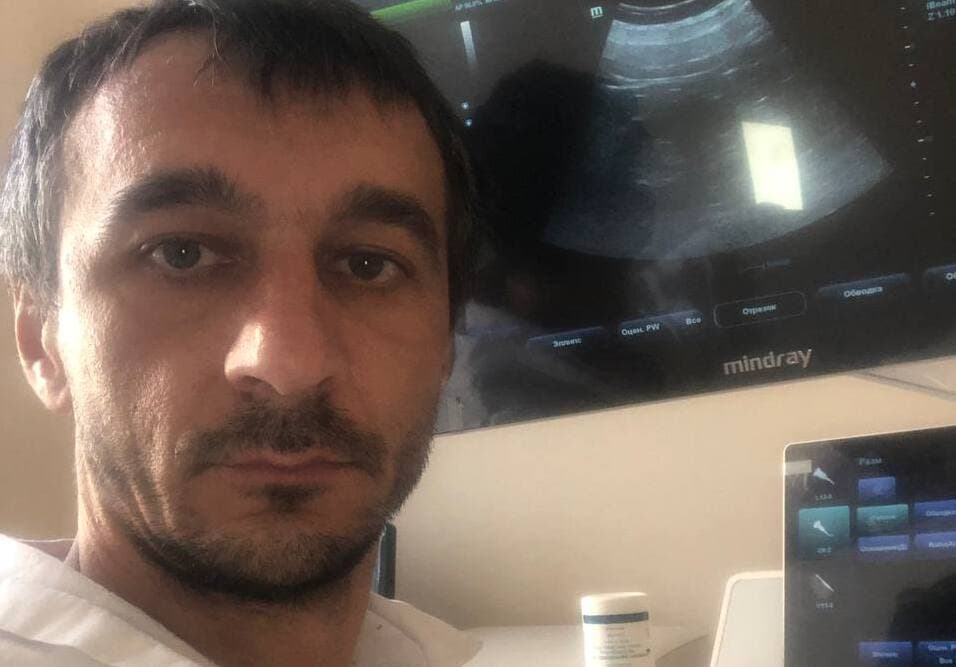
On February 28, I went for an ultrasound and found out I was pregnant. The gynecologist showed me a tiny little pea on the screen.
We really wanted a child. I called my husband — he cried. That very evening, we were already looking at strollers and cribs.
On March 2, my husband and I were sleeping. We didn’t hear the air raid alert, though we can usually hear the siren clearly even at night. The first explosion happened, and we were thrown off the bed. We got up to run to the bathroom. We’d usually hide from shelling in the bathroom — our building has no bomb shelter.
As we were running out of the room, the second explosion hit. The blast wave threw us — we didn’t even understand where — and we were buried under concrete slabs. My husband managed to slightly curl over me to protect my belly, and said: “I can’t feel my arm.”
They later showed us footage of the building — it turned out that where the bathroom had been, there was now a chasm. We were right beside that chasm. The fact that we didn’t make it to the bathroom saved us.
It was very hot. Above us, beside us, on top of us — slabs. Our right arms were more or less free. We tried to reach up to our heads and clear small pieces of rubble away from our mouths, just to get some air. We were breathing concrete dust.
My husband was breathing very rapidly. As it turned out later, his lung was already punctured, his ribs were broken, his spleen was ruptured.
We couldn’t move anything besides our arms. Our legs were pinned by the slabs. We tried to shift the slab, but it was impossible.
My husband remained conscious the whole time. I started losing consciousness from lack of air. He kept calling out to me: “Anya, let’s shout together so they can hear us.” We shouted in unison.
I was screaming into the slab — I felt like a fish hitting its head against an aquarium wall. I was sure nobody would hear me.
My husband kept reminding me about the baby: “Anya, Anya — just don’t hurt the belly.” He tried to reach my belly with his right hand. I think what saved us was the desire to preserve this little life. We kept saying: we have to give birth to our little pea, our little bead.
Then I saw the light of a flashlight. Then — a rescuer responding to our cries for help.
He said: “I can hear you, guys — we’ll come to you now.” But they couldn’t get us out quickly: the fifth floor was hanging above us, we were blocked by slabs. If they disturbed them, they’d collapse on both the rescuers and on us.
A rescuer carved a small burrow through to us. He took off his protective gear — all those jackets, the body armor. Otherwise, he couldn’t squeeze through to us.
I finally saw his face. He took my hand: “Calm down, everything’s okay.” I couldn’t let go of his hand. He says: “That’s enough, let me go” — but I couldn’t, because the fear was so overwhelming that he’d leave and never come back.
When they pulled me out, a sharp pain hit my body. I was shaking violently. Photographers' flashes were blinding me. Then I saw the paramedic, the doctors.
My first question was: “Where’s my mom?” She lives nearby, heard those two explosions, and started calling us — but we weren’t answering anymore. She immediately ran to our building and watched them pull us out.
I was in such a state that I understood absolutely nothing. Because I was pregnant, they couldn’t give me any painkillers.
I was taken to the ICU at hospital number nine. They warned me right away: the chances of keeping the pregnancy were 50/50.
I asked my mom: “Where’s Yura?” Almost immediately, they reached his father by phone. His dad said Yura had been pulled out and was in surgery — his condition was critical but stable. He’d been sent to a different hospital.
We connected toward the evening of March 2, after he’d come out of anesthesia. I told him I loved him madly. He told me I was his guardian angel.
I tried to ask: “How long did it take them to get you out?”
He said: “I barely remember anything from that evening.” For now, my husband is very weak. He constantly worries about the baby and asks whether we managed to save our little bead.
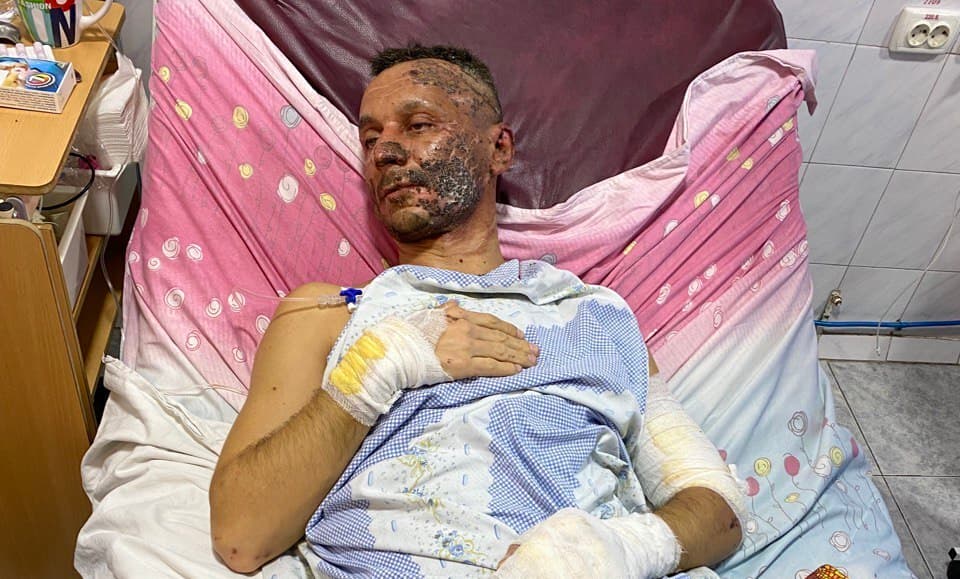
I have crush syndrome, a closed nasal fracture, and abrasions. My husband, among other things, has a crushed hand and an open fracture of the arm in two places. The doctor says he faces a very long rehabilitation. He’ll need a skin graft on his arm and a prosthetic joint for his hand.
I think about him constantly. When we fell, I immediately started screaming: “Yura, are you alive?” I can’t imagine what would have happened to me if I’d realized he was dead. I probably wouldn’t have even tried to save myself.
When my husband started coming out of anesthesia, he kept repeating: “Anya, Mira, Anya, Mira.” Mira is our dog’s name — a French bulldog. On March 4, rescuers pulled her from the rubble.
Of the entire apartment, only one small room remained. Most likely, we’ll be living at my mom’s.
People seek shelter with their relatives, their friends. Meanwhile, the local authorities washed their hands of it and said: “We have too many refugees from other regions, and there’s nowhere for you to live.” I don’t know why this city needs us so little.
The authorities allocated several million hryvnias for rebuilding the building (for this and other destroyed buildings in the city). But I don’t understand what can be rebuilt there. There’s an energy of death, suffering, and terrible grief in that place. People won’t return to that environment.
Right now, the most important thing for me is to carry a healthy baby to term and get my husband back on his feet. I’m already at the end of my sixth week. After that, we’ll start figuring out how to rebuild our lives.