Back
You’re like a Spartan wife. If I die, it will hurt, but you’ll survive
A Muscovite moved to Ukraine to be with her soldier husband. In May 2022 he was killed; now she is struggling to stay in Ukraine
Tatiana Milennaia left Russia for Ukraine to be with her husband, who served in the Azov Regiment. Her family and friends did not accept her choice, but she quickly realized she wanted to live only in Ukraine. She recalls her husband’s service, preparations for war, the final minutes before their separation on February 24, 2022, and his death in May on the battlefield. After her husband’s death, his brothers-in-arms supported her, but strangers on social media began attacking her, telling her to leave the country. As a widow, she was denied renewal of her temporary documents — Tatiana had not yet obtained Ukrainian citizenship. She fights for the right to stay, helps the military, and is painting a mural in honor of her fallen husband in his hometown.
Interview
Transcript
Transcript
Attention! Translation was done using AI, mistakes are possible
КА: Katya Alexander
ТМ: Tatyana Milennaya
КА: Hello, hi there!
ТМ: Good afternoon!
КА: Good, good! Look, let me tell you the framework of our conversation, I think it's already standard for you, you've already given big interviews. I'll be asking about you, about your story, about how you and your husband met, how it all started for you, about the war and about you now. I especially want to ask you about the mural you're painting.
ТМ: We're talking right now, I'm literally standing in scaffolding right now.
КА: I saw it in pieces in your stories.
ТМ: Yes, I try not to show it. I'm in a small town, Kamianets-Podilskyi, this is my husband's hometown. And since the city is small, there are such local city telegram channels here where they post news, and naturally, any passerby photographs it completely, and everyone here has already seen it. And I try to show it in pieces on my Instagram, to keep the intrigue, so that all people see everything at the end.
КА: And how long have you been painting it already?
ТМ: Already a month, today is the last day. We're now covering everything with varnish. We agreed about the publishing house, I just covered the last piece. There's also a videographer filming here, how I'm talking with you. We're taking down the scaffolding, the last beautiful shots are being filmed - people's reactions and just beautiful shots of everything finished. So today is exactly the last day. That's why I don't want people to see it, there will be a well-edited video of how we started from the very beginning, from an empty wall. I wanted exactly that to be on the internet. Of course, it's impossible like that, it is what it is.
КА: When do you plan to publish the video? I mean if you're finishing today...
ТМ: Today, it turns out, the very last shots are being filmed. We're cleaning everything up nicely here, removing all the construction debris, and that's it, it's up to the videographer how he edits everything to music, everything will be beautiful.
КА: I'm jumping ahead, usually I say such things at the end, but I'll say it just in case right away - I'd like, if you don't mind, to also ask for photos-videos. We'll most likely publish your story either at the end of the week or at the beginning of next week. Right after you publish, we'd also like to show the mural.
ТМ: Photos, I think, will be much earlier, good ones from the photographer, and the video - when he can.
КА: Yes-yes-yes. We'll talk more about the mural so you can tell me the detailed story. Can you tell me about yourself, about how your love story began, how you came to Ukraine?
ТМ: In general, the story with Ukraine began, if we take mine personally, from childhood. When I was still studying in elementary school, it was popular in Russia, maybe in our circle, to send children to children's camp in Ukraine - Crimea, Ochakov. For the whole summer they sent me to children's camp here by the sea, in Crimea, of course, Ukrainian. This is just such a childhood story. And then, already at a conscious age, everything started banally with Instagram, with some common subscriptions. On the internet I met guys who lived here, with Ukrainians, with my future friends, with whom I now live and communicate. These are also my husband's future brothers-in-arms, as it turned out. That's how we all became friends on Instagram. We were sitting in one chat, and everyone was friends, corresponding, taking photos. I came to Ukraine - for a concert, just to meet with friends, we brought each other gifts, that's how it all spun around. My future husband Maksim was in this chat. Covid started, year 19, we all called each other on Zoom. That's how it somehow started spinning, that we began disappearing from general Zooms, began calling each other as a pair. Our friends began noticing that something wasn't right, because we constantly came up with some excuses so that...
КА: To be alone together.
ТМ: To seclude ourselves, yes. It turns out, it was already difficult to leave Russia, because of restrictions, all that. Before covid we had already seen each other in Ukraine - I came just for a concert, and we saw each other here for the first time. The second time we also met in Ukraine. I came from Moscow also to walk around, [visit] friends. And that's it, the third time - this is already covid, we're communicating on Zoom, and on one of these Zooms, or rather on FaceTime, he proposed to me. It turns out, the proposal was made, although we had only seen each other twice in life.
КА: Wow!
ТМ: The third time in life we're already getting married here, in Ukraine. I leave, and the fourth time in life we're already living together as husband and wife. I was never in Russia again. Such a story. We saw each other twice in life, the third time we have a marriage, the fourth time we live together.
КА: Wow! And how was it for you? Seeing each other twice - was it love at first sight?
ТМ: It's an adventure, so to speak.
КА: So immediately love, immediately felt that this was it?
ТМ: Yes, everything started with these FaceTimes and Zooms, we started communicating and texting until 5 in the morning, until 6 in the morning. Texting, calls constantly 24/7, that's how it happened. Yes, regardless of the fact that he proposed to me, I already had the idea of moving here to Ukraine, because all my friends are here. In Russia the whole situation is tense in general, and the regime, and everything, and everything. Plus, and also the war since the 14th year. I decided for myself that I'm leaving after all. I'm leaving for Ukraine to my friends, it just all happened in parallel specifically with Maksim. I was just finishing my second education in Moscow and was just thinking that I'd defend my diploma remotely, because covid, get my diploma, get my driver's license, take my cat, load the cat in the car, all my things and leave for my friends here in Ukraine. But it turned out a bit differently, because all these restrictions started. When I was already leaving for the marriage with Maksim, they weren't letting [people] out anymore. I had to escape from Russia. I bought bus tickets to Ukraine, and they removed me from the bus together with a woman, she was about 50 years old. The two of us were removed for the reason that we don't have grounds to leave the country. She was going to treat her teeth, she had a medical referral, but the border guards from the Russian side told her that you're not going for surgery, consequently, we can't let you out. And I simply have no grounds, we can't let you out of the country. We were traveling transit through Belarus with this woman. They remove us, it's already night, somewhere 3-4 in the morning. Maksim was very worried, because he was a reservist of Azov Brigade at that moment, plus, you never know who reads our correspondence that I'm leaving there, you never know what could happen. And in general [he] worried about how I'd cross the border. And so they remove us, I write to him that I'm going to you, they removed me, if anything, look for me in the fields. We got in a car with this woman, at borders there are people who transport bypassing border checkpoints. We got in a car like this with her, somewhere 4 in the morning, and that's how we drove with her through clover fields to the first city in Belarus, this is Orsha. In Orsha we got out. I got there right during the protests [against] Lukashenko, waited out a day, because it was impossible to leave Minsk at all. I lived there for a day, so to speak, all the time in contact with Maksim, I say, everything's fine, in another day I'll still be here. And that's it, I already passed through the Belarus-Ukraine border checkpoint calmly, everything successfully. We got married, spent our honeymoon here in [his] hometown, in Kamianets in Khmelnitskyi Oblast. Then I left back to Moscow. According to Ukrainian law, to then enter here as a spouse, as family reunification despite covid restrictions. And that's it, the fourth time I entered, we were already as husband and wife, and I never returned to Russia again.
КА: This, it turns out, was the 20th year, if the protests in Belarus?
ТМ: 20th, 20th year, yes. The last entry here - this is 20th year September.
КА: And when you were going, weren't you afraid that Russian border guards would somehow figure out, do something to you?
ТМ: We were both very worried specifically about crossing the border, because at that moment I already had connections with familiar Russian volunteers who had left back in the 14th year, they were in the Azov Brigade at that moment. We were a bit afraid of all these connections, because, sitting [in Russia] in the 20th year and communicating with people from Ukraine, it was already, to put it mildly, dangerous. We worried, but Maksim really liked this about me, [said] that you have the same spirit of adventure as I do. He constantly said that: "I chose the right woman, the right wife. I'm glad that I married specifically you."
КА: And in general how did your circle in Moscow, in Russia, parents, relatives, friends, how did they perceive your decision to leave for Ukraine?
ТМ: I have such a family, quite vatnik [editor's note: slang term for pro-Putin Russians], and they didn't perceive it at all. They perceived it with such a smirk. I still remember this phrase that they tell me: "Well, usually people leave Ukraine for Moscow." With such intonation, you know, like it should be the opposite, that it's the opposite, that it's Ukrainians who leave there for earnings, to build life, and you're leaving the opposite way to a poor country and so on. That was the layout in my family's head. To explain anything made no sense, I just briefly explained that I'm married, my husband is there, that's it, I'm leaving, like I presented them with a fact. And mom naturally says: "Well, I won't put you on a chain, won't imprison you, you're already adult, well okay." And so I left calmly. My friend saw me off generally normally. [Friends] didn't understand a bit, because everyone had the thought in their head that usually everyone leaves from here to there, and I for some reason [do] the opposite.
КА: And didn't anyone have any stories about Azov Brigade, about Bandera [editor's note: reference to Stepan Bandera, Ukrainian nationalist leader], this classic stuff?
ТМ: At the moment when I already said that that's it, I'm leaving, there wasn't such [talk]. When I started living here already, we're already living with Maksim together, we're already a family together, everything's working out with work for us, I maintained communication with relatives, with some acquaintances, friends in Moscow. And already [things] flashed from my mom that come on, maybe you'll leave back. And friends like: "Still you're hanging out with Azov fighters there, you're friends with them in one company, still they're Nazis." I tried to [respond to] all this... and fakes also flew in, incomprehensible posts. To this I always showed the full version, specifically the truthful one, but people didn't delve in simply. They saw my small informational post there, and immediately "Azov" Nazis. I tell them that this isn't so, I explain, that at that moment there are Jews in the regiment, and different faiths, Muslims, there are many nationalities, but they [say] no, here are Nazis and that's all. They don't perceive information completely.
КА: And mom?
ТМ: Until February 24th happened, she called me back as a guest. I explained that I'm married to a person who is in Azov Brigade. I initially, when I was leaving, explained that this is a one-way ticket, that I chose such a husband for myself, this is my choice, I'm leaving to follow him, unfortunately or fortunately, this is a one-way ticket, that I won't return back. If we can meet somewhere, then it will most likely be third countries, as neutral territory. It all went past the ears, wasn't perceived, like what war, no restrictions, you can travel calmly. Here I'm already living here, we're living with Maksim, such calls started, like "let's come visit you, this and that." And my mom went to already Russian Crimea. I fought with her about this, explaining my position. This is just a preamble to the fact that I'm still her family. She has a husband who is military, I explained this whole story with war. No, people don't hear, people don't hear, it was useless. Naturally, closer to the 24th, when, maybe you remember, there were the first such reasons February 14th, 16th, 18th, [they] pull up [troops to Ukraine]. My mom called me, we were still communicating at that moment, and with such intonation: "Well what, are you preparing?" I didn't understand at all what to say like that about, considering that I'm her only child, and I'm located here. This is just strange. And like: "Well what, are you preparing, oh no, nothing will happen to you, like stop it." I then reminded once more that here since the 14th year everything. Yes, it's in such a frozen state, but the problem still exists, and so, at minimum, to speak is unpleasant and ugly. And of course, on the 24th everything worsened many times over, and at the moment we don't connect at all, don't communicate in any way.
КА: And to Ukraine you come, you lived in your husband's hometown or in Kyiv somewhere?
ТМ: When I already arrived the last time, I enter here, and I was never [in Russia] again. Maksim had such a position that it's better we go live in Odesa first, there they speak more in Russian, and I'll have such a smooth, easy adaptation, it will be easier for me. Plus, my husband's best friend and his wife, my best friend, lived right in Odesa too. We came up with the idea that we'll, as two couples, live in one city, it will be easier for us, because my friend is from Minsk. She was also in this chat, we had jokes in this chat with friends about guys stealing girls from capitals, that her from Minsk, and me from Moscow they stole.
КА: You came to the country, of course, you were there several times, but childhood - that's childhood, that's a separate story. How was it for you to adapt? What did you expect, and what turned out differently? You must have had some expectations.
ТМ: I expected, of course, that the legalization issue would be somehow easier. Of course, now I already know many moments, my friend also from Minsk, we already learned all these migration [procedures] thoroughly. At that moment it was such chaos - registrations, document translations from Russian to Ukrainian. It was just unclear where to poke around, it's a long process, everything takes long. And the adaptation process itself was difficult. The first two weeks it was on such a vibe that I just came as usual, for a time, that we'll just walk around, go there, walk, look at beautiful places, on such, on an easy [note]. And then, when already the first month, second, it was already morally just difficult. I understand that from documents I have a posvidka na tymchasove prozhyvannya [editor's note: temporary residence permit], which doesn't allow me to work officially. The first difficulties began - what to do, what to do, what needs to be done. Maksim had such a position that you're my wife, want to work - work, don't want to - don't work, I fully provide for you. But it was hard for me to sit at home and not work, you can go crazy, [I] needed to do something. Mainly moral difficulty. Specifically with documents it's just difficult, as a person immigrating from one country, which is hostile toward the country where you live. We lived 3 months in Odesa and then moved to Kyiv already. And that's it, in Kyiv everything already started spinning, it became easier for me, because Kyiv is still a big city. It's wrong to say that it's similar to Moscow, but it's similar to Moscow in the sense that it's big, that there's constant movement there, capital. We just moved to Kyiv, and that's it, I just exhaled. And Maksim says: "Yes, that's it, we should have [gone] to Kyiv after all, I see that it's easier for you, and it's easier for us," - and so in Kyiv we started moving, and everything became so much easier.
КА: You're a person with a Russian passport, were there any situations when it was unpleasant, awkward for you because of this before the start of the full-scale invasion?
ТМ: In general for the whole period from the 20th year until the start of the full-scale war there were no such cases, neither for speaking Russian, nothing at all. I walk down the street, no one knows what country I'm from, there were no such clashes. One single clash was when I started looking for work in Kyiv, I'm an artist-fashion designer by profession, makeup artist, I do hair, I put together [looks for] brides, makeup. I applied to salons and showed my resume and portfolio. Of course, in the resume practically all certificates and diplomas are from Russia, and at that moment I think, probably I won't write about this just in case. Such is my profession, that here they'll look specifically at work, specifically what I can do with my hands. And here's the first moment that happened, they called me back from one salon, and at that moment I already had the whole package of documents, like any citizen of Ukraine: both registration, and identification code, this is like our INN [editor's note: tax identification number], everything was there.
КА: Except passport, it turns out.
ТМ: Yes, except passport. And they ask me if I have registration in Ukraine. I say: "Yes, of course, I have registration now in Odesa, because we lived there." And they ask me: "Are you like from Russia yourself?" I say: "Yes, I got married, all that." And they ask me: "Tell me, do you have registration in Russia?" At that moment it seemed to me that this is a strange question, of course [I] have it, I'm from there. I say: "Well yes, I have registration in Moscow, because I'm originally from Moscow." And they tell me that, unfortunately, we don't need Moskals [editor's note: derogatory term for Russians], and hung up. This is the only, unique such case. Maybe I came across such a person. Never again were there any situations, everything calmly.
КА: Here's also interesting, I myself was born and raised in Russia, and I was always impressed by the scale of propagandized people. How much did you have an unzombified environment, how much did your love for Ukraine differ from what surrounded you, I mean before departure?
ТМ: Due to the fact that even the last years of my being in Moscow, finishing studies, completely living there, my communication consisted only of those people who either had left Russia long ago, that is emigrants whom they politically suffocated here, or those who were politically persecuted, they were pushed out of the country. Or these are volunteers from the 14th year, who are in Ukraine. All my communication consisted of such people, thank goodness, at that moment no one persecuted me for political beliefs. I just had the goal that I'll leave, because I have friends here, and I planned just to build my life specifically in Ukraine. The goal of staying forever in Russia didn't exist. I, of course, love Russia, I miss Moscow, specifically those places where I grew up. Naturally, I, let's say, walk somewhere around the city here, see some similar street, I immediately have flashbacks in my head. For place, the only thing, there's some longing. But the goal to live, unfortunately, fortunately, I don't know, there wasn't one, to stay my whole life to live there.
КА: And in general this chat, how did you end up there?
ТМ: We all were friends on Instagram, that is common subscriptions. With this girl from Minsk we had a chat in Telegram, just a dialogue between two. And she at that moment was already dating and later married a citizen of Ukraine, my friend. And she added him, and we got a dialogue of three. This friend added his friends. And that's how we gathered a small chat of, I think, 6-8 people. We all communicated in this chat, were friends. Someone writes that next week there will be a concert, it would be cool if everyone gathered. I look that my weekends coincide, that in principle it's realistic to gather in the evening, leave, spend 4 days with guys in Kyiv, somewhere in another city, leave late in the evening from there, arrive early morning in Moscow, and already run to work. We had such stories that I didn't even run home, just from the station to work, from work to the station. We just created this chat ourselves and communicated.
КА: Cool. And how did you start living together with Maksim? You moved in together the fourth time in life you saw each other. How did your joint life develop as a family, how did you adapt to each other, how did you get to know each other, how was it for you to live together?
ТМ: The moment of adaptation for us began at the moment of online. It turned out that we have a wagon of common interests. We were like silly people in love, we just met and we communicated with almost no one, disappeared from these chats and just together 24/7, super time. In this chat we also constantly texted, joked. When we already started living together, we immediately made it clear to each other that we're a family together. Our relationship developed such that besides the fact that we're husband and wife, beloved people to each other, we related to each other like brother and sister. We felt each other so much, this sounds bad, we felt each other by blood, that we're so similar, so much in common. Generally no complaints, we never fought. We just started living together, and just stuck to each other like two such pieces, that's how it developed.
КА: You say that a bunch of common interests, for example, what points of contact, conditionally, bonded you so much?
ТМ: What made him understand first of all that he made the right choice was that I'm easy-going. He loved mountains very much, loved hiking. And he's like: "So, let's go hiking." I say: "Maksim, what hiking, I've never been hiking, well what mountains?" I keep saying that I'm from the city, I'll die there, I'll whine, you'll regret that you took me. He's like: "Are you going hiking?", I say: "Yes, I'm going," - that's it. And we're already packing things, buying gas canisters. We go hiking with him, and he's like: "You see, you managed, everything's normal." He says: "You decided, went generally to who knows where, to a country where there's war. You didn't even blink, said nothing that it would be difficult for you, you just packed things and went." This is the main thing that he loved about me, that I'm such, easy-going.
КА: And did you have any doubts about agreeing to the proposal or not?
ТМ: He told me about this over FaceTime to my face, that's it, need to get married. And I tell him: I, of course, didn't imagine it like this, that it wouldn't be over FaceTime, but somehow beautifully. And immediately texted my friend from Minsk. I say: "Here's the thing, they invited me to get married." And my friend at that moment said such a good phrase, she was also just in the process of moving here. She said: "I have such a feeling that we'll all live together in one city. Make the decision yourself, this is your life, this is your choice. If you refuse, we'll all understand, we'll all still be friends, you'll still come visit us, or you'll move here to Ukraine. We'll still be together, he's our friend, if you refuse him, this doesn't change anything." I probably thought for two days more, thought. All this time we communicated and called with Maksim. And in the end I told him that yes, I'm ready, packing things, preparing documents, and that's it, ready to live with you, leave to you.
КА: And what were the pros, what were the cons, how did the decision-making process go in your head?
ТМ: Directly against, such didn't creep in, just the thought crept in that everything's fast, that we saw each other for the first time in life, then second time, the third time we're already getting married. Just a little scary that it's all too fast, and that I still have studies, and covid, and diploma, everything somehow both not on time, but also on time. Then already, when I already left, I understand that such important events in life, they come in such spontaneous moments, that everything developed correctly. Maksim was insanely happy when I finally said yes to him, that I'm leaving to you, I choose you. He said that I'll carry you in my arms, just come, just come, and I'll do everything. I say: "I'm going, I'm packing."
КА: And these doubts about everything being fast, you seem to be already well acquainted, because on FaceTime 24/7, but what argument won? Was it like adventure, like love, like what?
ТМ: We just communicated a lot with him. Returning to our relationship, that he and I felt that we're like brother and sister, that we need to unite. That is such a final [feeling], that we vitally need to be together, this is specifically final such a point. Feeling, love, naturally won out. Such [thing] can't be conveyed, such needs to be lived through in your life to specifically feel this.
КА: But still it was scary to take a one-way ticket with understanding that that's it, like mom...
ТМ: No, when I gathered all documents in Moscow, I already calmly bought a ticket, packed things, everything was good. That is fear that that's it, I'm leaving one way, there wasn't [any].
КА: It turns out that your whole life literally in the last few years was in Ukraine, not in Russia.
ТМ: Conscious life was also there, but here's life, in my understanding life, it began, naturally, here and began with Maksim. Everything that he showed, everywhere we went, all this was in the word life, and it began specifically really here, with Ukraine. Looking back, I understand that there was life there too, but I started living still here.
КА: It turns out, almost a year and a half you live in relatively peaceful time, the combat zone doesn't reach you. Your husband trains, probably serves in the regiment. How did these year and a half generally pass? What were the brightest memories before the start of the full-scale invasion?
ТМ: The brightest is, naturally, when in the 21st year he announces that he's going as a volunteer to war, that he's going specifically as a volunteer, not registered anywhere, just going. That is in case if, God forbid, something happens, then there will be huge problems what to do with him. We're already living in Kyiv, husband, wife, everything's good with us, we're building some plans. And an opportunity comes up for him to go to the frontline. He prepared for this, he wanted to. He warned me: "You chose such a person as husband who sooner or later will go to the frontline." I understood this, and he constantly prepared me for the fact that something could happen. We very often talked about death, about different such situations, that is he constantly prepared me for the fact that such could happen. From the most such bright events - this is when he announced to me: "Most likely, next month I'm leaving."
КА: In the 21st?
ТМ: Yes. This was May, end of May 21st year.
КА: And how he prepared you, can you tell more in detail?
ТМ: He and I had acquaintances who are already veterans, who had been in war for a long time. Different stories about killed acquaintances, about killed brothers-in-arms, about wounded, about, how to say correctly, well, amputated people, those who have no arms, in general, who remained some kind of disabled. We quite often talked about this, and he was always interested in history in general, war, military affairs, he really burned with this. We very often discussed similar [things]. He warned that if suddenly something happens to him, and I'm not ready, then it's easier to end everything. Of course, I didn't want to listen to this, and such conversations weren't raised anymore. I say that I chose you, I'm with you, doesn't matter what happens there, I'm here.
КА: And how was it for you with this awareness that your beloved person could go to war? In the 21st year, I think that far from everyone had the feeling that in general what's happening now, it was even slightly possible on such a scale.
ТМ: For such ordinary people, so to speak, who don't particularly follow the news there, what's happening in Ukraine - yes. In our case we understood that in the 20th year there's war. Yes, no one talks about her, but she exists, this exists. We just so calmly related to this, that, well yes, well he'll leave, it means he needs it so. This is his choice, I won't stop him. I, of course, talked with him, I say that if you're definitely sure, then I help you. I help you pack, help collect everything that's needed, I'll do everything, I'll help. I'll send you things there. That is, no questions or falling at feet, on knees, that don't go - no, such wasn't even discussed.
КА: And were you scared?
ТМ: Of course, it was scary, and in general you read news, people die there anyway. When he left, he sent me a message that at the position where they were supposed to just enter, a sniper killed a person, a citizen of Ukraine. The sensation of death, it's getting closer and closer, it's close, such was there, of course, this is war.
КА: So he went to the frontline in the 21st year?
ТМ: Yes, he left in the 21st year, stayed there and returned. He returned very inspired, with such already, well, not intentions, but with such thoughts already, probably, that sooner or later war will go.
КА: That is full-scale?
ТМ: Yes, yes-yes-yes.
КА: While he served, you must have had super unstable connection, how did you experience this?
ТМ: It was hard, but he warned me what can be voiced in phone communication, what can't be voiced. He trained me in this regard. Morally it was, of course, very hard, because I'm alone, despite the fact that there are friends, I'm still alone. Yes, there was support, but still it's morally difficult. And also such a difficult moment was that in Moscow my dog died, which [was with me] since childhood. Already morally difficult, and also the dog died. This was just in general. I told Maksim all this, I say, it's hard for me, I'm going crazy. And he told me that all these difficulties - this is just such a life path. I still remember these words and relate them to my situation in which I am now, that this isn't pain, this is just life experience. That this needs to be lived through.
КА: And how did you cope with this difficult state when your husband is at war, the dog in Moscow died?
ТМ: Well, the dog is such a thing. That's a dog, but here is human life of a beloved person. He still, despite being there, he supported me. He left at the end of May, at the beginning of June I have a birthday. Despite the fact that he's not physically next to me, that is he's in Donetsk, on Donetsk direction, and from there remotely he gave birthday gifts. Like he's not physically there, but he's still present. And his constant support, foundation helped not to go completely crazy. Of course, he tells about the fact that he has brothers-in-arms there, he went together with his good friend. I sent them packages, some treats. Like now happens in principle. So now everyone lives. So now live all wives whose husbands are on the frontline, girlfriends with boyfriends, everyone only survives in all this like this.
КА: And when he returned home, what did he tell about what was happening on the frontline before the start of the full-scale invasion?
ТМ: Of course, some things he didn't tell, because it's not allowed. What he considered necessary, what can be said, he told. Some situations with people dying, how these people died he, naturally, didn't tell. He told about training grounds, about what they shot from. He, as always, joked that like me and my friend the machine gun. Mainly, told about weapons. About specific actions he tried not to tell, so as not to traumatize.
КА: After the first trip to the frontline, did something change between you, maybe something became stronger? How did this affect your relationship?
ТМ: They strengthened more, because, as he later told me, the realization and conviction that "I once again convinced myself that I made my choice correctly, that you didn't run back to Moscow, knowing that I went to the frontline, that I could die there." For him these were indicators that everything he did toward me was correct.
КА: You still have this first contact with real combat actions, did this somehow affect you?
ТМ: For me Maksim confirmed his some nobility as a person, that these aren't just words, that he wants to go stand up to defend his country, but specifically, that he took and went, not waiting for some registrations, nothing. He just took and left.
КА: And he returned in the 21st...
ТМ: Yes, he went there for several months, a season. He returned and engaged in what he was doing. He was one of the leaders of the "Avangard" organization. He started his such political activity.
КА: And "Avangard" is...
ТМ: At the moment this is a combat organization that's in the assault platoon subdivision. Just before the 24th this was specifically an organization that was here. Now this is an organization that's completely on the frontline.
КА: And what happens next? Here he returns home...
ТМ: Everything returns to those paths as it was before his departure to the frontline. That is, we live together, work, and he spoke about war more and more often, more and more often some trips, preparations, shooting, all this happens more often. At the same time we build our plans together as a family. We planned children for summer 22nd year. We thought that we won't live in a rented apartment, we'll live in our own. We built our separate plans as a family, we dreamed about children. Then February 24th happened, and all people's plans, it seems to me, and our acquaintances', friends', everything went down the drain.
КА: And can you remember February 24th, what was happening?
ТМ: I can tell you a bit earlier, February 22nd, if I'm not mistaken. Yes, February 22nd he gets a paper that he must go to the Azov Brigade base in Mariupol. Because war began, as far as I know from stories of my acquaintances, not on the 24th, in those directions it began earlier, shelling became much denser, there became more of it. That is this began earlier. A paper came that that's it, he needs to pack all his things and leave for Mariupol, to the base.
КА: To positions? ТМ: Well yes, there, to prepare. And so it shook me up a bit, of course, so to speak. I think: "Well that's it, this already means something." He tells me: "We talked about how something like this would start sooner or later." I say: "Yes, I understand everything, okay." We were just planning to buy a ticket, he started gathering equipment, we bought everything. The 24th came, naturally, there was no more Mariupol. Although later he was planning to go there together with his brothers-in-arms, then everyone was talking about the blockade. He stayed to participate in the battles for Kyiv and Kyiv Oblast. Yes, February 24th happens. We, like everyone in Kyiv, wake up around 5 AM from explosions. I remember like it was now, we wake up together, and he tells me: "That's it, it's started, pack your backpack." And we already had things packed, everything was already ready. I look in the corner at all this equipment that he had stacked up, and I understand that, probably, today we'll see each other for the last time. As it turned out later, that's how it went. We finished packing all of this. We had pre-arranged meeting points in advance, both in our "Avangard" organization and among ourselves, where we meet in case everything really happens for real. And that's it, 5 AM, I call my female friends, he calls all of his. We gather, they take us away by car. He puts me in a car with his acquaintance, and that's it, this is the last time we ever saw each other at all. He loaded up, put me in the car, loaded his backpack, mine. And just kissed me on the forehead, said that's it, I love you, we'll stay in touch. And that's it, we said goodbye. I got in the car, they took me to Kyiv Oblast, where I lived for about a week, and then already, oh, what a week... Doesn't matter, I lived for some time, and then I ended up here with Maxim's family, in Kamianets-Podilskyi. This is Western Ukraine. He put me in and went to the meeting point where everyone was gathering, then they all got weapons at the nearest military commissariat. Then there were various battles for Kyiv and various sorties. They were in anti-sabotage groups. And that's it, as soon as he put me in the car, that's it, we never saw each other again.
КА: You said a very scary phrase about how you looked at these things and understood that, probably, you were seeing each other for the last time. How was this experienced in general, what thoughts were there, what sensations, what was happening to you in that moment?
ТМ: The most terrifying thing was that the battles would be frequent, that he would constantly be somewhere, and we wouldn't have the opportunity to even just cross paths, to see each other. The most, most terrifying thing, and it always stressed him out, that we wouldn't have the opportunity to see each other in person. Even with our eyes, even to wave across the road, that we wouldn't be physically available. Again, all the same, he was preparing me, they were preparing all the other girls, all the wives of acquaintances, everyone was being prepared that this could happen.
КА: All the same, preparing and living through it in reality are slightly different sensations.
ТМ: Yes, it's clear that you can't prepare for something like this, of course. The fact that we often talked about death... I can't say that he cultivated something similar in me, he amplified the thought that there is such a concept as a Spartan wife. Spartan wives, they never mourned their husbands who died in battles and wars. He always had such a position. Already full-scale war, he's participating there in battles. When he comes online, naturally, I under such my feminine influence tell him: here children were shot, here someone was tortured. Everything that happens in the news I tell him. He's like: "Tanya, I know this sounds very cold-blooded and cruel, but we need to be cold-blooded. This is war, people are dying, we might all perish. Maybe something will happen to you, we need to be cold-blooded. Everything can happen, but we will still see each other, meet." In general, we need to be cold-blooded. It's clear that this doesn't always work out, it's clear that emotions take over. I also cried a lot into the phone to him, which absolutely shouldn't be done when a person is in combat operations. Listening to tears on top of everything – that's certainly not good. But he still said: you cry it out, you'll call, and we'll talk. I would calm down, wipe away tears, I call him and say: "That's it, we can talk." And he says: "You need to be cold-blooded. You should be like a Spartan wife, everything will be fine, even if I die – it's nothing, you'll live on, everything will be fine. Yes, it will hurt, you'll get through it"
КА: How was this for you, how in general the role of a Spartan wife...
ТМ: It's clear that when this is said to you, especially from a husband who has chosen such a path that in case of something he might die – this, of course, hits hard. These are just such sharp words, it's also impossible to prepare for them. When he would say such things, and then our conversation would end, I sit in such a stupor for 10 minutes, trying to comprehend all of this. Then it just gradually becomes calmer, calmer, and you accept everything. Indeed, people are dying around, he chose the path of a warrior, this is a very noble path, and if such a thing happens, then it can't be changed. This is completely his choice, and I respect his choice. Unfortunately, this all sounds very cold-blooded and cruel, but that's how he thought I needed to think too. He had tasks set for me in case he died. That is, what I should do, how I should feel, how I should conduct myself, so that I wouldn't fall apart.
КА: This was hard to bear, yes?
ТМ: Yes and now it's still hard. Now it's still hard, because it's one thing to follow his, so to speak, instructions, that is to be such a stone, to hide some pain, tears. But all the same, all the same, when all these emotions take over, there are still hysterics and tears and everything. Then I wipe all this away, pull myself together, remember what he said, and that I need to hold on like this.
КА: I'll ask a question that I asked when he went to war for the first time. These are completely different conditions, when everything around is still exploding, full-scale war is going on. How did you cope with this at all, when on the other end of the line they tell you that you need to be strong, but being strong doesn't always work out?
ТМ: Such a difficult question. Everything in fact: cried it out, wailed, calmed down, gathered strength, that's it. Through tears, through hysteria, it all grows like this, this such cold-bloodedness to the situation, that is it kind of has to be present. He also always said that you cried it out, wailed, pulled yourself together, went and washed your face. Everything will be like normal. Naturally, besides such serious conversations, he also always joked that what if my legs get blown off, will you love me? I say: "Maxim, what nonsense, of course I'll love you, just come back." And it's clear that this such black humor, you can't go anywhere without it. He's at war, I'm here, and without such humor you really can't go anywhere. We often talked about our future, we dreamed about children. He has such hair, he's blond, but in the sun it's golden, wheat-colored, very beautiful. I have such dark-red, copper [color]. And we always dreamed that we would have children in these conversations, when he's standing somewhere in the sands at a position, and I'm in Kyiv in a warm bed. And he says: "We'll have little redheads." We called the children little redheads. He says, that's it, everything will be fine for us, we'll have little redheads, everything is ahead. He's like: the war will end, everything will be.
КА: That is, you together over the phone, while he was at the frontline, discussed the future, dreamed together?
ТМ: Yes-yes-yes-yes. As it was for us then, now it's like this for many. For many who don't have children, or have children but husbands are at the frontline, the future is discussed. Such thoughts, possibly some infantile ones about everything being fine – that's the only way we hold on, so to speak. It's clear, then you remember that your friends are dying, your husband's brothers-in-arms, it all, of course, gets worse. But morally this is impossible to convey, of course. You need to be here, to be acquainted with these people. It's hard. But then all this is realized – that this is very noble, that they left, they chose the path themselves, they weren't driven to the military commissariat or conscripted, they themselves, they left themselves, accepted this themselves. And we need to remember all this, for what they died, to honor, remember, at what cost, for what, for freedom. Absolutely, the worst thing is that at what cost, that very-very good people are dying.
КА: How did you find out about your husband's death? What was happening to you when this was?
ТМ: How this was... He died on May 26th. On May 24th he writes to me, as always, that we're going on combat missions, I'll be without communication for several days. And we had agreed that when he has combat missions, they still sometimes go on their phones anyway. We had agreed that he doesn't need to write to me, doesn't need to do anything, just a notification that you're online already calms me down by 90 percent. And that's it, he wrote that I'm going on combat missions, I love you, we'll be in touch. Everything as usual. It turns out, he writes to me on the 24th – nothing, on the morning of the 25th he goes online and doesn't go online anymore, that's it. The 25th complete silence, and we wives, girlfriends, we all communicate with each other and in this way we find out about the situation. I, for example, write to one girl, ask what's there with Maxim and with the other guys. And if her husband wrote to her that everything's fine, then we pass information about other people to each other like this. So, I write to her, ask if everything's okay, because her husband is brothers-in-arms with my husband, they were just nearby, together. She writes to me that everything's fine, that everything's fine. The 25th of May is already ending, already evening, late. I write is everything normal, she's like: everything's fine. I think, well okay, everything's in order. That's it, the 26th. He died, was killed around 11 AM. He, naturally, is no longer online. And I write to this girl, is everything okay, because Maxim has been gone for the second day. She doesn't read, but reads the message and doesn't respond. And I'm already getting a bit tense, strange. Then I write again. She reads the message, doesn't respond. As they later explained, that already all the close ones who were there knew that he had died, they just couldn't say it. They just couldn't say it. And that's it, approximately... Oh, we had also agreed that, despite the fact that he's there and he's without communication, so that I wouldn't write him many messages. And I write to him just one big message, about what's happening with me, that I went there, helped there, well such things. I had just written him a message that I'm going to help his sister here in the city. That's it, I'm already gathering, getting dressed, he's still not there, his online is not there. And the commander calls me. And that's it, I'm done, I just see that the commander is calling me, and the commander just doesn't call like that. And I'm done, I see, I just see the picture, I already understand – something happened. I pick up the phone, they tell me that such-and-such, Maxim died. If I'm not mistaken, this was the 27th, the next day, yes, the next day, I think. There was such a period that it's very hard to remember in detail. In general, they tell me that he died, he's now in the morgue, he's whole, like he looks good, he's in one piece, that everything's in order, but he died. I immediately, and this was the Zaporizhzhia direction, he died in the Zaporizhzhia direction. I tell him, the commander, where is he, I'm buying tickets, I'm coming. He told me, what are you, completely? You don't need to go anywhere, we'll bring him. I didn't immediately have the thought that that's it, that I need to think about something, my first phrase that I said was where exactly, I'm leaving. In a few days they already brought him, there was the funeral. The day of the funeral – generally a terrible day, I don't remember, we had a photographer, they were photographing there, I only later from the photos, I only looked at a couple of photos, couldn't look further. There was just such a period that was just scary. I practically don't remember anything that happened in those days. They later told me that people came up to me, told me something there, tried to calm me down somehow, I didn't remember at all that there were any people. Such a moment of stress that in general.
КА: That is, at that moment the psyche shut off everything, it turns out...
ТМ: Yes. It's clear, immediately started taking sedatives, well, all this, these medical pills entered everyday life. And just Maxim's dad, I was living here in his dad's apartment, in Maxim's room. Just literally half an hour later dad came, we sat together, tried to calm each other down somehow, but this is just unrealistic. So we sat at the table and discussed what we would do.
КА: And what did you discuss?
ТМ: Well, what to do, how, at that moment his sister was pregnant, and we just thought what to do simply. How to say, what to do, what to do now. That they'll bring him, what should we do.
КА: I can't even imagine, even close for a second, not one iota can I imagine what it was like for you at that moment. This is terribly scary.
ТМ: This needs, I say, God forbid anyone to experience such a thing. This is such, I don't even know how to describe, such sharp pain, it's hot immediately from heels to head.
КА: This was last year, in May '22?
ТМ: Yes-yes-yes.
КА: Do you remember... Yes, I interrupted you, speak, speak.
ТМ: Yes, I'm just looking across the road at the murals, just looking at the date. More than a year already, May 26th.
КА: There was this period when you generally don't remember well what was happening. Do you remember the period when you began to realize what had actually happened?
ТМ: I think, probably, after... After, probably, maybe a week, came the realization that he hasn't appeared for a week, that he hasn't written for a week. Such a thing simply for our entire acquaintance, from our very first, from the first correspondence, from the first suggestions, such a thing never happened, that he was gone for so long. The realization, it was coming more and more, realization was coming, but I convinced myself with each such realization that he was just still on combat missions there. He's busy, he just doesn't write. This gave such like pseudo-calm, that well he's just on combat missions. He's just busy, that's why he doesn't write.
КА: This was already after you found out? That is, you were trying to convince yourself?
ТМ: Yes-yes-yes. Periodically, until now there are such, well, I perfectly understand that he's gone. I perfectly understand because I saw him, I saw him dead. I realize that he's gone, but still somewhere in my head sometimes, inside myself... when it becomes very sad, when there are already tears, when it's already everything, this pain reminds of itself again, I tell myself in my head: "So, he's just on combat missions, he's just busy." That is, he's on combat missions, that's why he doesn't write.
КА: So the first realization came, when you apparently first blocked the thought yourself that this is true. How in general did this process of understanding that he had died happen for you?
ТМ: Constantly everything in the media, constantly posts that in such-and-such direction volunteer Kvapysh Maxim died. I constantly saved them all for some reason, I don't know why, so that later I don't know what. Constantly, constantly reminders, constantly brothers-in-arms write, acquaintances like: Tanya, we sympathize with you very much. These words, of course, don't help at all, but people want to support somehow. Here constant reminders about this, it keeps it like this.
КА: That is, on the contrary constant reminders make it easier for you, it turns out?
ТМ: No, not that it's easier, but on the contrary realization that he really, he really isn't there.
КА: More than a year has passed. Can you try to remember how in general your adaptation to the new reality changed over this year, to this irreplaceable tragedy? How do you experience all this?
ТМ: At first, the first, probably, months, it was morally like a piece was taken from me, that they took from me, that they took the most valuable thing. That is, such some sensations were there. All this also through tears, with a girlfriend we started living together, well, the one from Minsk. We started living together with her, and we even initially agreed that if, God forbid, something happens to someone, then we will live together. These first months... just these constant tears, this feeling of grief, generally terrible atmosphere, it's awful to be in it. I know that there are wives who experienced similar grief, and they couldn't handle it and just did something to themselves. I think that to be in such an atmosphere of grief, despair for a long time, yes, this is the worst thing. And absolutely I think that my husband and the husbands [of other women who] perished, died, they wouldn't want their close ones, people they love to be in such a state. And gradually, gradually, it's clear that with time, it just gets a bit easier. The pain doesn't go anywhere, it just becomes easier, because you need to do something. I remember Maxim's phrase when he was at the frontline for the first time. He told me that if something suddenly happens to me, you have "Avangard" and my family. And I live with this phrase until now. When it became a bit easier – this is already, probably, after half a year, I completely went into our organization. That is, volunteer work, everything I could take on myself, all help to our assault platoon, to all my husband's brothers-in-arms, completely on me and on a couple more people. You just needed to get into this and start working a lot-a lot, this started to distract. Only this way you get out of this grief, this state. And, strangely, you become stronger when you're involved. I just don't calm myself with the fact that if Max saw what I'm doing, what I'm occupied with, that I don't sit crying, wailing, left for some other country or something like that. That he sees that I'm here, that I help all his brothers-in-arms. He would say, I think, that I'm doing well.
КА: I'm sure of this. And the first half-year you just lived through this grief from inside...
ТМ: Yes, these are constant tears, generally constantly... alcohol, naturally, was there, but left after a month, probably. Just hard, well, impossible to convey this. Unfortunately, you have to live through it.
КА: As far as I understand, you didn't manage to get Ukrainian citizenship before the start of the full-scale invasion.
ТМ: Yes, I wouldn't have managed anyway. There the process of getting citizenship is generally very complicated. We were planning to do everything exactly as needed, according to the law. That is, after two years of marriage, the first two years of marriage I get temporary residence, temporary residence permit. After two years I have the right to get immigration permission, permission for immigration from one country to another, from Russia here, and apply for permanent residence. It's, I think, 5 or 10 years. And after that people can apply for citizenship. That is, the path is such, quite long.
КА: Almost 10 years, it turns out.
ТМ: People live here for decades, 10-20 years, and they don't have citizenship. This is a complicated process.
КА: And did you have difficulties in connection with this in somehow legally handling the funeral, everything else?
ТМ: Already after the death?
КА: Yes-yes.
ТМ: It turns out, Maxim is still alive. He participates in battles, all that, and my... I forgot how to say in Russian... term of stay in the country was just ending. I came to the migration service, came to Kyiv, to the main office. I came, they took me, so to speak, for interrogation. They asked dates when I entered, arrived, husband's date of birth, date of marriage registration, because I was living in Russia. It was unclear to people what to do with me. I explained everything, that I'm here completely accepting the Ukrainian position, I help, I don't communicate with relatives, that's it. I'm completely here. Here my husband is now at the frontline, what should I do, how should I be with documents? They told me that just 15 days before the end of my documents to come with documents where it's written that my husband really is in a military unit, that he really participates in combat operations. Based on this they could extend my documents. In the end they tell me that next time come with these documents. It turned out that next time I came with a death certificate. I enter that same office, they recognize me and say: "Oh, we'll just be dealing with extending documents." I say: "We'll now be dealing with something else." And I just show the death certificate, that's it, people's expressions immediately change. That's it, from that moment all these bureaucratic difficulties in legalization begin, because the husband dies, and if before his death he was my representative in the country, a physical person who represents me in the country, plus my husband. And now he's not there, and it turns out I have no basis for being here now. From this moment all problems appear.
КА: And what kind of problems are these, what do you have to go through considering that you lost your loved one?
ТМ: The most elementary is the question of legalization specifically, that you need to find some documents, grounds for staying in the country. This, naturally, was volunteer activity. That is, for extending documents, to be here on legal grounds, before I brought a marriage certificate, and Maxim came with me. Since he's the representative, he has to physically come and represent that, well, this is my wife, and that's it, they extended it for us. Now nobody can come, naturally, just documents on volunteer activity. That is, such was the situation. The first year they extended for me based on volunteer activity. The year ended, I need to extend further to legally be here. New decrees appear that for Russians extending permits based on volunteer activity no longer works. We try in every way to solve all this through normal legal means, so that I'm here without violation, so that everything is in order, so that my history in the country isn't, there, expired certificates, such things. We go with initiative ourselves, that let's, we need to think of something, we need to come up with something, maybe some, maybe not volunteer work... we think constantly. In connection with the full-scale war going on, and naturally more and more restrictions for Russian citizens. At the present moment, thankfully, there are people who help me, these are my father-in-law, and my husband's brothers-in-arms, friends, acquaintances, but also absolutely services, structures like DMS [editor's note: State Migration Service], this is the migration service, MVS [editor's note: Ministry of Internal Affairs], this is the Ministry of Internal Affairs. Thanks to DMS and MVS I have such status of state interest, and at the present moment my documents are submitted for consideration of citizenship. Accordingly, they're already in the president's office, that is, under consideration. Now my lawyer and I are looking for everyone who is not indifferent to my situation, we're waiting for a decision.
КА: It turns out, not only your husband's brothers-in-arms, but also people from structures, from migration, also meet you halfway and together with you solve your situation? Did I understand correctly?
ТМ: Yes-yes-yes-yes, all these contacts with services, all through a lawyer, naturally. We make a lawyer's inquiry with explanation, with some request, this is how we communicate in writing through a lawyer. The services are inclined to help me, they understand my situation, but in connection with the full-scale war going on, it's clear that there's a corresponding attitude toward Russian citizens. And it's clear why all these restrictions, why they don't allow extension of documents and so on. It's just that the situation is that such situations happen, like my situation, that a husband died, and what should I do. There's an absolutely mirror situation with another girl. She's also from Russia, if I'm not mistaken, also from Moscow, but her husband died in Mariupol. Different stories, naturally, but the situations we found ourselves in are the same. And such situations need to be considered, of course.
КА: Of course. I'll never be able to understand, but I'm trying to model at least minimally – here you are in an emotionally very difficult state after all this, and you also need to resolve legal issues that are connected with whether you stay in the country or not. How do you experience all this?
ТМ: It's hard, this beating down doors, each time telling the whole story, how I ended up here, this is terribly agonizing. Plus, it's clear, there are sometimes some incompetent people in structures who don't really want to listen to a Russian woman's story, and someone else will, maybe, say that it's a Muscovite's story. That's how it sounds. It's clear that it's morally even worse, because it happens that you can hear in your address: "Well, we'll check your story for truthfulness." This just sounds disgusting. I perfectly understand Ukrainians, I perfectly understand their attitude, this can't even be called an attitude toward Russian citizens. But there are such cases, like me, who chose life here, who left for a loved one. And I think I have the right to at least be heard. Yes, of course, it's hard, all these appeals to services, migration offices, it's hard. Now I come to them like to my own home. Thankfully, that after so much time it was possible, not without the help of MVS and migration, and my own lawyer, and directly the association of families from Azovstal, the girls, Yulia Menada and Katya Prokopenko, "Radish's" wife also help, we're in contact with them. Generally these are titan women.
КА: Yes, I interviewed Menada.
ТМ: You need to look up to such people.
КА: This is true, when I was doing the interview with Menada, even before Fedosyuk's captivity, I was very impressed.
ТМ: Yes, these are just incredible two women.
КА: Thank God that there's such support in the form of them. How often do you have to face such dismissive attitude from different people when you're trying to achieve citizenship?
ТМ: Directly in life there were several cases, only from incompetent employees of various kinds. Oh, there, from Russia, well such things. It's clear that the most negative feedback is, absolutely, the internet. The internet is generally the most terrible thing that could be in my situation. People who read interviews, in the comments... I perfectly understand that there are some bots there, and people who left for other countries, they worry very much about my situation, write all sorts of nasty things. I understand all this perfectly, but they just leave such angry comments that it's impossible to pass by. When the interview came out in "Bukvy" [editor's note: Ukrainian media], my friends, even my husband's brothers-in-arms wrote, said, under no circumstances go into the comments. When a person who is at the frontline writes to me, reads the interview and says: "Don't go into the comments." At the same time there are also military guys, my husband's brothers-in-arms, who after this interview write that I want to apologize for such fellow citizens who write such nasty things. That is, how different people's attitudes are.
КА: And what do people write, what are they trying to tell you?
ТМ: Naturally, there are good comments. There are people who are adequate, who more or less understand the migration service system, they understand there and express some...
КА: Sympathy.
ТМ: Words of sympathy, yes, empathy exists in people. The worst ones, this sounds very rude, that I'm a hero's doormat, that is, generally some inadequate ones. I myself perfectly understand that you shouldn't read them, these comments, but it's impossible to pass by them, you still go in and read this, and think: "Damn, well..." People are so angry they'll devour themselves.
КА: And what are they trying to tell you with this...
ТМ: Like, that this is a husband who's a Ukrainian citizen, and he's a hero, died, but what does she have to do with it?
КА: When you first encountered such attacks in your direction, how did you cope with this at all?
ТМ: All this also into hysteria, into tears. Then I just sat, understand that so, thankfully in life I'm surrounded by normal adequate people, and with those people who write such nasty things in comments, I hope I'll have nothing in common until the end of my life, and I won't know such people, that they just don't exist. It's clear that it's offensive, but then you understand that in life there are no such people around me. They exist somewhere in comments, let them exist there. You just need to be strong, and I, again, always in such bad situations, and in good situations, particularly in good comments, always remember my husband and think, if he heard this, he would have fought with all of them, would have knocked all their teeth out for me. He would definitely be for me, on my side, and he just wouldn't have let a single word be said in my address, in his address.
КА: Right now you're finishing a mural in honor of your husband. Can you tell how you decided to do this at all, what kind of mural this is, how you're making it?
ТМ: The main part is done directly by the artist. The artist lives here, in Kamianets, and I'm like his apprentice. The artist does his work very well, very beautifully and resembles him, here he giggles, says that I'm praising him. It all started simply with a sketch. Since I'm an artist-designer by education, Maxim constantly talked about this in our conversations. He told me a couple of times such a phrase, he said: "I hope you'll draw me." I don't know, in general, I didn't draw him. In my sketches I don't have him. And when we're here in the city, dad in particular made all memorial plaques for his son, he made them on the house, in the school, at the college. I got the idea that plaques are, of course, good, this is respect for memory, but it would be cool to do something like not adapted, but designed for young people. A mural is really cool. I had acquaintances in Kyiv who also had murals made. I thought, yes, a mural. Plus Maxim asked to draw him, but, unfortunately, I didn't draw him. I first made just a sketch, just on paper. I contacted an artist who's from this city. I say, there's such an idea, interested in timeframes, cost, how, what, how all this can be done. We found common ground with him, he agreed. I showed him one sketch. He helped us finalize the ready, completely ready sketch. Another girl, a designer, so we made the final version of the drawing. It turns out, in February this year I came here to the city to get permission from the local, here it's called city council, local authority, city, well...
КА: City council, I understood, in general, a governing body.
ТМ: Yes-yes-yes, so they would give me permission so that everything would be proper, so as not to disturb anyone. Closer to summer they already gave me permission. We wanted to do it on the anniversary May 26th, but we postponed because there was bad weather, and the artist was busy, and I had various problems at work, it didn't work out. In the end we started in June, in a month we're finishing it. This is such a 2.5-story drawing, the work is generally very colossal really. The artist is generally super great, he allowed me, I drew. Here, it turns out, his main figure, he's in military uniform with a weapon, in his favorite panama hat. He just loved panama hats very much. In a panama hat, mountains, and on the sides left, right mountains, because he loved hiking very much, mountains, such like a composite drawing of him. He's the main figure, and around what was main in his life, what he loved very much. I think he went crazy for these mountains. Once he invited me on a week-long winter hike. I say: "Well, I don't know, I'll probably die in the snows," he says: "No, here's everything you need, you won't freeze," I say: "Okay." He's like this in the mountains here with a weapon, below an inscription, call sign, numbers. And I left now a small such piece here on the left. There will be such a glass plaque. It will be written who this is, that the mural is dedicated to such-and-such, and there will be a QR-code. That's why this is more designed for such a young audience, because not all people of adult age will approach and scan, not all. And this will be a QR-code with a link to a site where there will generally be stories about Maxim. I gave a task to each, separate close circle, these are combat brothers-in-arms, close best friends and family are doing this. Well, and me. From each person there will be a story connected with Maxim. A story of acquaintance, something that people want to capture in the history of acquaintance. On this site there will be a story, stories from each close person. I think I came up with all this coolly in my head, now all this needs to be done.
КА: And did you yourself choose what story you want to write there from yourself?
ТМ: No, I think I'll write, probably, last. I don't even know, honestly. While I'm working on the mural, drawing something, I'm just living through now, constantly some thoughts come, some phrases that I would want to tell him, those phrases that I told him. I just write them down in my notes. Most likely, then I'll gather all these phrases, reread everything and include them in my story that will be published there.
КА: And do you remember, for example, phrases, connected things between you that you remember, can you give some examples? ТМ: Well, the most important ones are, of course, that he, we talked about the little redheads, this is generally the top, top of all phrases in our correspondence. If you enter "little redheads" in the search in our messages, there will be, I don't know, hundreds of messages probably. This is, undoubtedly, little redheads. The most important thing we dreamed about. He always had this phrase: "I want 10 children." I say: "What 10 children?" — and I'm shorter than him, I'm 159 in height. I say, will it work out with me to have 10 children, I say: "Let's have at least 3, — I say, — I'm for it, let's do it, 3 is totally cool." He's like: "No, 10." He always said this with such intonation that it's either a joke, a joke-statement, or he's seriously saying this, because he said it without a smile, like: "No, 10 children." 10 little redheads, yes. Well yes, little redheads.
КА: And now you're looking at the mural with his image, you literally, as far as I understand, didn't leave it for a month. How is it generally now to look at this work, at your beloved person, how are you in all this now?
ТМ: Oh, so since Max had his own vision of death, that he wouldn't want any celebrations in his honor. He's like, he also always said that in case he would have any awards, then these awards should go to volunteers, that he doesn't need that, that he doesn't want people to constantly talk about him. Here I, of course, didn't listen to him, made this mural. It's just that he looks so much like himself here, and I think he would definitely be happy about this. I think he would like this idea.
КА: Well, there are also mountains there, of course.
ТМ: Of course, there are mountains here, there's even a little house, and 5 of his friends are drawn, just from the winter hike. Among these five friends there's also his figure too, so there are two of him here, let's say. I think he would say: "No, don't, what, I'm not a hero," — because he had such... Didn't like when they praised him, that is, like that. I think he would like something like this. Another idea like this, I think that in his honor, when I resolve all issues with citizenship, with all these payments, because, undoubtedly, this needs just good money, this is to open a shooting range in his honor. First I thought, some section, because he did sports, wrestling, tourism, loved jiu-jitsu, he loved all this very much. There are gyms in the city. We thought with friends that it would be cool to open a shooting range. A shooting range in his honor, where there will be different types of weapons, you can shoot. Unfortunately, this is relevant, but it's also interesting.
КА: God grant this will stop being relevant sometime soon, of course.
ТМ: Yes, plus, if you think ahead, that after the war, unfortunately, there will be many veterans, and they will need to work somewhere. And if everything works out, if everything succeeds, then there will be such a place where such people, veterans, could be shooting instructors for ordinary people, for some groups, whoever just wants to learn to shoot, some courses. Such people could work there as instructors. I think it would be interesting for them.
КА: Excellent idea.
ТМ: We just need to get this.
КА: Unfortunately, yes, but I hope you'll achieve it.
ТМ: I think, yes, that it will work out, I think it will work out. Plus, I think that Maksim didn't like when I tell him that you're doing great there. Some of my girlfriends say that you're just a hero in general, he's like, oh come on, like stop it. I think that if we open some such thing, related to weapons, training, then this is just, I think, he would really like it.
КА: And did you generally think about what, if suddenly, God forbid, of course, it doesn't work out with documents, is there some plan B, conditionally?
ТМ: No, there's no plan B. Someone will advise and help, but I specifically don't consider the option that I'll have to choose some other country and leave, no, I'm here.
КА: This is home.
ТМ: Well, I'll be illegal, I don't know. I can't morally just allow myself to leave while his best friends are on the frontline, I just can't. And even if, let's conditionally imagine, that in a year, tomorrow, the day after tomorrow the war ends, everyone returns alive, whole, and it seems like you can leave, then I won't leave, because he's here.
КА: And how are things with his parents, did they accept you well?
ТМ: Yes, everything's normal. I come here to the city, I live together with his dad, and it's good. Sister, here just we made some corrections to the drawing, they came from far away, the artist draws here every day, my eyes get tired. They come, suggest something, we corrected together, and came to what's done now. In this regard, thankfully, everything's in order.
КА: Oh, I even for a second...
ТМ: Here I even teared up.
КА: God, I, I always feel like this... I actually also teared up earlier, but I didn't want to... Actually, the only thing I want to say to you, first of all, that you said about Menada and about "Radish's" wife, that they're super strong and powerful. But I can say that you're no less, you're very strong, first of all, to tell all this, it's very hard. You're trying your best to convey all this, including his memory. Actually this costs incredible strength, you're very strong.
ТМ: Thank you.
КА: I'll ask you the last question now. There might not be an answer to it, and then we'll talk a bit about the technical part. Is there something about you, your husband, the full-scale war or the one that was before the full-scale one, about Ukraine, that you would want to tell, but I didn't ask you about it?
ТМ: I'm just often asked how I see the outcome, how I see victory. Not peace, but victory. I constantly say the same thing, that victory, namely victory — is when complete de-occupation of all occupied territories happens, including the city where Maksim and I got married. This is Nova Kakhovka.
КА: Oh God, the left bank.
ТМ: Yes, that friend I live with in Kyiv, the wife of Maksim's best friend, the one from Minsk. They have a common child. And this child was born in Nova Kakhovka. Now we live in Kyiv the three of us, me, my girlfriend and her child. And for me victory is when everything that's occupied is de-occupied. In particular this city, because it's the city where Maksim and I got married. This is such an important part. And this is the native city of this child.
КА: And why Nova Kakhovka, how did this happen?
ТМ: They lived there, my husband's friend, he's from Nova Kakhovka. My girlfriend when she already got pregnant, and their birth happened in Nova Kakhovka, and the child was born there. We went there to get married because there at that time lived, oh, didn't live, in general, that friend is from that city, and we decided that we'll all go there. This city is important, considering what happened there recently, it's very important, namely for us this city...
КА: Part of history.
ТМ: Yes. This is, undoubtedly, the return of all captives, return of the bodies of the dead, because our mutual acquaintances who died at Azovstal after the airstrike, those bodies weren't returned. Maybe they don't exist, of course, but, in general, return of all Ukrainians back here, alive, dead. Of course, we want the collapse of Russia, but that's such a thing. The main thing is that everyone is returned, Azov Brigade is returned, that's the most important.
КА: God grant this happens soon.
ТМ: Yes, returning to the girls, to Katya and Yulia, what they do — this is just generally, everything possible and impossible. We're more or less acquainted in person with Katya and with Yulia, these are just miracle women.
КА: Here I, unfortunately, I only wrote an interview with Menada, but I'm sure that they're both...
ТМ: Yes, with Katya we also periodically, so to speak, exchange some phrases of support, and she also supports me. Generally incredible women.
КА: You're all incredible women, this is really worth a lot. This is truly an incredible example of inner strength, and I think that there's nothing like this anywhere else in the world, of course. Tatiana, thank you very much for agreeing to tell your story. I know that comments are traumatizing, and I really hope we won't have that. Even if we do, it will be some minimal percentage, because, strangely enough, we have a Russian-speaking audience, there's a Ukrainian-speaking audience, and as a rule, they only pressure those who, I don't know, went to Crimea to vacation now. Strange people appear everywhere, but let's hope that if there will be, then it will be minimal.
ТМ: Thank you, thank you to you. So, then I'll run, there's a piece left for me, I see, I'll go finish drawing.
КА: Good luck with the mural opening.
ТМ: Yes, thank you, there just, over there I see, two, two little stones need to be painted over, and that's all.
КА: Good, excellent.
ТМ: Thank you very much.
КА: And thank you very much, that's all, all the best.
ТМ: Stay in touch.
КА: Yes, stay in touch.
Testimony Photos
In Sections
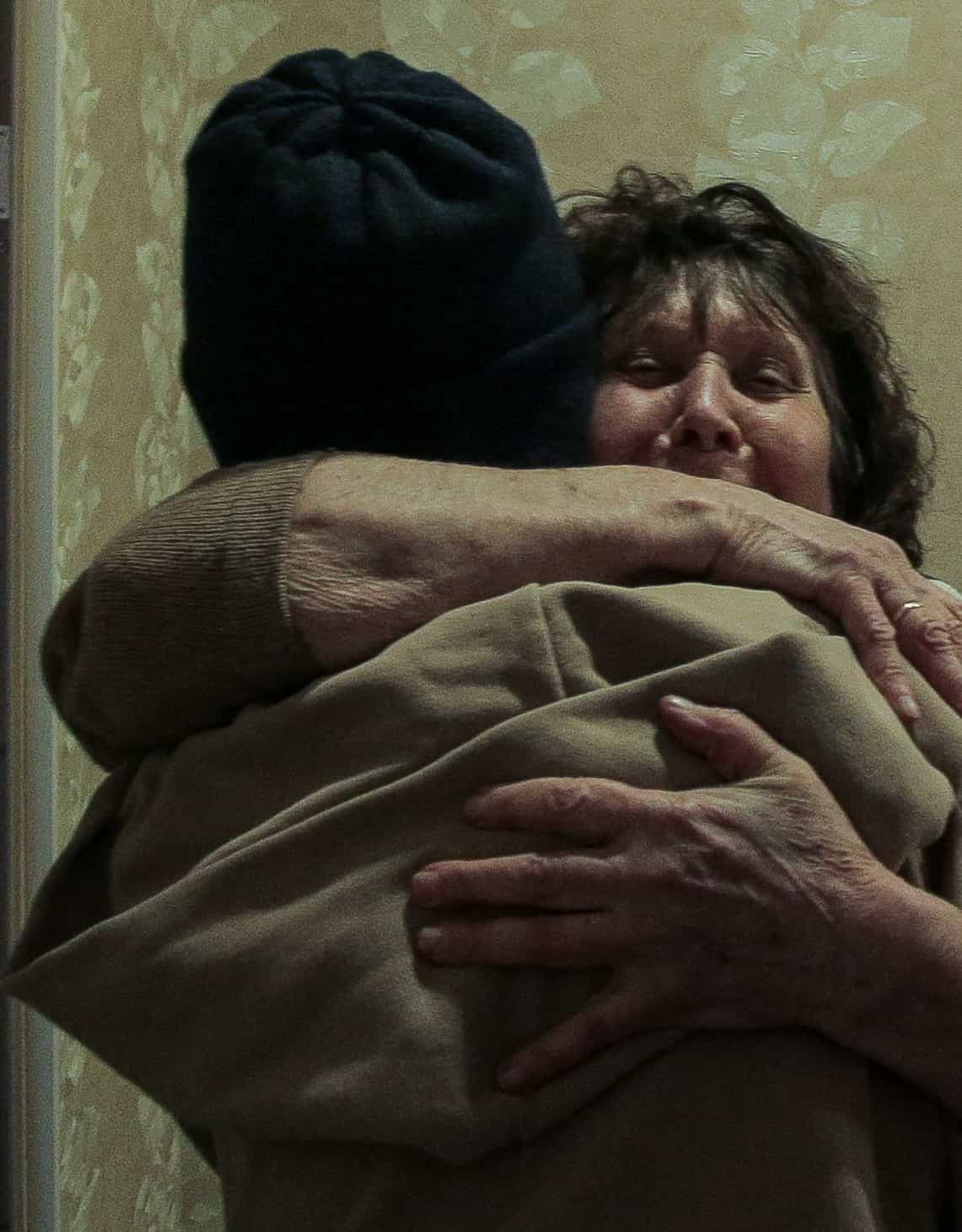
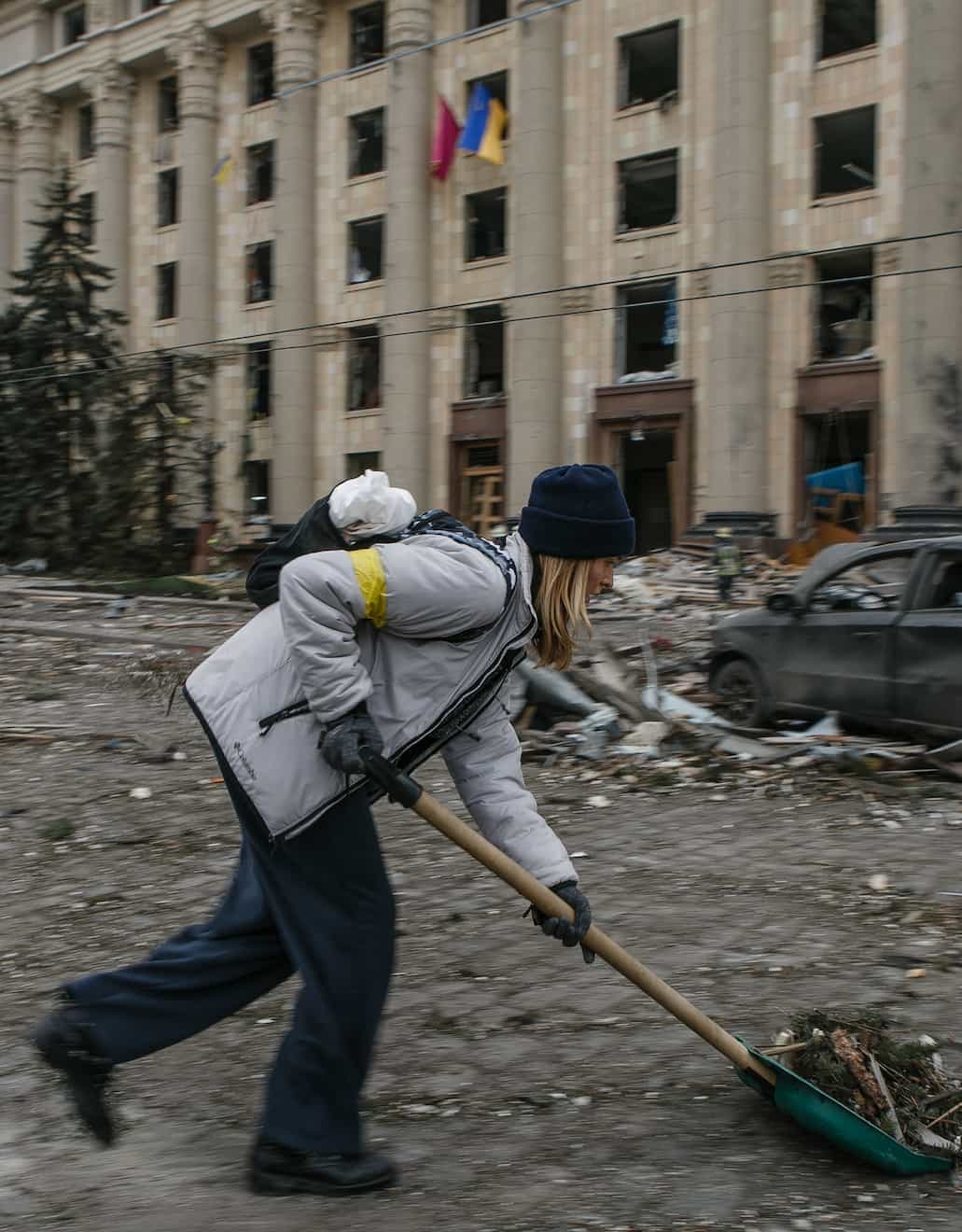
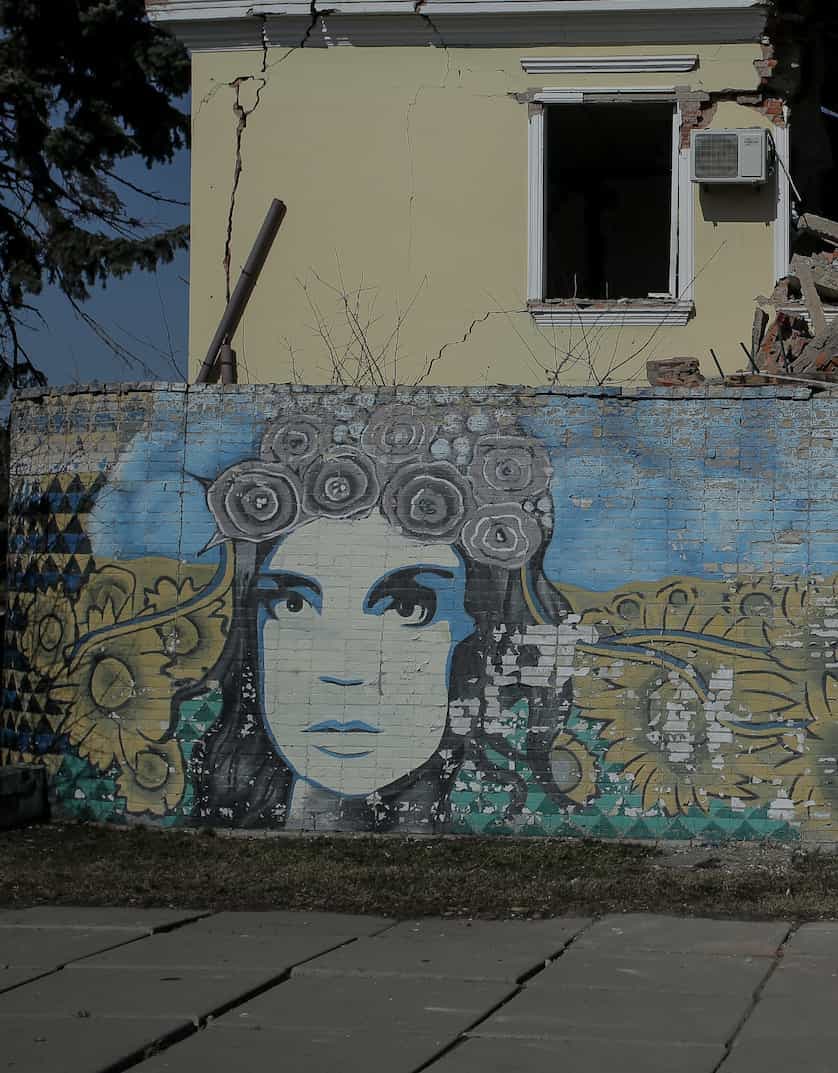
Other Testimonies from the Archive
- Recording
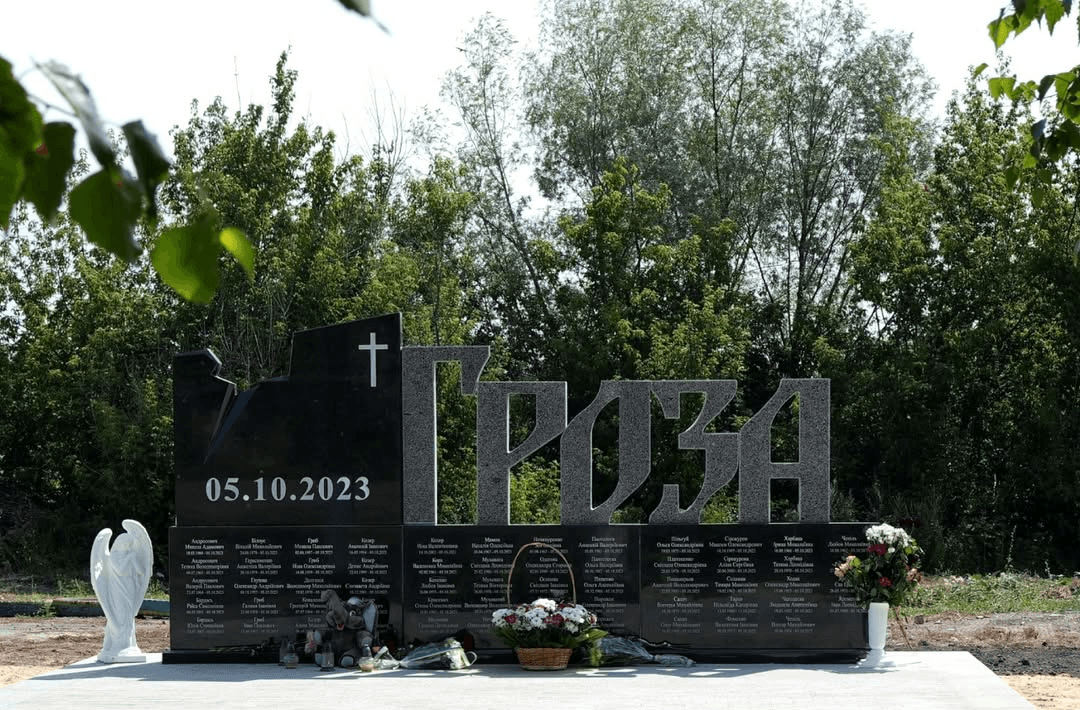
We won’t be here, but it will remind people that a Russian missile hit and killed half the village
A resident of the village of Hroza about the strike that killed 59 people
Volodymyr Bespalyi09/04/24 - Recording
For me, bread means sweat and calluses. And now blood, too
A Ukrainian helped his family work the fields and nearly went blind after stepping on a mine
Dmytro Yeliseienko04/25/23 - Recording
One must not lose the ability to love and not fall into total hatred
A Donetsk journalist advocated for peace talks with Russia but took up arms in 2022. He was captured
Yevhen Shybalov04/19/23 - Recording
Ukrainians are my brothers. Not a single dirty look throughout the entire war
A combat paramedic with a Russian passport serving in the Armed Forces of Ukraine
Anastasiia Leonova06/03/22 - Text
The coffins were sealed. There were three intact bodies; the rest were fragments
A Ukrainian man lost seven family members in one day. He couldn’t bury them for over a year
Vitalii Perehon06/21/23 - Text
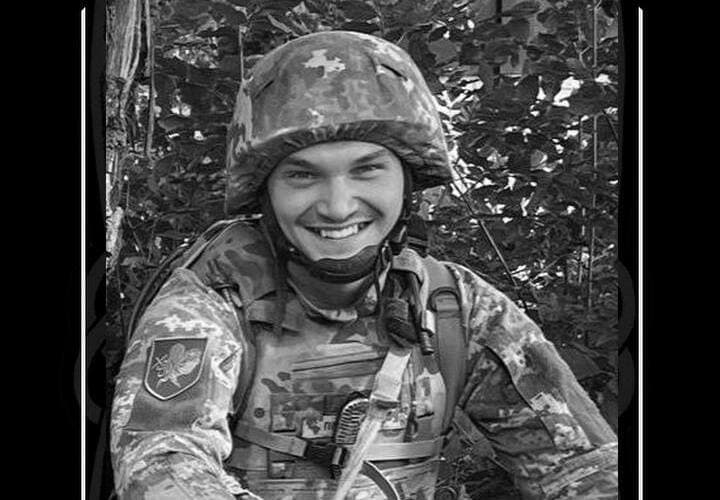
My sister says: 'Well, it’s your own people bombing you'
The son of a woman from Kharkiv was killed in the war, while her relatives in Russia collect money for the Russian army
Olena Avilova01/05/23