Back
One must not lose the ability to love and not fall into total hatred
A Donetsk journalist advocated for peace talks with Russia but took up arms in 2022. He was captured
In 2014, Yevhen Shybalov, a journalist from Donetsk, co-founded the humanitarian organization 'Responsible Citizens' with other residents of Donetsk, which helped Ukrainians affected by Russian aggression in the Donbas. For this, he and other team members were deported from their home city. For all 8 years before the full-scale war, he was engaged in humanitarian work and efforts to return the Donbas to Ukraine through peaceful means. After the start of the full-scale invasion, he voluntarily joined the Territorial Defense, fought in fierce battles near Kyiv and Lysychansk, and was taken prisoner, where he spent about seven months. His testimony is about the transition from pacifist to soldier, the experience of combat and a PTSD diagnosis, the cruelty of captivity and uncertainty, and how war changes a person but does not strip them of their humanity and capacity to love.
Interview
Transcript
Transcript
Attention! Translation was done using AI, mistakes are possible
КА: Katya Alexander
ЕШ: Evgeny Shibalov
ЕШ: Hello?
КА: Hello, Evgeny, good day.
ЕШ: Yes, good day.
КА: How do you hear me?
КА: I wanted to ask at the beginning: maybe you have some questions for me that I can answer right away, before I start asking questions?
ЕШ: No, I read the brief you sent me, everything seems clear. Even though I'm military, I think I understood everything.
КА: Just a second, my cat really wants to knock over the recorder. I want to tell you a bit about the framework of our conversation, about what I'd like to learn from you. It's very important for us to have the perspective that the war has been going on not for one year, but for 9 years, and you, as a person from Donbas, know perfectly well what was happening and that this didn't happen yesterday, firstly. And secondly, we're very interested in your perspective as a person who was a civilian a year ago, and then became military, how life with a rifle in your hands changed you.
ЕШ: You don't mind if I smoke during the conversation?
КА: No-no, of course, I'm a smoker myself, don't worry. We want to hear your reflection – how it changed you, your worldview and your life in general. Do you have any questions or clarifications about this?
ЕШ: No, everything seems clear.
КА: Let's start from the very beginning then, from 2014. How did this war begin for you? You were a journalist at that moment, as far as I understand?
ЕШ: Yes, I was a journalist then and worked for the Kyiv national weekly "Mirror of the Week. Ukraine," I was their own correspondent in Donetsk. For me, the war already in 2014 completely changed my lifestyle, profession, and everything-everything-everything. It happened quite by chance. In the summer of 2014, refugees from Shakhtarsk and Snezhnoe came to Donetsk, where there were battles then, these are such cities in Donetsk Oblast. And they were settled in an empty dormitory of Donetsk University, because the students had also scattered in panic. These people arrived in Donetsk just at the moment when there was no Ukrainian authority there anymore, and the new, self-proclaimed one didn't exist yet. Accordingly, everyone was somewhat indifferent to them. They somehow found me or one of my friends, I don't remember exactly anymore. We had a company of four friends-buddies, we did what normal people would do in our place – we just went to the supermarket and scraped together everything we had in our pockets, bought them some food, water. I especially remember a woman who fled from shelling to Donetsk, having with her only a summer housecoat and one flip-flop, she lost the second one somewhere along the way. She had nothing else. Then these people started passing our phone numbers to each other – mine, my brother's and two other friends, Marina Cherenkova and Enrique Menendez. But we understood that, firstly, our savings were quickly running out with this approach, and secondly, it was taking so much time and energy that it went beyond just volunteering. At some point we had to make a decision that either we stop doing this, or we make it our new profession. As a journalist I had already managed to receive a national award in Ukraine and left this profession. And my friends and I created a humanitarian public organization, which we called "Responsible Citizens."
КА: I also spoke with Olga Kosse, yes.
ЕШ: With whom? With Olga?
КА: Yes.
ЕШ: And we were engaged in helping. I won't tell you at length what we did then, I think Olga told you everything in detail. Among Ukrainian organizations, we were one of two that had the opportunity to work on territory controlled by separatists, until a certain time. In 2016 we were deported from Donetsk. Then one of those international structures we cooperated with invited me to work in their office in Kyiv. They don't really like it when I mention them, so can I not name them?
КА: Yes-yes-yes.
ЕШ: If briefly, it was a humanitarian organization from Switzerland, which wasn't directly involved in supplying some material aid, but worked more in programs to promote peaceful settlement, reconciliation. I felt obligated to do something to return peace to my native city, and was very happy that I found people who had certain experience in this, and gladly offered them my services. I worked there until 2022. February 24, 2022 – that was the day when I again had to change everything in my life, including lifestyle and profession. The war that began on February 24, I perceived as a person who worked in the humanitarian and peacekeeping sphere as a personal defeat, because before that I had spent 8 years of my life convincing my compatriots that it was possible to negotiate with Russia about something, that perhaps priority should be given to diplomacy, negotiations and the search for compromises, that one shouldn't grab for forceful instruments. But in the end it ended with me going to the military recruitment office on February 24 and, mentally addressing Russians, saying: "Guys, damn you, I spent 8 years of my life and made a bunch of enemies, convincing my compatriots that it was possible to negotiate with you about something. But if you're already posing the question like this, then let's do it like this." And I went to the military recruitment office.
КА: This is a very complex, difficult experience, I'm absolutely sure of this, this breakdown, that you spent 8 years trying to somehow participate in the peaceful settlement of the conflict. Let's start with why it was important for you specifically to try to change something in your native region for 8 years in this direction?
ЕШ: Because it concerned people next to whom I was born, lived and grew up. I understood that any forceful solution would mean, regardless of its outcome, huge casualties among the civilian population, and for me this isn't abstract civilian population and not statistics, these are my neighbors, friends. My classmate fought for the Donetsk People's Republic, I saw him in Donetsk in uniform. He didn't recognize me, and I still think that this was probably for the best. For me these are living people whom I sincerely tried to help survive in this difficult situation. I understood that if the full flywheel of military operation from any side spun up, this would primarily mean huge casualties among civilians. As indeed happened in the end. And on February 24 I had several motives that drove me as a volunteer into the army. Firstly, as I already said, I perceived this as my personal defeat as a peacemaker. And secondly, I told myself: excuse me, once the Russians had already driven me out of one city where I lived and which I loved, I won't allow them to do this a second time. Therefore I decided that I would already stand and defend. And thirdly, to be honest, on February 24 I was sure that we would lose the war. I was going to a hopeless cause simply because I didn't want to see what would happen to my country next. We are all victims of propaganda of one kind or another, honestly, I also believed that the second army in the world was advancing on us, that the order the President of Ukraine gave to the Armed Forces to resist and inflict maximum damage was a gesture of despair. I was sure that their plan would succeed, that they would take Kyiv not in a day, but maybe in a week, hold their victory parade, publicly humiliate us to the whole world by accepting capitulation from Zelensky. In short, they would assert themselves on us as they wanted. And I realized that if I later ask myself: "And where was I at this time?" – and answer myself that I sat at home – I wouldn't be able to live peacefully afterwards. Therefore I went to the military recruitment office, perfectly understanding that I had never served, never fought, by conviction I'm more of a liberal-pacifist. Before February 24 of last year I sincerely considered the army a gathering of, excuse me, idiots. And if I'm being completely honest, I still think so, I just have more arguments now. Nevertheless it turned out that this country has no one else to rely on except this gathering, and I decided that now my duty is to join it. I didn't pretend to be anything, I immediately said at the military recruitment office that I had never served, never fought, but was ready to do everything that a relatively young and healthy man could do in the army: if I need to dig – I'll dig; if I need to load – I'll load; if I need to shoot – I'll shoot, just show me how. That's how I ended up in the infantry in the Kyiv territorial defense unit.
КА: I want to pause a bit here on this moment of breakdown, on the moment of accepting one's own defeat in some sense. What was it like for you with pacifist convictions, with the mission that lay on your shoulders for 8 years, to decide to go to the military recruitment office? How was this experienced? How did you experience accepting your own defeat?
ЕШ: Well, quite painfully. The main feeling that gnawed at me was just bitterness. Bitterness for what I considered 8 years of life wasted. Damn, it's a difficult question. I'm trying to remember my thoughts and my state at that moment, it's not so easy now. In any case I decided for myself that if people in Russia don't understand the good way, then now we must all stand up and teach them such a lesson that they'll still scare their grandchildren with evil Ukrainians. I was lucky that I ended up in a territorial defense unit, our main task is defensive operations, in this sense my conscience was clear, that is, I wasn't attacking anyone, I wasn't an aggressor, accordingly, I didn't consider myself a killer. I'm defending my country, my land – this is normal, in this I saw my duty both as a citizen and simply as a man. Especially since I ended up in such a company where everyone was like me. I met many people in my own territorial defense brigade whom I knew from public activities, and several journalists, my former colleagues, joined there. The whole contingent was like this: almost no one had ever served or fought. These were IT workers, entrepreneurs, lawyers, attorneys, in general, such a set. And I thought: well, how am I better than these people? The platoon commander, who was a businessman, had his own company, dropped everything and went to fight – and I shouldn't? How am I better, why should I stay on the sidelines? And I thought that I shouldn't. Just as in 2014, I decided that since life turned this way, then now I'll have to make this my profession. And I just suppressed all unnecessary emotions and diligently learned the new business, tried to master it as well and as quickly as possible, because we didn't have much time left for training. I immediately immersed myself in this new role so much that I could hardly remember my past life after a month. This internal evolution, it somehow passed unnoticed for me, in such background mode already directly in the war. I was so busy with other things that I didn't have time and energy left to think very deeply about what, how and why. After a month I felt that I no longer felt like a frightened civilian who decided to commit heroic suicide, but like a soldier who already feels confidence in his strength and feels that he has learned something, is less afraid and just does his job.
КА: I want to stop a bit on this entry into a new life, new profession and some new values. Why in 2014 didn't you have the intention to go, take a rifle and go defend your native region, but 8 years later this became such an inevitable story for you? What's the difference for you? Why for 8 years was it important for you to engage in a peacekeeping mission, but on February 24 of last year there was no choice left?
ЕШ: I have a counter-question for you, short and practical: doesn't this beast that decided to mow grass with a brush cutter in our yard right now bother you very much?
КА: No, you can hardly hear it.
ЕШ: For me the categorical difference between 2014 and 2022 lies, in general, in two words: external aggression. I remain with my conviction, despite the fact that very many of my friends and generally many Ukrainians disagree with this, that in 2014 the war could have been avoided, that the Ukrainian government made many mistakes, allowing, essentially, Russians to manipulate people in eastern Ukraine with impunity. That is, the war of 2014 for me is primarily a story of huge, tragic misunderstanding, misunderstanding between the authorities and part of the country's citizens. Because many people were pushed to support the "Donetsk People's Republic," at least in Donetsk, by banal fear. When Viktor Yanukovych fled, very many of those who supported him in the east got scared that "he fled, so now we have to answer for everything he did." Purely out of fear they joined these protests, which at first didn't know themselves what they wanted, sometimes autonomy, sometimes federalization, sometimes something else. Actually, it wasn't necessary to immediately rush at these people with weapons, it was enough to talk to them competently. But the new transitional Ukrainian government essentially removed itself from this obligation and did practically nothing to prevent this. If I summarize in two words, then in 2014 we should have fought for Crimea, but not for Donbas, and Ukraine did the opposite. Because in Crimea there was unconditional external annexation and this was a completely legal reason to use force on the part of the Ukrainian state. And in Donbas they did it a bit more cleverly: Russian special services rather took advantage of the unstable situation to provoke a conflict. And in 2022 everything was obvious – we were attacked by a foreign army, the question already stands such that we were attacked by people who want us not to exist. And we want to exist, and in this we simply have a fundamental mismatch of positions, therefore space for dialogue is not yet visible. I mean, not necessarily that we shouldn't exist physically, although Bucha, Mariupol and the rest of the episodes prove that they don't shy away from this either. But primarily Vladimir Putin didn't hide that he wants to destroy Ukrainians as a community whose self-identification was needed, wants to destroy our identity so that we again merge in brotherly embraces, stop feeling ourselves as a full-fledged separate nation with our own history, language, culture, right to our own statehood and so on. He doesn't believe that there is a state Ukraine and a people, Ukrainians, and you can't do anything with him. Therefore here the question of our existence already arose. I consider myself Ukrainian, even when I was engaged in humanitarian and peacekeeping work, I primarily wanted to benefit my country and my people. I thought that now this better serves Ukraine's interests than rattling weapons. And here the question already stood sharply, that the Russian leader wants us not to exist, and we want to exist. That's exactly why war is unavoidable here.
КА: And in 2014 wasn't there a feeling that this was so close to a genocidal operation? Was it felt differently?
ЕШ: I had a feeling of terrible chaos, mess, in which everyone had the illusion that they controlled the situation, but it itself steered where it steered.
КА: You mentioned that it was important for you to convey to your people the importance of dialogue, diplomacy, peacekeeping mission. I want to understand a bit what it consisted of. It's clear that while you were on the territory of Donetsk Oblast temporarily uncontrolled by Ukraine, you helped with humanitarian aid, took care of people who are in frontline conditions, helped them with food, the same humanitarian aid. And when you were deported from your native oblast, what did this mission consist of? What does this mean in practice?
ЕШ: Here the question is sensitive, because the contract I signed with my new employer prohibits answering such questions.
КА: I understand.
ЕШ: If in two words, we did everything in our power so that the peace process, which was based on the Minsk and Normandy agreements, would work and steer onto some road leading to sustainable peace in eastern Ukraine. We tried different solutions, tried to come up with alternatives that would help bypass existing obstacles. Many of those people who signed these documents didn't take them seriously, but we tried to turn them into a working, effective mechanism that, if not very quickly, would gradually lead to the establishment of lasting peace in eastern Ukraine. I did this with the hope that the people of Donbas would someday return home, to Ukraine.
КА: Peacefully?
ЕШ: Yes, so they would return home peacefully. I perceived them as hostages of the situation, as victims of everything that happened. I saw my mission in Ukraine returning its citizens home: returned them mentally, legally, administratively, culturally, financially – in general, in all aspects.
КА: As far as I understand, after the phase of conflict from acute began to flow into slow-burning somewhere at the turn of 2016-2017, the problem of ORDLO [editor's note: Certain Areas of Donetsk and Luhansk Oblasts] became a bit silenced in society. How did people react when you said or did something about temporarily occupied territories?
ЕШ: They considered me a dreamer and an idiot, but I'm used to it, so everything's fine.
КА: And what did they tell you, for example?
ЕШ: They said that this would never happen, because nearby there's Russia, which will never allow removing such a lever of influence on Ukraine's policy. That I'm engaged in nonsense that won't give results. One acquaintance of mine even called me a "pink pony that farts the smell of violets."
КА: Because you insisted not only on return, but also on peaceful settlement of the conflict?
ЕШ: Yes-yes-yes. I understood that this would take a lot of time, but internally I was ready for the fact that this work could take the rest of my life. In Ukraine generally many people aren't inclined to long-term thinking, let's say, they always wait for quick victories, successes and consider their absence a defeat. And I simply set myself up for the fact that there was a long path ahead. And precisely in this I had a mismatch with the rest. Therefore they called me a naive fantasizer and dreamer who believes in what will never come true.
КА: Now let's move to 2022. You understand that you can't act otherwise, you go to the military recruitment office, you end up in Kyiv territorial defense. The first month when you just took up arms, began interacting from inside with military structures – what was it like for you? How did this happen for you?
ЕШ: The first week or two I was just constantly wildly scared. So much so that I practically didn't eat anything all this time, only smoked a lot and drank coffee. I started eating later, but never stopped smoking and drinking coffee. After about two weeks my biggest fear became dying meaninglessly, there was already ambition to still do at least something in this war, to help my army, my country with at least something. My first impression of the army was that this structure is considered a model of order and discipline, but in reality there's wildest chaos and mess, everyone's constantly running around, shouting, swearing, with weapons... In short, nothing's clear, but then it all structured itself, settled. I was lucky with commanders, because my company was commanded by an officer who fought in Donbas in 2014, had combat experience. Plus, we ourselves learned on the go as we could, read manuals, regulations, instructions. Gradually, gradually I came to understand that it's impossible to survive in war alone, that the people who ended up with me in one unit now became for me in some ways even more than family. Any soldier by himself is just a person, a civilian in uniform and with weapons, but when we're all together, then each of us is already a combat unit. I'm generally by nature a slight introvert, as befits a person with a creative profession and corresponding character, before that I had difficulty getting close to people there. And here for me it was a very new experience when completely unfamiliar people very quickly become truly brothers to you. We call each other sworn brothers, this isn't a figure of speech, we're really close to each other, sometimes even closer than members of one family.
КА: And how is this expressed? How to try to convey this to a person who doesn't understand what this is? I, for example, have never had anything to do with military structures, I want to understand a bit more what stands behind this word "sworn brothers," why such bonding happens.
ЕШ: I can start with one amusing episode that I remember. I ended up in grenadiers, quite accidentally, simply because no one else wanted to drag around this piece of iron. I was lucky that my partner was a guy who had served his conscription as a grenadier. Taking advantage of the moment while we stood guard at the position for several hours, he taught me, showed me, told me. Kyiv prepared very seriously for defense, actually. When colleagues, friends, relatives from my previous job later asked me, like "what do you think, will they take Kyiv – won't they take Kyiv?", at a certain stage I told them that "Kyiv now can only be destroyed, but it's impossible to take." This was true. One of these defense elements was that grenade launcher ambushes were set up in all high-rise buildings along practically all major streets. In one of them we, that is, my partner Sasha and I, were on duty and melancholically observed such a picture: military columns going in one direction, and a huge stream of civilian cars coming toward them. Moreover, in very many cars there are men behind the wheel, cars loaded with some things, household members, cats, dogs. Everyone's honking at each other in traffic jams in panic. In general, fleeing from Kyiv. And Sasha, looking at this river of cars, says so thoughtfully: "I don't understand them. Personally, in such a mess with the guys and with weapons I feel somehow calmer." Here's the first moment of this bonding – next to these guys you feel calmer than without them, that's all. Confidence comes to you that there's someone to stand up for you, there's someone to support you, if you're hungry, then there's someone who will share their last dry ration with you; if, God forbid, you get wounded, you know for sure that they'll pull you out. And you yourself are ready to do the same for them. This already even overcomes some level of pathos, becomes self-evident that primarily a soldier is not someone who necessarily knows how to shoot or fights, hung with some fashionable equipment, but a person who primarily takes care of his comrades, and then of himself. And this is considered a very obvious postulate in our new culture of relationships with each other, within the military unit.
КА: You, as a person who is quite introverted, were joining this family. How quickly did this happen for you? And was there such a moment when you understood that your interaction with the surrounding world, primarily with people, had changed?
ЕШ: About a month later I began to feel this. Just about the beginning of April, we were already leaving Kyiv, we were going north in pursuit of the Russian army, which was conducting "negative offensive" from under Kyiv, as we jokingly called it among ourselves. Before this we were let home for a few hours for the first time. And when I was walking from the positions to my home, I realized that without weapons and alone I already felt somehow uncomfortable. And the second such episode, when I realized that we had all changed, happened about the second month of the war in Kyiv. In the first month police in Kyiv practically didn't work. You know, both in Donetsk and in Kyiv the first sign that some social cataclysms are ahead is that police disappear from the streets, just dissolve in the air. So here too, I don't know where they all hid, but the first 2-3 weeks of the war there was practically no police in Kyiv. Then they were finally ordered to return to service and began sending patrols to help us, because we can't work with civilians fully – we're the army. We detained some violator of curfew, some drunk who never noticed that something happened because he was enthusiastically drinking all this time – well what should we do with him? Then they began assigning police crews to us, and all this good stuff like drunks, drug addicts who climbed around at night, civilian people who were stopped at a checkpoint, something wrong with their documents, we handed over to them. For this contingent they began assigning policemen to help us. And here once we're on duty at a position together with police, shelling begins. And we all as one stand and watch with surprise how the policemen simply scatter in all directions and hide in bushes. And everyone has such frank incomprehension on their faces, we think: well how is this? How can you abandon your post, your position without an order? And it seems it's not landing so close that you really need to run away like that. I saw this expression of incomprehension and slight irony toward the policemen in practically everyone who was on duty with me then. I realized that at a certain moment we even think the same already. This means we all already became soldiers, already became like one whole.
КА: So this metamorphosis took you about a month, yes?
ЕШ: About that, yes.
КА: You also said that the scariest thing was the first 2 weeks. And what was in these first weeks? What did this fear consist of?
ЕШ: The fear consisted of the fact that incomprehensible things were happening around, because Ukraine still didn't have experience of full-scale war before this. You don't know at all what to do, therefore my biggest fear then was not to die, but to die in vain simply because of my inexperience, confusion.
КА: You also said that when you went to the military recruitment office, it was such "heroic suicide." That is, you didn't want to hide at the moment when Russians were invading your country on a full scale. At what moment did this feeling of "heroic suicide" deform into something else?
ЕШ: At the moment when we left Kyiv to pursue the Russian army retreating from under Kyiv. This was our first success, which very much motivated, inspired us. We realized that we could do something, that despite the fact that we faced a superior enemy. At that moment we essentially had, of all the qualities necessary for a soldier, only steadfastness and motivation. But when we realized that even this could be enough to force them to retreat, only because we didn't want to retreat, this inspired us. We saw that we could do something, that here's the enemy, and he's running away. We felt much more confident. Later, standing on the Belarusian border, we already looked to the other side with such a feeling of some superiority. I think you've come across videos on the internet where Ukrainian military show various gestures to Belarusian border guards and soldiers carrying combat duty. This was our general mood then, we already felt some superiority. When I later got to Donbas, I realized that this was a false feeling, that we became too early to consider ourselves such straight super-warriors. But then it supported us very strongly, because we felt ourselves as one whole for the first time, a brotherhood capable of instilling fear in our enemies.
КА: This happened after the de-occupation of Kyiv Oblast, yes, when Bucha...?
ЕШ: What do you mean "temporary"?
КА: I mean, the occupation was temporary, I'm talking about that.
ЕШ: Yes-yes, de-occupation here will be permanent.
КА: I meant that when they broke the temporary occupation, a very short one.
ЕШ: Yes-yes-yes. My unit participated in the liberation of Kyiv Oblast, and this was our first such big success, which gave us all to understand that we could do something.
КА: Do you remember the moment when you first took up arms and began training, trying, or first shot in combat? How is it in general when a yesterday's civilian interacts with weapons?
ЕШ: How could I not remember: I have several gorgeous scars left on my hands after this. All these weapons, iron, seemed to me somehow heavy, angular, with some protruding sharp edges. I thought: Lord, how can people deal with this at all? At first you're afraid of this weapon yourself, because you're not experienced yet, don't know how it behaves. It also takes some time to get used to your weapon. I think that in our case it turned out short precisely because we were immediately involved in combat operations, in the operation to defend Kyiv, and had weapons with us around the clock. And when you don't part with weapons for even a second, it very quickly becomes part of you. When I returned after captivity for rehabilitation, they drove us by minibus for examination to the hospital. And I noticed that when you're riding in such a bus not behind the wheel, just sitting in the cabin, you really miss the feeling of an assault rifle on your knees, your legs are somehow too light, well something's missing. Because in a certain sense it really becomes a continuation of you, part of you. The first time you shoot from it, it seems so deafeningly loud, your ears ring for half a day. You're glad at least that you shot in the right direction, not thinking about whether you hit somewhere or not. You think: Lord, I didn't hit my own, shot in the right direction – that's good already. And then it becomes truly dear to you. You start taking care of it, treat it better than a pet: constantly clean it, wipe it, worry, sometimes talk to it. You go on duty, grab the assault rifle and not just silently, but say to it: "Well, piece of iron, let's go serve the people of Ukraine!"
КА: And did your weapon have some name? Did you call it something?
ЕШ: The assault rifle doesn't, but I called the grenade launcher Baba Yaga [editor's note: witch from Russian folklore].
КА: Why?
ЕШ: Because the Russian army was advancing on Kyiv, and I, sitting in ambush with a grenade launcher, said that "Baba Yaga is against."
КА: Excellent! So you said that "and then," at first you're a bit afraid of this weapon yourself, it's somehow bulky, scary...
ЕШ: Especially the grenade launcher. When my more experienced comrade suggested immediately screwing charges together and keeping them loaded at the position. Seriously, I had such panic, I walked around it in such big circles: it all seemed to me that if I accidentally touch it or kick it now, it will all immediately explode, we'll all die.
КА: And when did this transform and how does the weapon become your big helper in defending the homeland? And moreover, part of you – as you noted?
ЕШ: This happens through exclusively long, monotonous training. Experienced comrades immediately advised me that when you have free time, don't sit idle, always practice basic manipulations with weapons: load, unload the magazine, disassemble, clean, assemble, practice shouldering the grenade launcher. When operations with weapons already become part of your new biomechanics, new such culture of movement, then it already becomes an integral part of you. You already reflexively, in any darkness, lying down, by touch, in any smoke, in any dust, flawlessly perform all necessary operations simply because it's already somewhere in the subcortex, in muscle memory. That is, it becomes part of you when skills of handling it become part of you.
КА: This transformation from civilian, from pacifist, from journalist, liberal into soldier, into such part of a big family, big mechanism – how was this lived through for you? How did this transformation from one to another happen for you?
ЕШ: When I felt this, I even experienced a certain uplift. Actually, a very pleasant feeling when you don't remain alone with your problems, and especially with such a huge trouble. Before that I tried to always solve all my problems myself, independently get out of all life's troubles, very rarely relied on someone. And here suddenly so many shoulders ready to support you, which you can lean on. Actually, this is a pleasant feeling.
КА: And how did this happen? Can you catch the flowing from civilian to military at the level of sensations, how did it happen? ЕШ: Yes, I can. It's a process stretched out over time, if it's felt at all, then at the level of some everyday little things. At some point you notice that civilian clothes are already uncomfortable for you. They're practically not felt on your body, they're somehow weightless; when you're dressed in civilian clothes, you have the feeling that you're naked on the street. When you start feeling scared, anxious, there's an air raid siren wailing, you already reflexively make a movement with your hand, looking behind your back for where your rifle is hanging. The main evolution happens in that at some point you learn to act without reflection, to react instantly, and only then think about what actually happened. First you dropped to the ground, and then you start thinking about what that loud sound was that you just heard. This is what makes it hard for military personnel to return to peaceful life afterwards.
КА: And in what details does this shift in thinking still occur - when you first act, and then start to think it through?
ЕШ: Now in Kyiv the police constantly stop me, because I barely taught myself to turn on headlights at night, and I still can't drive without the gas pedal to the floor. They stop me every time, I say: "Guys, well sorry, it's just that the experience of driving on roads under fire has gotten so ingrained that I can't help it." They say: "We understand everything, you all drive like this, but you should still be more careful, you're in the city, you'll cause an accident." Or, for example, if in an everyday situation someone irritates you, it's good if there's someone close by who manages to hold you back, otherwise you just, excuse me, beat the shit out of them, and only then think about whether it was worth doing. Such very sharp, instant reactions to some irritants appear, and this is exactly how military personnel greatly complicate life for civilians in general and, in particular, for their loved ones when they return from the frontline. It's not necessarily some kind of trauma, although trauma too, but it's also a completely new model of behavior that's needed to survive in war. In civilian life this is rather a source of problems, then it's all socially unacceptable norms and socially unacceptable behavior.
КА: So it's not some moment when you suddenly realized that something had changed, but it's such a process stretched out over time that's hard to catch?
ЕШ: Moreover, you notice that it was happening only when you return. There such behavior and way of acting seems completely natural, logical to you, because everyone around behaves and thinks exactly the same way. You don't even notice that something unusual is happening. You notice this only when you return, I don't know, on leave, on furlough, for treatment. In short, when you again come into contact with civilian life. Only then do you feel that you've changed. That's why it's hard to answer such questions...
КА: Yes, I understand.
ЕШ: There's no moment of realization - you undergo a very gradual, natural evolution. Such, purely according to Darwin: if you want to survive - you adapt to the environment and new situation.
КА: Returning to the frontline, it turns out that the first month and a half, you spent in Kyiv Oblast. And what happened next, when you carried out the de-occupation of the partially occupied Kyiv Oblast? Where did you go, what were the tasks?
ЕШ: While we were completing the de-occupation of Kyiv Oblast, the Verkhovna Rada of Ukraine passed a law that allows the use of territorial defense units throughout the entire territory of the country, and not just within their own region. Essentially they transferred us as light infantry under the command of mechanized brigades of the Armed Forces. Since it was calm on the Belarusian border then, part of the forces were transferred to Donbas. Our unit ended up in Luhansk Oblast, where we were supposed to disrupt the encirclement of Sievierodonetsk and Lysychansk. The Russian army was trying to encircle a large garrison of Ukrainian troops defending these cities. From our side this looked like such a marathon, racing against the Russians, who would manage to occupy these small villages, settlements, populated areas around Sievierodonetsk and Lysychansk faster. If they're first, then they cut all the roads leading from there and create a ring; if we manage it, then we don't allow them to do this. Essentially, our main task and the only thing we could really do, being light infantry that found itself in a situation where an enemy was advancing on us that outnumbered us by 10 times just on my sector. We had an infantry platoon defending against a battalion of Pskov paratroopers. But the main thing we could win and what we were winning was time, to give our comrades the opportunity to withdraw in an organized manner, to create a new defense line. So it looked like this: we fly into some village, as soon as the Russians understand that they're late and we managed to get there first, they immediately start covering us with artillery, so as not even to let us dig in. Because infantry that managed to dig into the ground will then force you to lose a lot of time to knock them out of there. So we were already digging trenches for ourselves lying on the ground under artillery shelling.
КА: Your task, if I understand correctly, if this can be talked about - is to occupy the village and defend it, right?
ЕШ: Yes, yes, yes, absolutely right.
КА: Here the question suggests itself - what was it like for you to come to a region close to your native one no longer as a person from this oblast who promotes diplomatic relations and tries to resolve military conflict, but as a person in uniform and with a rifle? How was this experienced?
ЕШ: I told myself that despite the fact that I came in a new capacity, I'm essentially doing the same thing: I'm protecting as I can the people who have lived here next to me all my conscious life. Both peacekeeping work and military service - for me these are ways to protect my fellow countrymen, compatriots, to help my region. It's just that in some conditions I considered one thing the most effective way to apply my efforts, and now another. But for me these were two different facets of the same thing.
КА: You spent so many years doing everything so that there would be no military intervention of any kind, and now the changed conditions dictate other methods. This wasn't perceived, yes, as some kind of dichotomy?
ЕШ: Absolutely. In each situation a person who feels his need to do something to influence the situation chooses methods and tools himself. The old tools in this situation were clearly inapplicable, and the new ones - two excellent tools, the Kalashnikov rifle and RPG-7 grenade launcher - were more appropriate in this situation.
КА: With Kyiv Oblast it's more or less clear that yes, it's scary, and fear, which is layered on top with the fact that you never served. This is a different type of fear. But Luhansk and Donetsk oblasts - these are much hotter spots, as far as I understand, as a person who is very far from military history. Can you tell what was happening there and how you experienced it all?
ЕШ: Essentially the same thing was happening there as in Kyiv, just in a much more concentrated form. We were created as a unit oriented toward defensive operations, and that's what we did. But it was much more difficult there, because having withdrawn troops from around Kyiv, from around Chernihiv, Kharkiv, from other regions, the Russians concentrated them very strongly precisely on Donbas. Plus, they learn quickly, this must be acknowledged, on Donbas this was already a completely different Russian army. In the first stage we were very lucky in that they planned the campaign based on an incorrect assessment of the situation and their assumptions. They calculated that there would be no organized resistance, that people would meet them as liberators with flowers, that the Ukrainian army would only episodically defend somewhere and engage in battle, but there would be no massive organized opposition. On Donbas they already understood that everything was serious, and began fighting for real. So it was much harder for us. Very experienced, motivated and well-prepared units moved into the forward echelons - Airborne Forces [VDV], marines...
КА: Russian?
ЕШ: Russian, yes. At the same time, I'm saying, where they really wanted to break through, they created superiority in forces not even 3 times, as required by textbooks, but all of 10. By feeling it's just at that moment that it turns out that fear of war is also heterogeneous. Every soldier has what he fears most of all, his personal phobias. For all civilians war is all scary, but for a soldier it's not. I, for example, as a person who worked in front-line zones on Donbas from 2014, developed a certain immunity to artillery attacks. I wasn't afraid of artillery attacks. I understood that it's a matter of luck, of course, it might hit, might not hit, but in principle I didn't have direct fear. I had been under shelling. Of course, when you're a humanitarian worker, you risk becoming a random victim, and when you're military, they shoot at you purposefully. These are different things, but in general I was morally prepared for this. Among other soldiers there were those who fear this most of all, because you don't see when they're shooting at you, you don't even hear the shot itself, but shells, rockets, everything else just fly from beyond the horizon. Others are afraid of stepping on a landmine, they walk constantly looking under their feet, shifting from foot to foot, they really don't want to die like this, when you can't do anything, can't react in any way. Others, on the contrary, are afraid, and I am too, of contact battles, when a firefight is already being conducted at close distance. And others, on the contrary, fall into such an adrenaline rage, because it's easier for them when they see the enemy in front of them and can do something to him. It's easier for them than just lying in a trench under shelling, thinking, is this flying at you or not at you. There was such a concentration of battles in one week, more than in the entire previous war. Because, I'm saying, the Russians really wanted to surround Lysychansk, and they directly gathered large forces on a very narrow sector. We were continuously attacked by artillery, and from the air, and from time to time infantry probed, tried to storm in intervals between this. I had previously read about such things in books about World War II, when artillery preparation goes before an attack, when such a solid wall of explosions goes toward your trench, and moreover not one, but a second, third, fourth behind it. Then they also raise a drone, which immediately directs either artillery or helicopters at any movement on positions. This is, of course, first of all, scary, second of all, of course, we got concussions during this time... Some died, of those who were from my unit, who went together with me to Donbas, every third one didn't return. Some died, others went missing, were wounded, some were captured along with me. All that's left for you is to dig a good trench and then lie there. The scariest moment is when you hear a mine, rocket, shell approaching, you just fall into the trench and hear how your heart directly counts off the seconds while it's flying toward you, and you think: "Come on, you bastard, explode somewhere already, so I know it's not at me!" For me this was the most tense moment.
КА: You said that every soldier is afraid of different things. For you the scariest thing is contact battle, yes?
ЕШ: Yes, yes.
КА: Why?
ЕШ: I don't know. When these phobias manifest in a soldier, they're of some irrational nature, each person is just afraid most of all of some specific aspect of war. But to figure out who, how and why - you need to work with a psychotherapist for a year to get to the bottom of it.
КА: God willing, if it's a year. At the moment when you were already on Donbas, when this concentration of battles was happening, did you feel yourself more like yesterday's civilian or a soldier?
ЕШ: No, already a soldier there. I just had already completely forgotten that I had some previous life, could hardly remember it.
КА: And can you remember the moment when for the first time you felt that you could no longer remember what it was like to live as a civilian?
ЕШ: I can. At my old job they didn't immediately disconnect me from work correspondence. When we were already on the Belarusian border, I was walking to positions past the command post where there was a Starlink station, the phone was lying in my pocket, and I hear such a ding! That is, the phone caught a signal, there was no connection there, so we episodically went out to Starlink to write to relatives. And here I was just passing by. The organization where I worked evacuated all personnel to Poland at its own expense - paid for housing, travel, rented housing for several months, treated everyone very humanely, because other foreign missions, honestly speaking, just abandoned Ukrainian personnel, took away foreigners, and left locals who worked in their offices without special support. The organization where I worked acted very humanely in this situation, they took everyone out to Warsaw, rented housing for everyone. And I, in general, open work correspondence and read that one of our colleagues writes that "this is all, of course, good, but because of all this I had emotional burnout. Can I please also have 2 weeks in Cyprus at the employer's expense to rest, to breathe?" And I'm digging a trench on the Belarusian border, thinking: well, damn, at least everything's fucking great for me! I realized that I just don't understand these hipster things about emotional burnout and everything else anymore - what are they all talking about?
КА: And did you have such things before? That is, did you previously somehow understand about this? Was there such a thing that "that's it, I have emotional burnout, I want to rest for a week"?
ЕШ: Yes-yes-yes-yes. Things that now seem very strange used to worry me before.
КА: For example?
ЕШ: Well, how can you worry so much about such little things? Some problems at work, you walk around, your mood is ruined for the whole day. Here, for example, is an episode that illustrates the difference in psychology and behavior of military and civilian. In my case it's almost a pure experiment, because it's set up in the same place with the same participants. In my neighborhood where I live in Kyiv, in the area, like in any normal neighborhood, there's a local drunk who climbs around, pesters people and begs for small change for beer. Before you're walking to work, you meet him somewhere. And he's such a clingy, annoying one, and you're such an intelligent boy, trying to politely get rid of him somehow, and he follows you halfway to the metro, mumbling something to you. Well, and everything, you somehow got rid of him, but your mood is already ruined for the whole day. And here I came home on leave, and he met me at a very unfortunate moment, unfortunate for him. Just before this they brought my brothers-in-arms from the frontline to the hospital, I went to see them, and the next day one of them died from wounds, we went to the funeral. I see from afar, our local drunk is coming. You know, and military personnel have such a quality that they often, returning to peaceful life, observing it, feel irritation, because they think: well damn, why should I have to experience all this, while here such same young, healthy guys ride giroboards, flirt with girls, smoke their IQOS, and in general looking at them, you might think that there's no war at all. I don't have such feelings. I, looking at peaceful life, on the contrary, rejoice, I immediately have such a mood: well, guys, you don't need to thank me, but I know that I made my contribution as I could so that you're now engaged in something pleasant or useful here. But for some reason precisely these social parasites started to wildly irritate me. Because I think: damn you, time is being won for you at a terrible price, and what are you, you bastard, spending it on? On continuing to drink and crawl around the neighborhood as you drank and crawled, and not noticing at all that something happened in the world? That is I think: guys who were a hundred times better than you, we're now burying, pulling from positions torn apart. To pull out one of my brothers-in-arms and send him on his final journey, we collected what remained of him into a sleeping bag, because there was a direct hit from a helicopter rocket into the trench. And here it is, this bluish, eternally drunk scum was crawling around. He decided to attach himself to me at his own peril. He approaches, like in the good old days, says: "Young man, allow me to address you, my name is Alexander." And before I would have been confused, you know, this problem of intelligent people, that they get confused when faced with everyday rudeness. And here I was directly thrown up on the spot. He says: "Young man, my name is Alexander." I was thrown up inside on the spot: "Go fuck yourself, Alexander!" And immediately kicked him, without any thought at all. That's the difference between military and civilian person, for example.
КА: This is a very strong difference between you a year ago conditionally and you now.
ЕШ: Yes.
КА: Did you feel that something became different when you encountered this drunk? Or did you think about it only afterwards, like "wow"?
ЕШ: I thought afterwards that the psychiatrist was probably right when he sent me on leave for another month with a diagnosis of PTSD, and that I'll probably follow all his recommendations and take all the pills he prescribed for me. Otherwise, God forbid, I might accidentally kill someone...
КА: You just voiced the thought that "otherwise I might kill someone accidentally." What's it like to think about this?
ЕШ: Well, how can I tell you... Regarding Russians it was easy for me to think about this. Because, excuse me, a person from a foreign country came to my land with weapons in his hands, he thereby signed his own death sentence, let him not be offended. But regarding everyone else... I thought that I need to be very careful, because if you've written someone off as an enemy, you already react instantly and very aggressively, without thinking about consequences. That is, for you there's no longer a barrier to violence. I think: what if I had had weapons in my hands at that moment? Interesting, I think, would I have used them or not? I come to the conclusion that I could definitely have shot him in the leg.
КА: This internal writing off as enemies - does it also happen without reflection, that is, it's some kind of instant click?
ЕШ: Yes, it's an instant reaction. There are things that used to slightly frighten or irritate you, now they instantly cause aggression. From the entire spectrum of negative emotions that a civilian person experiences in everyday life, a military person has only anger left. And it's a reaction to any irritant. You know, in civilian life you're walking, there's a company of some noisy suspicious teenagers, you pass by them with apprehension, because who the hell knows. Or, I don't know, a pack of stray dogs is running, you're somewhat afraid - what if they start barking at me now or attack? Again, drunk Alexander is crawling around the neighborhood, you go around, thinking: "I just hope he doesn't attach himself." Well, a military person's attitude toward all such obstacles is one - immediate aggression. It's simply a protective reaction of your psyche. In war you can't allow yourself other emotions, because fear deprives you of strength. In short, the only appropriate reaction in combat conditions is anger. It helps you hold on, live.
КА: And can you tell about how the capture happened? I understand that this happened after how much there, 4-5 months on the frontline or even less?
ЕШ: Yes, this was such a sad episode when one unsuccessful decision by a commander can collapse the defense of an entire unit. Just when we were defending the village on Donbas, so as not to let Lysychansk be surrounded, at a neighboring position, as I later learned, an officer with a radio and tablet was captured...
КА: Ukrainian?
ЕШ: Ukrainian officer, yes, ours. Accordingly, everyone was afraid that now the Russians would be able to monitor our communications. And they made what seemed to be the right decision on one hand - to reconfigure all radios, change frequencies, channels, call signs and so on. They decided to do this simultaneously, collected radios from all positions at once, and we simply remained without communication just at the moment when the Pskov paratroopers went on the assault. Accordingly, they gave the order to withdraw, but not everyone managed to receive it, because some were managed to be reached on foot, the order was passed, but others weren't. As a result several positions simply remained in complete encirclement, not knowing about it. We realized that something was wrong when paratroopers came out at us from the rear. That is, completely not from the direction we were defending, because there was no one to the right and left anymore, and they were able to go around us through this gap.
КА: And when was this?
ЕШ: May 30th.
КА: The whole question of captivity is very military because it's clear that civilians were completely unprepared for being taken en masse, I've interviewed many prisoners, and most of them are civilians or medics who shouldn't end up in captivity according to any rules. Your situation is somewhat peripheral, on one hand you were only, it turns out, four months on the frontline, but on the other hand you're already much more military than civilian. Did you generally think about the fact that in wartime conditions it's possible to be captured by the Russians? Were there such thoughts at all?
ЕШ: Not at all. I was morally prepared for the fact that I might die there, get seriously wounded, but for some reason I didn't think about captivity at all. And this aspect wasn't touched on at all in our preparation, that is, we weren't instructed on how to behave in captivity, how to survive, what strategy should be there and so on. I know that soldiers, let's say contract soldiers, career military, they had something on this topic. For those who mobilized from February 24th and later - no. So this was a completely new situation for me. Actually this is a risk that, of course, must always be taken into account. I became convinced of this later, because I realized that it doesn't depend 100% on the level of preparation, experience and motivation of the soldier himself. With me in captivity were much more experienced and professional fighters, but nevertheless they were also there. Soldier's luck is a numbers game and that's it. There's always an element of surprise that you can't control. Everything we do in war increases our chances of surviving and returning safely, but nothing guarantees it.
КА: At the moment when you saw that Pskov paratroopers were coming from the rear, do you remember what you generally experienced, what you were doing, how this was perceived?
ЕШ: I experienced absolutely nothing, because by that time I had already been concussed many times and was in such a strange state that I saw everything around me, but didn't reflect on it at all. Buddhists meditate for years to fall into this state of empty consciousness, but actually all that's needed is for one rocket from a Su-25 to hit the hill behind which you dug a trench. This looked very strange from the point of view of a normal person, some wild and absurd situation, but nevertheless. So when I heard some rustling in the forest behind me, turned around and saw that three paratroopers were already aiming at me from the knee and about 40 more people were already lying around in a semicircle, ready to shoot, I acted as I would never have acted being a normal person - I simply got up from the trench to full height and walked toward them. I don't know why. They were so surprised that they didn't even start shooting, because they also clearly didn't understand what was happening. If I had run away, returned fire, everything would have been clear.
КА: And did you get up with weapons?
ЕШ: No, no, I put down my weapons, got out of the trench and walked straight at them. I approached them point-blank, we all together, so, stood there dumbly, looking at each other, such a silent scene for a couple minutes. And then they asked a simply brilliant question, they say: "Who are you?" And I'm in such a state that this question seemed very complex to me. And I stand there thinking: and really, who am I? What am I doing here at all? Then they finally noticed the insignia, then already demanded surrender, saying: "Otherwise we'll put you all down here." And in such a state nothing is scary at all, I even told them off in response, I say: "Listen, why are you bothering me? I'm not commanding here, I need to go ask the senior officer what he decides, whether we surrender or not. Let me go to the platoon leader now, ask, then come back and tell you what he decided." And they're also all in this adrenaline stupor, they say: "Well go, then tell us what he decided." So I go to my commander, he's in the same zombie-like state. I explain to him for a long time what's happening. Finally he pulled himself together and gave us the order to lay down weapons and surrender. I surrendered by order of the commander, and we didn't even give them our weapons. We just put them in the trench and somehow then distracted them so that they forgot about them altogether. And even the evacuation group that came for them the next day found the weapons.
КА: Evacuation group - meaning Ukrainian?
ЕШ: We withdrew from this village, they stormed it for a week with an entire battalion, planes, helicopters, mortars, tanks. In short, in the end they took it, and the next day lost it back, ours counterattacked and knocked them out.
КА: Aha, I understand. And this situation when you went at full height toward a team of Pskov paratroopers who were standing with barrels aimed at you - at some point did fear catch up? Or was this simply forgotten?
ЕШ: Yes, when I was remembering, I thought: "Why did I do that? They could have shot me." But at that moment, no. Later it caught up, yes.
КА: And when fear caught up, how was this experienced?
ЕШ: I generally, when I remember everything that happened to me, I just don't understand how I survived. When you return home after captivity, it's scary to return precisely because you're afraid that you won't be so lucky a second time. I really have the feeling of a person who in a casino put double zero on roulette ten times in a row and won all ten times. There's a fear that my luck limit has been exhausted.
КА: Precisely because there's a feeling that there's still not so much combat experience? Or why?
ЕШ: Yes-yes-yes. First of all, despite the fact that I've been in the army for a second year already, I don't consider myself a very experienced fighter. I'm most afraid of returning to service in a company where I'll be considered an experienced fighter, because the rest will be only just mobilized. If I have to return to the frontline, I would want it to be a company of people like me - beaten by life and frightened soldiers.
КА: Can you tell about captivity? We won't go very deep into this, our interview format is not quite about this. But what was it like for someone who was a civilian half a year ago, and now military, to end up in Russian captivity?
ЕШ: Scary, of course. And especially tormenting is the feeling that you're completely defenseless before them, they can do whatever they want. While you're a soldier, you have weapons, you have commanders, brothers-in-arms, you can resist, but here you simply wait for what will happen to you next, and you influence the situation very minimally. A feeling of such powerlessness appears, which constantly wants to turn into complete despair. And you restrain yourself only because you think about the fact that someone at home loves you and waits for you, you must hold on at least for their sake. They won't survive news of your death.
КА: Did such thoughts appear for the first time precisely in captivity, not on the frontline?
ЕШ: Yes, surprisingly. You don't have time to think about such things.
КА: Aha. Where were you held in captivity?
ЕШ: When they captured us, we still managed to cripple their commander...
КА: How?
ЕШ: He stepped on a "Petal" while leading us out of there...
КА: On a landmine?
ЕШ: Yes, anti-personnel. And on a place where nine people had walked before, he was walking last. And in captivity they held us in Luhansk in a pre-trial detention center, and then took us out to a colony also in Luhansk Oblast, that is, I didn't cross Ukraine's border.
КА: As far as I, again, have some experience communicating with people who went through Russian captivity...
ЕШ: I'm forced to warn that I have a consultation with a doctor in an hour, so let's do 15 minutes, no more.
КА: Yes-yes-yes, of course. Then I'll ask two questions. First. People who went through captivity, especially when they were held in ORDLO [occupied territories], always said that people from the so-called "Luhansk People's Republic" and "Donetsk People's Republic" who guard, work in prison, they're harsher than Russians. Did you have such a feeling? And did they treat you somehow differently because you're from Donbas yourself?
ЕШ: People told you the truth, I mean prisoners. Because people from "Donetsk People's Republic" and "Luhansk People's Republic" who deal with prisoners really bring some moment of personal bitterness into this. They've been fighting against the Ukrainian army for 9 years already. Russians treat more indifferently, we're like some blank on a conveyor belt for them that needs to be processed according to a certain procedure and that's it. It's bad for locals to be in captivity, because unlike people from other regions of Ukraine, you're considered a traitor. When soldiers from Kyiv, Lviv, Ivano-Frankivsk, Poltava fight in "Donetsk People's Republic" and "Luhansk People's Republic" - for them this is logical, it's simply the enemy. But if you're local, you're a traitor, because for some reason they thought you should have been next to them, but you're against them. Even in Luhansk my guards told me that "you're still lucky that they didn't take you to your Donetsk, because they might not have even delivered you to Donetsk."
КА: And how did this manifest, this accusation of betrayal? Did they pressure you emotionally or was there some kind of physical pressure?
ЕШ: Any - both emotional and physical. They could hit you with a baton an extra time during a search in the cell, call you a traitor. They constantly called me: traitor, traitor, traitor. Who did I betray if I didn't promise them anything, actually? I went to put my phone on charge, it's almost dead.
КА: Yes-yes-yes, I'm following the time. A general question, but still: what's it like to spend 9 months in captivity?
ЕШ: Seven. While you're there, what torments you most is that you don't know how many months it will be. Next to you in prison sit ordinary prisoners, because in Ukraine they free entire colonies or places of detention for prisoners of war and Russian prisoners of war are kept only with each other. But in ORDLO, possibly they fear something, but they don't gather large groups of Ukrainian prisoners of war in one place. In each institution maximum 300-400 people, no more. We sit mixed with ordinary prisoners, although they're categorically forbidden to communicate with us. If it's a pre-trial detention center, then several cells are allocated for prisoners of war, if it's a colony, then several barracks. But there are also ordinary prisoners. You sit and think about the fact that in the neighboring cell people know how long they'll sit here, but you don't. Maybe they'll exchange you tomorrow, maybe in a year, or maybe you'll sit until the end of the war. No news from the outside world at all, and you think: maybe there are no exchanges at all actually? You don't know, maybe everyone is lying to you about exchanges.
КА: So you had no connection to the world at all?
ЕШ: Once they let me call relatives. Only thanks to this I reported where I was, they learned that I was alive. But otherwise no, nothing. Only what guards tell you, and they, of course, constantly lie to you. While we were sitting, they told us that, well, Poland had already captured all of Western Ukraine, Russia practically all the eastern part, "you have nothing to fight for anymore," "what were you fighting for, boys?"...
КА: I, by the way, often heard about Poland, that guards say such things.
ЕШ: I don't know where they got this from. Lord, I wanted to add something else... Ah! The only category of prisoners they treat worse than prisoners of war are their own Luhansk People's Republic military personnel, imprisoned most often for desertion, refusal to fight. One of the prisoners who delivered food to us suddenly turned out to be a former Ukrainian policeman who wanted to transfer to serve with the Russians, but they imprisoned him instead. Suddenly, well, our inspector, duty officer, held us up as an example, told him: "Here are the boys," he says, "at least they defended their homeland with weapons in their hands, but you, you bastard, changed shoes mid-flight and think everything will be good for you?"
КА: Curious. I'm following the time and know that you have about 10 minutes left, so I'll ask the last question, which is very general, but I think that you, as a very reflective person, can answer it in detail. You today, current - how unlike are you to yourself from, conditionally, January 2020, that is, before the start of the full-scale war? How much are these two different people? ЕШ: My biggest fear while I was in captivity, and the thought that helped me hold on, was that most of all I was afraid that my family and loved ones would get back not the same person they love. That's like an internal point of no return for me. I try to do everything to resemble my former self as much as possible, primarily for the sake of those who love me. But it's not easy. I feel, of course, that I've changed a lot. I've become less reflective, more inclined to act instantly, reflexively. In some ways I've become, of course, more rough and harsh.
КА: And what's the most important thing you've managed to preserve in yourself?
ЕШ: Very interesting question! The ability to love. And still to hold back from falling into such all-consuming hatred toward Russians. I fight against Russians, but not because I hate them, but because I love my country. This is one of the boundaries on which I also try to hold myself, so as not to start hating all Russians without exception simply and wishing them death.
КА: It seems to me that this is very difficult after you've seen what they do on the frontline and how they conduct...
ЕШ: It's difficult, but I remind myself that I'm still a serviceman and for me the enemy is a Russian with a weapon. Let those whose job it is deal with the rest. Two lines of defense that I try to hold are not to lose the ability to love and not to fall into total hatred.
КА: And the ability to love - how does it manifest? This preserved important part of you?
ЕШ: For starters, not becoming a problem for my family and loved ones, making their life easier, not complicating it. Trying even in this situation to support them with everything I can.
КА: And am I understanding correctly that you were undergoing treatment, rehabilitation?
ЕШ: Yes.
КА: Do you plan to return to the frontline?
ЕШ: I have no choice, because under Ukrainian legislation captivity is not grounds for demobilization. In any case, we all remain in the army, we'll serve wherever they assign us.
КА: Do you have any idea yet what awaits you? Or have you already been assigned somewhere?
ЕШ: Not yet, because after treatment I'm now on recovery leave, and then a medical commission will assess my condition and give a conclusion about how fit I am for further exploitation in the ranks of the Armed Forces of Ukraine. And depending on this they'll determine where to send me for further service. But in any case, while the war is going on, I remain in the army.
КА: Aha. And if you had a choice?
ЕШ: Difficult question. Of course, if they had given me this choice right after returning, I would have said that I'm too old for this shit, I've had enough adventures, let's consider that I fulfilled my duty as I could, that's it, it's time for me to go home. And now, when I've already stepped back from all this a bit and think about it, I have the following thought. Of course, both I and those who weren't there, in captivity, but just fought the whole year, we're all terribly worn out, tired and really want to go home. But if we leave, someone will have to replace us. If I set aside statistics and lofty matters, I asked myself a simple question: if I want to leave the service, am I internally ready for, let's say, my younger brother to come and take my place? Who also has never served or fought. Here I can no longer unequivocally answer "yes" and I'm starting to think that if someone from our family has to shovel all this shit, then let it continue to be me - a person who has at least some experience and understanding of what war is.
КА: If I'm calculating this correctly right now, this is a decision made out of love?
ЕШ: Yes. I don't want to fight, but I'm ready for it.
КА: I'm now approaching the two-minute limit that you indicated. Very important interview. I would actually like to, I don't know, spend two more hours asking all sorts of details and specifics, but I understand that you need to go, I understand that I've already taken up a lot of your time. I want to ask a concluding question: is there something about your changes, about a year with a rifle in your hands, about Russia's full-scale war against Ukraine, that you would want to tell me, but I didn't ask you about it?
ЕШ: You know, people asked me "how did you, a person with such liberal, pacifist views, end up in the army at all? What actually drew you there?". I thought about this myself and talked about it with my friends in public activities, comrades who also ended up in the army. And I realized that all of us who voluntarily came to military recruitment offices on February 24th - pacifists, peacekeepers, people engaged in volunteer activities - we have one common trait, we're all very strongly affected by any injustice. We ended up in the army precisely because it seemed very unfair to us that a big and strong neighbor could simply by right of force take and humiliate our country. We came to do everything we can to show that justice still means more than force. That's what we're doing.
КА: And you're doing the most important work in the world right now. I can't imagine how difficult this is, because it's a completely different life for you.
ЕШ: Well yes. If you look very broadly at these things, when people reason: "what if the West gets tired of Ukraine and stops supporting us?", "what if Russia still bets on a protracted war and gradually crushes us?". Actually, if we speak globally about the significance of our war for the whole world, this is a war about who is actually right: the one who is for rules, or the one who is for force. All dictators say that democracy is worse than dictatorship, because democracy is weak. One of these dictators decided very demonstratively, publicly to humiliate Ukraine, which made a democratic choice, said that no, we don't want to be the younger brother anymore, we don't want to be a Soviet republic, but want to become a normal European democratic country. If this had been allowed, it would have been reputational death for all Western democracy in general, because people around the world would have started saying that "yes, indeed, the dictators were right, democracy is weak, it cannot protect either itself or its friends, what's the point then of us adopting these rules?". Therefore, in some sense, in Ukraine there's now a struggle for the entire modern democratic system in general. We're trying to prove by our example that freedom of choice, any freedom at all, is worth fighting for, that our desire to be free is stronger than the mad desire of the neighboring country's dictator to destroy us as a nation.
КА: I'm really confident that force won't win.
ЕШ: Let's hope so.
КА: Yes, that's true. Evgeny, thank you very much for such a conversation! I hope your recovery process goes as quickly as possible. There are a few technical questions, we can clarify them by text so I don't take up your time, but the main question - do you want to look at the text before publication, so I can send it to you for approval?
ЕШ: Not exactly approval, but to take a quick look...
КА: Yes, good. I'll write to you about photographs, about correct formulations, descriptions - we can already resolve all that by text.
ЕШ: Of course.
КА: Thank you once again enormously for the conversation! All the best.
ЕШ: Goodbye.
additionally: text responses to questions from the hero (April 23, 2023, punctuation and spelling preserved):
- would you, from today, after the experience of war, have acted the same way in 2014? Would you still have engaged in peacekeeping?
Yes, absolutely. I engaged in humanitarian and peacekeeping work with one single goal - to protect my fellow citizens from the horrors of war. In 2014, through various vile manipulations, aggressive propaganda and provocations, Russia forced Ukrainians to kill each other. I tried to stop this as I could. And I would try again if I suddenly returned to 2014. Killing foreign invaders and standing between compatriots shooting at each other - for me these are different things, united only by one thing: the desire to bring the greatest benefit to my country. Here's an instructive story on this topic. Once in spring 2015 I had to visit near the frontline from both sides with a one-day difference on a humanitarian mission. I didn't hide from either the DPR fighters or ours where I would go next. First the DPR fighters, and clearly all locals, caringly said: well be careful with the ukrops [editor's note: derogatory term for Ukrainians], they've brought in nationalists from western Ukraine there, they're completely insane. The next day ours, Ukrainian fighters, also almost all natives of eastern Ukraine, warned: watch out there, in Donetsk, because they've brought in Chechens and Wagner fighters to fight, they're completely unhinged... At the same time, the distance between the forward positions of both sides in that area was 800 meters. But in modern information society, people from Donbas couldn't recognize each other at such a distance, and fought fiercely, taking the enemy for someone else. This is exactly the madness I was trying to stop, within my modest abilities. Now the situation is more complex, but much clearer: a foreign army has invaded my country. So this doesn't happen again, it should all remain in this earth.
- If not the army, what will you do?
Oh, there will be enough work in Ukraine for dozens more years after the war! Personally I, using the acquired experience of working with international structures, would like to invest in Ukraine's integration into the Western world. We'll get there anyway, sooner or later. I'm confident that Ukraine will literally conquer a place for itself in both the European Union and NATO. But I have the ambition to suppose that with my help this process will be completed at least a day earlier than without it
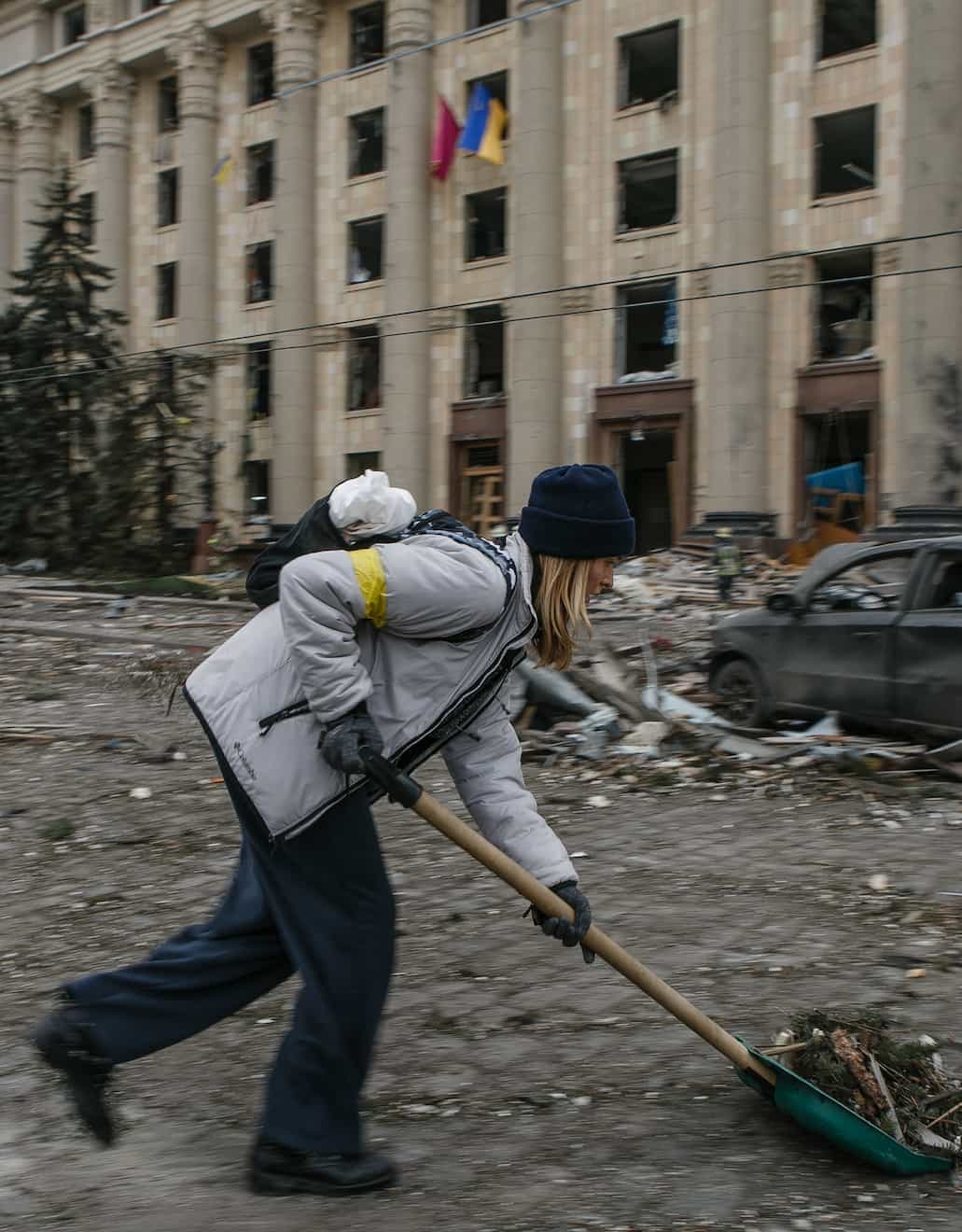
Testimony Photos

Other Testimonies from the Archive
- Recording
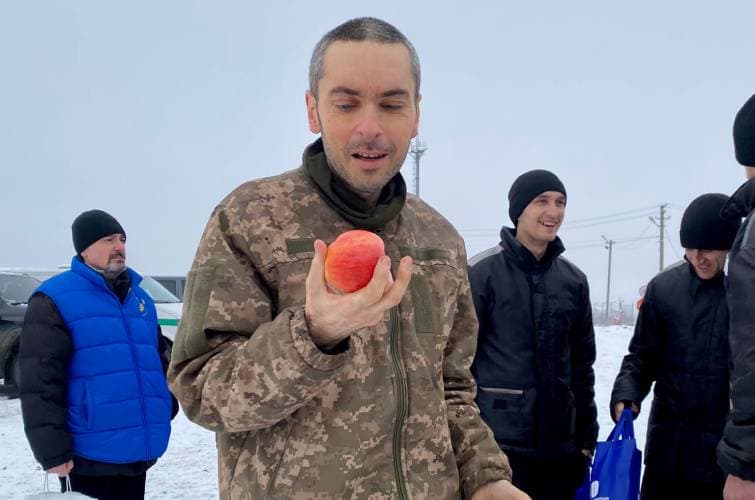
They made us shout 'Glory to Russia'
A former restaurateur went to the front and was captured by the Russians
Maksym Kolesnikov02/27/23 - Recording
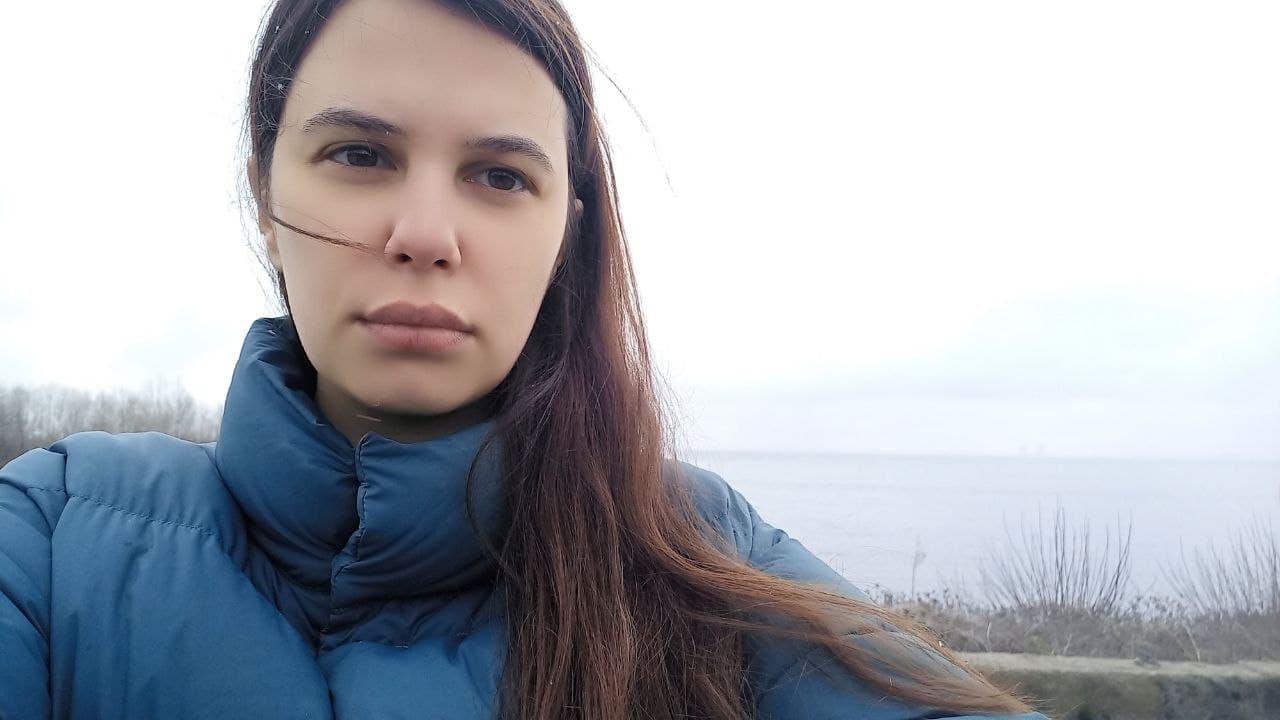
I’m not giving up my Donetsk identity
A volunteer helped war victims and was deported from Donetsk for it. She continued to help residents of the Donbas
Olha Kosse02/23/23 - Recording
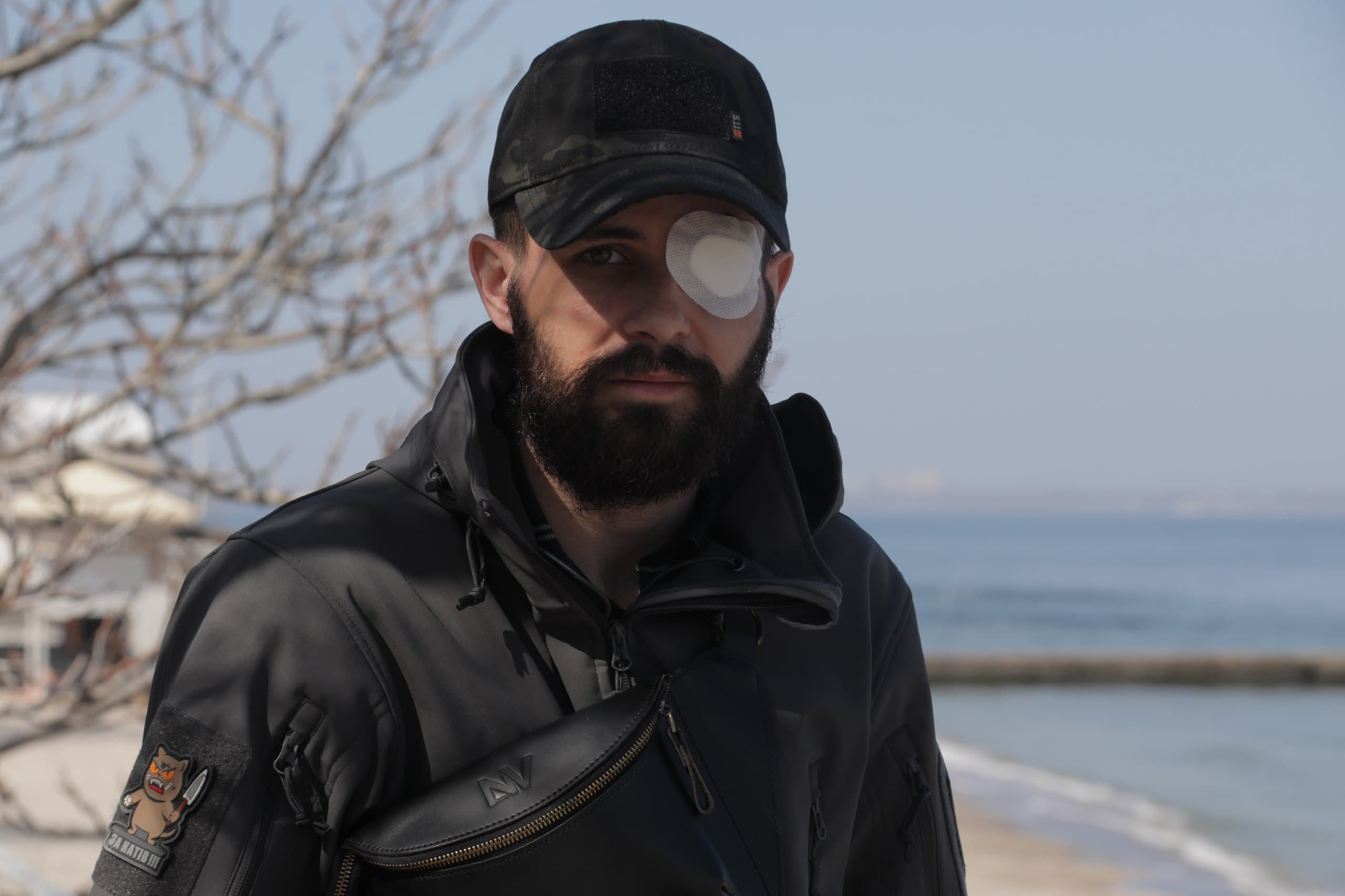
For me, bread means sweat and calluses. And now blood, too
A Ukrainian helped his family work the fields and nearly went blind after stepping on a mine
Dmytro Yeliseienko04/25/23 - Recording
You’re like a Spartan wife. If I die, it will hurt, but you’ll survive
A Muscovite moved to Ukraine to be with her soldier husband. In May 2022 he was killed; now she is struggling to stay in Ukraine
Tatiana Milennaia07/10/23 - Recording
They beat one fighter from Azov for three days. In the morning the guard called him a hearse
A volunteer from Mariupol who endured captivity and torture in Olenivka
Vitalii Sitnikov07/22/22 - Recording
Ukrainians are my brothers. Not a single dirty look throughout the entire war
A combat paramedic with a Russian passport serving in the Armed Forces of Ukraine
Anastasiia Leonova06/03/22