Back
They made us shout 'Glory to Russia'
A former restaurateur went to the front and was captured by the Russians
Maksym Kolesnikov, a former restaurateur and marketer, fought in the war in Donbas in 2015 and 2016. After the start of the full-scale invasion, he went to the military enlistment office voluntarily and was soon captured in Kyiv Oblast. He spent 10 months in Russian prisons, enduring hunger, beatings, and denigration. During the prisoner exchange, Maksym was photographed with tears in his eyes holding an apple — the photograph became one of the symbols of the cruelty of Russian captivity.
Interview
Transcript
Transcript
Attention! Translation was done using AI, mistakes are possible
КА: Despite the fact that you're in the hospital, I'm still terribly glad that you're free. Every defender of Ukraine should return home. This is very, very big and joyful news that you've returned.
МК: For me too.
КА: Yes, of course. I'd like to establish some framework for our conversation before the interview. I'll be asking you about captivity, about how it all began, what happened in captivity, how it was all organized. And when we talk about captivity, I'll ask you about 2015, about Donetsk, about the connection to Donetsk.
МК: Yes, of course. I expected it would be like that.
КА: Let's start from the very beginning. As far as I understood from various sources, on February 24th, when the full-scale war began, you went as a volunteer to the military commissariat. Is that correct?
МК: Well, look. I was in the operational reserve, first call. After service in the ATO [editor's note: Anti-Terrorist Operation, the official Ukrainian term for military operations in eastern Ukraine from 2014-2018], after participating in that campaign, those of us who were fit for military service were enrolled in the operational reserve. This means that we shouldn't wait for any summons and so on, in case of war starting we're the first people who should take up arms. Accordingly, as soon as everything started, I already had everything prepared. I assumed that war was quite likely. I really hoped it wouldn't happen, but I assumed it was likely. So I just kept everything I needed at hand: documents, my uniform, combat boots and so on. I just put it all on, packed into a backpack what could be added to the backpack. Well, and went. Everything was clear - where to go and what to do. That's how it was.
КА: So you went by call-up? In 2015-2016?
МК: Yes, in 2015 I was mobilized during the fourth wave of mobilization, and in 2016 I was demobilized.
КА: So you went to the military commissariat because you knew you were in the first such call for service. What happened next? I understand there are things you can't talk about, about some military actions.
МК: No, it's all simple there. The military commissariat verified that the military unit I was assigned to currently exists, that it's located at the same address. They suggested I go there. So I went there. Of course, the command staff had already changed, so there were no longer people I knew there. They saw me in the system, checked my military ID, verified that I was assigned to their brigade, to their operational reserve. There were already quite a lot of people coming to them at that time. A couple of officers managed to talk with me, a psychologist, to make sure I was in an adequate state. They enrolled me in the unit, put me on supply, issued weapons, issued uniform from what I was missing. Since I was demobilized already in spring, I didn't have a greatcoat, and this was already February. They issued me winter uniform, the winter variant. Accordingly, I received everything I lacked, a tactical backpack. In general, everything required. And already in the evening we departed for the object.
КА: And your military unit, it's in Kyiv, yes?
МК: Yes.
КА: And approximately what date did you already depart for the frontline?
МК: We departed on the evening of the 24th already to the oblast. And it became the frontline at the very beginning of March. We were in the northwest of the oblast, our guys held them - not our unit, but our Ukrainian guys held them in the north. One of the columns that reached Irpin, because they couldn't cross the river, they came to the territory where we were. At the very beginning of March we had our first battles. We also had an attempted airborne landing, but unsuccessful for them. From helicopters they tried to land troops, but nothing worked out for them.
КА: Russian - meaning? Enemy?
МК: Yes, of course, of course.
КА: And can you try, if it's possible, again, I don't know how much one can talk about this.
МК: Well, ask, if I can't tell you something, I'll tell you about it.
КА: On the 24th you already departed to Kyiv Oblast. From the point of view of a direct witness, a direct military person, how did the situation change there, in Kyiv Oblast? What did you see? From what you can tell.
МК: Already at that moment there was quite a lot of cannonade around us, we heard it mainly from the north. We heard a large number of aviation flights - both near us and above us flew a lot of aviation. At the end of February there was an air battle not far from us. We don't know who was fighting whom. We saw how one of the planes was shot down. Many helicopters flew. Everything was very active, in the north there was powerful cannonade. We still had communication, had mobile internet. It would disconnect at night, then turn on during the day. On the 25th, 27th, 28th it still periodically connected, and then it disappeared. It would sometimes appear for a couple hours a day. I asked my wife and mother to collect General Staff summaries for me via SMS, which the Ministry of Defense began publishing and a couple more news Telegram channels, to at least know what was happening around us. What we heard was approaching cannonade. And then, in the first days of March our deputy political officer already informed us that we were already encircled. He told us honestly about this, that there were already Russians around, everywhere. Then they started trying to enter our territory and contact battles began. They came to us, first started with mortar shelling. Then they tried to enter our area with a small special forces detachment. Our guys drove them away quite quickly, we didn't even all manage to assemble as a reaction group, because the guys worked clearly, drove them away. After they drove away this first attempt, we had heavy daily shelling begin, they bombarded us with artillery. Both barrel and rocket artillery worked on us continuously. Well, how continuously? They clearly, as if on schedule, started shelling at six in the morning. Every day it was like this. And at ten in the evening, at 22:00, they would turn it off. We lived just like on a schedule. Well, apparently they slept or I don't know for what reason. In general, we had just such a schedule. Good morning - it was always by the start of when the artillery began working on us. During the day there were some intervals, naturally, it wasn't all hours in a row, but the first volleys began at six in the morning.
КА: And how long did you stay in such daily shelling?
МК: More than two weeks. Then they also entered our area with equipment, tanks. We had women who were engaged in the kitchen and so on in the unit. They were dismissed, given civilian clothes to wear and in a quiet moment, when there was no shelling, they were taken out of the territory. Then, consider, somewhere around 17-18 days we lived in such a regime. The first time they entered with two tanks, we burned one, our guys burned it. The second one we damaged, but it left. From it the Russian [military], the crew started throwing out everything that could catch fire - everything was soaked with diesel fuel. [Our military] punched something there, diesel leaked inside, the tank started spinning in place, and they were throwing out of the hatches everything that could catch fire: sleeping bags, uniform sets. We looked at it later. For some reason they started throwing out canned stewed meat, I don't know why, it supposedly shouldn't have caught fire. Maybe they just panicked, in general, threw out a couple cans of stewed meat. And then, on March 19th they worked us over very harshly, there was very heavy shelling. On the morning of the 20th they entered with four tanks already. With the remnants of what we had from anti-tank [weapons], we managed to defeat one tank, and three started trying to iron our positions point-blank. Therefore the commander made the decision that we needed to preserve soldiers' lives. In any case we couldn't do anything with them. We could have held out for some more time, if there had been just infantry without equipment, we could have continued shooting for some more time. But we already couldn't even shoot at infantry, because as soon as we stuck out from somewhere, a tank would hit us point-blank.
КА: And did you understand what was happening around? I mean - the general situation on the frontline. Were you still getting these messages from relatives or not anymore?
МК: Yes. On the 19th I was still receiving SMS messages. I roughly understood what was happening. I understood that they had cut the Zhytomyr [road], we all knew and understood this. We understood that they were breaking through, they were trying to encircle Kyiv, trying to reach the southern highways. But I knew that around the 16th, 17th the south, the Odesa highway: they couldn't reach it. I knew that in the north everything was very harsh, because the cannonade was constant. On the 19th they beat us very harshly with aimed fire. Although they shot every day, but on the 19th they really worked us over very harshly, wanted to inflict maximum damage on us. And in other places it was all continuous.
КА: Where were you approximately? I just don't orient well in Kyiv Oblast. If this can be said at all.
МК: We were - northwest, somewhere 18-20 kilometers from Kyiv.
КА: And so on March 20th, considering that they had superiority in equipment, as I understand, your commander makes the decision...
МК: Yes. We simply had no equipment at all. The unit was non-combat, let's say. I can't say what subdivision it was. In general, the task was non-contact battles. From my brigade I was attached with a lieutenant, and all the others were conscripts and contract soldiers who, let's say, were from a specific, technical branch of the military, whose task was completely not to fight tanks.
КА: And what did the task of your, I don't know how to put it correctly...
МК: I can't tell you.
КА: Alright, alright, I understand.
МК: We had to guard and defend them, but there weren't many of us. The guys also, of course, fought, well done, despite the fact that they were more equipment [oriented].
КА: Guard and defend? Meaning - some other battalion?
МК: No-no-no. Look, once again. My unit specifically is an infantry brigade, let's call it that. From our brigade there were 11 of us left who were attached to an object that was itself a separate unit. And this unit - it's technical in its nature, it's not combat.
КА: Alright, I understand. And on March 20th the commander, considering the circumstances, makes this decision?
МК: We had an eight-hour battle.
КА: In the morning?
МК: It lasted eight hours. It started at six in the morning and somewhere everything quieted down by two in the afternoon. And the commander made the decision - to surrender.
КА: And during this battle that lasted eight hours, is everyone alive?
МК: No. There are, of course, dead and wounded.
КА: Can you tell about the process? How did the process of captivity occur? What happened in general?
МК: We had several buildings, let's call it that. In our building there were about two dozen people. We received information by radio from the commander that the unit was surrendering. We had several entrances and exits, all of them except one were destroyed by the Russians from tanks. They drove around this building and pounded it, there's such a semi-bunker, partially buried in the ground. They collapsed all the entrances from tanks except one. Through this entrance their special forces entered, they started shouting to us. We heard the information by radio somewhere around two, somewhere after half an hour, forty minutes they started shouting to us. We still had smoke then, such suspended particles, because they were throwing grenades into our ventilation shafts. They threw grenades there, and we had everything after explosions there, we were already with concussions. There was such dusty suspended matter, nothing was visible, although there were holes in the roof, light got in. But at first nothing was visible at all. Then the suspended matter settled, the sun started coming through, everything quieted down, the tanks stopped shooting. We even stopped hearing the sound of tank engines. And after some time through this entrance they started shouting to us, whether we were surrendering, whether we were carrying out the order to surrender. Specifically from our end, let's call it that, six people remained. We managed to check with each other whether we were intact. All six of us were intact. We shouted to them that yes, we agreed to surrender. They told us to come out one by one, throw our weapons aside, take off body armor and give them our documents. We started coming out one by one, threw down our automatic rifles, knives, then body armor and gave them our military IDs. They also took our phones in a separate pile. They laid out the documents and phones in a pile and tied them up. Before taking us outside, they put hats over our eyes, and on top wrapped our eyes with tape, and put plastic construction zip-ties on our hands.
КА: Before you continue, when they took you out - what did you feel in general at that moment when your commander announced surrender? How did you experience this?
МК: A difficult question, because in general it was unclear whether we would survive or not. At our entrance, through which they entered, everything was quite visible, specifically from our positions. I saw these four tanks, and I understood that we had no chances. The thought that this could be the last day of my life, it, of course, flashed through my mind. It's impossible to think about it, because there's battle, you have to do something, react, otherwise you'll die if you sit and think. So you had to do something. But still there was a state of shock. Specifically when we were already surrendering, I remember that my commander and I, we had such a room divided into separate little rooms. We were together in one room. Then they threw quite a few grenades at us. I can't imagine by what miracle we didn't have a single direct hit, that is, neither I nor he had any wounds specifically from these grenades. I had a wound, both of us were concussed, I was wounded on March 7th, a fragment flew into my leg, from a mortar. Landmines exploded very close to us. Only the fact that we crawled away very quickly backward, retreating, saved us. I just knew that they were clearly correcting fire on us, that is, there was a drone somewhere. We had to urgently quickly-quickly crawl away. We quickly crawled away with him. And in front of us very close - about a meter and a half away - landmines were exploding. Fragments went upward, but one of the fragments hit me, got into a vein, well, and concussed. And here, it turns out, we again found ourselves together in this little room. And really several grenades exploded near us, and there were RGD [editor's note: hand grenade] explosions, "F-1s" [editor's note: type of grenade] exploded, but nothing touched us at all. We were both seriously concussed, because our ears were blocked, numb, blood from the nose - such a state of concussion. Therefore the general adrenaline of battle and what was happening, thoughts about captivity somehow displaced it. There couldn't be any, you know, excessive experiences or any reflection there. Imagine - an eight-hour battle is going on. Before my eyes a person was mowed down by a machine gun burst. Here we're already all pumped up with this adrenaline and stress, shock, I can't single out any separate experience about captivity, even if there was one, it all mixed into the feeling of that day. Then they took us outside, sat us under trees. An officer-special forces soldier came, who took us prisoner, and said that they promise not to kill us, not to beat us, because they follow the Geneva Convention. Like we had a battle with them - and we have an oath, and they have an oath, after battle they no longer fight with prisoners. We won't try to escape - everything will be fine. They then took us back into this same room where we were in the evening, when it was getting dark, chose a bigger room there, took the guys. There's a concrete floor, they said: "Are there mattresses somewhere?" We went, found mattresses, ours told them where there used to be barracks, where there are mattresses. They brought several mattresses so we wouldn't sleep on the concrete floor. There was such humane treatment. They brought us their stewed meat, opened stewed meat for us, found plastic spoons and let us eat. But for the whole day I hadn't eaten before this, at six in the morning they woke me up with information that equipment was approaching. We had a shift before this. My duty ended at four in the morning, and we went to sleep, and two hours later they woke us up with information that battle was starting. I got up at six, since then ate and drank nothing. But I didn't even think about it. There was such a state that you don't think about it at all. Already in the dark, at eight or beginning of nine, this stewed meat they gave us, ours ate, of course, a couple, but honestly, we weren't in such a state... We spent the night there. The next day the special forces handed us over to the Russian National Guard.
КА: During all this time, this special forces, did they ask you about anything? Did they try to contact you somehow?
МК: They tried to contact us, yes. The thing is, special forces soldiers - they're all one hundred percent officers. This is part of the Special Operations Forces of the Russian Federation. I even know the regiment number, they didn't particularly hide it. They told us who they were. I won't name it to avoid any targeting of the place of action. In general, they communicated with us quite normally. They were more like: "Well, why are you Slavs fighting against us?" "Guys, this war will end soon. Now you'll be in captivity for a bit, you'll be exchanged," or "you'll be released." Such were the phrases, they were absolutely sure they would defeat us soon. But at the same time it was, really, from the series that they understand that everyone has an oath - both us and them. There was a phrase "We don't fight with prisoners." Purely in this part, I must admit, it really was so, they treated us humanely.
КА: And did you try to answer them something about what they were saying? That they'll win now, something else.
МК: No, not really. Well, who in such a situation would? It was clear to everyone that they took us prisoner and that in this situation we needed to survive. There were such moments from the series, they were amazed by our socks. I don't know how they saw it, apparently someone was sitting so that their pants rode up. And they asked: "Oh, what kind of socks are these? Imported?" And they tell them: "No, these are like Ukrainian ones." They say: "What's the inscription - ZSU?" - "Zbroini syly Ukrainy" [editor's note: Armed Forces of Ukraine]. They started talking among themselves about what cool socks. And one of the conscripts tells them: "Want - I'll share socks." They say: "Oh, are there some somewhere?" He says: "Yes." He said that we have a place there where socks are lying. They took him, went and took Ukrainian socks for themselves. They praised them very much, said the socks were absolutely awesome.
КА: How awful! And this is special forces. They, unlike conscripts, should have.
МК: Well yes, this is elite, yes-yes-yes. With them was a battalion of airborne troops. The next day, before captivity [editor's note: the hero misspoke, this was before deployment to the place of detention in captivity], they allowed us to take off our hats, untie our eyes so we could see what we were eating. They in the morning, the special forces, even brought more food from our own dry rations. They, by the way, praised our dry rations very much and said they were awesome. They're really very cool. They discussed among themselves: "Damn, what cool pearl barley" - in our, Ukrainian dry ration. And beans, they were generally, but we ourselves were crazy about these beans. They said: "Have you tried the beans?" - one says to another: "Have you tried the beans? Damn, try it. Such awesome beans!" Well, I'm [telling you] without swearing.
КА: I understand.
МК: Enthusiastic swearing. And they brought us our own dry rations, gave us like for the road some of their dry rations, brought and gave each person a dry ration.
КА: This was already in the morning?
МК: In the morning, yes. And the airborne troops, in the evening I still saw [them] a little. Eyes were tied, but when you open [your eyes] under the hat, you see something. I saw when the airborne troops came, some of them were in Russian boots, but there were people in sneakers, in Skechers. The next day they were all wearing Ukrainian boots, the airborne troops. The special forces walked in these, I know this model, very expensive winter footwear. One of them asked me in the morning, such a young one...
КА: One of them - is this an airborne trooper or special forces?
МК: No-no-no, special forces, special forces. He was already without a balaclava. He came up from above, you know, looks very much like a Viking, such is his appearance, fair-haired, purebred, you can see. Captain, I think. And he approaches me, looks, and I have a chevron - the coat of arms "ZSU", trident. He says to me: "What kind of symbol is this? Is this some Nazi symbol?" And I tell him: "No, this is Ukraine's coat of arms, the trident." He says: "And what does it mean?" I say: "This is the trident of Vladimir the Great, the holy prince of Kyiv. Ukraine's coat of arms was made in his honor." He says: "I didn't know." And left. Then another one came up and says: "Listen, can I take your brigade chevron?" And I was confused, I can't forbid, I say: "It's just that I have no documents now, nothing. [By the chevron there will be] at least some [identifying sign] of what I belong to." He says: "Ah, okay, then no need, keep it for yourself." And he didn't start taking the chevron from me, tearing it off. That is, he supposedly asked permission. He understood that I was negative about this, but didn't start taking anything. This was a special forces soldier.
КА: So they were somehow more or less still adequate relatively?
МК: Well yes-yes. They understood very poorly [about us] - well, how can you not know the coat of arms of a country you're fighting with? Still an officer, he's a captain, he should [know]. I don't know, maybe in my world of pink ponies they're interested in the enemy. Then they handed us over to the Russian National Guard, there the inadequacy already began. The Russian National Guard took away all the dry rations that the special forces had given us. They took everything from us, tore off all the chevrons already, took all sorts of things that the special forces had left us, took away bank cards. In short, everything that interested and concerned them, they took absolutely everything from us.
КА: And all this happened there, at the handover by special forces?
МК: They took us out of the unit territory and handed us over to the Russian National Guard, the special forces left. And the Russian National Guard started loading us into prisoner transport vehicles. Before the transport vehicle there was another search and taking everything that could possibly be taken. They took our dry rations away already in Belarus. Because when they were leading us to the vehicle, the "Zvezda" TV channel was already filming us, their military channel. On video [they filmed] that we were supposedly walking with dry rations. We thought they would leave them for us, but they took the dry rations already in Belarus. The Russian National Guard removed the zip-ties from us, put handcuffs on everyone.
КА: And did they try to insult you, humiliate you somehow?
МК: They were already harsh [toward us], they beat and shouted already. For example, they cut everyone's shoelaces on boots, and cut so harshly. You're wearing leather shoes, when they cut you with a knife like this, it's not very pleasant. These were already, let's say, tougher. And then, already when they brought us to Belarus, there the prison poses already began: "legs wider," "turn your hands palms out," "press your head against the wall" - with shouting, with swearing.
КА: The Russian National Guard, you said, shouted at you. What did they say? And did they beat you personally?
МК: Well, they called us Nazis. To hit with a rifle butt - very easily. On the back with a hand in a tactical glove, on the head, on the back of the head. In the face, apparently, there was an order not to hit, so there wouldn't be visible traces of beatings, because later they filmed reports, took interviews with those who had tattoos. They examined everyone who had tattoos and looked for some such symbolism. We learned this later, officers told us, they separated us from some officers. In general, such a story happened: when our guys repelled the first entry of special forces, and it was the same special forces that kept entering us all the time. When they repelled it, the special forces reported through their command that Azov Brigade was sitting in our unit, moreover that we [supposedly] had somewhere up to a hundred Azov fighters. Where did they see them? Where are they from? In short, information went that Azov fighters were sitting with us. How it happened that they mentioned them - they needed to explain that these were warriors who could resist special forces. So they made up this "Azov." And the Russian National Guard already called us Nazis and all that. We couldn't understand at all what [it was] about, we didn't know then that they reported about us that we were Azov fighters. Then the theme with Azov fighters, with nationalists surfaced again in Russia, when they brought us and interrogations began.
КА: Yes, let's [go] chronologically, so [we don't get confused]
МК: The chronology is this: March 21st the Russian National Guard takes us, brings us to Belarus, to Narovlya. We're there for two days. On the morning of the 23rd they take us out of Belarus to Bryansk Oblast, the city of Novozybkov.
КА: And when they brought you to Belarus, you said that prison habits already began there. Can you tell what was happening there?
МК: There was another search there. And then, as one of our comrades who once worked in the Ukrainian department of execution of punishments told us, there are a number of requirements that are inherent to strict regime in prison. For example, prisoners are lined up in a certain way during inspection. A person stands with legs as wide as possible, as much as they can, while turning their hands into the most uncomfortable position - thumb down, and the outer part of the palm should touch the wall, hands are placed as wide as possible. It turns out you're standing in a very unstable pose, and behind you is someone who can at this moment if necessary or if desired hit you, check you, search you somehow. They lined us all up in this pose for additional inspection, could bang your head against the wall. It turns out, when they moved us from the transport vehicle to the barracks they already lined everyone up. They hit some with their heads against the wall they lined us up against. But they hit so there wouldn't be bruises and damage on the face, so there wouldn't be fresh bruises or abrasions.
КА: And did they beat you?
МК: Something hit my leg, because I couldn't understand how to stand [in the pose the Russian National Guard demanded], so I would stand wider. In this general state of shock from what's happening, you don't particularly feel it. You feel the consequences later, but at first you don't perceive what's happening to you at all. Such quite powerful adrenaline.
КА: So there were practically no thoughts at all, right?
МК: At that moment, yes, some shock. Plus I had to frantically think up what to tell them, because I didn't want to tell them about [service in the] ATO zone, because I knew that ATO veterans are treated harshly, they're often killed. I needed to think up a legend about the tattoo. And I have a tattoo connected to the branch of the military I was in during the ATO. I thought up this legend. And then, when they started interrogating me about the tattoo, I told it to them and then stuck to it the whole time in captivity.
КА: Can you tell about this legend? Or is this not allowed?
МК: Why not? It's allowed. I have a tattoo of artillery reconnaissance, in which I served during the ATO. And I said it was a tattoo I made for myself during conscript service, that [this service] took place in a training center. I just gave a location, I deceived them in that I [actually] had a unit in such-and-such city, but I told them it wasn't a [military] unit, but a training unit, training center. It was easier for me to remember that way. Lies, so they wouldn't be exposed, should be repeatable and have some life connection. I thought they would check and come across that, yes, somewhere there such something exists. And so I [lied so that when checking this wouldn't be discovered]. It seemed to me they would act logically. It seems to me they never checked anything about this.
КА: And what's depicted in this tattoo?
МК: A bat against crossed cannons.
КА: Did they interrogate you about this tattoo starting from Belarus?
МК: Yes, starting from Belarus. They asked everyone: "Who has tattoos?" Everyone who had them said [they had tattoos]. I understood I had to show it, because if I hide it - it will be even worse. I was one of the first they dragged for interviews to TV channels, because I simply said "tattoo," and they thought there was almost a swastika there. And already under the TV camera, when I showed it, they asked me: "What does this mean?" I told them. Actually, when I was getting it, this symbolism was still old, from Soviet times. In general, they still haven't changed it there, in Russia. They didn't find any Nazi roots in my tattoo. [Then on camera] they asked: "Who? What? Where are you from?" And I'm from Donetsk. This interested them very much, they started asking me how I, being from Donetsk, am supposedly subjected to some repressions in Ukraine? Do I speak Russian or Ukrainian? I said that I've spoken [Russian] since childhood, grew up in a Russian-speaking family and have lived in Kyiv for many years. They told me: "And how? Do they oppress you? Tell us how they oppressed you." And I tell them: "They didn't particularly oppress, there were no problems." They still couldn't believe this and tried to [ask me]: "Did you enroll your child in kindergarten? Maybe there were some problems with this?" I tell them: "No, there were no problems. The child went to private kindergarten, there were no problems." They all tried to find traces of some Nazism.
КА: Were these journalists asking or military?
МК: Journalists, there was "Zvezda," REN TV, NTV, this whole gang, with them was some lieutenant colonel. They asked me for a long time, because I'm from Donetsk, plus I had clean Russian, I don't know, at least it seems to me I don't have any accent.
КА: That's right. Meaning - very good Russian.
МК: So they talked with me in detail. Then they started asking me: "Well, how is it there in Donetsk?" - whether I have [someone] there, whether relatives and friends remained. I told them that most friends and acquaintances left, because life is hard. They didn't like the information that life is hard, and they decided to try provoking me toward something else already. They started showing me two videos. There were obvious traces of editing, not very quality editing in this video. Video [supposedly] of Ukrainian TV channel broadcast, where they talked about how they would castrate Russian prisoners, cut them up for organs, all this blah-blah-blah. And they tell me: "This is Nazism, what do you think? Is this Nazism?" I understood this was editing, it was visible. But I also understood that if I start telling them now that this is untrue and fake, I'll probably suffer. So I simply said: "Somehow this isn't accepted with us, people don't think like this. And I think it's wrong to treat prisoners like this." Well, started moving away from the topic. They tried to tell me again: "So is this Nazism or not?" I'm like: "I don't know. I don't understand definitions of Nazism." In general, they understood they wouldn't extract this good from me. Although they still cut a piece with me and showed it on their channels.
КА: But also edited it?
МК: Yes-yes-yes, made some editing. I hope I didn't say anything inaccurate to them.
КА: How was it clear this was editing? It's clear that they simply couldn't say this in Ukraine, but how else did you understand that they [fabricated the video]?
МК: I work in marketing. I see when video jerks. It was visible that these were cut pieces of phrases, as they like to do. That is, one phrase starts here, is cut out, another piece is taken. Well, you can see it's editing, done not too qualitatively.
КА: And so they film you for Russian propaganda purposes. You're in a pre-trial detention center, as I understand, in Belarus?
МК: No-no, this wasn't a pre-trial detention center yet. This was really some warehouse, such a semi-abandoned former enterprise. As the Russians said, there was a temporary detention point for prisoners. Plus, they also took their equipment there. There was a bunch of their damaged equipment, an unreal amount of destroyed tanks, APCs, burned trucks, some destroyed MLRS [editor's note: Multiple Launch Rocket System]. They took equipment there that ours had burned, and prisoners. There were military and civilians - both.
КА: Meaning military and civilian prisoners?
МК: No, there were prisoners of war and there were civilian hostages whom they grabbed in Ukraine. There were many of our civilians whom they grabbed as prisoners. Because, according to all conventions, only military can be taken prisoner. But they grabbed civilians, essentially took hostages.
КА: So this was just some technical building, not connected to the prison system at all?
МК: This was some old warehouses, yes.
КА: And you stayed there two days, right?
МК: Two days, yes.
КА: What happened next?
МК: Next they put us in prisoner transport vehicles and took our unit out in two groups. First in one day, the 23rd, they brought half. And the second half they brought on the 24th.
КА: And were you in the first or second?
МК: I was in the first group, the 23rd. There was reception there, it was quite harsh. They made us shout "Glory to Russia." I couldn't understand what they wanted from me, because I thought there was some response to "Glory to Russia." Well, like there is in Ukraine "Glory to Ukraine" - "Glory to Heroes." I thought they had thought up something like that. So they really beat me in the ribs, because I was reacting incorrectly. In general, I don't want to complain on this topic.
КА: No, it seems to me this is an important thing, because reception is one of the most difficult...
МК: Yes, yes, this is the heaviest event, yes. КА: You can, if it's not difficult for you to remember this, [tell about it] This isn't a complaint, this is documenting war crimes.
МК: You know, I just don't know how our coordination headquarters [will react to this]. It's not really customary to talk about such things with us. Well, intake – that's harsh. Intake – it's always through beatings, they immediately break you. They broke my nose, beat me, broke my nose. Then they told me to take off my hat and wipe the blood that had flowed onto my face. They put [us with another prisoner of war] both on our knees, [we] stood and waited. And blood was flowing from me, then I wiped this blood with my hat. Then they worked over my ribs so [hard] that for two months I couldn't sleep on either side. With every turn it hurt, I'd wake up. So I had to get used to sleeping on my back, I'd never slept on my back before.
КА: And for what? They broke your nose just because, I don't know, they felt like it?
МК: FSB special forces took us in. It turns out, they approached the exit from the prison van and immediately twisted our arms very hard and bent them very hard. It turns out, for me, at my height of 183 centimeters, it was very difficult to move. They were basically dragging me and shouted something like: "Come on, move!" And they hit me in the face with a knee, broke my nose like that. Well, they didn't break it completely, which was good, but just broke it. They basically dragged me to the entrance, threw me on this [floor, shouted] "on your knees!" – told me to get up. Blood flowed from my nose, then I wiped the blood. Then came these shouts "Glory to Russia," then they forced us to undress completely. They issued uniforms, like robes, prisoner robes, rolled them into a bundle, into a rolled bundle. It was very strangely selected, because the pants were [for me] small in size, and the jacket, on the contrary, was big. I was lucky with the jacket, because later, when it was cold in winter, at least my arms were completely covered. And the guys who weren't lucky, who had pants that were too long and jackets that were too short, their arms were always very cold, because the sleeves only reached to their wrists, which made it colder in winter. And they gave me something like that. Then they drove us into the shower for ten seconds, ice cold, supposedly to wash. Well, actually just to douse with water. And they gave out a mattress. Then they took us to doctors, the doctors quickly examined us. They saw the remains of my wound, asked: "What is this?", I told them. They noted something, then, a month later, a doctor looked at this wound site.
КА: And this wound – this was the one from March, fresh? The one from the landmine...
МК: Yes, yes-yes-yes, yes-yes. It was a shrapnel wound, yes. Our doctor [put on] adhesive tape. She refreshed it for me, did bandaging, cleaned it. And it turns out there was a remnant...
КА: Of shrapnel?
МК: No, they removed the shrapnel. A remnant of the stuck-on tape. They saw the tape and started asking: "What is this?" Then they tore it a bit to look, but stuck it back on, that is, they left this tape.
КА: But the wound had already healed, yes, relatively?
МК: Well yes, it was healing, it was already healing. I walked normally, everything like that. Our doctor, she took care of me, everything was in order there. And then they dragged me, brought me to the first cell. In this cell there were already a couple of people from my unit. Then it turned out they gathered us in this cell. The cell was for seven people, first they put six, we were all from the same unit and we were all mobilized. There were mobilized privates, mobilized officers, but all were mobilized. And then, after a couple days, they threw another person in there, also a mobilized officer.
КА: This is Bryansk? This is all in Bryansk?
МК: Yes, this is in Bryansk. So it turns out, on the 24th I already had my first interrogation at the Investigative Committee. The Investigative Committee interrogated us briefly – circumstances of capture. The main part of the interrogation was devoted to the events of the fourteenth, fifteenth, sixteenth years: participation in Maidan –– as they called it – in the coup –– and so on. Attitude toward authority, elections: "Who did you vote for? Did you support political movements? Do you know anyone who supported them? Did you participate in the genocide of the Russian people in Donbas?" All these things, as they love all this, this whole propaganda crap. Here the fact that I'm from Donetsk, so maybe it helped me a little, because the FSIN went through all the points. And on the 25th I was still at an interrogation...
КА: At the FSB?
МК: At the FSB.
КА: You have experience in the Anti-Terrorist Operation. You didn't tell them that you went through the ATO?
МК: No, I didn't tell them. Of course, I didn't tell them. Well, why would I?
КА: And this wasn't reflected in your documents in any way?
МК: Everything is reflected in my document, but to my luck, all documents were lost, absolutely all documents about us were lost. We were told about this back in Belarus, the military police of the Russian Federation, who simply came to collect our personal data. They came to us and said: "Documents about you were lost, nothing came with you. Now we will question you. Tell the whole truth, otherwise you won't be able to get into the exchange, be included in the lists." They don't know what unit you're from and so on. They called us all one by one...
КА: So you were very lucky?
МК: Yes, lucky. And I, naturally, didn't tell them anything like that, didn't help at all. During interrogation, naturally, I spoke about my political views as evasively as possible. I said that I work in business, that politics doesn't interest me much, that economic issues [concern me] more, blah-blah-blah. Once the FSB agent understood that I didn't like Yanukovych. And he was like: "What's wrong?" Well, I told him there were many bribes under him and so on, corruption was very high. Since this is quite an accepted narrative for them, Putin himself spoke about the situation in Ukraine, about corruption and so on. He didn't interrogate me much about this. Plus he heard a couple of familiar names. I worked at one time as marketing director at Eldorado. He decided that since I'm a fairly prosperous person, with a career, financially speaking, I'm unlikely to be some political activist, so I managed to slip away.
КА: And before the first interrogation, when you understood you were being taken to the Investigative Committee, and then, when they were taking you to the FSB...
МК: No-no-no, they didn't take us anywhere.
КА: Ah, they came?
МК: They were all there. Yes, they were there.
КА: Maybe you discussed among yourselves or you yourself somehow thought about how to talk to them so that they wouldn't simply beat you, kill you?
МК: They were watching us all the time, there were these prison cameras. We were lucky in that we didn't have a video camera inside our cell, there was no surveillance with cameras. In Narovlya they took one of the officers to film for television channels, and he tried to tell them something about Bandera. They confronted him that Bandera is a hero for us, and he told them: "Well wait. That was such a time, you had Stalin. Stalin was also a totalitarian leader and destroyed millions of people, but he's a hero for you." After he told them this, after finishing filming, three Russian National Guard members came in with some – either [he was] Chechen, Caucasian. They beat him very badly, beat him right in front of us. This was in Belarus. In Belarus there was still one big room, well, not a room, but a warehouse, where we all slept on pallets. So it was clear that it was better not to tell them such things, not to teach them anything, not to tell them anything, but just to dodge questions as much as possible. It was clear that conducting ideological struggle among them, and especially manifesting your convictions in such a way was completely unnecessary, because it would only worsen your health condition. So we were all aimed at maximum refusal from anything whatsoever. Everyone said that no one ever participated in anything. It's clear that there weren't any special nationalists among us. There were no Nazis among us at all, they never found any in the end over ten months among us, because no suspicions were presented to us.
КА: So you're sitting in the cell. You already had interrogations by the Investigative Committee and FSB. What else happens? How is this daily life organized in general?
МК: On March 1st they completely break us up into different cells, separate everyone. They transfer me to a cell for fourteen people. More precisely, there was initially a cell designed for ten. Then they bring in these metal bunks, these sleeping platforms – and the cell becomes for fourteen people, they completely stuff it. Everyone around you is strangers. In my cell there turn out to be four military and ten civilians. And identification procedures begin, they had already taken our fingerprints before, but they go through our fingerprints again, take another DNA test, do 3D face scanning, apparently for checking against their database of video and photo materials they have. For another month and a half they begin, let's say, to educate us, to accustom us to prison submissiveness through various different procedures. They force us to start each day with singing the anthem of the Russian Federation. They forced us to memorize the rules of behavior for suspects and accused.
КА: And what are these rules?
МК: Based on some legislation and their internal regulations, there were rules about what suspects and accused who are in pre-trial detention centers are obligated to do, what they're forbidden to do, what the cell duty officer should do. They forced us to learn all this by heart. And during inspections they [checked knowledge of these rules by heart] right until the very end of my stay, all ten months, practically during every inspection. There were periods when it was easier, in January during morning inspections some block supervisors demanded that everyone take turns naming the points, naming the points about what we're obligated to do and what's forbidden to do.
КА: And were there cases when someone forgot something and they used force?
МК: Of course, of course. Constantly.
КА: Were there such cases in your cell or was this applied to you personally?
МК: I got hit once, they picked on me, supposedly I was too unshaven. At first, while the effects of normal nutrition still remained, my beard grew quite fast. Then it started growing very, very slowly. And this special forces guy picked on me: "Why are you unshaven?"
КА: And what did he do?
МК: Let's [skip this moment]. They definitely won't let this through. It all continues there [in captivity].
КА: Yes, good. You also wrote on your facebook that from the first days of captivity you did exercises every day. Can you tell about this?
МК: Yes, while it was possible. Back in the first cell I understood I needed to keep myself in some tone. I was very afraid that I'd get fat, that I'd lose flexibility, so I did warm-ups for all the joints I could, I did push-ups and squats. I tried to do planks, but it wasn't always convenient, but I did them periodically. And so push-ups, squats, planks, all these warm-up things, bends, twists. Everything I could for joints – I did all this to at least maintain some form. Plus it distracted me again. You exercise for half an hour – blood flow improves, muscles tense up a bit. You get pleasure from all this. The hardest thing there is the morning hours, when you get up –– wake-up call, you sing this damned anthem of theirs and then the day begins. You don't know what the morning inspection will be like, what will happen, whether there will be some tough guys today. The ideal situation is when they leave you alone and don't bother you. And the non-ideal – well, it's clear. There can be all sorts of things. This time before the morning inspection, it's the hardest in moral terms. Very often you dream that you're free. Well, and in general sleep is your personal time, no one bothers you during sleep. But now everything – you woke up, a new day began, and you're again in this same place. These first two hours, because wake-up is at six, and at 8:15, 8:20 is the morning inspection. This is the longest time. You want to live through it as quickly as possible. So to kill half an hour, forty minutes of them with exercises – that was generally wonderful.
КА: And what happened during these two hours? What were the general options for what could happen during these two hours?
МК: No, the question [is] that all sorts of things could happen during this inspection. And before the inspection you had to clean the cell, make the bed, then breakfast. At twenty to seven there was always breakfast. And then – waiting, just waiting for inspection. On days when they gave us television, since they started giving it, we watched it. For a bit more than a month, when we had books, we, of course, read in the mornings. But there weren't enough books for everyone in quantity. That is, maximum we had six books for fourteen people.
КА: And what kind of books were these?
МК: In mid-October, October 14th, we remembered this date exactly, we were waiting for this date, we were given books from some family. The books were all marked with some personal stamp, I remember, it was the Bosikov family. Some Bosikovs collected a library, and relatives of these Bosikovs congratulated them with postcards. In some books we found postcards – congratulations for November 7th, May 1st. Such postcards, still from Soviet times. There was a lot of Russian classics –– there was Tolstoy, Turgenev, Dostoevsky. There was also "Tarzan," some books about pirates. There were several children's books, children's fairy tales about Doctor Dolittle. Prishvin.
КА: Wow! Did this help?
МК: Books? Of course. They generally took time away and allowed you to disconnect. Let's say, I had less incoming content, because I told the guys a lot. I have a pretty good memory, and I retold books, series to the guys all this time. I've read many books, loved this. I retold various fiction to them, plus series I'd seen, films. I created a content stream, I really lacked feedback. That is, I listened to those who could tell something, but the guys' internal library shelf ran out faster. I lacked this. And here books come to you. I started reading with crazy speed to get this incoming stream. And we'd already been without television for a month by then. When the successes of the Ukrainian army began, they took away our television so we'd stop knowing about surrounding reality. In general, books helped a lot to get distracted.
КА: And do you remember any book that maybe especially strongly helped you or was memorable, that you read in captivity?
МК: How can I tell you? I read two novels by Tolstoy, "Resurrection" – that's a novel about prison. I'd read it once, it made a very big impression on me then. Well, Tolstoy is a great writer. And here I read it with special attitude, because I myself was in prison essentially. We were treated like prisoners. And I thought about how, in general, over a hundred years, a bit more than a hundred, the situation only got worse, because the attitude toward us was generally not human, let's say. He described the horrors of those prisons, but frankly speaking, [it doesn't compare with] how they treated people then. How they fed them, how they gave them the possibility in that same prison to move from cell to cell during daytime, for example, and how they kept us, that we could go outside for five minutes a day to breathe. Our situation was much worse than that of the main heroine of this novel. Well, the main character there is of course Nekhlyudov, but I mean – the main sufferer, Maslova. In general, for me it was simply indicative that nothing actually changed, that all this great Russian culture is as separated from real Russian life as a film of fat on slop. There's slop, and there's fat. You read this comparison, I somehow found it for myself there. No, it doesn't penetrate into the depth of life. There were some talented and brilliant people who tried to show [others] some values in their creativity, so they would come to these values. And the deep state lived in all this and continues to live, only now it's even worse, probably, because to the times of these imperial prisons was added the experience of the Soviet Union and absolute hypocrisy, meanness, which is also Soviet attitude in living conditions. And so I got distracted. I read "Tarzan," would never have picked it up in my life, but here it was amusing to read about "Tarzan."
КА: That's something, probably, completely different. That is, "Tarzan" is about some completely different place, not about prison.
МК: Yes, adventures, Africa, all these things. Somehow it distracted, yes. There were romance novels, guys read all these love sighs, specifically about love. Not erotic, but specifically love novels – about how he and she meet, there's some barrier between them: either social distance, or that they, on the contrary, work together in the same business and she has some [complications] in her history. A woman's story, when she has two children from previous relationships, and he's a young successful manager, her boss, who hires her. And there's this barrier between them, but then love wins. Everyone really liked happy endings. Even when I told something, everyone really wanted me to tell things with happy endings, for good to win. They really liked "The Count of Monte Cristo," I retold it twice. And "The Girl with the Dragon Tattoo" was very popular, because she was all tough there, defeated all the bad guys, everything was revealed. And travels and adventures really distracted the guys – both my stories where I traveled, and some adventure books. Jack London, I remember, in general... And you can see – how they listen, how quiet they become, ask for continuation or "tell us a bit more." You feel that interest is captured. Jack London, series of stories about Smoke Bellew, adventures in Alaska. I really loved this series of his stories, I even reread them, so I remembered them very well. This distracted very much and was very, very popular. Plus the series about Marco Polo, a couple of seasons, China, 14th century, adventures, some events, Chinese, Mongols, this European sailor who found himself in such a place. That is, completely different life. Then, when I started telling, the next day my comrade told me: "What you told yesterday, I dreamed about it all, that I'm in China with Marco Polo."
КА: Great. And how did you generally decide to retell books and series? How, what did this start with?
МК: When we were just discussing some hobbies, we asked [the guards] for books, they explained to us that there's nothing like that and won't be. Well, what to do, we started discussing our interests. And I was interested in history, they first asked me to tell something. Well, I said I'm interested in history, I was always interested in Ancient Rome and the Middle Ages, they asked me to tell something. At first everything started with battles, then the Crusades, I'd read a lot of different things about them, then the Hundred Years' War, and then we smoothly moved to some artistic things, fiction books and series. Ah, and before this [we discussed] who went to what, what came out [in cinema]. Before the war, just some time before, the film "Dune" came out, and I read the first "Dune" trilogy. I remember it quite well from hot traces, because I'd just read it. And we were also discussing films in the second cell, who likes what, the conversation turned to "Dune." And they asked me: "So what happened there?" I first started telling such a summary, and then it went with such details, because I already remembered well. And I managed to tell them for about a couple of days, considering the books this is probably about 4–5 hours total duration. And it turned out that it eats time perfectly, and the guys are interested to listen, and I enjoy telling, I liked it. And eventually they started asking me: "Come on, something else, come on, something else." This allowed perfectly to switch and simply fly away from this reality of this cell and these walls, to occupy yourself with something. Because, frankly speaking, [there was] nothing to occupy yourself with there.
КА: Did you do this throughout the entire...?
МК: It, yes, entered this practice, yes, and all 10 months [I retold something]. I still had untold things, fortunately, didn't have to tell everything. Then just memory, it started suggesting some such things, I suddenly remembered a film. Once they partially relocated us, they moved guys from my unit, conscripts, into our cell. And some conversation started on life topics, what works out in life, what doesn't work out. And I encountered some pessimism from a couple of guys. And for some reason I remembered such an old-old film that I last watched in the 1990s, called "Working Girl" with Harrison Ford and an actress whose surname I don't remember, I only remember she was once married to Antonio Banderas. This is a classic Hollywood story, how a talented girl decides to work in business, comes up with an idea, goes through some difficulties connected with her boss trying to steal this idea from her. But in the end she was able to convince a potential employer that she's great, that this idea is hers, and they invited her to work in a big office as a manager of some normal level. Plus Harrison Ford's character falls in love with her. Well, Harrison Ford all handsome, successful, rich lawyer, all that. I somehow suddenly against the background of this story unexpectedly remember this story in quite good detail and also tell it to them. This is to the point that memory starts suggesting you some things, I honestly hadn't remembered this film for more than 20 years. [I told] something that was interesting to the guys. For example, they asked me to tell them "The Three Musketeers," the young ones hadn't read it. Those who were older had read it once, but long ago, and watched more the Soviet film, but I had read it. I told it to them. Then it continued further, went on with Dumas. That's how it was born, one after another, one thing gave birth to some new stories.
КА: You were literally radio in your...
МК: Yes-yes, I was an audiobook. I worked as an audiobook for the guys there.
КА: This helped you a lot, yes?
МК: Yes-yes, this helped, of course.
КА: And you also mentioned the television you had. What did they show there? How long did you have access to it?
МК: They started giving us television on May 31st, before this we had no access to television at all. They gave us once after the fall of Mariupol, somewhere in mid-April they brought television, well not television, but a monitor with a flash drive, where Nikita Mikhalkov's program "Besogon" was recorded, two episodes about Mariupol and about how Azov fighters there are Nazis, blah-blah-blah, look at them. And they brought this to us, then took it away. During interrogations they refused to tell us anything about what was happening, just complete vacuum. And then on May 31st they give us a small television, which has an antenna for receiving digital signal, and there was only "First Channel" of the Russian Federation. And we started watching it. We, of course, were shocked, because before this they told one of us during interrogation that in Kyiv Oblast they're no longer there, Russians, but he couldn't believe it, he thought they were deceiving us, deceiving him. And then suddenly we see a map on which it's visible that they're no longer there.
КА: And so you understood that...
МК: Yes, so we understood they're not there. Then television started appearing. I had my birthday on June 1st, 45 years old, and the [cell] duty officer that day asked them to leave us the TV, he said "we haven't had it, haven't had it, and today we have a birthday boy, please leave us the television for one more day." This citizen supervisor was shocked by our audacity, and he allowed leaving the television, we watched television 2 days in a row. And since then television started coming to us. Our longest break was about 2 weeks without TV, but on average once every 7–10 days we had it.
КА: And there they showed...
МК: There we watched news. News stories, of course, were disgusting, but we really liked watching live broadcasts, because during live broadcasts guests appeared who blabbed the situation as it is. I'll tell you two examples. First example: this was when ours hit near Luhansk, hit Aleksandrovka, their ammunition warehouses. They reported this in the morning news as "AFU bombs peaceful areas." But already in the video they posted you could see that something flies up from the explosion site and explodes – some strange peaceful area where such fireworks happen after a hit, something very unlike. You can see that ammunition detonates, explodes. And then during the day they invited some deputy minister of internal affairs of this so-called "Luhansk People's Republic" to live broadcast. And so he blabbed to them, because he said: "What are we doing, everyone sees everything, let's be honest, ammunition has been exploding for 8 hours." They started telling that HIMARS threw everything there first, then this guy comes out and says that, first, hit on ammunition warehouses, second, air defense didn't work, third, two "Tochka-U" [missiles] flew in. The first "Tochka-U" was found, it was flying, something from air defense hit it, and it was a training missile without a warhead. It didn't explode because there's nothing there, and the second "Tochka-U" clearly hit the ammunition warehouse and blew everything to hell. And he blabs this in live broadcast, and the host immediately starts frantically looking for some clarifications, they take this guy off air, and we never saw him there again. Then, when the offensive near Kharkiv was already going, they first started lying, well there's Kherson, Kharkiv, they started lying very hard about losses in the Ukrainian army. They constantly told that [they shot down everything except] starships and death stars. And we saw the amount of destroyed equipment, if Ukraine had that much equipment, then they wouldn't have entered our territory. It seems to me they counted just aviation alone five hundred times. But live broadcast again, they invite this Boroday, who's the first among them, so-called head of this "Donetsk People's Republic," and he tells about "here we're discussing Kharkiv, but don't forget that near Kherson there's such a story going on, I have a sponsored battalion there, in which losses over a week were 87 people." And then we understand, that is, they're silent about this. And then we understand that if from a battalion, which at the top, at maximum, completely fresh and fully staffed, that's 500 people, and 87 die from it in a week, then this means quite a tough battle is going on there. And they completely ignore it, because there's no good news for them. September 20th was our last time with TV, when they announced that Putin should go on air. I think on the 20th Putin was supposed to go on air, but he doesn't go on air. And they forced those in the cell who they gave television to tell the news they heard during morning inspection. And here they stop. And when things go badly for them, they stay silent about it instead, don't ask anyone. And here a guard comes to the neighboring cell, and our neighbors [just] had TV. And he quietly past the corridor, he says: "What do you know from the news? What did you see last?" They told him they saw mobilization, that's how we found out that mobilization was announced. That is, he didn't check that they didn't know something, but he was checking [whether they knew], apparently, that there's an attack on Kherson. And we only found out about Kherson in December from their conversations among themselves, in mid-December we heard that Kherson is no longer theirs. And so from September 20th we lived without news at all. But this was much easier already, because we understood, we knew that Kharkiv Oblast was cleared of them, we knew that ours were counterattacking, we could only guess how far everything would go. But there was already understanding from the fact that everything... We had such, two favorite phrases that were ours, they often sounded like that. First, they had a program, it's called, it probably still exists on "First Channel" –– "Time Will Tell." And when we discussed something there, we said: "Time will tell." And second, someone from their experts in the studio once said so meaningfully that somehow everything was planned, but something went wrong. And this phrase "but something went wrong," we had it like: yes, I say, guys, something went wrong. Something went wrong for them there. Well, and we tried to eavesdrop on their conversations among themselves. For example, we know that a representative from Wagner came to them there, because there weren't only prisoners there, but there were short-termers serving, there were mess hall workers, well, who distribute food, clean corridors, local convicts. They discussed among themselves whether to go to Wagner or not. There was a reaction like "short sentence, you've already served half, why go to these 'Wagners'?" Then we heard conversations of guards among themselves about how before supposedly military service wasn't bad, because salaries were higher than for FSIN workers, but now it's unclear whether it's good to be military, because military can be sent to Ukraine and that's a one-way ticket. Then they discussed [that] they saw mobilized in person, mobilized in mobilization and that supposedly it's pitiful to look at them, at the mobilized, where they saw them, I don't know, in Bryansk or Novozybkov, but basically they gathered the wretched and poor, whoever the military commissars could catch. In general, they pitied them, that men are going to slaughter. That's what we managed to hear in the corridors. Well, and their arrogance, of course, how they felt confident at the beginning and toward the end, it was incomparable. That is, they already understood that "something went wrong."
КА: How did this manifest? That is, how did their [behavior] change?
МК: At the beginning they walked around, told that soon, you see, Ukraine will be divided, that the southern part will go to Russia, the west to Poland. They asked us: "What citizenship will you take – Polish or Russian?" – such a trick question, because no one wanted to say Russian. One of the guys in the corridor, we overheard, gave a brilliant answer, and we all started answering like that, they stopped hassling us about this. He said: "I'll be where my family is. Where family will be, that [citizenship] will be." The supervisor said: "Well yes, logical." And they stopped asking this question then, because everyone answered absolutely identically. They walked around, told about Poland, that we'd soon take Poland together. When they brought marines from Mariupol to us, one of the block supervisors, such a guy, we called him among ourselves "conqueror of Poland," gave him such a nickname. So he came to the marines, said that "Your guys fought tough, you're tough, hang in there, now we'll this and that you, and we'll go to Poland together with you." Then somehow his desire to conquer Poland cooled down. And then already, toward the end, they started telling us something from this series was the phrase: "And you thought you'd defeat us so quickly, right? But no, this is Russia, you'll have to mess with us more." That is, such: what? –– I had such a reaction, all of us had it, what, guys, wait, either we confused something, but the war seems to have started not with Zelensky commanding urgently to capture Kursk and Voronezh, it started with your attack on us – what are you telling us? "We thought we'd easily deal with you" – what are we talking about in general? As if Ukraine started the war, and Russia heroically resists the attack of aggressive Ukraine, these were some such claims.
КА: The scariest thing is that they most likely believe this.
МК: The scariest thing is how they behave with people in war with civilians. What these scum believe, this is their story, all these FSIN workers. Yesterday I called, finally called [one acquaintance,] I once had a woman who cleaned at our house, and she's from Bucha. I immediately remembered her when we learned about Bucha, and I called her from another number, but she didn't take my calls because strangers call. And here I restored my native SIM card and called her yesterday. Fortunately, she's in Bucha [since June], she's [from there], didn't experience all this. But she told that her neighbor was shot by a sniper because he was smoking on his balcony during curfew. They just shot him at the cigarette light. What they do in occupied cities – that's the most [terrible] for me. And that their heads are stuffed with this television crap, that's already somehow [not important] for me.
КА: Yes, that's true. And when they poured television propaganda on you –– how did you generally answer them? A very good answer about "where family will be, there I'll be." But how did you communicate with them in general? Did you communicate? Or didn't answer? МК: No, well, you couldn't not answer, because that led to punishment, silence. You always had to answer quickly and as evasively as possible. Again, I decided for myself that we weren't in a position where we could try to argue on equal terms or convince them of something. They wouldn't believe us anyway. But we also didn't need to take on some additional punishment for the sake of something. So we looked for the most [evasive answers], certain things. They, as a rule, 80 percent of them weren't locals, they were sent there on assignment, because there was a pre-trial detention center and the local staff of that pre-trial detention center specifically, where suspects, defendants are held during investigative actions, there weren't that many of them there, and we were detained already under the quota of a strict regime prison. We had FSB special forces [guarding us], we needed many more guards by format, so they came to us from all over Russia, from the Caucasus there were special forces, from Perm, from Siberia, the Far East, some central regions, Ryazan. There were all of these - both those who say "a" [Southern Russian dialect] and those who say "o" [Northern Russian dialect], you could tell by pronunciation [where they were from], by specific words. There were people from Rostov, Kuban residents, there were very many of [them], in their speech there were many Ukrainian words pronounced in the Russian manner. You know, if for my Moscow relatives at one time the word "skibochka" [slice] meant nothing when I told them "give me a slice of watermelon," they said: "What, what should I give?" The word "skibochka" - a slice, they didn't understand then. But these were people for whom the word "skibochka" was understandable, because they also speak that way. For example, they didn't say "svekla" [beetroot] to me, but "buryak," for a Siberian no "buryak" exists, he has "svekla." Similar moments like that, from which you could see that these were people from southern Russia. There were Caucasians, there were some Chechen or some other special forces. There were people from national republics, most likely Buryats, and definitely there were Tatars, they were recognizable by their specific accent. They were forbidden to use names, they all used call signs. They walked around with balaclavas all the time and constantly demanded that we keep our heads down and not look at their faces so we couldn't identify them, we walked around bent over all the time looking down. Even in the exercise yards they forbade us to look at the sky, it was disgusting, of course, you couldn't even [raise your head] in the exercise yard. This hit the posture hard, I still walk hunched over, now I'm doing physiotherapy, wearing a corset to straighten my posture somehow, because it affected it strongly.
КА: And did they take you out for walks often at all? How did that generally happen?
МК: Until mid-summer we weren't on walks at all. And then they started taking us out every day for 5-6 minutes. At the same time they demanded that we say that on the walk, if someone suddenly asked us, we walked for no less than an hour.
КА: Who would ask?
МК: Some inspection might suddenly come, so that we would answer "no less than an hour."
КА: And did they make you walk, literally like lifers walk in the zone?
МК: Yes-yes-yes, hands behind your back, head down. We could only move around the exercise yard that way. They made us run all the time until January. In early January something happened, because they forbade us to run, started walking us under escort all the time, so we'd walk moderately. Either someone fell and broke something, or something else, apparently some order came [from above]. And they completely forbade exercises, any physical exercises, sports activities on your own initiative, everything was forbidden, absolutely everything.
КА: And can you tell how this affected you? Because you were doing constant exercises from the very beginning.
МК: It affected me in that I had to hide in dead zones. There were particularly strict [guards] who watched closely, then I had to do exercises not in the morning, but during the day in this dead zone, because you could be punished with squats again for this. They liked to give such punishment - 200 squats. You're forbidden to squat 50 times on your own initiative, but you can squat 200 if they punish you - that's the system. Not everyone wanted to do this, but obviously you didn't want to set up the guys, so I hid so it wouldn't be visible. Well, there were about three of us who hid like that.
КА: Those who specifically did some...
МК: Yes, those who wanted to continue doing exercises, despite the threat of punishment.
КА: And did they ever punish you for doing some exercises?
МК: No-no, they never caught me.
КА: Never caught you?
МК: Yes, yes.
КА: You had some short period of time with television and access to some distorted information, naturally. Did you somehow [still] find out about what was happening outside captivity, what was happening at home, in Ukraine? Was there any way to communicate? For example, did you have contact with relatives?
МК: No, no, there was no contact with relatives. They allowed us to write one letter in mid-May - four words, this was dictated to us. There was no return communication channel, but the letter arrived at the end of summer, in September, I don't remember very well, something like that.
КА: And what was the text?
МК: "Alive, healthy, all is well" - four words. We were told that if we wrote something on our own, the letter 100% wouldn't be delivered. So no one wanted to risk anything. I thought that my wife wasn't in Ukraine, so I wrote to my parents' address. They received it, yes, I think in early September, I think they said it came to them. In May they let us write it, but we decided it was deception, because May 25 we [was] the only time when we put some date, [then] they let us write an application addressed to the military commandant in the pre-trial detention center, asking to be allowed correspondence with relatives. Accordingly, we thought: well damn, this is some kind of nonsense, first you write a letter, and then you write permission to write it. We thought that most likely this was so they would have it in the personal file as an excuse [because] prisoners of war are entitled to correspondence - here you go, we gave the opportunity, here's a copy of the letter. But it turns out they still gave it to the Red Cross, and the Red Cross passed it to Ukraine.
КА: Well, it's good that you managed to somehow contact your relatives.
МК: Yes, of course-of course. [This was] the only thing that came from me [to relatives]. But I didn't know anything about them, I didn't know what was happening. And my parents live in Horishni Plavni, that's near Kremenchuk. Just when Kremenchuk happened [editor's note: referring to the Russian army's shelling of a shopping center in Kremenchuk on June 27, 2022], we had the television, and I was very worried, of course. But I really hoped that they didn't go to that shopping center that day. I knew it well, because we often went there with them, when [unintelligible] parents, we went there for some big shopping for groceries, there was a big store. We knew it from the times when it was "Amstor," then there was "Silpo," for me it was a very familiar place and familiar location. And I worried about them, of course.
КА: You found out that they were okay only when you got out, right?
МК: Yes, only when they let me call my wife and she told me that everyone was alive and healthy. Only then did I learn that she was in Ukraine, made sure that my parents were alive, that everything was fine with the children, only then. They didn't let us contact anyone, [I spoke with family] only after the exchange.
КА: You periodically say the phrase "when we were at interrogations." Did you have these interrogations often? And what were they about?
МК: I had four interrogations. The first - that's what I told you about, the Investigative Committee, mainly about events of the fourteenth-sixteenth years. Then there was a second interrogation at the FSB. This was, actually, the circumstances of detention, this again [related to] political moments, nationalism and so on. But there was already more about the war, what I know about whether there was chemical weapons, bacteriological weapons, whether I saw foreign instructors, whether we had foreign military, foreign weapons samples, all this FSB stuff. And after verification, which took about a month and a half, these same two organizations interrogated us again on exactly the same questions, they printed out exactly the same protocols for us to sign. They didn't even change it, exactly the same questions, just printed them out, gave us to read, and we signed. I haven't had a single interrogation since then. So my last interrogation was at the end of May, and they haven't taken me to them since.
КА: And did they use any physical force against you during all these ten months?
МК: They did.
КА: You're not ready to talk about that?
МК: I survived it, bones are intact, let's say. Nothing that I couldn't endure.
КА: That's understandable, this is just about documenting Russia's war crimes.
МК: I told all this to our authorities. You just understand, we also discussed this, when they tell us that our prisoners [are being beaten], everyone worries, everyone is concerned about this, everyone asks. But there are guys there, you'll complain, it's unclear how they'll react and [whether they'll be harsher because of this toward those who are still in captivity]. I already drank this cup, I don't want to make it harder for myself there. Recently it was significantly easier, I don't want them to beat them up there once again because we want to complain here.
КА: Okay, yes, let's drop this topic.
МК: The time will come - we'll remember everything.
КА: The time will come - everything will be remembered, yes. Then I have this question: am I right in understanding that this is some kind of colony where imprisonment is possible...
МК: It's a prison.
КА: Yes, a prison. There must have been some other prisoners there, I mean Russian ones.
МК: No.
КА: No? This [colony] was completely for prisoners of war?
МК: No, they took everyone out. This was a prison, then they took out all the local criminals, and only held Ukrainian military and civilian prisoners.
КА: Got it, understood, aha. And can you tell how you were fed and treated? I see photographs of very many prisoners, I talk to many prisoners, this [was] absolutely terrible for them. How was it arranged with food and treatment [for you]?
МК: Let's start with treatment. They, generally speaking, recognized as diseases only heart problems, consequences of strokes and so on. Here they at least somehow reacted. They practically didn't react to colds. We had once, at the beginning of winter, everyone had this virus that affects the stomach, when everyone had very bad diarrhea, the guys had fever. They had to react to this, because on our floor, which had over a hundred people, almost seventy people got sick with this. So they had to react to this. And thanks to this virus we didn't go on walks for a week and were very happy, because there were already frosts, and we didn't have winter uniforms, we actually hated winter walks, and they made us go. But here we didn't have to walk, and we were very pleased about this. Regarding other things, sometimes they reacted to dentists, to requests to see them, because teeth hurt, they could still react to this. For everything else they said like: "Fever, sore throat? Well don't drink cold water, don't eat ice cream," - that was the reaction. Medicine worked very relatively. But they helped those with heart conditions, supported them with minimal medications. Regarding food, the first couple of months it was just awful. They gave rotten potatoes, for dinner some ancient fish that had been frozen from some incredible times. They gave in the mornings, as a rule, this format of porridge, when for 100 grams of water there were two-three spoons of already cooked buckwheat groats, that is, it was some kind of buckwheat broth, buckwheat tea. In the pre-trial detention center there was some inspection, because of which they fed us according to the standard. According to the standard, 150 grams of porridge for breakfast plus one-sixth of a brick of gray bread were supposed to be given. Then 150 grams of soup and 150 grams of a second course with meat for lunch, plus a quarter of bread. And for dinner 150 grams of potatoes or potato-cabbage stew, a 50-gram piece of fish and one-sixth of bread - that's what [was supposed to be according to] the standard. Plus 150 grams of some liquid, like tea or compote. Easiest [to track] by tea and compote: they gave us four mugs for fourteen people, that is, about a liter for fourteen people, this was given for breakfast. Breakfast - a liter for fourteen [people], lunch - a liter for fourteen and dinner the same. They gave enough to [meet] the standard only for two days during this inspection. We just overheard when the guard asked: "Yura, why are you pouring so much?" And he told him: "There's an inspection." He mentioned the surname of the local chief, he ordered them to give according to the standard. We were just amazed. And the standard itself sounds so-so, we had the right to a whole 600 grams of food per day, plus bread, but they gave us significantly less before and after [the inspection], so 600 grams was real happiness. They could sometimes give some thicker barley soup, or they could give soup that was half chopped potatoes, that kind of potato soup was the norm for a couple of months, they gave it twice a week - just water, a medium potato chopped into this water, that's it. Everything cooked, of course, they gave this kind of soup. They didn't give anything fresh for half a year. Once a month they gave one salted green tomato, some pickled one, or half a pickled cucumber once a month. Then they started giving a little, once every two-three weeks, probably less often even, shredded cabbage, and then it disappeared again. Fresh cabbage at the end of summer during this inspection [they gave], about four or five times and then stopped again. Nothing else.
КА: And how did you cope with this? This differs greatly from a normal human diet.
МК: Very greatly, we really wanted to eat, of course. It was hard to fall asleep, because the guys were very hungry. I had fairly large reserves [in my body], but I wanted to eat. We distracted ourselves, had to distract ourselves somehow, but in the evening it was very hard, at night, because we were already hungry... Difficult. And then some kind of adaptation happened, apparently, [but hunger] didn't decrease very much. And by summer it got a little better in quality, at first there was nothing meaty in the soups at all, then they started throwing half a can of stewed meat per pot of this first course, because this greasy film appeared a little [on the plate with soup], sometimes meat fibers got in. But then in winter it got worse again, everyone started grumbling again, because it was cold, it was cold in the cell, minus 14-15 degrees all the time, and we only had summer clothes. We had no peacoats, nothing for winter.
КА: This jacket, yes, saved you?
МК: In other detention centers they gave peacoats, but we weren't given anything warm. So we froze a lot, slept dressed to freeze a little less. Often woke up from cold. Started feeling more hungry, after New Year they cut portions again, it became even less. In general, it was somehow difficult.
КА: Am I right in understanding that this prison wasn't heated?
МК: No, there was something there, just for a huge cell there were two radiators of seven sections each of old Soviet cast iron. There was some automatic control of them, there were thick old walls, and damp, and as soon as it got a little warmer outside, the heating dropped, that is, they didn't let the room warm up. The windows were single-pane, old wooden frames with a huge number of cracks, it was constantly drafty, drafts. From the very beginning of winter the room couldn't warm up at all. They themselves walked around in winter uniforms, in balaclavas and in fur hats all the time, they were always warmly dressed indoors. And we walked around in summer [clothes], this black polyester crap that doesn't warm in winter, and in summer you're only hot in it because the fabric doesn't breathe at all. In winter [editor's note: the interviewee misspoke, he's talking about summer] they made us walk in it and forbade us even to roll up sleeves, you couldn't unbutton the top button. Strict regime.
КА: And did they actually charge you with anything?
МК: No.
КА: All this time?
МК: All this time no legal charges were brought against us.
КА: So according to their strange laws you weren't even under investigation?
МК: We weren't even under I don't know what. Because if you believe the Geneva Convention, they should have left us in our uniform, allowed us access to [unintelligible], to news. But they dressed us in prison robes, but at the same time they didn't even present us with suspicions. Before charges they should present legal suspicion and allow us lawyers, which, of course, didn't happen. According to the protocols [unintelligible] that we signed, we were witnesses. We had "witness" written in the protocol, in all four. When some guy came to talk with us once, some boss of theirs, he said: "When you introduce yourselves, you say 'detainee so-and-so.'" Although they don't have the concept of "detainee," I was supposed to report, if [someone asked me] some question, who I was, I was "detainee Kolesnikov."
КА: At what moment did you understand that you were with them for a long time in captivity, that liberation wouldn't happen tomorrow? How did this reflection happen for you?
МК: From the very beginning I set myself up that this could last however long, because it's clear to everyone how the war will proceed. I tried to keep myself from thinking that they'd exchange us tomorrow or something. Once [I asked] the second FSB officer, we all asked for some contact with relatives, and he told me something like: "Don't worry too much, - he tried to conduct dialogue humanely - you'll be exchanged soon, you won't be here long." I didn't even tell the guys [about this] so as not to give some false hope, but deep down I think: "Probably they decided to exchange us after all." But nothing happened, and I even stopped [thinking about it]. When two months or so passed after this conversation, I understood that he himself apparently didn't know anything. Obviously, it's pointless to have hopes based on one phrase. So I tried to just wait.
КА: You spent a little less than a year in captivity. What helped you hold on? How did you cope with such a huge amount of time?
МК: Listen, I don't know how huge it is for me. When I got [into captivity], I remembered the story of my grandfather, my grandfather sat in German captivity for three years during World War II, the Great Patriotic War, he fought and was captured, miner's division, they threw them into battle almost without weapons, and he was captured. Yes, by our current standards, the standards of our current life, ten and a half months [in captivity] is a lot. Of course, it's a lot by internal feelings. Plus how it proceeded, that you're all the time without contact with relatives. We're all now at smartphone distance from each other, to write, ask how things are - it's always extremely easy. But there you're cut off from all this flow of life. I understood that this could drag on for some time, and I tried to set myself up. I was convinced that [the exchange] would happen, I told both myself and the guys about this, that it would definitely happen, we just don't know when. But it will definitely happen, I know they're fighting for us. I tried to find moments for myself that would help me survive all this, preserving myself as myself. I understood that there are things that they, no matter how they tried, wouldn't take from me.
КА: For example?
МК: Memories of family, hope. They won't take away pleasant memories of my life, things I love, memories of Rome, of how I took my parents there for my birthday. I was supposed to take my parents to Lake Como in twenty-second year. Parents, children, everyone, I already had everything bought, airplane tickets and apartments - everything, I'd even already managed to rent a car, book it. But the war. But what already happened - that's happiness, memories of this happiness they won't take from me. What I loved they also won't take from me. And this helped me. I understood that sometime this would end anyway, my family would stay with me anyway. I worried a lot whether my parents would live to see it, fortunately, they're alive and healthy. That the children would remain, wife would remain, love would remain. Always, when I saw that [Ukrainian military] were having a hard time, something wasn't working out for them, I thought that Kyiv would remain, Odesa would remain, Lviv would remain physically, in general my country's beloved cities would be unharmed, the Carpathians would remain. I found moments for myself that made me happy before and would make me happy in the future. I also made some plans for the future. I mentally composed my thesis. During the beginning of the war I was studying in my second year to be a psychoanalyst and thought about my thesis several times. Now I should be graduating, in March I should have been defending. And I thought about what I would write about and what benefit my thesis could bring to my future, potential patients. Well, patients - [that's] still far off, some ideas remained in my head. I still tried to preserve myself, preserve myself.
КА: And what was your thesis supposed to be about?
МК: My thesis was about Harry Potter as a modern Oedipal myth.
КА: Wow!
МК: It's an Oedipal story. Yes, you just have to speak to people in a language they understand, and now, of course, for young guys, and even for adults the phrase "Oedipal situation" means nothing at all - who is this Oedipus and what is it? Nothing is clear. But actually the Harry Potter story is like a projection of the same story, just told in a slightly different language, but this language is understandable to modern people. I thought about this a lot, looked for similar things from culture, because one way or another people come to psychotherapy who are at a certain level of cultural development. And I found this connection. My practical benefit from this thesis is to show colleagues how important it is to be immersed in contemporary culture, including mass culture, to speak to people in an understandable language of images, symbols, that you can't close yourself off in classics, because then we won't understand them, they won't understand us. Now I dream about Oedipus. And among my acquaintances two have had dreams with Harry Potter. Dreams in psychotherapy, especially in psychoanalysis, are always important. That's the topic.
КА: So you were sitting in captivity finishing your thesis in your head? Something went wrong. I asked: in captivity it helped you that you internally returned to your thesis, somehow continuing to write it?
МК: Yes-yes-yes. I already came up with a structure for it, thought about what illustrative materials [to add], I looked for what it could be about. I invented it, composed it.
КА: But you'll defend it?
МК: After the war I'll finish this education, I'll write my thesis and defend it, of course.
КА: And thoughts about relatives, about family, about children [helped]?
МК: Of course, I remembered the children and wife, remembered some pleasant moments with her, what made me happy. I have a happy marriage... Are you still here?
КА: Yes-yes-yes. The connection dropped, I heard you say "yes, pleasant moments with my wife," but then I didn't hear anything.
МК: Yes. I want to say, we have a lot in common, much united us, and even some everyday moments didn't really separate us, on the contrary, everything was fairly harmonious with us. It was pleasant for me just to remember any of our days or any of our activities. They, in the end, were, you know, some kind of island of normality in all the distorted, disgusting world surrounding me, because everything there is so distorted. So I thought about this a lot, remembered, went through some things, how we did this, how we did that.
КА: On one hand, you went through the ATO, but there after the ATO you were in big business in recent years, involved in education. The military part, it passed relatively long ago. You're not a professional military person, in the sense that you didn't work in military structures all this time. How was it for you, as a person from business, a person of civilian profession, to be in captivity all this time?
МК: I don't know, just the same as others. In any case, before this I got into such a fairly intense mess of war, some reflexes that you need to fall down and press yourself down had already started working for me. So I can't say that I felt like a civilian in captivity, no. Civilians generally felt complete incomprehension of why they were there. We at least were military, we resisted with weapons, they captured us, but these were grabbed for absolutely nothing, they were just grabbed on the streets or taken from homes. A person I communicated fairly closely with, now we maintain contact with him, he was already, fortunately, exchanged. He was just sitting at home, did nothing, and still - they just came to him, took him from home, that's all. He's almost sixty. For them, for civilians, this was generally a shock: what, how, why? They say: "Why are you keeping us here? What, what's happening?" But I didn't have that feeling, I was taken prisoner after a battle, this happens, of course, this is war. I just have a fairly philosophical attitude toward life. Yes, there's war in the country, people die, some soldiers are captured. I divided this, let's say, into three categories for myself. The worst option is death, second is injury, when people lose limbs or lose very much psychologically and get captured on top of that. Third level is just injuries. And fourth is captivity. So I wasn't in the most terrible situation by far, because I still had ahead of me, at an unclear distance, but still ahead was an exchange, and it happened. But those who died...
КА: Can't be returned.
МК: Those are gone forever, they can't be returned. I have atheistic views, I understood that people are no more, neither relatives, nor close ones, no one will ever return them, their life on this planet is over, in this world generally it's over. So it's definitely not worse for me, but much-much better than for very many. So I, let's say, tried not to exaggerate the difficult, I didn't want to internally exaggerate these terrible horrors of captivity for myself. This manifests in small things. For example, someone counted in days, I never counted in days. Well what will the number give you, knowing that you spent three hundred and something days in captivity? Will this number help you? On the contrary, will [this number] signify to you that everything is getting harder? I never strived to round up, there someone was already saying: "We've been here so many months already." I calculate: "So many months will be in so many days. Let's not rush, maybe they'll exchange us before this moment, and you've already counted up." In general, I tried this way to somehow not dramatize less, tried to maintain a more reasonable, light attitude toward what was happening.
КА: And what helped you maintain this attitude?
МК: Everything we've been talking about, this conviction that this would all end, some of my own thoughts. You had to distract yourself from all this, you understand.
КА: And you found an excellent way! For example, these retellings, it seems to me, this is really very...
МК: Yes, this really worked.
КА: Let's then move to the moment of liberation from captivity. Can you tell step by step how all this happened? How did you first understand that you might now be exchanged? How was it all?
МК: So, January 31 before dinner, it was already about five o'clock, food distribution was already underway. They brought food to the floor, we tracked these moments. Suddenly the cell opens very sharply, quickly, we all line up, and they call two surnames in alphabetical order - first my comrade's surname, which is higher on the list than mine, then me. When they call you like that, you have to raise your hand and say your name and patronymic. We do this, and they tell us: "So, pack your things and let's go." Here, of course, hope began that this was an exchange, but I didn't let myself get too hopeful right away, because there are options of movements within the pre-trial detention center and transport to other detention centers. First they moved us to another cell, along the way they gave us our uniform, not our own, but just Ukrainian, my things never got to me. They gave me someone else's pants, two right boots, a jacket and a t-shirt. This was already [seemed] closer to an exchange, but a transfer was still possible. The next day early in the morning they woke us up, put us in prisoner transport vans and drove us. Here was another good sign, because they didn't tie our hands, only [covered] our eyes. Well, they pulled a hat down, tape over our eyes, but didn't shackle our hands, nothing. They brought us to a military airfield. Here it got a little cold in my soul, of course, because they'd brought marines to us from Taganrog like this before, that is, this could be a transfer to another prison. So-so, not a joyful feeling. But then, already on the plane they told us they were preparing us for an exchange, that we should behave calmly, and then everything would be fine. They treated us very calmly. I noticed that, conditionally speaking, military units, at least in [my] experience, were always a little easier to communicate with. We flew on the plane to one place first, collected more people, then to another, picked up people. Here they put us in a minibus, and here it became clear that this was definitely an exchange, because these [weren't] prisoner transport vans. The exchange didn't happen that day, problems arose there, they didn't bring a couple of people from Donetsk due to bad weather, and the exchange was postponed for three days. Our side insisted that everyone who was agreed upon on the list be brought, and that's how it turned out. We lived for three days in a tent camp.
КА: And where territorially?
МК: I don't know. We entered through Sumy Oblast, but they blindfolded us. I don't even know, most likely Belgorod Oblast. We lived in a tent camp. Maybe not in Belgorod Oblast either, because they drove us quite far, in the end [the road took] about two to two and a half hours, there were no watches, nothing, but about two to two and a half hours from the border with Ukraine it was. In the morning they brought us and immediately, without an intermediate point, drove us, then brought us and said "take off the tape," we understood that it was still an exchange. We saw Ukrainian flags there, on that side, and everything, we understood that they were [exchanging us].
КА: When you understood that you had no handcuffs, that you were riding in a regular minibus, what did you feel at that moment? How was all this experienced?
МК: Hope, hope, we felt hope.
КА: That is, you already understood that you would soon be home?
МК: Yes, on the last day there was already a feeling that we would soon be home, I allowed [myself to fully believe it], because before this I had to restrain myself. It was clear that something was still happening, because they drove us to some intermediate places, we were waiting for something. We waited for people to be taken out, but they couldn't bring them. On the last day in the evening they delivered these two guys to the tents, then we understood that everything, the group was formed. When the next morning they brought us to this point, everything, this means a one hundred percent exchange. Then, when they commanded for the military police to exit the minibuses, well everything, there was happiness, of course.
КА: How was this experienced after ten months of captivity?
МК: Hell knows. Everything was somehow dulled, of course. We were very... Well how? Damn, well like liberation, that's how it was experienced. Very difficult to formulate in words, you understand, it's such an emotion, quite difficult to somehow characterize it.
Testimony Photos
In Sections

Other Testimonies from the Archive
- Recording
They forced us to kiss their flag and the St. George’s ribbon
A school teacher was taken into Russian captivity, returned, and learned to enjoy life again
Viktoriia Andrusha12/23/22 - Recording
For me, bread means sweat and calluses. And now blood, too
A Ukrainian helped his family work the fields and nearly went blind after stepping on a mine
Dmytro Yeliseienko04/25/23 - Recording
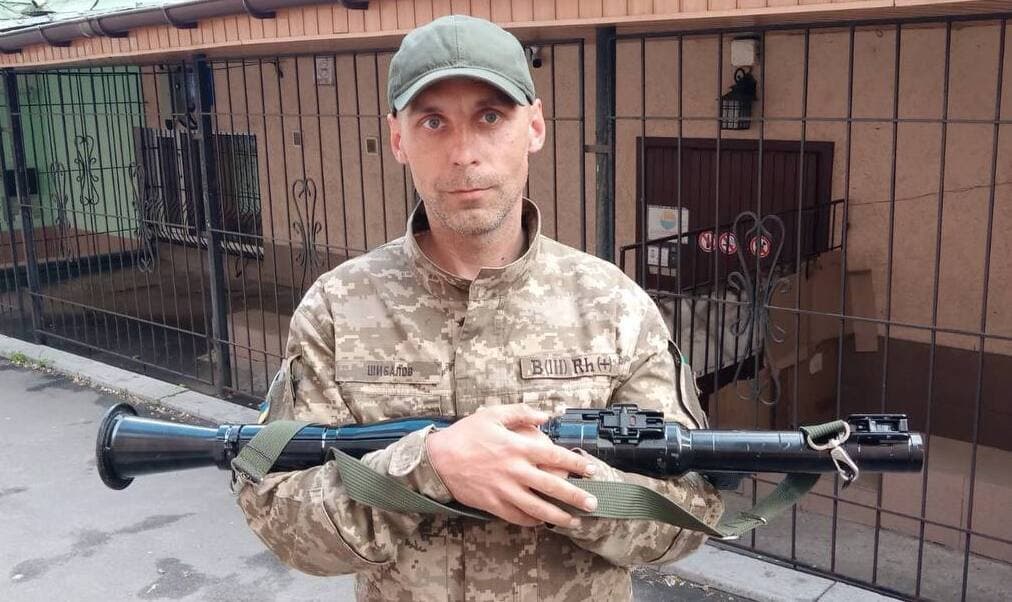
One must not lose the ability to love and not fall into total hatred
A Donetsk journalist advocated for peace talks with Russia but took up arms in 2022. He was captured
Yevhen Shybalov04/19/23 - Recording
I was sent to the transit prison, and my daughter to Zaporizhzhia
A military paramedic from Azovstal was separated from her daughter and sent into Russian captivity
Viktoriia Obidina11/01/22 - Recording
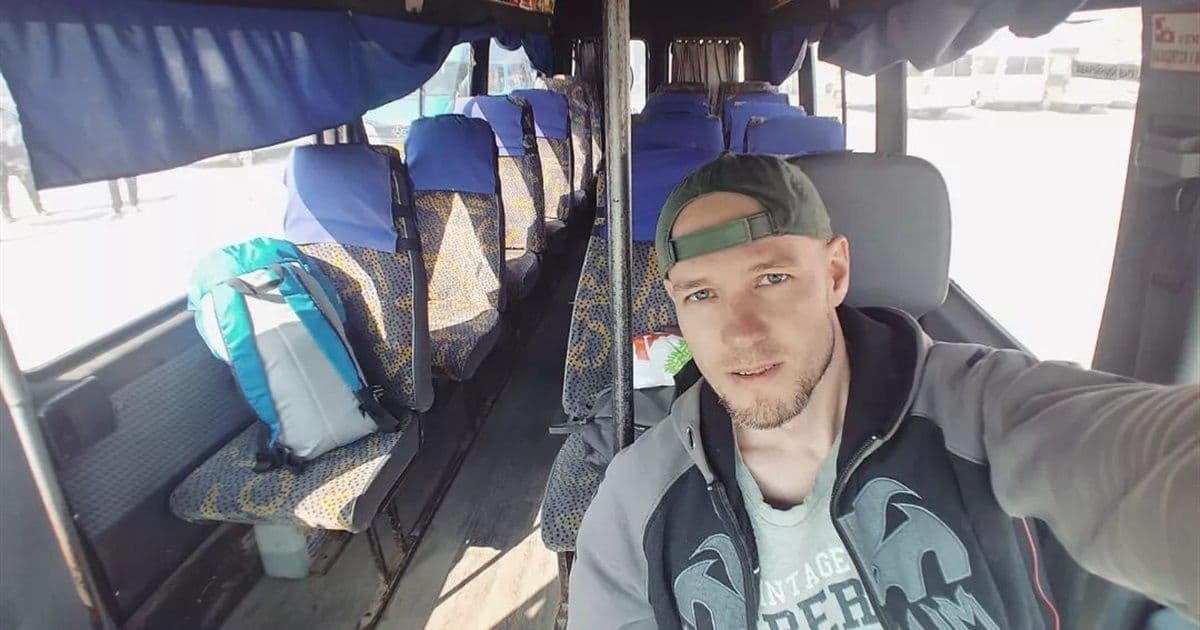
They beat one fighter from Azov for three days. In the morning the guard called him a hearse
A volunteer from Mariupol who endured captivity and torture in Olenivka
Vitalii Sitnikov07/22/22 - Text
I’m for Ukraine, and they’re against. I don’t know how to explain it
A Ukrainian defends his country; his brother died on the cruiser Moskva, and his close friend served in the Donetsk People’s Republic
Balu07/09/23