Back
For me, bread means sweat and calluses. And now blood, too
A Ukrainian helped his family work the fields and nearly went blind after stepping on a mine
Dmytro Yeliseienko has spent his whole life helping his family on their farm, where they grew rye. After the Ukrainian army recaptured territory in Mykolaiv Oblast, the fields turned out to be mined. There were not enough sappers, so many farmers had to clear the fields themselves. Dmytro worked in the fields and helped locate ordnance. One day he stepped on a mine and nearly lost his sight, but managed to survive. He talked about what has changed since the start of the full-scale war in terms of agriculture and the price now paid for bread.
Interview
Transcript
Transcript
Attention! Translation was done using AI, mistakes are possible
КА: Katya Alexander
ДЕ: Dmitry Yeliseyenko
КА: Dmitry, hello!
ДЕ: Hello.
КА: Yes, can you hear me well?
ДЕ: Yes, well, and can you hear me?
КА: Yes, yes, I can hear you well. If the connection suddenly drops, I'll ask you to repeat.
ДЕ: I understand, okay.
КА: Dmitry, let's... before I tell you about the framework of our interview – maybe you have some questions for me that I can answer right away?
ДЕ: No, no, basically no questions.
КА: Look, let me tell you then. I want to talk with you about what it's like to work in fields when landmines remain in the fields after de-occupation from Russia, how this process is organized. We'll devote most of our conversation to what happened to you, how you helped, how the landmine explosion happened. We'll talk generally about the problem of mining Ukrainian territories after Russia left there, about farming work and, actually, how this affected you personally.
ДЕ: I understand you.
КА: The conversation will take about an hour to an hour and a half approximately. The text will be in text format, it will be your monologue in first person. We won't add anything from ourselves there. Approximately, I think that at the end of the week or next week I'll be able to send you either a link, or, if you want to look at the text before publication, send the text before publication. Let's start, probably, from far away. Can you tell me a little about yourself and about your connection with relatives and with work on the farm?
ДЕ: My connection with relatives and work directly on the farm with them is already long. I've been doing this for a long time, helping them for a long time, but I want to emphasize that I don't work there officially, like, directly. I always help them during very difficult periods. This is sowing, sometimes some preparatory work on the territories themselves, at warehouses. Harvesting is a very difficult and complex period, every time I have to help, since the villages are small, and there are few people, so there's a constant shortage of personnel.
КА: So you helped them even before the full-scale war?
ДЕ: Yes, yes, yes, for a long, long time, definitely 6-7 years I've been helping them. But again, this is all in the form of help, since there's a shortage of personnel, unfortunately.
КА: This is Mykolaiv Oblast, correct?
ДЕ: Yes, Mykolaiv Oblast, that's right.
КА: Can you say more precisely where this is?
ДЕ: The farm is located in 2 villages. The village of Blahodatne, until 2017 it was the village of Komsomolskoye, later it was renamed to Blahodatne. And the village of Partizanskoye, it remained Partizanskoye. The farm was located in 2 villages. Quite a large farm, since there are many fields. About one and a half thousand hectares under lease, and about 320 privatized.
КА: Can you try to tell me about this farm? I don't understand this very well, how this is generally organized, what exactly is sown. Try to tell me about this family farm of yours.
ДЕ: I'm not, so to speak, a co-owner. Many people think that if we're relatives, then I almost count money with them and swim in some cosmic figures, no. I'm on the basis of seasonal help during difficult periods, for some just symbolic payments, since I'm a young guy, understandably, money is needed. These relatives themselves, their farming went far back and started small. They bought broken equipment, this was I don't know exactly how many years, but they've been doing this for decades already. Now the owner of the entire farm is my second cousin's husband, and his father started it. It started small, for long years through hard honest work it all went toward this, it wasn't like some company just had everything right away. Equipment was bought up, repaired, it started with very small scales. I still remember, my second cousin's husband was even looking for side jobs, he worked on the side for other farmers as help bringing-carrying. And then it went further and further, and what's most unpleasant, most offensive, is that from 2017-18 the farm began to work more globally, bringing bigger profit. The buildup only started in '17, the scales increased. Before that it was either at a loss or at zero, there wasn't much big earnings there. Literally from 2017 it went well, equipment started changing, the old stuff partially sold, old tractors, new tractors bought as replacements, a combine was brought from the States, John Deere. It worked one summer, it arrived, worked the harvest, and the next summer it was already bombed. That is, equipment only started changing, updating, only started gaining momentum. And with the arrival of war all this was destroyed, the farm was destroyed without exaggeration, by about 95 percent. So you understand, there were about 15 ordinary regular middle-class tractors, there were 3 heavy tractors, 2 combines, special equipment for processing, herbicide treatment of grains. This is quite expensive equipment, and it's all destroyed. With great difficulty we managed to assemble one seeder, cobble together 2 tractors from all that scrap metal. Already on much smaller scales and only in the direction of Partizanskoye village work began to be conducted on land preparation – processing, sowing itself. In Partizanskoye only Ukrainian military stood and, according to local authorities and representatives of the State Emergency Service, in these areas around Partizanskoye village the fields weren't mined. And Blahodatne village, where the second brigade is located, which was also the first, which is also the largest, Russians stood there. They stood along the Ingul canal, this canal cut them off right along the border. There it's simply a cardinally different picture, everything is mined there. And in such quantities, as if, I don't know, it was completely unnecessary to them, because there without fanaticism, I don't even know how to convey this. Just so you understand, you enter the corner of a field, walk a couple meters, and in these couple meters you can see about 6-7 landmines. You see this through the grass simply, how many there are. They're right in the plantings – both anti-personnel and anti-tank. In those areas agricultural work clearly won't be conducted soon.
КА: I want to move to the connection with the war, but I want to understand a little what is sown in these fields, what exactly is produced?
ДЕ: In our region mainly people sow, and we specifically sowed – this is sunflower, barley, wheat. There are also farmers who are vegetable growers, they deal purely with vegetables.
КА: We're now only about you, not the general picture.
ДЕ: If about us, then we only had barley, wheat and sunflower seeds – that's all. Only 3 crops were grown.
КА: And what is produced from this later?
ДЕ: It's delivered to ports. That is, everything went for delivery.
КА: And so this farm became in the last 5-6 years before the full-scale war already bringing some profit, normal agricultural production, correct?
ДЕ: Yes, already had the status of quite large farmers, since they took more land under lease, and started changing equipment. When we worked on old tractors, old combines, that was one thing, but when equipment started updating, then it became somehow more respectable.
КА: So your part of work on sowing, on harvesting – can you describe this process a bit for a person who has no idea how this is organized?
ДЕ: To sow one of these crops, there are many processes. Starting from preparation – I'm not talking only about field preparation. This is equipment preparation, this is seed material preparation, this is processing, treating against diseases, against pests, this is warehouse work, actually going out to the field. This is quite hard work, and you have to work hard. For example, my specific task was, I was mainly responsible for warehouse preparation – warehouse work, work with seed materials. For example, there were tractor drivers, they, logically, were responsible for this part, they had equipment preparation: repair and everything else. I prepared warehouses, found people who could temporarily come to work, let's say, loaders. I also went out to the fields. If, for example, sowing itself was already going, then this is refilling seed materials and controlling how they were applied to the soil. There are certain algorithms, how much of which crop should be applied per meter of soil. This also all needs to be controlled, checked. Later, when it grows up – this is already treatment, I had to learn to work with chemistry. They explained to me, showed me how to calculate, how much of what needs to be applied per hectare, herbicides specifically. Later already help during harvesting itself. I'll tell you that harvesting is the hardest period, the most difficult for all participants of this complicated matter. Very hot, very dusty, hard, you need to start working earlier, finish later. Especially hard work was in the warehouse. In the warehouse, as a rule, people didn't want to work, because this is without exaggeration hellish labor. When a truck arrives, you're in a closed hangar space under metal roofing, you unload grain. There's dust standing, and you throw it onto a pile with an electric loader. That is, a truck unloads, and you need to make such, you know, like a cascade. You're all day with a shovel in dust, in heat, everything bites, everything pricks, you just managed to shovel it away, the next truck arrives. So you're from 7 in the morning until 11 at night, until half past eleven, all day you can just stand with a shovel, toiling. A month to a month and a half of just hellish labor.
КА: I understand that this is help to the family, such, family conditionally business not business, how to properly call it. But for you this connection with work in the field, with land, with grain – was it felt before the full-scale war as some kind of value, that this is a big part of Ukrainian culture?
ДЕ: About culture this is probably more global, I'll answer from how it was for my family. For my family this was felt as such a bonus in the form of additional earnings. I didn't consider this as permanent work. For what I worked, helped, was the whole season with them, they could give, for example, a ton or two of grain, wheat, barley – your choice. They could give, figuratively, 500 kilograms of sunflower seeds to process into oil. This was pleasant, since my mother lives in the village and kept a household. That is, you don't need to buy grain, you simply received it. This was for my family primarily such a pleasant bonus. Considering more globally, speaking more globally, then, naturally, every such farmer, every enterprise of our country, it does good big work not only for Ukraine. As is known, our export also works very well. Everyone, I consider, even the smallest farmer, having gathered even 30 tons of grain – how many people can be fed from it. I consider this in any case a big contribution for Ukraine and for other countries where it was exported.
КА: So the full-scale war began, this was shortly before sowing. What generally happened with the fields, what happened in your region, can you tell me in more detail?
ДЕ: This will probably be a more interesting conversation, because war caught us at the moment of applying fertilizers to winter crops. We were feeding, went out to the field, applying fertilizers. We literally worked 2 days. The war began March 24th...
КА: February.
ДЕ: Oh yes, sorry, February. On the 23rd we were in the field, on the 21st we had a trial day. We started working February 22-23, on the 24th the war began. We were all in shock, Kherson isn't so far from us. Kherson is probably even closer to us than Mykolaiv, if by fields. And we could hear these artillery cannonades. We were in shock, we didn't know what to do, and we started calling each other: what are we, how, where, what's generally happening, and are we going out to work? Naturally, there was the question, are we going out to the field. We needed to continue feeding the winter crops, my sister's husband says that no, of course, we're all staying home. He's younger, you know, but his father is old-school. He calls, says: there's no need to believe in this, this is all lies, we're going out to the fields, no need to suffer, we won't argue. And he called us to the fields, he called everyone, he almost dragged us all to the fields by the ears. He said that everything would be normal, he didn't believe that this was war. And he went out to the field, another guy went out to the field with him, a tractor driver. The two of them drove around for a couple days until they saw that all these planes, helicopters were flying. We didn't have columns the first days. They worked the first 2-3 days and stayed home, understanding that something terrible was really happening. Acquaintances from near Kherson started calling them, saying that really this is what's happening, they didn't believe it from TV. Until personally acquaintances called this grandfather, he didn't believe in it. The first days he dragged us there. Then it started getting worse. Columns already started passing near our village. And the columns were of cosmic sizes – these were columns that were trying to take the city of Mykolaiv. They all passed near our village, along our Snighurivka highway, so their route was Kherson — Snighurivka, along the Snighurivka highway they went to Mykolaiv. This is how the war began for us.
КА: And you, it turns out, live in Snighurivka yourself, correct?
ДЕ: No, no, I generally rented an apartment in the city of Mykolaiv. Mom lived in Blahodatne village. I visited there often, could help relatives, or sometimes it happened that I temporarily lived at mom's in the village. I'm originally from Blahodatne.
КА: So it became clear that shelling was already close, quite powerful shelling of Mykolaiv had already begun, Kherson was under occupation. How did the farm make decisions about what to do next, considering that you need to eat something, you need to continue doing something?
ДЕ: Until the moment when fighting didn't start in our areas, we still lived with hope that we needed to wait it out. We hoped that we needed to wait it out. When fighting already started in our areas, when the first battles for Mykolaiv began, then the first broken Russians wandered through our fields, through our plantings. We understood that, apparently, this is for a long time and won't end with anything good. There were very many of them, if you look at the map around Snighurivka, they went from Snighurivka toward Mykolaiv. Near us were the villages of Novopetrivka, Kuibyshivka, Vasylky, Maksymivka, Batutyne, further down there – they were already under occupation. And so you understand, by distance Vasylky from our village was by fields, probably 4 kilometers, Kuibyshivka — about 6 kilometers, Novopetrivka — about 8 kilometers. It was already dangerous, it was already scary. But the worst started March 18th, when the Russians established a checkpoint on the Ingul canal. This bridge connected 2 villages: Partizanskoye and Blahodatne.
КА: That is, where you have exactly...
ДЕ: Yes, between us, they cut off exactly the two farms by establishing a checkpoint. What's most offensive, decisions weren't made about how to save the farm, how to save equipment, since people initially thought that, where to? They want to take Mykolaiv, Mykolaiv was bombed first, battles went near Mykolaiv. We even thought we were lucky at some point, we thought that war probably won't touch us, because the first Russians passed by. Simply by. Many people, having relatives in both Partizanskoye and Blahodatne villages, by all possible means came from Mykolaiv to survive the war. This turned out to be a fatal mistake, since a checkpoint was established, after which their control, their rules with exit, entry. Then it was even worse. I don't even know how to softly call this moment, but...
КА: You can not softly.
ДЕ: Many people hide the fact that military stood in our village. And recently there was their interview, this brigade, I won't name the brigade, it seems to me it's better not to. They in every way declare that they didn't stand in the village itself. They all say as one that they stood on the outskirts of the village, so that the village wouldn't be destroyed.
КА: You mean these are Russians saying?
ДЕ: No, no, these are our military. You'll understand further what the problem was. Let me remind you that in neighboring villages, in all surrounding areas Russians stood. And now look, what's the subtlety. Our military take position in our village. I think it's not hard to guess that they start shelling our military who are in our village. Actually, the village itself too. We asked them not to take position in the village itself, we asked them to take position somewhere where there are old ruined farms, old chicken coops, there are many concrete pits, many concrete slabs, you can dig in normally there. But they took position in the village itself, unfortunately. To great misfortune. After which strikes on the village began. When the Russians saw that there were military in our village, they started shooting at the military. Actually, at us too. And the village is small, population about 500 people, it's very small. Imagine, cover it a couple times – that's already, roughly speaking, destroying it. Let me remind you of that moment that many people came from the city itself. And we had much, much more people. Mainly they brought women, children to the village – we had 11, 15 people sitting in each basement, of them on average 5-6 were children. And they started covering the village, started covering heavily. There was no evacuation. By the way, this is also a very painful topic for local residents, because on official news channels, when they talked about our village, they said that the village was evacuated. But actually no. People left by their own means. In the village, so you understand, it was so difficult that we didn't even know from neighboring streets who had what, who was alive, who wasn't alive – there weren't just shelling there, street battles were actually conducted, close battles, close contacts. Just sitting in shelters you could observe such a picture as a tank flying through a front garden, through a vegetable garden, how Urals drove through streets looking for military. The pictures were such that it was just horror. Torn apart military lay around, local residents too, about 6 people were killed. And they were all torn apart from shells, they were buried simply as it worked out – under an apple tree, under a pear tree. And no one had information, there was no connection at all, you couldn't even send an SMS. I tried to contact an acquaintance in Mykolaiv, to find out what their situation was, what to do at all, where to go next. The first of our military who entered the village said: "Don't worry, we're here for a few days, and we'll go drive them out further." But, unfortunately, these few days dragged on from March 21st to November 10th. This was without exaggeration the frontline. It turned out like this, they blew up the bridge on the Ingul canal, they can't even enter Partizanskoye anymore. They held here – this is Novopetrivka, Kuibyshivka, Vasylky, they drove military out of our village. Then military returned again. And it changed several times, sometimes Russians, sometimes Ukrainian military, sometimes gray zone. In the end it was under occupation until November 10th. And imagine what happened to the village. Returning to the farm topic, what happened to the farm when it was shelled by both some and others.
КА: I, fortunately or unfortunately, can't imagine what happened to the village, to the fields. Can you try to describe to me how this all looked? These daily shellings, occupation – what generally happened, how was this, how did you survive?
ДЕ: Obviously, this was difficult, this was hard. You know, some acquaintances, when they try to find out in more detail how it was, I tell them: I want to explain to you first of all the state of a person who was there. This is such a state when you're about to lose consciousness, you have such a picture slowing down, you don't understand what's happening. This is such a state as if you're in a state of shock and about to lose consciousness. And you lived like this for weeks. You couldn't believe that this was happening, these are your native lands: bombings, shootouts, some run through streets, others, they drag people out of basements. First some, then others walk around looking for each other in basements. There were no humanitarian deliveries from the very beginning: as soon as war started, no one brought us anything. People lived on supplies, there's no medicine. I also have a neighbor with three children, they moved relatively recently, they didn't have any supplies yet. I had to help these children, because it's a large family, I had to share products. We already thought we simply wouldn't survive. There were already cases, you simply wake up, well relatively wake up, that's how I said it. Morning comes, it gets light, and you can at least run around somewhere, look where what is, at least to neighbors. I ran immediately to this one, his name is Misha, immediately ran to him, asked: "Are you whole, are you alive, how are you?" – because there were already cases when even basements were penetrated. You see between houses: there a house is burning, there a house is burning, there's no house there anymore, there's no house there anymore, in the neighborhood, through a house, through a street you can see that it's burning there. You couldn't move calmly through streets anymore, through vegetable gardens, because it was under fire. These are open areas, they were under fire. I remember as if now, I disconnected the fence between our territories to move through front gardens. At least this way it was, let's say, safer, since walls of houses, sheds, various extensions were such cover. At least in one direction you could run calmly. Plus it was also very difficult that mom had a cow. It's bombing there, shooting, however it was, I had to go milk and water it. I remember as if now, you run with these buckets, scary, scary. It flew over the village. No electricity, no connection, no civilizational benefits at all, but the scariest was complete absence of connection. We didn't even know what was happening in neighboring villages already. When it became very difficult, we thought about leaving the village, because there was no talk of evacuation. No one called, no one came. We didn't watch news either. On radio they didn't talk about such a small village as Blahodatne. There they talked about more global ones, about Mariupol. Who needs this Blahodatne? We didn't know at all what was around, what was better for us, where was better for us. There were already killed among local population. The village was covered by self-propelled installation TOS-1 "Solntsepyok" [editor's note: "Blazing Sun"], and it killed a guy. This guy, by the way, worked at our farm for a long time, but 2 years before the war he quit, went to work at MykolaivVodokanal. And he was killed by "Solntsepyok," he lived, by the way, to the left side of our brigade, was our neighbor behind the fence. It hit between sheds, it tore him apart. They found remains from him – literally a hand, head, some other parts. And locals buried him right in that crater from the shell that tore him apart. Later in this same Partizanskoye, it's neighboring, being a worker of our farm, a tractor driver, one guy remained, it was easier for Partizanskoye people to leave the village, because they had a highway at hand, and somehow they jumped there, somehow something was done there. In our case everything was cut off. Partizanskoye was mainly all abandoned, again, depending on where. This man who worked as our tractor driver, he didn't want to leave the village because of his household. He says: "Well, where will I leave the pigs, where will I leave the cows?" – his wife, daughter left, but he remained. One fine day there was a strike, it hit not far from him in the yard. It tore off his legs, cut up his whole body, our military took him to take to hospital and didn't deliver him, he simply bled out. At our farm the biggest loss is these 2 people. 2 people died specifically at our farm. At other farms no one died, at vegetable growers, nor at others who dealt with grains, they successfully left, and no one died at theirs.
КА: Naturally, while battles were going and while your village was on the frontline, you didn't deal with any fields.
ДЕ: Naturally, no. We had, as you already understood from the conversation, from the story, it was so severely difficult that you simply couldn't go out on the street. As I already said, we didn't even know what was happening on the neighboring street. I have an aunt who lived on the neighboring street, and I didn't know what was with her, they didn't know what was with me, we had no connection between us at all. We only communicated between neighbors, helped some neighbors, others. We helped some with food, others we helped with firewood. Mom taught me that you need to be prepared. Mom is prepared, I'm prepared, and we started sharing these supplies.
КА: And did I understand correctly, correct me if not, that first there was occupation in that village where you have the second household, and then...
ДЕ: No, no, there weren't any Russians there at all. Russians, when they were trying to take Mykolaiv, they passed by highway past this Partizanskoye, because Partizanskoye directly adjoins the highway. The only thing, they stopped the first times directly in Partizanskoye to ask for water, to eat. Their, let's say, senior officer staff walked around, allowed themselves to eat at people's houses. Regular soldiers sat on equipment, and those who were higher up walked around to eat in the village. People, naturally, didn't refuse, since they were afraid...
КА: That they would kill them, naturally.
ДЕ: Yes. One person filmed on his phone how the column was going, a grandfather. Well, like grandfather, such a middle-aged guy, he filmed how the column was going, and these started shooting at him with machine guns, it hit him. They say it seems like it was a ricochet, but the very fact that it hit. From that day that guy has the nickname "blogger." Yes, a bit of humor. But generally Partizanskoye village saw Russians only when they passed in transit. Ours fully got a taste of grief. Some people saw Russians more, some less, it all depended on how curious people were. Those who walked through streets, despite all dangers, saw more, those who walked within neighbors saw, naturally, less. Some people told how they went to ask Russians for cigarettes, some told how they accidentally met them, and there was nowhere to go – different cases, different stories. We had a very difficult night, after which we left the village, it was heavily beaten then, this is the night from March 27th to 28th. Russians completely drove out our military from the village, there was a heavy battle, close battles went all day, shelling from all sides, we didn't even understand who was already in the village, we didn't understand under whose control it was. All day without stopping either mortars worked, or something more serious, probably tube artillery, or they shelled with tanks, or BMPs drove up, tried to storm the village. Again, this is from people's stories, because personally you can't see everything that was happening from four sides. This is according to people's reports, stories of locals, this one saw and told, that one saw. Battles went all day, at night a vehicle flies in, an Ural, full of Russian military, and they started checking basements. According to the story of my aunt's husband, his deceased mother's house is next door, he looks after it, and our military hid there, our military, they ran into the basement. And he says: "I'm watching this, it was just starting to get dark, and a Russian Ural flies up directly to this yard as if guided." I understand that it was probably not guided, but apparently drones, we have such a war now, they saw clearly where they ran, and clearly drove there. And he says: "I saw how further our military ran in dashes through vegetable gardens in another direction, left this house. I continue watching, looking out, those Russians enter the yard to this basement and started shouting to someone, apparently someone from our military still remained. Apparently wounded, apparently they couldn't take him or he didn't want to run. In general, they threw grenades at him, apparently it didn't kill him there, there were bales of hay spread out, everything caught fire, and that guy screamed, the Russians stood above, didn't let him, didn't let him come out, he burned alive." The next day my uncle went there, he told me this later, he says he saw remains. When I could return to the village, November 21st I myself went to that basement, and found a burned helmet. That is, apparently there really was such a situation. When they were doing this to this guy, they started checking neighboring houses. My aunt, not having a basement at her place, lived at a neighbor's across the road. She had a more powerful basement than in that house they were watching. There were 11 people there. These Russians entered the yard, open the basement doors and shout: "Anyone there?" – people tell them: "We're peaceful, don't shoot!" We have, by the way, the local population speaks surzhik – this is a mixture of Russian and Ukrainian. "Don't shoot, there are locals here, don't shoot." They say: "Definitely no military?" – "Yes definitely, there are locals here" – "Well, catch a grenade." And they throw it there, into the basement, everyone starts squealing, screaming, there were children there too. As it turned out, this was a stone, that is, just to scare people. He says: "So, come out one by one." This is already from my aunt's words, she says: "We started coming out one by one, immediately men to the side. There were about five men. They immediately put them to the side, started asking for documents: 'Show who, what, tell us. Who stood here?'" – silence. He: "I'm asking again, who stood here, what forces?" One answered, says Armed Forces of Ukraine. That one hit him with a machine gun, says: "These are nationalists, what Armed Forces of Ukraine?" They went into the basement, started looking, lifting everything, turning over, walking through houses looking around." Generally that night there were many such stories when Russians entered basements, houses.
КА: And to you?
ДЕ: To us they didn't come that night, thank God, they ran through the yard already at night, who I don't know, because who ran by – unclear Russian or Ukrainian. Into the basement, thank God, no one came, no one checked us, we were alone, mom and I. I have one family – only me and mom, I don't have a father, or stepfather, or native sister or brother, everything only second cousins, third cousins. The two of us sat out this night in this basement. The next day I was installing windows in the house, windows had blown out on the veranda. I'm installing windows, a guy runs down the street and says: "And you, aren't you evacuating?" – I say: "What, they're evacuating?" – he says: "Yes, half the village has already left." People are leaving the village, there are already many killed, the village is partially destroyed. I say: "And where to go?" – he says: "I don't know, we'll try to the neighboring Partizanskoye." I say: "Damn." I run to this Mishka, I say: "Gather the children, we're leaving the village." He says: "And where to?" – I say: "We'll try Partizanskoye, maybe it's better there, maybe calmer, we'll see there. Maybe we'll sit there for a week or two." The military immediately said they were here for a couple days. I think, maybe there really is some plan. And we got ready, mom ran to the neighboring street to her sister, like, let's leave. They didn't want to, she came back. She says: "They didn't want to" – I say: "Well, what to do, we're leaving." We let the dogs loose, I wanted to take the cats, because of the cats I didn't want to leave. I delayed, started looking for them, mom started getting nervous. She didn't wait for me, took and left. Honestly, I felt very sorry for the cats. There were 4 cats, I didn't want to leave without them. Since this isn't an apartment, but private houses, cats walk on the street. Especially after it started hitting houses, everything closed up, and no one sat in the house. This was dangerous.
КА: And did you find them?
ДЕ: In the end I had to leave the village. You know, I specially went to the village for the first time only with the goal of going [and finding out] are there cats, are they alive. At that moment I was in Kyiv. I came by train to Mykolaiv, arranged with a neighbor, and the neighbor and I went. Everything I brought from Kyiv was a carrier for cats and cat food. Honestly speaking, this then became such, I don't even know how to properly call this, not insanity, but my relatives, my circle saw this as some kind of insanity, because I tried by hook or by crook to get to the village, and every time I took with me a carrier and food. I always left food at home, always opened a couple bags in the basement. In the half-destroyed house I also left open food on the table. Every time I came, and there wasn't, there wasn't, there wasn't, there wasn't, I always went and believed. Relatives were strongly against, because, imagine, when some were in the village, others, how many surprises there were. There were tripwires encountered, I personally saw. I have many, take even my TikTok, videos where I filmed everything happening, already after combat operations: what I found, what I saw there, my house directly. In the end from 25 trips I managed to find three, I still can't find one more cat. Also the most offensive, the most beloved one.
КА: I hope it will still be found.
ДЕ: After discharge I'll continue dealing with this, I'll continue searching. I'm in three organizations I can't say, because I'm not officially in any of them, but I'm unofficially part of them, in general. I work with all of them, these are mainly all animal volunteers. This is very cool for me, because for me this is an extra opportunity to help my region, once again help animals, and, of course, an opportunity to go home in hope that I'll manage to find the fourth cat. Yes, also the moment of leaving the village was very interesting.
КА: That's what I wanted to ask about exactly. ДЕ: Yes, the actual moment of leaving was very interesting and difficult at the same time. Interesting – that's sarcasm, because it was maximally disorganized. Imagine, at that moment I wasn't even renting an apartment, I came to my mom's, everything I had, I brought to my mom's. Everything that mom had accumulated in her life, mom is 59 years old by the way, that is, the house, everything that came with it, renovations were done in the kitchen, also very hard and practically with our own hands, because I myself had to haul everything. Mom practically didn't work, also some odd jobs. Basically everything was on me. It was very hard, and we had to abandon everything. Everything that was accumulated, we lived plus-minus pretty well, all of this had to be left behind. We left the village with a backpack that had water and documents in it. I also helped the neighbor's children get out, helped this Misha gather his children. He and Marina carried the smallest one, Marina is his wife's name, they took turns carrying him, because it turned out we had to walk much farther. We tried to go to neighboring Partizanskoye, the bridge was destroyed, and we knew that the bridge was near combat operations, toward Novopetrovka. Basically we didn't really want to go in that direction. We got the idea along the way that we should go to Partizanskoye through the fields directly, not turn toward a more dangerous zone, as it seemed to us. We approached this Igulsky canal, it's located, roughly speaking, exactly between the two villages, right in the middle. Approaching this canal, I stayed with the children, I say: "We need to sit, because it's under fire here." We went to the roadside and sat in the bushes. Mishka says: "I'll climb out to the canal now, look at what's going on with Partizanskoye." He ran out, I say: "Don't stick your head out too much, because there might be Russians near the bridge." He says: "Yes, okay, good." And he looked in a half-crouch like that, then once stood up to full height, looked, came down, ran down, says: "You can't go there, there's fighting there." We heard shooting, that things were flying in, but things flew into our village too, and into neighboring fields. The guys who left later than us, one guy there even got shrapnel wounds. We were leaving absolutely unsafely, just under shelling. We were already in despair, people were already saying that some man said the village was already abandoned, that he was running. We understood that either it'll kill us here, or it'll kill us on the road, there's no difference anymore. When we were leaving the village, it was also shooting everywhere, flying everywhere, and it turned out you couldn't go to this village either, because there was fighting there too. We didn't know until the very end what was in that village, who was stationed there. We decided to move in the opposite direction from Novopetrovka village, along the old Snihurivka road. I think there's Sadove village there, maybe Pervomaiske urban-type settlement, we decided to go. We started walking, we had to walk a lot. I was leading his two little ones, Igor and Artur, one is 8, the second is 5. And the smallest one, he got tired quickly, he's 3 years old, a boy. They started carrying him in turns in their arms with his wife. That's how we were leaving. Of course, it was scary, many people were in panic. When we crossed the bridge, there's such a long straight road, along the road we saw people walking with a white flag, we understood that we're not leaving alone. We sped up to catch up with these people. What I remember most is how we walked, and how much my mom panicked, how hysterically she behaved, how panicked this Misha's wife was. They were screaming, they were crying. I say: "The children are looking at you, now they'll start panicking and crying too." I remember like it was now, I tried to turn all this into a game form with the children. Like: come on, here we need to run, and here we need to crouch down. I tried to turn all this into a game so it wouldn't be so scary for them. Halfway we met Ukrainian military, they were sitting under trees. We passed them further, because we asked them who's stationed here, nobody answered us anything. And we went further, not understanding how to walk.
КА: And in the end, which village or which city did you reach?
ДЕ: In the end we came out to Pervomaiske urban-type settlement. There we were approaching one bridge, and behind the bridge in the plantation there are military standing. They were standing quite far, and we didn't even understand whose military they were, we didn't see insignia. They were in such neutral uniform, that is, not Russian, not Ukrainian, some multicam or British DPM, either foreign troops, or... This was clearly not standard military uniform, and we couldn't understand what kind of military this was. They're waving to us, shouting: "Come on faster! Faster!" We needed to run across the bridge, we didn't understand why. Old people were running, and whoever could and couldn't, everyone was running across this bridge. We were afraid, we honestly didn't know who we might end up with, who was waving to us there. Coming closer, we saw, I think, yellow tape on them then. We already understood that they were ours. Again you know, our own, we heard many cases when the war just started and there was still TV, they often changed clothes, passed themselves off as strangers for their own. Some spoke Ukrainian, but there were many Russian speakers there. They say: "Don't worry, you need to go there-there, but just faster, in these parts you need to move quickly, snipers work here." And I understood why we then had to run quickly across the bridge. They explained to us where to move further, we walked through fields. Near the pond we came out to this urban-type settlement, there was the first checkpoint, the first house, military lived there. They met us very well, very warmly surprisingly, it brought many to tears, they started feeding us, offering bread. I remember like it was now, they offered sandwiches, gave bread, a piece of loaf spread with mayonnaise, small cooked sausage and a small bottle of water to each person. I say: "I don't want to eat, I'm not hungry," – "Take it, you're in shock, you're just in panic, you don't understand, but you want to eat, take it." They offered sedatives to some, everyone was crying, everyone was so upset. Some military said: "God, we admire you." But we didn't understand why, we were walking with Mishka, and it seemed to us like sarcasm. Some military told us: "You're heroes." I personally took this as sarcasm, we had to leave our home, and they tell us: "You're heroes." I understand that this is most likely sarcasm. And then I understood why [they said that] – we really got very lucky that we got out. People, even military, were thinking about how to get us out of there. They say there were even attempts for the Red Cross to approach, but the military wouldn't let them past this post, said it was certain death. We walked, as I said earlier, constantly under shelling, we saw across the field. We walked along the old Snihurivka road, and parallel to us there was a dirt road below. They call it "Sadovskaya road," it went from Sadove village to our village. On this road in the area of the old pond, equipment was standing. We directly saw hits on this equipment, how it flew apart, how it burned. We left the village under such terrible fighting. These military already met us in Pervomaiske urban-type settlement. Those who were in serious condition, we had wounded there too, I think, someone had shrapnel in their stomach, shrapnel in their arm, some had very small children. I remember like it was now, they took these neighbor's children, took only the children, they say: "We're taking only children to school now. The landmark is the school – go there. Now we'll gather and think how to evacuate." We continued walking on foot, we came, and we can't find those children. Marina is crying, I say: "Please, no panic." I ran around with my little son, searched, we then found those children. Everyone was gathered together, they started giving out humanitarian aid. This is the first humanitarian aid we received in all this time, since March 28th. They gave us a can of stewed meat each, some other privileges. They were going to transport us from there, they gave us a package each without waiting in line. School buses came, they were shot through, without windows, windshields shot through, no side windows at all, just empty, sides shot through. Such buses came. It was very hard, there were a lot of tears, everyone was crying, everyone was in shock. Some people were even without documents, didn't even take documents, such stories, just hell. They put us in these buses, there wasn't enough room, I say: "I'll move to another one, sit with another village." Because they tried to put our village in one bunch, another village in another. My mom was sitting, crying: "No, be in this bus," – I say: "No, I'm going to another one." Their bus was going first.
КА: But why?
ДЕ: Our bus was packed with our village, and the second bus was practically empty. I say, I'll go sit in the other bus. My mom had hysteria, she went through this war hard. It's difficult to talk about this, but she's still not quite herself. She's still in such a state, like when we were leaving the village, she stayed that way. She still has everything panicky, she writes to me or calls, I don't pick up the phone for a couple minutes, don't answer, that's it, she's already calling relatives, that I'm already killed, already finished.
КА: I hope that sooner or later this will recover.
ДЕ: Yes, I'd like to believe that, [need for] all this to end, there, I think, the recovery process will go faster somehow, there won't be a reason to worry anymore. I moved to the second bus, and an interesting fate befell this bus, not for nothing did I sit there. The first bus was full. Then the second bus says, we need to stop by, pick up bedridden pensioners. Their relatives left them there, dumped them on neighbors, on whoever. We got out, and people are all, as I said, in shock, they're just nobody. You couldn't talk to them, it happened, you start asking something, a word or two, they start crying their hearts out. I remember like it was now, some elderly woman ran out of the yard, says: "It's to us, it's to us," – waves. The bus driver approaches, she says: "There's a grandmother here, she needs to be taken." And asks: "Help," but nobody gets out. Everyone's in shock, everyone's afraid, everyone sits so beaten down, withdrawn. Mishka also moved to that bus with me, I say: "Mishka, let's help." And we went out together. We loaded about 3 or 4 bedridden pensioners. Windows shot through, most likely it'll blow, dust, no glass. I say: "Let's at least wrap them in some blankets." I'm still honestly in shock that I didn't get lost like those people, that I could still think of something. I'm not saying this to say I'm great, but I'm really in shock that I really managed to still think somehow and keep myself together. Some pensioners were completely panicked, didn't want to leave. When we started driving, there was strong wind, it was blowing, small pieces of glass were flying from the windows, glass remains stayed in the rubber seals. Because of the shaking, because of the wind it was flying, and it was flying onto those pensioners. I started wrapping them literally with their heads covered. Some understood why, and some hysterically screamed, unwrapped themselves. I say: "I'll hold your hand so you won't be afraid, just now a lot of glass and dust will fly. I'll hold your hand now." I remember how these grandmothers all started crying, thanking me. For the entire time of combat operations, even to this day, there are two things that throw me off balance, and I can't hold back, I start crying. This story, because I cried then with these grandmothers, I felt so sorry for them. The way they cry, hug, thank. And the situation with not being able to find my cat. These two things are the most painful.
КА: I really hope it'll be possible to find her after all, that she just ran away from fear and sooner or later will return. I'd really like to believe that.
ДЕ: There's still a chance that the military took her, because I then, ending up in the hospital, met a guy who was in our village, fought. So he told stories about how they took out a lot of dogs. I hope the cat, God willing, is alive, just possibly in some other family. I warm myself up, possibly calm myself down. About the other residents, such a story, many people didn't believe that there was war, and they stayed much longer, we left March 28th, and the very last people sat until mid-July. These are mainly elderly people who didn't believe there was war, or those who weren't needed by relatives, or those who walked poorly, because the village was mainly abandoned on foot. During that time in Blahodatne they killed this man with "Solntsepyok" [editor's note: TOS-1A heavy flamethrower system], I told about that. They found his head and arm. Second case, relatives left a grandmother, as the grandmother didn't want to leave, and she stayed alone. She just died either from hunger or from cold in the cellar. Military found her, they buried her right next to that basement. Next case – military promised to help evacuate a group of people, only 12-15 people remained in the village, and they gathered them in a bunch so it would be easier to at least feed them, bring water. Thanks to the military they also lived there, fed themselves, helped each other. Those who lived in the basement even told that they made dumplings for these military. They found flour and everything needed, and they cooked for them. And somehow they promised to take them out one day. And said, that's it, the shelling is over, we're going out. And then a hit nearby, near that basement, and one man got hit in the back, and they carry him into the basement, shelling, everyone there in a pile, everyone in panic, and they say to him: "That's it, let's go out already," – and he's already cold. They also buried him near the basement.
КА: Oh! This is all a very important story, but your first-person story is very important, because this is our principle, we tell about what the hero himself goes through.
ДЕ: Ah, I understand, then I'd like to add about myself, I don't know if you saw or not, but I started doing volunteer work, helping people in my region.
КА: Yes, I saw.
ДЕ: I started helping precisely my region. This also didn't start for no reason, I didn't consider and didn't think that I'd manage to do this. It all started from the fact that, as I told, we left only with documents. Everything you had, everything you owned – this is what you were wearing, and documents. That's how we left the village. My mom was in panic, didn't even want to change into clean clothes. And having a household, she was in galoshes, in some dirty tracksuit. That's how we left the village. And we, when we took out these pensioners, they took us out, ended up at the Red Cross, they brought us directly there. You start asking, well honestly, at that moment they couldn't really help with much. I say: "My mom has heart problems, need pills." She has severely high blood pressure, now she's in such a condition, she's shaking, she almost loses consciousness. They say: "Sorry, we don't have any." I say: "Okay, what about food?" They said you need to stand in a cosmic queue. "Alright," I say, "we'll figure that out ourselves. What about cigarettes?" My mom also smokes. They laughed about cigarettes. I say: "What about clothes?" They say: "Also problematic." There was a whole tent, but unclear what kind. I say: "She's standing in galoshes from the barn" – "You can go look." We went into that tent, and there are 2 right, 2 left from different pairs, completely unclear what clothes. I say: "Yes, there really is nothing to choose from here." We went to acquaintances' apartment. I understood that even with clothes the situation was really bad, that people needed help. Everyone rushed to help. At that time, I think everyone remembers perfectly how our people helped each other, the army. How strong, powerful, great our people are, they took on helping. And I really wanted to help, and first of all, I was interested in helping my own people, my region. And I decided to announce a collection of at least clothes. I just collected clothes, worn, used, women's, children's, men's. And it took off. I have many very good friends, many good acquaintances, even several bloggers, quite famous ones, who also took on helping, making reposts. A colossal amount of clothes came to me. I found a friend who after work came to the cargo department of Nova Poshta, we took clothes from there. We collected the second batch, it turned out to be half a minibus, aha, good, we can go distribute. Many people lived mainly in the seventh boarding house of Mykolaiv city, we distributed clothes to people under this boarding house. Whoever wrote that they needed clothes – I took to the post office, sent approximately by size. And it went on and on, from the end of, probably, April until today I do this, and quite well. There's no such demand anymore, because, roughly speaking, everyone's been dressed 20 times already. But from the very beginning people really didn't even have spare pants, some elementary socks. People sat without money, and it was hard to buy, ATBs were empty in Mykolaiv. Basically little worked, markets practically didn't work. Even at first with Nova Poshta it was hard, it was just starting to return to work. When this was starting, it was really difficult, but it brought enormous simply, moral satisfaction. I was so satisfied that you can help people, and they thank you, it was cool. Yes, all my volunteer work started simply with helping my people. Later I started going to my village, on November 21st I went to the village, buying feed with my own money, leaving it in the village. I saw that there are very many abandoned animals and that people probably aren't planning to return there, because there's nowhere to return to. I felt sorry for the animals. An acquaintance advised me, already being plus-minus known for helping people, people also decided to help me, and they say: "Contact Kurkurina." Anya Kurkurina, a famous sportswoman from Mykolaiv.
КА: We released an interview with her.
ДЕ: She didn't pay much attention to me, I said I'm going to Blahodatne village: "I was told I can contact you, they even gave me your personal number, excuse me, maybe it's not allowed," – she says: "No-no, nothing, it's normal. Good – you'll come." They just asked me about the number of animals, you know, like with ordinary people. You come, say that I feed, for example, 10 homeless dogs and 3 homeless cats. And they give you 3 bags of this, 2 bags of that. Actually, it was the same with me. I say that roughly 4 cats, about 10 dogs I saw there, I want to go there more often, I'm looking for my own, – good, just definitely video report later to Viber. After the first video report they wanted to contact me themselves. They wrote, called, Anya Kurkurina says: "Can I call you?" – wrote on Instagram. Says: "Write your number." I wrote the number, she called, says: "When we saw your video reports, we were just shocked, we want to go there, I have Brits here, Star Special Tactical Animal Rescue organization, and we want to go with them." These, she says, are such cool guys. I say: "I'm warning you, – I say everything without exaggeration, – everything's in landmines there, everything's in shells, there are tons of booby traps." She says: "Don't worry, they're also not simple guys, they know what's what, let's try." We agreed with her, after the first trip we practically became friends. After that she started throwing organizations at me, recommending me to many organizations. Often I was there not even as a volunteer, but as such a guide. Journalists came, various zoo volunteers came, and I showed them everything, told them everything. For me it was very useful, because I could help my native region again. For me it was maximally useful. There were such requests: one very interesting guy came to me, his name is Dmitry, he's making a film "Дівія" [editor's note: "Wilderness"] about the harm of war on nature. And he had such an unusual request, he asked: "I need corpses, I need gore." I say: "I found corpses of Russian military, but I buried them, because it's not good. Whoever he was, Russian or whatever, it's not good for him to lie there. The soul needs peace." Possibly this is wrong, but this is my position, I buried them. He says: "Very bad, need to find somewhere else." I say: "I've heard, we had areas, this is toward Novopetrovka village, locals call these areas Zvyozdochka [editor's note: "Little Star"]. In the Zvyozdochka area are their biggest positions, there were very many of them there. I heard, almost half a canal of corpses, but don't know if they cleaned them up or not. Nobody has gone there yet." He says: "We need to go there." Before this trip, I remember like it was now, I didn't sleep all night. I was very afraid, I was terribly afraid, because even the same body armor, the same helmet won't save against an anti-personnel mine or some other one, because it tears off legs if you step on it. I say: "We can drive to the bridge, but then we need to walk on foot, because military were blown up on that road." There were supposedly two cases on that road, how people were blown up. That is, it's a very dangerous road, a very dangerous direction. But we still went with him. Such days also happened. I went with them, with different volunteers. With these Brits we tried to find surviving cows, because people from neighboring villages told that cows still roam through plantations, through fields. These Brits are also zoo volunteers, and they worried very much about these animals. They rode with us, a translator also rode, and we walked through these dangerous areas, looked for animals. But, unfortunately, we found many cows, but dead ones. Including I found our cow too.
КА: What horror. And can you very briefly tell where you were while you left for evacuation, directly by locations like there, there and there. Until you returned.
ДЕ: After I left the village?
КА: Yes-yes.
ДЕ: For a long time I was in Mykolaiv. I was always in Mykolaiv, all trips were from Mykolaiv. I helped in many organizations, plus independently, as I already said, I collected clothes for people from neighboring villages, also for people who also lived in the boarding house, from Kherson Oblast. By location I was only in Mykolaiv, in Kyiv. I returned from Kyiv when it became possible to go to the village more often, I returned back to Mykolaiv. I had to go to Kyiv because this volunteer work brought absolutely no money, with odd jobs in Mykolaiv it was completely tight. I was offered an option to go work in Kyiv. Even despite being in Kyiv, I managed to do collections and sending clothes remotely. I collected them in Kyiv and sent them to the boarding house.
КА: And can you tell how you decided, how you understood that you could already go to the village?
ДЕ: Well you couldn't go to the village. I went at my own risk. Possibly even violating...
КА: But the village was already de-occupied, right?
ДЕ: Yes, it was just de-occupied, I was already looking for ways to go there. But there was a checkpoint, the first people who went there were turned back. There were supposedly legends that if you're from this village, directly registered in this village, then they'll supposedly let you through. They don't let others through. But this turned out to be false, they didn't let anyone through there. The first ones they let through were those who have connection to those who died in the village, who has someone buried there, or those people who buried someone there. Either military, or buried their own. They only let such people through, roughly speaking, for identification or to take the body, that's it, they didn't let others through. Then we found out that either the 20th, or...
КА: Of November?
ДЕ: 20th, yes, of November they removed this checkpoint, supposedly no control. But again there was no permission to go there. We agreed with a neighbor, let's try, he says people have already gone, there's no checkpoint, people already pass through. We decided to try. As soon as I could, I came from Kyiv specially to Mykolaiv. I was met, and immediately we went to the village. I came through half of Ukraine specially to go, hoping to pick up my cats.
КА: When you arrived in the village for the first time, you say that everything's in landmines. Can you tell about this, what you saw in your native village, where you hadn't been for almost half a year?
ДЕ: A lot of burned equipment on the approach to the village, many hits. You just look at the fields, they are, I don't know how to say this, just like sprinkled with shot. So heavily covered densely, you didn't even believe that all this could be shells, because each shell is money, and so densely – well why, such was the question. That is, everything's shelled. Everything that could burn, it burned. On the outskirts of the village a man lived and worked at the water utility, controlled the water level, his house is on the outskirts, it's 2 kilometers from the village. It's also completely burned, bombed. And you think: "Damn, how?!" Along the road I constantly encountered trenches, various positions, everything in positions, all plantations, everything dug up. Uniforms lying around, at first when we were driving, even a lot of burned weapons was lying around, ammunition, cars. I saw a BMP at the approach to the village, BMP-1, completely burned. Approaching it, I saw behind it many landmines, anti-tank TM-62M. I entered the village itself, a lot of artillery shells were lying around, very many mortar shells, helicopter rockets, Grads, Uragans [editor's note: multiple rocket launcher systems], tons of rockets. You just don't understand what happened here, you're even afraid to imagine what could have happened here. They shot from everything, just from everything. You just looked under your feet, honestly speaking, from the first trip I remembered more what I saw under my feet than around, because I constantly looked at my feet. I couldn't examine the houses, I couldn't see what was happening on the sides. Approaching my house, no, approaching the neighbor's, I was already starting to shake very strongly, hands directly shaking, directly shaking. You think, now I'll see my house. Being in Mykolaiv, then in Kyiv, I constantly followed the situation, whether it's in occupation or not, when it'll be liberated, when you can already go. Every day started with checking Liveuamap, this map.
КА: Yes, I know.
ДЕ: Every day started with this – with checking the maps hoping that it's at least a gray zone there, it would already be pleasant, calmer, and you waited for it to become green. Every day I lived to come to the village, whatever it might be, according to rumors from military there's nothing left at all. But I still wanted to come, because you grew up there. I really grew up in this village, in this house, it's still my grandmother and grandfather's house. Approaching the neighbor's, I started shaking very strongly. I understood that I need to film some video: both for people to see it's interesting, and to show mom, and purely for myself, what I might see there. I turned on the action camera, approached the house. And honestly speaking, I don't remember what I saw there at all, how shocking that state was. I, helping other organizations, traveled to other villages, I saw a lot of human grief. But when I saw precisely my house, when I saw my own native place, honestly, I can't convey that state to you, and God forbid you ever know this state. I really don't remember what I saw. Thanks to the action camera I at least came and calmed down, sat and watched the video. I saw a lot of new things. I came, I look, there's nothing to take, everything's burned. The house is partially destroyed, but it's not suitable for restoration – kitchen, garages, sheds, we have 3 of them, all completely burned, just collapsed walls, there aren't even ceilings. Garage burned, everything burned, went into the house – everything torn up, everything piled up, ceilings fell, partially no walls. And so I came – what to do here at all? I left feed, that's it, just left. And I came home, watched, you think: "Oh, how did I not see this? How did I not see this?" After that I started going. Honestly speaking, I'm very grateful to Anya Kurkurina, and very grateful to the "Друзі поруч" [editor's note: "Friends Nearby"] foundation and most of all to our village, our animals, the "Соняшник" [editor's note: "Sunflower"] project helps, these are Americans. Thanks to Anya Kurkurina I got acquainted with all of them. Thanks to them it's possible to go there, because to go there without having personal transport is practically impossible. Nobody wants to go there, because people periodically get blown up there. In our region, this is probably the ninth case of people getting blown up. People don't survive in passenger cars, it's maximally dangerous. There were cases, a couple times I hired, but it's very expensive for me – pay 1000 hryvnia to have them take you for a couple hours, nobody will wait there for you all day. For them to take you to those areas for a couple hours, you'll pay 1000 hryvnia. For me working with these zoo volunteers was an opportunity to once again help, first, animals, and to go there myself for my own interests to my home, to my animals. Over all this time we managed to save very many lives, I mean, animals – cats, dogs. We didn't even ask about newborns, we took them out. And we photographed adults and posted in the local group – whose? People said: "Oh, mine, bring it," – we brought them. If "Oh, this is my Mukhtar, but I'm not planning to take him, you can feed him," then I call back, I say: "Aunt Lyuda, can we take him? The Brits want to take him." She says, yes, please. That way we took animals out of there.
КА: And can you tell how the process of farm recovery began after such incredible destruction? How did farming in general start returning to Mykolaiv Oblast?
ДЕ: In Mykolaiv Oblast in some villages it was much easier, some farms practically didn't suffer. For example, take plus-minus a village deep in occupation, they're more whole. Plus-minus take a village further under our control, they're more whole. But ours was maximally unlucky, just the frontline, and because of this it suffered maximally. In Blahodatne, precisely in our farming, winter sowing started when they started going to Blahodatne and trying to save at least something, get at least something out.
КА: And did you go?
ДЕ: Yes, I also went with them, helped there.
КА: And can you tell how you went to work in the field for the first time?
ДЕ: I went to work in the field for the first time, didn't drive, and that in Partizanske village. When they plus-minus pulled some equipment, gathered these couple tractors with grief, they waited a long time for sappers to come on application. That is, they wanted sappers to go through the fields.
КА: And how long did you wait?
ДЕ: 2.5 months since the application was submitted, but no results. And the farmers, it's not just us, not just my relatives. Everyone started knocking on all possible doors, and a decision was made that sappers only go around roads, infrastructure, unfortunately they can't do more. There are many fields, there might be three shells in a field, you can understand them too. And there's a 100-hectare field, they'd need to walk that field for a week for those three shells. A decision was made by local authorities, representatives of the Emergency Service, that supposedly the areas of Partizanske village weren't mined, since only our military stood there. Here there can only be rockets, more precisely even remains of rockets sticking out, mainly these are artillery shells. That is, they decided to go around fields independently. They say: "You yourselves at your own responsibility, at your own risk go around the fields. You find, for example, a shell. You photograph it on your phone, put a flag with bright ribbon and send the geolocation." They give contacts, this was sent to sappers, directly to someone from the sappers. My relative, this sister's husband, had a sapper's contact. I first sent to the sister's husband – I go around fields, find, photograph, he forwards. So you understand, those fields that are close to the village, there was just an unreal amount of shells and rockets. I went around, for example, 2 nearest fields near the village, I found 36 shells and rockets including.
КА: This is in 1 day?
ДЕ: No, this is probably in 3 days. In 3 days I went around them, because you need to walk densely to see better, it happens that it might stick out just a little bit. All this was photographed, geolocation sent, that's it, a field or two was already passed. And already Sasha, the sister's husband, sent an application to this sapper. He writes who he is, name of the farm, brief description, these shells, their photos, geolocations. Based on this an application was already made. But they really come quickly on application, can't say anything bad here. A day or two, they come and take them away. There was a conversation with sappers, they asked not to touch landmines and unexploded cluster munitions under any circumstances. Everything else is basically safe, there are no landmines here, they say, nobody in neighboring farms has found any yet, we've never found any. In the end I got blown up on a tank mine on the road on the outskirts of Partizanske village.
КА: Now we'll get to that, I want to learn in a bit more detail about the return itself. Do you remember how you and your relatives in general made the decision that, despite the amount of destruction, the damage, the probability of landmines, sowing still needed to be carried out? ДЕ: I think it's not hard to guess that the relatives are clearly more interested in this than I am. And there's my mom, who worries a lot, as I explained, worries so much that if I don't answer the phone for 5 minutes, that's it, game over. Naturally, she wouldn't have let me go into the field. All my other relatives were extremely against it, at that time everyone was against it, and I refused. The first time they offered me, "Dimych, we need to walk through the fields," I refused. As a result, we fought about it and didn't talk for some time. Eventually, when there was the idea with geolocations, with points, we talked: "Everything's fine, everything's more or less safe. We've been walking the fields ourselves for a couple of days already, there are only shells there, they're clearly visible." I even have a video, I don't even know if I should tell you this, but the sappers told me, I worked with them for one day. They said you can't touch only landmines and unexploded cluster munitions. They say shells, there might be three of them, for example, artillery shells, you can calmly carry them out of the field. You carry them somewhere carefully to a tree line, somewhere you pile them up, photo, marker, geolocation, send everything, and we calmly come and pick them up. So it wouldn't be like the first day they came, and we drove all over the field collecting shells. You can calmly drag them into a pile or even carry them out of the field, the only thing is, be careful with the fuse. The fuse, you'd have to hit it really hard for it to detonate. That is, you can calmly carry them out by hand. I even have a video on an action camera of how I carried out artillery shells, this Nona from the fields. They said that yes, you can work with this. A lot of rockets from Uragans, they say our machine doesn't allow us to pull them out. They say you have a tractor, it'll be easier for you, they explained how to pull out these rockets – in the direction it entered the ground, pull it out in the same direction in the opposite direction, never at an angle. It'll be easier for you with a tractor, I worked with them for one day, I saw how they do it. They simply approach, just take the shell in their hands, bring it to the machine, unscrew the fuse, look at how damaged it is. In my case, they advised me to simply not touch the fuse, just carry it to the edge of the field, like it's quite safe. These sticking rockets, Uragans, tail sections they try to pull the same way with a cable, pulling them out. I say: "How do you determine if it's exploded or not?" He says that mostly you can see, if it's empty, you can see, what they call it, not the motor part, but specifically the engine. Where the engine is, it burns out and becomes empty. Best thing, he says, to see this, most often we just pull them out. If it's very long, then it might be partially unexploded, you can't touch it. He says, you don't touch it if it's like that. That was the experience working with the sappers. We went around pulling out rockets ourselves with the tractor. If any other farmer from our area reads this interview, I won't surprise him at all with this story, many farmers bought metal detectors too, walked through those fields, and also pulled out these rockets independently, every farmer has so many of them, at least a dozen of these tail sections from Uragan. All farmers in our area went through this. Even from the Kherson direction, when I was walking through fields, a car stopped, and a guy comes up to me right in the field. He says: "I'm from near Kherson," tra-la-la, from some village there. He says: "We also walk through fields the same way. How do you deal with, these shells..." – I told him that there's such an agreement with the local territorial community [editor's note: OTG - amalgamated territorial community], with local authorities, with representatives of the State Emergency Service [editor's note: DSNS], and we came to such a conclusion. They have practically the same story, he says: "We simply submitted applications for fields to be cleared, it was useless." As a result, farmers walk through fields independently.
КА: Did you walk through the fields alone or were there several employees of your farm?
ДЕ: No, alone. The first two days they walked without me, Sasha went through with one worker, he officially works for him. The two of them walked. They went through, he told me the situation, says everything's clearly visible, you simply visually find it, photograph it and throw it. He told me how it's done, he offered me to go again. You want to help relatives, and you can earn some kopeck, because it's tight now with work in Mykolaiv. And I'm interested in being in Mykolaiv, so I can travel to the village as often and as much as possible. You can't do that from Kyiv. I agreed, I walked the fields myself, I studied this whole thing a bit, studied what everything more or less looks like, what's dangerous about it. I'm not such a stupid guy to start walking through fields without knowing this whole kitchen at all, especially after working with the sappers to also carry this stuff by hand. I acquired such a superficial understanding, let's say, I'll call it that. And I walked through fields. In the fields, I'll honestly tell you, I was much calmer and more confident, because I definitely traveled for volunteer purposes to dangerous areas, and I traveled to my village the same way, very dangerous areas. But on foot I was very confident in myself, because I'm a very cautious guy, even if I picked something up, I picked it up remotely with the help of a rope, for example, and a sapper's hook. But getting into equipment – I had a bad feeling, because being in equipment, I was absolutely not confident.
КА: Can you tell me how you studied a bit, how everything looks, how did you do that? Was it then with the sapper or somehow independently...
ДЕ: No, independently, independently.
КА: But how?
ДЕ: Just on YouTube and that's it. It was easier when I saw it, and I became interested in what it was. I saw such a shell, I have a photo, and let's study – whose shell is this. You start googling first, it shows you what kind of shell this is, you understand what this shell is from, you start watching a full review of how it works and what's dangerous about it. That's the only way.
КА: Do I understand correctly that you didn't participate in the discussion about whether it's worth starting the sowing season in such a period or not? When your family was discussing this?
ДЕ: No-no, no one asked me. I'm telling you, I'm not considered as some, I think you guessed. I'm a completely mediocre link there.
КА: Your mom was against it, many relatives were against you doing this. Weren't you yourself scared to go into the fields, to engage in searching for landmines and sowing?
ДЕ: Of course it was scary. I'll tell you, and traveling to the village, and with that volunteer work too, it was scary, and going into fields was scary. There was also such a feeling of duty, probably. After all, these are relatives, you sat there, remembered how from childhood you [celebrated all holidays together]. They appeal to you, saying such a difficult time, we need to help each other. The second time, as I already said, I agreed.
КА: Can you try to describe in words literally the first time you went out into the field – what did you see around yourself? I remember you said at the beginning of our conversation that there you could see something sticking out from under the grass.
ДЕ: That was in our village, in Blahodatne, there were landmines there. If there had been landmines in this village too, no one would have engaged in sowing.
КА: Ah, okay. In the other village you go out into the field for the first time. What do you see around yourself at all? How had it changed since you saw it before the start of the full-scale invasion?
ДЕ: Well, the fields didn't change much. Well, beaten up, lots of hits, that is, you can't say there's a colossal difference... Helicopters lying around, tanks standing – there's nothing like that. The villages are heavily beaten up. You walk through the village, go to that field, and you're just in shock, because Blahodatne is 100 percent destroyed, this is no exaggeration. Believe me, not a single intact house that's subject to restoration. Partyzanske is destroyed 80 percent, maybe even 85. You're just in shock when you're in the village. You go out into the field – as if nothing happened, if you don't pay attention to the craters, in the fields you don't feel any concrete difference. Sometimes, in some tree lines you see dugouts, you see trenches, you see torn up minibuses, some torn up cars, that, of course, reminds you that there was war. The walk-through itself, the first days we tried with metal detectors. Sasha bought two metal detectors, but since everything is really visible visually, and, you understand, equipment that had been used for a long time, especially Soviet tractors – there's scrap metal lying around every 5 centimeters, I won't even say every meter. The soil there is completely full of scrap metal. There are corners lying around, and pieces of tractors, bolts. They went with the metal detector literally 100 meters, got tired already and realized it was pointless. In terms of feelings, I want to say that you go out into the field, and you walk-walk-walk, walk-walk-walk, and you see a shell lying, such a damn huge 18-kilogram chunk. And you're just shocked, it feels like picking mushrooms. When you pick mushrooms and there are many – you have one feeling, but when you walk-walk-walk-walk, figuratively, 3-4 hours, and you finally see a mushroom, a good, beautiful one, you're like "Oh! Hooray!" Same with a shell. You walked-walked-walked-walked, then wow! A shell, not bad! You go to it, approached, put a marker, photographed. The first days no one carried them out at all. That feeling, of course, was unusual somehow, when you found a shell in the middle of a field. Sometimes, you might walk like that for half a day, not see anything. You even forget that there was a war, you're as if at work again. Then you come, a shell is lying there. Okay, Nona, sometimes we found 152s, such huge boars. That, of course, was shock. A lot of different stuff lies around, pieces from anti-tank guided missiles [editor's note: PTUR], that's an anti-tank guided missile, then pieces from other rockets like Igla [editor's note: surface-to-air missile], that is, a lot-lot of such stuff lies around.
КА: And that visit by the sapper, when he helped you, was there some day when he conditionally taught you? This wasn't planned, as far as I understood? He just came to process your markers or what?
ДЕ: Yes, they came on a call, absolutely right. They were shocked by the quantity, and they say, how are we going to start now, the fields are really seriously big. There's one field there that's 100 hectares in area, that's a lot. You can't even see flags from one edge to another. And he says: "I'm going to get tired now looking for them by geolocation, did you put them?" I say: "Yes" – "Come on, you'll drive around showing." We drove around in an L-200, a car, as I understand it, more senior management was there. And a cargo truck STAR, I stood on the running board and pointed with my finger, here-here-here. And that's how we drove up with them, collected shells. They called me to speed up the process of collecting finds. We talked with them, showed. To be honest, I was even more afraid of this right away, when Sasha called me, he says: "I'm in the city, sappers came there, they're asking for you to come help show where everything lies." I honestly got very scared. The most interesting thing is that I really didn't want this, I was afraid, I thought, now they'll start carrying these shells, unscrewing, laying them out. I was very afraid of this. But then I came, saw how easily they handle this.
КА: What were you afraid of, that they would start exploding?
ДЕ: Well, yes, there was such fear, you see them, but you don't touch them – well, okay. You only need to put a flag and send a photo with geolocation, that's it, you walk by. But when you even stand 50 meters away and watch how they pick them up there, then at first, those first couple hours, the picture was, you know, terrifying. It was a bit scary. Then they explained properly, like it's normal.
КА: When you first went without a sapper to specifically unscrew, extract, how was that?
ДЕ: I didn't unscrew anything. They warned that you shouldn't unscrew under any circumstances. For transportation they unscrew from those shells, for example, artillery fuses, so it's safer to transport them. But I didn't unscrew anything. You simply approach it, if it's in grass, you carefully clear it and pay maximum attention specifically to the fuse, so that it's not under anything, you don't touch it in any way and carefully carry it aside, nothing was twisted. I honestly was even afraid to put it on equipment, because sometimes there was a lot to carry, and I thought, maybe some old tractor or somehow figure it out so it's not by hand. No, I think, calmly better, slowly, confidently. In fields closer to the village, there were a lot. When I started going further, to those fields, then sometimes you could find 2-3 shells in a whole day. That is, there were much fewer there, there I practically just walked through fields.
КА: And the fear, did it go somewhere or did it stay with you?
ДЕ: It became less, I won't lie, the fear didn't disappear completely, but it became less when you saw that here I really didn't encounter a single mine. Because I warned Sasha, I say: "Sasha, if I find at least a piece of a mine..." – there, you know, plastic, infantry ones, I say, because I saw various types of landmines in Blahodatne. Both standing already on combat duty, or rather still on combat duty, and exploded ones. I say: "If I find even a piece of a casing, I won't walk here anymore, don't be offended." He says: "Okay, agreed." For all the time I never saw neither installed, nor exploded, absolutely no mine at all. So my fear became less somehow, but it didn't disappear completely, of course.
КА: In general, this whole situation with sappers taking so long to come, such queues for applications – can you tell me why this happens?
ДЕ: There are a lot of fields, much fewer roads, that's the whole answer. If, for example, we take just our farmers, the outskirts of Partyzanske village, there, let's say, one farmer has, I won't even talk about us specifically, but take any other one – 200-300 hectares, that one has 500 hectares, that one even has 100 hectares. That is, they need a lot of time to walk through them, a lot. And as the sappers themselves explained to me, we can walk for a week and find two shells. Why don't you walk around, find those shells, and we'll quickly come and handle the application in 20 minutes, not a week. That's how they explain it.
КА: Do I understand correctly that there's simply a gigantic quantity of mined fields?
ДЕ: Not exactly fields, more tree lines, probably. Because everyone mostly gets blown up in tree lines. Fields are mined only most likely and probably in frontline villages. That is, where they didn't dig in, didn't stand, they didn't mine there, because there's no point. Frontline villages – there should be maximum caution, you need to think 20 times before engaging in this. Because I heard, such legends are told, that either for cosmic money, or some private companies cleared mines, but the essence remains that even after sappers, gifts still remain. They also can't guarantee 100 percent that they went through and that's it, you can drive here as much as you want. Actually, even using my example, people had been driving on that road for a month, my relatives went out preparing soil, engaged in cultivation and generally drove heavy tractors. Really people drove on this road for a month, and nothing happened to anyone. Then I drove through, and even on the third time that day. I came to the field, brought seed material in a trailer. And the seeder broke down. I had to unhitch the trailer and go back. I, let's say, came on this road in the morning, went back on this road, took a repair kit, generator, welding, grinder. And on the third time I'm returning with this repair kit and already get blown up. Why it happens like this – it's unclear. But there are many such cases too.
КА: And now can you remember minute by minute, in detail, thoroughly that day when you were driving the tractor and hit a mine?
ДЕ: Do you want from the morning or specifically the moment of the explosion?
КА: Everything in general.
ДЕ: Well, I think, probably the moment from the morning – I'll try like this...
КА: Everything that concerns specifically working in the field. Of course, you had breakfast there, all that. But how you went out into the field, maybe what premonitions you had, memories, in general, everything that concerns specifically working in the field that day.
ДЕ: Another interesting moment, by the way, I didn't say this: I, living with my girlfriend, we split the rent in half, however much I traveled, I never did this before. This time I did this. I told her where I keep money, where I have what valuable things. She was shocked, she says: "You never did this before." That's how my trip there began.
КА: Why did you decide to do this that time?
ДЕ: I don't know, honestly, I can't even explain. She also tells me: "Why are you doing this? Why, you never did this before," I say: "I'm just saving for a phone" – that's how I explained it to her. Actually, it wasn't like that. I just wanted to, because the sum really was significant, I say: "Well, I'm saving for a phone, just in case, you never know, they're lying here. Maybe you might need them, maybe my mom" – because mom sometimes came to our apartment. I say: "Maybe mom will need money, you'll pass them on" – "Well, okay, fine, seemed to calm down." I went to the village, as I already told you, specifically for this period my task was to walk through fields. I'm absolutely not a tractor operator, I absolutely don't have the right to drive this equipment. Simply because Mishka, who worked there, he's, by the way, a neighbor, the one I left the village with, yes, that's him. He understands a bit about electricity. There was no electricity in the village, there was no power. Sasha's house in Partyzanske was partially destroyed. And this Mishka, he knows about electricity, he somehow connected something and says that electricians will come, you'll be able to explain to them. They initially wanted me to stay, but since I'm not an electrician, didn't do anything there, I couldn't have explained. Sasha says: "You'll go out into the field instead of Mishka for one day." I say: "Well, damn, we didn't agree on this, I haven't driven a tractor much." He says: "Don't worry, you'll drive calmly behind me" – I say: "What should I do?" – he says: "Everything will be fine." I tried to refuse, I didn't want to do this. Not exactly a bad premonition, that I'd sit there, something seemed to me, something I imagined – there wasn't such a thing. Simply there was no desire, I didn't want to, that's what it was. That day came. We went out to the field, prepared, drove along this Snihurivka highway, turned off. Sasha drove ahead with a seeder on a tractor, I drove with a trailer behind. We drove along this road, entered the field, filled up seed materials, made several circles with the seeder. I watched how the seeding goes on the seeder, whether there's clogging, whether everything's normal, whether everything's working. We drive up, he lifts the seeder, something's creaking. I say: "Sasha, something's creaking." He looked, lifted it, standing in place, says the frame cracked. He says: "Dimych, go to the village, bring a generator." I had an idea: "Come on, maybe we'll call Mishka, maybe he'll bring it?" He says: "Where will he put it, what will he put it with, there's a second little tractor half-disassembled" – little tractor is what they call a small tractor in simple terms. "It's broken down, disassembled, will he be able to come? I'm not in a hurry, unhitch the trailer and go back to the village." I unhitch the trailer, turn around, drive along this road again. I come to the village, ask Mishka to help, because the generator is heavy, 8 kilowatts, it weighs about 140 kilograms, I wouldn't have lifted it myself with my 55-60 [kilograms]. We loaded this generator, loaded welding, grinder. I also remember, I made coffee for myself, such a special cup so it doesn't spill. I made coffee for myself, such good weather, the sun came out. I also remember, I took off my hat, unbuttoned my jacket. I'm driving, approaching the place already, going down, and then simply unexpectedly a powerful blow. Just as I remember now, an unusual blow. Sometimes you get hit in some specific place, and a specific place hurts. But here was a blow simply on the whole body, most powerful and very-very hot. After the explosion I wasn't thrown out of the tractor, I was in the tractor until the end. I assume that for some short time, possibly 30 seconds, probably not even a minute, I lost consciousness. Because I don't remember how pieces of the tractor were falling, I don't remember how dust was settling, how there was smoke, burning smell. I don't remember this. Also this relative, Sasha, didn't manage to call me, although it's within sight. He saw how I got blown up, he didn't even manage to dial me. How it happened: I'm driving, powerful hot explosion, next stage – sharply I remember how I crawl out of the tractor, but there's no dust anymore, nothing. No smoke, no dust, nothing is falling. I crawl out of the tractor, climb over glass, I badly scratched my hands because I was crawling. I crawl out, first time I was even afraid to talk about this, because it might seem somewhat strange, but the first thing I did when I got out of the tractor – I was afraid to turn around. I was afraid to see myself dying. It seemed to me that's how people die. I turn around and look, there's no one. I exhaled, simply exhaled and think: okay, everything, pull yourself together. I exhaled again and look at my legs – legs are there. This was like a lottery, like draw-don't draw, draw-don't draw, I had it like look-don't look. I look at my legs – they're there, I stand up. I look at my hands – they're there too, but then clots are simply falling, not exactly blood dripping, but specifically clots are falling on my palms. I look at my hands, clots of blood are falling, I understand that most likely the problem is specifically with my head, with my face, with my head, because I see poorly, it was very blurred for me, very poor, everything hurt terribly. I take my phone out of my pocket. That video, by the way, that I posted, it was filmed second. The first video was accidentally filmed, how I look at myself, go to the road, and you can even see how I stop a car with my hand. Then I look at the phone again, wanted to look at my face again, and I see that recording is going, I turned it off. The next thing I do, going to the highway, I call this relative. Imagine, from the moment I got blown up, a minute, probably, I don't know, a minute-and-a-half passed. He didn't even manage to call yet. I call him, he immediately yells into the phone: "Are you alive? What happened?" – I say: "Sasha, I got blown up on a mine." He says: "Are your hands, legs there?" – I say: "They're there, but a lot of blood from my head, a lot really, I'm all covered in blood." He says, said with profanity, that stay there, I'll find some help now, stay there. I didn't wait. Next stage – I call this girl I live with, I say: "Ksyusha, don't worry, but I got blown up on a mine." She started screaming, says: "What do you mean? How?" We were also in a relationship with this girl at the beginning of the war, the first couple months, that is, my mom knows her, and everyone. She works together with mom in the office, and started telling mom, my mom almost lost consciousness. I say: "Just calm down, hands, legs are in place, but something's with my head." She says: "Where are they taking you, to what hospital?" – I say: "Honestly, I don't know yet. We'll be in touch later" – and I hang up. I approach the highway, stop a car, the car stopped and starts telling me: "God, what's wrong with you?" And I also remember, I stop it, the car flies by, brakes sharply-sharply, right with a whistle, turns around, flies up to me, stops, he starts holding my hand, says: "What's wrong with you, what happened?" – I say: "I got blown up on a mine." He says, also everything was with profanity, says: "We need to take you to the hospital, let's go to Snihurivka" – Snihurivka is closer than Mykolaiv. I say: "We won't go to Snihurivka, because the hospital there is bad, I don't have anyone there, all mine are in Mykolaiv, I need to go to Mykolaiv." He says: "Did you see yourself? I don't know at all how you're even alive. You don't even imagine how you look." I say: "No, we're going to Mykolaiv." While we were bargaining with him, trying to agree, a car drives up, and I see with difficulty that it's a red nine, 99. I hear a familiar voice, Uncle Oleg, Sasha's neighbor, says: "Dima, quickly into the car." And I get in the car, and this guy grabs me, says: "Do you definitely know this man?" – I say: "Yes, I know him, this is our neighbor." Well okay, take him. They take me to the hospital. Driving on the road, my phone rings. I already practically couldn't see who was calling. I simply felt around, I have a touchscreen phone, I guessed to answer, swipe. I hear, Mishka, also says: "Dimon, how are you guys there, is everything okay? Something just banged so loud here, and I'm here nearby." I say: "Misha, I got blown up on a mine" – he says: "How?" – and yells into the phone – "How? Are you alive?" I say: "Alive, but something's bad with my head." He says: "Are your hands, legs in place?" – I say: "In place" – "Holy cow. Anyway, if anything, call." I say: "Okay." And I continue driving. Already whoever was calling – I couldn't answer the phone anymore, I already couldn't, and didn't want to, and couldn't see anything at all. This Uncle Oleg was answering. He was explaining, I hear, he was telling we're taking him there, we're taking him there. He called an ambulance, arranged for an ambulance. We drove up to a checkpoint, apparently, because I couldn't see anything at all anymore. We drove up to a checkpoint, he says: "Guys, I have a guy who got blown up on a mine" – they say: "Okay, drive through." That is, they didn't even check us. And I was still worried because my documents were in my backpack, and the backpack stayed in the tractor. I think, now there'll be red tape, that I'm without a passport. They let us through without even looking. They bring me to Mykolaiv. An ambulance was already waiting for me at the entrance to Mykolaiv, they moved me to the ambulance, they bring me in, start checking. I felt unpleasant, I'm generally a very polite guy, but when they started examining me, I cursed at them a lot, a lot. I asked them not to touch me, because my whole body hurt like hell. I still couldn't even speak normally then, because from the blow, I'm talking now, my jaw hurts. I had a lot of shrapnel, I thought it was from the blow that my cheeks hit my teeth, as it turned out, pieces of glass flew at me, little pieces. I had many wounds in my mouth, my face, neck, hands, legs were badly cut up. Everything was completely beaten up, everything was covered in blood. They started looking for where there might be more serious shrapnel wounds. They felt me all over, pressed, asked me to take deep breaths in and out, undressed me. I was nervous: "Don't touch me" – kept asking not to touch me. They bring me, say his biggest problems are with his eyes. We're taking him to ophthalmology. They bring me to ophthalmology, there they say: "What are you doing? He might have shrapnel in his head, he needs an MRI, and we don't have MRI, we're taking him to emergency hospital." They put me in the ambulance again, lay me down again, take me to the emergency hospital. How they did the MRI, I don't remember anymore. Then I remember already how they were taking me back, I remember how they got me out of the ambulance, this Ksyusha had already arrived. I didn't have my phone at that moment, I absolutely don't know who arranged what with whom.
КА: Where was your phone?
ДЕ: Someone had it, either this Uncle Oleg, also not a stranger, I've known him since childhood, a neighbor. He apparently was dealing with the phone, explaining to people where to come. Later Sasha came too, the one who was in the field. He left all that business in the field, came to me. They all somehow coordinated there, came to me. I remember just like now, they were leading me out of the ambulance, I was so nervous, they were taking me by the arms, my arms hurt like hell. I say: "Don't touch me, I can do it myself, don't touch me." They take me by the arms, but everything simply hurts, muscles, everything hurt. They brought me to the ward and started washing me. I remember that I smelled very strongly of oil and diesel fuel, very strongly. All covered in oil, diesel, all in splashes, all in blood. This Ksyusha started washing me, wiping me with napkins, I was also rude to her, was harsh, I say: "Don't touch me, leave me alone." Honestly at that moment I simply wanted to cover myself and lie down to sleep. For some reason I wanted to fall asleep, I wanted to sleep. No one let me do this, by the way, I was either passing out, or I don't know, but this neighbor shook me by the hand the whole way, pulled me so I wouldn't fall asleep. I say: "I'm fine" – I somehow controlled myself, but I couldn't see anymore, not normally. They washed me, brought me to that hospital. By the way, the moment of the explosion we later looked at by the time of the call to Sasha, I called Sasha at 9:20. I called him and reported that I got blown up on a mine. Plus-minus 9:15, doesn't matter.
КА: This is morning?
ДЕ: Yes, in the morning, at 9:15 I got blown up on a mine. We looked at this later by phone, when I called Sasha. They washed me, brought me around, changed my clothes, took off all the dirty things. By the way, the clothes were very badly damaged, very badly by shrapnel. They took those clothes off me, changed me into clean ones, washed my face. I also had very badly, besides all the shrapnel, my hair was burned, badly burned, really badly. I had like a mohawk left from the explosion, you couldn't even smooth it out, nothing. Hair was so burned. There was a lot of glass in my head, a lot of dirt. I remember the first day after the operation, they did surgery on me at half past four in the evening. At 9:15 I got blown up, and at 16:30 they only started doing surgery on me – they extracted so many pieces of shrapnel. The biggest interventions were done specifically with my left eye. They, roughly speaking, simply sewed it together in a pile, because the front part of my eye was simply torn. They simply sewed it together in a pile. I woke up after the operation the next day. There were a bunch of people around me, I saw very poorly. My right eye was also swollen. I was worried that I probably wouldn't be able to see at all. There were many people around me, I was in this Mykolaiv hospital. The very first thing, I remember, I asked to wash my head, because I'm clean, it bothered me so much that I was pulling pieces of dirt out of my head. This was so problematic, they taped up my eyes, taped up my forehead, put a towel on my head, threw my head back. They washed my head like in a hair salon. My cousin with her nephew washed my head, and I only heard from them: "Wow, wow, look what black foam!" They washed me, I became a bit calmer from this. I think, they'll think some kind of homeless person came to lie with them.
КА: Did you feel pain, did you feel at all what had happened to you, did you understand the degree of damage?
ДЕ: No, at that moment, honestly, I didn't understand. My whole body hurt, my whole body, starting from my legs, ending with almost my fingers. This was the feeling, they asked me: "How do you feel?" – I joked, I say: "I have the feeling like Hulk took me by both legs, and like a frog left-right, left-right beat me against the ground with my whole body, my whole body hurts." My whole body hurt like hell. I remember how mom came the first time. This was hardcore. They took her away from there later, because she started screaming, yelling throughout the whole hospital, crying. Nurses came running, they say: "You caused panic throughout the whole hospital." They took her away from there later. That was mom's visit.
КА: Was this the same day?
ДЕ: No, this was the third day. They didn't tell her that I got blown up. She found out about this by accident, she called someone from the territorial community to ask about either humanitarian aid or about a meeting. They talked and talked, and then that woman asks: "Well how's Dima, is he better?" And mom's like: "What do you mean better? What happened?" She says: "What do you mean? You don't know that your Dima got blown up on a mine?" – she: "How?" And she flew over. I know mom's condition, and all the relatives did the right thing. And even this Ksyusha knows mom's condition, so no one told her anything. There would have been little point in telling her, I'm telling you, only panic and hysteria. During all this time she only visited me once herself, when she came herself. We haven't seen each other anymore since then, they don't let her in anymore.
КА: And it turns out, what date did this happen again?
ДЕ: March 21 at 9:15.
КА: Ah, so a month has passed, a bit more.
ДЕ: Yes, a month and 4 days.
КА: How has your condition changed over this month, what's happening with your eye now? ДЕ: The pains in my hands went away, the pains in my legs and lower back went away. In the end, the eye bothers me the most, only the pain of the eye itself remains. It's like, you know, as if someone is constantly, like taking and pressing on the eye and constantly holding it. I have this condition, as if something is constantly pressing on my eye. Plus above the eye itself the frontal bone hurts. Specifically above the left eye, the left half, the frontal bone hurts constantly. And constant ringing in my ears, I constantly have ringing in my ears. Not such ringing, of course, as immediately after, but such ringing that's bearable. It constantly rings and my head constantly hurts, but also bearably. There are, of course, headaches from some sharp movements, from some changes it hurts very strongly. I had one time, my head hurt very badly, so strongly that, honestly, I can't even explain what I wanted to do. Never in my life had my head hurt so badly, no painkillers helped, I was in the hospital, and nothing could help. For 4 hours I just suffered hellishly. In general, the left eye and severe concussion still make themselves known to this day.
КА: And your vision?
ДЕ: Unfortunately, I practically can't see with my left eye. Before the landmine blast, both my left and right eyes were 100 percent. Now the right one remains, but I'm not sure it's at 100 percent, but they test very well. They say the right eye is excellent, and the left one sees 3-5 percent. If I look at the sun, for example, and raise my hand, then I'll see a shadow from my hand. And even that wasn't immediate. For the first good 3 weeks I had complete darkness. Whether the eye was open or closed, it was equally dark. But the only good sign was that when they shined a flashlight in my eye, directly in the left open eye, I saw at least some glow. They said this was already a good sign. Later my volunteers, these Americans, I'm very grateful to them, the "Soняшnik" [editor's note: "Sunflower"] project, they took care that I would have more decent treatment, they transferred me to an Odesa hospital, to Filatov. That was on the 24th. In Mykolaiv I lay only 3 days. They transferred me to Filatov, the Filatov Institute in the city of Odesa. There they began taking care of me. I'm honestly very satisfied with the staff, very satisfied with the people. For now I can't say anything about the operation, since they haven't done it yet. I only had procedures and very, very many examinations and tests. Many ultrasounds were done, examinations every day, examinations every day, there were injections, IVs, pills. Also, by the way, a very interesting moment, I wouldn't want to miss it – this is the assumption of the doctor who did my ultrasound. He says that I have a very interesting case in the sense that a very small but very fast object destroyed my eye. He says it could have even been a grain of sand. But it had such powerful kinetic force that it flew into the front part of the eye, being small, having very little weight, it only had enough to enter the front part of the eye. But it flew in at high speed, and it made an explosion there. He says, if it had been even a piece of glass that was more or less weighty, it would have gone through the eye completely and there would be less hope that you would see. If it had been a metal fragment, that could have been very bad altogether. But this way, he says, literally a grain of sand flew into your eye, which made a big explosion in the front part of the eye. If you read the diagnosis, there are very interesting diagnoses there, there are multiple destructions and everything else. Later, when the blood left the eye, they continued to examine me, they say the retina didn't detach, this is a very good sign. He says there are chances to see. The only thing is, there's a lot that needs to be sutured, a lot that needs to be removed. They will remove my lens because it became cloudy, they will put in another lens. They say there's a prospect of seeing with the left eye, but they can't even approximately say what percentage I'll see. It could be a figurative 15 percent, it could be 70 percent. 100, of course, is unlikely, but in principle plus or minus with the help of glasses it might be possible to somehow correct the vision. That is, the right eye will be neutral, and for the left they'll look for plus or minus for vision. So that's how it is.
КА: I very much hope that vision will be restored at least to some degree. I'll send you later the foundation of a sapper who also was blown up on a landmine, he completely lost his eyes entirely, and he helps...
ДЕ: Ah, I should interrupt you, this is apparently Vladislav...
КА: Yeshchenko.
ДЕ: Yes. I communicate with him. He, by the way, called me the first days when I was in Odesa, he supported me morally, he says: "Don't get upset, I know your story, I know what happened to you. So you understand, I'm calling you and talking with you thanks to hearing aids. I don't see at all with either eye, and I also don't hear, I'm communicating with you thanks to hearing aids." He told me that if any help is needed, contact him.
КА: Yes, yes, I just recently recorded an interview with him, didn't know whether you know him or not, but if you communicate, that's great.
ДЕ: I'll even say more, we agreed on a meeting.
КА: Great!
ДЕ: I want to consult with him, now I'm on outpatient treatment, yesterday they discharged me for outpatient treatment. My course of injections and IVs ended, they say there's no point keeping you in the hospital. Now you're transitioning only to drops and ointments for 2 weeks, then repeat examination. I think during this outpatient treatment to arrange something with this Vladislav. I'm sure he definitely has acquaintances with eyes in clinics, I'd just like to consult what other specialists can tell me, since I only talked at Filatov, no one else told me anything.
КА: Of course, that's the right decision.
ДЕ: I want to meet with him and possibly he'll help me at least with examination.
КА: Despite the fact that these were temporary jobs during sowing, during harvest, still for you the land, work in farming – it's an important part of life. A month after the blast, have any thoughts formed for you?
ДЕ: By the way, a very good question. First of all, I'd like to recommend conducting trainings, telling farmers what's what, how to deal with all this in general, because as practice shows, they can't check all the fields. It's probably easier to gather all the farmers in one day and tell, show how this works. That's first, second – I'd very much like, this is personal advice from me, the bare minimum – to buy ballistic glasses. For everyone who works on tractors, just drive wearing ballistic glasses that withstand fragments. Cases of blasts on tractors aren't the first, people always suffer, survive, but most often eyes suffer, arms and legs get torn off. At least the bare minimum, make it a rule for farmers to go out in ballistic glasses. Regular ones can be dangerous because the glass of the glasses itself can damage both eyes at once, and damage them very badly. These should be exclusively ballistic glasses. In Ukraine the price of glasses can be from 2.5 to 5 thousand hryvnias. Sorry, considering how much effort and money I've already spent on all this, buying glasses for 2.5 thousand is really the least that could be. They would have saved me in that moment. Buying body armor, buying a helmet – that's even better, but it's expensive. Again, not everyone will be able to help themselves. At minimum, in a tractor you don't need body armor with some super-class protection, a simple kevlar one is enough, just with kevlar and that's all. And at least some minimal helmet. Personal advice from me, the absolute minimum is glasses.
КА: And about the mining itself, about the field itself – did you feel what the price of bread is now, for example, did such thoughts arise in your head?
ДЕ: You know, I gave an interview to Radio "Svoboda" [editor's note: "Freedom"] journalists. And I told them this, without exaggeration many people, eating bread, they don't even understand how much blood, how much effort in general was spent so that this bread would get to their table. For me to this day, to this day, for me bread – taking it in my hands, it reminds me of this incident every time. Every time. Without exaggeration really, as I already said, the price of bread is very high. At minimum for me first of all and naturally for all of Ukraine, because unfortunately there were many victims, and I'm sure this isn't the end. Unfortunately, I think everyone understands this, and there will still be cases.
КА: And when you conditionally take a loaf of bread, what feelings arise in you at that moment?
ДЕ: I already said, I immediately remember this incident, that this is blood, this is pain. For me before, a piece of bread was sweat first of all. Sweat and calluses. Because for many years, well, I might not be at some sowing, might not be at treatment. I was at all harvests, it's the most brutal work, being in this whole thing, many others couldn't endure it, left, quit. And you worked from beginning to end. For me then bread was sweat and calluses.
КА: And now also blood.
ДЕ: And now also blood, yes, absolutely right. You know, in my family and at all other holidays, since the main farmers are with us, always, always, all conversations are about farming. Everything about farming, whoever you meet, everyone talks about some problems, about some business. I'm not even being a full farmer, that is I'm really not a farmer, not an owner of something. But I'm always in this business, always conversations about this. You always hear this.
КА: So for you this is truly a big part of life, a big part...
ДЕ: Yes, a big part of life.
КА: Dmitry, thank you very much for sharing your whole big enormous story with me. Unfortunately, not everything will go into the material, because we're very limited in the number of characters, and as I said at the beginning, we'll mainly talk about fields and landmines and about how the explosion happened. Dmitry, thank you again very much, get well!
ДЕ: Alright, good. Yes, thank you very much, goodbye.
КА: Goodbye, all the best.
Testimony Photos
Testimony Videos
Other Testimonies from the Archive
- Recording
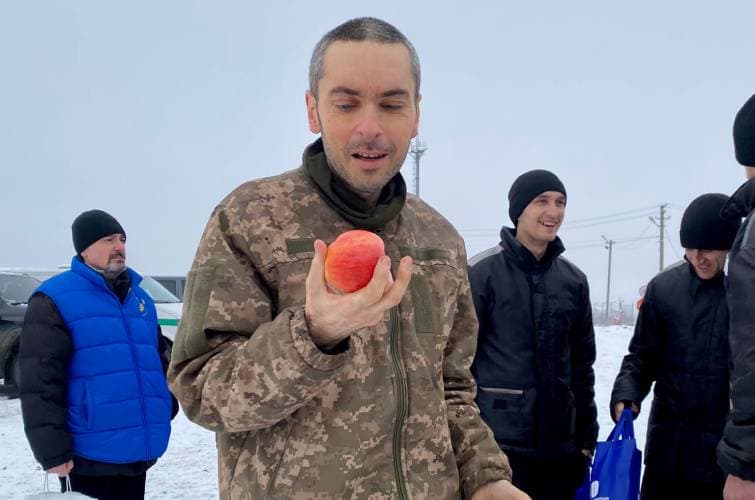
They made us shout 'Glory to Russia'
A former restaurateur went to the front and was captured by the Russians
Maksym Kolesnikov02/27/23 - Recording
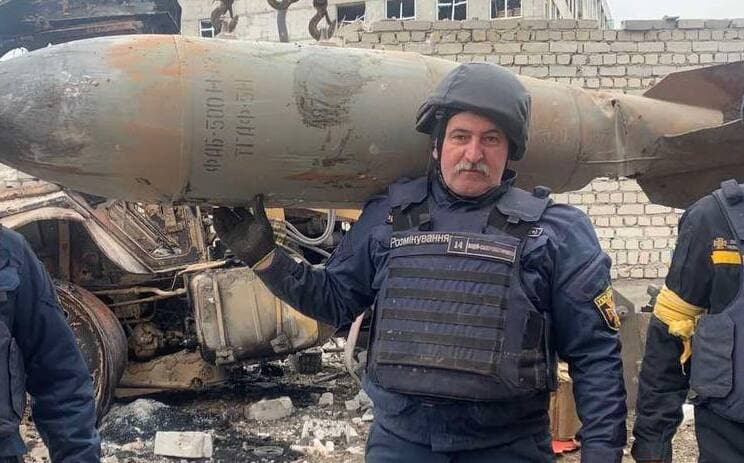
I realized I was standing in a minefield
A Kharkiv sapper was about to retire but instead defused a 500-kilogram bomb
Anatolii Kolesnyk12/18/22 - Recording
They loaded everyone: dogs, cats, a hedgehog
The home of Kherson retirees was flooded after the destruction of the Kakhovka Dam. Ukrainian soldiers evacuated them from occupied territory
Henadii and Olena Rotar06/09/23 - Recording
They beat one fighter from Azov for three days. In the morning the guard called him a hearse
A volunteer from Mariupol who endured captivity and torture in Olenivka
Vitalii Sitnikov07/22/22 - Text
I stayed on my shift for 4 and a half extra months
A trauma surgeon lived and worked in a hospital basement in an occupied city for four and a half months
Yurii Kuznietsov11/10/22 - Text
At first they buried people for a bottle, then for 100 grams. And when there wasn’t any alcohol left, bodies just lay there. It’s terrifying
A native of Odesa ended up in occupied Mariupol and escaped through dozens of checkpoints and arrest
Vadym Lahunovych04/20/22