Back
I realized I was standing in a minefield
A Kharkiv sapper was about to retire but instead defused a 500-kilogram bomb
Before February 24, 2022, Anatolii Kolesnyk, a driver-sapper with Ukraine’s State Emergency Service, was engaged in humanitarian demining: he searched for and destroyed ordnance left over from World War II. On February 24 he was on pre-retirement leave, but he returned to duty and has since been working under shelling. In March 2022, his team defused an unexploded 500-kilogram FAB-500 aerial bomb near the fire station where his family was sheltering. His relatives decided to keep the photo of the raised bomb and gave Anatoliy a t-shirt with the image printed on it. Anatolii’s children serve alongside him: his daughter is a psychologist, his son a firefighter. Anatolii says that if you stop being afraid, it’s time to leave the profession. As long as the fear is there, he keeps working.
Interview
Transcript
Transcript
Attention! Translation was done using AI, mistakes are possible
АК: My name is Kolesnik Anatoly Nikolayevich. I'm a driver-sapper, I'm engaged in demining territories, that is, our Ukrainian land with humanitarian demining, to be more precise.
АП: You work in Kharkiv and in Kharkiv Oblast, correct?
АК: Yes, I work in Kharkiv and in Kharkiv Oblast.
АП: What is the correct name of the subdivision or unit that you belong to?
АК: We recently transferred, I can't tell you exactly yet, what's correct.
АП: At least in general terms – DSNS of Kharkiv Oblast or what?
АК: Actually yes, we belong to DSNS of Ukraine, but it goes Міжрегіональний центр швидкого реагування... I forgot the rest of the abbreviation – it's a long abbreviation, I haven't fully learned it yet. (note – DSNS – Державна служба України з надзвичайних ситуацій, State Service of Ukraine for Emergency Situations; Міжрегіональний центр швидкого реагування – Interregional Rapid Response Center)
АП: Okay, alright. Maybe later you can write it in text?
АК: Yes, I'll write it for you later, because it's very long there. Before we had this group, we were separate.
АП: Do I understand correctly that this is not the armed forces, this is not the army, this is specifically...
АК: DSNS. We belong to DSNS, but a separate subdivision.
АП: You said that you're engaged in humanitarian demining. Please tell us what this is.
АК: Humanitarian demining is part of demining territories, that is, we're engaged in searching for and destroying ammunition from the First World War, Second World War, and now naturally, this war. Everything: both landmines, and shells, and tripwires, and reactive rockets, everything-everything. Before we didn't have this. Before we only had shells, landmines, and nothing else like that, we weren't involved with modern [weapons].
АП: How do humanitarian demining and DSNS sappers differ from military sappers?
АК: Military sappers are at the front line, "at zero", that is, they clear the way specifically for our troops. And we go behind them and clear the entire territory so that peaceful people can live quietly, calmly, without these very...
АП: That is, you're engaged in demining already liberated territories?
АК: Yes. We, just like military sappers, we approach "zero", but very rarely. In case of emergency necessity yes, we approach "zero", we work.
АП: You said that before you were engaged in demining shells from the First and Second World Wars. Please tell us about this in more detail – what do sappers actually do in peacetime?
АК: Well, how to say, how to explain more precisely? We go out on applications, that is, people somewhere in forests, somewhere in houses – situations are so different – find [old ammunition], they dig it up. And so they call us, we go out on the application and begin to examine the territory. Sometimes it happens, you go out for one piece of ammunition, you dig it up, [and it turns out there's a lot], – there was a case, we dug up 420.
АП: Wow! No way!
АК: Yes. Caliber 122 millimeters, that is, you should understand, this is a very large [weapon], weight approximately 27 kilograms.
АП: These were shells from the Second World War?
АК: Yes, these were shells from the Second World War.
АП: And how long ago was this?
АК: Different times: both four years ago, and five years ago this was. I've been working for more than ten years – I won't say specifically when, what and how much.
АП: No, you just told me specifically about this case, when such a large batch was...
АК: This was somewhere in 2013.
АП: Was this someone's private plot?
АК: No, this was a railway station, this was along the railroad. As witnesses said, grandfathers and grandmothers – there's a village nearby – during the [Second World] War the Germans destroyed our train there, and so the ammunition, it was along the railroad like that on both sides.
АП: Was this also somewhere in Kharkiv Oblast?
АК: This is all in Kharkiv Oblast. We work only in Kharkiv Oblast.
АП: Please tell us how you met February 24th, how your life and work changed in connection with this? What tasks appeared for you, what do you do now?
АК: I met it very "cheerfully". To be honest, I was having fun from morning for an hour and a half for sure. I'm saying this so chaotically, excuse me. 150 meters from my house – I live in a private house – a little rocket flew in, so it was very cheerful. How to explain? I have a lot of experience, we're already kind of used to it, we're battle-tested guys, but I through my sleep – I sleep lightly – heard explosions going, and they were getting closer, closer, closer, closer...
I woke up. And when it fell nearby, when the "Kalibr" landed nearby, let's say it was very cheerful (note – "Kalibr" – cruise missile). Good thing there's a basement in the house, I had to quickly get the whole family down to the basement. Imagine, this is early morning, this was the fifth hour, this was, of course... Little granddaughter, daughter, wife. It was cheerful. They didn't quite believe, of course, they thought I was joking around, but when they heard that everything around was rumbling, exploding...
АП: You mean, the family didn't believe that something had started?
АК: Didn't believe.
АП: They didn't hear the explosion?
АК: No, they heard, but they couldn't believe. They thought I was joking, they thought it was either exercises or something else, because we have a military unit not far from here. Something like that.
АП: And you immediately understood what was happening?
АК: Well... Yes. I'm an almost military person, so to speak, and I like to observe certain details. Certain details already suggested that something would happen.
АП: What do you mean?
АК: That there would be war.
АП: I understand. You say – certain details, you mean that you followed the news or...
АК: There weren't only news, there were certain events that led to such thoughts – let's put it this way.
АП: Can you clarify what you mean?
АК: I can't completely, but in principle I can. Before New Year my wife's mother died from covid. She went to church, a church of the Moscow Patriarchate. And it turns out, when we brought things after New Year literally a week later, this was somewhere around the sixteenth, fifteenth, maybe somewhere seventeenth, I won't say exactly, of February. And it turns out that the priest was getting ready to leave urgently.
АП: You were bringing things to the church, you wanted to donate them?
АК: Yes, we donated them. And here the priest urgently packs up and leaves. And I say: "Something will happen". That's basically how it all came together. That is, it led me to think that if the church is fleeing, then something will happen.
АП: And was he leaving for Russia?
АК: Yes. He had already been there several times before this. Already everywhere in the mass media [it was being discussed] that something was in the air, everyone started quickly discussing all this, and then – oops, and the priest like that packs up and runs from here.
АП: Did you talk to him, did he explain why he was leaving?
АК: No.
АП: Did he just tell his parishioners that he was leaving?
АК: Yes. I didn't talk to him. I didn't like him at the funeral, didn't like him at all. It was very interesting what was said, that "we are all mortal and we will all go there". And I didn't quite like this. And then we brought things there, and he leaves, and I understood: aha, that's it, something will happen.
АП: Let me clarify: he said this at the funeral of your wife's mother?
АК: Yes, that we are all mortal and we will all go there.
АП: And after this you found out that he was leaving?
АК: Well, this was after some time already. This already passed well, about three months. Oh no – two months passed from the moment of the funeral, and there is data [that] he left.
АП: Please specify when the funeral was? At least the month: before New Year, December, January?
АК: December 15th [2021].
АП: And how did you find out that he was leaving – was this just announced in the church?
АК: No, I'm telling you, we came to the church, brought things. We threw out old things, but what was good quality, bought recently, why throw it away when it will be useful to people. We brought [it] in boxes, and they were already on their way out, roughly speaking, almost loading into the car.
АП: The priest with his assistants, with someone else?
АК: He, wife, daughter and some woman.
АП: And the church ended up without a priest, was it closed or did it continue to function?
АК: Just recently when I found out that it functions.
АП: I see. This church is located in Kharkiv?
АК: Yes.
АП: Please tell me, what happened at your work on the 24th? Did you come to work [the same day] or several days after this, what [then] was it?
АК: I went on vacation on the 21st [of February 2022], that is, I wasn't at work. We have our own, let's say, regulatory documents, which state: in case of accidents and similar, we have lists, call lists and there are alarm signals. We had an alarm signal activated, and according to this signal we all gather at work, regardless [of the fact that] you're on vacation and similar. If you are here, on the territory of the city, [you come to work]. Everyone gets called, they automatically call everyone, we gather and go to work on the alarm signal.
АП: Tell us about your first trip after the start of full-scale war: when was this and what happened.
АК: This was already on the twenty-fifth, since on the twenty-fourth they were still deciding what to do with us, vacationers, how to proceed.
АП: That is, on the twenty-fourth this signal came that you all needed to gather, yes?
АК: Everyone gathered: those who were on duty, those who were generally at the unit, in the subdivision, all people were gathered, except those who were on vacation, those were recalled periodically. I was recalled last, because I was on vacation, before going on pension. That is, I shouldn't have come back to work from vacation, I should have gone on pension.
АП: You had your last vacation before pension?
АК: Yes. [In the personnel department] they decided with me [what to do]. I started work on the twenty-fifth. That's it, I got in my car, and worked completely, under shelling, everything as it should be.
АП: Didn't you have thoughts to stay [on pension]? Couldn't you stay, couldn't you say that you're on pension?
АК: I could.
АП: But you decided not to do this?
АК: No, of course. I won't abandon the guys.
АП: Tell me about the first trips, please – what was this? Where did you work, how was it?
АК: I can't even explain to you. These events developed so quickly, it was all so, well I don't know... Nobody asked any questions, a command came – jumped in the car, left, cleared the territory, left. And so every single day, that is, nobody asked any questions, a command comes – that's it, got in, left, worked, came back.
АП: At the beginning of our conversation you said that you work already on liberated territories. Do I understand correctly that at the beginning of full-scale war you worked under fire, that is, essentially you were "at zero"?
АК: Yes.
ТК: They didn't take our city.
АК: I wasn't just "at zero", but right at the "front". So you understand, we're working on the street, there's a house, a five-story building, behind it shells are exploding. And we work calmly.
There was a case in general: we were driving [with colleagues] down the street like this, people [are walking by], I open the car door, shout: "Get down, fool!", and to the side, roughly speaking, fifty meters away, "Grads" are falling. I then drove away through side streets, left. We understood a little how it falls – whether it would hit us or not hit us.
ТК: Your car is shot up, beaten up.
АК: The guys came under fire. I kind of came under fire, but the fate of getting hit bypassed me, let's say, in the car. Yes, there are some shrapnel wounds in the car, but this is such, trifles, but the guys have cars beaten up badly.
АП: Didn't your family try to talk you out of going to work?
ТК: That's useless.
АК: Well, that's it.
АП: Didn't succeed?
АК: No. No, at first they cried a little there, but then got used to it.
ТК: And then they came to you every day, that's why they got used to it.
АП: They came to you?
ТК: Yes.
АП: Where?
АК: To work. My daughter also works at DSNS, she was in management.
АП: That is, you have such a family, everyone works together?
АК: My daughter yes, a psychologist at DSNS, my son is also a fighter at DSNS, a firefighter.
АП: Wow.
АК: My wife, though, no.
АП: Your wife must have nerves of steel.
АК: Yes.
АП: The family came to you – how was this arranged? Did they come to you at headquarters or where?
АК: No, generally at first nobody came anywhere, everyone...
ТК: ...just didn't come out of the basement...
АК: The first two weeks – this was very tough.
ТК: Planes were flying, bombing heavily.
АК: And they were in the basement. A large bomb fell near them. This bomb here.
ТК: Yes, we even made this photograph as a memento. Near us, we were in the basement, near us fell, well 200-300 meters from us, an aerial bomb. And we made this print on a t-shirt as a memento for him (note – накатка – transfer, thermal print), which was the only one left – they gave them away.
АК: I accidentally [gave them away], I didn't want to. This photograph went around the whole world.
АП: I wanted to ask you about the t-shirt, because I also saw a similar photograph and thought whether it was this one or not.
АК: It is.
АП: Tell me again, please, what happened. This is a bomb that hit the house next to yours?
АК: Yes. They were at the fire station, in the basement.
АП: Your family was in the fire station basement?
ТК: Yes, at our son's fire station. At our son's fire station basement. We came to him, because we already had... Can I [join you]?
АП: You can! Then let's have you also appear on video? Otherwise it's not very convenient to talk like this.
ТК: We then, it turns out, in the morning took our daughter by command. She to her work, then Sanya [son] went to his work. And we meanwhile took aunt from the hospital, because such confusion everywhere. Well and already around, probably, three o'clock we already understand that already tanks, we were near the Ring Road at dawn... (note – end of sentence unclear)
АП: When was this, at least approximately?
ТК: February twenty-fourth. And already there were tanks, they were rolling around here. We didn't understand whose tanks these were, ours, not ours, there's some incomprehensible battle going on. Our son called, communication was already breaking up terribly, our son got through to me, says: "Come to me quickly". And we came there, and there many people came to the fire station: people came from neighboring houses, went down to the basement, packed in the cold. But what to do – scary after all, and here there's a whole mountain of rescue workers, a whole bunch. There we sat for about two weeks, probably, because this was horror, these were planes, aerial bombs, artillery, everything in the world this was. Everything over our heads...
АК: Yes, everything was rumbling, everything was flying...
АП: When you say "you", you mean that the two of you were at the fire station, your son, your daughter, and you all lived there?
ТК: At the fire station was I, was granddaughter, was my aunt with daughter, with son-in-law, with grandchildren too – this is just our family. Sasha just, son Sasha, he (note – end of sentence unclear). I also don't know how many days they sat there. From February twenty-fourth, probably, I didn't see you [husband Anatoly] at home, yes and Sasha too (note – here and further Tatyana addresses her husband). Sanya somehow started coming earlier later, they transferred them to some schedule: worked four days, then rested two somehow – this is the fire station. Then somehow differently they transferred them there, they (unclear) started returning, coming to their senses and started going to work, I suspect. And when they let you go home, I don't even remember when you could get out home – purely at least there, I don't know, water the flowers, see if the house is whole or not.
АП: That is, you lived in the basement there, at the fire station, for two weeks?
ТК: Yes.
АП: A fire station is a strategic object. Weren't you afraid to go down there?
ТК: You know, I thought that specifically fire stations they shouldn't hit. I was also very outraged when they shot schools and kindergartens, just smashed them – this is also wrong. For some reason specifically at hospitals and fire stations I didn't think that they would [shell], although later into the maternity ward, remember, it hit this...
АП: Yes, in Vilniansk at the hospital recently there was shelling... But I understood what you're talking about – that maternity ward that they shelled in the first days.
ТК: Yes, Mariupol (note – referring to the shelling of the maternity ward of hospital №3 in Mariupol on March 9, 2022).
АК: In Kupiansk they also smashed...
АП: Yes. We talked about the t-shirt, tell me what is depicted on it and how you got this t-shirt.
АК: This is a gift.
ТК: Yes, our daughter ordered such a print for his birthday, he just turned 50 in April, he was supposed to go on pension. Well we decided for him as a memento... I, to be honest, hoped that on April 19th he would already say: "That's it, I'm home". Uh-huh, he said... He said that I signed a contract and went to work further.
АП: What is depicted on the t-shirt, what kind of photograph is on the t-shirt?
АК: The t-shirt turned out: this is where they were, at the fire station, there nearby a lot hit the building, but one of them didn't explode, it weighs 500 kilograms.
ТК: FAB-500.
АК: FAB-500, yes. Moreover, we made inquiries, this FAB-500 is not listed anywhere.
АП: What do you mean, please explain.
АК: It's been disposed of according to documents long ago.
АП: That is, according to documents it doesn't exist?
АК: Doesn't exist.
АП: That is, like officially the Russian army wrote it off, it doesn't exist, but it flew in?
АК: Yes-yes.
АП: Is this open data that can be looked at?
АК: No.
АП: You said that you just looked...
АК: These are closed sources.
АП: But this information was somewhere, and you found out from it that this bomb kind of doesn't exist?
АК: Yes. At least the number of this bomb no longer exists.
АП: It flew in and what happened? It didn't explode, you went there and what?
АК: It didn't explode, it was located there on the territory under the building. This was the first aerial bomb so large, specifically modern, that we encountered, and we were taking it out from there. [There are] its own, as they say, small nuances, in order to neutralize it, in order to put it in transport condition – it took a little time.
АП: How is this technically arranged? You need to get it out, take it away...
АК: This is difficult to explain to you.
АП: If in very simple words, so everyone understands, can you at least in general terms?
АК: It was necessary to remove two detonators from it.
АП: Remove, you said?
АК: Yes, unscrew, remove, however...
ТК: Carefully, so it wouldn't explode.
АК: Yes, this all has to be done carefully, so that it doesn't explode, because upon impact it should have detonated in any case.
ТК: That is, it was armed?
АК: Yes. It turns out, aerial bomb, all detonators armed, well and this is very dangerous. This was all unscrewed, taken out...
An evacuation was carried out [of people around], everything as it should be. Well nothing, we unscrewed it, worked on it... Yes, sweated a little. Yes, it was scary, but nothing. And then, when I lifted it like this, we decided...
ТК: They decided to take a photograph as a memento.
АК: When we lifted it, the aerial bomb, we decided to take...
АП: Lifted, meaning took it out from under the ground or lifted it from a crater? Where did you lift it from?
АК: Yes, we got it out. We lifted it, it was lying – there under the building entrance to the basement, specifically on these steps, so we were getting it out from there. We moved it around a bit right there to get to the detonator. And when we had already neutralized it, roughly speaking, we lifted it from there with a manipulator, in order to load it in the car and take it away. So when we lifted it, we decided to take a picture – first photograph, first big aerial bomb like that.
We stood next to it, and it moved a little on the cables, started turning. I held it with my hand so it wouldn't spin, and at that moment the guy took a picture. As a result it turned out that we're standing three of us and I'm holding on my shoulder...
АП: The sound cut out. I can't hear you.
ТК: Everything's fine with us.
АП: There, sound appeared, everything's in order. Please tell me when this was? When did this bomb fall? When did you demine it? At least approximately.
ТК: Beginning of March, first days of March.
АК: Yes, this was in the beginning of March.
АП: And this was the first aerial bomb that you demined? Or the first large one in general?
АК: No, there were many of them, in principle, but they all exploded. And this is the first one that specifically remained whole, that we demined, that we got out. And then there was another one, then another one, then on the roof of a house in general there was the same kind, we got it out.
АП: This one fell near a residential building? Something's happening with the sound...
АК: Our connection is like this, like on Friday. On Friday we didn't manage to talk at all.
АП: Please tell us about the story with the drones that you found. What was this and how did you manage to return them?
АК: The first drone – we were examining territory for the presence of explosive objects (note – ВНП – Вибухонебезпечні предмети, explosive objects) and accidentally [found it]. I still have this from 2014, from the first war this remained. I don't know, with my eyes, I see everything around me. And accidentally with peripheral vision I noticed a drone in the bushes. I picked up the drone, took out a flash drive from there – it had a flash drive – looked at the video. I saw that this video was specifically filming orc positions, Russian Federation positions were being filmed. Aha, so this is our drone. That's it, we started figuring it out.
АП: I can't hear you. Sound cut out again.
АК: We reviewed the video that's on the flash drive in the drone. I saw that the drone was filming orc positions, positions of the Russian Federation that were standing at our place. I understood that the drone was ours, that is, our or ZSU [Armed Forces of Ukraine], or territorial defense – I don't know (note – "чи" – Ukrainian "or"). I started finding out who was standing at those positions and so on, in order. Good thing I have a friend who works as a journalist and who very often ran around there at our place, he works at [news agency] "Reuters". I [went] to him immediately, calling, saying: "Help, it's needed". And with his help, roughly speaking, we contacted the people whose drone this was. The guys came, said "thank you", took the drone, left.
ТК: They were happy.
АК: Yes. And the second drone already...
АП: How is this possible? That is, the drone isn't signed, naturally, which unit it belongs to, that is, he just somehow through his channels found these military people?
АК: Yes-yes. This was approximate, that is, the first drone this was approximate: maybe it's theirs, and maybe it's not theirs. That is, maybe this is...
АП: How is it possible to track this? How is it possible to find out whose? I can't hear you, unfortunately. Maybe I should call you back?
Testimony Photos
Other Testimonies from the Archive
- Recording
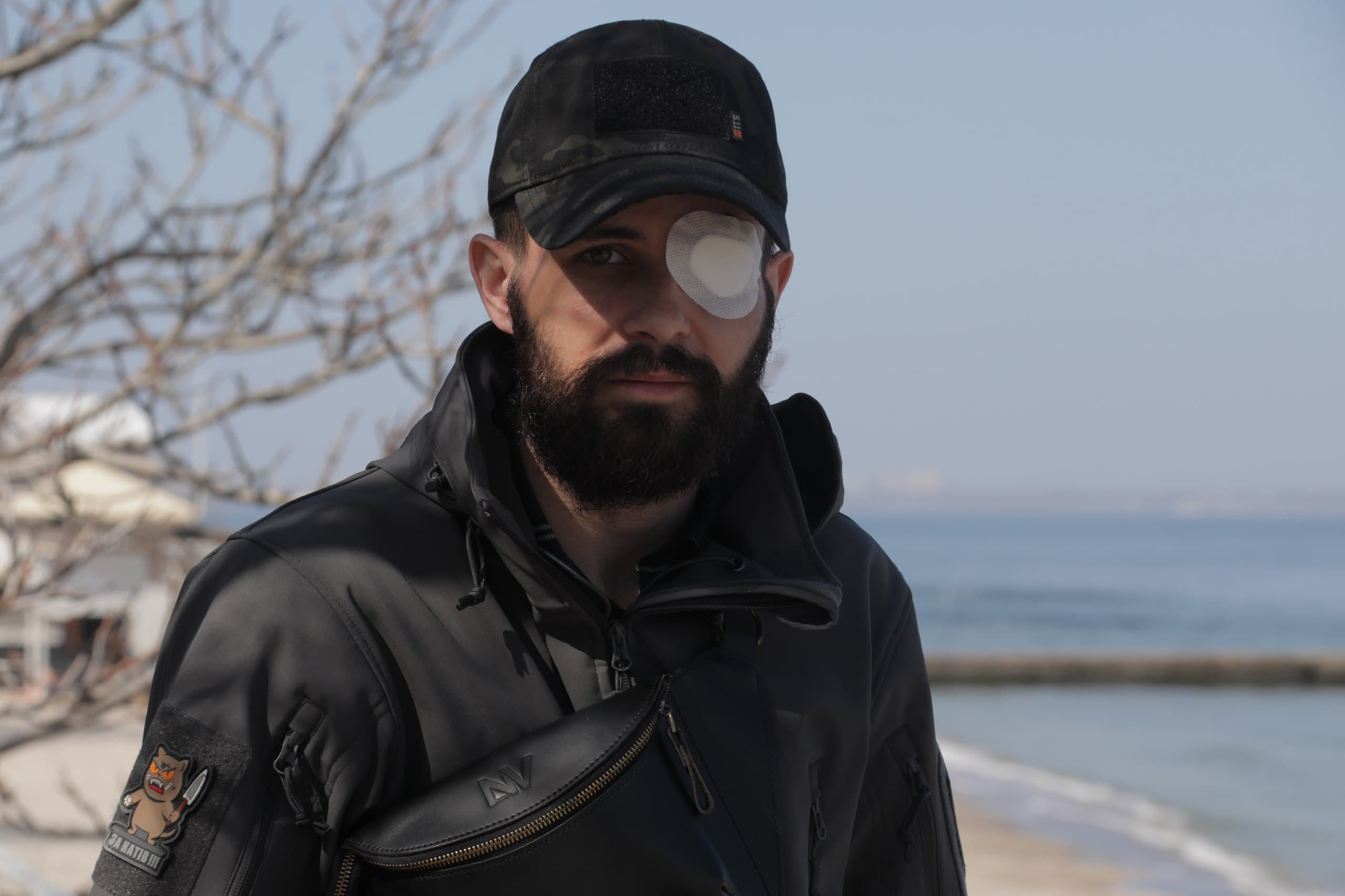
For me, bread means sweat and calluses. And now blood, too
A Ukrainian helped his family work the fields and nearly went blind after stepping on a mine
Dmytro Yeliseienko04/25/23 - Recording
They loaded everyone: dogs, cats, a hedgehog
The home of Kherson retirees was flooded after the destruction of the Kakhovka Dam. Ukrainian soldiers evacuated them from occupied territory
Henadii and Olena Rotar06/09/23 - Recording
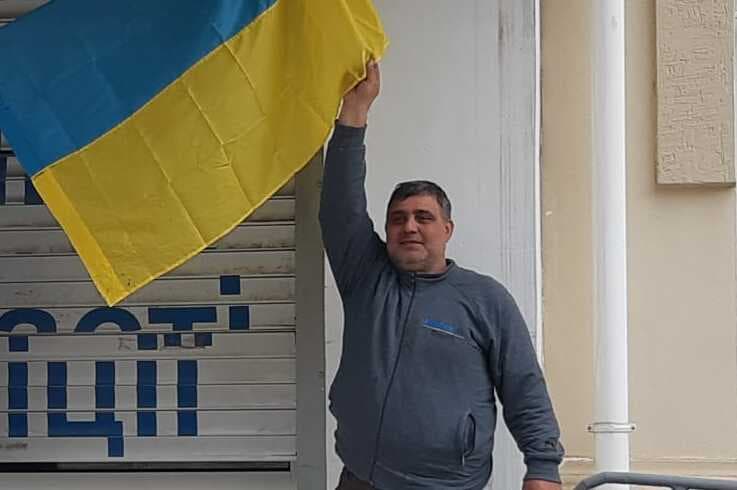
Children have been born, weddings have been held, but there has not been such joy since
A resident of Kherson stayed in the city under occupation and helped hang the first Ukrainian flag after liberation
Borys Aliiev11/22/22 - Recording
They beat one fighter from Azov for three days. In the morning the guard called him a hearse
A volunteer from Mariupol who endured captivity and torture in Olenivka
Vitalii Sitnikov07/22/22 - Text
At first they buried people for a bottle, then for 100 grams. And when there wasn’t any alcohol left, bodies just lay there. It’s terrifying
A native of Odesa ended up in occupied Mariupol and escaped through dozens of checkpoints and arrest
Vadym Lahunovych04/20/22 - Text
I want to see everyone. I desperately want to fall in love. In war, you constantly feel like you might not have time for something
The story of Nastya, a volunteer from Kharkiv, about evacuations and losses
Nastia05/26/22