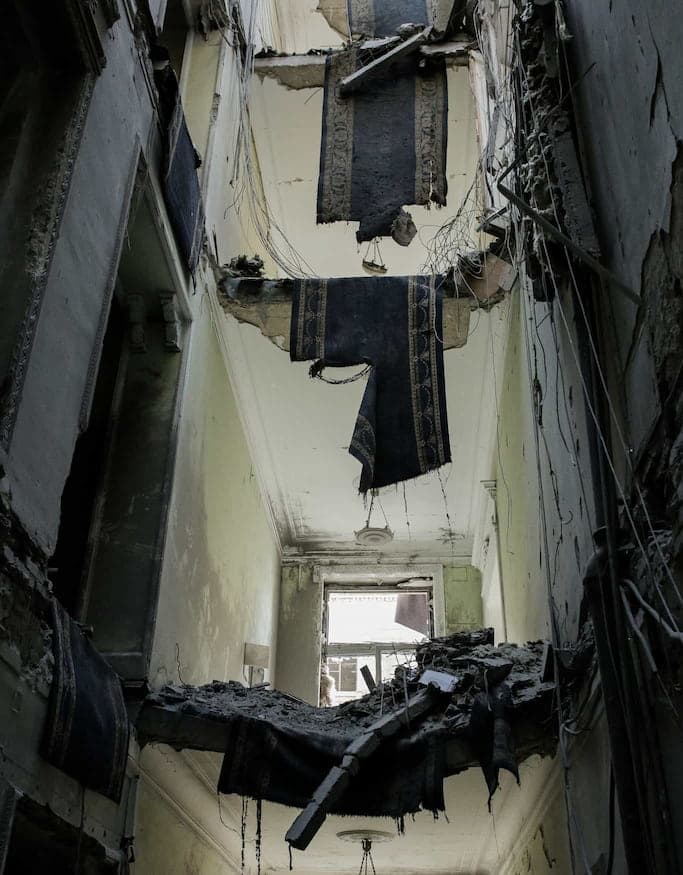
Text
I called and said: 'Mom, I lost my leg'
The story of a girl who survived the explosion at Kramatorsk train station
Anastasiia Shestopal08/03/22
She was 19 when she lost her leg from a missile that struck Kramatorsk. Two years later, she’s finishing university and posing for Vogue and Playboy
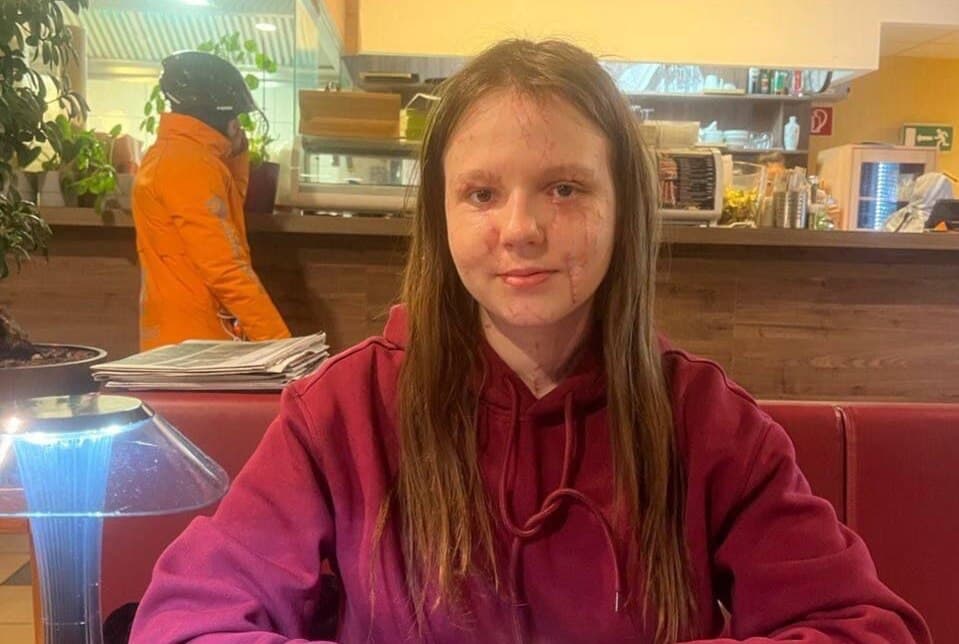
When Russia struck the Kramatorsk train station in 2022, Anastasiia Shestopal was just 19 years old. The missile strike cost her one leg, and she went to Germany for treatment. Two years later, Anastasiia lives in Essen, Germany, has come to terms with what happened, and is finishing university. She became a model, shooting for Vogue and Playboy. She also runs a YouTube channel about life after amputation and helps others who have lost limbs.
Attention! Translation was done using AI, mistakes are possible
АШ: Anastasia Shestopal
АП: Anna Pavlova
АП: As I already told you, we are now making a series of materials with heroes of our past interviews, which we recorded during two years of the publication's work at the very beginning of the full-scale war. And we're calling some heroes to find out how their life is arranged now, how things are going now, and to make a second episode of interviews in order to show the changes that have occurred. When we were choosing from numerous interview heroes those we want to talk with, we decided that we definitely need to talk with you. Last time my colleague talked with you, now it's me. Nice to meet you.
АШ: Yes, I'm also glad to meet you. Very nice to meet you.
АП: As far as I understand, your life has changed very seriously and somehow got settled in Europe?
АШ: Yes, at the moment I live in Germany, that's how it turned out.
АП: Let's try to talk about this, about how your life was unfolding after the operation, how in general you were building it, what was happening with your career, what was happening with your studies. I think that you can start telling, and I'll ask you some clarifying questions along the way.
АШ: First, after I had the trauma, I lay in the hospital for a month in Dnipro (note - Anastasia lost her leg during shelling of the railway station in Kramatorsk). We had acquaintances in the city where I live now, and they posted information about me. One German woman wanted to help me so that I would come here to continue treatment and get prosthetics here. And then we chose Germany from all the countries where we wanted to get prosthetics, where they offered us. Because here we looked at a lot of information about prostheses, that there's good prosthetics here. We just already had acquaintances there, and then we came here. About three weeks I still lay in the hospital. After some time prosthetics slowly began, slowly I was coming to myself already.
АП: You ended up in Germany for treatment. How did your rehabilitation go? Who helped you? Who were you with? Were your loved ones near you? Or they couldn't leave?
АШ: My mom was here with me for some period. Already a year and a half [ago] I sent her back to Ukraine. Because I can't live with anyone for long here. I already live alone. But at first, the first time, she helped me in my rehabilitation, of course. Besides mom there was nobody else here. All my family and friends were there, in Ukraine. Germany helped us a lot with prosthetics. And now they also help me with this.
Here I was slowly already recovering. I resumed studying at university. This year I already finished it, I graduated with a bachelor's degree. These two years [after the injury] I still studied remotely. And slowly here I already started learning German, everything else. [Started] running a blog and somehow slowly coming to myself, accepting my changes again, my body.
АП: You mentioned studies. Please tell me a bit more in detail what you're doing. If I understand correctly, you already defended your diploma?
АШ: Yes. I studied in the specialty "Social Pedagogy and Work." Such a social sphere.
АП: In Ukraine?
АШ: Yes. I somewhat accidentally enrolled here, but now I don't regret it. Because I was going to enroll as an actor. I even passed the creative [exam]. But then I didn't want to enroll in that university where I passed the creative [exam]. And already by trial and error I enrolled in my university. But now I understand that probably it was supposed to happen like that, that I chose exactly this specialty. Because we have very many directions [connected] with what is now more interesting to me - how to work with people with disabilities and everything else. And now this even came out as a plus for me, all my knowledge. I already finished [bachelor's degree], but I won't go to master's program. Possibly, later I'll [finish] something else different. But now I'm more focused on learning languages, German, English, to already think up something here. And plus I now work as a model in my agency. For this I also need to [learn] language even better.
АП: Please tell me in more detail about your modeling path. How did it happen that you became a model? As far as I understand, you collaborated with really famous agencies and designers. Please tell about this in a bit more detail.
АШ: I didn't consider myself in this sphere at all before. I'm such a creative person, but I considered acting more. Because I'm of short height, short [people] are unlikely to [realize themselves in modeling]. And I didn't focus on this strongly. And, like, that's it, I'll be in the acting sphere, tra-ta-ta. And I gave up on this in my life before this. But when this whole story happened to me, then first someone offered me... No, first I had my first photo shoot here [in Germany], which I just organized for myself, found a girl photographer. And we took photos so that [I could] start accepting my changes, my body. See myself differently. Then a girl from Ukraine wrote to me. Not far from me she lived here.
АП: In Germany?
АШ: Yes. She suggested that she's creating a project of photos of women from Ukraine, who aren't even necessarily victims. Everyone there had different stories. She was making such a photo project. And I agreed, we did a photo shoot. A very cool one came out. I looked at myself again from a different side. For me each photo shoot is like a new acceptance of some side of myself. This is like another therapy.
Then, after this photo shoot, I think, someone offered me, I think, to shoot for "Playboy" in Ukraine. There was a project about women who suffered from the war. Everyone had different stories. And then I also shot with this girl. She shot me in Germany, I didn't come to Ukraine then yet. And I also really liked this. I was somehow completely different each time already. I really liked everything that was happening, I was super enjoying the process. I didn't think before that I would enjoy this so much.
And, it turns out, then I had another photo shoot here with Germans. And then... Yes, here I was shooting... Yes, now I'm restoring chronology. And then already, probably a year passed, and I was offered to shoot. I at this time [sometimes] was shooting, [sometimes] wasn't shooting. I didn't have a goal yet to do more modeling. I still wasn't planning to go to Ukraine, but someone accidentally wrote to me, offered to shoot for Vogue. Earlier for me this seemed like something really super cool. I didn't even think that I would have such an opportunity. I was still a bit scared to go to Ukraine, but at that moment I understood that if I don't come now, then I won't have such an opportunity later.
АП: This was Vogue inviting you in Ukraine?
АШ: Yes, yes. There was a photo shoot of some people with prostheses for like... For society, you could say. This was such a Vogue photo shoot. They revealed our stories very coolly. And very cool shots came out for us, I saw, with a cool photographer. I really wanted to participate in this. And I came to Ukraine. Everything was, in principle, good this trip. Then I saw my work. When we were shooting, everyone was praising me: how beautiful I am, cool. And I was like: damn, well, in principle, yes. And after this I came here [to Germany]. Before this an inclusive modeling agency came across to me. It now works in England, America. Everywhere, in general, it works.
I work around Europe. And they have, it turns out, completely different people [working] - for example, with some spots on the body or something else. With different such features. I saw that they are the most popular in this direction. And I'm thinking: "Damn, well, of course, I can send them my portfolio. But I don't know - maybe it won't work out." But in the end I decided to send. And they literally answer me the same day. I was like: "Wow, I didn't expect that they would answer me so quickly." And they were like: "Yes, let's go, we want to collaborate with you. We're filling out the contract." And that's it, so I filled out the contract with them. And slowly... Well, plus I started Instagram. The more my recognition increased, interest in me, the more some little jobs appeared for me.
Then I had a photo shoot in Rome. Also a Ukrainian girl found me. She has her own brand, rather, not a brand - well, anyway, I also shot for her. And so slowly, slowly... Recently I had a photo shoot for... I can't yet, I think, it's still not allowed to name what this is. Well, anyway, a coffee brand, very popular in France and, in principle, around the world. There will be advertising, which will be [shown] for two years. Very cool. And earlier this would seem to me like, super wow. And now I just, so to speak, do castings and go to work. And it's really super enjoyable for me, yes.
АП: Am I understanding correctly that you travel around all of Europe? That is, these are photo shoots not only in Germany, but also in Italy, in France?
АШ: No, [not only]. My last one was in Lisbon. Was in Barcelona. Was in Rome. Not super many yet. Now I'm doing a casting to Bulgaria. Well, slowly, slowly.
АП: Sounds great, very inspiring. And can you name brands, those that can be named, for which you shot? Either the name, or what this brand does, what this brand produces?
АШ: Well, the exact brand, name, this is probably not allowed yet.
АП: No, maybe those that already came out.
АШ: Yes, now I'll think. Well, from magazines this can be named. In Ukraine I shot for such a platform, called "Rozetta" [editor's note: Ukrainian e-commerce platform]. There everything is sold, I don't know if you know or don't know. I shot for things. This, like, also seemed super cool to me earlier, because this was such a super cool site at that moment. Then... Now I can't remember right away. I can write, of course. What's it called at Lina's? A vintage bags and jewelry store, there's all kinds of Gucci, Saint Laurent, vintage.
АП: Resale platforms.
АШ: Yes. What's from the recent ones? Well, in principle, I can't say that I have really super many commercial [photo shoots] already. I haven't been in the agency for that long. Through the agency I maybe had 4-5 photo shoots. So for now I'm still not at the peak, you could say.
АП: And if we talk about magazines, you collaborated with Ukrainian Vogue, it turns out?
АШ: Yes, Vogue, I had Playboy.
АП: You said that you went to Ukraine for the first time after what happened for a photo shoot. Was it scary?
АШ: Yes, it was scary. I just on this day still... Well, I not only needed to go for a photo shoot, I had other business there. If [I had] just [needed to go] for a photo shoot, I would hardly [have agreed]. I was postponing my trip, because I was still somehow scared anyway. But when such an opportunity appeared, I think: damn, well, I need to solve everything together. I needed to solve some documentary issues there. And my mom came to Kyiv. To Kyiv it was still not so scary for me, but still I didn't know how I would feel there. And I came, on the first day there was a very serious shelling in Kyiv. They hadn't shelled it so much for a long time [as] when I came. It was, of course, very worrying. Plus, while I was approaching Kyiv, my mom was already waiting for me at the station there. I [at this time] read the news that missiles are still flying there. Well, anyway, it was very scary right at the moment of arrival.
Then the remaining days - this was maybe about a week, plus or minus - there was nothing serious already. But there were alarms. Each alarm - we go down, go somewhere. Still this triggers me very much. But I've already been three times [in Ukraine] - with that time, plus two times I was. Already, of course, it's not so scary. A bit scary, but still I'm in Kyiv [where it's not so scary]. My family lives in Donetsk region - I would hardly go there, for example. In Kyiv it's safer after all. Plus I choose the district where we live, in the center. In the center it's not so scary for me. Generally scary, of course. Well, I, like, just worry very much about all this.
Now everything that concerns my life has become very tense like that. If something hurts - I immediately start worrying about this very much, quickly solving this problem. I didn't have this before, for example. And now I just relate to my life more responsibly. Therefore I don't put myself in a situation where I need to fight for life again.
АП: Do you miss home, miss Ukraine?
АШ: Yes, of course, I miss it. There you still feel yourself like your own person. Here you don't feel yourself like that, because we're all different anyway. Here there are its pluses, its minuses. I miss, of course, my family. But already with time I'm getting used to being such a loner, maybe. It's becoming more and more comfortable for me. But I always liked being alone anyway. Of course, there are periods when I miss super much. For example, I'll have graduation from university now. And I probably won't come, because it's complicated for me to get there, just for this to come - I probably won't come. And I'm a bit sad.
And then - there are pluses here. I try to rely on the pluses of what I'm located here now. So, to return to live now [in Ukraine] - hardly. It's easier for me to live here, for example, in some everyday issues. Unfortunately, for now in Ukraine they don't fully arrange all this and [don't] even make, simply put, elevators everywhere. Here this is better.
АП: And in general in the future did you think about returning to Ukraine? Or for now you don't plan so far ahead?
АШ: For now I don't know, honestly speaking, what will be, whether I will return permanently. I will definitely come to visit, I come when our plans coincide. But I don't know whether I'll return permanently, and how much time should pass. Because now I want to slowly develop my modeling further. And possibly I'll be doing something else here, besides this. I don't know how life will turn out further in general.
I, of course, always miss. But still need to... Here my rational brain kicks in a bit, that for now it's easier for me [in Germany] in many issues - physically, this is the main thing. Because, well, really, I still [after the trauma] get tired faster. This all happens faster. In Germany, for example, there's an elevator everywhere. I don't necessarily have to climb stairs everywhere. In Ukraine, even in Kyiv, unfortunately, this doesn't exist yet. And this is one of such [conditions] that definitely stops me from living permanently for now. The same buses there, for example - this is complicated for me. I there [in Ukraine] constantly ride in taxis. And, conditionally, with a disabled person's pension... Well, I, of course, work. You won't ride much on a disabled person's pension there, so for now I don't know how it will be further.
АП: I would like to talk about the agency. You said that this is an inclusive agency. Did you meet other Ukrainian women there with some traumas received because of the war? Maybe in the agency or on other photo shoots?
АШ: I know one Ukrainian woman there. I was already acquainted with her before through social networks. And then I saw her, that she's also in this agency. But... I don't even know what her condition is called correctly? She has short stature. That's it. You know?
АП: Yes-yes-yes. Well, that is, this isn't connected with war traumas?
АШ: This isn't connected with amputation. There are completely different people there. Someone maybe from birth doesn't have a bit of an arm or something else there. Or there... Well, completely with different [features]. Because now for many projects, especially in Europe, this isn't something... Not okay. Your height and something else isn't important. The main thing is how you present yourself. The better I just present myself and express [myself], the more chances I have that they'll want to work with me further. Therefore in general no such factors, that I have a prosthesis, here doesn't have any importance, role at all. What I thought would matter more before, now it doesn't anymore.
АП: In the agency did they talk with you about the war?
АШ: No, because we don't know each other. Well, how to say? We haven't seen live those who work in the agency. Because our agency is generally located in England. I have my own booker. At the very beginning I corresponded with those who are creators. But in general I now only maintain contact with my booker, who sends me castings, we correspond about this. We would, possibly, have met, but they're in England, I haven't been there yet. And we haven't seen each other live yet to talk live.
АП: You run a blog. Please tell more in detail about this.
АШ: I run a blog. More such lifestyle for me, but with my certain messages, values. About the fact that people who have some disability, they can absolutely live a full life, [but they] are given some markers. Many girls find themselves in a similar situation. They don't see a way out, [don't believe] that they'll live fully further. I show this by my example. Because at 19 years old I lost my leg. Now I'm 21. And now everything looks absolutely different. [My blog is] about the fact that I give support to people in similar situations. Very many now, unfortunately, such stories, which write to me, tell me. Well and in general [the blog is] about me, about my life, about how periods of life passed. This just motivates people. And many people like to follow me and learn some news from my life. For now [the blog is] more with values of the fact that my life didn't end. I continue to live my life. And I literally show that I can do absolutely the same things that other people do: exercise, travel, fly, do what I would have wanted to do before. The fact that I don't have a leg, this absolutely isn't an indicator.
АП: Do you often discuss what's happening in Ukraine in general, being in Europe, with non-Ukrainians? That is, with Europeans. Do they often ask you about the war? Do you have to have such conversations?
АШ: I discuss. But in general, I just don't have so many acquaintances-non-Ukrainians here. I, in principle, communicate very little live here with someone. I don't have many German friends - literally those who helped me here. I know that when they brought me here, my [acquaintance] German woman had an idea with her friends to create a small foundation, where they started helping other people after my story. And so they're always in the context of this. One of her friends, he's in Kyiv now. They transport children on ambulances there. Some to Germany, some from some regions to Lviv, Kyiv. He's always exactly in context. And keeps others in context. He posts news from Ukraine on his page in German. These are those I'm acquainted with. And I know that of all my acquaintances, everyone very much supports [Ukraine], helps, as they have opportunity.
АП: You mean, these are Germans, yes?
АШ: Yes, I'm here with Germans, mainly. Because when I work, not everyone is interested in whether you're Ukrainian or not Ukrainian. And with Germans who know me here as a person, they, of course, all support. They made various fundraisers. It inspires me very much that they help.
Here, conditionally, my German woman, she never before this, before my story, helped anyone like this. She learned about me and decided to offer her [help]. She's not even some super rich or anything. She just has many friends and connections in this city. This hospital here is the coolest. And so she just decided to help a person whom she hadn't seen at all for a very long time - until they discharged me from the hospital.
Of course, I hear different stories, but I've only met very pleasant and kind people here, who don't care at all, and they could not care. My friends first lived with Germans, until they rented an apartment. And the Germans then didn't want them to move away from them. That is, they help others very much.
АП: Am I understanding correctly that now your main work is modeling and blogging? Or are you doing something else?
АШ: At the moment for now yes. Because university took up a normal amount of time for me, and now I have other interests. I would like, possibly, something like some, I don't know, little business, not little business. Because modeling is such inconsistent work. Now there's something, now there isn't. There's a shooting season - there isn't. And plus, for example, in Germany this still isn't as developed as, for example, in Ukraine. [In Ukraine] I can just run a blog, and they can constantly write to me there: "Let's shoot for this, for that." There's no such thing here. Here this is more complicated. Here you can also do something else in parallel. I'll have time to search for something else, besides this. I really like this. This inspires. But, again, this doesn't take up that much time. Well, like, I want, of course, for this to go even more successfully. I won't put focus only on this, so to speak. I'll do something else. But for now I have such... After university a moment of stopping. So I'll see what will be further.
АП: You said that university took up very much time. Why was it important for you to finish it after all?
АШ: I can't say that it was really very much. But still, [there were] some such boring assignments - I don't like doing such things at all.
I had to do this. Somehow it all dragged on for me, it seemed to me that this was super long.
Why was it important to finish? Well, because I already after all passed two courses. And when I got [to the hospital with injury], I was already in the third year. From the very beginning [of studies] I still didn't know what I want, how I want. [I thought], this definitely won't be superfluous for me. Here, [in Germany], I, for example, can work in many social spheres, if I want this.
And the knowledge I received, it's not superfluous for me in the given situation. I know how I can help people in situations similar to mine. And in general, in other different situations.
Why did I choose this specialty after all? It wasn't completely super random. I liked psychology, I'm very immersed in all this. But I didn't take biology. And biology was needed to apply for it. Therefore I chose something super adjacent, where there would be similar subjects. And in my specialty we had very many psychological subjects. In general each subject [was], in some sense, about psychology. I, in principle, don't regret. I had a very good university and our teachers. So I finished, and good. And good for mom. Mom will be glad.
I can't say that this took up really a lot of time. But still this was such an exhausting thing. This isn't like, for example, modeling brings me pleasure. Still I can get tired physically, but not morally. And there I probably got tired more morally after all. So I'll rest a bit now.
АП: That is, now in your plans is to rest and then think what to do?
АШ: Well, I'm slowly already thinking what to do now.
АП: What are your plans?
АШ: Possibly, I would like to open something here. But for now I need to decide how to do this correctly, and not at the given moment. Because at the given moment I'll put focus on languages. Because I didn't go, for example, to German courses, I only studied with a tutor. I have plus or minus B1, but not conversational. I don't have enough conversation. And I need to go [somewhere] where they speak, because I have nobody to speak with. But at least I sometimes [use] English at work. And [in German] I only speak with the tutor, conditionally, and this is not enough for me. I need to put focus on this, to still feel more free here after all. So that if I still decide to open something, I could speak normally with people, freely. Because now I don't speak freely.
АП: And if opening something, do you already have some thoughts what this is? Is this a store? Or is this a salon?
АШ: I had a variation of flowers, because I love flowers very much. But this, damn, is very complicated really. This needs to be really super thought through. Something I wanted such - a bit, I don't know, for the soul, so that I would have something to do. But this is very complicated for now for me. I need to have good language, so that I don't, conditionally, fall over anywhere, in any such thing. So for now I'm studying languages.
I'll now do more blogging. Because lately I somewhat lost stability of running the blog. I'll study languages, blogging. I want to increase my blog: recognition, subscribers, all this. I just like this, but when I, for example, immerse strongly into studies, then I seem to lose strong ideas. It seems to me that something is uninteresting, and in general such a moment of burnout, not burnout passes. And now I want to return this somehow. And shoot more, do this more.
АП: Do you have to work with a psychologist? Or have you already returned, you could say?
АШ: I have a psychologist, but I'm not [dealing] with my trauma. I have other traumas. What [is connected] with my story [of injury and leg amputation], it seems to me, I already worked through. If some question surfaces there, I can always bring it to therapy.
I had a psychologist before this too, from 18 years old I had a psychologist. So for me this wasn't a problem - to go to therapy and start solving this question. And now, like, I go to a psychologist. But there isn't for now such [thing] that something will trigger me strongly on this question now, especially after I went to Ukraine. Still the gestalt closed a bit. When I have the opportunity to go to Donetsk region, then maybe something will surface. But for now I already worked through this question.
In general I started accepting this all quite quickly. And if I had the opportunity, for example, not to live through this, I would have lived through [it] simply because I really like how I changed very strongly after such difficulties. I wouldn't have known before, for example, that I can handle such [things] and speak about it so calmly. And I like what this gave me. It took many things from me, but I can't say that it gave me less.
АП: Wow.
АШ: Yes, just if not for that situation, I wouldn't have met many people in my life and everything else. And my life could have turned out completely differently. I lost such a big part of myself there, but still this gave me much. Most importantly, this made me myself. Because [since] when I enrolled in university, I had an unclear state, muddy. I didn't understand what I want, how I want, what to do at all. And after this, already such questions, yes, they happen of course, but still I don't fall into states of confusion. And now I'm somehow, well, super more mature and super, I don't know - this word - awareness - in general, like, different. And obviously, of course, this changed me very strongly. But this makes me happy after all.
АП: I don't know how correct it is to say this...
АШ: It's correct, yes. Speak.
АП: Can you say that you feel some even gratitude to this trauma that happened?
АШ: I can't say that I really have gratitude to this situation, but, first of all, nothing can be changed, this is true. I just have acceptance of this situation, and from this situation I already found ways out for myself, so as not to focus on the fact that, god, how bad everything is, why did this happen to me like this - which, for example, I had in the beginning.
I focus on the fact that besides the fact that this is super terrible, I met some of my, other people. This filtered my environment. I know, really, for whom I'm important now, and for whom I'm not. And I super value my life and each moment of my life. Possibly, if this hadn't happened, I would have reached this later than now. I'm glad that this reached me. And I relate to myself and to everything super differently after all. I'm more tender, supportive to myself, which wasn't like this before.
АП: You can only admire your resilience and your optimism. Very cool. And very energizing. Last question, probably. Have people approached you for some support, maybe finding themselves in a similar situation? Did you manage to communicate somehow?
АШ: Some girls approach me. One girl in Uman was injured. She has a similar amputation as mine. And in general, many wrote like that, but we correspond the most with her now. She left for the USA now, she got prosthetics too. Plus a girl from Kramatorsk, who was small at that moment. She was maybe nine years old, now she's eleven. She lost two legs then. And with some we maintain some connection. Sometimes we correspond there and are subscribed to each other. A couple of girls who approached, I advised them my psychologist. And now they work with my psychologist on this topic.
I started running my YouTube. Now I also have a bit of a pause with YouTube, I recently released one video, then disappeared a bit again, but now I'll slowly return. And when I released videos at the very beginning on the topic of phantom pains, how I live through this, then super many people wrote that for them this was very important to hear, to learn my experience. And plus through my social networks people see that they'll still get a prosthesis, and they'll be able to continue living like this.
I have an acquaintance guy who was military. I knew him just as military. When all this happened to me, he supported me there, wrote [in response] to stories, conditionally. I saw who this person was. He's from my city. And then in the moment I learn that he got under shelling, very high amputation of his arm, amputation of leg. I also supported him as I could do this at that moment. When people see such similar stories, when they talk about this, then it's easier for them to understand that they're still not alone. Because not everyone can conditionally talk about this. Not everyone can somehow show their trauma there. Because it's still more difficult for many. But from my experience, when you just stay silent about this, you'll live through this trauma even longer. And the more you talk about this, the faster and easier it will be lived through.
An obstetrician-gynecologist survived under rubble during the shelling of a maternity hospital in Vilniansk. His story continues two years later
A trauma surgeon from Dnipro on saving people after a missile hit an apartment building
The life of a Ukrainian woman whose portrait became the first face of the war
A 19-year-old Ukrainian woman was caught in a shelling in Dnipro on her birthday
A doctor survived a missile strike on a maternity hospital
The story of a girl who survived the explosion at Kramatorsk train station