Instagram Post Text
Attention! Translation was done using AI, mistakes are possible
Alicante–Tbilisi.
My family in Mariupol hadn’t been in contact for nearly 6 weeks. Mom, Dad, my brother, my sister. The last thing I heard from them: the phone works intermittently, you can’t go beyond the courtyard because of the shelling, they won’t let anyone leave the city. From February 28, the phones were unreachable. I was losing my mind, but hoped they were hiding in the building’s basement or in the school bomb shelter. I subscribed to every possible channel and group where people posted news from Mariupol or, like me, were searching for their families.
One day I read that the eastern part of Mariupol had apparently been taken by the DPR, and food was being delivered there. I was given the contact of a volunteer who drove there in his own car with humanitarian aid. I begged him to find my family: gave him the address of the building, the school. Two days later, he sends me a video, and I see my entire family with my own eyes — alive!
At first I was overjoyed, but then I looked more carefully — I couldn’t recognize Mom. She’s fairly young, but she looks like an old woman. Exhausted, covered in ash, and completely unable to comprehend what’s happening to them. The house is completely destroyed, the garage burned down, they don’t come out of the basement, yet Mom says: “Everything’s fine, they give us rations.” A completely inadequate assessment of the situation. Animal instincts had taken over. They’re being fed — so life’s manageable.
Later I understood they’d been completely cut off from the outside world. They didn’t know what happened in Bucha or Irpin. Didn’t even know that Mariupol no longer existed. They thought the shooting was only near them, and everything else was fine. They got information only from soldiers who lied that it would all end soon, the buildings would be rebuilt, and everyone would live as before.
The day that video came, I’d already been living for a month in a suburb of Alicante, at a friend’s place. I realized that without me, the family wouldn’t go anywhere. So I bought tickets for the nearest flight from Barcelona to Istanbul and started planning this whole quest: how to get in and how to get everyone out together.
Since 2015, I’d been living in Kyiv and regularly traveled to visit family in Mariupol. I’d crossed those checkpoints so many times that I roughly knew what to say to get through. This time I invented 2 cover stories: that I’d been on a business trip and was returning home to my registered address. And on the way back — that we were going to relatives in Chuvashia. I even wrote down all the details on a piece of paper so I wouldn’t mix anything up. Then I took my phone and started preparing for inspections: deleting everything even remotely connected to Ukraine.
The hardest part was figuring out the route. There was one loophole — through Georgia, through the Verkhny Lars checkpoint. But I wasn’t sure they’d let me through with a DPR registration. (Valeria is registered in a village that regularly changed hands and is currently in DPR territory — I.K.) I called transport operators, asking how to cross that border. They told me there’s no way around it illegally — there are massive cliffs, snow.
Tbilisi–DPR border.
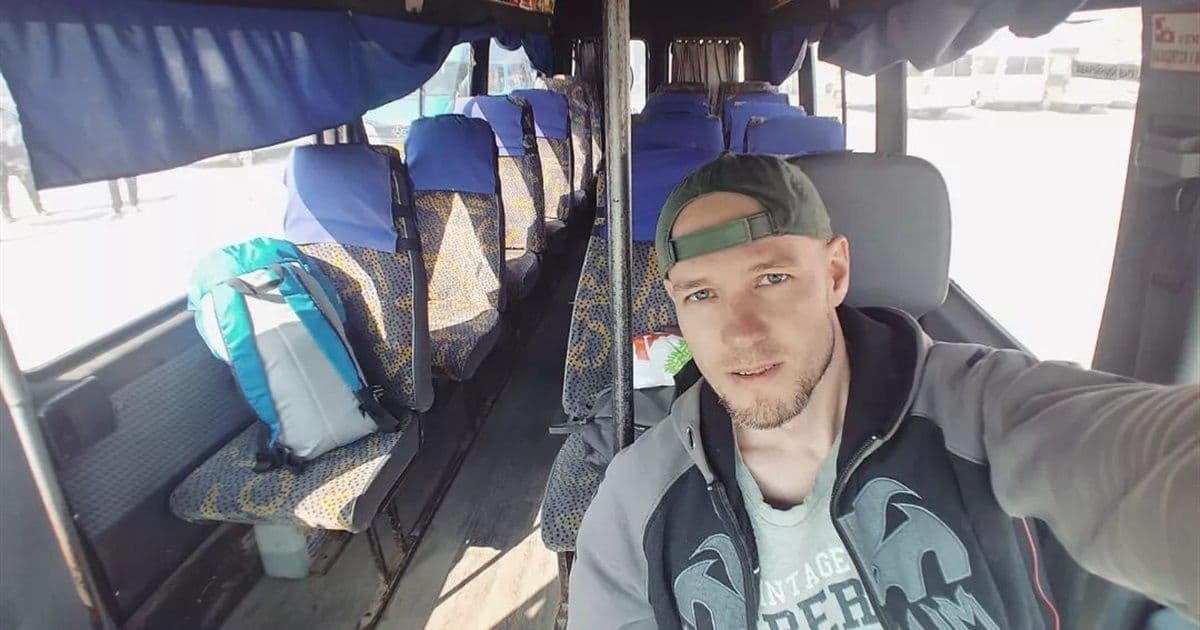
I found guys who transport packages by bus from Yerevan to Rostov. They told me to arrive at the border around 3–4 a.m., at the end of the shift, when the border guards are already tired. I talked them into taking me in their vehicle. They cleared the boxes, I squeezed in among them somehow, and rode like that for 22 hours.
I couldn’t really sleep. The guys played music loudly to stay awake behind the wheel. Smoked constantly. But I’m very glad I went with them, because everything was exactly as they’d said: the girl checking us was sitting there half-asleep, spent about 20 minutes trying to reach her colleague who was supposed to do the additional inspection, but he never came. We were let through. At first I thought this would be the hardest point of my journey, but I was wrong. Ahead of me was the Veselo-Voznesensk checkpoint on the DPR border.
DPR–Mariupol.
I arrived there in the early morning too, hoping they wouldn’t check thoroughly. But they inspected me for an hour. They pored over my passport — you should have seen what it looked like. Checked my phone at length. I was absolutely right to delete everything — I could tell from the tabs that they’d looked through it all. At the end, one of the border guards came up to me and said: “Valeria, you have 2 minutes to tell me the real reason for your trip.” But I kept lying, just as calmly. That’s how I crossed the border.
Next, I was supposed to ride with the volunteer in his car, but he wasn’t free yet. I had to wait for him 4 hours. It was raining hard, and they offered me to come into the Emergency Ministry tent. I saw this scene: 15 beds with soldiers sleeping on them. About 5 more people sitting by a potbelly stove, drinking tea. That’s when my knees buckled. You should have seen these… I can’t even call them faces, these mugs unmarred by intellect. And each one had 2 automatic rifles. I had an absolutely clear understanding: one wrong word, look, or gesture — and they’d shoot me right there. I sat in an empty spot.
One soldier turned to me and asked: “Name?” I gave my name. Then he asked: “Want some tea?” I answered: “No, thank you!” He says: “Here, take it!” — and extends a sticky cup that they’d all already drunk from. I take this cup, thank them, and drink. And tears are welling up inside me.
There was a family from Mariupol sitting there. What they described was horrifying. They’d had to drink water from puddles and catch pigeons, because there was no water or food for a long time. The woman showed me her legs and arms — they weren’t even bruised, just covered in some kind of blood marks. She’d been carrying food, was attacked, and they took it away. I spent 4 hours in this setting until the volunteer came for me.
This was the person who’d found my family. We drove to Mariupol along the Taganrog highway. It’s some kind of road to hell, though it was once a good, straight road. Enormous craters, 5 meters in radius. Along the road — masses of burned cars, military vehicles, random belongings, baby strollers… Apparently, people had been fleeing and were caught in shelling.
Mariupol–Russia.
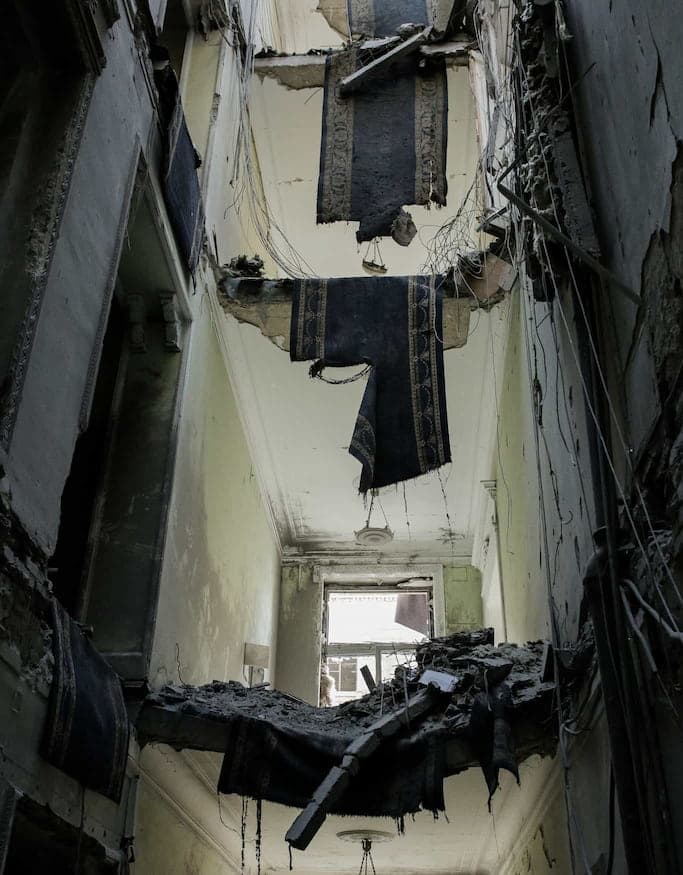
When we arrived in Mariupol, I went straight to my parents. It was a very moving moment — they saw me and burst into tears. I told them we had half an hour to pack. They didn’t argue, went straight to the basement for their things. Meanwhile, I decided to walk with the volunteer to our garage to see what was left of it. Nothing was left — everything had collapsed or burned. And this was the second moment that day when I was truly terrified. You walk and realize that the place where you grew up no longer exists. And you realize just as clearly that you too could cease to exist at any second.
We left Mariupol as a whole family, plus a cat and a dog. We needed to reach the checkpoint. Walking with belongings and animals was impractical, and there were practically no cars left in the city. Dad found an acquaintance whose Moskvitch had miraculously survived, and he promised to drive us in exchange for a chainsaw. In a city where stores don’t work and there’s no electricity, a chainsaw is worth far more than money.
We got through the checkpoint quickly. The only thing they checked was how much money and jewelry we were carrying. That’s apparently how they tried to identify looters. My parents had 13,000 hryvnias, 3 rings, and a chain. Nothing special. Then we transferred to a bus and, along with other refugees, went to a school for “filtration.”
Imagine a crowd — probably 500 people — who’d been sitting in basements for a month and a half without bathing. The smells were nightmarish! Half the people were somehow holding it together, while the other half had simply lost their minds: some talking to themselves, some screaming, some crying. People were confused, exhausted, not knowing where to go. No conditions for sleep. Adults slept on the floor; for the children, we laid jackets on desks, rolled up pants for pillows. The next morning, amid all this madness, young people in “United Russia” hoodies showed up at the school with GoPro cameras. They said they’d come to collect truthful information for Russians. They approached children and asked questions: “How do you feel about the special operation? What were you taught in school about the Great Patriotic War? What do you know about Bandera?” When they came to my sister, I said we wouldn’t be answering this nonsense. I understood these weren’t people who could decide our fate, so I said everything I thought.
At first I thought the word “filtration” was only used by our side, but then it turned out it’s used at the official level. A group of people were loaded onto a bus and taken to the former Interior Ministry building in Donetsk. From the bus, practically under escort, we were led to an assembly hall. There they asked who was going where next. We said we were going to Russia, and they said: “Oh, you’re all such good people!” After that, they started recording our passport data, photographing us from the front and in profile, taking fingerprints of each finger and the entire hand. Then came an interview: where did you work, how much did you earn? My dad is a builder — they asked him: “Why are you leaving? If not you, then who will rebuild the city?” Again they went through the phone, checked everything. After that, they gave us a paper with a DPR stamp.
Russia–Georgia–Spain.
Then there was another checkpoint, already on Russian territory, where all men were detained for about 5 hours. At first I didn’t understand what could take so long there. It turns out that time is needed to “process” people, to convince them to sign refugee status papers. I’d warned Dad and my brother in advance not to sign anything, even at gunpoint. Dad said he needed to consult with the family — they let him and my brother go. But since they’d already stamped us, we got in a taxi and left for Rostov. Rented a hotel so everyone could sleep and shower properly for the first time in ages. I can’t say we felt safe — we were still on Russian territory, and there are people there for whom laws don’t exist. I think the first time we were able to truly breathe freely was on the train from Tbilisi to Batumi.
P.S. “I don’t know if they’ll be able to live as before.”
I gradually learned what they’d been through. The whole time they sat in the basement. They were glad that “they were lucky with their basement” — it was dry and had no rats. There were no periods without shooting at all. But they adapted, knew that in the evening the shooting was less frequent, so they could walk to the store, look for some food, wet wipes that were worth their weight in gold.
Once, Dad and my brother were caught in a Grad strike, but they were lucky. I realized their sense of danger had dulled, and even death had become something ordinary. If they saw a body on the street — they didn’t react, just walked on.
My sister was silent for a long time. I think the first word I heard from her was two days later. Now she’s coming around, but she often has nightmares and reacts very acutely to any loud sounds. I understand that my entire family is deeply traumatized, and I don’t even know if they’ll be able to live as before, after everything that happened to them.
Now they’re in Spain. Thanks to volunteers and the Catholic church, they have housing — each has their own room. My plan for the near future is to find something for everyone to do: school for the kids, work for the parents, so they can adapt faster and stop living in the past.
Many people don’t understand that you need to get out of Mariupol by any means possible, and surviving there is difficult. How long a person can last in unsanitary conditions, without water — I don’t know. In the groups searching for relatives, I more and more often read: “Stop search. Deceased.” When I hear that Mariupol will be rebuilt, I don’t believe it. There’s nothing left there that can be rebuilt.