Instagram Post Text
Attention! Translation was done using AI, mistakes are possible
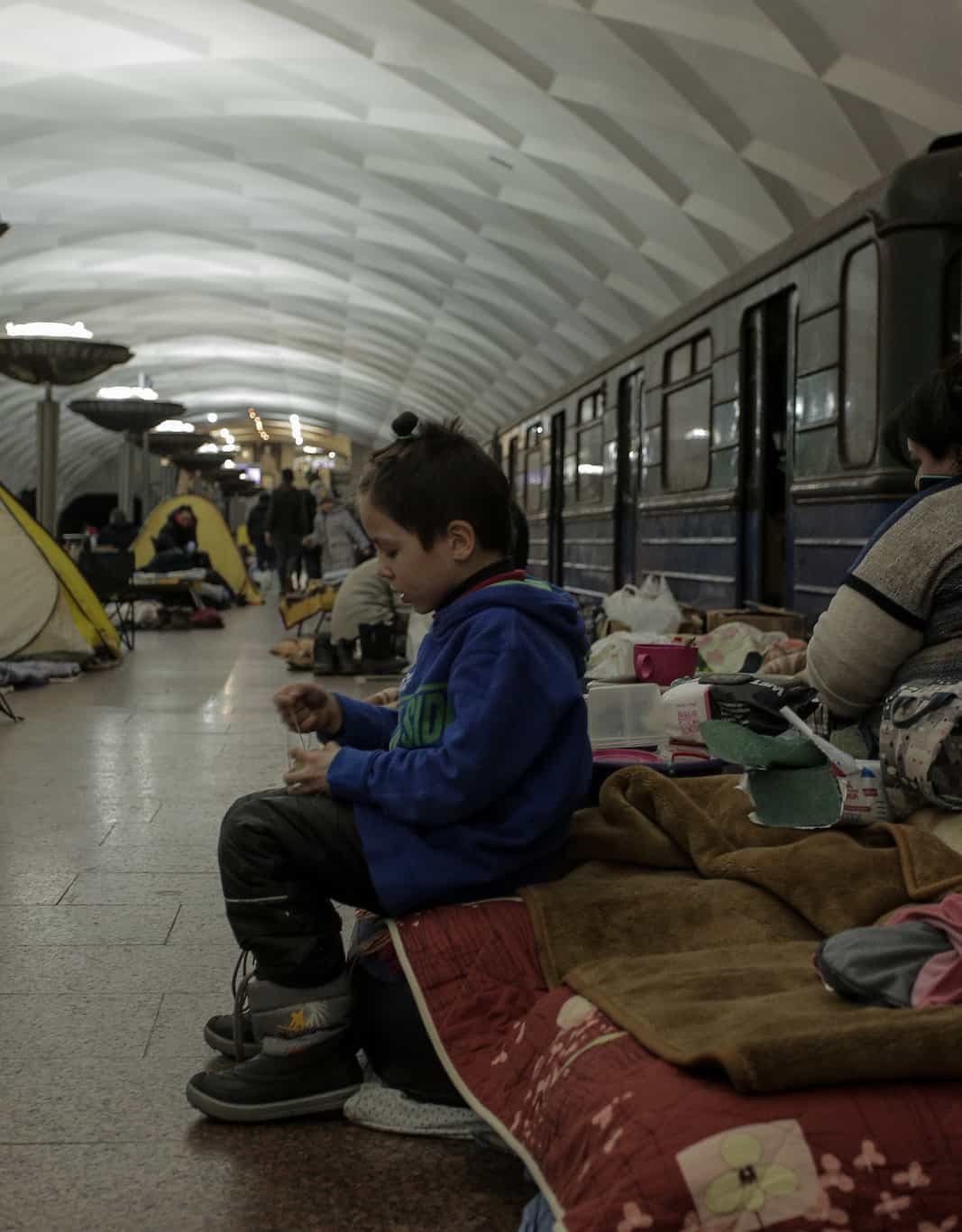
First we hid in the Builders' Community Center, until they bombed it. We were moved to the city council building, closer to Azovstal. We stayed there too, until the Russians came and shot up the building from tanks and APCs. After that, we hid in the basements of neighboring apartment buildings.
We had no water. We took turns, running to Azovstal every other day. There was a bread factory there, and next to it were water containers.
Around March 25, my daughters went for water there again. And they didn’t come back. My wife and I started searching — they were nowhere to be found. I ran all over the area. We ran around, searched every house, every basement, asked everyone.
That spot was an open area, a clear field of fire. What was happening there was horrific — so many corpses. It felt like they waited for people to gather for water and then shelled them.
We searched for them for three or four days, I think — I can’t even remember clearly anymore, maybe longer. There was hysteria — my wife was hysterical too. It’s horror; you can’t convey it.
Sleep was already impossible, and then this. At least before, there’d sometimes be a lull at night — you could doze for an hour or two. But after this, sleep vanished entirely.
Then we managed to charge a phone, and an SMS came from Mariana: “Dad, we’re at Azovstal.” That was euphoria — thank God, the children are alive. We had hope that they’d be evacuated from there through the green corridors for civilians.
It turned out that when the girls went for water, heavy shelling began. They scattered in the chaos, and my daughters ran to Azovstal.
My wife and I couldn’t get to them. The shelling was heavy and frequent. Military vehicles started driving around: Z-marked cars, APCs, tanks, infantry fighting vehicles.
At Azovstal, they had a connection. When our Kyivstar network was working — if you climbed onto a certain building, for example — a text from the daughters would come through. Roughly once a day, once every two days.
They’d tell us everything was fine, they had everything, there was food. That they were safe, under protection. As for what was happening outside — they didn’t need to tell us, we were practically right next to them, saw and heard everything.
Azovstal was being shelled extremely heavily. Every bomb felt like a blow to my heart — I felt it all. Not just me — my wife the same.
We waited for them to be evacuated. We had information that the UN and the Red Cross were supposed to get them out of Azovstal and to Zaporizhzhia.
On May 1, they were taken out through a humanitarian corridor. We didn’t know — there was no connection anymore. Then we got a bit of internet and saw in the news how they were being led out of Azovstal. They were in the photos.
They were taken toward the “DPR,” to the village of Bezimenne. We could tell from the photos of tents and Russian soldiers with white armbands that it was a DPR filtration center.
We had hoped they’d be taken to Zaporizhzhia, to the Ukrainian side — not to the “DPR.” It turns out the UN and the Red Cross either lied or were forced to take them there (some people were indeed taken to Zaporizhzhia, but the rest were sent to the “DPR” — S.P.).
The next day, “DPR” representatives called from the filtration center. They told us to come and pick up our younger daughter. They gave us 24 hours.
She’s 16 years old. They said if we didn’t come for her, she’d be sent to an orphanage in an unknown direction. I started asking them questions about what was happening with the children there — nobody explained anything.
We raced there by car and arrived the next day. Our younger daughter told us they’d gone through filtration, been assigned to tents, and at 9 p.m. soldiers came and took Mariana away to Donetsk.
They didn’t even let them say goodbye — nothing. Our younger daughter fought, tried to do something. The sisters were simply torn apart.
Our younger daughter didn’t know much of anything. Later they told us: wait a week, she’ll be brought back. We stayed in the camp. We went to everyone, pestered them — no use.
They’d answer: “We don’t know anything. She’ll be brought back.” That was their one answer. We talked to colonels, lieutenant colonels, captains. We approached everyone, asked everyone.
There were many people there like us. Some were told they wouldn’t be released for a month, or two.
From the conversations, we realized there was no point waiting there. We decided to leave and try knocking on other doors.
Ten days later, we were on the road and started calling, writing everywhere we could. We contacted the Joint Center for Prisoners in Kyiv, wrote letters to the president, to the SBU, to the Ukrainian Ministry of Internal Affairs (Mariana serves in the police — S.P.), to the International and Russian Red Cross, to the UN. Our letters are in Geneva — everywhere. We keep doing this to this day. Writing, calling, asking.
We learned that Mariana was transferred from Donetsk to Olenivka. Girls who’d been held with her get released and call us.
They can’t say much about her, but their messages give us strength. They say she manages to help people even there. Knowing her, I have no doubt: she’d give away the last thing she has.
We know that as of now, our daughter has fallen ill there. The girls said she was lying down and complaining of back pain.
You’d never hear something like that from her — it must be really bad if she told someone she was hurting. Most likely something happened in captivity; she didn’t have that problem at home.
We think she was taken because she worked for the police. She’d only just started — after graduating, she’d been working for a few months.
She’s a fighter for justice — it’s been that way since childhood. After sixth or seventh grade, I think, she developed a desire to work in law enforcement, to help people.
I feel pride that I have a child like this. And I will always feel pride for her.
At work, she dealt with troubled people. She always tried to talk to them.
First and foremost, she is my child. This is all so hard. It affects our communication as a family, our health, everything — my wife, our younger daughter.
We try to somehow overcome this, we support each other — nothing helps. Nobody sleeps at night. Everyone worries, waiting for an exchange. For when she’ll be freed.