Back
Our house in Kherson still stands — that gives us strength. The house in Abkhazia — nothing’s left but the foundation
The story of a Ukrainian woman and a Georgian man who 30 years ago fled the war in Abkhazia and now flee the war in Ukraine
Tetiana Kviraia is a Ukrainian woman who in Soviet times moved to Abkhazia, her husband Zauri’s homeland. They survived two wars and were twice forced to flee their home. In September 1993, they left Abkhazia along with thousands of refugees, and shortly after moved to Ukraine. In the spring of 2022, they decided to leave Kherson, and through Odesa and Chișinău arrived in Tbilisi. The couple hoped it would be easy to settle there, but problems arose: Zauri was denied citizenship, and they had no acquaintances or relatives left. Tetiana and Zauri are being helped by charitable foundations.
Interview
Transcript
Transcript
Attention! Translation was done using AI, mistakes are possible
ТК: Татьяна Квирая
ЗК: Заури Квирая
АП: Анна Pavlova
АП: To start, please introduce yourself. Tell us your name, where you worked or... As I understand, you're not working now?
ТК: Haven't for a long time.
АП: How can we introduce you? And where are you from? And where do you live now?
ТК: I am Tatьяна Квирaya. Currently we are in Georgia, in the city of Tbilisi. We came here, to Georgia, on April 25, 2022, last year, from the city of Kherson, from Ukraine, where we had lived since 1994. Before 1994 we lived here, in Abkhazia, in Georgia. Should I say more details?
АП: Where did you work? Or how can we introduce you? What did you do?
ТК: Worked in general or in recent years?
АП: Well, both in general and in recent years.
ТК: Well, in general my husband and I graduated from Kherson Industrial Institute, worked as engineers at a cotton mill after graduating from the institute. In Abkhazia I worked at "Gruzagrostroi construction trust" until [19]93. After the military actions we left for Ukraine, to Kherson. In Kherson we were engaged in family business - car repair. My husband did the main work, and I did the paperwork, so to speak, bookkeeping. That's the kind of work we did.
АП: And you had a business before the start of the war?
ТК: Yes, that kind of... business, such a family affair. We earned money for living in our own yard, so to speak, for existence, for survival.
АП: If I understand correctly, you moved, ended up now in Tbilisi also together with your husband?
ТК: Together with my husband. Our family - it's just the two of us, my husband and I. We don't have children, never had any. Relatives either. He was taken for upbringing. I was in a family. My parents were there. And I had a blood brother, but he also died in 2017. Now I'm alone too. And my husband is alone. Now there are two of us.
АП: You have very difficult experience, as I understand. This war is not the first in your life. I would like to talk more in detail about the first war - in Abkhazia. But in order to start talking about this, we need to understand how you ended up in Abkhazia. Am I correct in understanding that you yourself are Ukrainian?
ТК: I'll explain to you now. I'm Ukrainian, born in Kherson Oblast, in a village, my parents lived there. And after finishing school I entered the industrial institute. My husband is from Abkhazia, from Georgia. And he came there, to Ukraine, to that same city of Kherson, and there he studied at the institute. We met, already being students, in the first year. For five years we studied together, same specialty, and after... well, we were friends, so to speak, communicated. And in the last year of institute we got married, concluded marriage, since there was already job assignment and [graduates] were leaving the city of Kherson. And then we went to them. He went to his homeland, to Abkhazia. And I went, of course, with him. We were already married. We went from Kherson to Abkhazia in 1982.
АП: So you went to Abkhazia because your studies simply ended? Or there was a job assignment there?
ТК: Yes, studies ended, of course. We got education, and he... we chose Abkhazia.
АП: And why did you decide to go there?
ТК: We didn't decide. That's his homeland. He was returning there, naturally, he had a house there. That's how it was. This was a decision because of the house, mother, homeland. And he was going there, and I, of course, went with my husband. We went together, of course.
АП: What were your impressions when you arrived in a different place?
ТК: Oh, of course, good ones. Well, Abkhazia is known to everyone. Paradise on earth in terms of climate. Of course, I liked everything. It was comfortable for me there. Those were still Soviet Union times. Paperwork there was in Russian, in this autonomous republic. For work and for living it was comfortable for me. At that time, when we had this country, this was still [19]82, the Soviet Union hadn't collapsed yet, it was comfortable for me. We lived in my husband's house until [19]93. Well, can we move on to the events of the war, yes? This is what interests you?
АП: Well yes. I would just like to understand what your general feelings about the country were, your impressions from moving.
ТК: The impressions were wonderful, because, as I said, the main thing was that paperwork was in Russian. This was a construction trust. The collective was united, people were friendly. In the collective there were people of different nationalities, as in Abkhazia: Russians, and Armenians, and Georgians, and Abkhazians. Well, it was very comfortable, both in terms of work and communication.
АП: The move wasn't stressful for you, one could say?
ТК: No, no. Then - no. Youth and, again, the country, a hospitable country, especially in terms of living and climate.
АП: And what city did you live in?
ТК: Ochamchira. Abkhazia, the city of Ochamchira. In the collective there were women - both an accountant, and in the estimate-design department there was a Russian girl. In general it was also comfortable for me in terms of communication. Well and the guys-foremen were of different nationalities. It was comfortable. The attitude was also friendly. In this regard everything was good.
No one expected that outsiders, third forces could interfere - these were provocative actions - and in such a multinational republic provoke a conflict. Well, specialist-provocateurs did their work. Because in Abkhazia there were joint, families, mixed marriages. That's what was very painful. In one family the husband is Abkhazian, the wife is Georgian. The other way around - the wife is Georgian, the husband is Abkhazian. Armenians. There were mixed marriages. And still a conflict was provoked.
АП: Let's move on to this. Please tell us in more detail when this happened. What was happening? How do you remember those days?
ТК: Those days... This was... Why am I sure that these were provocations? Because... I'm Ukrainian and communicated with both Georgians and Abkhazians. And female friends came to me. For example, an Abkhazian female friend comes and says: "You know, on August 14 Georgians are supposed to attack us and slaughter us." This is what the Abkhazian says. Right there, let's say, a Georgian woman comes to me and also: "Abkhazians are supposed to attack us on August 14 and slaughter us."
That is, provocateurs were working, as I'm saying, who were pitting these two nations against each other: they scared Abkhazians that Georgians would slaughter them, and they scared Georgians that Abkhazians would slaughter them. You understand, that's how it was. I felt this because I was a third nationality and communicated with both those and those. There were provocations. Well, that's how it was.
АП: How did that war begin for you?
ТК: This was spring of ninety... Oh, now. The year? [19]92, yes? It was starting... Well yes, before this in 1989 we had in Ochamchira a small conflict. There was even shooting there. But then still - this is [19]89 - apparently the country's security service still worked, and this conflict was suppressed. It lasted, maybe, ten days. This was in 1989. And when the time of the Union's collapse was approaching... In 1991 the Union had already collapsed, this treaty on the Soviet Union's dissolution had already been signed.
АП: Yes.
ТК: And the conflict in Abkhazia began in August, August 17 [19]92. The conflict itself, the armed shootout itself in the city of Sukhumi, on the approaches to Sukhumi. I remember this very well.
Well wait. Here my husband is sitting and interrupting me. I remember this because my husband ended up in July [19]92... we were lying in the hospital, and they performed surgery on him. We called a neurosurgeon from Tbilisi, he flew in by helicopter for one day, performed surgery on my husband. And right then the clash began, the shootout in Sukhumi. And it was problematic for me to get medications, medicines that are necessary after surgery.
АП: And you had to get them in Sukhumi? Or was your husband in a hospital in Sukhumi?
ТК: My husband was in Sukhumi, because this was surgery. A wound, this was a hand wound. They saved his hand then for the first time. He had already received a bullet wound.
АП: Wait, so your husband had a wound as a result of this conflict?
ТК: Well yes.
АП: And how did he get it?
ТК: Well, this will take a lot of time. There in July shootouts were already beginning, and so he got hit...
АП: By accident? Or how did it happen?
ТК: Well how by accident? When shootouts were beginning, then men went out to the outskirts of the city, defended themselves, because wives and children were in the city. You understand? Of course. That's how he got this wound.
АП: So in the summer of 92 he went...
ТК: Yes, this was the end of July 92, 1992. As I'm saying, we have very interesting long stories, this can take a lot of time.
АП: Well that's fine, we'll talk.
ТК: I'm trying to go chronologically and speak briefly.
АП: Don't worry. If anything, I'll stop you. Here some details are very important. So your husband, when shootouts began, he in his city went out... What was this? Something like, as now territorial defense, yes? Something like that?
ТК: Well, something like that, yes.
АП: And he received a wound in his hand?
ТК: And received a wound in his hand, yes.
АП: And a [surgeon] came to operate on him...
ТК: And they took him, of course, to Sukhumi. An artery was severed, a microsurgeon was needed. And we called... Well, they cut from his leg... Here he [husband] speaks very detailed, and I'm omitting this, details of the operation.
АП: That's fine.
ТК: We called a neurosurgeon from Tbilisi, he flew in and performed this complex operation. I remember this, these events, because there was already shooting in the city. I went out into the city, where there were already both battles and looting. I was forced to look [for medicines] in pharmacies. Pharmacies as such existed, there was already no pharmacist there. Stores were already being ransacked there, pharmacies were being ransacked.
I remember that I entered some pharmacy, the door was open. I was oriented in medicines and knew. And, I remember, I entered the pharmacy and chose the medicine he needed on the shelf. There came out... And fortunately, luckily, there came out, at this time the pharmacy manager happened to be there, a man, because I was missing one medicine there. And he directed me to a house directly. He says: "Go to the house, my woman-pharmacist lives there." Some scarce medicines were already being removed from pharmacies, because looting was going on, they stored them at home.
I remember these events. These are stressful events. It was already scary to move around the city. But then there were predictable shootouts, automatic weapons, unlike those that are now in Kherson. In Kherson now there are shells - when will something fly in? Well, by the way. Well, then [in Abkhazia], in the 90s, then there were automatic weapons shootouts, and there it was more predictable. You could see the dangerous object. It was possible to move around, to hide in a building somewhere. That's how it was.
And he was in the hospital. And I was also there, probably five days with him, fearing... And Ochamchira, our city, is 55 kilometers, and there too shootouts were already going on.
АП: From Sukhumi?
ТК: From Sukhumi, yes. There too later I was forced to leave him in the hospital for further treatment. Buses ran very rarely, but I went home, because I had come for one hour to the hospital in Sukhumi, but it turned out that I needed to... Due to such sudden unfolding of actions I was delayed for five days. I needed to bring some clothes, little things [to bring], go home. And there I waited for him.
Why do I remember all these dates? My birthday is August 22. That is, on the 17th they performed surgery on him - I remember this - and on August 22 I was riding in a bus.
АП: On your birthday?
ТК: On my birthday. Well, that's why this was remembered. And then I waited for him. Then the guys brought him after... Well, I don't remember when this was already. Of course, all this was remembered. And then we were already in Ochamchira.
АП: You lived in an absolutely, generally speaking, prosperous country...
ТК: Yes.
АП: And suddenly shootouts begin on the streets, suddenly some completely incomprehensible situation begins. Your husband is forced to go defend the city. What were your first thoughts then? How did you generally adapt to this, if one can say so?
ТК: Yes of course, we didn't adapt, but... I then fulfilled tasks that were clear to me - there, to get medicines. Right? You know, well, impressions... Ah, yes, here's one moment. This was wildness in Sukhumi. I'll tell you this moment.
Complete wildness in Sukhumi, what seemed to me... We were in the hospital, right? And the conflict began in the city. And August 17 - this is the height of the season. This is the sea, Sukhumi, Abkhazia.
АП: Tourist season? Well, vacation.
ТК: This is the beach, yes. People were on the beach. And I remembered... And to this day I have this file in my head, when they bring a girl to our hospital, they wounded her in the leg, I think, and she's in a swimsuit, that is, from the beach. And this impressed me so much! You understand? People were vacationing. If we, locals, somewhere saw some movements about some, maybe, unhealthy situation, then they - visitors, vacationers - didn't suspect anything at all. And here a person was lying on the beach - and suddenly this. Somewhere some automatic or machine gun burst, somehow this hit them. And they bring her to the hospital. And this file is still in my head to this day.
That is, impressions, of course, were... Here's how I reason: since my brain kept this file like this...
АП: Remembered? Imprinted?
ТК: Remembered, yes. This was, of course, abnormal, unnatural. Violence, which, of course... Well, there was both fear, and... You ask about impressions, but describing them in words... describing them in words is difficult. This needs only to be felt, sort of. It's impossible to describe this, it's so unnatural, unnatural. Especially I'm generally against any violence, this outrages me - not only that I specifically found myself in this situation, but it outrages me that people can't live in peace, when it's possible to live in peace.
Even describing this in words is difficult for me, it so... well, outrages me - this is even putting it mildly. This is difficult to describe with some word.
АП: And do you remember the moment when your husband told you that he's going to defend the city? How was this in general?
ТК: I may not remember the moment. I know that, first of all, he got in our car and left. And that car then disappeared there. Somewhere outside the city it was left, then it disappeared. That's what I remembered. He took the car. I was against it, I say: "Leave the car," because I already knew that it could get lost, and this is still a means of transportation after all.
АП: This was your personal, family car, yes?
ТК: Yes, personal car. This also was remembered by me a little, that I was against it. He got in the car and left. Well, of course, I didn't let him go. These are already our personal relations, family ones. I didn't let him go, because... well, dangerous. I was against it, against it, because we didn't have children either. He's alone, I'm alone. We held onto each other and hold onto each other. Of course, I was against it.
Well, he's such a person - how to say? - who thinks about everyone. He then, when we were leaving, even on the last day he left to save and lead out Sukhumi refugees. Through the sea, through mountains he led them out. And I here, in Ochamchira, was closer to Zugdidi, to the border of Georgia, and I left alone on the last day.
АП: You mean when you already decided to leave?
ТК: A year, a whole year the war went on. I'm just adding that then too he left, thinking about people, about women, about children, about everyone, that [they] need to be protected. Yes, he left, left home, I couldn't stop him.
АП: Now we'll get to this too. I just want to pause here a bit so we don't forget about this. So on the day when you decided that you're leaving Abkhazia, you gathered to leave, but your husband decided that first more vulnerable people need to be taken out?
ТК: Well yes. I just jumped ahead a year now. You said... Well let's go to the beginning. At the beginning it was the same.
АП: How did you live through this year before making the decision to leave?
ТК: I stayed, of course, in my house - we stayed. I again emphasize, already comparing two wars: then the war was mainly [at positions]. The guys went out to positions outside the city after all, and mainly they conducted shootouts at positions with automatic weapons, firearms. And shells on the city at that time, in the 90s... Well, there were. There was an aerial bomb, there were "Grads" [editor's note: multiple rocket launcher system], and planes dropped cluster bombs, but this was very rare, not every day. Unlike what's happening now. In Ukraine there are mainly artillery shootouts, that is, they throw shells. Then there the danger was mainly at positions outside the city, well, the main danger.
And, of course, I didn't want to leave the house. I was in the city almost the whole year. But when there were dangerous days, let's say, "Grad" shelled, then I, of course, on those days went to Zugdidi, still left the city.
АП: And was it safe there?
ТК: There? Yes. In Georgia it was already absolutely safe. I left, lived somewhere at acquaintances' for a week, it happened. Then returned to Ochamchira again.
АП: And did your husband stay in the city all this time?
ТК: And my husband, yes, and the guys. They still guarded [the city], because already from the forest hostile, let's say, detachments were coming to the city. From the sea ships approached... How to call them correctly? I don't know. Well, let's say - ships. From the sea - ships. They landed troops, they could also enter the city. Well and they [husband and other volunteers], of course, shielded the city from them entering there.
Because when hostile [detachments] already entered the city, entered villages... Well how to say? Well, enemies. Or how to call this already? Well, that side. Then, of course, the population suffered. They raped women and killed old people. This war is also described. The population suffered.
АП: And all this time your husband was in some...
ТК: He was at positions, yes, all the time.
АП: And what was this? Was this some volunteer militia?
ТК: This was volunteer [militia]. He [husband] says - yes. Mainly - yes. But then it was a little organizational, because later there were headquarters, they already somehow formed them by lists, recorded them. Already the Georgian government recorded, apparently, the lists.
АП: I understood you. How did you come to the decision that you need to leave?
ТК: And there it was unambiguous. September 27, 1993 - active artillery shelling from that side began, from the Sukhumi side. "Grads" were already shooting, active artillery shelling of the city was going on. And it was clear that we need to leave. Territory clearing began. And people actively left Sukhumi. Through the pass, through mountains people left, by sea they left, not even by highway.
And from the city of Ochamchira we walked already on foot to Zugdidi along the highway. I got up from bed. I went to sleep, I think, at twelve at night. But the "Grad" shelling was so intense that we were forced to get up and leave. And we walked on foot, because we didn't have our own car anymore. Well, my neighbor there took me about thirty kilometers... Although to Zugdidi it's fifty-five, yes? They drove me a bit.
And my husband wasn't nearby then, he was leading out refugees who were leaving from Sukhumi to Varchi. He says it's a village or settlement Varcha. I left all night to Zugdidi with one bag. But I was already cautious, of course, I took all documents. I always had all documents folded in a bag.
Well, this was an "Iron Stream" [editor's note: reference to a Soviet film about mass refugee movement]. I also remember this day, this highway. Later they said that 300 thousand people were leaving. And along the highway people walked, led animals. It was scary. I remember, one mother was fussing, running along the highway - she lost a child. Her lamentations, for some reason I remembered this picture so. This was also terrible. There was a film, I remember, "Iron Stream." That's why I call it that - "Iron Stream." When these thousands of refugees, many thousands passed, the highway was filled, we all walked.
АП: And did you have some agreement with your husband about where you meet?
ТК: No, there was no agreement. Then there were no phones, nothing. I remember, already when I approached the edge... There's Inguri, a river, it separates Abkhazia... well, the Abkhazian border and Georgian. I crossed to the Inguri shore and right there near the bridge I sat down, because everyone passed through there. There any person could see another person. This was a bridge.
АП: So a meeting place like that?
ТК: Well, this was predictable. There's a narrow bridge...
АП: And everyone passes through it?
ТК: One lane wide, yes. How much there? Six-seven, well, eight meters wide. There everyone could see each other.
АП: So this was the only exit?
ТК: Yes, this was the only exit from Abkhazia to Georgia. And I sat down. There are such posts that separate this road. There, I remember, I sat on a stone like that. I knew that somewhere he'll still pass here, along this highway.
АП: Did you wait long?
ТК: I don't remember this file well somehow. Apparently, everything was so stressful...
АП: How weren't you afraid to go without agreeing with your husband? You say that you're always together.
ТК: No, I wasn't afraid, I wasn't afraid at all. Well, I was 36 years old, young. And, you know, in stress a person concentrates. These emotions are all difficult to explain. Now when I talk with psychologists, they say that the organism itself puts up protection, the organism concentrates. And you do what [is needed] at this moment. It's like at funerals. I buried my parents. At that moment you concentrate. And what you now have to do in these half-day, in a day - that's what a person does. And apparently doesn't think about anything else. On autopilot, everything on autopilot. Everything on autopilot and compressed, like a spring. And then a person... Well, I'm talking about personal feelings.
АП: And why were you sure that your husband would also decide to leave?
ТК: Everyone was leaving. They didn't stay there, no one stayed there. Especially the Georgian population, they all left. And later even - well, this is from stories - whoever stayed, [they] finished them off. It happened that they finished off old people too, and killed them. We know about one of our neighbors, he was already elderly, and he stayed... Well, the surname... Well, let's say Zhora Gandeliani (unclear - ed. note), yes. He stayed home. Well, still it was hard for old people to leave the house, now I understand them. He thought: "I'll guard," well, the house. Well, they killed him. This is what we know.
АП: This was already after you left?
ТК: Yes, after we left. Already communicating much later, [discussing] who saw whom, in the city here already, in Georgia, in Zugdidi. In Zugdidi we then stayed until February [19]94.
АП: When you were leaving, did you think about the fact that you would never return to the house again?
ТК: Of course not. Everyone waited that they would leave and return right away, in two-three months. At that moment this was the first armed conflict in post-Soviet republics. This was both strange and wild. And, of course, no one thought that the house would have to be left forever. They didn't understand that politics yet, so to speak, world politics, at all. We thought - conflict and conflict. A conflict, we thought, truly local. But it turned out that this was also geopolitics.
АП: Am I correct in understanding that before leaving you didn't even especially discuss in the family with your husband that this needs to be done? This somehow happened by itself? You didn't have any doubts - to leave, not to leave?
ТК: No, we left, because it was scary. As I'm saying, there was shelling.
АП: Yes-yes, I understand. But did you somehow discuss this with each other?
ТК: In what sense?
АП: Before deciding to leave, did you discuss that this is necessary to do? Or was this a natural decision that didn't even need to be discussed?
ТК: This was natural, wasn't even a decision... for a person to leave from death, from mortal danger, because there was shelling. This was visible, this was audible. And that's it - a person gets up and leaves. Everyone was saving themselves at that moment.
АП: Let's move to the moment when you met on the bridge. I understand that you still met?
ТК: Yes, yes, yes.
АП: And you went further into Georgia, into this border city?
ТК: We went into Georgia. Still this is a small country. There were acquaintances, many acquaintances. We stayed with acquaintances, lived a month. Then - with others. Well, there, in Zugdidi.
АП: And in February you decided to move further?
ТК: In February - of course. In Georgia there was such devastation! These are the [19]90s. We were in Zugdidi. There wasn't even electricity at that time, I remember. There were wood stoves. Fortunately, winters are warm here. Somewhere you'd bake something on a wood stove, some bread. Well, and with food... Here's a southern country, corn flour, you cook mamaligu [editor's note: traditional Georgian corn porridge], bake bread, drink tea.
Well, people survived. There was no work here. Refugees who also came out of Abkhazia, they occupied places in hotels, in schools. Some abandoned buildings - refugees settled there. There weren't conditions for comfortable living there, of course. I remember, I'd go into some school, into a classroom - and there were thirty people there, children. Well, there weren't living conditions.
And since we studied in Kherson, and my parents were there, in Ukraine, in Kherson Oblast, in a village, then we, of course, decided to go there, to Ukraine.
АП: Let's move to the Ukrainian stage of life. You came there after ten years, even more, after leaving?
ТК: I personally - yes. Twelve [years].
АП: How did your life work out there?
ТК: Well, of course, it was hard, very hard in all respects. There too in the 90s, as everywhere, apparently, in all post-Soviet republics, the economy was at a very low level, there wasn't much work. My parents lived in a village. In the village too there were no prospects and work for young people. And we decided to go to the regional city with him [with husband], since he could do something with his hands.
АП: To Kherson?
ТК: To Kherson, yes. He mastered a craft. Besides our educations, he mastered a craft, was a gas welder. And we decided, like many others, to earn money for housing with our labor, craft, so to speak, services for the population: gas welding, painting, such things. And we rented an apartment in the city of Kherson with a garage.
There were bureaucratic complex problems for us there. We got up and left at twelve at night in Ochamchira, that is, passports were, of course, not deregistered. Well, place of residence - remember how it used to be? You had to deregister, deregister your passport, and then move to another city, to another country. We took documents and didn't deregister, nothing. What deregistration at twelve at night and at all in those conditions?
When we came to the passport department to register, they suggested to us: "You must deregister from your previous place of residence." When I started saying: "But we're from Abkhazia. Deregister? It's impossible to return there. There even passport offices don't work anymore," then the employee and officer of the Ministry of Internal Affairs here already, in Ukraine, says: "Don't tell me fairy tales." That is, that conflict hadn't been covered yet in mass media especially, nothing...
АП: So they didn't believe you that there really was a war going on?
ТК: Yes, they didn't even believe me. As I remember now, he said: "Don't tell me fairy tales."
АП: Unbelievable...
ТК: We had serious problems with documents. Since we studied in Kherson, we started looking for former students... How is this?
АП: Classmates?
ТК: Classmates, yes. Somewhere someone somehow there, in some emigration structures, somewhere some acquaintances [we started looking for], so they would at least believe us and help us. Then they suggested to us: "You have to arrange all this through court, register through court." Well, these are nuances. This is already when getting citizenship. Here we were only registering.
АП: And what did you answer to that Ministry of Internal Affairs officer when he told you that?
ТК: Well, I told the truth, and that's it. What could I say? What could I answer? I don't remember exactly now, not all files are remembered. Well, apparently I said that that's how it was, there was a conflict.
АП: But it was offensive when he said that to you?
ТК: Yes of course, offensive and painful. I was surprised that people don't know. Well, then there was only television, and they didn't tell about it on television. These are the rights of TV channels, right? This wasn't covered, apparently.
АП: Am I correct in understanding that there were few refugees from Abkhazia in Ukraine, victims of that war?
ТК: There weren't any, I think, at all. Specifically in Kherson - yes. Mainly refugees from Abkhazia went to Russia, to Moscow. They mainly went to trade, engage in commerce. And they made more progress on this, of course, than we did with manual labor. My husband was against standing at the market and trading.
АП: Why?
ТК: Well, I don't know. This is purely psychological, apparently, unpleasant for him. Because we worked, so to speak, in organizations. I worked a little at a bank, and at a construction organization. We worked intellectually, and here suddenly to stand at the market. Well, this was... He wouldn't have stood at all. I maybe would have even agreed.
АП: And did you have an option to go to Moscow, for example? Did you think about this?
ТК: We could have gone, but no, we didn't go. Also purely psychological. Because the provocateurs - this was a third party, the KGB.
АП: You mean that Russia also took part in [the conflict]?
ТК: In the provocation... Troops landed in Ochamchira, ships were from Sevastopol. I worked in the personnel department. There were about two percent Abkhazians in Abkhazia, maybe five-six percent, very few. And there were surnames... Well, let's say, Ukrainian surname Solomka, as I remember now, and it's written: Abkhazian. And this is a purely Ukrainian surname. I communicated with him. He's also a descendant, his grandfather and grandmother are from Ukraine. Registered as Abkhazian. That is, there were few Abkhazians. Where did they suddenly get weapons, planes, "Grads"? I won't speculate, but the answer is obvious.
АП: Let's return to the Ukrainian part of your life. You had serious problems with documents, but somehow you still managed to prove?
ТК: Yes, we found a person from the passport office, and she told us: "You can only do all this through court." We initially arranged temporary residence permits there, they put stamps on us, just temporary registration. Still we put them, because it was still necessary to provide this at the clinic, there, where we already worked, we registered at the tax office. Still some registration had to be. She put temporary registration on us.
And residence permits - we already litigated. They explained to us: "You automatically accepted Georgian citizenship." We came in [19]94, in February, to Ukraine. The law on Georgian citizenship - this was April [19]93. And we were [during the adoption of the citizenship law] in Abkhazia, in Georgia. When the Soviet Union was collapsing, then those who were in a specific republic, they automatically accepted citizenship of Kazakhstan, citizenship of Ukraine, citizenship of Russia [and other countries]. We automatically accepted Georgian citizenship. They said: "You are citizens of Georgia automatically." And I had to go through court. They needed a paper, such a certificate that we didn't accept, or something [citizenship]. I already forgot the purely legal nuances. The correct formulation should have been and grounds for them to then give us residence permits.
АП: Ukrainian?
ТК: Well, these are legal questions. I can say in two words. I went through even these court and paper complications, bureaucracy. This continued for about six years. Only in 2000 they issued me a Ukrainian passport.
АП: Unbelievable!
ТК: Yes, yes.
АП: So until then you were a Georgian citizen with a residence permit in Ukraine?
ТК: Yes, with temporary. With registration even, I would say. These are purely legal, purely paper matters, bureaucracy... I had to go through this. I was nervous, of course, because it was necessary to look for acquaintances, in whose house one could register. And people were wary of this: "Oh, you might claim this housing [will]..." Well, many nuances.
АП: This considering that you yourself are from Ukraine, were born there?
ТК: Yes.
АП: Were there any questions toward you as refugees? Did you discuss with anyone, with acquaintances, with friends, the war, your status?
ТК: Yes. Look, there was such a nuance. You asked a question, I remembered.
Here was such a nuance. When we came to Kherson, we went to the regional administration - well, the house, so to speak, white, which dealt with... Well, you understood, in Russia now these are called "governors"...
АП: Well, some administration, yes?
ТК: Yes, this is administration that deals with all this arrangement. And there was a department, I don't remember what it was correctly called. They dealt with refugees. Because refugees weren't only from Abkhazia, there were refugees at that time from different countries: Afghanistan, something there... Here was some department...
ЗК: There was Transnistria...
ТК: Transnistria. There was a refugee department. We entered that department, I remember, there were two men there, two bureaucrats. And when we started saying that we're from Abkhazia. They told us, I clearly remembered the words, they said: "We won't arrange documents for you in Ukraine. You are refugees for Georgia." Here. "Go to Georgia, and there they can give you refugee status. Ukraine won't give you refugee status." Because Abkhazia was part of Georgia.
ЗК: "You," he says, "are refugees for Georgia."
ТК: For Georgia, well correct. Yes, here those who stayed here, in Georgia, they still have refugee status to this day - people from Abkhazia.
АП: And in the end you didn't receive refugee status in Ukraine?
ТК: We didn't get anything there, no. We started arranging residence permits, and then already, after six years, I decided to take Ukrainian citizenship. But we lived there (unintelligible)...
АП: And did your husband also get citizenship?
ТК: My husband also took citizenship later, in 2006 even.
АП: Wow. ТК: In 2006 you got it. I deal with documents a lot here, I remember all the dates.
АП: On a daily level, did your refugee status, the fact that you moved, affect your relationships with people? Did any acquaintances, ordinary people, not officials, say anything to you about the fact that you came?
ТК: We rented an apartment there in the private sector, took care of our business in our private yard. We rented a house and garage. I'm Ukrainian, he's Russian-speaking – it was comfortable for us to communicate with people. We had classmates there who stayed in Kherson, we could also go to them, well, meet...
АП: Turn to them.
ТК: ...turn to them, talk. In daily life it was comfortable. There were nuances, of course, with medical services, because we weren't citizens of Ukraine, and there we had to go a little...
АП: But this was specifically related to documents?
ТК: Yes. That's why we worked privately, in our own yard, with manual labor. It was difficult to get good positions, according to our education. I couldn't get some decent place, of course.
АП: Because you didn't have documents?
ТК: We didn't have documents, yes. That's where it leaves a mark, [inaudible], sort of like that.
АП: As I understand it, at some point you still bought your own housing.
ТК: We bought it, we were already forced to. In 2003 real estate prices went up sharply and we got a plot. There was an old building there – what was accessible to us money-wise. That is, we latched on, as it were. Well, and then we improved it there – there's only two of us – one room where you can sleep, and we built a bathroom and kitchen. A small house. Well, a roof over our heads.
ТК: 60 square meters like an apartment, but on the ground we made ourselves...
ЗК: ...comfort.
ТК: ...comfort. We worked and worked, lived for 10 years it turns out. And still were building all this time. Well, construction is always rather expensive.
АП: Did you build everything yourselves?
ТК: Ourselves, yes, especially the interior work, water, sewage. My husband did all of that.
АП: I think now we'll move to the most difficult part, to the war already in Ukraine. How did the war begin for you?
ТК: Oh... A literary digression...
Since we had already experienced war in Abkhazia, when in Ukraine in 2014 in Donbas this... so to speak... these clashes, military actions began, already then I felt it, already then. Already then I was tense. I remember, my electric chandelier broke, I said: "I won't buy a new one" – this was only 2014 – "until the war ends. What awaits us is unclear." That is, we were already tense because of the war we had experienced.
What I mean is that I wasn't so relaxed from 2014, because even though there were no direct military actions on the territory of Kherson Oblast, there was already tension in the country. refugees from Donbas were already appearing in Kherson.
ЗК: From Crimea...
ТК: Well, from Crimea people also came. But there was peace in Crimea, they got foreign passports from us, since they couldn't get them in Crimea.
ЗК: But they captured Crimea too.
ТК: Well yes, Crimea was also occupied. Crimea was also surrendered in 2014.
That is, we're a border region, Kherson... There were some fears about war somewhere, already, so to speak, all this was in the air... But no one among us would ever have thought or allowed a full-scale invasion to the end. Even when talks had already begun on television, this is 2001...
АП: You mean 2021?
ТК: ...we didn't allow it, yes.
We lived in Ukraine near our parents. I want to say about my family, about myself. My parents were already elderly, 87 years old, 86, we took care of them. In general, we had plans to move to Georgia...
АП: Wow! That is, already from Ukraine?
ТК: ...because he [husband] missed Georgia. We had no one in Ukraine, we had no children, nothing. We were planning to move to Georgia. How were we planning? To sell our real estate, of course, and come, buy a little room – that would have been enough for us.
But we took care of our parents until the end. As long as they live, that long they live, let them live, God grant them health, they lived. And so we were somehow delayed. But in 2017 they both died, one after the other: mom in May, and dad then in August. And already then we again thought about moving, selling, to Georgia. But here this pandemic began, these quarantines. Well, the move would have been uncomfortable. You couldn't enter there, you couldn't... During the quarantine you couldn't even travel around the region... Well, this was everywhere, everyone felt it. And this coronavirus, these two years, again delayed us in this Ukraine...
And then that's it, and then immediately, you see, immediately 2021. Talks about war began, something like this, about tension there... Well, there was, there was, it was in the air, already even on television. But we still didn't allow it: how could this be? Two countries where people are closely connected by family ties, right? From time immemorial.
From Ukraine to Russia people went to study and were taken into the army. Zaur, by the way, was drafted from Kherson into the army, served in Kostroma. Many of my acquaintances...
We have one acquaintance, he's from Kherson, and then served in Russia, finished military school in Russia and always told us that very many Ukrainian officers serve in commanding positions in the Russian army.
That is, putting together all these factors, no one ever thought they would attack Ukraine.
АП: About the officers – you mean they went from Ukraine at some point, in Soviet times, to Russia to study and stayed there?
ТК: Yes, of course. I mean all these family connections, all these connections on this everyday level, well, everything. That is, the two countries were...
АП: ...very closely connected.
ТК: Closely connected, yes. Now they won't become brotherly anymore... But close, close in connections. Well and in general, how, how could this be? We didn't allow it. Therefore, if we had allowed it, then maybe quickly, but we would have left before the war, which I regret and blame myself for.
АП: That is, if I understand correctly, initially you were held back by your parents, the need to care for them?
ТК: Yes-yes-yes.
АП: They passed away in 2017...
ТК: Yes.
АП: And then there were several more years until the pandemic. You apparently somehow...
ТК: Dad died at the end of the year. While I did these paperwork matters... They had a little house in the village, a plot, it had to be somehow arranged, given to someone, so that someone would live there. Well, also these organizational questions, this was until... In 2017... 2018, it continued in 2019...
АП: Well and then the pandemic already
ТК: Well and the pandemic, yes. The pandemic already began in 2019 [editor's note: the coronavirus pandemic began in 2020]. Well, in 2018 I was still recovering from all this. There was still this little house in the village, it had to be arranged after all, and not just abandoned.
АП: You said you wanted to move to Georgia. Can you tell me literally in a couple words why you wanted to move?
ТК: Well, because my husband is Georgian, he wanted to be in his homeland. Spiritually attached. And there, in Ukraine, we had no one anymore, absolutely no one. Climate-wise too, Georgia was still more comfortable than our Kherson Oblast. Kherson Oblast, it's mostly desert there, the climate is somewhat not so comfortable, especially for me, I have hypertension. Well, that's how we decided.
АП: You were thinking of moving to Tbilisi?
ТК: No-no-no-no, to some village. We could never afford Tbilisi money-wise, price-wise. And that's if [the housing] would sell. Also wouldn't sell right away, maybe.
АП: Were you thinking [of going] to Abkhazia?
ТК: No, not to Abkhazia. There's no life in Abkhazia. And in Abkhazia only Abkhazians and whoever lives there now... Well, they wouldn't even let a Georgian in there, with his surname.
АП: Yes, exactly, there...
ТК: No-no. We're here now [in Tbilisi], we can't even enter Abkhazia for one day.
АП: Despite Ukrainian passports?
ТК: Despite that, yes, because the surname is Georgian. Well, there are lists or no lists, but the surname is Georgian, well, it's unfavorable... We talked here with a girl, she's a journalist, her grandfather is in Abkhazia, in Gali, the city... That person who is in Abkhazia must get permission from the local administration and come to the bridge, to the border, to the post with this permission. She must also come to the post. And that's how she can enter there. That's how it is here.
АП: That is, he must meet her.
ТК: You understand, still now. Georgian surname, they won't let a Georgian through just like that. Well, we have Ukrainian passports, true, but the surname is Georgian...
АП: ...matters.
ТК: The human factor might work, someone might harm you. There's also that attitude there... We don't even think about it, because, as I say, some human factor will work. Who will be there, how it will be – that's still a question.
АП: Let's return to the start of the war in Ukraine. Please tell me how this began for you already in 2022.
ТК: We didn't believe it, it was unbelievable... This memory is remembered to this day by the slamming of doors. Scary... Because this was around 5 in the morning and I startled from [the slam]. Our door apparently wasn't very tightly [closed] in our room. The door slammed hard, and the house shook. I woke up, and there was a terrible explosion. At that moment, throughout all of Ukraine oil depots, most likely – well, not only in Kherson – were exploding.
АП: This was the 24th?
ТК: On the morning of the 24th, yes. The oil depot in our city exploded. And we woke up from this noise. And immediately my body felt that this was something terrible. Well, this was a terrible explosion, very loud, it was far from our particular district. We have an oil plant, oil depot. But it was so powerful that I understood that this was trouble, that this wasn't just something somewhere, that this was like... Well, my heart immediately [started beating]. Subconsciously, probably, it remembered those strong explosions [in Abkhazia]... Well and I understood that this was trouble.
I jumped out onto the threshold, and our house threshold faced exactly in that direction where the oil plant was. And I saw this glow, smoke. Well and since there had been talk before this that there could be war, I said "war" to Zaur, said: "That's it, it's begun."
This was immediate, some frantic movements, some fear that trouble had come: trouble came to the country, trouble came to life, life was disrupted. And a little, until 6-7 in the morning, we were like... Well, I was doing something in the house there... And then I understood that I needed to go get food.
Since our region is bordering, we expected that they would come here immediately from Crimea. Well, I already felt what would happen. And experience, maybe, I don't know... But I understood that I needed to go to the store early, get some long-lasting products.
And since we received our pension on a card, I understood that here I needed to withdraw it, ATMs might not work. Well, that's how it was then, ATMs in our city worked only one day. Since from Crimea to the Kakhovka Dam... The Kakhovka Dam was a strategic object. Tanks, all their equipment from Crimea passed through the Crimean isthmus unhindered in 2.5 hours.
My parents' village, it's there, closer to Crimea, and it's right on the Crimean highway. Already at half past ten I called the girls there, and they tell me: "And already at 10 in the morning Russian tanks passed by us, past our village." At 10 in the morning they already passed like in a parade, unhindered. Apparently, they stood and captured the Kakhovka Dam.
АП: Can we say that because you already had experience living through war, you were more prepared, so to speak?
ТК: Well, not prepared, no. Well, prepared in what sense? The only thing I did in the morning was buy some food for three, four days, for a week: cereals, something like that. And I withdrew the remaining pension from the ATM. Already at three in the afternoon there was no money in the ATM. People also went, lined up in queues at ATMs, and withdrew. But there was already a limit established, you could withdraw a very small amount. But we have small pensions anyway. Well at least I got that pension. I filled a container with water.
We have the Antonivsky Bridge, maybe you've heard of it. And already then, on the 24th, shooting began on the Antonivsky Bridge, artillery already started working. This was already around 4 in the afternoon, 5 in the afternoon. And there were already firefights there. They defended for three days. Wait... February has 28 days... On March 1st they already entered the city – Russian troops, tanks.
Well, these nights were sleepless, because, as I say, artillery warfare was already going on here. We live on the edge of the city, shells were flying over our heads. It was already, of course, terrifying and scary.
And near us, close to our district, in Chornobaivka, the famous airfield, which was also heavily shelled.
ЗК: Everything was already gone: food was gone...
ТК: And in three days everything disappeared in Kherson, yes. All the stores immediately became empty. ATMs completely stopped working. Bank branches almost all closed, because they started taking money out, well, banks... The city emptied. People immediately started leaving, those who had their own cars, toward Mykolaiv. People started leaving the city. 50% of people who had their own transport, especially those with small children, they immediately left the city and departed.
АП: You didn't leave immediately because you didn't want to or couldn't?
ТК: No, we had nothing to leave with, we didn't have a car. First of all, we had nothing to leave with. Secondly, age. Immediately, of course, we would have thought about leaving, and health... I didn't think to just take and abandon a house a second time. No, never. You had to mature to this.
The first, March 1st, I also remember clearly. We have a wide street, and tanks were entering along our street. This memory too is probably for life, because this is also very unnatural. I approached the window early in the morning, around 6-7 in the morning: instead of cars, heavy tanks are driving along our street. This is such... also such an unnatural picture, terrible... And on the 1st the city was occupied.
Well, mainly then the Russian National Guard entered our city, specifically the Russian National Guard was in the city, and the active... well, how to put it...
АП: Army?
ТК: Military, military troops, army... The army went somewhere another 15 kilometers beyond the city there, into the region, and there they already were, located.
All this equipment, weapons, they advanced even further into the depths and were all located there. And the Russian National Guard was in the city.
АП: When did you understand that you needed to leave? How did you come to this?
ТК: We stayed for 55 days, during this time, of course, daily life was severely disrupted: it was difficult with food, it was difficult with medical services, pharmacy, medicines.
I also missed this: I tried to get in line at the pharmacy that same day. I have hypertension, and this is something that needs to be taken every day. I tried to buy medicines in reserve, but couldn't. They were already gone, in two hours all this was bought up in pharmacies. That is, I couldn't buy even basic medicines for my main illness, to lower blood pressure. This was very important, I already didn't have these medicines. But somehow we still got by. What was there to do.
With food it was difficult, even just to get bread you had to stand... This was March, [days were] frosty, we went around 6 in the morning somewhere, stood in queues for about three hours in the frost, but they might not bring that bread. Because electricity disappeared, and bakeries run on electricity too, they might not bake. The flour supply in the city that was there was running out.
And the city was already cut off, the frontline was already there, and we found ourselves completely isolated. Already there were no corridors with Ukraine, nothing – the frontline was cut off from the main territory of Ukraine, the frontline passed there. We had no supplies from Ukraine, no transport, no supplies, no humanitarian corridors – there was nothing. The city of Kherson was a cut-off city. What supplies remained somewhere in warehouses, the city held on to those. It was difficult with food too.
It was difficult with medical services, with pharmacies, because there were no medicines in hospitals either.
АП: You mentioned the Russian National Guard and the military – did you have any encounters with them? Well, that is, maybe you somehow...?
ТК: There were. What did I personally have? That they walked through our streets every night, controlled, with such big searchlights, they could shine into houses to look. That's the only [encounter]. Well, during the day we were only in our neighborhood. I didn't have direct encounters. And around the city – yes. We had rallies in the city, in the center against... This was also covered on television.
And they already tracked those partisans, not partisans – those who offered them resistance. Because they walked around the city, and you could observe on the street, they might drive up to some yard, take someone away. Well, mainly young people, guys... Somewhere someone, of course, they tracked and took away, because there were special places where they took them and led them. Well, what they did there, I wasn't a witness, but they wrote about it later.
АП: Yes, we also talked with victims...
ТК: They interrogated them... Well yes...
АП: You said they shone searchlights on your street – were they monitoring so that people wouldn't go out at night?
ТК: Yes, there was a curfew, of course. They tracked those same partisans, maybe.
These were restless nights. Restless nights so much that they told us: so that LED bulbs, red ones or whatever, don't burn in the house, turn them off, cover them up. Otherwise they'll think it's a sniper, and they'll shoot there. Well, in general, such nuances. We covered the windows, of course, and in the evening we already didn't even turn on the lights.
АП: You mentioned light. I remember how you told the story about the chandelier that exploded at your place. Did you hang a chandelier after all or not?
ТК: No, of course, I never hung one. I did very well not to hang one. So we lived with a light bulb for 8 years.
АП: Incredible. In the end, you still decided to leave after 55 days.
ТК: Yes-yes, we endured. First of all, it became very difficult financially. Look, pensions came on cards, right? And this is Kyiv. We were already cut off from Kyiv, as I say, territorially. But yes, electronically, through the internet, they could come to the account. But since there were no ATMs in the city, I couldn't [withdraw]. I was left without means, without money, understand? ATMs didn't work.
Yes, I had money on the card somewhere, maybe they sent it, well, transferred it, but there were no ATMs. And we couldn't get money from ATMs, well, they didn't work. There was no cash in ATMs. Since the region and city were cut off from Ukraine's territory, there was no cash collection, this money mass wasn't brought, hryvnias, they didn't bring them, didn't load these ATMs. There was no possibility to get money anymore. This was also difficult.
We stayed because we couldn't leave. There were no organized corridors for passage. Only those who had their own transport left. You could leave toward Crimea, toward Crimea, toward Russia, but again only with your own transport.
Then somewhere after about a month... Well, what was already being arranged? This is like in any war – spontaneous carriers, those carriers who negotiated with checkpoints. There were checkpoints, let's say, on the frontline. They negotiated with checkpoints, of course, there was a peculiar cash flow there. And they started taking people out, these carriers, [people] who didn't have cars.
But we still didn't leave. I couldn't abandon the house, this would have been very painful. I endured and endured and endured...
But what became the final push for me personally? There was no order in the city, no safety. When you live in peacetime, there's police. If there's some danger – a thief, looter or someone – then you can call the police. There's some protection somewhere. At this time, when there was already this occupation, these structures, none of this existed, that is "safety" increased [editor's note: the heroine apparently misspoke and meant "danger"].
We had a prison zone nearby, close by, two blocks down. A big prison zone was located, city, regional... And prisoners were still there. But those who guarded them were also people, and some of them left, abandoned the city. Ukrainian guards who still remained, they guarded this zone, but they also started leaving. There was no one to guard these prisoners fully.
And one day there was a riot of these prisoners, and there was a possibility that they...
ЗК: Threat.
ТК: A threat that they would scatter around the city. And we're close, well, literally two blocks from this zone. When I heard this news and I imagined – we have a small house without bars, without locks, without anything... I saw such a threat that these prisoners would burst in to me, so to speak, hungry in all respects, and without, well... You understand what I'm talking about.
АП: Yes-yes.
ТК: This became such a threat purely on that level, that definitely no one would protect me and this would be scarier than any shell, probably... I imagined it like that, that this is horrible.
And I got agitated, understood that we're in danger here, without guard, public order, without anything. And this was such a push that I decided: yes, we need to leave the city after all, because what will happen, how it will happen, they'll cripple you somewhere...
АП: That is, shelling didn't frighten you as much?
ТК: Death isn't scary. They'll cripple you... Well, and here I started looking for these carriers, tracking them. We still decided to go. Once or twice I packed a bag, then put it aside again. All this was scary. To take only documents again and leave the house, abandon property at this age.
But then one day a guy called me, he lived on our street, he drove people, was also a carrier, and says: "Well, are you going or not?" Because there had been conversations before this. And the corridor from Kherson to Ukraine was also already in danger. Well, corridor not corridor – those roads they traveled on, those roads that these servicemen provided them, who were at checkpoints. He told me: "That's it, we won't even go on this road anymore, we'll have to detour somewhere through Zaporizhzhia, and this isn't 300 kilometers, but everything... Making a very big circle. Decide."
Well and one day on the 17th, around April 15th we still decided. We passed through 12 Russian checkpoints through the frontline.
The fields were already mined, especially rural ones, from this rural road... This wasn't on the highway anymore – [before] there was a corridor to Mykolaiv, to Odesa – but on rural roads through the frontline. Even Russian servicemen, they indicated: "Go this way," "Go this way." That is, they indicated where the road wasn't mined. Because those who didn't want to pay money – they demanded money there – and just went, they could explode on the roadside.
АП: That is, Russian military demanded money to indicate a safe road?
ТК: Well sort of yes, this was safe. I think so, because the passage was expensive, 350 dollars. If before we traveled by bus, maybe for 50 – I'm converting to a certain currency so you understand – then this was 5 times more expensive, understand? The distance is small, but they demanded [big] money. But I was willing, because those who didn't want to pay money exploded, died. Why wouldn't I pay money to save my life?
АП: That is, you paid the driver, and the driver already paid...
ТК: Yes-yes.
АП: ...these military?
ТК: Well, probably. We guess so, because it was expensive and they indicated safe roads.
ЗК: Well and tell about the 60 kilometers...
ТК: Yes, there [only] 60 kilometers from Kherson, but we had to make a circle on rural country roads, we traveled 300 kilometers. That is, we traveled five times more, well and they [took big] money too. But still they at least let us out of the city.
АП: And where did you go?
ТК: We went to Odesa, since we decided [to go] through Moldova. From Ukraine planes weren't flying.
We through Moldova... Moldova, Chisinau – Tbilisi by plane. We tracked this on the internet. We decided to go to Odesa, from there to Chisinau and by plane to Tbilisi.
АП: That is, am I correct in understanding that you organized everything yourselves, without help from volunteers, without help from any organizations?
ТК: Ourselves, because from Kherson there was no transport, unlike other [cities]. There was no evacuation, and there wasn't even regular service, there were only private carriers through the frontline.
ЗК: It was abandoned...
ТК: The city was abandoned. We arrived...
ЗК: No humanitarian aid, nothing...
ТК: I said before that no products were brought in, nothing.
АП: Maybe such an obvious question: did you immediately decide to go to Georgia because you more or less knew everything there and because you basically wanted to go there? That is, you didn't have thoughts, for example, to stay in Ukraine somewhere in the western part, more safe?
ТК: You know, we were so [cut] off in occupation, and there wasn't always internet, there were difficulties with internet, we were in an information vacuum, that even arriving in Odesa, we didn't know that evacuation trains existed, that some transport to Europe existed, volunteers. We didn't know about this.
ЗК: It wasn't covered.
ТК: It wasn't covered. If only someone had said: download a telegram channel, there might be information there. We didn't know all this.
Arriving in Odesa, we immediately, the next day, turned to the Georgian embassy, they didn't suggest [anything] to us either. The only thing they said: "You'll go to Chisinau by minibus."
АП: Wow. In Odesa you came to the embassy, and in the embassy they didn't help you in any way?
ТК: Yes, because we're Ukrainian citizens. We came to the Georgian embassy [because] he's Georgian. But we're [Ukrainian] citizens. They didn't help us with anything at all, they say: "Well, if you were Georgian citizens, then maybe we would have bought you a ticket or something. But you're Ukrainian citizens. Yes, you have a Georgian surname, but you're Ukrainian citizens."
АП: And they didn't even tell you about volunteer movements?
ТК: No, they said nothing...
АП: Incredible...
ТК: That's why we're also offended, because already in Moldova we were in a camp, and even there volunteers didn't enlighten us about something. From Moldova people went to Europe. But I thought people were going to relatives, acquaintances. That Europe accepts [refugees], we didn't know this.
АП: How did you end up in a camp?
ТК: Well, we had nowhere to spend the night in Chisinau: hotels are expensive [to rent]. Someone already then said: there's [a camp] there. We went to the Ukrainian embassy, which is located in Moldova.
When we arrived in Chisinau, we immediately went into the airport, and they didn't give me a plane ticket: I have an internal passport, I didn't have a foreign passport at that time. And airlines didn't give tickets with internal passports.
They said, "Georgia might not accept you, maybe, and then we'll bear losses. Go to the Ukrainian embassy."
АП: That is, you had a ticket bought, but they didn't accept it?
ТК: No, it wasn't. They didn't sell us a ticket.
АП: Because you didn't have foreign passports?
ТК: No, my husband had one.
АП: But you didn't?
ТК: My husband had one, somehow he arranged it there. Dreaming [of going] to Georgia, he still got a passport in Ukraine. And I think: well then, then... What's the big deal, we'll arrange it in five days... Well, since the house didn't sell, nothing... Somehow we weren't in a hurry, because there were no particular problems then, you could quickly arrange it in peacetime. But he still arranged it, he was dreaming. He had one, thank God.
ЗК: You yourself said: "Go."
ТК: They didn't sell us tickets, said: "Go to the Ukrainian embassy." When we came to the Ukrainian embassy, there was such a camp nearby. Terrible, of course... Sections divided by sheets with two beds each and that's all. But nevertheless there was at least a roof over our heads, we stayed there, of course. And there were also volunteer buses to Europe, it turns out. I saw them visually, but no one told us that "you can go and volunteers will meet you there." For some reason I got the impression that these are people going, knowing where, that they have either friends or acquaintances there, they have money. Well, they're all young – many young ones, mainly from Odesa. Well, you know, from all over Ukraine for some reason people immediately went to Europe who took advantage of the moment. It wasn't dangerous there [in the regions they were leaving from].
When I left Kherson and came to Odesa streets, to a store, I burst into tears – it was completely different, like completely peaceful life: everything works, transport, people, all organizations work. We got as if to another country.
You had to feel occupation, you had to live there and feel all this. And many people, young people took advantage of the situation, that Europe accepts them, evacuation is free, and went there. And no one explained to us that we could also... I thought people were going, [and] paying their own money.
АП: Would you have gone if they had offered?
ТК: We probably would have gone there, yes. Especially since there was an obstacle to getting into Georgia.
How did we get in later? I made photocopies... Well, they said "Georgia won't let you in"...
АП: The airline?
ТК: Yes, the airline said this – "we'll bear losses." I made photocopies of documents that I have a relation to Georgia. I had all documents with me, I already had experience. I had all documents: work record, my husband's birth certificate, that he's from Abkhazia, my work record, that I [worked there]. Documents down to some Ochamchira house [document] that we have lying around.
These photocopies, documents I made, and we gave them to the airport administration. They sent them somewhere to Georgia, either to the airline or to border [services]. They looked at our these documents for ten days, then were convinced that [they would let us into Georgia]. Some check passed, that we still have a relation to Georgia, and still the border service will let us through.
And yes, apparently they gave approval, because they sold us tickets. Apparently they coordinated... Well, they sold the ticket, and then we entered, flew here on April 25th.
АП: You flew to Georgia not understanding where you would live, how to arrange yourselves at all?
ТК: Yes, not understanding, but we flew to a safe place. Of course, not understanding much. But we lived for ten days with people, yes, distant-distant acquaintances. We still, how to tell you, worked in Abkhazia, somewhere on Facebook I communicated with someone. We lived with acquaintances for 10 days, and here we already learned about the mayor's office program, that the mayor's office provides hotels to Ukrainians.
АП: You mean the Tbilisi mayor's office?
ТК: Yes. We're a vulnerable category, two pensioners. We submitted an application, and they provided us with a hotel. We lived in a hotel for three months, the first three months.
ЗК: But the program ended...
ТК: Then the program ended. Again there was nowhere to live. We went to a village. Well, in a village it's cheaper, you could live cheaply with people. Here, in parallel, I looked for housing and submitted applications to Tbilisi volunteers, to charitable foundations I submitted applications. And the "Motskhaleba" foundation, they responded, wrote to me, called me and offered housing, which we immediately agreed to, of course, since we had nowhere to live. These were our saviors.
ЗК: [I] was doing citizenship in parallel...
ТК: Yes. These guys, this foundation – this was our salvation. I can talk a lot about this foundation separately too, good things.
АП: Am I correct in understanding that this is the housing where you currently live?
ТК: This is that housing. They took care of us, they helped us for a whole year.
They helped in terms of housing, provided comfortable housing, provided food products. These administrative questions, that my husband is dealing with citizenship, trying to get Georgian citizenship, they also helped: they [provided] lawyer consultations. They helped, provided, directed.
АП: How was it for you to return to Georgia under such circumstances and so many years after you left?
ТК: What did you say? The first word "how was it"?
АП: How was it for you to return, yes.
ТК: Well, now I don't know what you had in mind... First of all we were going to a safe place. First of all we were going to that country where [we know] the language, yes...
In what other sense were we deciding? We know the language, it will be more comfortable. Close in spirit, and we knew the city, we came there on business trips. Well and we hoped that we would meet someone somewhere, some old acquaintances, some colleagues. We weren't going to a completely unfamiliar place, but somewhere like spiritually, something close. And that's why we went here, to Georgia.
But only the mayor's office helped us here, in the end, and this foundation, the guys. They were completely unfamiliar to us, strangers, now they're like family to me, like home. Home, I found a home here, where I stayed for a whole year.
АП: Am I correct in understanding that you lived in a shelter where other refugees also lived? Or was this your separate housing?
ТК: No, this shelter was designed for 25 people, and constantly someone lived there. Young people then left for Europe further. Well, it would have been more comfortable for them there.
We were on permanent stay already. Considering age, we established ourselves here, in Georgia.
ЗК: Tell [them], there were also children. АП: I was surprised that you said: when you were in Moldova, if you had known that you could leave for Europe, you would have gone to Europe.
ТК: Our hopes didn't pan out regarding Georgia, and in Europe at that time programs existed [for refugee support]. We only learned about this now, in hindsight, watching videos: there were programs there that we didn't know about that year, a year ago, in April of that year. We think that there we might have, perhaps, gotten settled.
АП: And what do you mean when you say that hopes didn't pan out?
ТК: In Georgia many acquaintances died, distant relatives also died. Because my husband is already 70, and he's the youngest of all. That is, we didn't find anyone.
We didn't find anyone, so to speak, kindred... Well, kindred spirits, relatives, even some distant ones, because, I'm saying, everyone already passed away, everyone's old. It didn't pan out, yes.
Well, first of all, most importantly, we thought we were leaving for a short time, for three months. We thought that by fall 2022... There were negotiations going on there, somewhere there was some movement, it wasn't all so hostile. We thought the war would end.
АП: What are you thinking of doing now? Do you have any plans or assumptions about how life will unfold?
ТК: Yes, we're looking for an apartment in more remote areas, perhaps. [Planning] to rent an apartment. My husband is applying for Georgian citizenship. Why? We couldn't return to Abkhazia, to our first home. And now we don't know what will happen. We don't know what will happen there with Kherson. Probably no one [knows] this.
He has the possibility to get Georgian citizenship through a simplified procedure. Last year he applied, but couldn't go through this procedure, they refused him.
АП: Wow...
ТК: Yes, they refused him. There's something about that in the video somewhere (referring to a video about Tatyana and Zauri that volunteers filmed – editor's note). And now he's [applying for citizenship] for the second time. We've already found more documents here in Georgia, the Union of Abkhazia Veterans gave him a certificate, another certificate, we also went to the Ministry of Abkhazia, they give recommendation letters... That is, some kind of guarantee appears somewhere. Let him get this passport already.
Well I said, yes, the Veterans' Union gave a recommendation. We don't know what will happen with Kherson.
So he decided, let it be. Because what we went through – documents have great significance in a person's life. Let this passport be, if he manages it, that's what we decided already. And therefore we decided to stay in Georgia for another winter, four months. This issue might be resolved.
АП: That is, you're planning to be in Georgia?
ТК: Well, for now yes. And the war won't end, that's for sure, until spring, maybe even until fall 2024... Well, we see the prospects... Well, maybe some miracle will happen. I won't speculate, I'm a small person.
But at the moment everything's freezing up there (inaudible – editor's note). Going there in winter is definitely impossible, Kherson is being shelled intensively. Day before yesterday there was shelling near our house – our street – heavy. Two people remained on our street – one pensioners, they're 85 years old, and the other is also my friend. She's an animal breeder, she has dogs, probably 35, [breed] shih tzu. And so she stayed because of the animals, doesn't leave, because she says: "I can't abandon them too" – such a person.
АП: Wow. Do you know what condition your house is in now?
ТК: Well, now it's standing, the walls are standing. What's inside, we also don't know clearly. But for now the roof, walls are standing.
АП: And about your house in Abkhazia, do you know anything?
ТК: About the house in Abkhazia we only saw tourist videos here and there, driving by – nothing remained there except the foundation.
АП: That is, it's completely destroyed?
ТК: No, well the house there is also such, yes... I don't know, maybe some generation will return [to Abkhazia]... But not us, what do we... We're already old... Definitely not in the coming years.
АП: You spoke about planning to leave for Georgia even before the start of the full-scale war.
ТК: Yes.
АП: Now you've ended up here. Do I understand correctly that you want to return to Kherson after the war ends?
ТК: Yes, we want to, we must. We have one path. Our corner is there, where there's a roof over our heads – God willing, may it be preserved. We don't have housing anywhere else, and housing is housing.
As of today, at the moment I'm speaking, of course, hope that, God willing, it will be preserved... And it will be a corner where I can at least lie down and, excuse me, my body won't need to be transported when I die. If I die in a foreign land, then the people around will also have to deal with the body. Well, age. A person should have a corner. And there is a corner there.
Yes, it will be hard there, in Ukraine, even if the war ends, yes, there will be devastation in Kherson. Well, we don't know what will be, but it's that place, that room, bed, where I'll lie down, won't bother anyone.
АП: That is, now you're no longer planning to stay in Georgia, buy some housing?
ТК: No. Now we're not planning to, because we can't buy anything here. We would plan to, if we could buy. We wouldn't bother anyone anymore, would be settled, you could say.
Yes, even in the villages here everything's cheap, but we don't have [money], we didn't manage to sell anything there. And so, of course, it was in the plans. What's there to say about plans now...
But let him get the Georgian passport. He'll be able to apply for a pension, maybe some social room... Well, up to the point of an old people's home or something... Well let this document be, yes, since we started. That's what we decided.
АП: Do I understand correctly that you lived in a shelter for almost a year, and now you're living in separate housing?
ТК: Now they [volunteers] rented a separate apartment. Because they had two vulnerable families left, but this family also left, they left on September 10th.
ЗК: And in the shelter there was a contract, they didn't extend the contract.
ТК: Yes, that house, we're no longer there.
АП: Because the shelter closed, as I understand, yes?
ТК: The shelter closed. Well, the foundation has financial difficulties now. Foundations here and Ukrainian ones...
АП: That's true...
ТК: ...there were still two foundations in Tbilisi, two shelters, they also closed.
АП: Yes, unfortunately, that's a problem now.
ТК: A problem, yes. In my opinion, and in Europe, there also aren't such programs, yes, as before.
АП: Unfortunately, that's so.
ЗК: But here the state doesn't help, Georgia. [Everything] on people's enthusiasm. People also got exhausted.
АП: Unfortunately, that's so.
[...]
ТК: I had to delete information from the phone, because the phone was checked at these Russian checkpoints. They told us, like, "delete the photos." I erased them. But a couple of photographs, when we were young... And so we didn't like, I didn't like to be photographed. Here, in Georgia, also little. Well, there's something, something can be sent, if you need... From what periods?
АП: I'd like several photos from Abkhazia, if there are any, and current photos from Georgia or from Ukraine from the last several years. Your joint ones would be better.
I'd also like to clarify. I remember when we spoke on the phone, I think on Saturday, you said about being offered to be transported somewhere north, to Norway, if I'm not mistaken.
ТК: Yes, they offered. Well, they tracked these programs, the girls, our curators, refugee placement programs. But if I were 40 years old, then I might have gone north, maybe. But now, considering my health condition, nuances, north is definitely, categorically no, because I have many problems with the urogenital system, with the gastrointestinal tract. My husband has glaucoma, he can't be in darkness, he'll go completely blind. That is, northern countries are definitely no.
We would still consider Europe. But we want to use these four months: maybe he'll get citizenship. Let this document be. If everything in Ukraine becomes really bad – we don't know what will be there – yes, we can consider Europe already, but climatically close to Ukraine [countries], the middle zone. Well, what's it called...
АП: Warm?
ТК: Eastern [Europe]. Well, they're warm or not warm, but like Ukraine: Poland, Germany, France.
ЗК: You can go to Bulgaria.
ТК: Bulgaria... Well these, you understand, countries.
АП: Aren't you afraid to go to places where there's another language, where there's another culture?
ТК: Well, however it turns out. People live there, yes... It's already scary to travel anywhere, of course, but...
I don't want to travel, but, excuse me, I'm a believing person, I can't lay hands on myself and destroy my body just like that. I have to exist and live, what to do. Well and how to live, along the way, as God helps, so and... We gather all our strength.
АП: Do I understand correctly that "Motskhaleba" continues to support you now?
ТК: Of course. We'll keep in touch, it seems to me, there will be connection until the end of life. I'll write somewhere, and congratulate somewhere, because they're younger than me, I tell them: "You, my girls, are like children!" They're, they're 40 years old, I'm already 66, they're my children by age. We don't have children, and they supported me, supported us and support us now. And they would support, but, you see, circumstances are such – they have difficulties, I understand all this perfectly. I'm very grateful to them and will always be grateful.
АП: What supports you in general? Because to experience two wars in a lifetime and two...
ТК: Yes. And I don't know...
АП: ...two experiences of being a refugee... How do you hold on?
ТК: I asked this question to a psychologist too, by the way. I'm amazed at myself, what kind of inner strength this is, what is this, human. The human organism and human brain – it's very complex, and we haven't studied it yet.
In these extreme moments, when I was caring for my bedridden parents for five months, those were terrible months, then I was also always concentrated, and some force supported me. I call this divine force, God supports. The psychologist told me that these are the organism's internal reserves putting up protection.
Sometimes there are moments when it completely overwhelms and it's completely hard and you don't want to live. But then something again, somewhere some positive news, somewhere some positive person supports – hope rises again.
What holds me, of course, most importantly, is that our house stands there and this gives strength. When they blew up the Kakhovka Dam, and this is the road to the left bank, where... my parents are buried... then I experienced this very hard. Will I ever get to their graves... This was a strong blow, and now I bear this with pain and anxiety... And now, of course, hope supports me: as long as that house stands, it means I'm still holding on...
АП: Did your parents' graves survive?
ТК: How would I know... I know that my grandfather was buried closer to the left bank, and when there was flooding, his grave was flooded, my grandfather's. That grandfather's – you understand, how monstrous – who fought during the Great Patriotic War, and his fellow soldiers were the same Russian ones, from Russia's side, grandfathers. These are our grandfathers who were together, together defended this big homeland. And now their grandchildren, grandchildren are fighting. Their grandchildren betrayed them, it's horrible.
АП: Yes...
ТК: It's horrible. These values don't exist in this humanity. If there were, it would be so great. Spiritual values were lost, from there comes all the trouble among people.
АП: Do you perceive Kherson as your home after all?
ТК: Well, home as... refuge now for living, for existence – yes, of course. There because there's housing, yes. A person needs housing, especially at this age.
ЗК: Well and homeland...
ТК: My homeland... Well...
ЗК: Born there, grew up there...
ТК: This will remain forever, yes.
АП: And for your husband, where is home?
ТК: Home... He feels comfortable here too, of course. But also there. He knows Russian language too. Language has great significance, communication has significance. Now specifically in Kherson it won't work out, even if the war ends, to sell this real estate, because there's devastation there, anyway several years. What do I care about plans, you about plans, about plans... We don't know what tomorrow will be. We live here and now. What we manage to do, that's what we do.
АП: You spoke about it being impossible to travel to Abkhazia.
ТК: Yes.
АП: Would you like to?
ТК: Well, how to say... Nostalgia, of course, exists, because everything pleasant [is connected] with these places, with this life... I'd like to, but it's unrealistic, of course. To live there in general is already unrealistic... Just to look around, maybe, would be possible... It's so hard for me to travel already, that even here I don't go on excursions, because there are legs, there's head, something else, physically it's already rather difficult.
Therefore I say: a person should live out their life where they have a house. Well, a house is shelter, so to speak, such refuge. It's no longer really about traveling, not about trips. All this is hard.
АП: Tatyana, thank you very much for the conversation. I'll pass your contact to our employee who handles financial collections, so that you can discuss some technical matters.
ТК: Uh-huh.
АП: I'll wait for the photos and in several days I'll return to you with clarifying questions.
ТК: Well I'll send you the photos that exist, and there you'll select... We have very few. I've never liked to be photographed in my life at all.
АП: Why?
ТК: I don't know, I didn't like it. Even for the honor board at school. Somewhere someone photographed me secretly, hung it up, I went in the evening, tore it down and threw it away.
АП: Wow.
ТК: Well, I don't know, I don't know. I'm saying again – the brain. You can't explain, maybe, a person's actions sometimes. I'm a believing person, I think that thoughts, they come from outside, it's not my merit.
АП: I very much hope that it will work out to help you somehow. Thank you for the conversation.
ТК: Thank you.
Testimony Photos
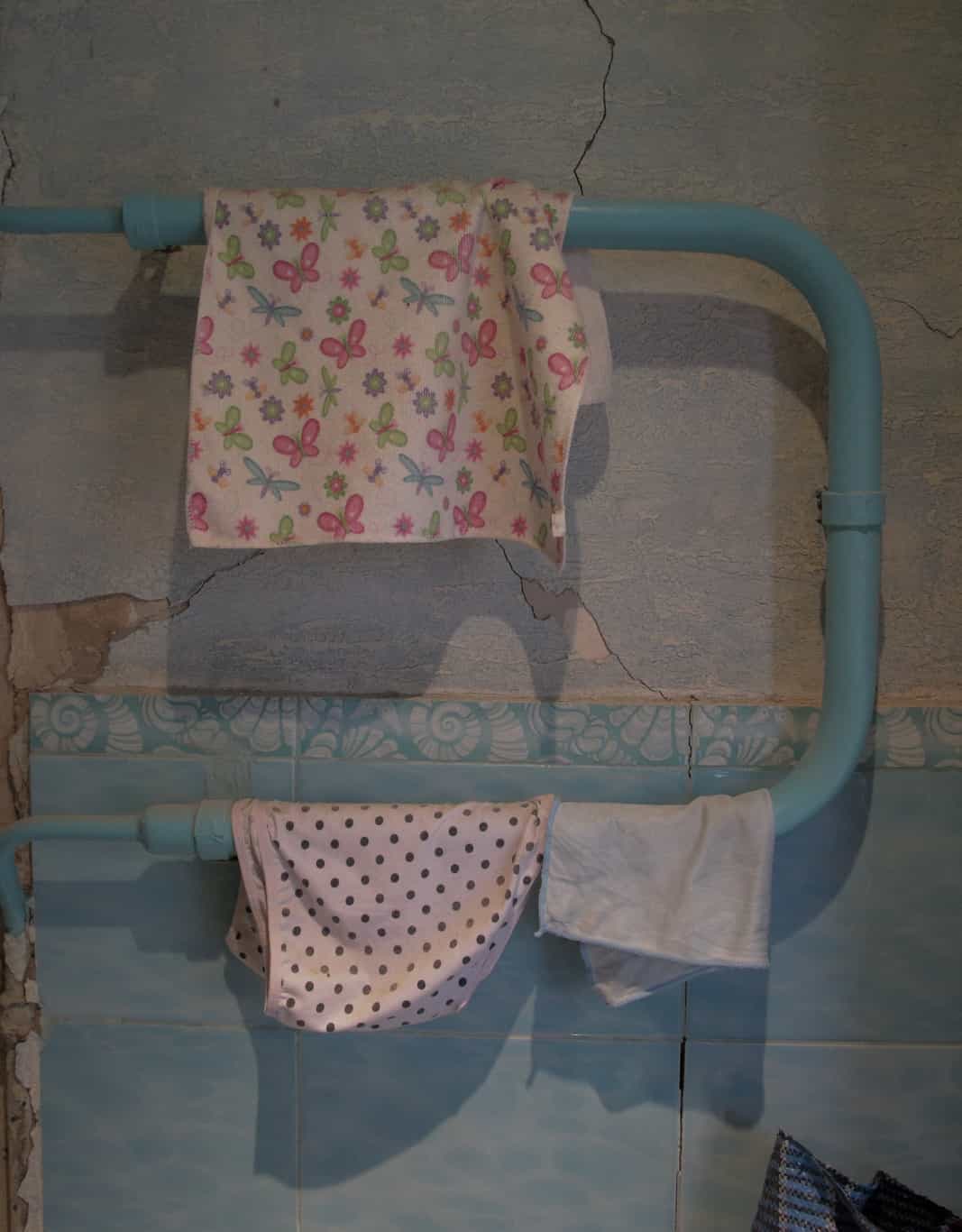
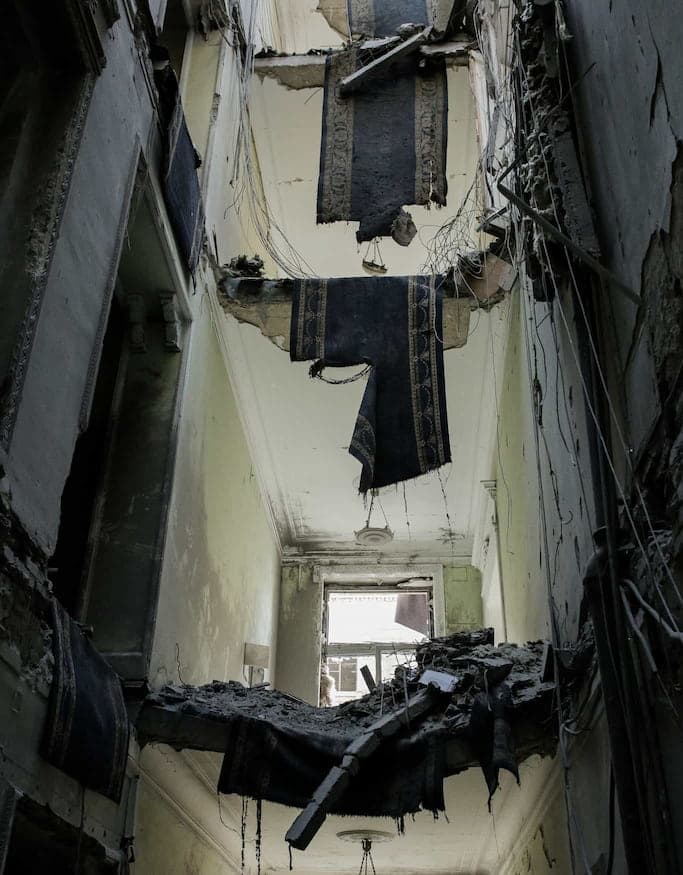
Other Testimonies from the Archive
- Recording
For me, bread means sweat and calluses. And now blood, too
A Ukrainian helped his family work the fields and nearly went blind after stepping on a mine
Dmytro Yeliseienko04/25/23 - Recording
They loaded everyone: dogs, cats, a hedgehog
The home of Kherson retirees was flooded after the destruction of the Kakhovka Dam. Ukrainian soldiers evacuated them from occupied territory
Henadii and Olena Rotar06/09/23 - Recording
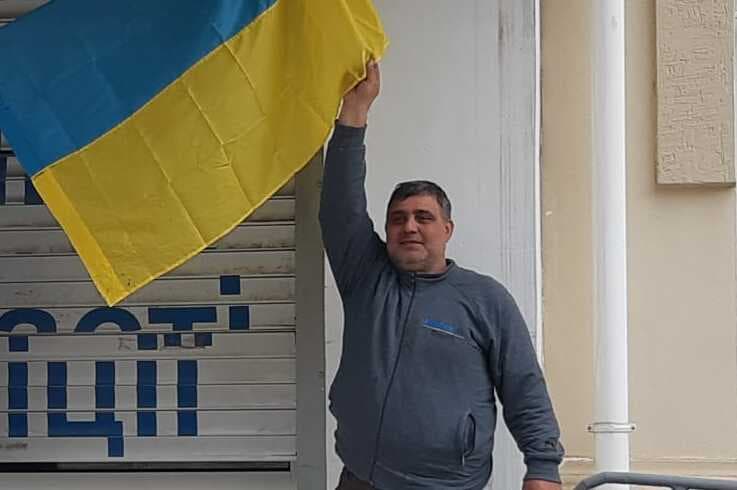
Children have been born, weddings have been held, but there has not been such joy since
A resident of Kherson stayed in the city under occupation and helped hang the first Ukrainian flag after liberation
Borys Aliiev11/22/22 - Text
At first they buried people for a bottle, then for 100 grams. And when there wasn’t any alcohol left, bodies just lay there. It’s terrifying
A native of Odesa ended up in occupied Mariupol and escaped through dozens of checkpoints and arrest
Vadym Lahunovych04/20/22 - Text
If I’d been two days later, she wouldn’t be here
A woman who brought her 84-year-old mother out of the Donetsk People’s Republic to Georgia
Ahnetta Kevsehi09/03/22 - Text
If anyone at the checkpoint messes with me, I’ll say: you came to liberate us, so why the hell are you fucking with me?
A student and volunteer on life in occupied Kherson
Bohdan05/22/22