Back
All we have left of Vova are rubber slippers
An resident of Izium on life under occupation, her husband’s death, and evacuation
Liliia Maichenko from Izium describes her family’s life under occupation — hunger, constant shelling, and no connection. In early April 2022, a Russian shell hit her home: her husband was killed, and her children and aunt were wounded. The family was evacuated to Belgorod, where they were met with propaganda and the refusal of help. Liliia describes her the difficult treatment of her son and daughter, attempts to regain their documents, and their flight from Russia through Belarus and Poland to Switzerland.
Interview
Transcript
Transcript
Attention! Translation was done using AI, mistakes are possible
КА: Katya Alexander
ЛМ: Liliya Maychenko
КА: Hello, Liliya, good afternoon.
ЛМ: Good afternoon, Katya.
КА: Thank you so much for finding time to talk with me, I understand that you've had a difficult relocation and generally very difficult circumstances. Have you settled in normally, is everything okay with you?
ЛМ: Yes, yes, everything is good, we haven't reached our destination yet, we're waiting for assignment to our canton, we're living in a dormitory for now, the conditions are absolutely comfortable, so we're satisfied. We're admiring the beauties of Switzerland for now, going on walks, in general everything is excellent.
КА: I'm very glad to hear that. Liliya, tell me please, do you have any questions for me before the interview, maybe you wanted to clarify something?
ЛМ: Honestly, I don't even know, no questions.
КА: Let's then slowly begin. Let's rewind a bit to the very beginning. Tell me please, you at the very beginning of the full-scale war, February 24th, were in Izium, correct?
ЛМ: Yes, yes.
КА: You yourself are from there and your entire family always lived there, right?
ЛМ: We ourselves are from a village in Izium district, I'm from Kharkiv Oblast. But since 2012 we've been living in Izium with the whole family.
КА: So it turns out, this is you, your two children, your husband, my condolences, and your mother, correct?
ЛМ: No-no, mother lived with father in Oskol (a village in Kharkiv Oblast – editor's note), where I'm from originally. She's been gone for a year and a half already, unfortunately. My aunt also lived nearby with us, during the time of fighting she moved in with us, since she's alone, she was scared, and it seemed calmer at our place. So she lived with us.
КА: Tell me, please, what was the situation in Izium at the very beginning? What did you do, did you live in one house, did you hide in the basement?
ЛМ: On the 24th we woke up and found out that they were bombing Kharkiv, that war had begun, that was it, for sure. We didn't go to work that day, we all stayed home, because we didn't know what to expect and when this would start in Izium. We were in contact, of course, everyone – on the internet, in groups. Whatever information someone found out, we passed to each other. It reached Izium on the 2nd, March 2nd the bombing stage began. That was probably the most frightening, it was all at night, you're sleeping and you just hear a plane flying. Then you hear whistling, a bomb falling somewhere. You just pray and don't understand where it's flying, because you've never encountered such a thing. How close to your house this plane is, what force this explosion will be – nothing was clear at all. We just all hugged each other like this, prayed and then: phew, it passed by. This was, honestly, I can't say, a day or two. Then bombing of the city center began, these were troops that had already approached the city. Izium is divided by a river, across the river was the city center and there this highway to Donbas was guarded, it was very important. And we lived on the other side of the river, and Russian troops immediately entered our part of the city, we ended up immediately cut off from that part of the city. It turns out, in that part of the city, in the center, Ukrainian troops were still there at first, and here it immediately became occupied territory. Personally we, our family, had nowhere to hide, we have groundwater very close to the surface, there are no cellars, no shelters of any kind. There were bomb shelters, mostly in the city, maybe people there used them more. We hid simply in the house, chose what seemed to us the safest room. We laid bedding on the floor, there was a bed there, and we all slept together. If we heard any bangs, we tried to stay in this room.
КА: And why did you choose this room, why did it seem to you that it was safe there?
ЛМ: We read that during bombing ideally, of course, there should be two solid walls, separated – the room where you are and another room, that is, another wall. All our rooms were connecting, we didn't have such ones, there was one, a corner like this, where we were. Behind this wall there was also an old stove, we hadn't demolished it, we kept planning with my husband to, but he kept defending it – let it be, it'll come in handy. Such a thick wall resulted and on the other side there were windows, but also an inner wall quite thick. We thought it would be safe there. We also went to hide at neighbors' in an abandoned house, they had a basement level, one and a half stories the house turned out. They used to build such often, the first floor semi-basement like that, there were such dense concrete slabs. We went there when air raids began, sat there several nights. Then apparently we got a bit used to it, spat on this business and already stopped doing this – whatever happens, we decided to stay in the house.
КА: You were living already on occupied territory, there were constant shelling, bombing – how did you support each other as a family, how did you try to hold together?
ЛМ: I'll say that this brought us closer. If there were any scandals, troubles, then we tried to hold together, more often told each other how we love each other. Basically we always tried to be together everywhere. If we go out somewhere beyond the yard, then we all go together, so that no one stays home alone. If my husband and I leave, then at least the children stay with grandmother. But basically we tried to go out somewhere all together or be home all together, stay together everywhere all together just in case.
КА: And grandmother – this is your aunt, am I understanding correctly?
ЛМ: Yes, this is my aunt.
КА: You lived in that part of Izium that was occupied earlier. Did you somehow interact with the occupiers, did they come to your house?
ЛМ: No, they didn't come to the house. Near our house there was a checkpoint. Generally at first checkpoints stood very frequently. You always left home with your passport, at every checkpoint they checked you. Moreover, if these were men, then they also checked their data, they had lists and they checked whether your surname was there – whether they were looking for former ATO participants [editor's note: Anti-Terrorist Operation participants]. In general, they had some lists, they were looking for people. They checked, if everything was normal, they let you pass further. Honestly, there wasn't such really rude-rude attitude. The checkpoints that stood near us – these were mainly "LNR" [editor's note: Luhansk People's Republic] and "Donetsk People's Republic" [editor's note: Donetsk People's Republic], they, of course, were rough guys. At first everyone asked them: "How long are you here? Why did you come here? How long will you stay here?" The answer was always: "2-3 days and we'll leave, we'll quickly sort things out here and leave." Or the answer was: "We endured for 8 years, you endure too." In such a spirit, that people came to take revenge on us, apparently. Why did you let Ukrainian tanks through when all this started in 2014, you should have stopped the tanks then, and now endure – in such a spirit.
КА: And did you answer them anything when they told you about these 8 years?
ЛМ: Well, this says it all. Secondly, opposite you are two with machine guns, so you won't really tell him anything, definitely not get into any arguments, because fear was present. The guys behaved normally, but no one knew how it would be further, God knows. They said they ended up here purely by chance, that they caught everyone who was on the streets. They said their fathers don't even know where they are now. The guys were absolutely diverse, from 18 years old to 60. All different heights, builds, physiques, dressed in whatever. When we already saw Russian soldiers, these were already such, I don't know, like handpicked guys: young, excellent equipment, cheerful, like handpicked.
КА: And am I understanding correctly that every time you needed to go to the store or get water, you needed to go through this passport check?
ЛМ: In principle yes. Well the checkpoint that was located near the house, they didn't change for some time, they already knew us, didn't ask anymore. If it was some new checkpoint or we went somewhere to another place, in another direction, of course, they always checked.
КА: After the occupation began, can you tell about how you lived – did you have electricity, where did you get food from, how was your daily life organized?
ЛМ: In general we lived like this: we were absolutely unprepared for war. All the money was on cards, there was no food supply at all, because stores, excuse me, were accessible 5 meters away, there was a store next to the house, you could always buy, no one stocked up on anything. On the 24th, when we found out war had started, all the stores immediately stopped working and literally that same day, the 24th, 25th. There weren't Russian soldiers yet, they came in early March. Immediately looting of food stores began, household chemicals, in general everything needed for life. Local residents simply looted stores, broke windows, and whoever managed to take what – everyone dragged home. Not to lie, with memory, of course... In early March, when serious bombing began, when they bombed the city center, we stood watching as from behind our backs, at the entrance to Izium, somewhere from under Izium simply, excuse the expression, they hammered with Grads [editor's note: multiple rocket launcher system] into the city center. The whole city stood in smoke, we were in such shock – how do people there generally... there were lots of people there, where are they, did they manage to hide, didn't they manage. There was such wild horror that you stood, didn't understand how in general and who would remain alive there at all. Then we asked the soldiers what they were bombing. They said the city mayor told them the city was empty, there were no people there, they could bomb. Honestly, such an answer from professional soldiers... Well honestly, an old woman on a bench said it. Whether this was such an answer for stupid local residents, well in general. When they started bombing heavily, electricity disappeared, gas disappeared, heating was gone, there was nothing really to cook on, nothing to heat with either – just then good frosts hit. While we ate what we had. There was no humanitarian aid yet, then later through fifth-tenth people we started finding out that there were such people who drove to Kupiansk for products and brought them here to Izium. You could buy, well again, whoever had money, everything was only for cash. Ah, here's what I didn't say: ATMs emptied in the first days, we have a small town, there aren't that many ATMs and cash there, of course no one immediately started bringing more. Whoever managed, withdrew money, whoever didn't manage, excuse me, could only gnaw on their card. With gas too it was as luck would have it – some had no pressure at all, we had such weak-weak pressure on the gas stove. You could cook soup in half a day, roughly speaking. You woke up in the morning and started cooking. There were days when there was no pressure at all, then the stove in the summer kitchen saved us. We lit it, there was no wood supply, we always used gas. We burned simply everything that came to hand, what wasn't needed, to cook something to eat. What saved us was that this year the potato harvest was good, the cellar was stuffed full. Usually we had trouble with this, we planted little or there was crop failure, but this year it was really, I don't know. Well and preserves – that's what we ate. We really wanted bread, of course, like never before. There wasn't any, this was later, after some time, they started bringing products from Kupiansk. People went, stood in line from morning: some came at 4, at 5 in the morning, not afraid that there was still curfew, you still couldn't move around. People still left their fear aside, because they wanted to eat, they went, stood in line. These were lines of 300 people, you could stand half a day and not buy this bread. Same exact way they brought flour, we stood in line for three days, only on the fourth we bought flour. Well and that's basically all. We were there until April 5th, we received humanitarian aid, not to lie, two or maybe three times maximum.
КА: Two-three times – you mean the city of Izium itself?
ЛМ: No, specifically our district. I don't know how it was in the city, there was no connection anymore. Somewhere two-three times there was humanitarian aid. What Russian soldiers fed us – this was our Roshen chocolate [editor's note: Ukrainian confectionery company]. They bombed warehouses, I didn't know we had so many confectionery warehouses in Izium, not only Roshen – there was Roshen, Konti [editor's note: Ukrainian confectionery company], confectionery. They bombed warehouses and this was distributed to people. Let's say, at an intersection queues formed from four sides and people 5-6 in turn from each side were let through. People with machine guns controlled the queue, [local residents] approached with bags and they poured different candies, cookies for them. We ate sweets, of course, until we were stuffed. We later discussed this question for a long time, that if we have confectionery warehouses, we probably also had warehouses with grains, with flour. Okay, fruits and vegetables – these were delivered, maybe in small batches, from Kharkiv from the region. But grains were clearly there, where did all this go? Why don't they give it to people, they only give chocolate and with such, you know, nobility, joy, that they're benefactors, they gave us chocolate. We never ate it, we simply hadn't seen it! My husband left with aunt for humanitarian aid, this is, it turns out, one bus stop away. They went on bicycles, aunt returned, but husband wasn't there and wasn't there. Soon curfew, time. We went with the children to meet him. We went, for the first time we went so far, something was rumbling ahead, scary, but we're going to meet him. In general, we went-went-went almost to that place where he should be – he's not there. Well let's go back, because it's really scary. We're returning, a Niva drives by with Z written on it, then it stops and comes back. We, of course, are in panic, don't understand, young guys with machine guns jump out and head toward us. We're frozen, of course, what will happen now? They come to us: "Do you need chocolate?" We froze, didn't know what to say, do we need chocolate, don't we need it? What should you answer in such a case? It was scary. In general, they didn't wait for an answer from us, started simply pulling out boxes of cookies and chocolates in boxes, and shoving all this into our hands, which we simply couldn't carry. As soon as we left, immediately people started jumping out from yards, what are they giving here, also started: "For us too, for us too!" The guys are so kind, cheerful, everyone take it, eat please. In general, we had whole warehouses of chocolate at home.
КА: Nightmare! And at the moment when they drove up to you in this Niva with the letter Z, were you already thinking that that's it, that now they'll either arrest you or something else will happen?
ЛМ: Well yes, honestly, we always expected something bad, constant fears. Especially if they jump out and come – what will happen now? What will they say? Especially, alone with children, without a man – well it was very scary actually.
КА: Of course. And did you find your husband that day? Where was he all this time?
ЛМ: Yes, we had just left those guys, and husband was coming, he had returned home. Also we weren't there, he went looking for us, in general we missed each other.
КА: And when you met your husband again, did you discuss this somehow? You both probably thought that you could hypothetically lose each other.
ЛМ: Well yes, there was fear of course.
КА: What did you discuss?
ЛМ: I'm telling you, you just go, try to cheer up the children. But you just go, you hear that somewhere sometimes closer, sometimes farther some explosions, you understand that now, at any minute, it could hit here too. We were walking by, saw houses – here's a destroyed house, here there were targeted strikes. There, where we lived, it was calm for us, but closer to this Rostov highway, here there were destroyed houses. You think: people also didn't expect, and this happened, and you just walk. You know, there was confidence, no, it can't be, everything will be wonderful with us, everything will be good, and always with humor, positively. We were sure we would survive this.
КА: These occupying forces, these Russians, they're located literally right next door, at the checkpoint in the city. No electricity, no gas, no connection anymore. How long did you stay in such a condition?
ЛМ: A month, it turns out. A bit more than a month.
КА: That is, all of March and early April?
ЛМ: Yes, yes.
КА: Liliya, now I want to ask you about the most difficult moment of this story. Surely, the most difficult in your life – that day when the strike on your house occurred. Can you tell very detailed what was happening, what kind of day it was, how was all this?
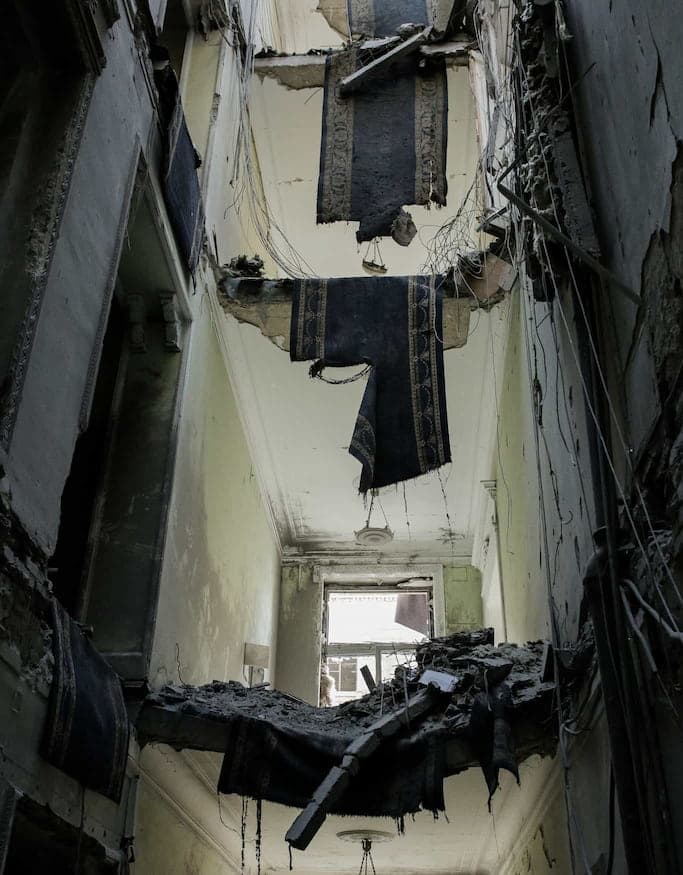
ЛМ: A day like any day, like the previous ones. Living in such constant... that over your head fly, I don't know, rockets, Grads... People say, let's say, those who lived in Izium, with such confidence that they can already clearly distinguish when Grads are flying, when what rocket. I, honestly, I'm not such a specialist. Incoming, outgoing – I sometimes even confused this, I'm far from this. But still, when you see that such a thing flew in the direction, I don't even know where, toward Sloviansk, Sloviahirsk [editor's note: Ukrainian cities], through the city. When all this flies and constantly this with such force, and this is everywhere – nowhere is it quieter. Throughout the whole city with such force all these explosions, it flies with such roar that the sound is the same everywhere. And you simply get used to it and walk, stand in line for humanitarian aid, or you went somewhere to buy products. You stand and think that such a crowd of people is standing, 100, 200, 300 people, well depending, maybe now it will fly in and how many victims will be immediately in one place. But you're positive, you think: nothing scary, everything will be good. On this day we again went to that person who brought products, for something or for cigarettes, I don't remember. In general, we weren't home, then we looked for connection to call. Grandmother was with the children at home, my husband and I were walking around. Everything was normal, the day passed, yes, it was noisy, something was exploding somewhere, somewhere not far from us it was noisier than usual. Somewhere after lunch two female friends came to us, asked us also to go buy cigarettes from this man. My husband and I got ready, went, this was probably five o'clock in the evening already. We bought, returned home, well what to do – let's probably start making dinner. It became very noisy, shells started exploding somewhere, somewhere nearby, explosions. My husband kept running out to look where this was, how, where it's flying from, where to. We for some time all ran together to one room, then ran to the corridor. Then everything seemed to quiet down. We put pasta, spaghetti to cook, we were in the house, everything seemed okay. They were already cooked, aunt started draining the water, the children were in the kitchen, and husband would run out, then quickly fly into the house. I started scolding him, come in for God's sake, don't run out. In general, we were sitting. Then it became very noisy again, my nerves gave out, I say: "I'll go pray, probably." It always calms, it still becomes easier, calmer. Well and I went to the room, knelt by the window, near the icon. I didn't manage to finish the prayer, and just bang it happened! Everything went dark literally, I started feeling that something is falling from above, falling, falling. Our house is old, it's clay and lined with brick and all this – clay, sand, all this falls on the head, inside and something falls, hits on the head. You know, I was waiting for another bang now and that's it, and everything will go dark for me. Suddenly once and everything stopped. I started looking around, saw that there's no roof, the whole roof fell inside, all this in beams, everything is lying in the house. And I was in that room where, I said, the safe corner, we slept there. I heard simply wild screaming, daughter is screaming. I started getting out, came to the kitchen, no one at all, everything in this reddish dust, no one visible absolutely, everything is blocked. In the kitchen simply the walls were collapsed to the window sill. That is, if they were standing in the house itself, then in the kitchen everything was collapsed to the window sill. I went toward the screaming, found her, she was sitting, I didn't understand, in some unnatural position, this was later we already figured out that she was sitting at the table and the weight pinned her with this table, she settled like that. On the way I simply wrapped my arm around something, it turned out to be hair – aunt was lying there, she was unconscious, I started shaking her. I threw myself to daughter first, lifted daughter, she was screaming from pain, everything, her clothes were bloody, all over her body and she herself all over. I started: "Can you walk? Are you alive, everything's normal?" Fortunately, neighbors rushed up instantly, weren't scared. We have people nearby, a young couple lived, they were the first to rush up, then more neighbors. It turns out a house and around us neighbors, like the house is in the center. Neighbors rushed up, we couldn't go through the door, everything was blocked there, they helped get Polya out first through the window. I didn't see Matvey, Matvey called himself: "Mom, I'm on the street, dad is here." While we were still in the house, while we hadn't come out, I heard how husband (unclear) still. I pulled out, they took daughter to the street, then aunt. I started shaking aunt, she didn't come to for a very long time, I thought that's it for her too. Then she made a sound, I somehow scraped her together, she couldn't climb through the window sill. I started getting angry at her, that I can't get out to husband, to see what's with him. In general, while we got out, I approached him, and the neighbor woman says: "He's already done." I didn't believe it, of course, he was lying absolutely well like everything was whole. The only thing, on the right side the liver was all outside, apparently this was from shrapnel. Immediately, probably because the post was nearby, literally 10 meters from us. Instantly a UAZ drove up, this was immediately, we don't have documents, everything remained in the house. We came out in what we were wearing, climbed out and that's it, everything remained there. What to do with husband? Quickly-quickly us: "The living quickly into the UAZ and we're leaving from here." They scooped us up, we only saw that they covered him with a curtain from the house, that's it. They took us to a military hospital, which is one bus stop away near the church, in a gym in the school, in the school gym. We never returned home.
КА: First of all, my deepest condolences. That is, they definitely determined that your husband died?
ЛМ: Yes, they checked. I myself felt for pulse both by the neck and here, the neighbor woman too, she has distant relation to medicine. She concluded, the military said. We honestly, we arrived at the hospital and panic fear returned, no one let us go back there anymore. At the same time for a very long time: what if he remained alive, what if he remained alive? We all only had this thought: what if he remained alive? What if we abandoned him and that's it. Polya in the hospital had surgery, they treated the wound, she had a torn wound to the bone on her arm and very many burns all over her body. Aunt, she had strong bruises, her whole right side was blue. Not blue yet, her whole side hurt and it was difficult to get up. I generally got off with light fright, not a scratch at all, Matvey externally also nothing. This was later, when they moved us to Belgorod, there they determined that he has a compression fracture. It turns out, what saved him was that refrigerators fell on him. This gave spinal trauma, but protected from these injuries, that is it's unclear what would have been with him. Because when we climbed out of the house, pieces, already the remainder, I don't know what this was from, from this thing were lying right by the wall where the refrigerators stood. We later asked the military whether this could still have been an explosion on the street, they said no, this hit the house. If it had been near the house, there wouldn't have been such destruction. What finished us off of course was that LPR [editor's note: Luhansk People's Republic] people took us away, they didn't comment on anything, didn't say anything, that we're without documents, what will happen with husband, how in general – I was screaming all this in panic. They silently simply took us away from there and that's it. When they brought us to the hospital, very many soldiers approached us, I don't know, I didn't look at shoulder straps, ranks. Soldiers already of higher rank and all as one: "We weren't the ones shooting, your people were shooting." This was immediately some kind of such pressure: "Do you understand that we couldn't do otherwise, why did your president say like this, that he..." I don't remember what there already, in general, something in Russia: "Now you see how it turned out." And what will you answer them? You're standing, a bunch of armed people and how in general, and what to say? Honestly, it was scary, I only said: "You know, I wanted you all to lay down your weapons and go home." "But you understand that it won't be like that." Well and then it became that "We are people under someone's power, we have no other path, do you think we want to be here? I have family at home." And all in such spirit.
КА: They brought you to this hospital, which is like a gym, this is in Izium, as I understand? You have two wounded children in your arms, your aunt and your husband just died – what condition were you in generally?
ЛМ: Well how can I tell you... I'm a person like that, not prone to panic, I carry everything deep in my soul. Of course, I just quietly cried into the pillow, because you won't really cry, especially scream and sob. I simply didn't understand how to live further, what to do. Simply in an instant your life turned upside down, moreover it turned over so that you were and you're not. The only thing I thanked God for was that the children remained alive. I thought over this situation for a very long time, what if this had happened when my husband and I hadn't returned home yet? Good that we were still all together at home. I replayed this situation: would it have been better if we hadn't been home? Of course, lots of things were thought through, but this already happened, this is already inevitable. Honestly, the only thing – this is guilt, I felt myself insanely guilty that this happened to them, that exactly like this, that I didn't protect him. No one understood when he managed to leave the house even. He seemed to be in the kitchen. And still we don't understand, whether some blast wave carried him out of the kitchen, or he still went out, because we found him on the side where the explosion was, he was lying by the gate. Still I don't understand how all this happened. We seemed to all be together and no one, no matter how much we discussed, no one remembers whether he managed to go out or he was in the room, how everything happened.
КА: My deepest condolences to you. I understand this is very difficult and if I ask any question you don't want to answer, you can not answer. How long were you together with your husband?
ЛМ: Since 2006.
КА: How did you first understand that he was no more, really realize it?
ЛМ: How can I tell you... He was such a hot-tempered and very strong guy. In his life he went through a lot, he was such a rock. It seems to me that nothing could happen to him, he wasn't one of those who... Health was there, strong guy. There simply wasn't awareness, well this couldn't all be, he should survive. How so, this can't be. I simply don't really understand this, if the liver is torn apart, then the chances are like...
КА: Liliya, my deepest condolences to you! And how did the children cope with this?
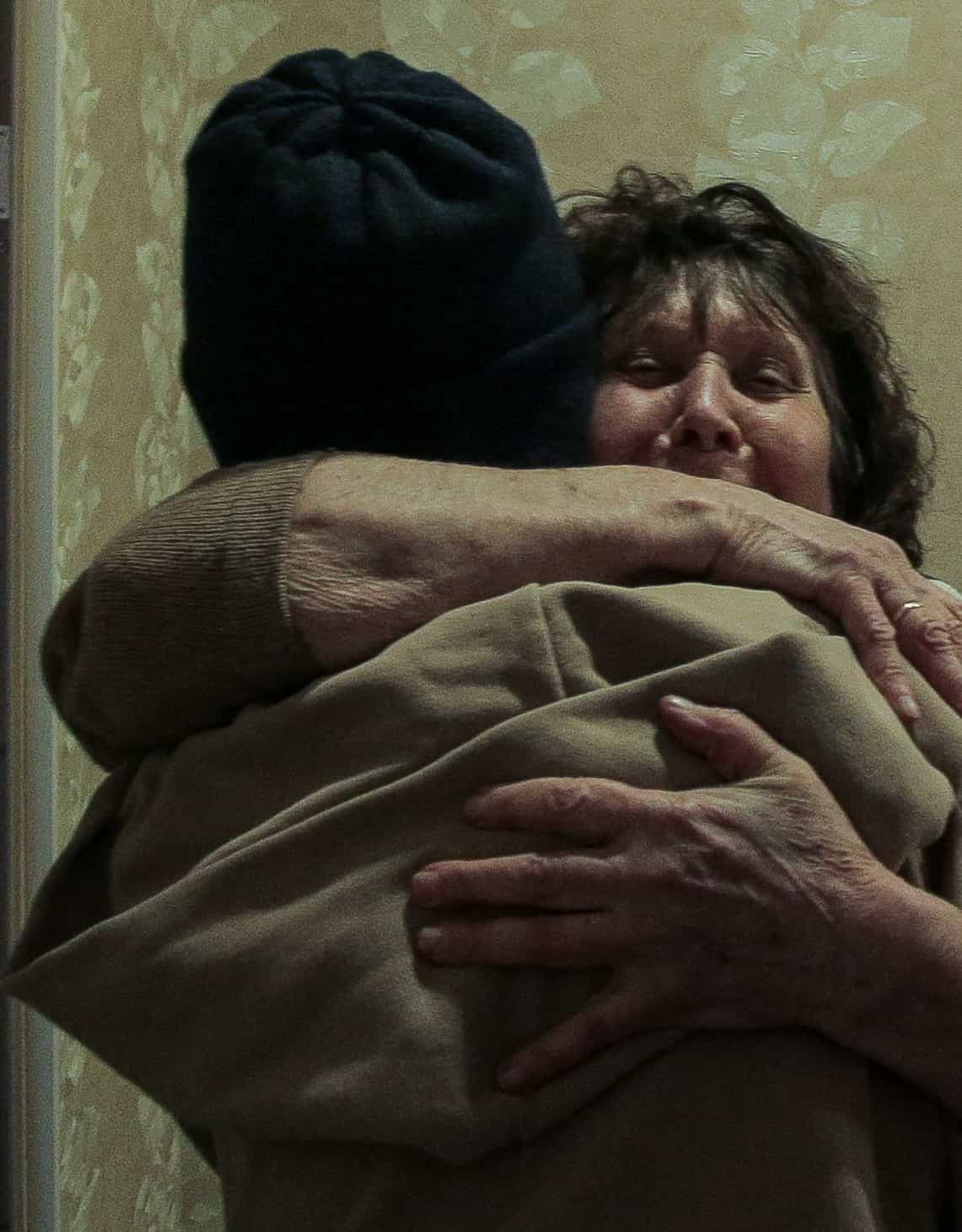
ЛМ: Well how did they cope... Daughter was closer to dad, she still starts crying immediately when talking. She's like a broken record, when we got in the UAZ: "Why exactly him? Why exactly us?" Moreover this directly in Ukrainian: "Why exactly us? Why exactly daddy? Why all this to us?" – all in such spirit. She went through it very hard, of course. Well that's how it is.
КА: This is such a big tragedy, simply impossible.
ЛМ: Of course, in life there was everything: disagreements, difficulties were there. The most offensive is that there was just such a period in life when everything worked out for him with work, we apparently, as it's called, got through our wild phase, stopped proving something to each other, decided to live for the children. The plans were grandiose for this year, for summer, house, renovation... In general, a beautiful future was planned out, it's offensive that he couldn't do any of this and didn't see it.
КА: Lord, what horror, Liliya, I'm so sorry. This happened in April, yes?
ЛМ: Yes, yes, in early April.
КА: You're in such a horrible shock state together with two children and your aunt in the hospital, in the gym, you understand that all this happened. Your daughter is wounded, aunt is wounded, with your son it's still not very clear. What happened next, where from Izium did they send you or where did you go next?
ЛМ: We had two choices: either stay in Izium, but there's absolutely no medical help there, no hospital. Here they gave first aid, treated the wound and that's it, in such conditions they did it. Either stay here, no one will take us back, get home on our own somehow, it wasn't far there. We weren't alone in the hospital that day, there were many victims on our side, two more women, a man, they brought someone else, there were many civilians. One woman in the morning still gathered herself, although they also recommended she go further for treatment, she said: "No, I'm going home." I don't know how she walked. They also tell us: either you go home, but I would recommend taking your daughter for further treatment. Of course I went, how could I not. We really didn't want to, we had initially negative attitude toward Russia, my husband and I... Although we met in Moscow, he went there for work, I went. He generally spent half his life in Russia, and he's from there originally, Russian roots. At one time we were planning to stay for permanent residence, I kept persuading him: "Let's already try to stay there somehow" – "No, let's stay here." Since 2014 the situation still turned around, especially on the 24th everything happened categorically. We had the opportunity to go to Russia, to the Ukrainian side we didn't have the opportunity – when they blew up the bridge, they separated us finally, that's it. And there was no money, honestly, to the Russian side was possible, there were many acquaintances there, but we didn't want to, whatever happens, we'll stay home, that's it. As a result it happened that we still ended up there, but with losses, as they say. Of course, there was only one choice — to go. And aunt also said categorically: "I won't fly, in the morning I'll get up, go home." But in the morning she couldn't get up and, again, where would you go? She lives even farther than we lived from this hospital. I say: "How will you go? It's unknown what's at your house, no documents. Come on, you're flying with us." Matvey also categorically: "No, grandmother, you only with us." Well and that's it, in the morning, it was a terrible night after what happened, we were afraid we wouldn't live until morning in this hospital. What if it hits here too? The fear was simply terrible. On the helicopter they also told us we'll make it 50-50 – we might make it, might not, as luck would have it. I don't know how long we flew, an hour, hour and a half, I don't remember, it seemed like an eternity. Thank God we made it.
КА: Can we stop here for a bit now. First of all, all your documents remained in the house, you went without documents and without things?
ЛМ: Yes, without documents, the military told us: "Don't worry, everything will be wonderful, you'll restore everything, everything will be great, the main thing now is to get treated and everything will be excellent."
КА: And where did the helicopter come from, did they themselves propose where to go and provided the helicopter?
ЛМ: Yes, yes. This is a medical flight, it flew every day in the morning. The wounded – both soldiers and civilians, whoever needed to be, everyone was evacuated by this helicopter.
КА: And did you know where you were flying, did you choose where to fly or not?
ЛМ: No, this is a specific route, to Valuyki Central Regional Hospital or even a military hospital was in Valuyki. We were there for an hour or two, and that same day they sent us from Valuyki to Belgorod, to the regional children's hospital.
КА: You four, it turns out, your two children, you and your aunt, got there on this helicopter, and then by train to Belgorod, correct?
ЛМ: No, not by train, they took me with the children by intensive care ambulance, aunt stayed another day in Valuyki, then they transferred her to Stary Oskol to the hospital. Here we separated, and we met again on May 12th.
КА: They transported you in such conditions because they understood your children had serious condition, yes?
ЛМ: Yes, of course, in Izium they said that in Izium they can't help with anything anymore, we need to only fly there.
КА: Where did they tell you this?
ЛМ: This was in Izium in the military hospital, that we need to only fly to Valuyki.
КА: Because of Matvey, because of your son?
ЛМ: Not because of Matvey, because of Polina. Matvey was like nothing, in the military hospital they didn't see anything, no injuries, everything normal. Because of Polina and because of aunt.
КА: Because of Polina, because of burns, correct? Because she had very large...
ЛМ: Yes, yes, yes.
КА: And so they brought you to Belgorod. What did they tell you there, what happened there?
ЛМ: There they examined the children, they determined Matvey had a fracture. There came from St. Petersburg Zorin Vyacheslav, I think, military surgeon, military traumatologist, he operated on Polina, put a cast on Matvey, they put a full corset on him. They did two more operations on Polya in Belgorod or even three. She had a fracture of the left wrist and a torn wound on the right arm. They inserted pins, these radial bones, there was a fracture with displacement, they inserted pins and did surgery, transplanted skin, because everything was torn out to the bone. They healed it, then did a transplant, took skin from the leg, transplanted it to the arm.
КА: And Matvey, your son, compression fracture of the spine?
ЛМ: Yes.
КА: Your son has a broken spine, daughter in operations for skin transplants, how was this for you?
ЛМ: While we were in the hospital, they provided complete care, the attitude was wonderful. The doctors at the highest level, well done, I can't say anything bad, just huge thanks to them, low bow, for putting the children back on their feet. I was absolutely calm about what would be next, the main thing was for the children to recover, we'll solve everything else later. There was understanding that as problems arise we'll solve them. We remained alive, that's it, we're already where they don't shoot. Everything will be normal, somehow we need to live further, in any case raise the children, so that's how it was.
КА: And how did the children cope with all this? These are complex operations where you need to endure a lot of pain. ЛМ: Polina's condition was, of course... The first two weeks, first of all, the first week she couldn't move at all, her legs were all covered in bruises, burns, everything was swollen, it hurt, both hands were also in splints, in casts. She lay like this with arms and legs spread apart, only on her back. That was the most difficult time, morally it was hard for her, she was being cranky, tears all the time, of course. First, from what had happened, second, from the fact that she was completely immobilized, for her life was over and that's it, the mood was pessimistic. Matvei, of course, helped, supported, such a smart boy. Gradually, gradually everything started to get better, she cheered up a little, everything gradually got better. About papa constantly, Polya for a very long time... We were in the same ward, Matvei was in the boys' ward. She couldn't fall asleep without me, she constantly had nightmares. She says: "I close my eyes and I have this picture in front of my eyes, I'm afraid to sleep." That is, it was like that.
КА: And how did you calm your daughter?
ЛМ: How? I just fell asleep next to her, she felt a little calmer with me nearby. I calmed her down, we constantly talked about papa, that we can't bring back what happened. Definitely, when all this ends, we'll go and find where he's buried, we won't abandon him.
КА: So it turns out, Polina is 13, and Matvei is 10?
ЛМ: No, Polina is 11, Matvei is 13.
КА: And how long did you stay in the hospital in Belgorod?
ЛМ: We were discharged on May 12th.
КА: About a month?
ЛМ: Yes, yes, a little over a month.
КА: And do you remember the exact date of the explosion?
ЛМ: April 5th. Around 6 PM it was.
КА: On May 12th you were discharged from the hospital, what was your plan?
ЛМ: We ended up in the hospital without communication, then acquaintances and relatives found us. Here, of course, thanks to the "Russia" channel, they showed a report from the military hospital in Izium, they filmed us there on the day of the tragedy. On April 6th they showed this on television, after that video [relatives started looking for us], they called the hospital, some got the chief doctor's number, some called the hospital, in general, many found us. They gave us a phone, a SIM card, we were in touch, everyone supported us of course, relatives, those who had already left Ukraine abroad, all acquaintances, relatives.
КА: So acquaintances and relatives found you after a report on Russian television?
ЛМ: Yes, yes, they recognized me, recognized Matvei. There was a one-minute clip, I don't even know how they recognized us, huge thanks to them, of course.
КА: This is propagandistic Russian television, which showed you from the side they needed. Didn't you have any anger or resentment towards them for using you in Russian propaganda?
ЛМ: There was of course, because, first of all, they framed the clip as if this was bombing and for bombing the city center... We know perfectly well who bombed it, we saw this. They say that Ukraine bombed the city center and they showed all this, and here are the victims of the Armed Forces of Ukraine - they showed us. There was anger. You just arrived at this hospital, when they brought you, your condition is terrible, they immediately came at you with cameras: "How would you comment? What can you say?" It was some kind of entertainment, they brought monkeys. The anger was terrible, "no comment," I didn't want to say anything. This was the first such encounter with a Russian channel. Then, when they took us from the hospital, they moved us to a tent camp at "Virazh." Our aunt was already there, she had arrived there a little earlier. They brought us there literally, I think, the next day there came... I don't remember his name, an MMA fighter who supported Russia, an American.
КА: I also don't remember his name, it doesn't matter.
ЛМ: I don't remember, yes. And so they came into our tent: "So and so, he would like to talk about this, ask a few questions, would you be against it? He would like to learn the truth from the primary source, because there's a lot of information, please." Well, we talked, she asks questions, I tell how it really was. This didn't go over well, I see that this didn't go over well with the tent camp workers either, they immediately started twisting it, that "people don't understand that this was a necessary measure." They explain to him, translate, I don't know how they translated the text that I told him word for word, as I would have liked. Then a news broadcast came out, but there was nothing, they only showed us on those cots and someone else too, that everyone is satisfied and happy. The third time it was also, guys came, wanted to interview again, but we refused. They stood there, filmed us anyway. "You understand that we tell one thing, you cut out what you need and show something completely different." And there was such text that he says, like: "Don't worry, everything's fine, Russia will help, we're so used to helping everyone, everything will be fine." I say, "You understand that everything will be fine, of course, but no one can return what happened. How many families, lives were broken? Someone lost their lives completely, someone lost those same material goods that they built their whole life, put their life into this. Families fell apart, men stayed in Ukraine, wives with children left. This is just some kind of horror what's happening, who will compensate for all this? Let's not give any interviews, no, thank you." They left. Then they tell me: "And they showed you, did you see?" And I watch this news, they show me with a satisfied face in the context that Russia helps everyone and I say: "Everything will be fine." I was just in shock. How is this even possible, this is horrible, you can't do this! And I even sit and tell my aunt that it's even funny, you can't even sue them, because there are no documents.
КА: My God, I feel so sorry for you.
ЛМ: They used us as they wanted and that's it.
КА: What horror. I definitely won't do this. You can't do this, this is how Russian propaganda works, unfortunately, very sorry that they started pestering you. We will just make this story public, don't worry. When they started pestering you and filming, had you already left Belgorod? Where was this already?
ЛМ: This wasn't from Belgorod, this is the tent camp, it's located in Belgorod.
КА: You're under constant attacks from Russian journalists, you have children who are just recovering from serious operations, you met your aunt in the tent camp, reunited after so much time. What was your plan, what were you thinking, what to do next?
ЛМ: Our aunt only chattered about returning to Izium, the children immediately put her in her place - no one will return. Naturally, no one was planning to return, because, first of all, there's nowhere to go, second, how many memories are connected. Until it's completely over there, not just that they'll stop shooting, but when this war will end, when they clear all the mines there - then of course, earlier under no circumstances. The plan was such that first restore documents, because we're nobody and no one knows our names. Honestly, there was such a mood, I was just in such apathy, that since fate brought us here, probably, we'll try to put down roots here, we'll try to settle here, there are acquaintances. Friends called from Orel: "Come here, we'll help you, you'll live, housing, gradually with work." We decided to stay in Belgorod for now, a distant relative took us from the tent camp. In general we decided that we'll stay there. One acquaintance, I didn't pay attention to her words, but then I thought about it. She says: "To stay here, you need to change everything in yourself. You need to restructure yourself like that, will you be able to?" - "Of course, we can." But over time it turned out that we couldn't.
КА: And what exactly couldn't you do, how was this expressed?
ЛМ: You know, after all, anger, resentment remained, about how all this happened, because of what all this happened, because of what the whole life turned upside down. Now we can't restore documents, they shuffled us around in all services, we wrote letters to both the governor and the mayor, called the hotline of the investigative committee in Moscow. They seemed to try to help us, called us in, we told our story, they photographed us for reporting, "What, you have such a situation, of course, we'll help you find housing, work, children in school." Almost from their own pocket they were going to help, exactly until the moment we left the walls of the investigative committee, that's it. They even talked about that restoring documents isn't so difficult, because if Russia is now in Izium, then anyway some data, maybe, they saved, you can give a request, you can achieve something. I personally won't give a request myself - who will accept my request, who am I, this needs to be done by the appropriate authorities. No one started doing this. Apparently, then they still thought that we're a big problem for Belgorod, they insisted that we return to the tent camp and go further - as we joke, by stages. Well, not quite, deeper into Russia, they offered cities to go to: "There for sure everything will be wonderful for us."
КА: And what did you decide?
ЛМ: We definitely refused to go, what's the point of going somewhere? Here at least there are acquaintances, somehow you can not get lost, but there who knows where they'll take you. The first people who went, called, somewhere they take you to the outskirts, there's a sanatorium. In principle no one says it's bad, but you sit like you're tied up - about work, how they feed you, give you drink and you have housing, that's it, live like a vegetable. Without documents we were afraid to go there, it would be the same red tape as here. We stayed in Belgorod. Because we wrote to all authorities, this process was accelerated. We received an identity certificate at the end of July.
КА: And all this time you were in Belgorod?
ЛМ: Yes.
КА: So they didn't restore your documents, but only issued an identity certificate?
ЛМ: Yes, yes, and at first they said that this is a very complicated process, you even need to go to the consulate in Moscow and you need two Russian witnesses who will confirm. As a result it ended with my aunt being my witness, I was her witness. Then they offered us, to socialize in Belgorod, the next stage - this is to go get either temporary asylum or residence permit somehow accelerated. We didn't really get into it, because we had already decided that we'll probably be leaving. So we didn't start doing any of this.
КА: Am I correct in understanding that in June you received this certificate and...
ЛМ: In July.
КА: Sorry, yes. For yourself, for your aunt and for the children?
ЛМ: No, the children in this certificate are recorded from my words, that I have two children of a certain year of birth, nothing at all for the children. Only for me and my aunt, so that our photos would be there, only adults. Although later, when we started communicating about leaving Russia with volunteers, they helped, they personally sent me photos of my passport, my certificates, children's certificates, and in obtaining this certificate. I went and said that so and so, it happened that I have copies, but no one paid attention to this anymore, although before this they said: "Oh, but what about the children? We need something for the children too, well okay, let's deal with you, and then we'll deal with the children." As a result they issued these certificates, everyone washed their hands of us, goodbye, we wish you success.
КА: This was all in Belgorod?
ЛМ: Yes, yes, this was all in Belgorod.
КА: How did you come to the idea that you needed to leave Russia? You say that you had pain, resentment for everything that was happening from the country you had to go to. Can you tell a little more in detail - how you thought about leaving, what motivated you, what did you think?
ЛМ: Maybe it seemed to me, I won't say that there are very many such people, I don't know, but we survived there thanks to caring Russians. Not the state, not the services, but specifically ordinary Russians. They helped us a lot, we came naked and barefoot: with things, with some money, completely everything needed for life - charitable foundations helped us with this. In the process of living you still had to communicate with people, even to the point that you're sitting in the park on a bench and someone starts a conversation with you. Anyway this attitude, you know, Ukrainians are supposedly loved and we're good, but still as a result those who watch television heavily, for them essentially all Ukrainians anyway are Nazis. If you're for Ukraine, then you're already like a Nazi, you deserve it. That's the first thing. Then still the attitude, I was very worried, okay me... I always wanted to speak out about this, but you understand that you won't prove anything to people, all the time not to conflict, not to discuss this topic at all. Moreover, here are people for you - you came, you say that you came from Izium, where there's war, you saw with your own eyes, and they prove the opposite to you, that you're wrong, that this is how it really is. This was irritating, "oh, what a tragedy you have" and nevertheless they start just brainwashing you, that you don't understand shit, that this is how it had to be and in general we'll show Ukraine how it's done! In general, everything in that spirit. There were such people and there weren't so few of them, let's say. My son also, my daughter speaks more in Russian, but Matvei, he doesn't care, he spoke in surzhik and that's it, doesn't restructure anywhere. I was very worried about how it would be in school, because in the hospital, let's say, also, he was friends with the guys. Polya has a harder time getting close to peers, Matvei is so open, easy, he was friends with all the guys in the ward. Even among children there were comrades who had watched enough television and proved to him, and he's silent, but they prove to him what a hero Russia is and that this is how it had to be. I just imagined that the same thing could be in school, conflicts are inevitable. I didn't want to subject the children to such pressure at all. I was very afraid of this.
КА: When children started telling him that Russia is great, and Ukrainians are to blame for everything themselves, how did he react, how did he relate to this?
ЛМ: He was silent, didn't enter into conflict, didn't prove anything, just was silent. Like me, so did he.
КА: And did he discuss this with you?
ЛМ: Yes, we said that we remain with our opinion, our country is Ukraine, we love it, the truth is on our side, and everything in that spirit. However it may be, it's clear that we don't know the most important thing - what all this started because of, but the fact remains that Russia attacked first.
КА: He's a teenager, he's not yet a completely formed person; Where does he get the understanding that it's better to keep quiet and not enter into conflicts?
ЛМ: God knows, maybe he was looking at me. You know, this whole situation, the children matured. This affected everyone - we aged, the children matured very quickly. Probably, understanding came by itself. Probably, some kind of self-preservation instinct still works.
КА: You looked at how they communicate with children in the hospital and how they communicate with you, and realized that staying in Russia further is impossible. What happened next?
ЛМ: My friend even earlier, probably, we were still lying in the hospital, she was sending me links to volunteer organizations that help Ukrainians leave who ended up on Russian territory. I say: "No, until they remove Matvei's cast on June 12th, I won't move anywhere for sure, and then we'll think." She, of course, condemned me: "How can you? They did this with Vova and in general this happened, and you'll still think?" In general, I still didn't react, I think we'll see. Then gradually all these thoughts, that, first of all, it's very difficult - if it weren't for friends, if it weren't for acquaintances with whom we lived for free, friends who helped with money, husband's friends, our mutual friends, relatives. At some point I got a job without documents, they took me, huge thanks to them too, but the salary was, worked one day - we ate for one day as a whole family, that is the salary was very small.
КА: And what kind of work was this?
ЛМ: In a grocery store, seller-cashier, everything in one person, loader. In principle it's very hard to survive. I just thought with horror: school is coming, September, no winter clothes, no help. We went everywhere, knocked on every door: you don't have documents, we can't give you anything, sorry. I understand, the situation is complicated, but. We figured that we just won't survive here financially. Well, and the decision was made.
КА: And how did you get out further?
ЛМ: We started communicating with these volunteers, first they helped with copies of documents. Then about a month passed, I regretted that I didn't listen to my friend, didn't start earlier, because we could have left earlier, they would have removed Matvei's cast, and we could have already moved. But preparation took time. On the 27th we left Belgorod. This, honestly, was scary too.
КА: Why?
ЛМ: We didn't understand where. There was suspicion: "What if they take us somewhere? - all kinds of crazy thoughts were there, - What if they take us somewhere for organs? We're going without documents, unclear who where." The fear was insane, I tried to find some reviews. But as a result everything was wonderful, honestly, I didn't expect at all that it could be like this. How much our journey took, we stayed in Warsaw, but otherwise the journey took about four days without stops. We met so many people who spend their lives helping people, dedicate themselves, this is incredible, I just remained in quiet shock. It seems I always considered myself a sympathetic person, normal, empathetic and ready to help, but in comparison... You lived your whole life, excuse me, my house is on the edge - I don't know anything, I sympathize with you. But here people find opportunities, I don't know, strength, just to help other people like that. This is, of course, great, just fantastic.
КА: So it turns out that you found volunteers who said they're ready to help get you out to Europe. What did your route look like? Here's the point Belgorod, and then?
ЛМ: I don't know if it's possible to talk about this or not. Our starting point was Belgorod, we drove to Smolensk. We spent the night in a hotel there, in the morning another driver picked us up and we went across the border, the next stop was in Minsk. We stopped at a volunteer family who take in such people, help them. We spent two nights there while we got white passports. Then we went to Brest, there we waited two hours for someone to pick us up. From Brest already across the Polish border, the next stop was in Warsaw. We stopped at a center for disabled people, refugees. A small center and we stayed there for five days, even six.
КА: Why?
ЛМ: From there they picked us up and straight... Because, first of all, Matvei can't travel sitting, he needs specially, so that there would be a place to lie down. All this, again, volunteer organizations - they look for sponsors, it was hard to find transport here, there was a problem. But then they picked us up, and we went straight to Switzerland. Since the 7th we've been here.
КА: Since the 7th of September, it turns out?
ЛМ: Yes.
КА: After such operations your daughter, your son with a broken spine - how did you move and make such a huge journey all together? How did this happen, he moved lying down, right?
ЛМ: He lying down, and we all sitting. Well, nothing, we endured, apparently because there was determination, determination for the result, that we needed to get there. I was very worried about my aunt, because she also has consequences with her back. First of all, her age already, second, after being hit hard, apparently there was some displacement too, her back hurts a lot. But nothing, everyone endured, everything's normal, on a positive note. In general, everything's good, even better than we expected.
КА: You had to look for transportation, transfer in such a way that your son would move lying down?
ЛМ: Yes, so that he would travel lying down all the time.
КА: But he can walk?
ЛМ: Yes, he can walk and sit a little already. On June 12th they removed the cast, he still has restrictions for 3 months. You can sit down to eat, but you can't sit for long. But since on the road there's also constant shaking, it's undesirable, but otherwise you can walk, you can lie down.
КА: You've already repeatedly mentioned this "on a positive note." Can you tell where you get these forces to somehow try to be positive, how possible is this in general in such circumstances? How is this expressed and how do you hold on at all?
ЛМ: Well, I don't know. First of all, I understand that I can't fall apart, it's not that case, because you can get lost. But otherwise I don't know, in general I myself am a positive person in everything, even in the worst situation I try to find a bright plus, to somehow hold myself together, I don't know.
КА: You lost your spouse with whom you had just gotten everything sorted out, you have two wounded children. What was this beacon light, this bright spot that you were striving for?
ЛМ: Children, of course. God left me alive, them, so I owe them to give them that bright thing they didn't see now, because of this war. I must give them this, I must give them a happy future, so only like this, only forward. And what - to fall apart? I try not to think and remember less. Maybe later I'll allow myself weakness, [now] there's especially no time and nowhere to cry, even to let myself go, because people, relatives always surround you. Polya, if she remembered something, got thoughtful and shed a tear, she immediately doesn't cry, otherwise I will cry. We all immediately try humor, to distract and everything.
КА: In general, you hold together with your family and try to do everything so the children feel happy.
ЛМ: Of course I try, it doesn't always work out, but I try.
КА: And why did you choose Switzerland specifically?
ЛМ: We actually wanted to go to Germany, because many countrymen went there, although we understood that Germany is not so small - even if we go there, we might not meet, only after time. Well, we set our minds to it and set our minds to it. But when we started communicating with volunteers, they advised us to go to Switzerland, because Germany is already very overcrowded, if we had thought of all this earlier, maybe, but since Germany is very overcrowded. Here, in Switzerland, [unclear] conditions and medical help, than it would be in Germany. We didn't resist much, Switzerland, so Switzerland. Now we don't regret it at all, honestly. I don't know yet how integration, socialization will go. I think it won't be worse. But nature now is captivating, for the soul just what's needed.
КА: This can really be very healing. Liliia, you probably thought about the future. What are your plans, maybe some dreams appeared among all this hell that's happening?
ЛМ: Dreams? I don't know, there were such thoughts that since we ended up here, we'll try to put down roots here. You know, friends left either to Russia or to Poland - I communicated with them, they say that you don't really start living, because we think: still we want to return home. Here I already caught myself thinking that we won't live on the step of the bus anymore. We need to already get on and sit down, and there let it be as it will be. We'll try to put down roots, and there, God knows, maybe we'll return. We won't make predictions, for now we'll try to live to the fullest, and there we'll see.
КА: This is a very correct and very strong thought, I really liked how you said about the bus. Your children are very lucky that you're so strong. I'm sure everything will be good for you. I have a few clarifying questions about you left. Tell me, what's your last name?
ЛМ: Maichenko.
КА: Maichenko. And what did you work as before the full-scale war?
ЛМ: I worked as a regional manager for optical products.
КА: And please tell me how old you are?
ЛМ: I'm 41.
КА: Liliia, I want to ask you the last most important question. First of all, I want to say a big thank you for agreeing to talk. I just feel incredibly sorry that you had to go through all this, I'm very sorry for your loss. You're so incredibly strong that I'm sure everything will be good for you. I want to ask you the last question: is there something about this war, about all that horror you had to go through, about your children, about your movements, that you would like to say, but I didn't ask you?
ЛМ: Oh, so hard to say right away, I don't know. Of course, I want to say that this war... Before this I read a lot about how there's some kind of selection going on, not selection, purge at the highest level, I don't know. This war, probably, removed masks from many, exposed people completely, who was how. Peaceful lives in war conditions - this is absolutely contrasting, forced to rethink the whole life after all. My husband and I never made far-sighted plans, not to say that we lived one day at a time, but we didn't look far ahead. I told the children that after what happened we will live only one day at a time and catch every moment of happiness. Because I understand that each day can be the last, and there let it be as it will be. I still don't understand how people there in Izium are now, there are still those who don't leave, have gotten used to this horror already. And I don't know, maybe you can't say this, that thanks to this incident, I don't know, if all this hadn't happened, probably, my husband somehow... I tell the children everything that papa saved us with his life, gave us life. If we had stayed there, no one knows what would have happened to us, maybe we would have been alive, gotten used to it, we had already gotten used to all this at that moment, there would have been degradation in any case. I don't know how to say this correctly. In general, with his life he gave us a chance for a better new life, which we all strived for together before.
КА: I think he's happy to know this, as much as it's possible. I can't imagine how much strength you have inside to still rethink all this and think about it. You're really very-very strong, it's very good that you chose to live life and teach this to children. I want to wish you that everything works out, and that you really like it in Switzerland.
additional: text message from the protagonist (September 13, 2022, punctuation and spelling preserved):
Hello, Ekaterina. I thought for a very long time yesterday about your questions, about whether my decision to return to my homeland changed after the liberation of Izium, and why it was so hard for me to answer. I concluded that I'm probably not ready yet and it's hard to say if I'll be ready at all. I simply am scared, scared to look the past in the face, to dive into memories. I want to hide, cross everything out and forget.
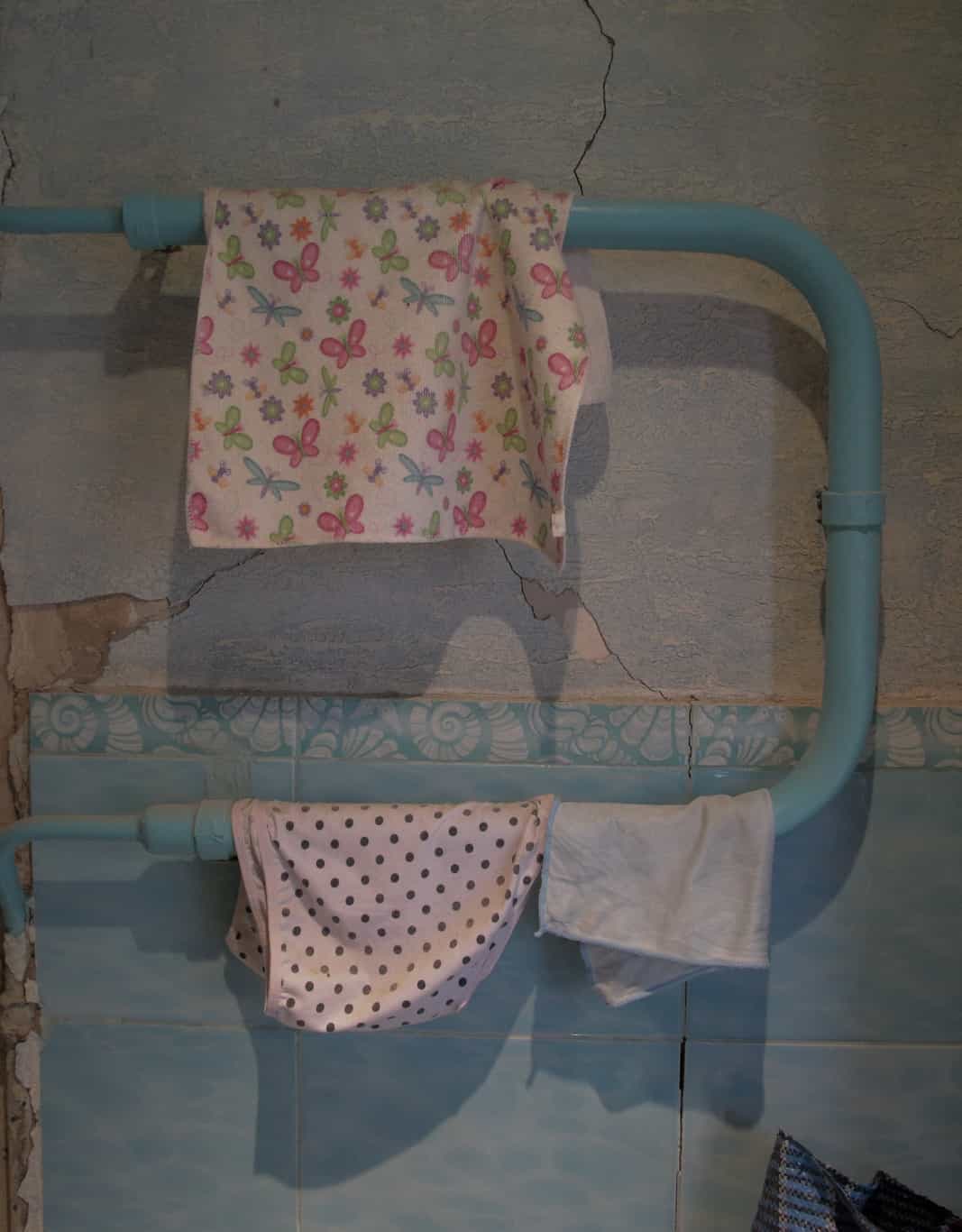
But I fully realize that sooner or later I'll have to do this, since I have a duty to my husband (need to find his grave, possibly rebury him). Now we have from Vova only rubber slippers left (we could only find them on aunt's feet under the rubble), which we carry everywhere with us and somehow can't bring ourselves to throw away...
Papa lives there, brother is already ready to return, mama, grandmothers and grandfathers are buried there...
Besides, I can't make the decision alone, I have two "navigators," my children, who are already mature enough that I could ignore their opinion.
So time will tell. We'll decide together.
Testimony Photos
In Sections
Other Testimonies from the Archive
- Recording
She recognized me, she was screaming. But by the time we got there, she’d already bled out
A resident of the village of Hroza about the Russian strike that killed 59 people
Volodymyr Bespalyi10/11/23 - Recording
For me, bread means sweat and calluses. And now blood, too
A Ukrainian helped his family work the fields and nearly went blind after stepping on a mine
Dmytro Yeliseienko04/25/23 - Recording
I need to go to the morgue. My husband is there
A mother of three lost her husband during the bombing of Mariupol
Olha Berezka08/16/22 - Text
If they restore my sight, I want to go to Ukraine
The life of a Ukrainian woman whose portrait became the first face of the war
Olena Kurylo12/18/22 - Text
The coffins were sealed. There were three intact bodies; the rest were fragments
A Ukrainian man lost seven family members in one day. He couldn’t bury them for over a year
Vitalii Perehon06/21/23 - Text
I stayed on my shift for 4 and a half extra months
A trauma surgeon lived and worked in a hospital basement in an occupied city for four and a half months
Yurii Kuznietsov11/10/22