Instagram Post Text
Attention! Translation was done using AI, mistakes are possible
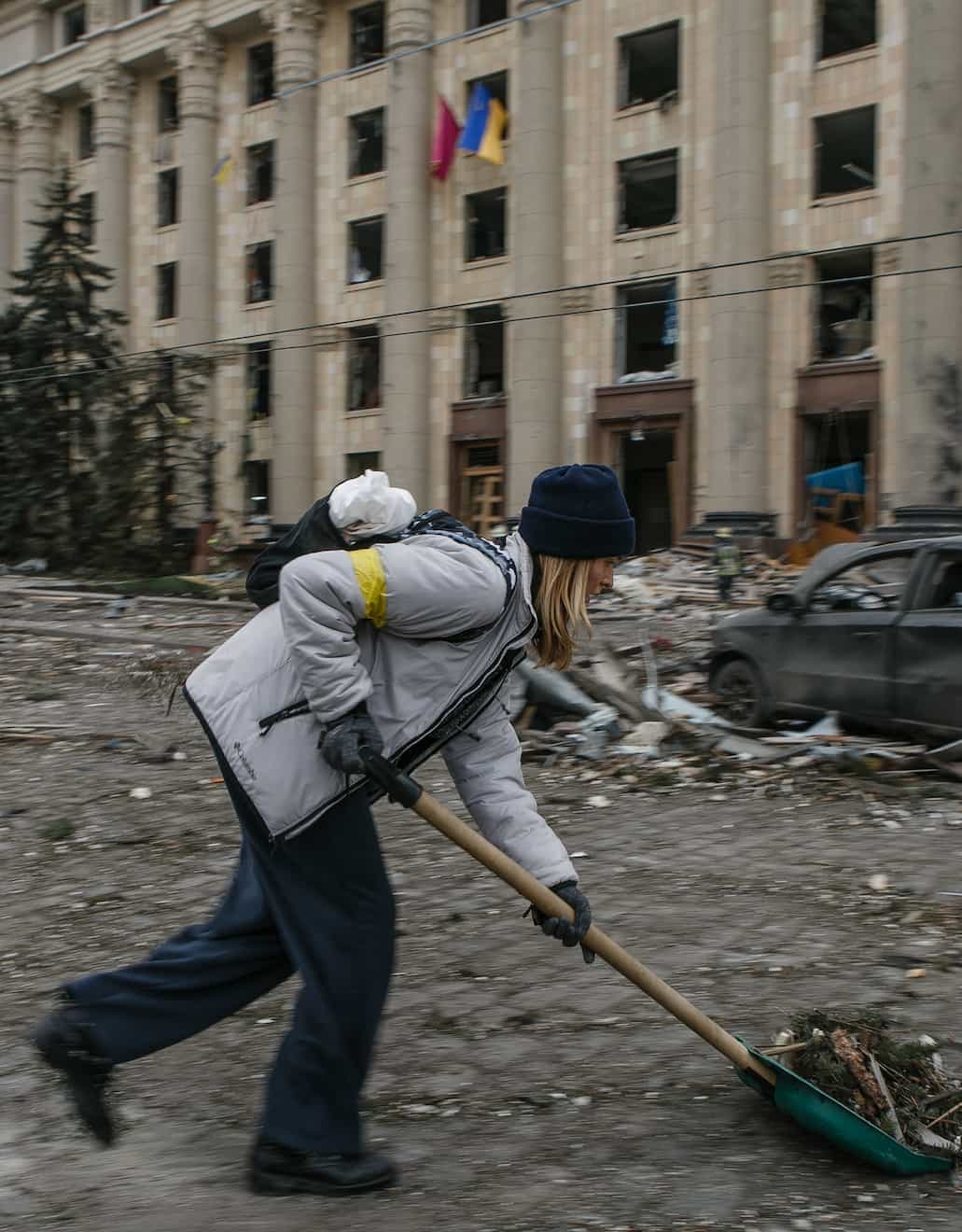
After the war started, I helped the wounded in a hospital. I didn’t know whether to leave or stay. I couldn’t leave through Europe: I had no visa, and I’d given all my cash to the Armed Forces of Ukraine. I’m not a military person, I even have bad eyesight, but I wanted to do something useful. I went to the hospital. There you can be useful — cleaning up feces, carrying out urine.
I immediately told the head coordinator that I’m Russian, I don’t speak Ukrainian. He said: “No problem, I have relatives in Russia myself.”
Before that, I’d already spent two weeks volunteering in a hospital in Myanmar — I had some experience caring for patients. But my first visit to a hospital in Ukraine was a shock. Myanmar was much easier — there I understood we were fighting ordinary diseases. That makes sense. But how do you react to the fact that my own country bombed these people, and now they’re lying here with horrific injuries?
That’s where I first saw a person with a concussion. He lay there with a split head, stapled shut, and instantly forgot everything. He’d say: “Give me my pants, I’m going home.” I’d say: “You can’t go home.” And so it went for several hours. You just sit there, stopping him, calming him.
I worked exclusively with the severely wounded. People with head injuries, tracheostomies, unconscious. They needed to be wiped down, their urine bags drained, fed.
I wish I didn’t have this experience. That I didn’t know how to clean a tracheostomy — I don’t want to know what a tracheostomy even is. I’m a designer. I wanted to make websites, apps, travel. I wanted to help people and animals, but definitely not sit and watch people die because citizens of my country are launching rockets.
I only had one conflict over my citizenship. The Ukrainian volunteers who knew me joked around: “Come on, say: 'palyanytsya, Ukrzaliznytsia.'” For us, it was just a normal thing, nothing special. But during one shift, a new volunteer showed up, figured out I was from Russia, and left to call someone.
An hour later, soldiers came in with automatic rifles and said: “You’ve caught a spy here.” I immediately understood they meant me. “Wait, let me finish pouring out the urine,” I said. I showed them my [Ukrainian] residence permit, said that naturally I’m against the invasion, which is why I came here to help. I’m a citizen of Russia, but I didn’t choose my citizenship. How can I be a spy if I myself started being bombed on February 24?
They asked me to leave while they sorted it out. That same evening, the volunteer coordinators called everyone I’d worked with, and they all vouched for me. I was asked to come back the next day, and the person who’d called me a spy was suspended. They kept the Russian and suspended the Ukrainian.
Before the war, I traveled freely through half of Ukraine, speaking Russian. I have tons of Ukrainian friends in Odesa, Kharkiv, Kyiv, Zaporizhzhia. There’s a law in Ukraine that services must be provided in Ukrainian, but everyone calmly switched to Russian if they knew the language.
I can’t call myself Ukrainian, but I don’t want to call myself Russian either. I grew up in Siberia, and my father is Ukrainian. Then I left Russia and have been living in Georgia for two years. I speak Russian, English, and know a little Georgian and Ukrainian. I don’t believe in the “brotherhood of nations” — I understand perfectly well that Russians and Ukrainians are absolutely different people.
One of the justifications for the war was that they were protecting the Russian people. But I woke up many times from bombing. I was lucky — nothing hit us. Others weren’t so lucky.
Our side says they only bomb military targets. If you hear rockets flying over your house, you don’t think about whether it’s headed for a military target or not. When at 6 a.m. on February 24 they started bombing us, I texted my mother and wife that I loved them. I remember it now and tears well up.
I still have PTSD. On May 16, I left for Georgia, where my wife was waiting. Georgians love fireworks, and I jump at every one — my heart nearly stops.
Once, we were already falling asleep and a firework went off right below our window. My first thought: we’re being bombed, a rocket hit the neighboring building. I grabbed my wife and frantically started thinking we needed to hide. When I came to my senses, I realized I’d already left, it’s safe here. But over there, it doesn’t end, and people still wake up from bombing.
Every time I read the news, I think: please don’t let it be one of my relatives. Naturally, I worry about them first and foremost. But I don’t want to read about the deaths of any civilians or soldiers either. Nobody should have attacked them. This is the fault of our state, our dictator, and of us as a society.
My wife and I live by the war, even though we’re in a different country. We collect food, humanitarian supplies, try to raise money on Instagram, donate to Emigration for Action, who buy medicine for refugees. We attend émigré rallies.
We have no plans — we’re waiting for victory. The word “planning” has become very complicated now. Nobody planned to live through a war.
I’d like Putin to end up behind bars, in The Hague — I have too many questions for him. His trial would be the best TV series. I’d watch every hearing, every investigation. But I’m afraid that won’t happen.