Back
When you’re dragging a wounded man, you have one prayer: 'Fuck, fuck, fuck, fuck'
A boxing commentator on evacuating the wounded from Bakhmut and losing his son
Yurii Nesterenko is a sports commentator and former press attaché of Volodymyr Klychko. After the start of the full-scale war, he began volunteering to evacuate wounded soldiers from danger zones, doing extensive work in Bakhmut. His elder son was killed in the battles for Hostomel. Yurii described in detail how military evacuation works, what one is forced to endure every day at the zero line, and how letters from his wife and daughter help him carry on.
Interview
Transcript
Transcript
Attention! Translation was done using AI, mistakes are possible
КА: Hello.
ЮН: Are we doing a video interview or something?
КА: I only need audio.
ЮН: I'm ready then, if you can hear me normally.
КА: Yes, yes, I can hear you well. Thank you for finding time to call me, I understand that you have a very tight schedule. Tell me first, Yuriy, do you have any questions for me that you'd like to clarify before recording?
ЮН: No, I don't. I just don't know the direction of our conversation. You ask questions, I'll answer them, that's all.
КА: The framework of our conversation will be around your work in Bakhmut. We want to tell in your words about what's happening there, how medics work there, how you work there, in general, to convey the entire situation on that frontline through the story of how you work there.
ЮН: Look, if we're talking about work in Bakhmut, in Soledar, in Toretsk, if hell exists on earth - then hell is exactly there, because every day is walking on the edge. And it doesn't matter whether you're sitting in trenches, evacuating the wounded, whether you're a combat medic, or you're a medic at a stabilization point - something can hit at any moment here. Recently Yara died, Yanochka, our little angel, this says that you can die at any moment. And this scares you at first, then you get used to it, and then you just learn to live with it - to listen, not to take unnecessary risks, not to show once again that you're a hero. War doesn't need heroes, war needs those who know how to survive, so they can do their job tomorrow too. Therefore, if there's hell on earth - this is Bakhmut.
КА: We'll now try to describe this through questions. An outsider, naturally, won't be able to imagine all this horror, all this hell, but at least try to outline it. I want to start with how you generally began working in Bakhmut. I looked at the interview you sent. You went there in September, I think?
ЮН: I'm one of those people who was involved in organizing and training people in the Territorial Defense Volunteer Units "Avangard," that's Khmelnytskyi. When I understood that the work was done there, there was nothing more to do there, I tried to get enlisted through the military commissariat. Let's say, they told me come later, later, later. I can't sit and perform some kind of work, I'm like that in life, I need to climb into the very ass of the devil, crawl out of his mouth and break his horns. My comrades from the eighties invited me, from the Special Operations Forces, they said they needed smart guards to provide cover for medics: if needed - drive a car, if needed - provide first aid. First aid - that's a tourniquet and bandage, that's all, you can't do anything more. I said: "Yes, please, I'm ready." I ended up in one of the volunteer medical units, and ended up first in Bakhmut, this was July 2022. From there they asked me to move to Kharkiv Oblast, from September I was in Kharkiv Oblast, this is Pervomaiske, Pyatihorske. From there together with the 518th brigade we carried out the offensive. Despite the fact that we're volunteers, we were a little bit behind the main attacking block, evacuating the wounded from zero. This was Bayrak, Balakleya, Novaya Gusarovka. After Novaya Gusarovka the troops went so far forward that in general deploying stabilization points wasn't possible, because the advance was there 10-15 kilometers, and zero 10-15 kilometers to the stabilization point - that's very much, that's incredibly much. If it's a serious wound, he can bleed out in one and a half to two minutes. We were told: "You've already done a lot here, rotation awaits you." Our rotation lasted exactly three hours. After we packed our things, one of our leaders came in and with a guilty look says: "Need to go to Bakhmut." Some refused, and since my children with my wife are abroad, and here, let's say, nothing holds me, I said: "I'm not against it." I arrived in Bakhmut, joined the 93rd brigade "Cold Yar," helped other brigades - 60th, 63rd, 57th.
КА: These are Armed Forces of Ukraine brigades, yes?
ЮН: These are Armed Forces of Ukraine brigades, yes. Until February 20th of this year I was there. We were engaged in evacuating the wounded from zero, from stabilization points to hospitals. Naturally, if you're going to the troops, then going empty is senseless, so we brought everything, starting from water and ending with generators and ammunition.
КА: And when you went to Bakhmut, once again, this was summer, yes?
ЮН: September 25th I was already in Bakhmut.
КА: So September 25th you're in Bakhmut. Strange question, I understand, but weren't you scared to go to such a harsh zero? How did you generally prepare for this morally?
ЮН: If I'm honest, the most difficult thing for me was to get out of the car, out of an armored car, even out of a pickup, out of a bus. To get out of the car and run to the wounded - that's the scariest thing. But to constantly be afraid... Fear eats you up. Many say: fear is fire, if you control it - it warms you, if you don't control it - it burns you. I think this isn't entirely correct. Fear is constant doubts, and the more doubts, the more you start to get nervous. You can't get out, so you somehow start destroying yourself, engaging in self-eating. Therefore, I'm an adult person, I'm practically 60 years old, and let's say, the wild nineties and even more difficult times of crises taught me to make decisions. Sometimes these decisions, of course, are wrong, but in most cases, in general, everything was right. Therefore I didn't doubt. On February 28th my eldest son died, so this became personal, this is a personal relationship with every occupier who stepped on Ukrainian land. Therefore I didn't doubt for a minute, even now, when service in this volunteer medical unit has outlived itself. The unit itself turned out to be not entirely clean and angelic, as it's presented. I made only one decision - to get mobilized. And you can congratulate me today - I'm already a full-fledged fighter of the First Presidential Assault Brigade "Storm." Ten minutes ago, as I'm talking with you, I'm already a fighter of this brigade. I made a decision, I'll do the same thing - I'll evacuate, only now I'll teach more those soldiers who will come, pass on my experience to them. For every normal person, a man, especially a man already of age, I think that this is not just an obligation - there needs to be understanding that let the young ones sit a little more.
КА: I don't even know whether to congratulate you on this, but I understand that yes.
ЮН: No, you know, I...
КА: Then congratulations!
ЮН: Thank you very much. You know, when I see how military commissars start chasing people, serving summons, this pisses me off. After the first war in 2018 I came to my brother in the United States of America, he's lived there for a very long time. I came out in military uniform, I never heard when people walk up, salute and say: "Thank you for your service!" Unfortunately, we don't have such practice, so I suggest to military commissars, when you meet a person who needs to be served a summons, stand at attention and say: "Dear Ivanov Ivan Petrovich, Ukraine entrusts you with the high right and honor to come out in defense of your homeland, your families, your mothers, and we give you a summons for this." And film all this. When a person starts hystering, all the negativity will be on this person. Because defending the homeland is an honor. And being an occupier is shame. That's all.
КА: This is absolutely true. I probably understand that you don't really want to talk about this battalion, what happened there?
ЮН: No, I can talk. There are very good people there, it's just the leadership of this unit, of this volunteer battalion, they don't respect people, they use them. They just use them brazenly, in the dark, and this is very mean, I think. You know, there's such an expression: "I'm not lying to you, I'm just not telling you the whole truth." This volunteer unit, they perform work, they evacuate the wounded, intubated ones, which medical units of the Armed Forces of Ukraine don't always manage to do, that is, they do remarkable work. It's just at what price this might backfire, there will be tragedy. Because people there are mostly with some incomprehensible automatic weapons, drivers and medics. My task was to teach survival. If a car, say, came under shelling, they had to know what to do, where to exit, how to hide, what to do with the wounded. There used to be some classes, now this doesn't happen - this is too costly, because classes should happen for at least two weeks, and for two weeks people need to live somewhere, somewhere they need to be fed - this is very expensive. Therefore we minimize expenses, as was said, and there god, in general, will judge. No matter how I tried to explain that "you understand that when a person is under shelling, he gets lost, and an unprepared person, he's not even ready to listen to my commands on what to do. And this will be a tragedy." But we didn't get along in character, so everyone went their own way. I wish this volunteer unit good luck, and to everyone who's planning to connect their life with it I just said: think one more time, because dying is easy, unfortunately, dying a hero is even easier. Only heroism is the ability to survive, so you can continue beating the enemy tomorrow.
КА: Let's return to Bakhmut a little then, if you don't mind.
ЮН: Yes, please. I'm now on Koltsevaya, if I pick you up, we'll return to Bakhmut in exactly eight hours.
КА: Can you tell in detail to a person who doesn't really imagine how your work is carried out? You say that you helped the 93rd Armed Forces of Ukraine brigade, what rank do you have there - not rank?
ЮН: In my past life I was a whole lieutenant colonel of foreign intelligence, but that's in the past. Here I came, I didn't have a rank, I'm a volunteer. Even now I got mobilized into the Armed Forces of Ukraine as a soldier, just a soldier. Because, you know, having a rank presupposes having a position. I don't want to have a position, I want to do what I did in Bakhmut. I did this fucking well, and continue doing this, but now already being in the Armed Forces of Ukraine. If there was a possibility to continue being a volunteer, that is essentially a civilian contractor with some military unit, I would continue doing this. It's not about money that can be earned, not about medals and not about rank. It's about this being personal. When something personal comes to the foreground, then everything else goes far to the background. What did we do? First - this is second-level evacuation. We were called to a stabilization point, where the wounded were delivered directly from the front. Military medics stabilized them, that is, brought them to the state that allowed transporting them already for second-level evacuation, that is directly to the hospital, where the wounded were already provided with main medical help, operations were performed, and so on. For this we had ambulances, two ambulances, two crews - anesthesiologist and his assistant, medical orderly, there was a driver and there was a guard. I was a guard who carried out, let's say, protection of the entire crew.
КА: And what does this mean? How is this arranged?
ЮН: Protection of the entire crew? Look, often stabilization points are located in direct proximity to the defense line, because delivering from the defense line - that's maximum seven to ten minutes. I had to listen to the air, whether there are outgoing, whether there are incoming. I had my own little drone, I launched it to understand the situation, to look around, let's say. As we said, to rise above the fuss and understand who we live next to. The driver drives, medics deal with the wounded, my main task is to watch so they're all safe. If there's mortar shelling, then the car needs to be put in that place where there's the smallest probability of any damage by shrapnel or direct hit. It was necessary to understand, can we evacuate the wounded, can't we evacuate the wounded, at what speed to drive, by what route to drive. All evaluation of this information was done so that without any unpleasantness and problems we could deliver the wounded directly to the destination, that is to the hospital. Did I have to shoot from the car? No, I didn't. Did I have to lead medics out and pull out the wounded? No, thank god. Preliminary information gathering, information evaluation allowed doing all this with the smallest level of danger. Did we come under shelling? Yes, there was shelling ahead, behind. Holy Mary, help, god, protect, pedal to the floor - and forward. It's very difficult to hit a fast-moving target, only if there's work by square. But god had mercy. Although very many crews still got hit, there were tragic cases, there's no getting away from this. But us, as they say, god had mercy, knock on wood. On the frontline human resources, you understand - if a medic from the crew was wounded, and there are two people in the crew, then one is unlikely to manage, so chief medics say: guys, won't you help? Most guards said: no, this isn't what mama gave birth to us for. I got up and said: yes, I'm ready.
КА: And this help, was it in applying a splint...
ЮН: No, no, there are very good tactical medicine courses, I'm very grateful to those people who tell how to do this or that manipulation to people who don't even have medical education.
КА: And you went to such courses?
ЮН: I came to these courses already after, let's say, the first attack in Kharkiv, the first stay. I can say that all this is complete nonsense. The only thing you manage to do at zero, when a person is wounded - is to apply a tourniquet, at best, tamponade the wound and apply a bandage. That's all. No needles in lungs, pill in the mouth - you don't do any of this. The only thing, when you're dragging to the evacuation point the wounded, you have only one prayer that you pronounce, this is "fuck, fuck, fuck, fuck." You delivered to the evacuation point, your car already arrives, and it doesn't matter, pickup, van, "Niva," the main thing is that it drives, and preferably fast. And you just throw the guys onto the back seat, into the bed, into the trunk. If it's armored vehicles, then you use the moment to maximally, excuse such a word, stuff the insides of the transport vehicle with wounded. After this either you're behind the wheel, or your colleague quickly-quickly drives to the stabilization point and there the wounded already get into the hands of doctors who stabilize them.
КА: I understand correctly that one of your tasks was to pick up the wounded from...
ЮН: Yes, when the need arose to go directly to the evacuation point, which is at zero. Understandably, this isn't on the very line of contact, this is somewhere five hundred meters, maybe less, maybe more. Most importantly, this should be a more or less protected place, because the car has to stand there, that is, you can't do this in an open field. Sometimes, if we're talking about an open field, this was carried out deep at night, either with night vision device, or generally in complete darkness, quietly drove up and quickly loaded the wounded. This was the most, on one hand, safe method, but this was also tragic, since until night, until darkness many simply didn't survive, unfortunately.
КА: And how did you learn about the fact that, let's say, from some place you need to pick up wounded?
ЮН: Banal communication. There were evacuation points, we knew evacuation points, we knew codes, we knew where to go.
КА: That is, military personnel transmitted to you?
ЮН: Naturally. You understand, if we're talking on civilian open radios, then this is also known to the enemy. If there was no communication, then they agreed that we, let's say, come out there every hour and a half.
КА: That is, there are some points from which military personnel know that you evacuate the wounded?
ЮН: Yes, yes, this is usual practice, this isn't our know-how, this is worldwide. Exactly the same with the British, and Americans, and the pig-dogs have the same methodology. This is ordinary practice.
КА: So you say that it's better for this to be a safe place. And what in general in such hell as in Bakhmut can be considered a more or less safe place to pick up wounded?
ЮН: Any surviving building, any hole, garage, wall, preferably concrete. Understandably, if you take a bit north of Bakhmut, there where it's private sector, there now everything is mowed down, there's nowhere to hide. That is, any safe place where you'll have at least five minutes to be safe. In Bakhmut itself even across the river we transported wounded, this is seven minutes to any, say, capital structure, behind the corner of which a car could hide.
КА: I understand that military personnel chose the points of these evacuation posts?
ЮН: Yes, this is purely a military task, this is an Armed Forces of Ukraine task. We only provided feasible help, let's say. Agree, it would be stupid if I, a civilian, came and told military personnel what to do.
КА: Yes, of course, understandable. Can you recall such hottest, harshest evacuations to stabilization points? What condition were people in? How many did you have to pick up?
ЮН: You understand, it's impossible to say that this particular case was... Among cases that I remember - this is a young guy who had traumatic amputation of two legs and an arm. And he's conscious, he's in shock, the guy is 23 years old, my son is older. We're in shock, and he says: "Listen, I remembered a joke here!" The guy was so fearless, for all your fears you felt shame - here lies a kid without legs, with one arm, asking for a cigarette, telling jokes. Maybe this is some psychological shift, maybe he didn't understand everything yet, but we look at him, we see him, and he says: "Well what's wrong with you, guys, it's normal, I'm alive after all." There was a moment when we were pulling out a child who got hit by shrapnel, abdominal cavity. This was a girl. Military personnel evacuated her from the Bakhmut area, and we intercepted her on the road and drove all the way to Pavlohrad. Our medics stabilized her, shrapnel went through there, there was bleeding, and they constantly poured blood into her. We drove for about four hours, I think, and constantly poured blood. Thank god, she turned out to have a blood type that I had. They delivered her, saved her, but those eyes... This is simply impossible to forget.
КА: And how old was she?
ЮН: I don't know, here the question was to deliver her. This is a small child, maybe seven, nine years old, well ten maximum. This was simply a child, blue eyes, such brown hair, you know, like they draw princesses in paintings.
КА: Did she survive?
ЮН: Yes, she survived, thank god, they delivered her. Well and the last - this is what, actually speaking, forced me to part ways with this volunteer organization. This is when a volunteer from Poland was wounded, a mortar mine hit, and she had traumatic amputation of the right leg up to the knee. We applied a tourniquet, brought her to the stabilization point. At the stabilization point they prepared her for the possibility of further transport. She needed to be taken to Pavlohrad, since she's a civilian, and have the operation done there. There was hope that the leg could be saved. She needed to be taken by ambulance, they didn't want to give the ambulance. I still, let's say, using force of persuasion, took the car, two medics agreed to go. We took this girl. Thank god, everything's fine with her, the only thing is that it was impossible to save the leg. She's now in Poland. Since I'm Polish, I contacted the consulate, contacted my colleagues from Fundacja Zakres, and they organized evacuation from Pavlohrad to Krakow, to her native city. But there was another problem there, their car was damaged. Thank god, only two rear wheels were punctured, it hit the body, most importantly - didn't hit the motor. And there the guy, driver, remained, he was essentially abandoned. When I asked to give a car to evacuate this guy, I was refused. Thank god that I had my "Niva," this was a beast-car in the direct and figurative sense of the word, because it roared impossibly, everything roared, starting from the engine and ending with the chassis. We came, saw that it was more or less whole. Opened doors, something was stolen, that is, stolen, but, thank god, the car was running. We went quietly at night, dragged the car under the stabilization center, it was there in safety, under supervision. In the morning we came, removed wheels, went to Kostiantynivka, with difficulty found two wheels radius 15, since this is the most popular radius. Made wheels, returned to Bakhmut, put the car on wheels, and I evacuated him to the road to Pavlohrad. At the same time no help from this volunteer organization, in whose ranks I was, was offered to me. You understand, big declarations are made, only the implementation of these declarations is very-very small. I'm a media personality: I'm a boxing commentator, producer, TV channel director, worked at radio stations. Naturally, Poles, English, French started coming to me to give interviews. And this was perceived as me promoting myself instead of advertising this organization. They were sent harshly in the direction of the Russian warship, and this became already a catalyst for us parting ways. I was ready to go at any time, so as not to waste time on the road, with my car, with which I evacuated lightly wounded. And this is eight people, those who were shell-shocked, and those who had gunshot wounds, but they didn't require a resuscitation crew. These guys were always evacuated last. Taras Shelestyuk, Ukrainian boxer, gave me a car on which I evacuated the lightly wounded. Again, this was perceived as: you're doing PR on blood. In the end, we were forced to part, which I'm glad about, since I became a free person. But I couldn't get permission to be on the frontline, although I tried very-very hard. Therefore I chose one path, as I already told you - to get mobilized, which I did.
КА: And I'm listening to how you tell about how you picked up wounded, delivered to stabilization points - what kind of cars were these? This is the one that was given to you or these were always some different cars?
ЮН: This is everything that moves. This can be L200 pickup, Volkswagen Amarok, Nissan Navara, fourth, fifth UAZ [editor's note: "denchik" likely refers to UAZ vehicle], this can be any minibus. I'll say that on my "Niva" I always delivered two-three wounded. True, these were seriously wounded, but who didn't require intubation, that is, didn't require resuscitation actions. There were "Cossacks," armored cars, there were "motolygas" [editor's note: slang for armored vehicles], boxes that deliver infantry to the front or something else. Everything that could be used was used.
КА: And where did you take these cars from, did volunteers bring them to you? Everything that moves, it appeared somewhere in Bakhmut after all?
ЮН: Mainly volunteers, either volunteers by request of military units, or just personal connections. My students from my department congratulated me on my birthday, giving me a "Niva." That's how cars appear. Guys made a collection somewhere, drove it over. A fighter asked: "Guys, need a car" - somewhere either in Ukraine they found or brought from the West.
КА: Can you describe how the work of medics at stabilization points is organized, what happens there? So you bring several wounded from evacuation, what happens to them next?
ЮН: There are resuscitation crews who take the wounded to the operating table, cut clothes off him and then perform a complex of medical measures to stabilize the person. If there's bleeding - stop the bleeding, if an arm is broken, then secure the arm, if there's traumatic amputation and everything is hanging literally on skin, then cut this off. That is, all those medical measures that are necessary to stabilize the wounded, bring him to that state that would allow transporting him further to the hospital.
КА: I understand correctly that this happens literally in cars or...
ЮН: No, in cars this happens very and very rarely. Since, you understand, to hit a vein with a needle, you need to still stop, or drive on a super car on a super smooth road. If there was possibility to evacuate the wounded very quickly to a safe place that presupposed some visual protection from the same little drone, then it was possible to stop and resuscitation measures took place directly in the car. These are some structures, basements, surviving buildings, everything in which surgical actions can be performed. This isn't necessarily sterile, although in general they tried to achieve this. This is simply a room. Imagine that on your kitchen, on your kitchen table, a wounded person appears. People who were sitting in phones, or eating, or drinking tea, or just dozing - in an instant everyone turns out around him and tries to defeat death.
КА: I understand correctly that technically this is arranged like this: a brigade, they don't have any points for stabilization points, you just choose in the process where to stop and go in...
ЮН: Yes, there's a command, chief of medical unit, who chooses the place where the stabilization point is located.
КА: This is always different places, literally every day?
ЮН: This is such a place that is maximally safe for conducting stabilization actions.
КА: Were there cases, for example, that these were someone's residential apartments, that you had to somehow...
ЮН: No, no, about the kitchen I was exaggerating.
КА: I understand, I just decided to clarify, maybe there were such cases.
ЮН: No, no. Preferably, this should be some medical unit, or some building where there exists one big room, or two big rooms. If you've ever seen an operating room, something of similar size.
КА: And how are such rooms searched for in zero conditions?
ЮН: With legs, with eyes.
КА: But you probably didn't do this?
ЮН: No, no. There exist quite professional competent groups who can do this. Because it's not enough to find a house, you need to understand what will hit there - won't hit, is there water - no water, is there electricity - no electricity, evaluate whether it's mined there - not mined. Much is known in advance - prepare the sleigh in summer, the cart in winter. There are backup stabilization points, this is a whole system. Sometimes, if the enemy approached and they start shelling the stabilization point and shelling densely, naturally, evacuation needs to be conducted. Evacuation is performed to a backup point that is most convenient for quickly transporting equipment, quickly transporting wounded and continuing to work.
КА: Were there cases when targeted shelling started during operations, stabilizations?
ЮН: Constantly. This is still five-six kilometers from the front edge, you should understand that mortar reaches, artillery reaches, anti-aircraft missile reaches, so yes.
КА: And how does this happen? Can you try to paint with words such a day when you had to evacuate already from a stabilization point?
ЮН: The most illustrative story - this is the story of the children's hospital in Bakhmut, which was located on the highway [toward] Khromove, opposite Nova Poshta, there was a stabilization point. At some moment scouts said that there's a probability of shelling, and rocket S-300 at that. We rushed there at two in the morning, literally everyone. First - this is, of course, wounded and personal staff, people. The wounded were shoved in like they show in the Tokyo metro, that there are special pushers of passengers into metro cars, that's how we loaded. First all the serious ones were evacuated, and then we evacuated people who were standing on one leg - two cars. Thank god, people were evacuated. Alas, we didn't manage to evacuate equipment, since two S-300s hit. Unfortunately, four comrades died, without chances. There, where they stood, they were supposed to evacuate generators, and that's exactly where it hit.
КА: My condolences.
ЮН: Hit from another side too, this was enough for the building to be destroyed: windows blown out, very many partitions destroyed. Then we came there, took surviving equipment, surviving generators, medicine - everything that could somehow be used further, we took. Already the next day we drove there very much.
КА: This children's hospital, I understand that it hadn't been functioning for a long time, it was chosen as one of the stabilization points?
ЮН: Imagine that on one side the upper two floors are destroyed, it's four-story, if I'm not mistaken, windows blown out, partitions by shock wave that came inside the room through windows, doors blown out, walls destroyed. Walls are drywall, there was big space that was divided into offices. All windows blown out, on one side a crater about fifteen meters deep, and in front of the entrance, entry to the stabilization point another hole. We heard these two explosions, but we were already, thank god, far away.
КА: This happened after you had already evacuated?
ЮН: There's no such thing there: here's air raid alert, we stop work, please proceed to bomb shelter. There they constantly shoot, you go outside, hear: boom-boom, boom-boom. You don't pay attention to this, since you already understand that this is far. You feel, you already hear by arrivals that this is - eight kilometers away, this is - five kilometers away, this is - one and a half kilometers away. Silence scares you, when they're not shooting, then - what the hell did they think up? And there were times when they brought a wounded person, medics work, hits from one side, from the other side. If it had hit the stabilization point, I wouldn't be talking with you now. You don't pay attention to most of these explosions. Yes, when it hits and walls shuddered, everyone, you know, tensed up, but this is a second, literally a second, then everyone continues their work saving the lives of our warriors.
КА: I understood. You just said that this stabilization point was in a former children's hospital. I understand that the children's hospital hasn't been there for a long time?
ЮН: It hasn't been there since January 6th.
КА: That is, it was empty, you occupied it as a stabilization point?
ЮН: Yes, it was empty. We met with administration, occupied two little rooms there, they didn't allow us to occupy more. This stabilization point was one of the smallest, there stood three tables and between tables you had to squeeze through. We would have gladly occupied more space, but administration was against it, and we don't have the right to act arbitrarily.
КА: You talked with administration, the hospital wasn't working at the same time, yes?
ЮН: The hospital was empty. You understand, in Bakhmut there were quite a few bad people, supporters of the pig-dogs, who came, received humanitarian aid, then left and gave up the location - and something hit there. Therefore the children's hospital didn't work. Although when people came with children, the child has high temperature or tummy hurts, naturally, help was provided. Well, we're not beasts. But the hospital itself didn't work.
КА: Now I understood. You described that you stopped reacting to shelling and rather silence was something suspicious. How do you come to this? Not from the very beginning after all is such frequency of shelling perceived as norm.
ЮН: You get used to this, a person gets used to everything. Now, for example, they turn on TV or radio not to get information, but for so-called background-informational noise. When you hear some information that interests you, then you switch attention. As soon as shelling starts, you're afraid of everything, because you don't understand the danger, how far this is flying here, and you react to everything. Then they explain to you, you start to listen: when outgoing, whistling-not whistling, if nothing whistles, then everything's fine, you can feel yourself in relatively confident safety. When you hear whistling, this is already a tense moment, then sit in bomb shelter, or body armor and helmet. However, body armor and helmet should constantly be on chest and on head. And then you get so used to this that you already develop professionalism in picking out from this background noise what's whistling. What's whistling is dangerous. I, for instance, have perfect pitch, I feel tonality, therefore what will fall here and now, I can distinguish from what will fall a hundred meters away. Heard whistling - either hide, or fall, and this needs to be done immediately, within one second, because there might not be a second second.
КА: So you react to this, you performed military duties in Bakhmut. And in general people in Bakhmut, I mean civilians, how many of them remained, what condition are they in, what kind of people are these? ЮН: I can't say exactly how many of them remained. Most of those who stayed there are some kind of marginal elements, they just don't go anywhere because volunteers bring food, they manage to make alcohol even from some kind of jam, moonshine. Somewhere they get various narcotic substances, maybe from a ransacked pharmacy or some medical company. People with complete hopelessness remained there, they've resigned themselves. Supporters of the Russian world remain and these marginal elements, drunken half-people-half-homeless. More or less normal people left long ago, because a person can't help but understand, the Russians gave enough examples when people said: "It won't affect us, and maybe, perhaps..." Not a damn thing, perhaps never works, because Russia can't fight with infantry and soldiers, it's easier for them to destroy everything and then fight with civilians. Many people are like: "We live here, we have an apartment here, everything's fine with us," and then there's no mobile connection, they ask soldiers to call such-and-such person. Many people there know me, and they just beg in tears: "Come, take us away from here." While there was such a possibility, we did it. We evacuated children: the mother lies drunk or with a syringe in her hand, and this poor child of two-three years sits there. Naturally, we called the police, they called a social worker, and we simply took this child. Mainly there are degraded elements, or people who are already asking to be evacuated, they've already sat until the moment when there's nothing. Even on the twentieth, sixteenth we couldn't take anyone anymore, unfortunately, because there are no bridges. And how do you explain to a person where he should come out so you could evacuate him? Several of my acquaintances, they have parents in Bakhmut, they cry, call: "Yura, take them." But you can't do it anymore, because going there alone, looking for where they hid, because there's no house anymore, there's no one at the address - it's meaningless. And taking a group of people and going to do this is simply impossible, it's an unjustified waste of time and effort. So people remained there, some say nine thousand. On the twentieth I specifically asked the guys, they took me to Bakhmut, it wasn't in the very center and not on the line of contact. Where the guys died near the children's hospital, I simply commemorated them, put a glass with horilka [editor's note: Ukrainian vodka], laid a piece of bread with lard, lit a cigarette, said: "Bakhmut, I did everything," and left. It was pure hooliganism, I simply felt that I had to do it. We went out, crossed on foot through Khromove, through the little canal, and already in Chasiv Yar I got in my car and left with tears.
КА: I think that if you feel you need to return, you'll return there.
ЮН: Yes, we'll return with the guys on the offensive, and we'll return there to kick out all this Russian fascist filth and return freedom to Bakhmut, like to other Ukrainian cities. You must understand, no matter how hard it was in Bakhmut, no matter how many losses there were, the people who are there - they are extremely motivated. When young soldiers or new units came, and they found themselves next to veterans, they would say: "They'll surrender Bakhmut." Such a moment of silence would come, a ringing one at that, and they were told: "Don't say that anymore, guy." Because no one will surrender Bakhmut. Bakhmut in translation from Turkic means "salt of the earth," how can you surrender the foundation? Many say that Bakhmut is already a principle. No, Bakhmut is now holding back all the Russian fascist scum, who, if God forbid a breakthrough happens, will have a direct road to Sloviansk. Despite all the defense lines, they'll have a direct road, because there's flat terrain to Druzhkivka, everything can be shot through well. And the most terrible thing - they get the dominating height. That's why our guys drive them away from the highway. When they say that dead Wagner members lie there in two-three layers, this is absolutely not an allegory, that's how it is. The first waves of Wagner assault troops covered the field with their corpses, and there was a warming in early December. On the frontline, when the wind blew from their side, it was impossible to be there - the smell of iron, the smell of decomposing bodies was unbearable.
КА: Have you ever had to face the choice of whether to help some wounded occupier?
ЮН: All Wagner members who were taken into captivity by me or other colleagues, if they were wounded, medical aid was provided to them. No one tortured them, no one shot them, the attitude toward them was quite normal. If questions, excuse me, I'll allow myself to express it a bit, you know, like boys: "I have two questions for you: why and what the fuck for?" These were the questions: "Why did you come here?" And we encountered extraordinary ignorance, people didn't even allow the thought that they were acting wrongly. They had the prevailing opinion that they are children of Aryans, gods descended from the mountains, who decided that Ukraine needs to be destroyed. Such words really initially caused some cruelty, then we simply laughed at them. Look at me: I'm almost sixty years old, I may have a belly, but I'm a fit healthy man, and you're standing there, something incomprehensible. Although there were specialists there too, of course, this shouldn't be denied.
Testimony Photos
Testimony Videos
Other Testimonies from the Archive
- Recording
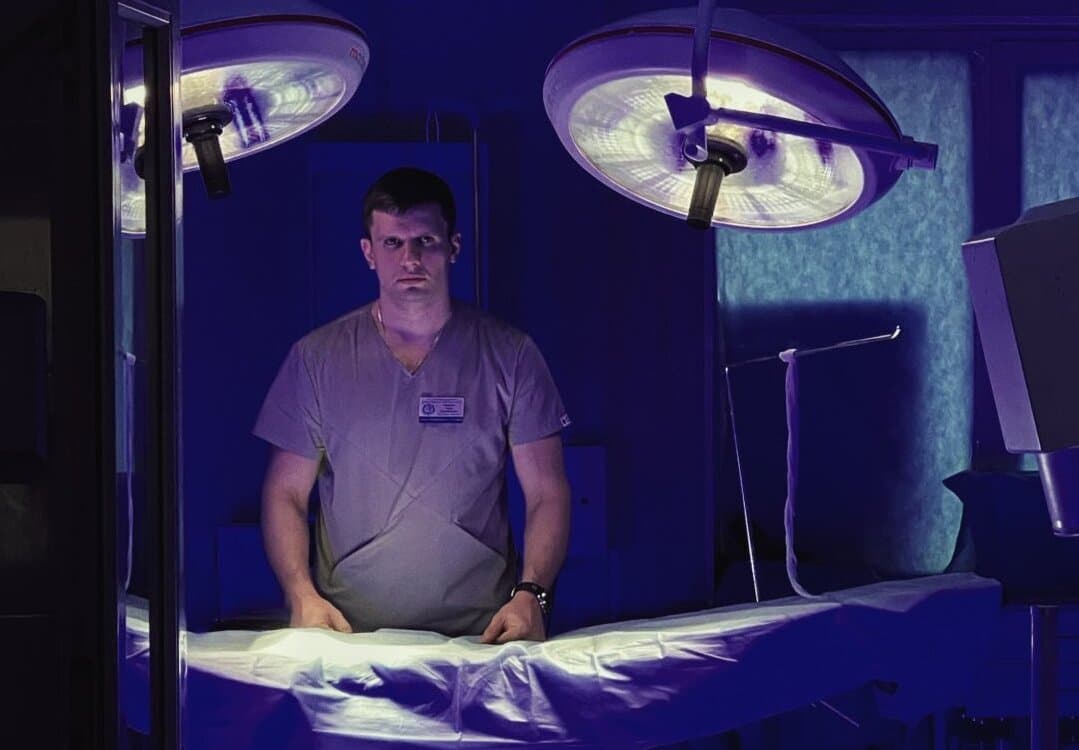
She was screaming for everyone to stop shooting, even though no one was shooting anymore
A trauma surgeon from Dnipro on saving people after a missile hit an apartment building
Taras Hatsenko01/31/23 - Recording
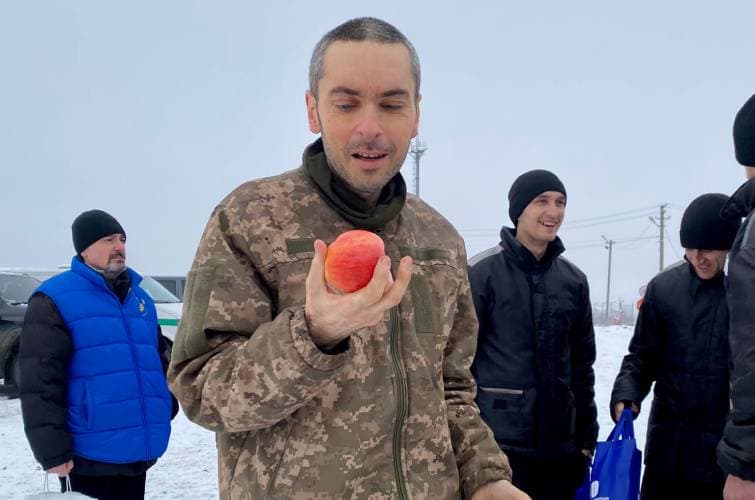
They made us shout 'Glory to Russia'
A former restaurateur went to the front and was captured by the Russians
Maksym Kolesnikov02/27/23 - Recording
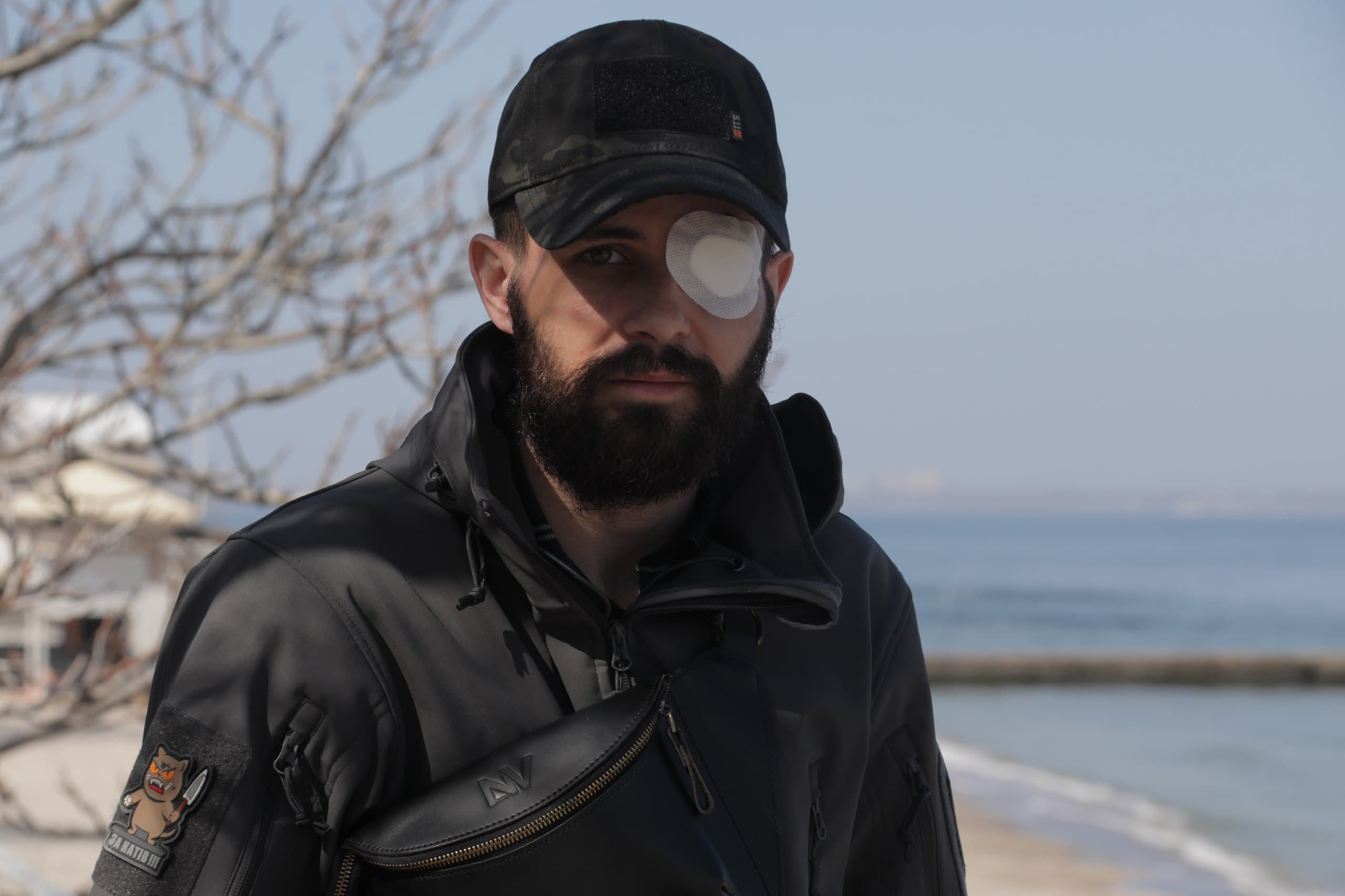
For me, bread means sweat and calluses. And now blood, too
A Ukrainian helped his family work the fields and nearly went blind after stepping on a mine
Dmytro Yeliseienko04/25/23 - Recording
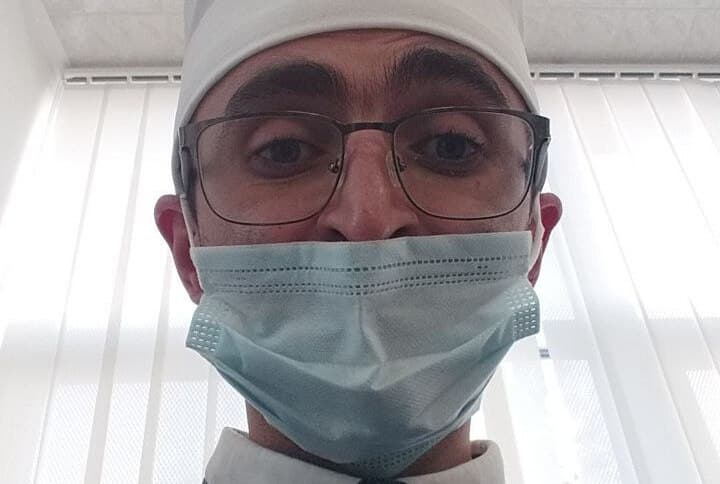
I realized: they’d taken me out to be executed
An anesthesiologist about being in captivity in Olenivka
Yurik Mkrtchian11/22/22 - Recording
I lost faith not just in Russia, but in people altogether
An anesthesiologist about the terrorist attack in Olenivka that killed 50 Ukrainian prisoners
Yurik Mkrtchian11/23/22 - Recording
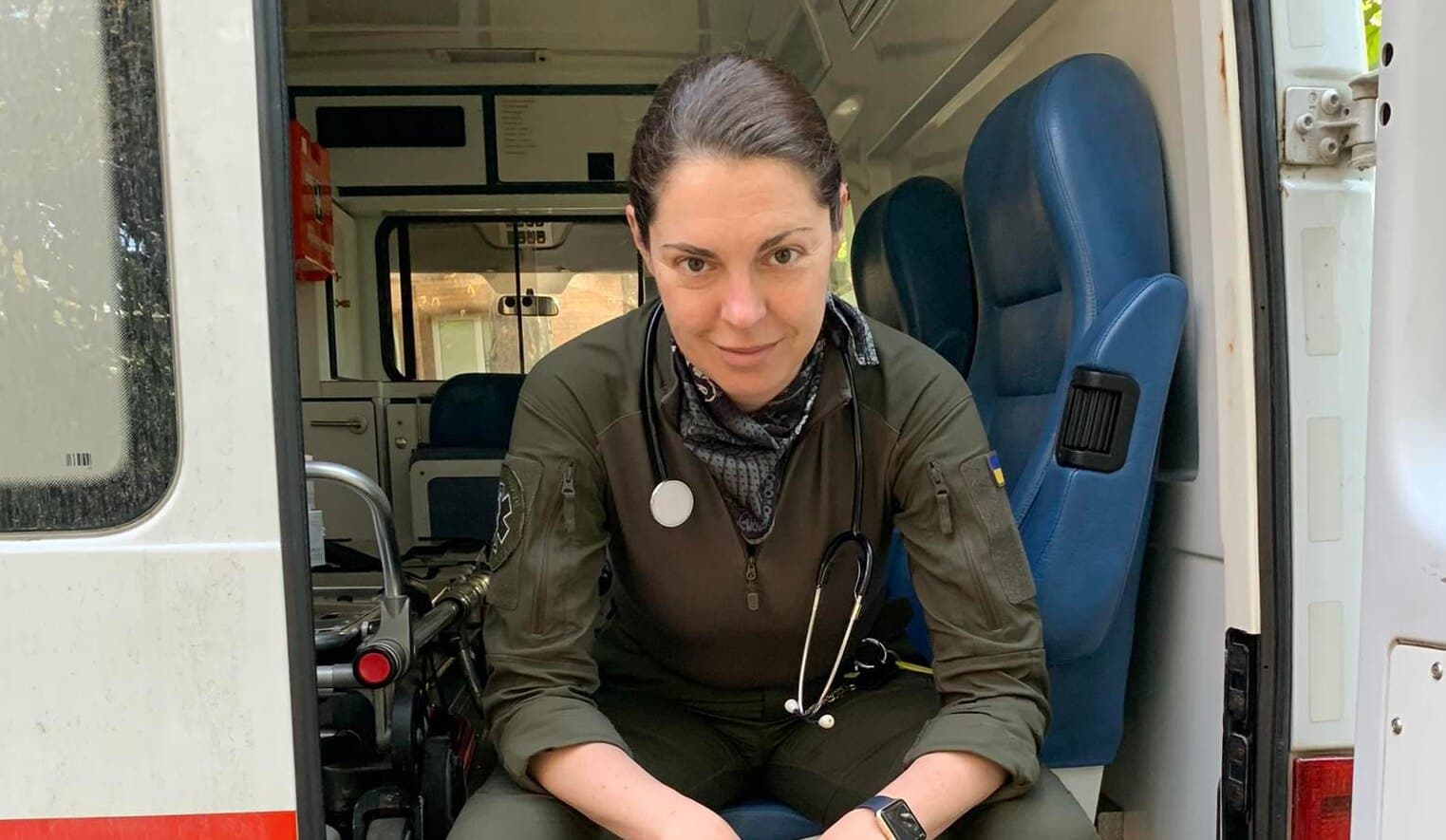
Ukrainians are my brothers. Not a single dirty look throughout the entire war
A combat paramedic with a Russian passport serving in the Armed Forces of Ukraine
Anastasiia Leonova06/03/22