Instagram Post Text
Attention! Translation was done using AI, mistakes are possible
“I’m sorry, I’m leaving,” I wrote to my artistic director. I realized that if I took a few days to wrap up things with the apartment, documents, and so on, it wouldn’t be honest. I had to leave immediately, not a second later. There can be no compromise here.
Somehow I had the sense to withdraw cash from my card. At the bank, the employee looked at me and asked: “Did something happen to you?” I said: “War happened to me.” I don’t know how, but he let me withdraw the entire amount, despite the restrictions. We also exchanged those rubles for dollars — it was a miracle; a few hours later, that would’ve been impossible.
From Moscow, I flew to the UAE, and from there to Poland. I found a large volunteer center in Warsaw. They’d converted an office space into a cafeteria… Beds, bathrooms. Our people were brought there. I translated, played with children, walked them to the bus. I stayed for three weeks and returned to Ukraine around the twentieth of March. I drove, looking at the fields, the checkpoints, the hedgehogs, the signs reading “mined,” and understood that I’d made the most right decision of my life. Ukraine is like a loved one to me — when they’re in trouble, you need to be there.
My boyfriend’s family, including him, were under occupation in the village of Kopyliv (Kyiv Oblast — SP).
He sent me a video of a column of Russian military equipment moving along the road for several hours. After that, he disappeared — they had no communications or electricity for several days. They sat in a basement. Then a solar panel was discovered at a neighboring farm. Then they killed a ram, shared it with the neighbors, and cooked something over a fire. Then a shell hit near the fence. Then they miraculously managed to drive out.
Anton says it was scary on the first day, and after that they felt nothing. Only when they saw Ukrainian flags did they realize they’d survived. His mom went back to Kopyliv the very next day after Russian troops withdrew. She went to plant the garden and check if the goats were alive. The goats survived, and one had given birth to kids.
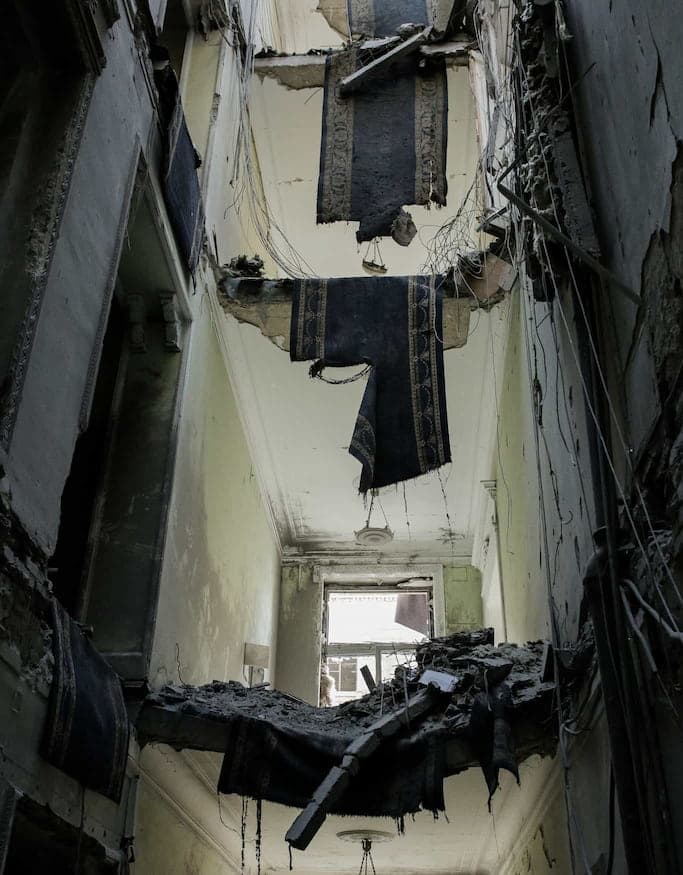
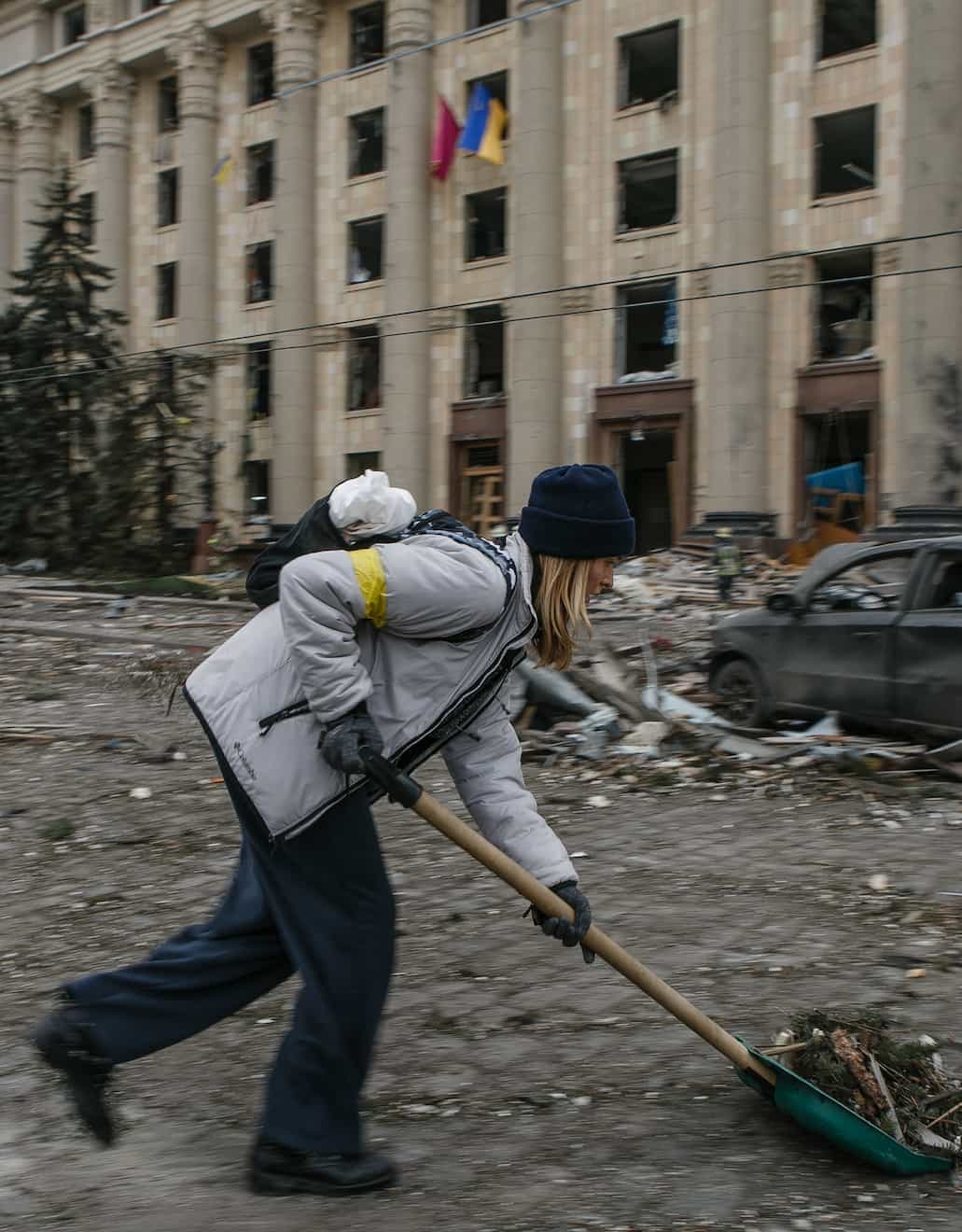
On the second day after Bucha’s liberation, Anton was asked to deliver hot meals there. He’d started volunteering immediately after the deoccupation. I asked to go with him. We drove in — everything was in shards, tanks, equipment. Only the bodies had been cleared. There were people who’d been hiding in basements. When they saw us, they immediately asked us to call their relatives and tell them they were alive. In Bucha, I saw a severed arm on the roadside. There was a teenage girl who came out in heels and makeup, a bit dirty, covered in soot — there was no water. But she was all done up, because the press was coming.
In Bucha, I filmed on my phone and posted to Instagram. People started writing to me that I’m an ungrateful bitch, that Russia gave me so much. These are my viewers, who came to see me in theater, brought flowers, and said: “Oh, you’re our little Ukrainian sunshine.” Now I have fewer followers — I deleted everyone who had a Z symbol on their page.
Right now, I weave ghillie nets for our snipers. Mothers come with their children — the older ones weave too, the younger ones draw pictures with wishes for our guys. In every ghillie net, in a little pocket, they tuck a drawing. Everyone watches over this — it’s like a blessing. I tie these knots and pray over each one. If I’m making a sleeve, I think about that arm: “God, please let this hand stay whole!” When soldiers give feedback, saying the ghillie turned out great, I’m happy — however wild that sounds.
When I came back, I was ashamed to talk about myself. In Poland, I met a woman who’d fled the war. She started asking about me, and I couldn’t say that I’d lived and worked in Russia. I stayed silent. But you can’t hide it forever, so I’ve gradually started telling new acquaintances about myself. Sometimes I hear: “God, what are you doing here? Go back to your Russia!” I understand these people — their reactions are understandable.
My family is pro-Ukrainian — they always have been. When in 2010 I was accepted to study acting in Moscow, my father was in shock. I was 20, I didn’t take his words seriously. I wasn’t interested in politics, I believed that art saves and unites. How badly I screwed up.
I feel like I spent 12 years living with an abuser. Woke up one morning to find he’d killed my entire family. That’s how I perceive the war in Ukraine, started by Russia. When I came home, the first thing I said to my father was: “Dad, you were right about everything.” But I have no regrets. It’s experience. The most priceless thing in life.