Instagram Post Text
Attention! Translation was done using AI, mistakes are possible
For a long time, I kept telling myself we weren’t going anywhere. Where would I go with six children? We had almost no money — definitely not enough for leaving and living independently. We don’t have anyone abroad either.
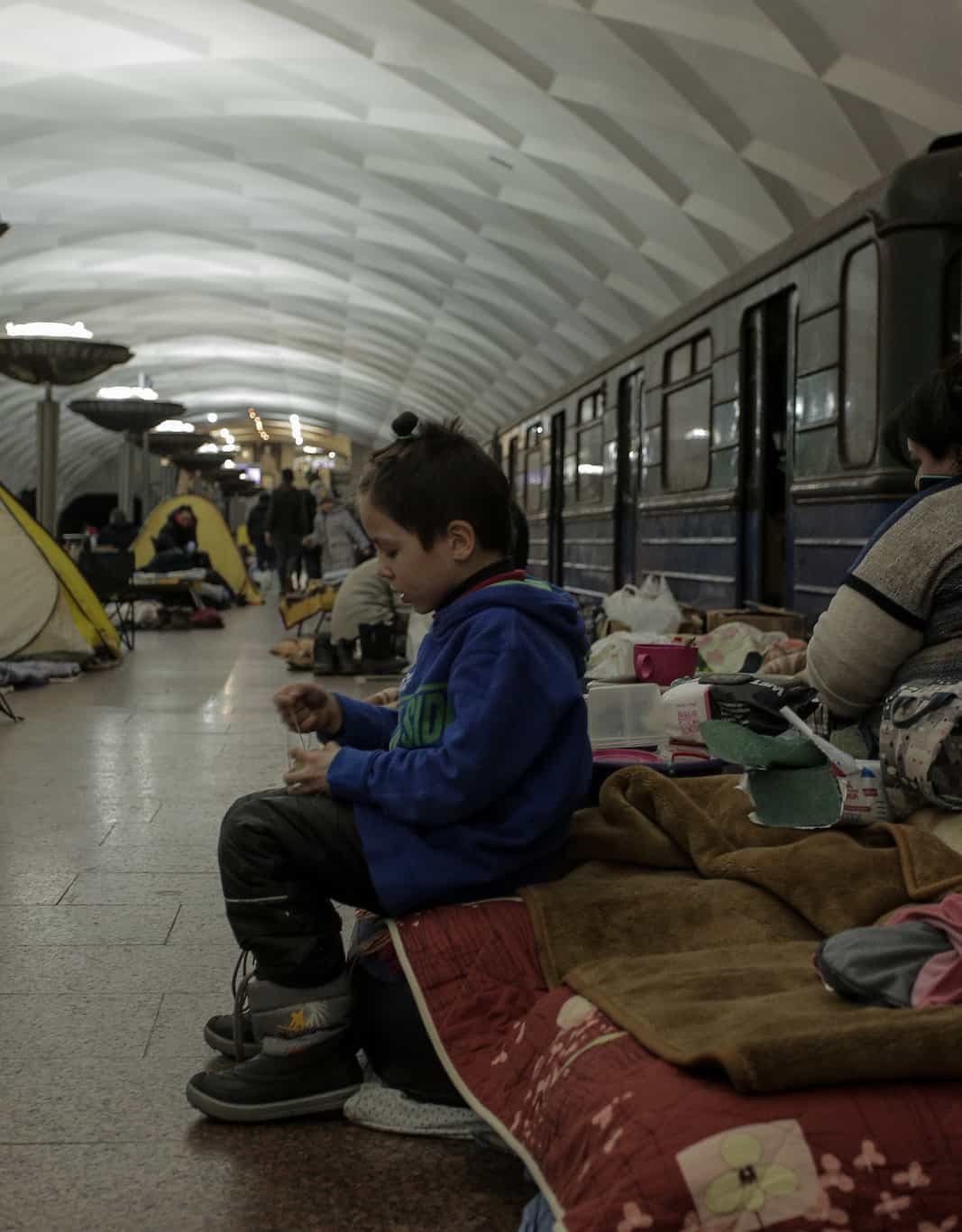
We wanted to wait it out. Below our building there’s a parking garage that can be used as a bomb shelter. I packed a little backpack for each child. Put in thermal underwear, socks, water, cookies. Explained what to do during an air raid alert.
I was afraid of scaring them, so I framed all the instructions as a game. When the sirens went off, the kids panicked, but only one of the girls was truly frightened — Sasha. She couldn’t sleep, sat beside me the whole time.
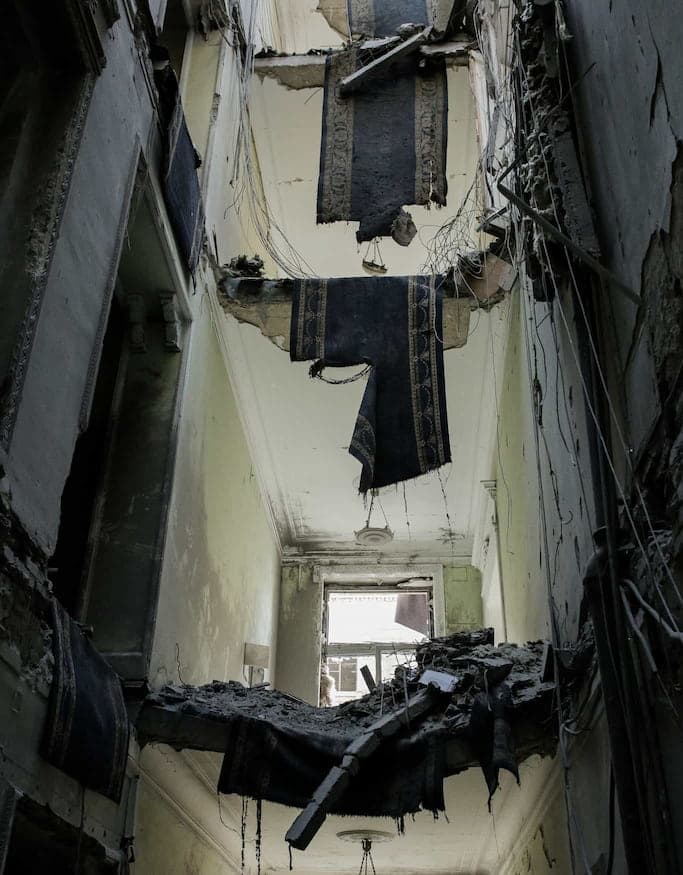
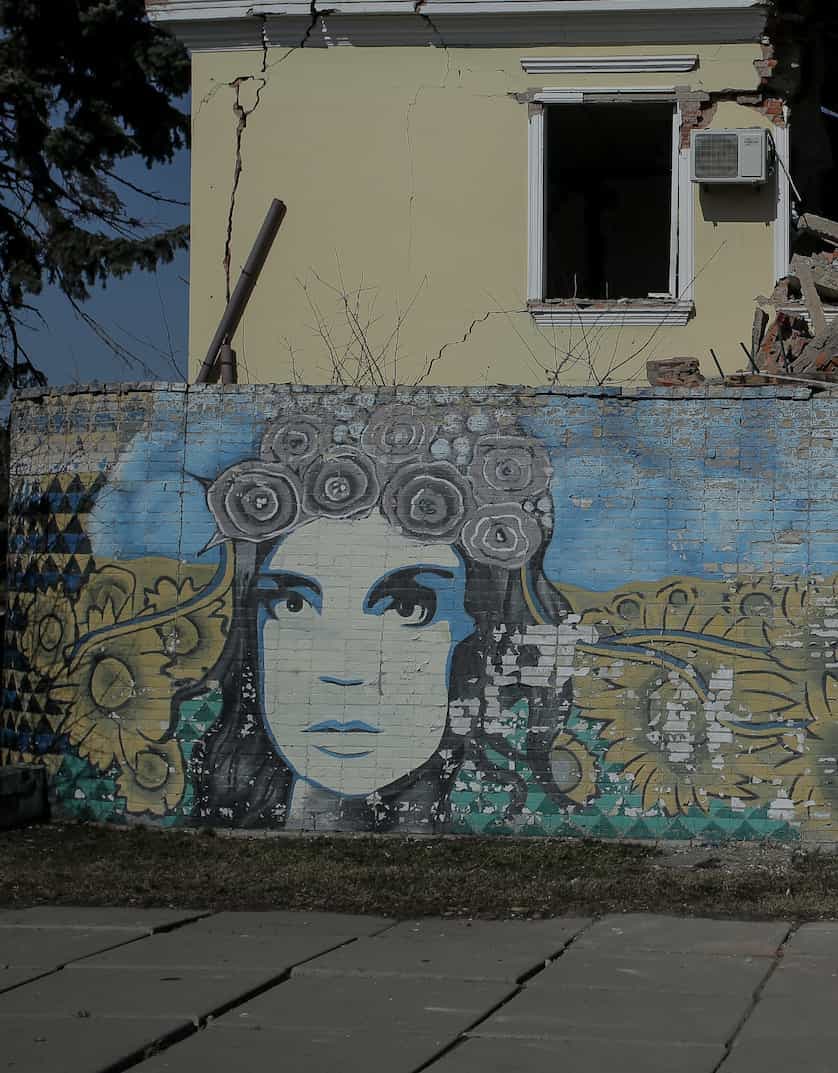
Then in Ukraine they started bombing residential neighborhoods, schools, hospitals, maternity wards. I realized that even though our building is far from the military base, we could still be hit. When in early March the strikes on power stations began and people started talking about the danger of a nuclear explosion, I decided I had to get the children to a safe place.
My mom helps me [with the children]. But her legs are failing, and in a state of panic she herself might need help. The children’s father plays no part in our family’s life. I’m the only adult who has to protect everyone.
We drove our own car to Chișinău, where some friends were already staying by then. Besides the children and my mom, I also brought the elderly mother of a friend.
Before leaving, I set the children a condition: each one takes only one — their most favorite — toy. I’d read that many people abandoned their cars on the road and crossed the border on foot carrying bags. So I decided to take only what I could carry myself — the bare minimum: a few things, documents, medicine.
At the border, we joined a line stretching for kilometers. There were no accommodations for large families. Some checkpoints with Moldova were closed — only two were operating [according to official data, at least four were open in March — SP].
From my friend, I learned that an auxiliary checkpoint had opened. We drove there. It turned out to be closed. We wasted several hours and had to turn back.
We drove on a destroyed road, then spent a long time standing in a field, waiting, because news came that there was shooting and explosions nearby. We headed for another checkpoint near a Moldovan village.
In peacetime, the drive from Odesa to that checkpoint takes about five hours, but it took us nearly fourteen. Without stops to rest. When we arrived, the children’s patience ran out, and from exhaustion they had a meltdown. Just six screaming children. We went through the checkpoint in style.
In Moldova, a friend met us and took the wheel. I sat with the children and took turns holding them in my arms to calm them. When we reached the hotel, the kids finally passed out and we carried them. We took the last two rooms — had to sleep on mattresses on the floor.
At night, the children woke up and started whimpering: “We want to go home.” I explained that we couldn’t go back because it was dangerous at home — explosions, people could be killed. They understood somewhat and accepted it.
We spent almost two weeks in Moldova. I didn’t know what to do next or where to go. The whole time, I was submitting applications to various organizations for help. Then I found out about an evacuation flight for Ukrainian refugees from Romania to Portugal. We had to drive our car to Bucharest.
It’s still there. Because we’d been driving on unpaved roads for so long, some suspension part got damaged. I can’t drive it back or sell it. It’s a big car — after the quintuplets were born, the [Odesa] mayor’s office gave it to me as a gift. It has eight seats, six with child car seats. When you have that many children, it’s hard without a big car. I’m afraid that something might happen again and we’ll need to leave once more.
We flew to Portugal into complete uncertainty — only on a promise from volunteers that we’d be taken in. And they helped: the first night, they set us up in a former warehouse converted into a dormitory for displaced people. Like a hostel: cots, a cafeteria, shared shower. From there, the children and I were taken to a social center. We lived there for some time, and then we were given separate housing for displaced people.
For now, we’re living in a small town in Portugal. I’m not working, and neither is Grandma. I used to earn a little from a blog, but after the war started, it became morally difficult to write.
We couldn’t find a kindergarten. In Portugal, kindergarten groups are small, and spots are few. And there are a lot of children now, including displaced ones.
So I had to put the children in school, even though they’d just turned six. Since there are many displaced families, at least half the quintuplets' class speaks Russian or Ukrainian. But for my eldest daughter, who started third grade, it’s harder: she doesn’t speak English, so she doesn’t understand the teacher or the other children.
I talk to the children about the war. I explain that it’s still dangerous at home, but we’ll definitely go back when our side wins.
I tell them about Grandpa, who’s fighting in Ukraine and protecting us. He’s sixty-eight years old. He joined the army as a volunteer, working at a checkpoint. The children call him regularly.