Recording
I’m in Mariupol, don’t tell Mom
A Ukrainian woman about her brother, an anesthesiologist, who was taken captive
Karina Mkrtchian07/01/22
An anesthesiologist about the terrorist attack in Olenivka that killed 50 Ukrainian prisoners
Yurik Mkrtchian, a military anesthesiologist, describes the terrorist attack on the prison camp in Olenivka on July 29, 2022. Afterward, he and other Ukrainian medics saved over a hundred gravely wounded, many of whom died from a lack of medical care. Only prisoner doctors provided aid — Russian prison staff merely watched. He describes the horrifying screams, the lack of evacuation, the indifference of Russian soldiers, and his own disillusionment with humanity after what he witnessed. A testimony about mass casualties and Russia’s cynical disregard for the lives of prisoners.
Attention! Translation was done using AI, mistakes are possible
КА: Katya Alexander
ЮМ: Yurik Mkrtchyan
КА: While you were in captivity in Olenivka, there was an explosion about which quite little is clear and known. Do you know what happened and did you work with the victims after that explosion?
ЮМ: Look, let's say, I'm not an expert on explosives, on some artillery issues or narrow military specialized issues. I'm a military doctor, yes, I'm military, but I understand these things mediocrely, let's say. Therefore, I, realizing how very important this is, I'll omit that moment which would allow me to comment something on this issue. I cannot 100% assert that this was an explosion from inside or an incoming strike.
КА: No-no-no, I actually don't want your assessment, but what you saw and what happened.
ЮМ: What happened is that the administration... I told you about the structure of the colony – it's several barracks, DIZO [editor's note: disciplinary isolation]. So, and there was an industrial zone, promka. On the territory of this promka, it was in the most distant place on the territory of the colony, there was one barrack. They started literally a week or two before to renovate it. Conditionally speaking, July 29th was the terrorist attack, on the 28th among only Azov fighters they selected 200 people and settled them in this barrack. On the 28th they settled them, and on the night of July 29th this event happened, let's say. As Kiselev says, a coincidence? Well, sort of...
КА: I don't think so, yes.
ЮМ: I don't think so. Again, this is my subjective opinion. In principle, about this we can breed demagoguery for a very long time and shoot arrows at each other. But the worst thing about all this – is that the Russians burned in this Olenivka, in this barrack, the remnants of my faith in people. I am deeply disappointed. I didn't think that people as such were capable of such things at all. After this explosion we still heard for about an hour, probably, screams and wails throughout the entire colony, just a terrible roar of people. Only after an hour one of the colony employees came, said: "Guys, there's a fucking mess there, take everything you have, let's go." That is, they called us there. The road is two-lane, in width and somewhere in length 70–80 meters, somewhere like that. And this entire road is strewn with bodies. And everyone is screaming. Dark, nothing visible, just wails. In the middle of the road a pile, a little pile of white rags, just rags, cut into bandage strips, and this wild wail of people, blood everywhere, no flashlight, nothing. As we later calculated, there were 116 wounded. 47 two-hundreds [editor's note: military slang for killed in action] on the spot in the barrack simply burned alive. In medical terminology this is "mass casualty incident." Such a thing in a doctor's practice occurs literally one in a million chances. So you understand, in medical university, you just read that such a thing exists, but it occurs extremely rarely, it's practically unrealistic. Very few doctors in life encounter such a thing. When I encountered this, when we all saw this, I had several seconds of just bewilderment, I didn't even understand what needed to be done initially. Then somehow we switched on, started conducting triage, we turned on the classical for a doctor [approach], to what we studied, to what I read, to what I knew needed to be done. We conducted triage. So you understand, triage for you – it's an ordinary word. But what is it in reality? Night, dark, you approach one wounded person, he's talking, he's conscious, that's it, you have a criterion that he's alive. You left him, went to the next one. The next one isn't talking, you look at his wound, his head is pierced, and you understand that in those conditions that exist now, you won't help him with anything, that he most likely died. Yes, he's breathing now, he has a pulse, but he will die, and you won't help him with anything now, that is, you're dooming him to death. In the most correct variant, if there aren't 116 wounded, but he's the only one you have, then you provide him help and you'll try to pull him through. But the complexity precisely of triage is that you take responsibility for who will live and who won't. It's extremely difficult to live with this afterward at all, because you know that you doomed several people to death in the name of saving a greater number. You left him, but went and tightened a tourniquet on a guy, because he's bleeding, and he will die 100% now from blood loss if you don't put a tourniquet on him. You applied a tourniquet to him and you saved him 100%. But to this guy with the head injury you most likely won't help. If you spend time on him, then you won't be able to provide help to that lad who has a limb injury and whom a tourniquet will help. This is the essence of triage. This is heavy psychological pressure on a medic. This is what we in principle did. Of these 116 during the night five more died, whom we couldn't help, who had head injuries, critical bleeding, which there was nothing to replenish with. And a poorly tightened tourniquet on one whom we missed. These five more died during the night. This is, let's say, what was there in terms of medical help for these wounded. You can say that if we hadn't been there, then there would have been even more two-hundreds, and those invalids who... Let's say, you applied a tourniquet, you should then assess whether this tourniquet is needed. Due to the fact that evacuation was delayed and this all went on all night, at 11 approximately, I don't remember the time anymore, this explosion was, and the first vehicle only left at dawn. If a guy had a tourniquet on his arm all night, they would simply cut it off, amputate this arm, that is, he's disabled. If, let's say, we hadn't been there, he would walk around with this tourniquet, ultimately they would amputate his limb. The number of people who died and the number of invalids as a result of this terrorist attack would have been many times greater, I can assert. But the most terrible thing in all this – is the behavior of the Russians. I am deeply disappointed. It was as if people came to watch some performance in a theater, here's the fence, they stand behind the fence and observe how I conduct cardiopulmonary resuscitation. They're like, you know, popcorn was missing and some special effects. And this all dragged on all night, you understand. Nobody, I understood, was planning to take these wounded away. They waited until the last moment, until almost everyone there would die. This isn't normal, this is immoral, you can't act like this, well how is this? They just stand and watch, and watch how people die.
КА: And none of the Russians helped?
ЮМ: Huh? Didn't hear.
КА: I'm saying, and none of the Russians helped the wounded?
ЮМ: Their biggest help would have been for them to take them to the hospital as quickly as possible. These five who died, four had traumatic brain injury. They needed evacuation as quickly as possible. They didn't die literally immediately, within half an hour, we were still pulling them, I was trying to stabilize them, we were trying to resuscitate, but still there's the rule of the golden hour. It seems to me, this is my subjective opinion, that people simply set the task to kill as many people as possible. And the very fact that... I can't imagine who, what asshole could give such an order to do this, to gather people in one room and simply set them on fire. What kind of moral freak do you have to be to give such an order? What kind of moral freak do you have to be to carry out such an order? What kind of beast do you have to be to simply watch how people die all night. All of Donetsk, it seems to me, could hear these wails. How could they calmly watch people's suffering? How much they hate us, I can't understand, where does such barbaric cruelty toward other people come from? I became deeply disappointed not just in Russia, but in people in general. After all, first and foremost, people were doing this. How could they just watch this? I don't know, they are barbarians. In my life precisely this event became a turning point in matters of attitude toward Russians. Before this I really with deep understanding realized that they are capturing Ukraine simply in their interests, they need these territories, I relate to this with understanding. But I will never understand, simply won't understand, because this is against my internal rules. This has already grown into a war not simply of Ukraine and Russia, this is already some kind of war of good and evil, really. Well how can you do this?
КА: After this absolutely horrible night, what condition were you in at all? What was happening with you?
ЮМ: First, we slept it off after this. Still lucky, probably, that over the years of my practice and life these aren't the first deaths I've seen. What struck me, probably, wasn't so much the number of these three-hundreds [editor's note: military slang for wounded], nor the number of the dead, I'm a military doctor and for me this is really normal. I've already hardened to this. What struck me was precisely this attitude of the Russians, that they were purposefully destroying us. This can really be called genocide. I grew up on Soviet films about fascists, you know, where they throw people into some hangar and set them on fire. And I never could think that I would see this власні очі [editor's note: Ukrainian phrase meaning "with my own eyes"], I didn't want to believe in this. For me this was the heaviest, and until now remains the heaviest. I don't want to believe that people are capable of such things.
КА: Some kind of hell on earth, simply impossible... And what happened then with the wounded? Did they take them away? You pulled out everyone you could pull out, and then them to the medical unit, to the hospital? What was happening with them?
ЮМ: Of these 116, 70, I don't remember how many, in general, the majority we sent to hospitals. They loaded them simply like cattle into KamAZ trucks, packed them in and took them to hospitals. The administration immediately said that "we won't take everyone," so like "prepare to treat the remaining ones here, in the colony." We selected the lightest ones conditionally, in order to have the possibility to continue their treatment here. Plus-minus those who were the most severe and medium, we sent everyone to the hospital. You understand, the lightly wounded remained, but they weren't even sent to the regular barracks, you know, but they were sent to solitary confinement, stuffed 20-plus people into one cell. Well how so? They don't give a damn about them at all, they torture people, this is horror. Well how can you stuff a wounded person, not only did they leave him here, in prison, they also simply stuffed him into a cell. Barbarians, I don't know.
КА: And these were burn patients, these were gunshot wounds? I don't really understand the nature of people's injuries.
ЮМ: Look, the nature of injuries... If smart FSB agents and these other people start to understand that... In general, let's not talk about this, okay?
КА: Yes, okay-okay.
ЮМ: Simply wounded and that's all. Because not everything allows me to say completely, you understand.
КА: Yes, I understand perfectly, I warned right away that if there's something you can't talk about, that's absolutely normal. I understand that people are still in captivity, this could harm them.
ЮМ: The most important thing – is to convey to people, to the Russians themselves, so they see what they've turned into. They accuse us of fascism, of Nazism, well, excuse me, here it is, simply classical, like Soviet films were made. I grew up on these films, I have relatives in Russia. I'm in shock, I don't know how else to explain this. To convey this to Russians and to convey to the entire world what Ukraine is now fighting for: not simply for its territorial integrity, for Crimea and other things – this is really already some kind of war of good and evil. Because this is a war against inhumanity, spiritlessness, immorality. This Russian world cannot be allowed to spread. It needs to be stopped.
КА: I've written quite a few people from captivity and not only from captivity, and each time I still can't... this each time simply breaks me to pieces. This isn't from pity, but simply from the fact that this cannot be. I know that this is happening, but this is simply some kind of real hell on earth, everything that the Russians are doing now. Yurik, I want to ask one more question. Is there something about captivity, about military medicine during full-scale war and about the entire current situation that you would like to tell more about, but I didn't ask you about it?
ЮМ: Probably, we said everything in principle with you. I have nothing more to add. I described to you as openly as possible everything that personally motivates me, what motivates my colleagues who still remain in captivity, who the wounded are, for whom personally I fight. I'm not promoting the interests of all prisoners specifically. Because this war, there's a lot here that's wrong, in general. We need to try to somehow influence this.
КА: I'm very grateful to you for being so honest with me and telling everything. This truly costs very dearly. I understand this perfectly. Do I understand correctly that your position is military resuscitator-anesthesiologist, correct?
ЮМ: Anesthesiologist-resuscitator, intensive care physician. If for me each of these words has some value, then for the majority this causes stupor, so you can simply write "anesthesiologist-resuscitator."
КА: I write about doctors periodically, just now I was writing about a doctor from Izium, we indicated his full position out of respect for the profession.
ЮМ: Aha. Good, I'll write my surname and position.
КА: Yes, good. Do you want to look at the material before publication, do I need to send you the text for approval?
ЮМ: Yes, absolutely.
КА: Good, yes. I think this will happen next week, because there's a lot of material and I'll need time to work on it. I'll then simply send you the entire text in Telegram and we'll correct everything you want to correct, discuss everything. Without your approval we won't publish anything.
ЮМ: Yes. Look, there's also something like this from the technical side, like a letter, each word of which had significant meaning. I'm generally Armenian by nationality, I'm Russian-speaking, and I'm also originally from Luhansk region, you understand, I'm a direct antipode to all this Russian propaganda which talks about Nazism and fascism. I'm an Armenian in the Ukrainian army. Oppression of the Russian-speaking population, well I'm Russian-speaking, I never had any problems in Ukraine. About Luhansk people wanting to be part of Russia – this is also complete nonsense, I'm from Luhansk myself. Again, I don't know how correct this would be, if our main topic of the article is military doctors and the wounded.
КА: I think I'll simply describe this in the background information, to show what kind of person you are. This won't shift the tone of our publication, but will give the right accent.
ЮМ: Yes-yes-yes, I'm for this.
КА: Yes, of course. I'll do everything.
ЮМ: I don't know what people will like. I'm a doctor, I know my work, but your work to me...
КА: I know mine and will try to do everything so that we have a very strong material, and it will definitely turn out like that, because all your experience and your profession – this is incredibly important. Cannot convey in words how much I admire you and your colleagues, and all Ukrainian military, and everyone who helps. I'm really very grateful that you talked with me, and this is very-very important both for me, and for the entire editorial office where I work, and in general for the entire war that's happening now – that your voices should be heard.
ЮМ: Look, the main thing – as I see it, what should this end with? Not with praise, exaltation of military medicine, because this can increase our value. That is, Russians in matters of negotiations will then say: "Fine, for one of your doctors we give there 10, 10 of ours." This shouldn't...
КА: Yes, I understand.
ЮМ: Shouldn't worsen these trades. In the final summary this should result in that, Russians, you violate elementary moral, humane rules and you should simply release these people, and should have done this from the very first day, and not force them to suffer and endure. Simply release them, show elementary humanity, humaneness, nobility. You still have a chance for reconciliation with the Ukrainian people. Leave Ukraine and release the wounded at minimum. This is what should be, so there's no increase in our value in exchange. They exchanged me as an ordinary military person. I want to turn all this around so that they give back our doctors and wounded. I consider that from this, by and large, everyone will win: our government, because it will get back its people for free, and the Russians, they'll have a chance to try to at least prove that they're not such marginals as they actually are. Show nobility and give back the wounded and doctors at least now.
КА: Yes, I understand. I'll try to place all the accents correctly as much as possible. We can discuss this together and correct something that you don't like, but I'll try very hard to make it so that everything you wanted to convey will be conveyed, and show both the hell of the Russian world, and everything we talked about. I'm truly incredibly grateful to you for telling me everything very honestly and openly.
ЮМ: Good. Thank you.
КА: Thank you! And in general, may all this end quickly with victory. Once again great admiration to your entire family.
ЮМ: Thank you.
КА: Yes, thank you.
ЮМ: Thank you for the help. Goodbye.
КА: Yes, goodbye.
A female medic from the Armed Forces of Ukraine went through captivity while pregnant
A military paramedic from Azovstal was separated from her daughter and sent into Russian captivity
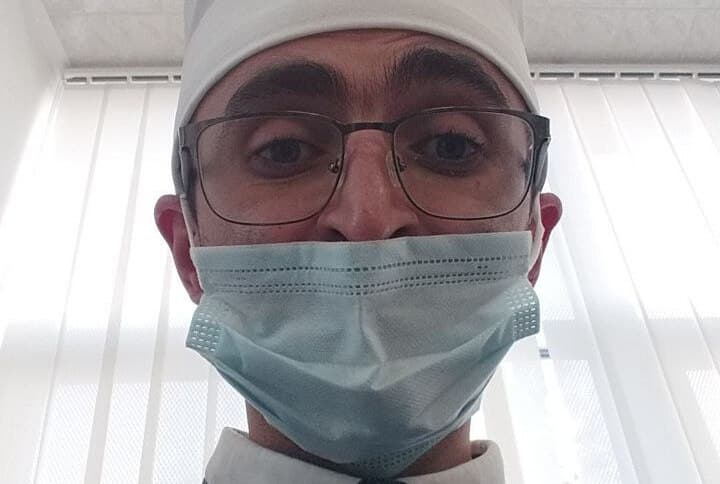
An anesthesiologist about being in captivity in Olenivka
A daughter and mother were evacuated from a village in Kherson Oblast. Their brother stayed and was captured
A volunteer from Mariupol who endured captivity and torture in Olenivka
The story of a fiancée of a defender of Azovstal killed in Olenivka