Recording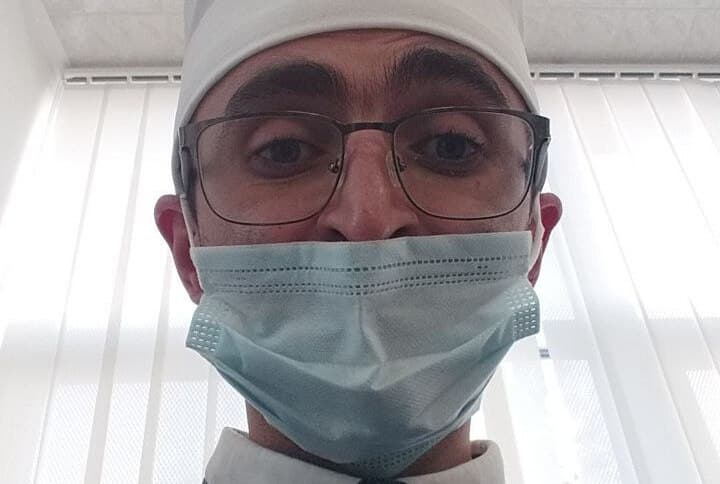
I realized: they’d taken me out to be executed
An anesthesiologist about being in captivity in Olenivka
Yurik Mkrtchian11/22/22
A Ukrainian woman about her brother, an anesthesiologist, who was taken captive
Karina Mkrtchian talks about her brother, a military anesthesiologist who was taken captive and whom she is trying to get out. He managed to contact his sister several times, asking her to do everything possible to draw attention to the fact that severely wounded people are being held in captivity. Karina describes how her brother defended Mariupol and treated the wounded there, and how in captivity there was no food, water, or medicine for two weeks. At the time of the interview, Yurik, her brother, had been in captivity for two months.
An anesthesiologist about being in captivity in Olenivka
An anesthesiologist about the terrorist attack in Olenivka that killed 50 Ukrainian prisoners
Attention! Translation was done using AI, mistakes are possible
КА: Katya Alexander
КМ: Karina Mkrtchyan
КА: Hello, good day.
КМ: Yes, good day, Katya.
КА: Good day, Karina. I'll warn you right away that I might have not very stable connection. So if you need to ask again, please ask again. If suddenly something isn't audible or I'll be asking you to repeat, please excuse me as well.
КМ: Yes, of course, no problem.
КА: Did you have any questions that you'd like to clarify before the interview?
КМ: I wanted to ask you, could we focus more on... my brother made contact and said we should reach out to media and give publicity to the topic that there are very many wounded there, that they need to be exchanged.
КА: Yes, of course.
КМ: And the letter.
КА: Yes.
КМ: Did you see the letter?
КА: Yes, good. I'll ask you about the whole timeline anyway, how this started and how he ended up in captivity and so on. But yes, of course, we'll talk about the letter too, and about what's happening now. This is the most important thing overall.
КМ: Yes, we have other people who grouped together – relatives of captive medics. They're all together. If you'd be interested, I'll give you the general picture of the scale.
КА: All from there, all from Mariupol?
КМ: Yes.
КА: Yes, of course. We want to do everything possible so this doesn't disappear from the agenda. For this we're ready to write everything we possibly can. Let's start from the very beginning. Can you tell me how your brother ended up as a medic... I understand correctly that he was at Azovstal?
КМ: He was at the Ilyich plant. It's just that media write a bit generally. Since the start of the full-scale war he was in Dnipro by assignment from Kyiv.
КА: As a doctor?
КМ: Yes, worked as an anesthesiologist. As far as I know, the hospital received a request for medical assistance in Mariupol. At that time the 555th hospital in Mariupol had already been destroyed. Yurik together with four more medical workers, there were, I think, 4 doctors and one nurse. They flew by helicopter to Mariupol.
КА: When was this?
КМ: This was at the end of March. He's that kind of person by nature, he always protects us, never tells us anything unnecessary. He kept telling us that he was safe, in Dnipro, that everything was fine with him. And then at some point he wrote a message at night, when contact with him was lost for 4 days, and after those 4 days he wrote me a message: "I'm in Marik [editor's note: diminutive for Mariupol], don't tell mom." So when he got there I don't know, I don't have reliable information.
КА: I'll write approximately or rather I'll take that you don't know when exactly, that he wrote this message. You said that they sent him there by helicopter. What did he tell about how they delivered them there? How did they get there? What condition was Mariupol and the plant he was assigned to already in at that time?
КМ: About the helicopter flight he told his wife. He told about how when they were flying, [Russian military] tried to shoot down the helicopter. After my brother's spouse's communication with the Dnipro hospital, she went there a couple days ago, they said that initially it was planned that the medics would accompany flights to evacuate the wounded. But when they shot down the helicopter when they were flying back, they made an emergency landing and stayed in Mariupol. So they understood that this plan wouldn't work for going back.
КА: So they were evacuating wounded at that moment, but they were shot down. So they decided to stay in Mariupol?
КМ: That's how I understood it from the stories. The story that I told in the "Politics" publication before the moment when I learned this detail, I was saying that, as my brother told: they flew to Mariupol by helicopter. When they were flying there, they tried to shoot down the helicopter, but the flight was successful, everything was normal, there were no casualties, they were carrying medications and doctors, medical aid was on this helicopter. By assignment several people went to Azovstal, others – to the Ilyich Plant.
КА: And so he was among those who were sent to the Ilyich plant?
КМ: Yes, but again later for the general picture... here everything is so confusing, actually, you don't know where the truth is. The hospital says that when they sent them by helicopter, they sent them to the 555th hospital. They knew it was already in the encirclement, but at their own risk the medics were sent there to provide the needed help. When they brought them there, the hospital was completely destroyed. So they were still in this hospital at that time. From this hospital already, when it was bombed, part of the doctors went to Azovstal so there would be doctors there too, and part – to the Ilyich Plant. The mobile hospital ceased to exist. They conducted all operations at the plants, my brother – at the Ilyich Plant. He didn't say anything more about the flight.
КА: While he had stable contact, while he was at the plant, what did he tell about what was happening there? As far as I understand, much less is known about this plant than about Azovstal. Can you tell, if you were in contact with him, what was happening there?
КМ: Again, he didn't tell anything. He told some such moments, for example, that people were dying, that there were very many deaths. He said that they took some Russian soldiers captive. He said it was a very young, small boy who had just turned 18. But otherwise he didn't tell anything. Absolutely. He told one story concerning a pilot. When there was already the very last flight, they shot down the helicopter, and the pilot, at the cost of his life, so as not to give away the coordinates of the plant, of that location where the wounded were, he just redirected the helicopter to the terrain and sacrificed himself. This story he told. He said that they later found his body and it was terrible to look at, but people should know thanks to whom we stayed alive, what kind of heroes we have.
КА: And I understand correctly that for some time they managed to evacuate people from the plant where your brother was, by helicopters?
КМ: Yes, they managed until the moment when the Russians exposed this operation [editor's note: literally "machination"].
КА: Is it approximately clear when this happened?
КМ: I can't say exactly, but it seems to me that this was somewhere in early April. Somewhere right at the very beginning, probably the 3rd.
КА: So they managed to evacuate people from this plant somehow more or less actively. In difficult conditions your brother continued working. What happened after they learned about their location in April? What is known to you about this from your brother?
КМ: On April 12th he called me and said: "Such a scenario is possible, that I'll be in captivity." I asked the question: "Are there other options?" He said: "This isn't the most deadly, but it's possible. So you know, I'll be either in Donetsk or in Taganrog."
КА: So he understood everything in advance?
КМ: Yes. I think so. And then on the news they showed us that there was a breakthrough of the 36th brigade. I think that people there understood the risks of the breakthrough. Again I'll tell you now, but then you think yourself whether you need this information or not, because this information isn't from my brother, but from relatives of captives who during their stay at the Ilyich Plant told more than my brother. They said that they sat almost two weeks without provisions, they had no food, no water, no medications, the wounded were just dying because they were rotting. They said that this breakthrough was planned. They somehow gathered to go out from the plant onto the street and retrieve the bodies of their fallen. There around this plant throughout the entire territory trip wires were already set up. So they perfectly understood that a breakthrough with such a large number of people wouldn't be possible. A small group – yes. I understand that my brother was just preparing me for what would be inevitable. That's why he said it that way.
КА: On April 12th he told you that most likely he would end up in captivity. What happened next? What is known to you about what happened? How were they taken captive? What was happening?
КМ: I only saw video clips from various Russian public pages [editor's note: social media groups]. They showed how they conducted examination [in captivity], undressed, checked for tattoos, scars from weapons on elbows, if snipers and so forth. Everything was told in detail there. Then they took them to Olenivka. In the video I didn't see my brother. I reviewed everything, but didn't find him. And they showed how they conduct interrogations, provide medical aid to the wounded and so forth. And these videos were like: "Praise us, we feed them."
КА: And in general at this plant where your brother was, were there Azov fighters or some other regiment?
КМ: There were everyone. The thing is that Azov fighters were at Azovstal. At the Ilyich Plant in principle, as at Azovstal, there were border guards, and Armed Forces of Ukraine, ordinary territorial defense. In general, all military structures were grouped at both plants, but Azov Brigade wasn't at the Ilyich Plant. There were civilian doctors there.
КА: And medics?
КМ: Yes, yes. There were military medics, like my brother and his colleagues, and also there were medics from the Mariupol hospital. That is, civilians.
КА: You saw all these videos where they take Ukrainians captive and didn't find your brother. How did you learn that he also ended up in captivity, that he's alive?
КМ: I learned this from him himself. Probably two weeks, 10 days there was no contact with him, nothing. We were filling out all these documents that were needed [for submission to captive lists]. Here my brother's wife receives a message on the phone: "Yurik is alive. He's in captivity in Olenivka." When you open this message, it was already deleted.
КА: This happened in Telegram?
КМ: Probably, I didn't clarify which messenger. I just asked: "Ukrainian phone number or not?" And my brother's wife said, yes, Ukrainian, +38.
КА: Unknown, yes?
КМ: Yes, unknown. I understood that he was in Ukraine. It was written there that he's in Olenivka, but until you google it, I didn't know about it before.
КА: Olenivka is on the territory of ORDLO [editor's note: certain areas of Donetsk and Luhansk oblasts]?
КМ: Yes, yes. This is Volnovakha district.
КА: Your brother's wife received a message that he's alive and in captivity. What happened next?
КМ: Next nothing. Next we wrote every day to the Security Service of Ukraine, wrote to NIB [editor's note: National Information Bureau of Ukraine], at that time Vereshchuk was still handling it. We wrote to various organizations for searching people and helping captives. This is from the legislative side that algorithm that needed to be done for entering into the database [of prisoners of war], we did it. In April after, a long time... No, but then he made contact again in this way. In the message it was written that everything's normal with him, he worries about you.
КА: Also from an unknown number, also to the wife?
КМ: Yes, yes. And the third time when he gave news about himself, this was already the letter.
КА: Tell me about the letter in detail.
КМ: We received the letter already in May, after a month, somewhere May 14th. Just a photograph of this letter with a signature: "Yurik asked to pass along. Don't ask unnecessary questions. Don't write back." Something like that was written. This was May 13-14th somewhere. We received it, read it. We understood that we need to do something with it, because he writes specifically as an appeal. And the opening quote goes from Mtsyri [editor's note: poem by Lermontov] specifically so we would understand that he's writing, that no one is forcing him.
КА: This is because you knew that he knew Mtsyri by heart from school?
КМ: Yes. Further there are also such phrases that he used in everyday life: "I don't knock down rockets with a sapper's shovel." He often spoke like this about comparison with salaries, that a flower seller might earn more than a person who saves lives. He always said that his profession is undervalued, but it's very significant. We decided with my brother's spouse that we would publish this letter, because many people also intimidated us, saying: "No, you can't. You must be silent. With publicity you'll scare them away, there won't be an exchange. Do you want him to sit there for long?" We, honestly, spent a month being afraid, and when we received the letter, we understood that if he himself finds ways to make himself known, then we don't have the right to do nothing. We decided to publish.
КА: This was a photograph of a handwritten letter? It came in a messenger and then they deleted it?
КМ: I don't know about this, I didn't clarify whether they deleted it or not. Most likely yes.
КА: This didn't come to you physically as paper?
КМ: No.
КА: If we generalize what your brother was saying in this letter?
КМ: He demands to save the wounded. He demands freedom for himself and signs as a military doctor. That is, he generalizes freedom of action for doctors, possibilities of treatment, possibilities of providing aid and possibilities of proper medications. The most basic thing is that wounded need to be freed, give them freedom, give them free treatment in their own country, if you don't provide it to them. The main cry of this letter, the main goal is an appeal to people so that the masses would influence the exchange. This is how I interpret it already. In the letter it's clearly written: "I demand freedom for myself and my work called cargo 300 [editor's note: military term for wounded soldiers]" and writes: "I don't call for mercy and compassion." That is, no pity is needed, nothing, just one simple demand: give us freedom.
КА: Did he write about what condition the captives and wounded are in? What's happening? How are they? How many are there?
КМ: He didn't say anything. He said: "There are 300 of them here and 300 wounded, 50 of them seriously." This was his phrase. What he managed to say on the phone when he called. He said: "This issue needs to be actively promoted because there are a shitload of them." This is a direct quote.
КА: Let's stop here for a second. He was able to call you at some point?
КМ: Yes. On May 27th he called me, already me. And before this he called his spouse a few days earlier. On May 27th he called me, asked whether we received the letter, whether we're promoting it. He said: "This is what can help us." He said this phrase to his spouse too. He asked to contact UN, Red Cross. I managed to tell him that we were in contact, communicating, that we're working on it. And that's it, he asked how mom is doing and how we are, whether they're shooting here. I said: "No, everything's fine. How are you?" He said: "Normal. That's it, bye. I love you, kisses."
КА: But he managed to say that there are very many wounded?
КМ: Yes.
КА: Did he just say that 50 are serious, 250 are moderately serious?
КМ: 300 wounded, 50 of them serious. He somehow said 300 and 300, 50 of them serious.
КА: In details he didn't say how much aid they're not receiving, where they're kept, whether they're in a hospital or in a pre-trial detention center?
КМ: No, he didn't manage to say anything like that. Literally after some time we saw a video, the Russians posted on their telegram channel, with a caption that staff medical workers provide aid to prisoners of war. And in this video was my brother.
КА: This, it turns out, was the first time you saw him?
КМ: Yes. After so many months.
КА: I understand correctly that the Russians tried to pass your brother off as their staff medic?
КМ: Honestly, I had such a first thought too, but people more connected to the agencies said that it means staff captive medics provide aid to captives. So they wrote "staff," but it's unclear what they actually meant.
КА: I understand this might be emotionally difficult. You saw your brother for the first time, even if in a video, even if in some horrible channels. What were your thoughts? What did you feel at that moment?
КМ: The feelings were different: I cried and was happy that I saw him. I immediately started paying attention, watched him 10,000 times, paused, looked at his gait – whether he's limping, noticed that since he's unshaven, overgrown, then there are water conditions, so they bathe them, normal, lice don't start. They usually shave them. I then wanted to look closely at the clothing, but nothing was visible there. I noticed that he doesn't limp. Of course I was happy seeing him.
КА: This is the only thing that's known in detail about the captives: from your brother you learned about the number of captives and that they need to be freed, that 50 of them are in serious condition. And this video where it's visible that your brother is helping his own while being in Russian captivity.
КМ: Yes, yes. I don't know for what purpose they filmed this video, but thank you very much, at least I saw my brother. You know, as a person who has absolutely no relation to medicine, I perfectly understand that this little bandaging they're doing, while you can hear him commenting and saying that he has fractures, he needs rehabilitation, not setting, but surgery, after surgery rehabilitation for a year. They just wrapped him with elastic bandage and that's it. Well what kind of aid is this? From the video it's visible that medical aid is being provided improperly.
КА: I understand correctly that your brother comments that he needs surgery, and some medics, unknown which ones, they just rebandage a serious wound and don't give him access to some medications or something else?
КМ: No, not quite like that. A wounded captive is sitting, a person in surgical scrubs is rebandaging his arm, filming him from behind. This wounded soldier says that he'll need rehabilitation for a year. At this moment they're just rebandaging him. When you watch, as an ordinary person, you understand that there's no benefit from this aid. At this moment our other doctor is sitting nearby, Vova Shapkov, in a cap. I'll forward you the video later so you understand what we're talking about. In this video 3 of our doctors were noticed: Vova Shapkov, my brother and another one, I don't remember his name.
КА: Yes, I need to watch and possibly we can even insert the video in the publication. I wanted to rewind back a little. Your brother called you from an unknown number?
КМ: Yes.
КА: From a Russian or Ukrainian one?
КМ: From a Ukrainian one.
КА: Did he manage to say that they're all in Olenivka, in ORDLO, or are they in some other place?
КМ: No, we managed to talk for at most a minute and a half. This was just about the letter, this was about mom and us and one word "normal" about himself.
КА: This was, it turns out, a month ago, May 27th?
КМ: Yes.
КА: A month has already passed. Is anything known for the last month about the condition of the wounded, about your brother's condition, about what's happening there in general?
КМ: Actually nothing is known to us. The only thing is that on June 8th my brother called and said the same thing – that we need to work more actively on this issue because there are very many of them there, help is needed. After I appeared on a TV channel in Ukraine, 3 days later from our side, Ukrainian, my brother was confirmed, they gave him prisoner of war status. These are the only changes.
КА: So before this he didn't even have prisoner of war status?
КМ: Yes, he didn't even have it when the video appeared. I took a screenshot, sent this screenshot, signed that this is my brother. I sent it to the Security Service of Ukraine, to NIB. I expected some reaction, that they would confirm him, enter him. They entered him in the prisoner of war registry, but based on my appeal. He wasn't confirmed, even after the video and screenshots they didn't confirm him. But last week they gave him prisoner of war status.
КА: And when he called the second time, besides him saying that this needs to be covered somehow, did he manage to say anything?
КМ: He called his wife then, she already passed it on to me. You know, there's such a feeling that he has very little time, and he tries to manage everything in these 10 seconds. That is, the conversation was also mainly about the wounded and again he asked how I am and how mom is.
КА: About the condition of the wounded he just said that it's critical and serious?
КМ: Yes, yes. Here we just know Yurik. He's that kind of person by himself. He has several categories of illnesses and reactions. If you have bronchitis, even severe, then drink some milk, nothing terrible, it will pass. He doesn't like me resorting to some medications, only syrups at most and honey with milk. When there's some gunshot wound or cut with a knife, he looked like, need to treat it, bandage it and that's it, you'll live. When there's something that he already talks about some problems, then we understand that these are very serious problems. Maybe he can't say that there are people already in very bad condition, completely bad, but knowing him as a person, we understand that if there were guys there who could with that medical aid that they're providing live another half year or year or five years, he wouldn't worry so much. And if he already worries about them, if he talks about them and asks us to talk, then the wounds there are very serious and time is pressing.
КА: I understand correctly that about what's happening to them and what's happening to your brother, you have no channels through which you can find out whether they're alive or not? These calls of his from unknown numbers – this is the only way to find out how he is?
КМ: Yes, this is the only way. The thing is that on that side we have absolutely no one. There are acquaintances and even then part of them left, practically everyone left. And people are afraid. There's no one there to ask to go, and I don't see the point in this. And of such a level to reach the military personnel from the Russian side, we don't have that.
КА: Well yes, this is understandable. You said that you united with other relatives of captive medics. Can you tell about this? What are you doing? What have you managed to do? What are you undertaking to keep this issue on the surface all the time?
КМ: We united. Here my brother's spouse tried very hard. She immediately started contacting everyone she knew, with whom Yurik was. She figured out, so to speak, conducted her own investigation. After some time, more than two months, we as a whole group are moving in the direction that we need to talk about this. The more this will be heard, the more reaction there will be. We already made sure from personal experience – my brother was already confirmed as a prisoner of war. That is, some progress has already started. We're engaged specifically in publicity. There's such a person, Andrey Kryvtsov. His sister is in captivity, Elena Kryvtsova (after the interview Karina clarified that Elena is not Andrey's sister but sister-in-law – Editor's note). This Elena Kryvtsova, who was also in the 555th hospital in Mariupol where my brother was, her last location that my brother was able to record is Taganrog. That is, how they filter, whom, where and where to leave – it's unclear.
КА: So they're also scattered to different places.
КМ: Yes. And there's the wife of a boy, he'll be visible in the video, I'll take a screenshot, show you. His spouse also appeared on television, gave interviews. Her husband also makes contact and says to give publicity to the topic of the wounded, we can't sit calmly knowing that our loved ones, doctors, medics according to the Geneva Convention can't be taken captive, just like civilians. We're trying to tell the world too about such violations taking place. That is, doctors who took the Hippocratic oath to treat everyone and everything, who were always untouchable in any war, here they end up in captivity, and about whom no one knows anything. That they made contact themselves at least gave some peace to relatives, because to live two months in uncertainty about where your loved one is, you can go mad. So this Olya Shepkova, the spouse, appeared and said the same thing. He, it turns out, is with my brother from the academy, they studied together in Kyiv and graduated from medical academy. He by assignment went to work in Mariupol, Yurik by assignment went to work in Dnipro and several other doctors from this graduation from the academy were also scattered. Now they're all together, about 7 of them are there. This is only from one group. This is such a very patriotic, close-knit group.
КА: Karina, tell me please, can you share the photograph of the letter? Can I ask you to take it for publication?
КМ: Yes, of course.
КА: What plans do you have to try to move your brother's situation and all the captive wounded who are now on Russian territory from this dead point?
КМ: Our main task is to achieve that this topic is heard, that everyone knows about this and return our wounded home for proper medical aid. Then the medics will follow. We perfectly understand that while there are many wounded there, our medics will be there.
КА: Until all the wounded are evacuated?
КМ: Yes. I don't know how much all, but this number that he names, 300, it's enormous. Taking into account that by our calculations there are about 30 medics there, plus or minus. This is still not enough for proper medical aid. So we understand, the more wounded return from there, the more our loved medics will return. So our main task now is to talk about this as much as possible. Such a chain is built.
КА: So far nothing is known about exchanges, about what's happening there, what progress there is?
КМ: Today there was an exchange I saw in the news, I read, somewhere at 4:00 PM they published.
КА: Wounded or unknown?
КМ: Unknown. It was just written there that there was an exchange of prisoners of war, but I didn't find details, didn't read. As they usually write, if such a headline was there, then what's the point of looking for something further? The main thing is that an exchange took place. If Yurik didn't call, it means he wasn't in this exchange. I now have such a short perception of news that for me such an exchange was – this is a very big plus, a big step forward, Yurik didn't call, so he wasn't in the exchange.
КА: How do you in general, as a very close relative, cope with this situation?
КМ: I have strong support from my brother's spouse, we support each other. My boyfriend too. Plus, we were doing volunteer work, at first I really felt that I need more-more-more, to help someone in every way, so as not to stay in my thoughts. At some point, when I received the letter, after a month of captivity, my hands dropped very much. I don't do volunteer work anymore. Mom found out, I was hiding from her [about brother being in captivity] for two months, but she saw. She was clicking YouTube, I didn't think that the video would become so popular. Mom saw.
КА: This was a video where you are or where it's visible that your brother is in captivity?
КМ: This is where I appeared live on an interview. Mom saw. They just put a photograph on the cover, mom recognized her son, called me crying. But now we, you know, as relatives and loved ones, we're all in one condition. If one of us has a hard time, we understand that with this psychological condition we'll be giving weakness for everyone else too. So each of us holds on. Good thing that we know Yurik is alive and healthy, for us this is the most important. I gave myself a rule: I cried the first time, although I'm such a very sentimental person, when there was the call, he himself told me about captivity, my friend was next to me. The second time I cried when I received the letter, I really sobbed. And the third time, when I saw the video, I restrained myself. A tear slipped by, of course. I gave myself a rule that I'll cry the third time when I hug him. And this helps. In those moments when it's very hard, when mom calls me crying, I understand that no, I need to hold on. From us crying here, it won't get easier and this won't help the cause. So you need to pull yourself together and try to do something.
КА: Can we return to your mom a little? Why did you decide to hide from her that you learned he's in captivity? What did she think all this time? No contact with him, and Mariupol is already under Russian Federation control.
КМ: Mom didn't know from the very beginning that he was in Mariupol. When contact started disappearing, I said that he was somewhere in Dnipropetrovsk Oblast, south of Zaporizhzhia. There were just communication outages there. I, honestly, for a long time believed myself that he was there. So this legend remained with us. I didn't tell mom for the reason that she lives alone and, being in her thoughts, I worried that it would be hard, that something might happen to her on nervous grounds. Because of this I didn't tell her.
КА: So until the moment when she accidentally found the video on YouTube where you talk about your brother, she didn't know at all that he was in Mariupol, that he was at the Ilyich Plant? She thought that he was without communication somewhere in Dnipropetrovsk Oblast?
КМ: Yes, yes. And when Yurik made contact, I called mom every time and said: "Yurik called us" or "Yurik wrote" or something else. That is, I told her everything, just didn't say where he was, hid the location. There were moments when mom had dreams, she called and said: "I dreamed that Yurik is in captivity." Then she'd watch, read news, calls me and says: "He's in Mariupol. You're not telling me." And I'm lying, saying: "No" – "He's at Azovstal?" – "He's not at Azovstal." Here I didn't lie, told the truth already. Her maternal intuition works very strongly regarding the connection between my brother and my mom, they always feel each other. This was noticed long ago. Throughout our whole life we all sense each other. So I wasn't surprised when I heard mom talking about captivity, she has such dreams. I understood that sooner or later she would need to learn about this.
КА: How did she perceive that he's in captivity and that he was in Mariupol all this time?
КМ: Hard. She cried, said: "He's his father's son." You just understand, if you knew my brother personally, you probably wouldn't even be surprised by this. My mom wasn't surprised either, in principle, just as his wife and I weren't surprised when we learned he was in Mariupol. We understood that Yurik is that person who will be... He always said: "I'll be where I'm needed." And to his wife about how everything happened, on April 12th he called her and said: "Forgive me, I couldn't do otherwise." This wasn't April 12th, this was said when they were talking while he was already in Mariupol. When he was in Mariupol, he told her: "Forgive me, I couldn't do otherwise." And said another phrase: "The price of our separation is hundreds of saved lives."
КА: He's a hero, of course.
КМ: They're all like that.
КА: Yes, they're all simply made of steel. I really hope that everything will be fine with him and he'll return home as quickly as possible. And not only him, but everyone who was there. Karina, tell me, do you have something else that you'd like to add about captivity, about your brother, about the wounded in the context of our interview, that I didn't ask you about?
КМ: You know, I have so many thoughts. They're all so chaotic that it's hard for me to figure out now what else I'd like to add. It seems to me, in principle, everything was fully revealed. If suddenly something else, I'll write to you.
КА: Yes. At any time write to me, call me. I remember your request for me to show the text before publication. As soon as I edit it, I'll send it to you right away so you can make sure everything is correct, everything is as you'd like to tell it yourself.
КМ: Good, thank you very much.
КА: Thank you very much, Karina, hold on. We'll try very hard to do everything to give this another voice.
КМ: Thank you very much.
КА: Thank you very much. Hold on. All the best.
КМ: Same to you. Goodbye.
КА: Goodbye.
A Ukrainian servicewoman went through captivity and brought back her children from occupation
A female medic from the Armed Forces of Ukraine went through captivity while pregnant
A military paramedic from Azovstal was separated from her daughter and sent into Russian captivity
An anesthesiologist about being in captivity in Olenivka
A female paramedic from Azovstal described what Russian captivity is like for a woman
How a father awaits his daughter’s return from captivity