Back
I was told to my face that we invited Russia ourselves, that it’s our own fault
A resident of Sievierodonetsk on evacuation — through Russia and Poland to Germany
Maria (name changed) is from Sievierodonetsk, Luhansk Oblast. Her city was occupied in 2014, and she and her son briefly left but returned after de-occupation. When the full-scale invasion began, they once more decided to leave. The minibuses heading to occupied but relatively quiet territories were a two-minute walk away, while those going to Ukrainian-controlled areas were five minutes away — at the time, that was a huge difference. Maria and her son ended up under occupation. Before long, they managed to get to Poland and eventually return to Ukraine. But due to problems with housing, the family moved to Germany. Maria’s husband was allowed to leave the country as a caregiver: their son has a genetic condition. After being in a refugee camp, the family was given housing. They are treated well in Germany, but Maria dreams of returning to Ukraine.
Interview
Transcript
Transcript
Attention! Translation was done using AI, mistakes are possible
М: Maria
АП: Anna Pavlova
АП: Thank you for deciding to talk with us after all. When I saw your comment [in the Helpdesk Media chat] and started writing to you, I noticed that we had tried to call each other a few months ago...
М: Well, I've never worked with psychologists, to be honest. When it pours out of me, then I write, but in general I try not to remember it, because I try not to delve into this topic.
АП: You mean, not remember about the war, about what's happening?
М: Well, yes, let's say, about what I've experienced.
АП: But nevertheless you agreed to talk with us.
М: Yes.
АП: That is, you're ready to return to this memory for some time now? [...] If I understand correctly, you've known about war firsthand since 2014.
М: Yes.
АП: That is, for you the war didn't begin in February [20]22, as for many Ukrainians, but earlier?
М: Yes, our city was occupied, but then Ukraine liberated it, so we, let's say, only managed to get a little scared.
АП: Please tell me, where did you live?
М: We're from Sievierodonetsk, that's Luhansk region. It turns out that they came in May [20]14, we were having City Day, well, City Day was already under them. And then they were driven out, I think, in August. And we came, we were leaving, I was leaving with the child to Kharkiv, and we returned around the first of September home.
АП: Unfortunately, we can barely hear you. Maybe you have the possibility to speak louder or closer to the microphone?
М: This might be something with the headphones...
АП: Yes, probably without headphones would be better, if there's such a possibility.
М: Hello? Hello?
АП: Yes, this way it's perfectly audible.
М: Yes, good, good, so we'll do it this way.
АП: You were leaving your city for Kharkiv?
М: Yes, I had an eighteen-month-old child at that time. I was taking care of the child, he has a genetic disease, we have problems with his stomach. We were just then planning, or rather all the doctors said that it would be better by six months, then by a year. After a year it didn't get better. He had just turned one around New Year's in [20]14, and I was just planning to go to Luhansk for examination - either [to] Luhansk, or [to] Kharkiv. Well, this whole mess started, while I was getting ready - I thought, everything would get simpler, maybe somehow it would resolve itself, but it all got worse and worse. And I literally, probably in May, was going to Luhansk, I went to the doctor every month for medications, for prescriptions. And on June 15-16 we left for Kharkiv. I told myself for self-comfort [that] this was like for examination, but in fact very many were leaving, because there was no water, no anything else. Our city wasn't particularly bombed then, it only hit the outskirts - as they said "separatists scared us" - but Lysychansk got it. That's the neighboring city. Well, of course, not like now, this was all a lite version. And we waited it out in Kharkiv, and at the same time got examined about our problems.
АП: How much time did you spend there, in Kharkiv?
М: Well, actually two and a half months of summer. I don't remember what date they liberated us, actually. We were still waiting for the diagnosis anyway. Either in mid-July, or in mid-August the city was liberated, gradually everything got settled, everyone returned, and life got settled, and we basically lived. Yes, we were a front-line city, but nevertheless it was Ukraine, there were laws. Thank God, as they say, the first time we were spared.
АП: How did they treat you then in Kharkiv, as people from an affected region?
М: We were in such a not very prosperous old district. It's called New Houses, but in fact it's an old district. Let's say, they didn't treat us very well - well, some like this, some like that. I personally didn't really spread around [where we were from], but my mother came to help me a little, and you know, you can't really shut old people's mouths (note - probably the heroine misspoke and said "can't open" instead of "can't close"). And there were conflicts, they attacked my child, an older girl tried to hit him, I tried to protect him. And I heard addressed to me that you called Russia, you're to blame yourselves, you called them yourselves. Naturally, I didn't answer anything, because there are many of them, I'm alone. But in fact in Kharkiv it started much earlier than in Luhansk, and ordinary people didn't decide anything in this regard. No one here kept under their pillow either EU flags or Russian flags, no one walked around and waved them. These were imported buses from Voronezh that came to our city, shouted, recorded video and left, with drunk faces, I apologize - of course, I don't know what nationality you are there.
АП: You mean, they shouted what...
М: "Rus-si-a, Rus-si-a". They waved, shouted, everyone knew where these buses stopped. Well, of course, maybe some of the locals supported it, I mean, in their hearts. Naturally, we lived close to Russia, everyone considered it a brotherly country, and so on. But I never aspired to go to Russia or to Europe. I lived my life, I worked, everything suited me just fine. Whoever needed to would have left for wherever they wanted.
АП: Am I understanding correctly that you returned because the treatment ended? Or was it connected to the fact that the city was liberated?
М: Well, yes, we got the diagnosis, and at the same time everything calmed down in the city. I, by the way, was working. I worked from when the child was 8 months old. I have such work that I can regulate my workload. I tried not to sit [at home], because it's very difficult to sit among all these diagnoses, ailments, everything else. My husband supported me. And I went out to work a little, so by September I, of course, returned. I'm a teacher.
АП: Didn't you have the thought to leave then?
С: The thing is that, yes, of course, we all understood this, but we have a late child, and when I was pregnant, my husband got a complicated diagnosis. He has oncology, they removed half his intestine, now on March 1 we have another operation coming up. And there was no health left. I don't know what we were waiting for. Many left, of course. My godmother left, my husband's sister left. People left, but nevertheless very many came from Luhansk, so the city lived and prospered. We didn't see this, that...
АП: You mean, to you from Luhansk they came to the city?
М: Yes-yes, our city accepted very many displaced persons. Probably, our city accepted the main mass, the way Dnipro accepted now. People don't want to leave far, people think that once-twice, and all this will get settled, and we'll return. And we were such a transit point, for many became a second home, for many Luhansk residents.
АП: In the [Helpdesk Media] chat you wrote about how despite the fact that your departure for treatment, as I understand it, was relatively planned, you still gathered in panic, in haste and didn't even take necessary things.
М: In [20]14?
АП: If I'm not mistaken, then yes, you wrote that glasses, I think, or is this already...
М: No-no, in [20]14 it was all much calmer, to the point that we could afford to order a taxi, and we took the child to Kharkiv by car. What do you mean calmly? Naturally, there were checkpoints, and I remember, before Kharkiv they checked very thoroughly. The only thing is that I didn't get out of the car. They took my husband out, checked, felt something there, looked at fingers. They asked us what was in the car. And we had him [the child] on baby formula, such specialized one, and, of course, it was interesting what kind of jars we were carrying in such quantity. And there was an interesting story on the way back, when we were already returning. There were also checkpoints, and we approach the checkpoint, and my child [says]: "I need to poop". We take out this potty, a soldier approaches us, handsome, I remember, tall like that, strict, such a serious face. He looks in the window and [says]: "Drive through". And we're there with the potty - in general, both funny and embarrassing.
АП: He let you through?
М: Yes-yes, didn't check - well, it was obvious. So, well, it was scary anyway. Then my husband stayed. I took the child out, and my husband stayed, he was still working. That is, in [20]14 it was somehow more or less.
АП: You said that many refugees came from Luhansk, and what was the attitude toward them in your city? You talked before about how they treated you in Kharkiv, and what was the reverse reaction?
М: In our city there were, maybe, some dissatisfied that they said "Luhansk people took positions". They took some of our positions in management, and someone from Luhansk became [the manager]. This was the dissatisfaction. I know that immediately prices in the city jumped for housing, taking advantage of the situation, let's say. But nevertheless my brother gave away an apartment, just gave it away. They had another house, and he gave it to friends, they lived all these years simply for free. Probably, they paid for utilities, I don't know. Then my aunt also rented at minimum rates - that is, everything still depended on people. Someone, of course, took advantage of the situation and raised prices, and got rich, let's say.
АП: But this attitude, like "you're to blame yourselves", there wasn't such a thing?
М: Ah, well, no, of course, because we're the same. We're the same "ones to blame ourselves", we're the same region, we're two neighboring cities. Then I think that this was very beneficial for Sievierodonetsk, because fresh people with fresh views came. We, by the way, worked with a psychologist, I'm very grateful, from Luhansk. She worked with the child and with adults under the auspices of [the charitable foundation] "Vostok-SOS", if you know such a thing.
АП: Yes-yes-yes.
М: Simply this was for us both an outlet, and help, and support, and friendship. She gave us a little doggy, I took this doggy with me, she's wandering with us now.
АП: You mean a puppy, a living one?
М: No-no-no, a toy - [I] didn't explain. That is, this person became our friend. Then another Luhansk woman made a private school with us, opened it, very interesting, very creative. That is, well, I think that people from Luhansk gave a big push for the development of our city. And as I heard from many, it became a second home, sheltered in difficult times, and they're grateful to Sievierodonetsk. Well, now again this home doesn't exist, now they're wandering again.
АП: The second time you had to leave was already in [20]22?
М: Yes. The second yes, was in haste, and I, honestly, can't understand what I was thinking with, what I was thinking. My husband said: "A couple of days - and everything will get settled". What would get settled, we didn't think about, because under all this, honestly, you don't think much. Now I'm analyzing, I think: "My God, what was I thinking with?" I had a packed bag standing, an emergency one, there were necessary, essential things. I was sorting through before departure, took everything out, so it wouldn't get lost - I don't know, completely inexplicable. And knowing the experience of Luhansk residents who left for a week and didn't return, didn't return for 8 years, I still did this stupidly. Didn't take clothes for the child, nothing. I left, just loaded up medications, whatever I saw, whatever was needed there, and left in winter clothes, in what we were wearing. Just so that... Well, I had the feeling simply that this would end.
In general, you're like in a completely different reality. When they usually quieted down around six, it was quiet, and in your head you think: "Well, this is just some kind of thing there - well, they turned off the gas, then there was no gas, no electricity, no water. Well, this is just to endure, and that's all". When shelling begins, then you already understand that you're in this. But when it becomes quiet, it already seems to you in your head that it's as if nothing is there - it either seemed to you or what.
АП: You mentioned the experience of Luhansk residents. What did people tell you, who left for a week but stayed for eight years?
М: Well, no one really talks about it particularly. Simply somewhere in comments [you can judge], in the same social networks. [They write] that a year has passed since I left for two weeks - something like that.
All the same they're a bit not in the same situation. There you could return, travel - yes, with difficulties. Acquaintances left, but you could return for a stroller, take some things. Their apartments weren't touched, I think, even now they don't touch them particularly. It's not like with us now - they took out everything they could. Well, that is, the situation is completely different.
АП: When did you understand that maybe you'd have to leave, and packed the bag?
М: Well, in fact it all somehow stood there. You know, when it goes without stopping, when day-night, day-night, constantly curtains closed, the child doesn't go out, you don't approach the window, you're, well, kind of not in reality. The first time, when it started, many acquaintances holed up in basements. One of my acquaintances later said that thanks to the girls who went out into the daylight, fed us with children, and so on. We didn't sit like that with my husband. Well, maybe my husband was calming me down. My colleague too, she's alone with two children, she didn't come out of the house at all. Like they'll kill me, and the children will remain alone in a closed house. We went out, because, besides the child, we also have my mother with dementia, with diabetes, who needs insulin injected every day. We had my husband's father who was bedridden, he has Parkinson's. We had to go out anyway, and we first ran to withdraw money, stock up on food. That is, if people were already at the moment, we left after three weeks, people were already starving, we had plenty of everything, because we calculated for parents, and for ourselves, and for the child, and carried to neighbors.
We have such a neighborhood - all old people who couldn't really provide for themselves. We had a more or less prosperous family - we didn't have a car, didn't have an apartment, but only because of this situation. Well, we had our own apartment, but small. A small two-room, and I kept telling my husband that we need to expand, and my husband kept saying that we live on a powder keg. He understood all this perfectly. And the first days, when you could still go out, we ran and bought everything: everything we could, everything that was there, everything that could be obtained. It turns out, on the 24th-25th [of February] they gave out work records at schools, they gave everyone work records. Our principal didn't give them out, kept silent, didn't know what to do yet.
АП: You mean, didn't give out to teachers at your school?
М: Yes, our principal didn't give them to us. We sat, I didn't know what [to do]. Everyone hoped that this was a couple of days, and somehow they'd agree, something would somehow resolve itself, and everything would be fine. Then they dismissed children until Saturday - this was Thursday-Friday. On Saturday I was supposed to go to work, naturally, no one went. On the first day [of full-scale war] they bombed the airport near the city, this was the 24th [of February]. And so we just listened, heard that they went to Shchastia - a small town Shchastia before Luhansk - and they pounded it for three days. And when they passed Shchastia, then they took up with us. And on Sunday, I think - what date was it? I don't remember by dates.
АП: The 29th (note - Sunday fell on February 27, 2022)
М: Probably, yes. I won't speak by dates, because different versions. Now people were really in such shock that it's not particularly memorable. My friend says: "Write it down," - I'm silent. She then next time says: "Well, at least record it on a voice recorder," - I say: "Natasha, you understand, I don't want to remember this, I just want to forget it," - this is all like, simply not that it's a different life, it's simply something unreal. And the first time it hit either on Saturday or on Sunday. We have a tank from the Great Patriotic War standing on a pedestal in the middle of the city. And it hit right in that area. They destroyed our favorite cafe, "Lviv Croissants". We always went there with the child, I took him to IT school, and it happened that he missed lunch, and we went in after class, ate there. We have problems with food, and there you could choose exactly what you can have, and we really liked it with this fresh croissant. And it killed the first woman. This was, of course, such a shock.
АП: Did it kill her right there in the cafe?
М: No-no.
АП: Ah, in the city in general?
М: In that area it hit, yes, and buildings were destroyed, and this was the first such, exactly shock. Because in [20]14 it was on the outskirts, on the outskirts of the city, there somewhere windows flew out, but such, exactly such destruction, directly through the city - there wasn't such a thing. Well, and we weren't in the city anyway, this still wasn't perceived like that.
АП: That is, this was the first shelling that you actually saw, that you witnessed?
М: Well, in [20]14 there were still shootings here and there, but there wasn't such exact shock. And then everything got worse and worse. On the first [of March] it hit our house, Grads hit. We didn't really go down to the basement, because the basement is poor. There eternally either homeless people, or homeless people died, or something else. Of course, people equipped it there, people lived there. We didn't go down, because my husband has peculiarities, he needs a toilet nearby constantly. I also couldn't breathe there, because all this dust and so on - it's even worse. People, children got sick. We waited it out in the bathroom. Well, when it was really [scary], then we went down several times. The child, by the way, liked it there. There were girls there, he saw living people, and he kept calling me: "Let's go to the basement".
АП: He was, it turns out, a first-grader at that time?
М: At that time no. He went to school at 5 - [at that time] second grade, probably. Or even... So, he was 8 years old - no, we were already fourth [grade]. Well, he's a very strange guy, he was already reading at two. That's why we hurried so much to put him in school. At 5.8 [years old] he went. Well, yes, it turns out, this is fourth grade, probably, or third.
АП: Amazing!
М: Well, but now you can't make him. I thought I had a genius, but now he's already a teenager, no longer such a genius, he evened out. And it hit our house, in the roof, and hit the neighbors. And my husband on top of that said that our house is old, if it buries you in the basement, then it will be even worse. I was very afraid to go to the toilet and wash myself alone, because what if something happens - I'll remain alone, they'll be killed, and I'm alone clean, like a fool.
АП: Laughter through tears indeed.
М: No, well, really, this is real. I don't want to experience all this alone - this is even worse than if they kill you. And I kept asking my husband what we would do if suddenly they destroy [the house]. He said that we'd go then either to mom's or to dad's. They live not far from us, 10 minutes walk. Thank God, because if they were in new neighborhoods, from where they [Russian troops] were entering, from the Luhansk side, there everything was simply burning, everything terrible. My godfather was getting out of there - I think, a thousand hryvnias it was then around the city, and you can't find anyone who will bring you. In peaceful times it was 20 hryvnias for taxi. In those times it was a thousand and one and a half thousand, and so on, and people couldn't evacuate from there - well, it's simply great luck that you got out of there. So we were lucky [that parents lived in another neighborhood]. My mother is on insulin. Either I ran, or my husband ran [to her], a nurse lived nearby. It was very scary, of course, to ask her, but she's right next door, two houses away. But all the same it was very dangerous. Well, actually we went outside for three weeks. Not three weeks - the last time I was on March 8, we got into a store, and then literally either the 9th or 10th [of March] they bombed there. And the last time I saw my work from a distance. My beloved school.
АП: Did they bomb it too?
М: No, it's still standing for now. They bombed the second one. Well, not bombed, they hit there, there's damage. Ours is still standing. We have a very beautiful building, a very beautiful typical building. All these years they talked about accepting this building as an architectural monument, but they never did it. I worked there as an assistant principal for a while, there were talks, but not this, then... I hope that it will withstand, exactly this building. I'd like at least something to remain.
It turns out, we all waited - it's unclear what we were waiting for. Ukraine was evacuating. From us it was five minutes to walk. Near the Palace of Culture there were buses. I'm very grateful to Haidai (note - Serhiy Haidai at that time was the head of the Luhansk Regional Military-Civilian Administration) that he organized this. He begged, he asked, pleaded for everyone to leave. But really from new neighborhoods it was impossible to get out, and for us still, of course, these five minutes we needed to run. And in the end all this was approaching-approaching-approaching us, and then suddenly it hit there, in that area where our parents are - that is, past us. And then I already simply lost the remains of my mind. I thought that this would happen gradually, you somehow control all this, and you can regulate. But here I understand that really life is under threat, we need to do something. And we called friends, girlfriends, and my girlfriend told me two words: "Come, it's quiet here". And come, it turns out - she's also in Luhansk region, north of Luhansk region, where Russia had already entered. And I had enough sense to get on a minibus and go there with the child. I don't know what I was thinking with, really. Well, in that situation you don't really think, because this, what's this stress hormone? Cortisol scales. We dried out very much [our mouths], we drank constantly, I constantly made hot water, however I could. There was electricity - with electricity, there wasn't - on gas, somehow it worked out for us that something was there, we somehow got by. My husband brought a second multicooker, and when there was electricity, we cooked there both for parents and for ourselves with multicookers. And I constantly heated boiling water, I constantly had boiling water. And we drank a lot to wash this out, but all the same it didn't really help, to be honest.
АП: You mean wash out what?
М: Cortisol, all this, so that these nerves would come out. And when it hit the parents, I already simply lost my head and told [my husband] that I'm leaving, however you want. But how to leave? Father is bedridden. We called [various services], at that time no one really helped particularly. I asked my mom. Mom said: "What are you talking about, what war?". She had some glimpses, she honestly didn't understand what was happening at all. Well, I grabbed the bag, got ready in the dark, because we sat in the dark. And in the morning we ran to the minibus. I abandoned everything. Honestly, if not for my husband, I would have simply abandoned mom there, and for my whole life... and now I would have... It turns out, mom has a friend of the same age, over 80 - probably, no longer alive.
[...]
Yes, the friend stayed [in the city], the friend was in her right mind. And her daughter couldn't take her out. All these years, all this time I think about how she is there. Because she doesn't have a home, well, most likely that... Our neighbors left one by one, an elderly neighbor woman and her husband. First the husband died. I went in, because there's also no heating, nothing, somehow we helped. Really went, didn't abandon them, the nephew's niece of this grandfather. And she, when she could, ran in and fed them, and when she couldn't, then we fed them. And first the grandfather died, literally in the first days. We tried somehow for them to take him away. It was very difficult with services, they didn't come. They tell us - well, like, "Take him out to the balcony". And there were such frosts! One thing, you know, for this woman [from the funeral service] some body "take out to the balcony", and another thing [for us] - a person who was living an hour ago, whom you knew for many years. We lived there about 15 years, probably, in this house - since 2006. "Take him out to the balcony, well, bury him somewhere" - where will we bury him? First of all, we don't go out, because it's impossible to go out on the street, stick your nose out. Well, in general, such a thing. But in the end services came and took him away. And then a few days later [our] Baba Raya died, who loved my child very much, also took care of him. The last time I went in, we simply wrapped her up. I was afraid to leave her a heater, because she was already also not herself. We wrapped her up as best we could. She said: "I want to go to Kolya, I want to go to Kolya," - and in the end she left too. We didn't have to bury anyone, thank God, services took them away. How they decided this there, I don't know. Old people very much, it thinned them out, let's say. These are victims that aren't counted in this war.
АП: That is, they died simply because it was impossible for anyone to care for them, because there was no electricity?
М: Because there was no electricity, because there was no heat in the frosts, no heating, they destroyed everything. First thing they destroyed these, our water treatment [facilities]. They hit transformers, everything, that which gives heat. They destroyed the Ice Palace - why? Because humanitarian aid was distributed there. They destroyed the Palace of Culture, which under Poroshenko was simply made... You can relate to Poroshenko however you want, but they [the Palace of Culture] restored it practically from zero. It was a club, then it was something else there. It was built at the beginning of the city, it was built together with the city. Even my mother ran there to dances. And they made simply a candy out of it, this was a wonderful building that functioned. There was a Ukrainian theater there that left Luhansk. A magnificent fountain. Our city flourished in recent years, plus when our current... I got excited, what's our president's name?
АП: Zelensky.
М: Zelensky, yes. A lot of money was poured into the city, this is simple. We have two pools, plus a third one in school, city ones. We waited for the pool for half a year while they did a general reconstruction. We went to the pool for many years with the child. We waited, they opened it in January. I spent a month getting a certificate, we went three days, three times, and this all started, and it got hit there, and now there's a hole there, and now sparrows bathe there instead of my child. They bombed this [Palace of Culture] because there was also theater there, because humanitarian aid was also given out there. They hit humanitarian points. They destroyed my child's school, I didn't see photos, but I understand that it simply can't be restored, it's in the same neighborhood. What is all this for? My child went to IT school. We had a businessman in the city who made a square with the help of citizens. I need to remember surnames too later, a square named after him - I'll remember, I'll tell you. He made it, he specially built a building from scratch for this IT school. They laid special, strong networks so that children could develop, so that children could study. They put new computers, everything from scratch. We already came out of vacation in January, started studying, they were still finishing inside, some internal work was going on. That is, brand new, for what? My child was simply developing. We went to everything, to everything, to whatever was possible. For what is all this? Fountains, squares, a square opened, a new square, we didn't even manage to go look there. Constantly something was being updated, something was being improved, they worked. My husband has a black building standing, this Impulse, a black building, why? Where's the logic in all this, I can't understand at all.
АП: After three weeks you decided to leave. Am I understanding correctly that you managed to take out your mother as well?
М: Yes, my husband stirred with us, but naturally, conscience didn't allow him, he stayed, I went to my girlfriend - it turns out, into occupation.
АП: That is, you with your son and mom?
М: No, mom stayed, my husband went to mom, my husband went to dad. We called all the foundations. At that time "Red Cross" said that we don't deal with bedridden people, although later, in April or May they were evacuating bedridden people after all. At that time "Vostok-SOS" helped us. They agreed, they could also take out my mom. She folded up in the evening, and in the morning she unfolded, said: "I'm not going anywhere, I don't need anything, and everyone leave me alone". But they came in and took her out by the white handles together with my husband. They unloaded dad, yes. On the road, it turns out, the first transit point was in Dnipro. In Dnipro they transferred them. They [volunteers] returned there for other sufferers, and other people drove them further to western Ukraine. Since I got stuck, as it turned out, in occupation - it was impossible to leave from there, this is a separate story - my mom was picked up by my brother, her son. And dad [husband's]... My husband didn't leave right away, he wanted to come to us, but naturally, it didn't work out. We, honestly, didn't understand what we were doing. Naturally, no one would let a man into occupation and wouldn't let him out. Well, honestly, in that moment you don't understand what you're doing. You want all this to end, but how and what will be next - you don't plan anything. You simply, your brains refuse.
I was going to my girlfriend. My girlfriend lives near Novopskov. Novopskov is a settlement. It turns out, you get to Starobilsk, that's a city. In Starobilsk she has an aunt. Then you go to Novopskov, in Novopskov she has a biological sister. We know each other well, we're friends and so on. And then from Novopskov you go to this small village - well, not small, but a village. And according to plan I was supposed to arrive at five, get in a taxi and arrive to her in the village with the child. They told me that there's no connection, but we corresponded via Wi-Fi, I didn't even understand that if there won't be mobile connection, then there won't be mobile internet either. And I didn't take either the address of this aunt, or the address of this sister, nothing. So my husband stuffed me in, managed to stuff me in. I look at him from the window, and he looks, I look - he doesn't know how what will be and so on. At first I sat the child down, we had reserved seats, I sat him on the edge, and myself by the window, so that if anything, he would be protected. But so many people piled on, on me, a 150-kilogram woman sat on him, I ended up putting him by the window. In general, how we traveled - this is one song, but at three in the afternoon they turned off the internet, and I understand that I'm without connection. I have one address left, no connection, I can't call a taxi. We were going to Svatove first, they didn't let us through to Svatove. The drivers were young, two minibuses, they laughed all the way, cheerfully talked to each other, until they understood that the situation isn't funny. We started driving around some plantations. While we left Lysychansk, of course, I was already thinking, while we pass this zone of shelling. We left, started driving around everywhere, here it's already getting dark, here soon curfew, and we're generally unclear where in a field. People started getting nervous. People were stuffed simply in stacks.
АП: This is a small ordinary minibus, right?
М: Ordinary minibus, yes, there were seats there. It turns out, everyone in seats [was sitting], who was registered, and then they stuffed everyone who was there. I'm grateful to this carrier that they still followed some rules, because in other minibuses these men climbed in, pushed away children, pushed away women. Simply, while we waited for them, we watched all this disgrace, this is terrible, of course.
АП: You mean directly pushed out of the car?
М: Well, out of the car I don't know, but they pushed everyone around and climbed forward. Naturally, I wouldn't have gotten in with a child. But this way I was sitting. I don't handle heat well, good that I was sitting, because even sitting I felt bad. Well, in general, such a thing. Once we stopped at one in the afternoon. And we didn't stop anymore, no one wanted to go to the toilet anymore, or eat, nothing, because everyone was very afraid and worried. And when we were already at six o'clock... And there it's quieter, and curfew isn't so strictly observed. If at our place we generally didn't go out practically, even throw out garbage under the window - this is scary - then there, of course, this is all simpler. There [Russian military] came in generally without any battles, simply came in and that's all. I don't know how - maybe there weren't fortifications. I don't know what this is connected to: both politics and military affairs. Therefore there it wasn't so strict, but all the same we entered Starobilsk at six in the evening. I think if I had taken the address of this aunt, I would have calmly gotten out, found this aunt, we would have spent the night and gone further. But this way I'm going into the unknown, to this Novopskov, where no one is waiting for me. They know that I should arrive in that village, but I won't get to the village at night, because there's no taxi. In Novopskov all the last ones got out, who wanted to go wherever - oh, not in Novopskov, before that there was some point. And in general, to Novopskov we traveled - me, the child and the driver, because the driver, thank God, was from Novopskov. Otherwise he simply wouldn't have taken us.
АП: That is, am I understanding correctly that you didn't know the address where you were going, and you were traveling by intuition? M: I had planned one thing for myself, as it should have been in peacetime, in fact. But everything turned out completely different, they didn't let us go where they had planned, and we got lost. We drove through fields, through forests, trying to break through somewhere. They approach a checkpoint, and they're not allowed to go further. And they look for another checkpoint. Another checkpoint – they're not allowed through again. People, frost -16 [degrees] and so on. And I'm traveling, I understand that I'm without connection. In general, I cried there from three in the afternoon when they turned off the electricity. I just sat in this minibus and had hysterics. I understood that we're just driving into the night, unclear where. And where to stop, and where to spend the night, and this isn't a city, this isn't Moscow, where you arrive at a hotel and say: "Give me a place." Where to stop? My child is grown up, eight years old, sat there and spoke like an adult man: "Mom, calm down, everything will be fine." Well, I understand that he's just saying that. But I'm analyzing and thinking [to myself]: "God, how can one be such a fool." My husband will say: "Where did you take them," – well, like we'll freeze, my husband will say: "You didn't protect them."
So, we're traveling, traveling, in general, I'm crying. And the last message I received was from that sister who is younger than us, but turned out to be much smarter. And just in case, she wrote down her address. Well, I understand that during curfew, where will I run around looking for this address? Now they'll catch me, shoot me, and so on. Oh, well, in general, we got nervous. The most terrible night of my life. When we were already leaving from there, and at 12 at night they threw me out of the bus not where needed, in Warsaw, I wasn't afraid at all after all this. And in general, we traveled, traveled, night-midnight, – there, it turns out, you approach Novopskov, they have a very good sanatorium there, which now probably also doesn't function anymore. There were refugees there when we were there. More precisely, when we were traveling, there was nothing yet. And I had the thought to stop near this sanatorium, go – if it's functioning, ask them to let us spend the night for money. It's good that I didn't stay, because the sanatorium is in the forest, and it, of course, wasn't working. It started working much later. So we would have stayed in the forest in the middle of the night and in winter. In general, this guy, the driver, didn't take us to the station, but dropped us off somewhere in the middle of this Novopskov, said: "Go there, your street is there." Naturally, we went, there were no such streets there, wandered-wandered, walked-walked. This was already half past eight in the evening – I understand that we'll just stupidly freeze here with this bag. We started knocking on all doors. And this is a private sector. First, what time it is – no one will open. Second, this isn't a house, but a gate, a fence. In general, we knocked, rang – I, of course, experienced so much, this is just the most terrible night of my life. God grant that there be no more such nights.
Finally some man opened. I was already simply out of my mind. He understood the situation, says: "Now I'll take you to the street, and then you're on your own." But thank God that while we talked, we found these mutual acquaintances, and he took us to the house, because I wouldn't have found it at night – there's a street, then wasteland, then [something else] – in general, you won't find it at night. He took us practically to the gate of this sister. It was horrible. And at this time they were running around, despite the curfew, looking for me around Novopskov. In general, also a heroic woman, this friend of my sister. I'm very grateful to them. They are now my sisters for life. And we spent the night at her place. The child said in the morning: "And what's this, where did the night go? I closed my eyes, opened them, and it's already morning." And then we went calmly to my girlfriend, with whom we were friends when I was 15, and now after 30 years our friendship, so to speak... She sheltered me, and I'm just so grateful to her.
We waited some time until my husband managed to get his parents out. And he himself already got out to Dnipro. And then I started trying to leave. But leaving was very difficult. There were several minibuses. They didn't allow buses to let people on, so as not to create panic, so people wouldn't scatter. And it turned out that only locals signed up, so to speak, through connections.
АП: Was it possible to leave from there to Ukraine or to Russia only?
M: Yes, to Ukraine. Then there was [a route] to Ukraine through Kharkiv, this was also a very difficult route, very hard, and so on. But nevertheless it was possible to leave. Where it's two hours, there you had to travel a whole day. Well, practically the same as how we were leaving. But we were already ready, I understood that I needed to get out. She gave me shelter, but it had already warmed up a bit, and it was very hard for my husband morally. He lost his father on the way. That is, his father left, [but] when they were taking him to the West, he died.
АП: This is his father, the bedridden one?
M: This is his bedridden father, yes. And he [husband] left later. It didn't work out for us – he went to Dnipro.
АП: How was life there, in the occupied territory, what was happening there?
M: Well, it was very scary. They told all kinds of horrors, that hide your phones, and don't go out with phones. There was no connection. We ran everywhere looking for this connection, whatever was possible. Because they immediately cut off all these points, except they couldn't disconnect Ukrtelecom. And there, where there were Ukrtelecom points, there you could connect. One guy was also in this village, I'm also very grateful to him – though I never saw him. He opened access [to wi-fi], wrote "Access for everyone." And we went to the other end, connected, and I could sort of get some...
АП: To wi-fi?
M: Yes, to wi-fi, and I could get some news, learn something and so on. But I even managed to participate in a survey. Somehow from the village I was going out to Novopskov for groceries. And some girl, I understood that she was a student from Luhansk, was conducting a survey: how do you like all this and in that spirit. Well, my friend later told me that in such times it's better not to get involved in these surveys, but I'm such a person that... "A wise woman always knows when she needs to be silent, but can't" – that's about me.
АП: What did you say?
M: I said what is fact: "Who likes this? You deprived us of normal life." We lived, children developed, old people lived out their lives. What is my mother guilty of, that she was born in war and is dying in war? Why should she now sit at the edge of the world, and you can't explain to her why you're not home. "And why aren't we home, and why aren't we in Sievierodonetsk?" – "So everyone left" – "What, really everyone left?" You can't explain to her, she can't understand, and there's the same little grandmother there, exactly the same, from Bakhmut nearby. Exactly the same: "When will we go home?" And what, how do you tell her, how do you explain to her? She was [born] in the war, she was born in [19]43, she told how her aunt took her when there was bombing, she covered herself with the child, because like a child is like a holy soul, and nothing will hit her. That's how she was born, she survived the famine, of the forties, of [19]47. And now she has to die – and again, and again. We lived in this Soviet Union, scraped by on kopecks. And it's even impossible to normally see off a person, a sick person, suffering from diabetes for many years, impossible to provide conditions. My friend, by the way, I wanted to note, has a diabetic son. Well, type one, this severe form. And the first thing – medicine. Well, same as with me – the first thing that should be accessible – medicine. That's why I was then dragging this whole bag with me and buying there. For a very long time it worked – well, for some time the Ukrainian pharmacy worked. You could pay by card.
АП: There, in that place where you went, yes, in the occupation?
M: Yes-yes, in Novopskov. So we bought everything we could there, and somehow Ukrainian volunteers managed to deliver insulin to this friend of mine. Both long-acting and short-acting, and these syringes, and so on. I remember her at that moment, when she received it – she was simply out of her mind with joy, because [absence of insulin] – this is a threat to her child's life. I don't know how they delivered it – it's just some miracle of miracles.
АП: When this girl... Ah, yes-yes, go on.
M: Yes, she just wrote down my answers and that's all.
АП: And there was no reaction, yes, to your words?
M: I understood that no, I can't [stay] in occupation, I don't know how to be silent and won't, and don't want to. And naturally, I needed to leave, get out. We were there for some time. I was still thinking: "I don't know, if we have to stay, how to be and what to be?" But then my husband left, and, of course, I started trying with all my might to leave too. Ah, I didn't finish about the minibuses. And finally we signed up for April 16th, [20]22. This was very long for me to wait, I was so dissatisfied that I had to wait so long. But I had to. And then, it turns out, on April 13th and 15th, every other day, these minibuses that went on the same route, but of different companies... Well, companies worked there that were stable, that didn't cheat, not swindlers, nothing. They were shelled under Kharkiv in one place. And the first time I don't know how many were wounded, then on the 15th [of April] there were already seven corpses and, I think, 17 wounded. That is, these minibuses were just trapped, [they] shot them up. And they said that they didn't even let medics approach to bandage someone, that is, people just bled to death. And I understand that if we had been traveling, again my child would have been traveling by the window, because it's again a crowd, and again so he wouldn't be crushed in the minibus, I would have seated him by the window, and I don't know at all how we would have arrived, what that would have been. And my friend's mother told me – I was suffering about this, that it wasn't working out, what to do and how to be. She told me: "Let it be as God gives" – that is, don't ask for what you want, but so that God resolves it as best. She later told me: "There, you see, I told you so." That is, that you should never go against [fate], that's how it turns out, [so do it]... Well, naturally, we didn't go anywhere. All these departures were canceled, the driver guys got stuck for several months, they weren't allowed to go home. There, I think, a couple of people who were from our side, they just weren't allowed through here. They were hanging around somewhere there in Dnipro, I don't know, without money, without anything. In general, it all stopped. And after some time they started taking people around, through Europe. And then we signed up. I was very, very lucky that I had money. And we signed up, gradually left, to Moscow first. In Moscow we stopped and spent the night. A very difficult route, very long. With the child we spent the night at relatives whom we had also never seen – well, that's how it turned out.
АП: You had relatives in Moscow, and you hadn't communicated with them before, it turns out?
M: These aren't my relatives, these are my husband's relatives. Yes, he's some distant brother through other relatives. Well, in general, we somehow had to look for acquaintances to [stay] somewhere, because with a child it's a very difficult route, very complex, if you travel from zero to zero. We first stopped in Moscow, spent the night, went further. Stopped in Poland. Another relative rented an apartment for us. We spent the night in Poland, in Warsaw. There was also a story there, how we got there in the middle of the night. We were supposed to check in during the day, after two in the afternoon, but arrived at 12 at night. We traveled with strange drivers who almost took me to another country, to Romania, because in Poland they don't stop at the station. They threw us off at some stop at 12 at night – so interesting. We get out, I'm not afraid at all: this was already May, May 25th, it's not cold anymore, and I understand that this is Europe, that this isn't occupation, no one will shoot at you here, there's light everywhere. And in general, I get out at the stop, some girl is walking, talking on the phone. And I start [asking] her, because I have an address, how to get there, I don't know how to call a taxi, I don't know, and as it turned out, you had to exchange not euros, but zloty – they use those here. I also didn't have zloty, nothing. This girl is walking, I say: "Girl, help, what to do, here's the situation." She puts away her phone and says, more precisely says into the phone: "Wait, here are ours." And starts figuring out all this with me.
АП: And she was speaking Polish on the phone, and you addressed her in Ukrainian?
M: Yes. I honestly didn't even think about this, the language difference. Polish is very close to Ukrainian, in any case we would have understood something, well, something. But that's not the point, I didn't have money on hand, because I thought, Europe – that's euros. But they use zloty there. I'm in the middle of the night with a child, with these bags, at some stop. They were supposed to stop near the station, they naturally passed it by. There the drivers are so peculiar. In general, I could have gone to a completely different country. And she starts figuring out the situation: "Do you have money?" – I say: "Well, I have euros" – "Euros don't work. I'll call you a taxi" – and gave us money for the road so I could pay for the taxi. She explained to the taxi driver where to take us. And I first needed to stop by a woman who cleans to get the key, and then go to this apartment. In general, we went at 12 o'clock, I call, this woman doesn't answer. And they allowed us to move in earlier, that is not at two in the afternoon, but as soon as we arrive – also such [good] people, just...
I met so many people who help when you're in a hopeless situation, in a hopeless situation, that it's just – well, I don't know, something unreal. I never met Ukrainians there again. We walked around the next evening with the child. No, there were no Ukrainians. This is the one single girl who I came across in the middle of the night. And it turns out she explained to this driver, and the driver is either from Kazakhstan, something eastern like that, a guy, he spoke Russian approximately. I call this woman, she doesn't answer, I think: "My God, waking up a person in the middle of the night" – but in the end she picked up the phone, said where this driver should come. The driver picked [us] up, she started explaining how to get into this apartment, because there's a fence, a bunch of locks. I look, I don't understand anything, she sees that I don't understand anything. She starts explaining to this driver. They took this paper with these codes, brought us. There's a fence, and barbed wire on top. We're breaking into this fence, none of the codes work. There it is, the apartment, there's a beautiful house – we can't get in. He [driver] says to the child: "Maybe you'll climb over?" I honestly, I looked at this barbed wire in the morning, I think: you had to be so tired, because I wasn't thinking at all. He could have cut his stomach on all this – well, there was just no sense in this driver or in me. He [son] started climbing over – it doesn't open. [Driver] says: "Run, press some button there, it will open." They found the button, it doesn't open. He [driver] stands, I understand that he has orders – no, he stood, just until we solved the problem. Then the child ran around, says: "And here's a gate, we passed it" – it was open. We entered through this gate. He opened for us, until he made sure that we entered the building entrance, he didn't leave. I'm also so grateful to him, because I understand that the person is at work. Like how they threw us out in Novopskov, the guy said: "I have to get up in two hours." So he sleeps for two hours at home and goes on another trip. And what a trip – under shelling. I understand him too. But to just abandon a woman with a child like that... In general, whatever.
Well, in general, in Poland it wasn't scary. In Poland I first put on a nightgown, because all this time I couldn't approach a mirror to look at myself, or undress properly. Somehow morally you can't relax. I clearly remember that we enter this beautiful, clean, washed, cheerful, joyful apartment. And I relaxed, I understood that that's it, I'm safe. And then from Poland to Kyiv the next day. We, of course, ate at home, but while we traveled, while we also dealt with this taxi, while we arrived, a young growing organism got hungry. In Poland you could take food at the station, and they even gave sandwiches and water to take with you. Now, I think, there's no such thing. This was so useful to us while we traveled, because my boy eats well, however much you take. Also so grateful to people for help.
АП: This is when you were already going to Kyiv?
M: Yes, this is when we were [going] to Kyiv from Poland, at the station, and everything was already good. We just cried when we saw the flag, that we were already at our customs.
АП: You said that you stopped at your husband's relatives in Moscow. How was this? If I understood correctly, they supported you. Were there any conversations about what's happening, how was all this in general?
M: The thing is that until you understand this yourself, if you don't analyze, [then you won't understand what's happening]. Like we didn't understand people from Luhansk, why they're running – well, they would have stayed, it's still your home there. Still, until you go through this yourself, you won't experience this. That same friend of mine who lived in new districts, former friend, she said that the defenders destroyed everything. Do you understand where they're shooting from? Do you understand what Grads are like with us? Our city held out for four months.
АП: Your friend also lived in Sievierodonetsk and said this?
M: Yes-yes, the friend lived [in Sievierodonetsk]. Besides that, she lived in new districts that were shelled from Luhansk. Everything burned, everything black stands. And what's very interesting is that she went to save herself in Europe, although in [20]14 her sister left for Russia with her family, and she quite well could have left for Russia. But she left for Europe and at the same time said that Ukrainians destroyed the city. Well, because, I don't know, this is some property of the psyche. You like this version, and you find all confirmations of this version that don't contradict your worldview. Because very many people don't want to destroy, don't want to analyze, don't want to destroy what they built over years. And this is very difficult for them now, to rethink all this. I don't know how to explain this. You know where from, you know that we didn't have Grads in armament at that moment, we didn't have armament at all. We had one cannon that shot nearby, and that's it, and that's it. We just held, all this heap, how is this in Russian, simply with our houses. You know where they shot from, just here everyone... My godfather, he already knew – Grads arrived, and he says: "I stood on the balcony and saw that bam – they're shooting." And then after several minutes, when people get up there, those who survived, they shoot again. And he then walked around the city, I told him: "Don't wander around." Bam – it hit, he fell behind a garbage bin, and says: "It quieted down, but I'm not getting up." And it hit a second time – if he had gotten up, it definitely would have killed him. And she knows all this, she experienced all this and nevertheless allows herself to speak like this. Well, and not just her, probably. And for me this is incomprehensible.
АП: Your relatives in Moscow, what position did they hold after all?
M: The relatives are from Donetsk, more precisely the brother is from Donetsk, and his wife is probably a Muscovite – I honestly don't know. We didn't particularly talk with them, because I was very tired. We just slept over and left. Well, he said that yes, people lived and lived, and now they're forced to flee. Then when we later communicated in later conversations, he said such a phrase that "not everything is so unambiguous."
[...]
АП: And you left through Russia simply by yourselves, without help from volunteers?
M: Yes-yes-yes.
АП: I understand. We stopped at the point that you ended up in Kyiv. What happened next?
M: I'm in a group of mothers of disabled children, there the girls left earlier, and whoever could get out earlier, they wrote to definitely make documents. And we started making foreign passports. We waited for dad, dad made his a bit earlier, none of us had any. We made foreign passports, tried to somehow settle in Kyiv. My husband's company left, but they didn't invite him. It left not in full composition, his boss didn't leave. I had hope that they would invite him to work, because I on my teacher's salary, even full-time, can't feed everyone, living in rented housing. Besides paying for housing, you need to eat something. And we spun around, turned around, there's no particular health, and when we got our passports, August 10th, [20]22, we left for Germany.
АП: How did your husband manage to leave? As an accompanying person for his son?
M: Well, it's not necessarily an accompanying person there. With a disabled child both parents can leave. At least at that time it was like that, now they're already changing something, I don't know.
АП: And without a foreign passport you couldn't leave, or was it needed to travel further?
M: We could leave, but now there would be a problem – now people are trying to make these foreign passports here, and you have to go somewhere for this. [For example, to] Cologne. In short, with it it's much simpler, with a foreign passport. Ah, no, they wouldn't let us through anymore, because we were already traveling with a child through Europe. The first time we traveled from Moscow without a foreign [passport], and then they wouldn't let us through anymore, so we definitely needed to pick up dad and make ourselves documents.
АП: And were you able to pick up your mother too?
M: No, mother stayed first in Dnipro with my brother, and now they moved to western Ukraine.
АП: Why did you still decide to leave Kyiv, to go further?
M: I already said that now there's no possibility to feed myself, not having work and not having my own place. When you have an apartment, you can still somehow get by on rough work. But when you have neither apartment nor work, and you need to look only for some low-paying [work], well, it's difficult to survive. Plus we thought, we'll leave for winter, and then we'll see. Well, so far we're hanging here, nothing is stopping. So far we're in Germany.
АП: That is, you went to Germany because Germany provided including housing and some opportunities?
M: I actually wanted [to go] to Poland, but Poland is very close to Russia. I didn't want any country that's close to Russia. We didn't go very far, because it's difficult for my husband on the road without conditions. We went, the next one after Poland – this was Germany, so as not to be so far from Ukraine.
АП: How did everything work out there?
M: I don't know... We live, we live. At first it was very difficult. Now in principle good people help. Well, it's one thing when you plan and go from poverty or from need, or when they yank you out. I never wanted to go to Europe, or to Russia, anywhere. I wanted to be left in peace, I would have lived at home and worked at my job. So, well, so far it's like this.
АП: They provided you some housing in Germany, I understood correctly?
M: At the moment yes. This is considered a separate apartment. Before this we went first to one camp, they didn't accept us there, then to another camp, they accepted us for one night. In general, there were many adventures. Then to the next camp, the child eventually caught corona, we still lay in isolation. Then eventually in the third camp they distributed us to a smaller settlement in a dormitory. In the dormitory we lived four months, and after four months they gave us separate housing. Now my husband and I go to courses, the child goes to school.
АП: Language courses?
M: Language, yes.
АП: You wrote that you really didn't like the language, as far as I remember, it was hard for you to learn it, but you still managed.
M: Well, you know, I'm still such a child of the Soviet generation. They very strongly instilled in us that Germans are enemies and all fascists, and so on. I think this is somewhere in the subconscious still. Because I already here reread a story, if you know such, "The Gutta-Percha Boy," I don't even remember whose it is.
АП: No, honestly speaking, I don't know.
M: Well, I read it at school once. Well, the fact itself that I read this story and watched the Soviet film. It's about a boy who was orphaned, they gave him to circus performers to learn, and there a bad master treated him badly, eventually this boy crashed. Well, in the story this bad master is just a bad master, but in the Soviet film this master has a German accent and, well, in general, like a German. And I then, having analyzed, think this was instilled in us literally on all kinds of little things constantly, that Germans are bad, you can't expect anything good from them. And I studied German at school, I couldn't stand it. Well, and now I have to. And of course, it sounds not like I imagined it from Soviet films, this barking...
АП: That is, can we say that your ideas and attitude toward Germans changed?
M: Yes, of course. Well, I say, this is all unconscious, this all settles in the subconscious. Because you already start analyzing. When in the second camp the child caught coronavirus, while we got to the third one, it turned out he had corona. They sent us to isolation. This is such a trailer, just a separated place, and you can go outside, there's literally a meter or two, such a fenced space. And I after all these trips, after all this, I just snapped, switched, I look at these inscriptions in German, these signs "Halt" – like stop, don't touch, closed zone. Lights shine from above, like in a concentration camp. I just... I have such a feeling that I'm in some film from my childhood. In general, the beginning was not simple. Although this is ours. Other people simply calmly arrive in Berlin at a camp, then they take them by bus, and we're here on these trains. In general, as my friend said: "You don't look for easy paths." A bit like that we had to.
АП: Where do you live now and how is your life structured now? What do you do?
M: I think that we're in a suspended state, we're waiting. I'm in the news all the time. I'm together with everyone – when there's shelling, I can't sleep until it all ends. That is, I don't know, I left with one half of my brain, but with the other I still stayed. I don't know, nothing is planned, time stopped, I can't say.
I tried to work. Here you can't work unofficially, so I, of course, immediately notified, signed documents, and then, after two months, they never paid me. I worked from January, in March I started asking where the salary is. It turned out that they didn't process anything, although this director of mine knew that I officially submitted this application, already told everyone and so on. Well, everything is very strange. I worked for the government all my life – you came, wrote an application, and that's it, you work, you get advance-salary stably. Here, of course, everything is not like that. Eventually with the help of Germans we knocked some money out of her, retroactively. She [my director] is not German, she's Russian German. Many people, let's say, understand that we're in a desperate situation, that we won't complain, because we don't have sufficient knowledge, and they take advantage of this. Because exactly the same story was told to me by my colleague from the dormitory. He worked construction, and exactly the same story, step by step. Time drags on, they tell you there are some problems, and then eventually you get thrown out on the street. So to work here, you need to know the language at minimum.
АП: That is, I understand correctly that you got a job with some emigrants from Russia or from the CIS, and...
M: Yes-yes-yes. We processed all this, we signed a contract, and then it turned out that this contract just lies on her shelf, and that's it, she didn't send it anywhere further, didn't process anything. This all seems very strange to me.
АП: And what kind of work was this?
M: This is work with children, clubs, Russian-speaking children.
АП: How did it all end?
M: Local Germans helped me – well, she seems to me to just be not very adequate, so who knows her. And private people wrote to her, and here we have help, a translator who works at the Rathaus [editor's note: Rathaus – city administrative body in Germany], official. He called her. Well, in general, she understood that she couldn't get away with it just like that. Well, in general, she processed documents, at least those that were needed for official institutions, and so it all quieted down. In general, I made conclusions that you need to know the language and check. Well, I don't know how to check this, because in fact I thought that everything was processed. And that she didn't give these documents further movement, I don't know how to check this – there's no way to check. Well, these are already such small things.
АП: And your husband, does he somehow manage to work?
M: Not yet. The thing is what we encountered. It's much easier for people who have a working profession. There you don't need a high level of language knowledge, and, well, it's easier. And it's easier to find work, and they'll take you with pleasure. But we both have higher education, he's an engineer, so in order to work, you need to know the language. And to know the language, you need to learn it, and you need time. I don't know what will be next. For young and active people, probably up to 30 [years old], in principle this is really a chance. For us this is... We're just waiting. I don't know what we're waiting for. We do what's required of us, and that's it. In fact, life is destroyed.
АП: Your son, how is his life organized now?
M: The same. The child had a routine, had everything. But thank God, with health here it's easier for us, because with doctors here it's problematic. Knock on wood, I hope it will be like this further. We manage on our own. He goes to school, he goes as much as we can [send him], to clubs. Development here is so-so, to put it mildly, the level is such. We have this all developed an order of magnitude stronger. Of course, he was yanked out of real life. It's very difficult to return to what was yanked out.
So far I don't know, no plans, nothing. There's a roof over our heads, thank God. There's money, thanks to Germans. We don't plan anything, I don't know. There are some classes with psychologists here. I tried to go, I say that I can't [live] without my land, it's very hard for me without my sand. Like someone wrote a poem about Sievierodonetsk: "For every grain of sand in sandals I love you, my Sievierodonetsk." It's hard for me without what I lived in for so many years. She [psychologist] says: "Well, you understand that you can always return." I look at her – [she's] a person from Ukraine, from Chernihiv – and understand that she doesn't understand me at all. She also experienced shelling and they also entered Chernihiv, there was some occupation. But she doesn't understand me at all. Where can I return, to a destroyed city? Without heating? Where, to the fascists? How can I return there? And even if Ukraine enters, everything is mined there – that's one. All communications are broken – that's two. What's the point of rebuilding all this, how will all this be rebuilt? This is already just a dead zone. And this is not only my city, but surrounding cities: Bakhmut, Rubizhne burned, just completely burned. That is, this region is just a dead zone, worse than Chernobyl. Because Chernobyl at least isn't mined.
АП: Last year, speaking about your husband, you wrote in chat that you pulled him out and, as you put it, didn't let him kill himself. Did he have some depression, did you help him?
M: When he left for Dnipro, yes, he had, probably, depression. I don't know [exactly] what it was, because it's very difficult. It's difficult for women, it's very difficult for women with children, but it's most difficult for single men. I saw this even with another man, not with mine. I sometimes took Nazar out, well, my child, took him to Novopskov, there's a very interesting park there – what is this called, God. This is like a former village, both village and town, but everything so organized, there are tons of playgrounds. Russians probably can't understand this. They came and said, why did they pull this out of a village school. But the school is very big, we lived nearby, big, plastic windows, very beautiful, beautiful renovation, tons of flowers around.
АП: That is, there's some museum, like a preserve, something like that?
M: No, just a well-maintained big building, a village school.
АП: Yes, you were just talking about a park, I just thought that the park is...
M: We came in May, there are tons of tulips there, flowers on every corner, on every corner. With us in the city flowers – this should be a flower bed. There are also flowers, everyone plants them. But there simply any patch of earth, and a flower grows. And they came, took out everything at once. When we came, there was still a Ukrainian flag hanging somewhere for about a week, on this school. Then they removed this flag and said: "What is this, multimedia boards in a village, how can this be? We don't have such things in our city, but you have multimedia boards in some village, and every teacher has a computer in their hands, what is this? This is some disgrace."
АП: You heard this directly, people said such things, seriously, yes? М: Well, the teachers from that school said this. And when I was taking my child to that park, to get distracted a little from time to time, a man approached me and said that "I'm looking for housing, do you know [where to rent?]". Something was wrong with his phone, I don't remember – either he lost it or didn't have a phone – and he was without housing, nobody would house him. I said: "Go to that sanatorium" – the one I told you about – "they house refugees there". He said: "No, they won't accept me". They only accept women with children. And that's exactly what happened when my husband came to Dnipro, nobody wanted to rent him an apartment, because they help women with children. My colleague left, she calmly stayed in Dnipro for several days before going further, to western Ukraine. Men aren't housed. And he barely found some terrible wreck for insane money, then another one, and then his father died before that. And he was, of course, in a very difficult state. I asked relatives, acquaintances, whoever there was, whoever could help, because I didn't even have proper contact with him. To talk to him, I had to look for that internet. [I asked] for them to talk to him at least by phone, to support him. I asked friends – basically, anyone I could find. It's hard, yes, it's all hard.
АП: Do I understand correctly that when he left, he also couldn't stay at the job where he was, meaning he couldn't work remotely?
М: It turns out that some of his equipment, well, some, let's say, parts of something there they were able to take out from his work, but they called a limited number of people, they didn't call him. If his boss had left, then maybe everything would have been different. But his boss chose his home, he stayed on occupied territory, there outside the city.
АП: So he couldn't continue working at the same company where he worked?
М: No, it's a private company, they just gave him his documents, and that's it.
АП: And you also couldn't teach online at school?
М: Our school is now on downtime. I know that other schools are working now, but our school is on downtime. Ours isn't working.
АП: You wrote about trying to promote Ukrainian culture while living in Germany. How do you manage to do this?
М: Promote? That's probably saying too much. Well, we're just invited, we're supported. We have here, how to call it, a curator, a German grandmother who set herself the goal of showing the difference between Ukrainian refugees and refugees of other nationalities. And so they support my child. We had just arrived, when we met them, she learned that we're musicians. And she found an ensemble for my child in a neighboring village. And she persuaded for a very long time, probably a month or two. I understood that carrying an instrument with you is difficult, getting there by bus every week is difficult. And in the end they've been driving him for over a year now, every week, every Monday, they take him and pick him up. He literally went with this orchestra today for the weekend somewhere, well, like to a dacha to practice, and rehearse, and relax.
[...]
АП: You said you're musicians, do you play too?
М: Yes, me too, I'm a musician. Last year they asked us... She invited us somewhere in early December, probably. There's such a very interesting custom here, not in Germany, but specifically in this settlement, that in December every day people gather somewhere and sing Christmas songs, a decorated window opens – this is called a "Christmas window". I thought this was everywhere like this, but in fact it turned out that it's specifically here. This settlement is two thousand years old, they celebrated this in summer.
АП: That's incredible, where is this, what region is this?
М: This is the south, this is Baden-Württemberg. And she invited us, they found an instrument for us [...]. How much the Germans value all this – they just provided it for free, gave the opportunity to practice. This isn't only for us, I see from communication they do everything so that the child is engaged. The only thing is, they don't know how, of course... How to say this? If you want – do it, if you don't want – nobody will force you, but in any case music is work. Without work there will be nothing. And so they drive him weekly now, taking time away from themselves, money for travel and so on, they drive my child to lessons.
АП: This woman drives him by car, or how does this work?
М: Her husband. And in December she suggested that we sing and play our Christmas songs. And we came out. We generally have this system, we always have Christmas, my family always treated this holiday very carefully. We always gathered at mom's, always sang carols, shchedrivky [editor's note: Ukrainian New Year songs], and now we continue all this. We even once got on all-Ukrainian news with my child, Espreso channel. He [son] was still little then, he was five years old, and we appeared with a carol on all Ukraine. And we performed there. And this year they also invited us [city residents], we also performed, prepared, sang, played. And in summer, when they celebrated 2000 years of their settlement, they invited my child specifically, but I included local children. There's also a singing girl here who studies, from Berdiansk. She sang, my child sang, played [...], there was a concert, other children sang too. But when we sang Taras Petrynenko's song about Ukraine... I wrote the first song about what we experienced in occupation. The child couldn't sing it, he started crying. And the second song the same way, we finished, the second child already started crying. It was a bit of a lump in the throat, well, they wrote about us in the local newspaper. It was so authentic. The girl had a very beautiful embroidered costume. We also have here – someone gave us a vyshyvanka [editor's note: traditional Ukrainian embroidered shirt]. So when they invite us, of course, we go and do it. How else can we, first, sort of identify ourselves, second, express gratitude. Musicians can only do it with music.
АП: You said at the beginning that this woman wanted to show that Ukrainian refugees differ from others. What do you mean?
М: She said at least in summer such a phrase that she wanted to show the difference, that Ukraine is a developed country, that the children are talented, that [we] can bring something of our own to German culture.
АП: In the sense as opposed to refugees from other countries?
М: Yes.
АП: This woman is German herself?
М: Yes, yes.
АП: In this settlement are there refugees not only from Ukraine?
М: Yes, many.
АП: And the attitude toward them isn't the same as toward Ukrainian refugees?
М: I don't know, they treat everyone loyally. Well, she just said such a phrase about showing differences... Oh, I can't, we have a basement apartment (note – the heroine coughed). Oh, hello?
АП: Yes, yes, I can hear you.
М: [In the apartment] there's dampness – either a lot of mold, or I breathed too much, I don't know. Just a moment, excuse me.
Very loyal attitude, they [Germans] are very correct. And regarding... Let's say, we had a boy in our courses whom the teacher taught to hold a pen, meaning absolutely illiterate guys arrive. I think he was from Afghanistan. Another guy from Afghanistan told that his three sisters don't have names. So really there's a difference, I think, that's visible to Germans. At least, I hope it will be visible.
АП: Well, you can feel sorry for them too, of course, from such conditions.
М: Yes, everyone has their own story, and the world somehow can't calm down, doesn't want to be peaceful.
АП: Do I understand correctly that you don't plan to return until the war ends?
М: I don't know, we don't plan anything. Actually I wanted to finish the basic German course and when at least something calmed down, and go visit mom anyway, because I have obligations not only to my child, but also to mom. But now it turns out that my husband has surgery ahead, such a very difficult one again, so I don't know.
АП: How do you communicate with your mom – by phone, or how do you manage to communicate?
М: When my brother visits her, he calls me, and we communicate on Saturdays once a week.
АП: At the very beginning of our conversation, when you were talking about how it was very difficult to leave for Ukraine, I didn't clarify why you didn't immediately leave for [free] territory, to safer places in Ukraine?
М: Because to the minibuses that took people to occupation it was two minutes to walk, and to the minibuses that took people to Ukraine it was five minutes to walk. And at that moment this was a very big difference. Getting to the first ones was much easier.
АП: Did you face any condemnation because you went to occupation?
М: Well, only at work they limited my rights and didn't pay me these downtimes.
АП: Because you went to occupation?
М: Honestly, they tell me not to spread this around too much – yes, because I was in occupation those two months. Well, I don't know, I live as I live. No, nobody said it to my face. I didn't go to impose Russian narratives. I just went to my friend so I wouldn't end up somewhere unclear in winter, in uncertainty. Besides, it's one thing when you're driving by car – there are also risks of being shot and so on. But you can plan something. You loaded things, you got in, put your child in and drove. But when you're leaving to another city [without a car] – we don't have railways, the railroad is only in Lysychansk. And at first yes, you could leave from Lysychansk, but those were such crowds. If you saw photos from Kharkiv or Lviv, it's not funny at all. There according to talk they crushed a small child, and children got lost, and I was just afraid in that crowd that we would get lost with him, with my child, first of all. And second, where would I go? Winter, I leave – and then what, and where to live? And here my friend said, come to me, I knew her family perfectly, I knew that I would have a roof over my head, they wouldn't throw me out, my child would have a bowl of soup and so on. And I could plan something. They'd bomb that train in the middle of a field, as they did, and then what? And it's -16 degrees frost outside. Well, honestly, I didn't analyze much then. She called me, I was in an insane state. She said: "Come to me," – and that's it. And I went to her. I wasn't going to occupation, I generally didn't know what that was. I was going to my friend, whom I've known for many years and who, I knew, wouldn't abandon me.
АП: Is she still there, or did she manage to leave?
М: No, she left, took all her children out. She's great.
АП: Being in Germany, where there are, generally speaking, quite a lot of Russians, have you encountered them, and what were these interactions like?
М: No, I won't say anything like that. The only thing is that this employer of mine, who didn't pay, said a couple of times about Donbas: "Where were you when they were bombing... damn, bombing Donbas". Well, I didn't develop the topic, because, well, seriously, this... What's the point?
АП: So she, on one hand, hired you for work, and on the other hand presented all this to you?
М: Well, she tried to talk about something there. You can't explain to her, first of all. Second, I said that Donbas is me. If everything was wonderful there, I wouldn't be sitting in Germany. None of us needed all these other countries with everything they give us. We're grateful to them, but we lived our lives, didn't want anything. Everything suited us.
АП: Do you allow that you'll have to stay in Germany for a long time?
М: I think we won't have to stay, because we can't physically handle heavy work, and without work who needs us here. And the work we'd want, at our age it's difficult to get. You need to study a lot, you need time that we don't have.
АП: So you still connect your future with Ukraine and plan to return?
М: I hope so, yes.
АП: If you return, when you return, will it be Sievierodonetsk, or will it be some other place?
С: We registered as IDPs [editor's note: internally displaced persons] in Kyiv, and I think it's either Kyiv, or it's Kharkiv, because I lived in Kharkiv for eight years, studied there and worked after that. It's a city close to me. I don't know what will be in Sievierodonetsk. Even if everything gets better, I don't think there will be work for me there. We'll see, I don't know. My city, my house is destroyed for now. Not completely, but... But at least it's not whole.
АП: What do you miss most?
М: What do I miss? Work, our front garden. My child dreamed of planting a tree. They gave us a tree, we planted it, then flowers joined this tree. And we have very difficult soil, sand there, very difficult to water. The tree is a willow, which really loves water, we survived the first winter worried that it wouldn't freeze. In summer, thank God, it came alive, it got frostbitten, but it was alive. We carried water. And the second winter we left. It was covered for a long time. I asked people to... Well, like – wrapped from frost. I don't know... [I miss] everything.
АП: You planted the tree on the eve of war?
М: It turns out, a year and a half before. [I miss] the heat, the climate, although it's not that simple, the air... But most of all work.
АП: [...] I really hope that you'll be able to return as soon as possible, and I wish all of us the speediest end to the war. I hope that our chat [of Helpdesk Media], if you continue writing there, also supports you somehow.
М: Yes, very much. In the chat – it's the only place where you can speak out.
АП: Seriously? What about the people around you?
М: I don't know, generally among people we don't share this. Just when it already gets to you, then you dump a mountain, then you regret it. Well, generally I understand that people prefer not to remember all this. Well, and in principle, the main mass who left was more prosperous. Our region, of course, is the most, well, traumatized.
АП: Finding yourself in another country among Ukrainians from more prosperous regions, do you encounter some misunderstanding from their side?
М: No. We don't really communicate closely with anyone, because people are all very different. I already thought that if not for this situation, we would never have crossed paths with many of them in this life at all. Because your circle forms from scratch, from birth, then from education and so on. So I can't say that we're very close with someone somewhere. We have people from Berdiansk, from Mariupol, from Kharkiv. Everyone experiences all this, it seems to me, individually. Nobody gathers. Maybe men there over a glass of cognac [discuss] all this somehow, I don't know. We're such people, more closed, we don't discuss all this, don't remember.
АП: You just said that mainly people leave from more prosperous regions, let's say, from...
М: Well, the same Kharkiv, yes – it was easier to leave, and whoever had brains, calmly got up and left even before the shelling, and didn't sit three weeks, didn't wait. They shelled us on March 1st, and I only left on the 14th [March]. Well, more precisely not shelled, but hit our house. So why sit and wait another two weeks? Unclear.
АП: I understand you. I hope that your husband's surgery goes well and successfully.
М: Yes, thank you very much.
АП: Thank you for finding the strength to share. If we decide to publish the material, I'll get back to you. There will surely be some additional questions. In any case I'll write to you next week.
М: Good, thank you for being there.
АП: Thank you.
М: All the best to you, to you personally.
АП: Thank you so much, thank you, we're always ready to support you, write in the chat [of Helpdesk media].
М: Thank you, goodbye.
АП: Goodbye.
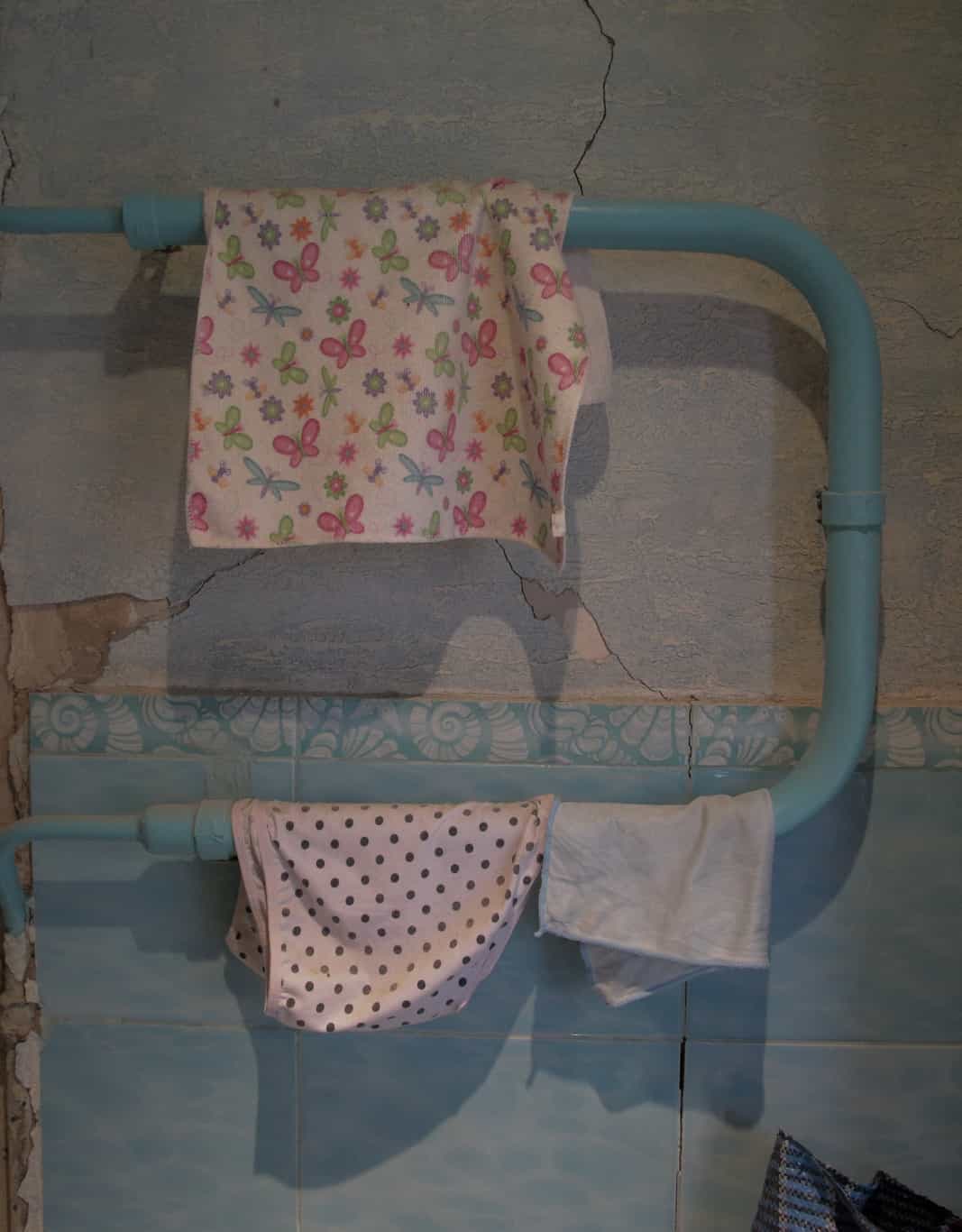
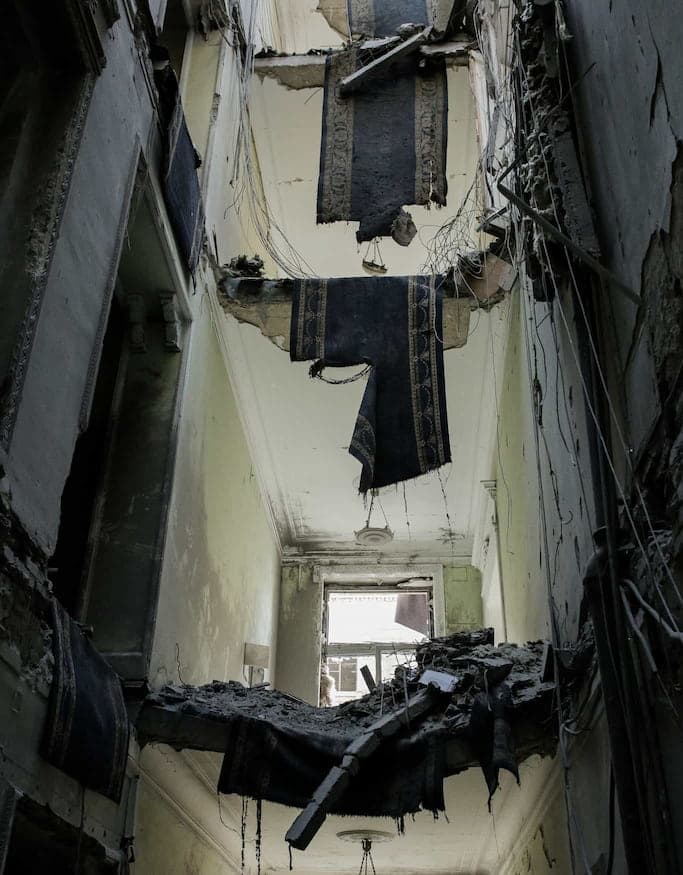
Other Testimonies from the Archive
- Recording
I realized I was standing in a minefield
A Kharkiv sapper was about to retire but instead defused a 500-kilogram bomb
Anatolii Kolesnyk12/18/22 - Recording
For me, bread means sweat and calluses. And now blood, too
A Ukrainian helped his family work the fields and nearly went blind after stepping on a mine
Dmytro Yeliseienko04/25/23 - Recording
I need to go to the morgue. My husband is there
A mother of three lost her husband during the bombing of Mariupol
Olha Berezka08/16/22 - Recording
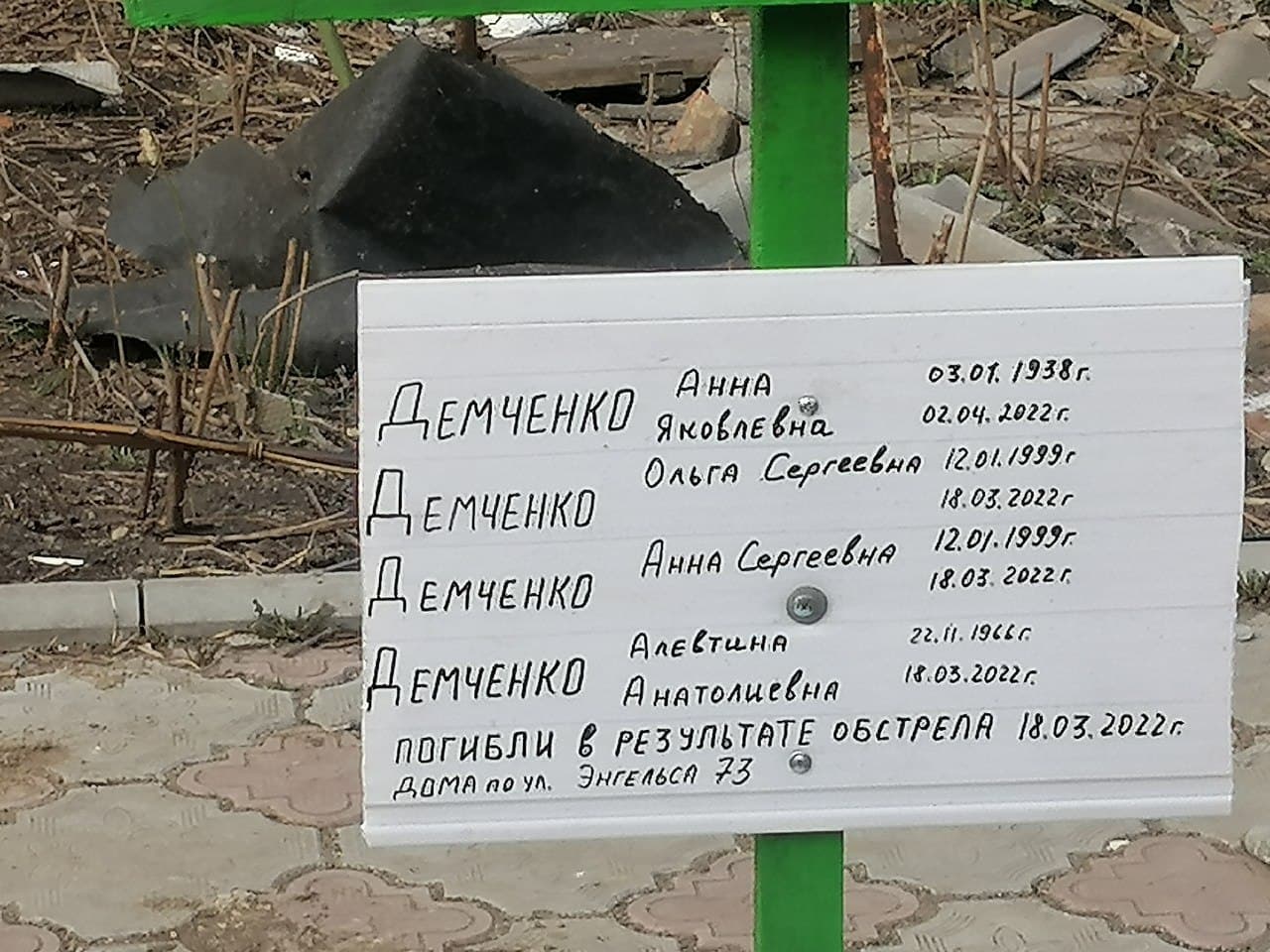
Three generations in one strike: granddaughters, their mother, and grandmother
A resident of Mariupol lost nearly his entire family during a shelling
Serhii Demchenko06/24/22 - Recording
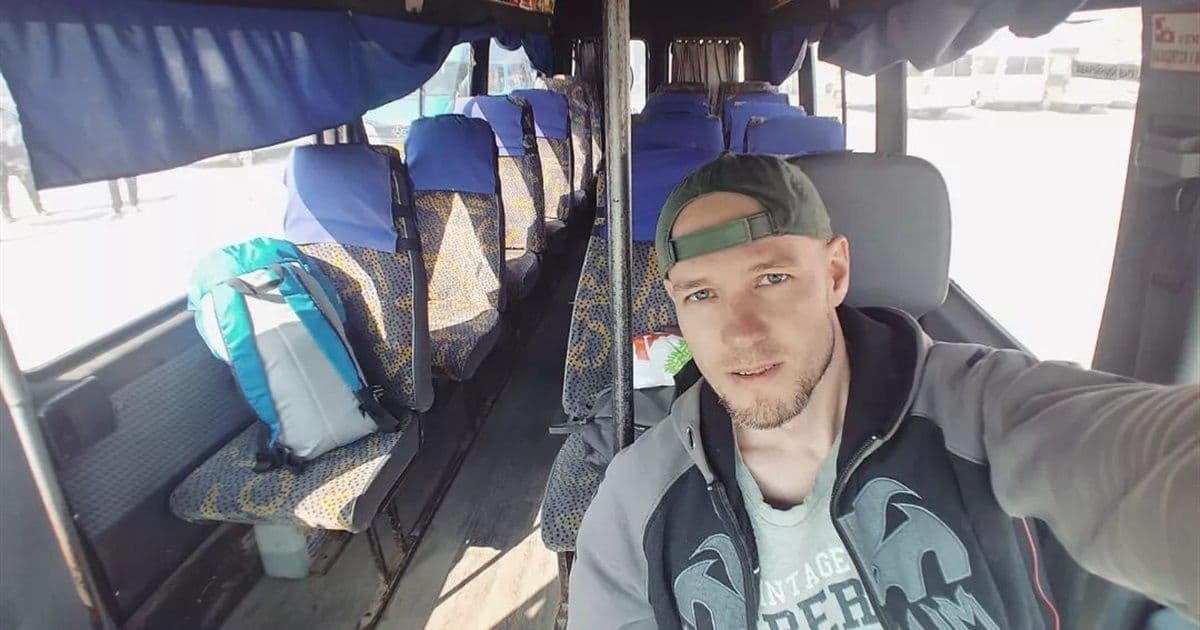
They beat one fighter from Azov for three days. In the morning the guard called him a hearse
A volunteer from Mariupol who endured captivity and torture in Olenivka
Vitalii Sitnikov07/22/22 - Text
Living under bombs on the 9th floor in a wheelchair
Rina’s story from Kharkiv
Rina (Iryna)04/05/22