Back
They’ll have to drag me out in some creative way
A wheelchair-bound man from Kupiansk on his evacuation with his 98-year-old grandfather through Russia
Yevhen Yaroshenko, a 41-year-old resident of the village of Kovsharovka near Kupiansk, had been living with his 98-year-old grandfather, a World War II veteran, since the start of the war. Yevhen himself is programmer and a wheelchair user with muscular dystrophy. His parents died several years ago, and his grandfather remained in his care. When in the fall of 2022 the village found itself essentially on the front line, without electricity, gas, or water, the family decided to leave. They left home and through Luhansk Oblast ended up in Russia. The journey was grueling: his grandfather lost consciousness several times, and they had to walk on foot at the border. In Voronezh, an Adventist community took them in, and then volunteers helped arrange their departure to Germany through Belarus and Poland. In Germany, Yevhen is learning the language, caring for his grandfather, and trying to integrate.
Interview
Transcript
Transcript
Attention! Translation was done using AI, mistakes are possible
ЕЯ: Evgeny Yaroshenko
АП: Anna Pavlova
АП: Let's get acquainted. Please tell me your name, where you're from, and where you're living now.
ЕЯ: At this stage I'm currently located in the city of Labrun, this is Saxony, Germany. My name is Yaroshenko Evgeny, I'm 41 years old.
АП: And which city in Ukraine are you from?
ЕЯ: It's a settlement, one of the large settlements in Ukraine – PGT Kovsharovka, Kharkiv Oblast. It's such a conglomerate, as they now call it territorial community, the city of Kupiansk. This is now on everyone's lips.
АП: Yes, we just recently did an interview with a resident who stayed, despite the evacuation, in the city, we literally released it last week. Do I understand correctly that you left Ukraine after the start of the full-scale war?
ЕЯ: Yes. About a week and a half before they liberated Kovsharovka. That was September 21st.
АП: September 21st of last year, 2022?
ЕЯ: Yes.
АП: Please tell us your story in more detail. As I understand it, you had to evacuate not alone, but with your elderly relative.
ЕЯ: Yes, this is my grandfather. The situation is as follows: Kupiansk was occupied literally in the first days of the war, by the 26th [of February] troops were already standing in Kupiansk. And Kovsharovka, it's like this: across the river, on the other side of the Oskol river it's located. The settlement, in fact, didn't feel the occupation as such, because there were no troops, nothing was there, everything went around us, along Kovsharovka. In Kupiansk everything was serious, but in Kovsharovka not so much.
Backstory: we live with grandfather, my parents died nine years ago, and I took grandfather to live with me. I myself am a wheelchair user, I move around in a wheelchair. My parents helped make the apartment. At the moment when I lived in one apartment with my parents, they passed away. I sold the apartment, we were doing repairs in the new one, I moved there. And so it turns out, we lived like this with grandpa. I'm generally a Seventh-day Adventist myself, I went to a Protestant church. And after my parents' death the community helped me.
And it turns out, why did we leave? The settlement started getting torn apart, [because] we became, let's say, in the middle of the frontline, somewhere between. Everything was flying between us. On one side on the high bank there's a cliff, on the right. Our guys were already standing there. Literally a week before departure our guys liberated part of the right-bank Kupiansk district. And Senkovo, and up to Kupiansk they were already approaching. And when they approached, we became, let's say, the frontline. It became quite problematic, because I'm a person dependent on others. The community helped, a friend helped me, another friend, he's elderly, he's 60, under 70, he came here with me. He helped us leave.
A week before our departure, before the 21st [of September], in Kovsharovka first there was no electricity, then they cut the gas pipeline. We were left without gas, that is, everything became really sad. I sat there for almost a week, and we made a global decision that we're leaving. Since there's basically nowhere to go, only one direction is available, we left through Luhansk Oblast to Voronezh. Our Adventist community received us there. That's how it was.
АП: So initially you went to Voronezh, and after that you already moved to Germany, do I understand correctly?
ЕЯ: Yes, the organization "Rubicus" helped with this, as far as I understood, volunteers. There's such an interesting story there. Obviously, sitting in Russia under occupation – it's not that it would be a principled [position]. "I won't sit on enemy territory" – there wasn't such a thing, but there was such a moment that I don't agree with this, I didn't particularly want to sit there. My friends suggested a couple of options, I wanted to involve the church, but with the church it was quite problematic. Our organization could take us to the Baltics, let's say. In the Baltics organizing everything was problematic, since we were only in Voronezh for a week or week and a half. And we couldn't communicate properly. My friend sent me the address of an organization that helps refugees leave for England. I filled out a form and application there - there was silence.
And such a moment happened: my girlfriend from Kupiansk, she has the same illness as me, that is muscular dystrophy, she left a little later than us. Well, there's Kovsharovka and next to it a small village Novoosinovo, she's from there. That is, we literally lived nearby. And when things started getting bad for them too, that is specifically shelling, things were hitting the village, they gathered and also [left]. She with her parents – dad-mom – they took the dog, the wheelchair and also left for Russia.
We're getting ready to leave, but there are no possibilities as such: some refused, others this, through the church line there were also quite a lot of questions. And she calls, says: "Zhenya, there's such an organization, I'm writing, they don't answer me. You can try. I wrote here and there."
In general, at such a moment, we had already been there for about two weeks. And it turns out that I wrote, and they answered me and said: "Yes, give us documents, we'll consider this option." I sent the documents. First there were questions: they offered us [to go] to Germany, to Finland. I consulted with friends, they say: "Finland is not quite an option for you, go, try Germany." And the girls [volunteers] sort of found a place here. This is an organization that serves elderly people. It's like a nursing home of sorts. I ended up here.
АП: So do I understand correctly, this is some kind of organization or social center?
ЕЯ: Yes, they call it pflege [editor's note: German word for care/nursing]. The organization, it's big throughout Germany, this is ASB. And the owner of this establishment, he has a house, we have several rooms here. We have six people here. All Ukrainians from different parts [of Ukraine]: from Dnipro, from Kakhovka there's a man, from our oblast also a man. That is, there are six men here: my grandfather, me and four more people.
He [placed] us without any complications. The complications are such: here in Germany, when you arrive, you have to register, it takes a long time. Until they give you some status, until they process disability, you live at some transit points. The volunteers who accompanied me said that in Germany, at the old airport, a camp was set up, and in some other places [they can house people].
My girlfriend, by the way, who gave this contact of volunteers, she left later. I contacted her too, she sent two letters, they didn't answer her. Then they answered, they helped them leave right in a car. She came to this heim [editor's note: German word for home/dormitory], but since they don't allow parents to work here, to care for patients, because they consider that a person will only exert themselves for their own relative. They wanted to stay so that mom could care for her. But it didn't work out, they left. They're in a neighboring state, as far as I understood. They live separately, they were helped to rent an apartment, to register. At this stage they live together.
АП: Please tell me, can you tell in more detail how your departure was arranged? Because leaving with such an elderly person, considering that you also have certain limitations, is quite difficult. How was all this arranged?
ЕЯ: The most interesting thing is that grandfather is 98, and he's more mobile than me, because he walks by himself. He got up himself, walked himself. Although there were also problems with this. It was chaos. Well, first of all, leaving is expensive. We pooled money, it cost around 2.5 thousand to leave, to travel literally 200 something kilometers, this is from Kovsharovka through Svatovo, Starobilsk, and there to Melovoye. Melovoye is the border of Luhansk Oblast with Russia. This is Melovoye on our side, and on their side it's Chertkovo, border checkpoint.
The chaos was quite serious, because we tried to do something for two days, even three days. It's cold at home, apartment on the first floor, boiler doesn't work, nothing works. Damp, no water, you have to cook something somewhere. Fortunately neighbors helped, cooked on a fire. They go to the forest, chop wood – in short, they helped us [make] boiling water, cook something, fry something, well, such things. We held out like this for a week. We started getting ready, went to negotiate about a car, and there it's in order of living queue, crowds of people are leaving, it's all complicated. We tried once, it didn't work out, then like this for three days in a row – on the third day it worked out.
We didn't negotiate much. I need to be lifted. A person should have come to lift me, and this is early. The car arrived. Our sisters [from church] were leaving [with us], in total our company was eight people. Half past five in the morning chaos, the driver arrives, says: "Come on, let's load up." And there's no one to lift me. He helped us, in short, dragged me, onto the wheelchair, shoved me in the car, neighbors helped.
Neighbors helped, shoved me in, then put grandfather in the car too. He was without chaos for now, everything was normal. Well, in terms of not being nervous, let's say. We seemed to take everything. I forgot everything I wanted at home, forgot my jacket, forgot this, well, such chaos it was. Then we drove around Kovsharovka some more, picked up our, let's say, sisters. And around the beginning of eight we were already ready to leave. We left. They [those who transport people] usually don't travel alone, they group into a convoy and go in a convoy. But by the time we gathered, the convoy had left. We left around twenty past eight, drove a bit. Kovsharovka, next to it Kurilovka, there was a church there. Right near the church our driver got a flat tire. And they were solving the question for 15-10 minutes, what to do next, how to be. Well, they decided like this: they'll pump it up, if, let's say, the tire goes flat again, then they'll pump it up again. Well, that's how we went. They pumped it up, in short, we left through Kurilovka, along the railway.
By the way, the feeling of war, the first feeling, was right there. We passed Kurilovka, went in the direction, there's Peschanoye. There somewhere something like banged. I saw for the first time people cross themselves so sincerely. Our driver was specifically crossing himself: you could see that he was really scared. Things hit the settlement, it happened, they shot down several times above us these, HIMARS [editor's note: likely referring to HIMARS missiles], and Russian mortars were working specifically. But I personally didn't have such a feeling. When we started moving [from Kovsharovka], yes it was scary. We passed, then got on the highway Kupiansk-Svatovo. And there I saw the results of war for the first time. There was a destroyed Russian column, a tank with a torn-off turret lying nearby, a Kamaz and something else there, a couple of pieces of equipment, all of it burned. Apparently, our guys attacked. There were no other difficulties on the road. The only thing is that our grandfather: "Where are we going? Where are we going?" [in Ukrainian]. But otherwise no. In Svatovo they checked us, there was a checkpoint. They looked at licenses, compared passports, and that's all. The driver told us that like you don't need to say where you're going, for what purpose.
АП: How did you manage to convince grandfather to leave?
ЕЯ: There are no options – to tell or not tell [grandfather]. The thing is, what's the situation? Before this I was getting ready to leave, because the situation was clear and obviously there was no particular point in staying there, especially for me. The critical moment was approaching September. Then everything already became clear there.
Before that moment I suggested to friends [to leave], but we didn't have such an opportunity. Why – because everything came down to me and grandfather. From Kupiansk you could leave to Ukrainian territory only through a bridge – I forgot what the bridge is called. This is in the area of Chuguevskaya community crossing. There's a dam, they crossed through this dam. But however many drivers we asked – they won't take us. My friend says: "Where would we go with grandpa?" There weren't really options. Well, obviously, we had to go. And then already, at the last moment – well what? Tell grandpa that there's a war there? He even now, after seven months, asked: "Where are we?" [in Ukrainian] – he had such a question. Although when we arrived, he said: "Are we in Poland?" Grandfather is like that. We didn't explain anything to him. He was fine half the way until Starobilsk. Then we had a bit of hysteria, because "Where are we going?" [in Ukrainian], this. We had a small hysteria, and then we reached the border, it was harder there. There you had to walk one kilometer on foot. We [walked] with adventures. Grandfather lost consciousness there. It's hot and a lot of walking, and he hadn't walked far anywhere recently. He would leave my house, sit on the bench, feed pigeons – we had such a routine. And recently he had covid, and it all overlapped. From February we had dark mode in the apartment. At night we closed everything, closed all the blinds, I turn off the light so he won't turn it on, because of light masking, just in case. Although the house stands in such a way that nothing really anywhere somehow, but still. I turned on a lamp for him.
Recently grandfather wasn't very active. And here, of course, he had to walk. Well, people helped there, a woman. He walked about 400 meters, he felt unwell. He lay down and like switched off.
АП: Wow, he lost consciousness?
ЕЯ: I didn't see, but most likely yes. Well, they picked him up, brought him to the checkpoint itself. He seemed fine, lively. An old woman was also traveling with us. Sisters from church, two of them worked for me in shifts, by the week. They cooked food, cleaned.
АП: Helped with housework.
ЕЯ: Yes-yes-yes. And we left with this company: aunt Valya, who took care of me, then Vika, her mom, her aunt and daughter.
АП: So you all went together, this whole move and crossing was joint?
ЕЯ: Yes-yes. At the border Vika took all these [organizational questions] on herself. Sergeich was also with us and two women: aunt Lida and grandma Zhenya. Also 70 something [years old]. And all this was happening with chaos, because Luhansk people are quite a mixed bunch. Vika collects documents, says: "I'll go find out at the border, how things are there, what's there." To the Russian [border she went]. She collects documents, goes through the Luhansk People's Republic checkpoint, goes to find out, they tell her that yes, go through, we let you through in order of living queue, this and that. She returns, and there someone from the officers joked: "Ah, you're spying here," – there was specific stress.
АП: He said that to her?
ЕЯ: Well, yes. What was the situation there? She, Vika, takes her phone and accidentally takes someone else's – either aunt Valya's, I don't remember, in short. She goes through there, negotiates, returns back, and someone calls this phone. And these officers immediately turned off the phone, and started [saying] that you're like a spotter, etc. She was really stressed there.
АП: Do I understand correctly that you didn't leave to Ukrainian territory because there were some difficulties with the move, with the crossing?
ЕЯ: Let's say: first of all, there was no one to organize, because my friend – I only counted on him – he didn't have such an opportunity. And plus, they simply wouldn't have taken us out, because through the crossing, through the dam it's quite problematic [to leave]. There exactly like at the border with Russia, from Melovoye to Chertkovo you have to go [on foot] – that's more than a kilometer. Here if it's a kilometer, then there it's much more.
АП: You have to walk on foot, yes?
ЕЯ: Yes-yes-yes, and this needs to be organized. Obviously, to organize at the moment when there's no connection, nothing – this is all quite problematic. This option [with leaving through Russia] had already matured, because, well, that's it. Sitting in a settlement where everyone's leaving, there's no one, we with grandpa already had no options. So such a decision was made. Without asking anything [of grandpa, we decided to leave].
АП: How did you explain to grandpa what was happening when the war started, when you were forced to sit without electricity? How did he react to all this?
ЕЯ: You know, somehow it all went quite smoothly, because grandfather, let's say, he's here and not here. He understands some things, but why tell grandfather that there's a war? He already lived through one war. They told grandpa – there's no electricity, that's it. There was such a problem: at night the electricity is turned off, and he got lost. Usually the situation is such: there's electricity, he goes somewhere, and I'm lying on the bed, I can't get up myself. I have, if anything, a remote control, I [turned on] the light for him. Well, he turned it on himself too. And when there was no electricity, this was a problem. We, it turns out, at the end of spring, April-May, had no electricity for 2.5 weeks. There was a problem there, because he gets lost at night. This question was partially resolved. Two nights were hard: he got lost somewhere there, then [says]: "Turn on the light, turn on the light." Usually I call someone, but when there was no phone connection, you can't call. At 10 I went to bed, and that's it, and we're together until morning. Well, [such situations] weren't very many, so grandfather oriented himself, let's say. Good boy in this regard. There wasn't such a thing that he got lost around the apartment, fell or something like that. Everything went normally in this regard. We lived in the same rhythm as we lived, by and large.
The only thing, food – that was a problem. I had certain supplies. We lasted normally for a month and a half, two. Then our people started helping – Vika, aunt Valya – [they'd bring] something from the garden, until we received our pension. This is also an epic, because there's a card, [but] the card got blocked before this. We withdrew money for a percentage, you had to go either to Svatovo or to Starobilsk. You go there, you pay a percentage there, I think, 36 thousand, somewhere around 30 thousand, I don't remember anymore [editor's note: here the hero most likely means that such a sum he had in his account]. Somewhere around 30 thousand accumulated in pension for half a year. I received 24 thousand in hand, gave 6 thousand to the intermediary who did this, that is, withdrew it. But then it became easier, this was already somewhere end of May – beginning of summer, June, I think. So, about grandfather – it's hard to say, no one convinced anyone. There's such a word "necessary." I understand that I can't leave him, because... You have to pull your own, so somehow like that.
АП: You said that he lived through a war. Did he participate in World War II or was he...
ЕЯ: Yes.
АП: So he was in the army?
ЕЯ: Yes, he served, he fought on the Fourth Ukrainian Front, started the war in '44, cavalry. He went to the Oder, ended the war near the Oder. Our grandfather is living during his second war.
АП: But if I understood correctly, you didn't tell him that there was a war.
ЕЯ: Yes, but why? He, let's say, in himself – is a child of 4 years, 3.5-4, [only] grandfather. We had our own problems there. It turns out, nine years ago there was a tragedy: grandpa, in short, went to the market, he had a stroke. He went out on the street, reached a certain place, stood and stands. That's it, just stands, like rooted to the spot, and that's it, they came. Neighbors called an ambulance, the ambulance came, they didn't take him to the hospital, just gave him IVs at home. And at this moment, when grandpa was recovering, my mom dies and dad. And so it turned out that I took him.
АП: Some kind of accident happened?
ЕЯ: My father had suicide. And mom there, well, her heart couldn't take it, it turns out, literally a week later...
АП: And you took grandfather to live with you?
ЕЯ: Well yes. I took grandfather, because where else? We had such a tragedy – we worried so that grandfather wouldn't find out that we don't have dad, this and that, oh no. They called and told him. Grandpa is like conscious, this and that, but after the stroke he was such, interesting. He's conscious, this and that, and what there... "Everything's normal," I say, "grandpa, everything, it's like this," I say, "mom went to remove a cast, this and that." He's like: "And when will father come?" [in Ukrainian], I say: "Later." Well, this and that, then at the last moment they told [that father died]. Well, he was already such then, he's like yes, but like no. [I] took him to the funeral. He was still conscious then in the sense that he understood things adequately. And then little by little, little by little, grandfather [forgets] one thing, then another, [doesn't understand]. It turns out, somewhere in 2017 his brother dies. There was also something incomprehensible, there was also suicide. What it was, I'm not informed. I didn't go there, because I don't particularly communicate with relatives on his side. So he dies, [grandpa] goes [to brother's funeral], comes back, I say: "Grandpa, what was there?" And grandpa is such – he's like there and here. He says: "I don't know, something like he died and that's it." Something they said there, but grandpa already didn't care, it turns out.
АП: But at the same time, after the stroke he physically recovered somehow, that is, he could walk?
ЕЯ: The stroke was of such a kind – there most likely something with memory was involved. He walked after this. I didn't pay attention when I took him, [then] I look, and he can't do everything with his tongue. Well, he spoke normally like this, more or less adequately. But time comes... These five years I played chess with him, and dominoes – this is our favorite activity – and he watched football at my place. Then little by little, little by little... You know, there was some film when a child, let's say, was born old, and then toward the end of life got younger and younger.
АП: Benjamin Button.
ЕЯ: Yes-yes-yes, that's the series where... You observe grandpa, he's the same, he's going somewhere into childhood. First TV became uninteresting, then we stopped playing chess. He had some incomprehensible attack there. And after that I don't bother him, don't strain his nervous system, try to limit him from all sorts of stresses and such. Well, and so we lived.
АП: You have very warm relations. Were you always so close with him?
ЕЯ: Yes. It turns out, this is mom's dad. I'm the favorite grandson, so always like that, always very much so.
АП: Please tell me in detail. You said you're the favorite grandson – maybe you have some stories connected with him, from childhood? Did he raise you?
ЕЯ: I went until third grade. I went to school, after third grade I came to fifth grade, went until New Year and stopped. I very often [spent] all summer at grandma and grandpa's, and in winter they took me home. There was school at home. Well, and in general from childhood into any adventures [I got involved]. Grandpa fussed with me. They picked everyone up from kindergarten, but he more often. He taught me to play chess, and cards, and everything else. And wherever, there grandpa-grandpa, this is...
АП: You said that until fifth grade [you went to school]. Then you got sick or you just started studying at home?
ЕЯ: No, got sick sort of. I have muscular dystrophy – this is a hereditary genetic disease. It was called Erb-Roth muscular dystrophy for me, that is juvenile or something like that. It's not written that way now, now dystrophies are defined a bit differently, now they've learned to identify specific genes that, let's say there, don't work. And in connection with this they assign some category. They already specifically say, write, which gene, which what. So this was just regression, let's say. Until a certain age I walked, and then worse and worse, just started falling. My [close ones] started worrying so I wouldn't hurt myself somewhere there. I would fall somewhere at school, then somewhere else. And getting up in winter, let's say, was difficult. Well, in general such things.
АП: And grandfather was next to you and in every way...
ЕЯ: Well, not quite. We lived separately, but in summer yes, all the time grandpa with us, grandpa on standby, here and there, came to visit. When I was staying at their place [with grandma], grandpa competed with me. Mom works, dad works, in general, constant activity. So [all] summer yes, he dealt with me specifically. He and grandma.
АП: What else did you do? You said he taught you to play chess. What other activities did you have together?
ЕЯ: Yes we're fans – he's a fan – he got me hooked on football, I got addicted until a certain age. We have the category Dynamo Kyiv, this Kharkiv one, Metallist, and then Kupiansk Lokomotiv. This is priority.
АП: You watched together?
ЕЯ: Yes-yes, my grandpa is such, passionate about this. He's a football fan, he's a chess fan, cards fan, he's such a comrade with us, a fan. And everything grandpa knows, I know too. Before school we played chess, that is, he taught me. And at school I somewhere already, it turns out, I think in first or second grade went to chess club and started already playing independently and practicing. And such a theme turned out that I was already beating him, and he was losing. If cards – this is his theme, then chess – this is my theme. Well, it was cool.
АП: And what was he in the past?
ЕЯ: Grandfather after the army, when he was demobilized, served additionally in Bryansk Oblast. As military men who fought, they weren't touched much anywhere, they just stood there, performed something there, some tasks, helped officers, this and that. After he was demobilized, this is somewhere around... I don't remember this, this is [19]46 or [19]48, they helped him get a job on the railway. He, I think, was still trying somewhere to get a job at a mine, but something didn't work out there. He got a job at the depot as an assistant engineer, but before that they hired him as a stoker. He traveled as a stoker for a certain time, and then he was an assistant engineer his whole life. Already when he retired, he [worked] here and there – well, in general, such things. Sometimes as a miller at a bread factory, sometimes as a guard. Well, they don't sit without work – no, so he was engaged in something. In general he traveled his whole life as an assistant engineer, for the most part. These are steam engines.
АП: Then he already returned from Bryansk Oblast back to Ukraine?
ЕЯ: Oh, I can't say exactly – this is either Orenburg Oblast or Bryansk Oblast, somewhere around there. I just don't remember now. I once had an idée fixe: I proved to my neighbor that in the 1940s when there was war, [19]44-43, malaria was raging on our Volga. They proved to me that this doesn't exist. I had to [do this]: took grandpa's military ID and found where he was drafted, where they drafted him. Neither the village nor the city where he was drafted exists anymore. This was Stalingrad Oblast and some settlement there or something like that, which also in fact doesn't exist. I don't remember exactly now, I have the military ID scanned somewhere. At that moment malaria really was there.
Grandpa, by the way, lived through this thing. Also an interesting case, he told this his whole life. He was generally small like that, well, a very small comrade. And when he ended up near Volgograd, he caught malaria. And it tossed him around, and tossed him around specifically. And he looked like, I don't know, a straw. But at the same time when at a certain moment he was drafted, but he was worthless. They used them, drove them around, I understood, on internal tasks: guard something somewhere, escort something somewhere, transport something somewhere. And at one fine moment either a gypsy woman it was, or some grandma approaches him, says: "What, dear, is this malaria here?" – "Yes" (inaudible), she says: "And where do you live?" – and they were standing in some farmstead at some Cossack woman's. He says, over there. She says: "(Going over there? – inaudible) You need such and such, such and such, such and such, you'll drink, onto the stove, let her cover you with everything there is, here, and this thing will pass." And grandpa's malaria passed like that. He [drank] milk there, something else, well, in general, I don't really remember anymore, but...
АП: So she cured him.
ЕЯ: Specifically. We should check, yes. Actually malaria really was raging in these places. Grandpa won't lie much. Apparently such a story [was]. That is, she really cured him. He says: "What's the trick with malaria? 12 noon, and you start getting stormy, and you feel really bad, and you're just not good at all." He says: "The next day I overslept, first of all, unclear how much. Already toward lunch I wake up, this and that, rummaging around, nothing, – he says, – 12 o'clock, and I'm not getting tossed around." He literally, he says, in three weeks, in a month he ate well. And then he went to the frontline.
АП: So she cured him, it turns out.
ЕЯ: Yes, specifically. Such a story it was.
АП: Probably that's why he's so strong, lived through so much.
ЕЯ: Our grandfather is not particularly strong, he's such – drank cold water, and that's it, angina or something like that. But in general he, let's say, is a tough guy.
АП: After you already found yourselves in Germany, how did you settle in there, how did you settle him in, how did you generally get established?
ЕЯ: We settled in naturally. Here they take care of me, of him too, that is, it's normal. We arrived, nothing special. They feed us, they give us drink. Grandpa came alive from the moment he left for Voronezh. Why – at home we're alone, the two of us, everything's grayish, windows closed most of the day, this and that. Our grandfather recently was like this one, a sparrow, ate, had food: "I don't want this" – ate two spoons – "I don't want this." We arrived in Voronezh, and there's a crowd of people, everyone sits at a common table.
АП: This was some kind of house, or where did you stop there?
ЕЯ: We crossed the border with such a crowd: me, grandpa, Sergeich, aunt Valya, Vika's mom, Vika, her little one, grandma Zhenya and aunt Lida. This is our such, like our group. And from the border of Russia, from Chertkovo, the pastor of the Voronezh Adventist community picked us up. They came in two cars and picked us up. They loaded, shoved everything. We're there with things, with everything. I, grandpa don't have many things. The only thing I took was my laptops and tools to [clean a laptop]. Well, one bag each, and so it turned out to be quite a lot. And in general, they picked us up.
At 7 o'clock we left Kovsharovka, somewhere around 12 o'clock, plus-minus, somewhere around one [PM] we were already at the border with Russia. That is "Luhansk People's Republic," "Donetsk People's Republic" we passed checkpoints and found ourselves at the border with Russia. This is somewhere around two [PM], well, an hour plus-minus. We passed the border there. Russian border guards were more cheerful, an officer, two of them, quite loyally treated us. We approach this booth where you throw things for checking. He [officer] says: "Listen, come here to me," – well, in the sense they brought me there in a wheelchair, he asks: "What's here?" – I tell him, he writes. "What's here?" – I tell him. I had one device there, then another. There was a modem, router, well, in general, such various things that are needed. And he's like saying: "Okay, you see that place, there," he says, "carry, take everything through, in short." And that's it, that is, they didn't even check absolutely anything, they treated us loyally. They see grandpa, that we're going as a crowd, in short, and they quite loyally let us through, quickly. We passed the border.
There was another incident with grandpa. Grandpa completely passed out then. In short, what's the situation. We pass the border, everything's normal. They met us, pastor Mikhail says: "Guys, let's do this: there's an emergency situations ministry reception point, they set up two tents at the border. You can sit there, [drink] tea, such things, [brew] instant noodles." And we all came there as a crowd, drank tea, ate instant noodles, this and that, gave him tea to drink. I stepped away, come back, aunt Valya tells me: "Grandpa feels bad." I look, and grandpa is out of it, grandpa is just completely unconscious, unconscious. And he's this, a kilometer on foot, yes, once they gave him a ride, once he already lost consciousness. And he specifically lost consciousness there. The feeling, of course, is indescribable. Our people say: "So, look, we're calling an ambulance now, we're going with grandpa to the hospital, and you gather up and go to the relocation point or whatever it's called."
АП: This is the pastor telling you?
ЕЯ: Yes. Vika went with grandpa in the ambulance and they left. The ambulance came, took grandpa, and he was out of it from this chaos – he hadn't walked for a long time. And it turns out, he just fell asleep, specifically fell asleep. But he fell asleep in such a way that you [can't wake him up] at all, no reactions at all. I thought, that's it, grandpa will die there. And they put me on a bus, in a PAZ [editor's note: type of Soviet bus], and say: "Go there." I have such feelings, like going to a funeral. I think: "We were sitting normally at home, took grandpa out, in short." And it's such, PAZ bus – I have such feelings that a crowd of people, like from a funeral [editor's note: such buses are often used when relatives need to be taken to the cemetery]. Well, thank God, everything worked out. They took him, and his blood pressure dropped. He had been running around, and it turns out that before that he was in chaos: "I want to go home, where are we going, why do I need all this." After this he woke up in the hospital, they gave him a supportive heart injection. In general, they looked, stabilized him. And we picked him up already in the evening – it was around 8 o'clock in the evening.
АП: So they sent you to this house where they housed you, and Vika went with grandpa...
ЕЯ: Look, they didn't house us. I don't know, I don't remember what it's called – temporary placement center, something like that. They gave tea there, there's where to place yourself, in short. They sent us there so we would just wait it out, because grandpa needed to be taken care of. Vika calls, says: "Everything, grandpa's lively, he's normal, they gave him injections." "That's it," she says, "he's recovered, we'll come soon." At 8 o'clock in the evening they came.
I looked at grandpa – grandpa is fine. Well, such, well, specifically tired. We wrapped him up in the car, covered him. We decided that we're going further. We got in the car. Before that we drank tea in this relocation point. We get in the car and go to Voronezh from this Chertkovo. I don't remember the name of the second pastor, I remember Mikhail. In short, they bought us food: buns, yogurt, something else there they bought. We took off [in the car] and somewhere around one at night, maybe later, we arrived at the second Voronezh Adventist community. They were waiting for us there, set up cots, and we moved in as a crowd. Grandfather was fine. АП: Was it scary when grandfather felt unwell?
ЕЯ: Very.
АП: What were you thinking about in that moment?
ЕЯ: And in that moment I wasn't thinking about anything. Tears welled up, I really thought that if we'd just stayed home – nothing would have happened. But you understand that this is necessary, and you understand that this is. And there's such a feeling that you've really buried a person. This period when he [grandfather was in the hospital], three hours you sit there, don't know what to do. Such prostration. At home, as they say, everything's your own, and the walls protect you.
АП: But at the same time you understood that you had to leave anyway?
ЕЯ: Yeah, without question, there are no questions there. Everyone's cheating here. At our border before we entered the checkpoint, there was an officer. And we had, besides grandfather, Vika's aunt, and Vika's aunt is 87 [years old], and she's not herself at all. Grandmother also walks, but she's, first of all, more cheerful than grandfather.
Grandfather has been walking poorly lately after the hospital, after covid. At my home he walked without a cane, without anything, normally: he'd bend down, he'd run. But after lying in the hospital for two weeks, he stopped walking. The toilet [in the hospital was] far, they put a bio-toilet in the hospital for him, and like, that's it, fine. He got used to not having to walk far. They brought him home, but he barely, barely, barely hobbles. Well, our brothers and sisters – you can't quickly get these walkers and everything else – they gave us walkers as a gift, gave them to us temporarily. So he came here to Germany with them.
And she [Vika's 87-year-old aunt] walked by herself. And while we were dragging all the things there – Vika, Sergeich and others are carrying things back and forth – and this grandmother, she's [walking] back and forth. There was some transformer booth there. Officers come up: "Why aren't you watching the grandmother, there's a departmental facility here, back and forth." And her sister says, like: "She won't do anything there, she's just walking there." And he tells her like: "Why are you dragging around with such old people?"
АП: This is a Russian border guard?
ЕЯ: This was some border guard there. I got mad then, I say: "We probably wouldn't be driving around here if we didn't have a war, and at home there was no fucking light, no water, no gas." He let up after that, because the situation there – day, heat, in this heat a bunch of people, more than a hundred people. I'm snapping back, I'm already fed up with everything, because the grandmother is bothering him. And I started snapping back. After that he didn't say anything anymore. He went to his checkpoint, brought two chairs, and then they sat both my grandfather and this woman Lyuba.
АП: These are Russian, yes, border guards?
ЕЯ: This is a Russian border guard. But the thing is, he was alone there, he was on duty. I'm saying: those who were inside were officers, a woman and a man, they were quite loyal to everyone, so there are no questions. There it turns out, between the checkpoint, when going down the road, a Luhansk border guard. We were crossing like this: I have a backpack hanging on my back, a bag in front on a wheelchair. Well, in general, there's a bag of everything, they put something else, I don't remember what anymore. But it was quite hard to go, and quite hard to go down the slope. Some guy there also from the Luhansk border guards, some private also helped, brought us down. That is, here everything seems loyal in this regard relatively. I'm saying, if you don't take into account this moment with the Russian border guards, when they gave Vika a hard time at the checkpoint, we sort of passed without problems. Although people said there, they stand for a long time, they can generally stand up to 24 hours. We passed, let's say, with little blood: grandfather lost consciousness twice, and we, let's say, found ourselves in a more or less reliable place.
АП: And grandfather with the walker, it turns out, walked all this time?
ЕЯ: There's no other way, there are no options. I screwed up, I didn't take [him a wheelchair]. At home I have a street wheelchair and an apartment one, well, home one, a regular active wheelchair [editor's note: wheelchair for active movement]. There was chaos at home, you have to pack, pack up. I think – I need to take two wheelchairs. One folds, and the second just in case – well, there was no way [to take it], in short. He [apparently, the driver – editor's note]: "Here, there's nowhere to put it." Chaos, and you somehow relaxed, and didn't take it. It would have been great – the second wheelchair would have come in handy for grandfather and so on. When there's chaos, it's always like that. I left a jacket, left this, thank God it was hot that day. September 21st it was such heat toward Rostov, specifically there – Chertkovo, Melovoye. It was normally hot there.
АП: You were saying that you came to Voronezh, and grandfather literally came alive there, started showing some kind of activity.
ЕЯ: Yes, in what sense. We came there to the community, they put us up for the night. [We were] like gypsies: there's a small house, we occupied all the sleeping rooms there, the central hall. And they started looking for an apartment for us. And there one pastor, [...] he gave us his small cottage for four rooms temporarily – quite normal. And they took us there that same day literally by evening, already on the 22nd. And grandfather is alone at home, well, I – well, what's there, we ate, back and forth, talked, didn't talk, we're in our rooms, and he's doing something else there. Well, in general, like that, not actively. But here there are many people, everyone at one table, grandfather came alive a bit, it was more cheerful.
АП: Did he try to communicate with everyone somehow?
ЕЯ: He's like this with me, not particularly, let's say, sociable. But he started feeling much more cheerful. It's noticeable. An old person, he has some business of his own there.
There were funny moments – one after another. We decided to shave grandfather, in short, because he got scruffy at home. But there's nothing to shave with, no electric razor. Sergeich, whose car this is, well, my friend who came here with us, he has a razor, a razor blade. We tell grandfather: "Grandfather, let's go, we'll shave." There's such a circus, grandfather: "Don't shave me, don't shave me." I don't know what triggers there. Well, such things, there were funny moments.
АП: Did you manage anyway?
ЕЯ: No, if he didn't want to, arguing is just extra hysteria. I try to be loyal – he doesn't want to, he has his own vision, back and forth. Well, at home we cut with clippers, at home everything was normal for us. Lots of photos – you cut his hair normally. But here he saw the razor, said no-no-no. What he meant there, I don't know.
АП: This worked in the subconscious, apparently, some thing.
ЕЯ: Yeah, like don't shave me. Well, in general, it was like that. There were wonders.
АП: How did the road to Germany go for you?
ЕЯ: The road to Germany is two parts, two epics. When they picked us up, it was such a rainy day. Volunteers picked us up. It was somehow strange – a girl in emergency ministry uniform accompanied us. Well, everything's unclear like that, but quite cool. They came to Stary Oskol, picked up a girl Anya from there. She's from Balakliia, she's a nurse, was working, going to work, and at that moment it hit. She has shrapnel wounds, they sent her to Kupiansk, in Kupiansk they stabilized her, sent her to Belgorod. As far as I understood, they operated on her there, but she still doesn't walk. She has shrapnel in her spine. I think they removed something, something not. And so volunteers picked her up and then us. And we drove to Smolensk normally. Although grandfather tried to ask where we're going: "Guys, I need to go home, I need to go to Kurilovka, here's Kurilovka." But then somehow nothing. We got to Smolensk in a day, it turns out. We left around 12, plus or minus, I don't remember exactly. And literally by evening, by 10 o'clock, we were already in Smolensk. Normal. This part of the road grandfather didn't whine. They fed grandfather, this driver who's also from volunteers, his mother gave him something meaty for the road. Grandfather went for it there, grandfather liked this theme. We arrived normally, cheerfully, let's say.
АП: You went by car?
ЕЯ: Yes. Volunteers asked how to transport you, they say: "Here's a train," – I say: "Train is normal, not quite," – they say: "Grandfather won't fit?" – "No," – I say, – "grandfather will fit, but I won't fit, I'll have to be dragged somehow interestingly," – because, well, wheelchair, back and forth, it's either a car with a lift, or something else, well, in general, specifically. But grandfather can, he'll climb in, climb out. Well, with problems, but still more cheerful.
And so they sent a car, in short. This was a journey in one car from here to Warsaw. It turns out, the first day, well, quite normal, it was interesting for me. You sit, constantly new places, something changes. For grandfather this is a burden, but he slept half the road, half the road we tried to feed him, back and forth. He handled it normally. Already from Smolensk to Brest everything was nothing, but there were nuances. We passed the border for a long time, it was hot there, and he [grandfather]: "Guys, I want to go home, what are we sitting here for." And then there was a nuance. We leave from Smolensk, it's not far to the border with Belarus. We stood at the border for a long time, they checked our passports there. They didn't check grandfather's, but they checked my, Sergeevich's, Anya's documents for quite a long time. And then literally 15 minutes at the Belarusian border the driver Boris was getting a green card, and that's it. And literally all the rest of the time is a journey through Belarus, that is, we didn't stop anywhere, just on the highway, constantly on the highway, fields-fields-fields.
We got to Brest. And there grandfather already started acting specifically... He felt bad, he was getting sick. There's another funny thing: we arrived in Brest, they dropped Anya off somewhere on the outskirts, and we had left to the place where we were supposed to spend the night, well, a bit [editor's note: a little bit]. But some kind of failure happened there. In Brest there are two villages Seya... I forgot the exact name, I have it written down somewhere.
АП: With the same name?
ЕЯ: Come again?
АП: With the same name?
ЕЯ: Yes-yes-yes, exactly the same. Moreover, one of them is near the border with Ukraine, literally there in the sticks [editor's note: in the wilderness], that is, wild forest, not a single dog, not a single cat, abandoned houses, well, a creepy place. And the second one is in the center. We dropped off Anya, and we... Boris entered the point [in the navigator], and it turned out that this point is somewhere 60 kilometers from Brest. Well, we're fine, he's driving us, it's all the same to us. Around 10 pm, we're going to this village. We arrive in this village, and there's nobody there at all. We were actually somewhere on the border with Ukraine, right there, I think. I looked, it was about five kilometers or even less. We arrived there, and it turns out it's not there – in short, we need to go back again. But grandfather is already no good, grandfather is already like: "Guys, guys, that's it, I don't need anything anymore, where are we going, how long will we be driving." Well, we got there.
We arrived in Brest to the volunteer family around midnight. And there, of course, grandfather threw a fit, it was unpleasant. He's grumbling, clawing: "I won't get out of the car, what are you doing to me, what are you doing to me," – we got him out, convinced him, brought him into the house. The house has new renovation, everything in glass, mirrors. A family, a couple, Pasha, Olesya, they have three girls, little ones. At that moment Olesya was [home]. Grandfather woke them up specifically. Uncomfortable. Grandfather is yelling. "Come on take off," – I say, – "the jacket," – "What for, I won't." He's like that, he just caught concrete stress. There was chaos, volunteers called an ambulance, the ambulance came, they said: "We won't inject anything to such a grandfather. We'll inject him with a sedative now, he won't wake up tomorrow, we won't inject anything." They say: "Give him something gentle." Thanks to the volunteers, they searched until 2 am at midnight for this gentle sleeping pill. We gave it. As a result grandfather slept in the car, because it was easier there.
АП: You mean he asked to go to the car, or you...
ЕЯ: Yes. We didn't [put] him there, he climbed in there and from there that's it, said no-no-no. He has stress...
АП: He left the apartment to go to the car?
ЕЯ: Yes, well because chaos. Here's the hostess, a middle-aged girl: "Grandfather, take off your jacket, now we'll go to sleep," – "I won't give up the jacket, you'll steal it," – and that's it, and I don't know where this comes from, what's there. There wasn't such chaos [before]. This is concrete chaos simply. Well, he's on edge, he doesn't understand where he's going, he doesn't know what they're doing to him, back and forth. All this played a role.
АП: How did you calm him down, how did you support him in general?
ЕЯ: He calmed down himself. The volunteers brought pills, Sergeich gave him pills. He drank, drank tea, said: "That's it, don't touch me." And Boris said: "So, let grandfather sit in the car," – thank God the car is a Toyota, thank God the car has heating. We left him there, and he settled in there normally, dozed off, and by 8 in the morning grandfather was normal. That is, he calmed down, let's say. Then we brought him into the house, Olesya fed him, then put him to bed, he dozed until three, it became easier in this regard.
This was the first chaos, and then, naturally, we had to cross the border with Poland, there are also nuances there. We barely crossed with grandfather. The volunteers – this family turned out to be Baptists, believers, and quite good really, quite understanding. They endured concretely. The kids didn't sleep, around 1 am, 2 am, the child is three years old, and all this, that is, constant chaos. But despite this, they treated us very-very loyally. Big thanks to them. This was chaos, then the day was sort of like that, we spent it normally, and their same community [sent us further]. There were two drivers, they took us to the border with Poland. We passed there normally sort of, the only thing, again it's long.
We left at 9 pm for the border, around 11 we were already there, already submitted all documents. They asked grandfather: "Grandfather, don't you want to go to the toilet?" – grandfather: "No, I went, that's it, no," – well, they took him out just in case. Yes, that's it, he went. That's it, we passed the Belarusians, Belarusian border guards, we enter the bridge between Poland and Belarus, and we get stuck there until four. And grandfather there all this time: "I need to go to the toilet." But there it's like: you get out on the bridge, and that's it, and they just send you back.
АП: That is, this is the zone between borders, this neutral one?
ЕЯ: Yes-yes-yes. And there you can't do anything, you can't walk there. Well, real chaos, it turns out, this is until four o'clock. Then movement sort of started, he calmed down a bit. Movement from four or from five in the morning, it turns out. We went to the border, he calmed down. That is, he doesn't need to go anywhere, doesn't need anything, we won't do anything, everything's normal. We passed the border very quickly, then passport check, we were delayed there too, it turns out, for about two more hours.
АП: This is after already passing the border, there was another one, right?
ЕЯ: There it turns out like this: at the border, they checked our car, took documents for verification. The border guard asked grandfather – I say: "I'm the grandson, I speak for him." He says: "Is grandfather crossing the border for the first time?" – I say: "Yes." With a Ukrainian passport, – grandfather has an internal one, – he was passing for the first time. Sergeevich, my friend who was helping us, he also has such a passport, Ukrainian simply, and grandfather has the same. And apparently they just detained them for verification. From 5 am literally 15-20 minutes they checked the car. [They say]: "That's it, you're free, go, but here are the passports, go to the parking lot and wait." And two more hours. Grandfather sat for probably another 20 minutes, and let's go: "I need the toilet, what are you doing, how long can this go on," – this was concrete, there you can't do anything anymore.
АП: How did you, what did you tell him, how did you endure all this in general?
ЕЯ: Quite interestingly. We persuaded and everything. We persuade: "Grandfather, sit," – "Driver, comrade driver, what are you here, I'll get out," – "Grandfather, you can't," – "I'll do it right here," – he says: "Grandfather, sit," – like that. Well, quite difficult. If, let's say, I understand that you need to sit and not move. Sitting also, in my case sitting for a long time. How long is this? We left at 9 o'clock. You sit and sit – it's tiring, but you understand that this is how it is, this is how it should be. Well, but grandfather, he's like a child, you can't explain to him. Well, thank God, we passed all this.
It's like accumulative then. We passed this, arrived in Warsaw, volunteers placed us in a center, I think it's called "Mudita." This is a temporary placement center for disabled people in Warsaw. They took us there, but said: "We wouldn't have taken you, Zheka, if we had looked at you, [if we] knew what awaits us," – in the sense that I need to be put on the bed, from the bed, and so on. There was concrete tension with this. But nevertheless they found volunteers who helped with transfers, quite normal everything.
Grandfather behaved not very well there, because stress, because movements. He constantly runs somewhere at night, bothers everyone. And these are rooms of seven people per room, and there are, it turns out, four such rooms, I think. They're made somehow locally, and, it turns out, if you walk around there and rustle at night, everyone hears it, and everyone, of course, doesn't sleep. Thanks to the roommates for their patience, so we somehow survived this. This was, of course...
АП: Did you live there long?
ЕЯ: I won't say exactly, I just forgot. I'm one day less than everyone else, well, I mean grandfather and Sergeevich. I just had a friend in Warsaw, and he just took me to his house for one day. This is near Warsaw. We wandered around Warsaw for a day or two. About five days in total. It turns out that we arrived, stayed for a day and a half, on Saturday they took me away, and returned me on Sunday. I don't remember exactly, it was Tuesday or Wednesday – on one of the days the owner of this house, let's say, nursing home or care home, picked us up. He then took us here, to Germany. And so, there was chaos in this "Mudita," we stressed out, but otherwise... Then it became a bit easier. A month, of course, of stress, grandfather was causing chaos: at night he needs to walk, put on boots, it was like that. Then it became a bit easier, now it changes periodically like that. Something like that.
АП: What helped you hold on in this whole situation and endure everything that's happening? This is very hard...
ЕЯ: Distraction, most likely. I'm a believer, in this regard there's some support. You know that not everything is just like that, you know the nature of things – there are evil forces, good ones. Hope in God, it reinforced, support from Sergeevich, friends who are there. In Warsaw a friend picked me up, such a day of relaxation turned out. Let's say, it's like going to a museum. He took me around temples, he took me around Warsaw, took me to [unclear – editor's note], that day, on Saturday, they were filming some film about Germans there. There's a funny thing, we caught this moment when it would seem everything's sad: they're hanging people, seven people. But we, the thing is, we watched about eight takes – it's fun. Actually they stop, hang them again. From the side a crowd of people, it's all quite interesting. Then we attended a concert. My friend, he lives, Grodzisk, I think the city is called, near Warsaw. And they had Armenian music day there. And we hung out there at the end of the day too. In general, such a quite cheerful day. Everything's interesting, you walk around all such new things, everything's so calm. Cool. We sat by the fountain, then something else.
АП: You got distracted.
ЕЯ: Yes-yes-yes, it's easier for me in this regard.
АП: You mentioned filming. I noticed that there was some hanging scene, and you said it was amusing for you. Wasn't this some kind of trigger for you?
ЕЯ: Not a trigger, no. Well, the thing is, there's such a concept as film. When you feel this somewhere there, you don't understand, you don't associate this with what once happened. I have a concept of war, a concept that there's a war, when you sit at home in a nine-story building on the first floor, when something hits somewhere there, it's quite creepy, but you don't feel it. It was scary when about six HIMARS were shot down above us. This is mid-summer, I don't remember exactly, I won't say dates here. Ours were trying to break through Russian defense, and it was quite an interesting day. Sergeich, he's a Baptist himself, tells me that when these six things flew in, when they were shot down, people from the community gathered and left for the Baltics, literally that same day. That day was quite scary.
But again, here are two examples. There's aunt Valya, she helped us with grandfather, back and forth. And here's aunt Valya's sense of war. A rocket flies in at night, they shoot down the rocket over Kovsharovka, and here's what she sees. She says: "I'm standing, in short, going to the kitchen, and at this moment explosion, glow, red glow, the rocket scatters, back and forth." What does aunt Valya do? Aunt Valya drank something there, went to bed. I don't know – this is a stable nervous system. But Vika's mother literally [reacts] like this. The same situation, a plane flies there, supersonic transition – this is when you're sitting at home, this is such an impression that something hit somewhere. This is such a big boom, and that's it. And that's it, the person, she can't live. She says: "Zhenya, this is impossible to survive." That is, above one explodes the same force explosion, it's scary, it's like this, and the second [reacts] like this.
For me the war started when I was leaving Kupiansk. When I saw for the first time what a tank is – like a toy box. A tank stands – and I had seen tanks several times in my life before, – a big such machine. But here the same big machine, but it looks like a trough, it's broken, the turret nearby. Then it was creepy.
АП: This is at the very beginning, right, when...
ЕЯ: Yes, when we were still leaving, this is September 21st.
АП: Ah, you saw it for the first time then?
ЕЯ: Yes-yes-yes, I saw it for the first time then. Before that, the concept of war, I'm saying... These six times when they shot down HIMARS, then it was loud, then it was scary. Then you lie at home, sensations, in short, not pleasant, because you think: "Aha, so it will hit, in short. It will hit, so it will be quite sad. Friends, Vitalik won't come, Vitalik and this..." – Vitalik asks me before this. An adult man, he's three years older than me, says: "Zheka, imagine, now something will hit somewhere, what to do? What to do?" – I say: "Are you really saying this? Vitalik, you save your family, wife, mother, and then [if] there's time, you'll remember about me and grandfather," – in short, such a situation, quite creepy.
АП: You mean he was asking you what to do with you, how to help you?
ЕЯ: Yes, not so much asking, as such, you know, a rhetorical question. We just sat, discussed what to do when it hits. Because I had a good apartment made, a solid apartment, I invested in renovation: plastic windows, wheelchair exit, that is, normal. Vitalik has a three-room, but he has old windows, Soviet ones. The whole summer, the whole spring it hit nearby or a plane flew somewhere, they flew to position from Belgorod to Izium, they bombed there in the morning, around 6 o'clock not yet. And this gang, in short, on low level [flies], and these sounds are impossible to convey. We discussed this all one evening, and he just said rhetorically. And when you've already discussed this, you lie down, and there was a hit, and then quite sad, unclear, scary, frightening. But otherwise in general... People, the thing is, get used to it.
A girlfriend says that all this is nothing for her, this occupation, compared to the amount of equipment that went through Kupiansk. This is scary. My sister lives now, this is Kharkiv Oblast, Volchansky district, and this is the frontline. And on the first day of war so much equipment passed there that she says it was terrible. But the girlfriend says, through Kupiansk every day, every day tracked, wheeled equipment goes, there's so much of it that for them it was morally heavy. Yes, these hits – it's like, sat, worried and that's it. So like that, you try to distract from this. I'm saying, for me this moment of the hit, when HIMARS were being shot down, it was very loud, because somewhere here in the area above the settlement, plus or minus. The house, nine-story building shakes concretely. So that's how it is.
АП: When did you move from Poland to Germany?
ЕЯ: This was, I think, October 18th.
АП: Ah, well, that is, this happened quite quickly for you?
ЕЯ: This is a move in three days, and stayed in Poland a bit. It's like that. Seems quick, yes.
АП: Well, just a very eventful move, and of course, these three days are probably perceived as a much longer period.
ЕЯ: Especially for me, who basically, before the war sat at home on standby, because everyone has their own problems, business. To go out, I didn't have a ramp, I need to be carried out, and someone needs to carry. I actually sit at home on standby constantly. But here for me so much chaos, so many movements, so much new. I'm saying, the only tragedy is this with grandfather. Well, 98 years – this is not a theme for moving. And especially a person who, let's say, is not himself. For him this is chaos, for him this is scary. For me it's like an adventure. Yes, it's sad from the point of view that you sat in your home, you had everything: you have a pension there, you have side jobs there. I got officially employed two months before the war.
АП: What did you do?
ЕЯ: I do website support – content, I used to do creation in general, maintenance, such things, installation and so on. And for me this was generally like an achievement. I'm satisfied with myself, I have everything. I liked this. I equipped an apartment for myself, parents helped, that is, for me this is ideal. I lived in an apartment where you can't get through thresholds to the bathroom or to the kitchen. Everything's small there, back and forth, on a wheelchair this is a whole problem. And here such a moment that you have normal conditions, you live normally for yourself, you have someone to help there, you have friends there who visit you. From all this you somehow... Well, it's sad to leave.
We were leaving, I told you, it turns out, we stopped near the church. You know, such a significant event. We stopped near the church. A wooden church, from 189-something, I don't remember what year. They say it stood during the Germans, we changed a wheel there. I said that the driver had a flat tire, we stopped right opposite the church. Back and forth, we arrived in Voronezh, and literally, I think, a week passed, and they send photos that nothing is left of this church, only the foundation. Everything burned down, nearby a tank, first-second-third, in general... That is, there were concrete battles there.
АП: Did you go to this church?
ЕЯ: Well, let's say, yes, sometime in childhood they took me. The question is simply like, you understand, – this is all homeland.
АП: This is all, of course, very painful, and it's hard for me to imagine how you cope with all this, and also pull grandfather out.
ЕЯ: Thank God, there are friends, yes, as they say. This is very very significant, this is very great, and they help. Of course, it's sad.
АП: How did you adapt in Germany?
ЕЯ: About Germany, – to say that I adapted is quite [difficult]. Not quite adapted – I'm studying the language now, they enrolled me in courses. In terms of adaptation I'm such a person: I'm where I am, I have a bunk-place, I'm fine. As Vika says, who worked for me, who helped: "Well, somehow sad. Zheka, now you would be sitting there [in Ukraine], drinking tea," – in such a sense. It's unclear yet, adapted, not adapted, in this regard, of course, it's somehow hard to say. Well, I'm at home, there's a feeling that there's some place of deployment, nothing more for now. I understand that I need to [learn] the language, need to do something, need to spin. Because the further, the clearer it becomes that home sort of, home doesn't exist in fact. The apartment is still standing, they trashed the settlement. Well, so what that my house stands, neighboring houses stand. But basically there's such a feeling that there's no home. About adaptation I won't say. I'm still in the process, let's say, – this would be correct. I'm constantly here in the home [editor's note: care facility], the owner of this establishment brought me such an electric scooter, but it's not working now, he's repairing it. So I don't wander far especially, and here are mountains, you can't move much, this isn't a city. So I have little contact with Germans. Mainly here our gang, here girls work from Ukraine, so I don't know yet how much I've adapted.
АП: This scooter, is it used instead of a wheelchair?
ЕЯ: Not quite instead, it's such an electric scooter on which you can travel, it's battery-powered, transferred from the wheelchair to this, you can just wander around. I rode here to a couple of places, adapted. Well, it doesn't work now, I sit here temporarily, waiting.
АП: What's the hardest thing for you?
ЕЯ: In terms of worldview. At this stage it's still hard to accept that I'm somewhere here, and not there, at home. All life, it turns out, is there at home. But here a year [unclear – editor's note] from this life, and somehow... It's still quite hard to perceive the future. Not knowing what will be tomorrow – this acts quite depressively on you, although there are goals, there's a desire to learn the language, try to find work. Although everything's unclear and not simple with this.
АП: You spoke about friends, do I understand correctly that some of your friends are also not far from you?
ЕЯ: Everyone scattered, literally everyone. My friend who took care of me, he returned to Ukraine. Until September 20th he came to me and says: "Zheka, sorry, I can't anymore." He has a [difficult] situation at home there. The war started, he has everything sort of normal like that, relatively it was possible to live. He worked unofficially as a glassblower, he has a family, wife, small daughter. The war started, chaos started, this shooting started. All this is hard, the wife says: "Let's leave." They're going, then not going, and this chaos: we're going, we're not going, we're going, let's think how to get grandfather out. With grandfather it doesn't work out – let's postpone everything. Well, in general, this kind of thing. In summer it was scary: hits, I said, there were big hits, this, boom, boom. And after this she [his wife] decided that she needs to leave urgently. Before this she worked, also got a job at the territorial center, he also helped at the territorial center. She can't carry much, they go to work together, he loads bags. They gave humanitarian aid to all clients at the territorial center, grandmothers there, back and forth. [There] the elevator doesn't work, this doesn't work, and he carried this. And then in September he says: "Zheka, that's it, I," – he says, – "can't be without family, I need to go." And he left for Russia, worked there a bit, earned money and returned back to Ukraine and now he's in Zaporizhzhia. Vika from that company stayed in Voronezh, they stayed there. Their aunt died there, this one who was 87. They stayed there. Other friends, they lived in Russia, in St. Petersburg. Due to the fact that mobilization was announced, they gathered and left for Finland. And everyone like that somehow, everyone scattered.
АП: And you spoke about Sergeich, who moved with you, who helped you leave.
ЕЯ: Yes, he's with me, he's here. The owner of this establishment, mister Pokholik [unclear – editor's note], he, let's say... There was such an agreement, they asked: "Sergeich will come with them, the three of them will come, but where to put Sergeich?" They say: "Well, together for now, and then nearby." And so he promised, did it, he has a house here too, he rented him an apartment. He [Sergeich] is on social [benefits] just like us. But we're in the care facility with grandfather, and he's separately nearby, they gave him an apartment. We help each other here, hang out together little by little.
АП: How do you interact with grandfather now, and how is he adapting to what's happening?
ЕЯ: He adapted in places. He gets lost in places, in places he can walk around here. There are 6 rooms here, a common dining room, toilet – so he can get lost like that, run around. But otherwise, like at home, maybe a little less attention here, presses on the language. But otherwise mainly together, if they call for dinner, I feed him. His hands shake, he has like Parkinson's, they didn't diagnose him, but there's such tremor in his hands. He doesn't eat by himself, I feed him. That is, let's say, at this stage thank God.
АП: You said that when you were traveling, he constantly asked to go home. Does he still remember home now?
ЕЯ: I'm saying, we arrived, such a bright [detail] I remember that someone tells him: "Grandfather, where are you?" – and he's like: "Who knows, here, probably in Poland." That's what he said. Then after about seven months, he doesn't [remember home] at all, everything's normal for him. He's both there and here. There's company here, they play dominoes, something else at the same childish level. Nothing, it was normal. Then there was still a question "Where are we?" – like that. Well, I always [tell] grandfather: "Like we're sitting at home." Well, normal. He asks the question in places. There's Sasha here, he's from Dnipro, he's disabled: he doesn't see, and he has no hands. And he like tells grandfather, we're in Germany. Well, I don't know how grandfather reacted there, because now he doesn't ask, now everything's relatively like that, normal. He doesn't make scenes, quite calm.
АП: Have you ever regretted that you left and lost your home? ЕЯ: That's about the fact that we lost our homes, yes. Regarding leaving - I'm telling you, the only time I regretted when we left was when the situation [was] at the border. They're taking grandfather to the hospital, you don't know what's wrong with grandfather, he just kind of passed out and that's it, sits there like nothing, you can't bring him back to consciousness. And so I saw this, they put me in a PAZ bus, shoved me in, I'm riding in this PAZ bus to this temporary deployment point. And the feeling was quite disgusting, like I pulled grandfather out, and on the same day there's this kind of situation. I thought that's it, grandfather won't be around anymore. But nevertheless, it's a pity that I have a house there, an apartment there, which we invested in, where I felt comfortable. It's a pity that, how does it sound, native bones, I have a cemetery there. I have my parents there, I have my grandmother there, I have... This is part of life, this is habit, about this, of course, it's a pity, this is, well... This is your work, you liked it, I was striving there, working extra jobs to get this, you know, apartment, yes... I had a friend, he died long ago, he also helped me choose this apartment, and it was so, well, such a whole action. All of this is a pity: feelings, friends, who, well, who knows when everyone will get together again.
АП: And you said that your parents helped you with this apartment, with the renovation.
ЕЯ: Well, yes, we first bought a two-room apartment, then invested a lot in it. I conceived how it would all look, that is, a convenient apartment there, when you can get everywhere in a wheelchair, drive up, you have it warm and cozy there. A guy was doing renovation for us, says we need sand. My parents drag this sand all day, back and forth. In the evening they come, they're like: "Well, that's it, nothing else is needed." And then he comes and says: "Yes, need a little bit more." This is a whole commotion for them. Then, well, there's a lot of everything. You take this, it's done there, but there it's a whole epic. You buy a bathtub, this is also a whole movement for you there, some kind of commotion. We bought it, my [parents] are like: "But there are no legs," - "How are there none, - I say, - everything was delivered there," - they: "No, we're calling Nova Poshta," - back and forth. I call, they're like: "That can't be, they're there," - and these ones: "They weren't there." Then as a result they ran, there it's glued on scotch tape. In general, movement.
АП: So the apartment is what connects you with your deceased parents and with friends.
ЕЯ: Yes, this is something common, this is mostly... You understand, an apartment is walls, emotions are connected with the apartment. And emotions are everything, this is the feeling of home. No matter what, you're actually homeless. You're sitting somewhere in Germany, Germans treat you very well, cheerfully. It's unclear in general - for me Germans were something like... War movies, these eternally some half-wits who yell incomprehensible things. I came here - everyone communicates quietly, everyone is welcoming, quite good actually. Germans are different, quite loyally treating you. But I'm telling you, the feeling that there's no home, it's such, it's present.
АП: Will you return when everything ends?
ЕЯ: Actually I'd like to. The question is - I don't know what will happen next. This state of uncertainty, it's scary at times. First moment: I'm not independent. In order to start the day, someone needs to put me in a wheelchair. I sit in a wheelchair, then I'm already mobile. And again, I need to flop onto bed, I need to get up from it, toilet and other business. And understanding what's there now, what's in Ukraine, I don't know what to do at all. I had everything organized, the church helped, they got organized there. I earn money there, share it with them, they help me. Such a symbiosis. Again, Vitalik works at work, goes to work. He lifted me up, shopped once a week, helped, and everything was normal. But now all of this is gone, and like... The desire to return home, it's always there, but, let's say, who knows what tomorrow will bring.
АП: You said that faith supports you and that everything that happens, happens for something. Have you answered for yourself the question of what all this is happening to you for?
ЕЯ: No, at this stage no.
АП: But you believe that this is needed for something?
ЕЯ: Yes. Any trials in life, they lead to something, they teach something, they have some purpose. There's fatalism in this, yes, but that's kind of how it is. Many things don't depend on you, but you have a certain attitude toward them. I know that all this is not just like that. At one time there were disappointments, during this war period, in some brothers and sisters. There were some conflicts and so on. Then time passes, you understand that everything is not just like that - those same conflicts. You just after some time look at everything a little differently. Although it's unclear, although it's unclear why [the war is going on]. It's a pity, scary, pity for the boys who go there. At this stage there are no answers. Generally speaking, if not for the disability, I probably wouldn't have gone anywhere. I would most likely have fought. But in such a situation it's like this, yes.
—
Clarifying questions from correspondence with Evgeny:
АП: What is the name of the organization that helped you leave for Germany? And what is the name of the organization that houses you in this house? Are these different organizations or the same one?
ЕЯ: volunteers helped, I submitted an application on the "Rubikus" website. Other volunteers were making arrangements in Germany, as far as I know. ASB - that's what the organization that takes care of us here is called, the owner of this care facility picked us up from the Polish center in Warsaw.
АП: Please clarify, the whole time from Russia to Belarus and further to Poland you traveled in one car? Was this a Russian car and did they let it through everywhere?
ЕЯ: From Voronezh to Brest we were driven in one car, and from Brest to Warsaw the three of us were transported by other volunteers in a minibus.
АП: In the house where you live now, are there 6 people total or 6 Ukrainians specifically?
ЕЯ: 6 Ukrainians from different regions of Ukraine.
АП: When you were leaving the village, was this an organized evacuation or did you look for a driver yourself?
ЕЯ: There was no evacuation, the Russians were running away, they didn't conduct evacuations. The sisters from the church arranged with a driver themselves in order of a live queue. You come as early as possible and make arrangements. It was an 8-seat bus and a passenger car.
Testimony Photos
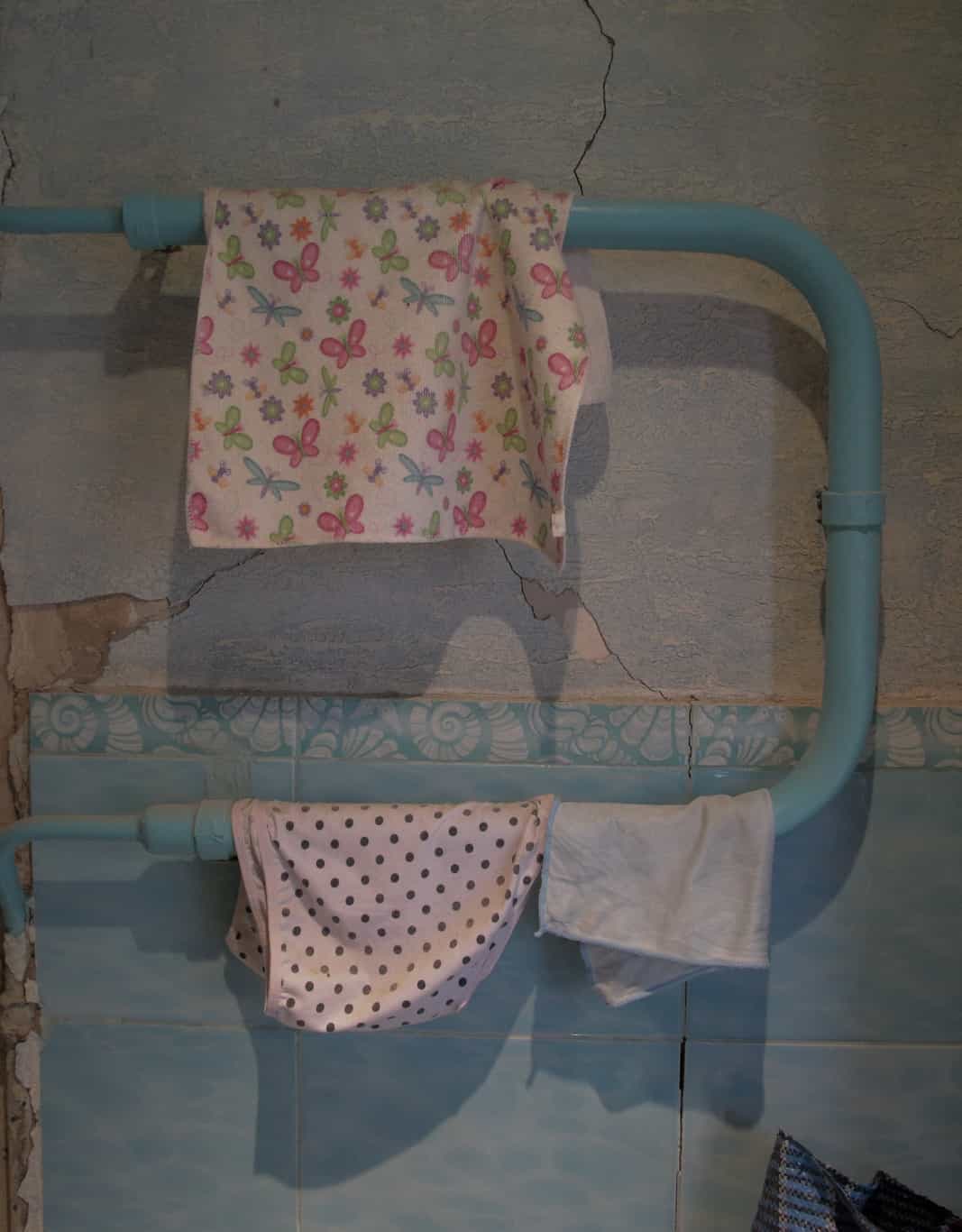
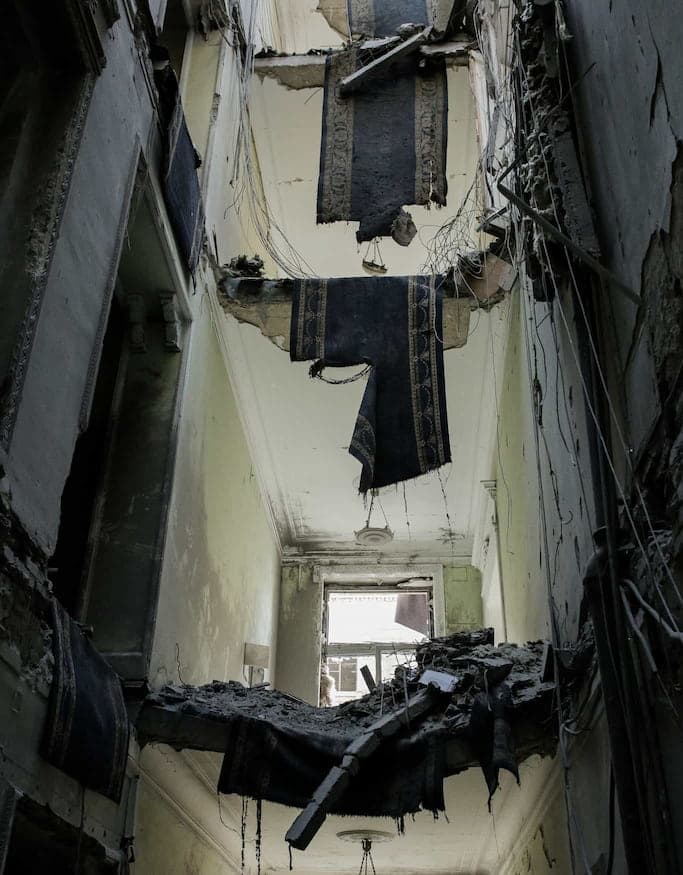
Other Testimonies from the Archive
- Recording
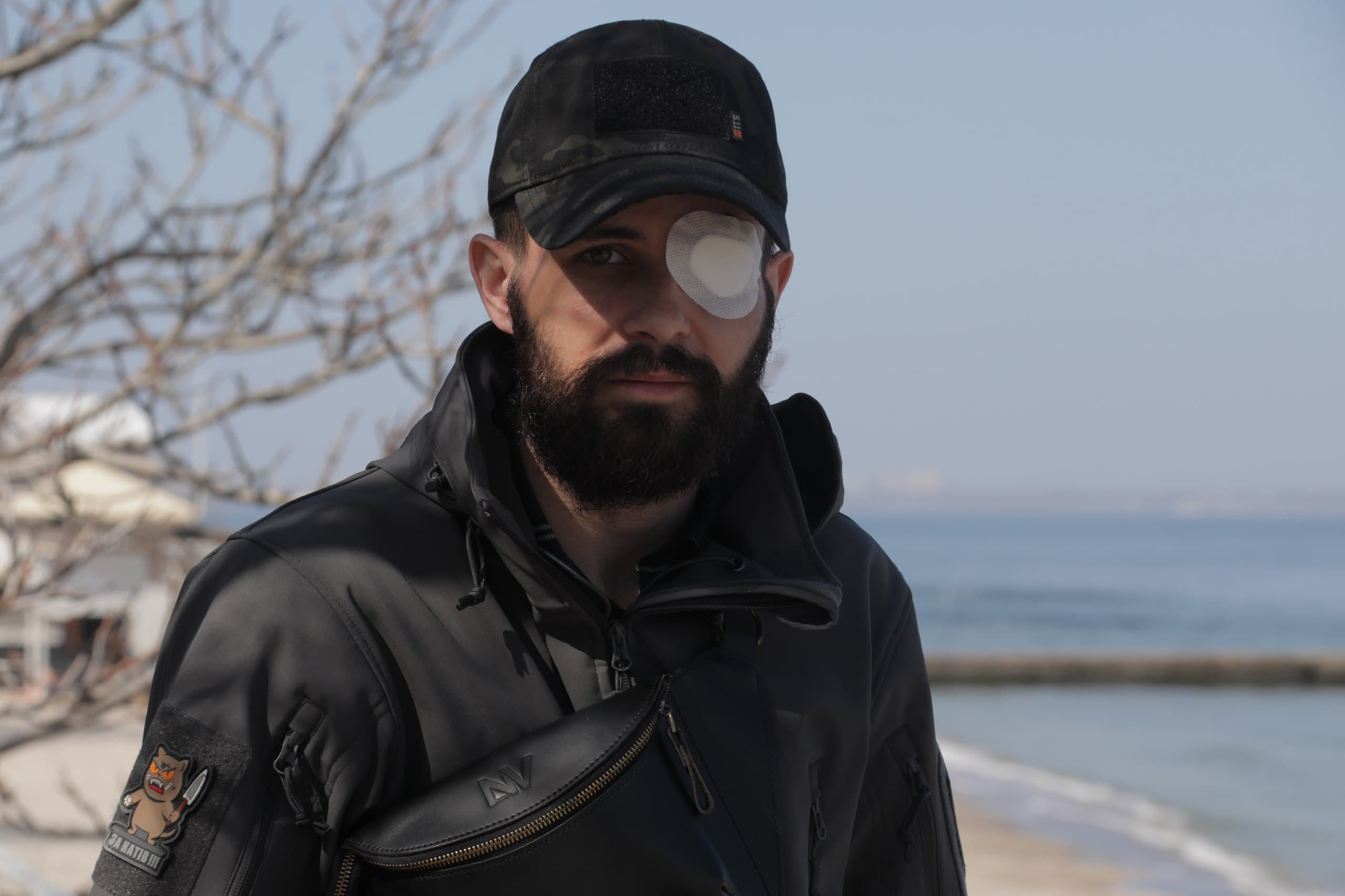
For me, bread means sweat and calluses. And now blood, too
A Ukrainian helped his family work the fields and nearly went blind after stepping on a mine
Dmytro Yeliseienko04/25/23 - Recording
They loaded everyone: dogs, cats, a hedgehog
The home of Kherson retirees was flooded after the destruction of the Kakhovka Dam. Ukrainian soldiers evacuated them from occupied territory
Henadii and Olena Rotar06/09/23 - Recording
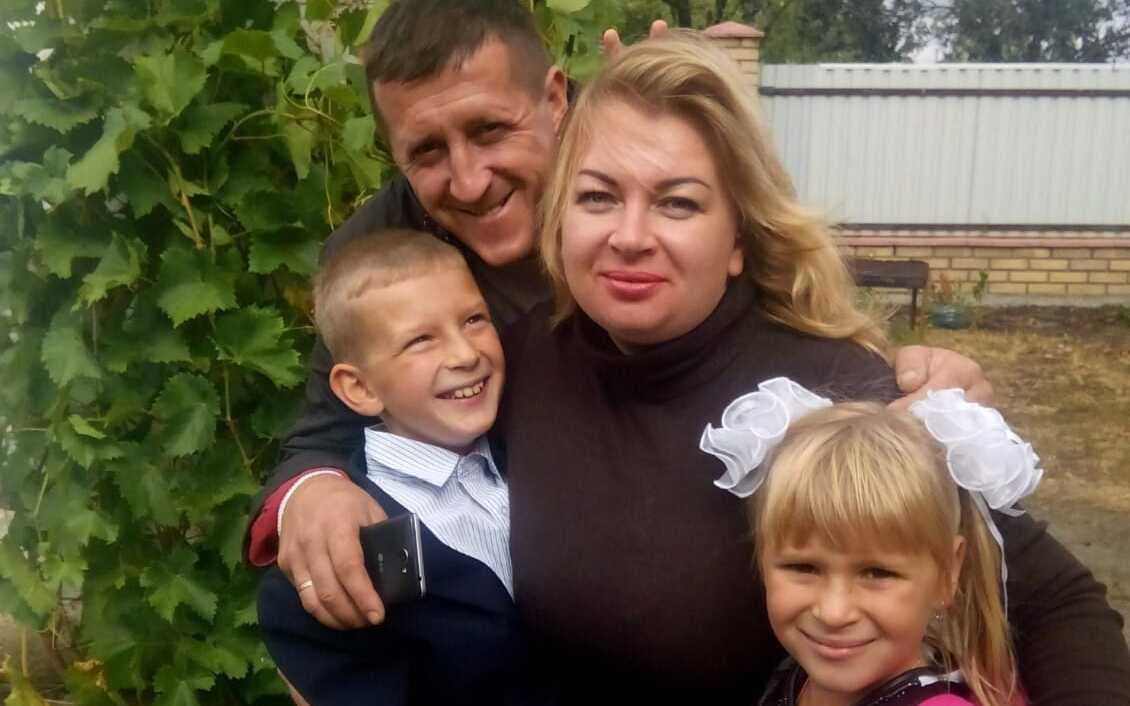
All we have left of Vova are rubber slippers
An resident of Izium on life under occupation, her husband’s death, and evacuation
Liliia Maichenko09/09/22 - Recording
They put a bag over my head. A pink, new one
A kindergarten teacher from Kherson became a TikTok star, was taken captive — and survived
Olena Naumova12/05/22 - Text

If they restore my sight, I want to go to Ukraine
The life of a Ukrainian woman whose portrait became the first face of the war
Olena Kurylo12/18/22 - Text
I want to see everyone. I desperately want to fall in love. In war, you constantly feel like you might not have time for something
The story of Nastya, a volunteer from Kharkiv, about evacuations and losses
Nastia05/26/22